Moderate
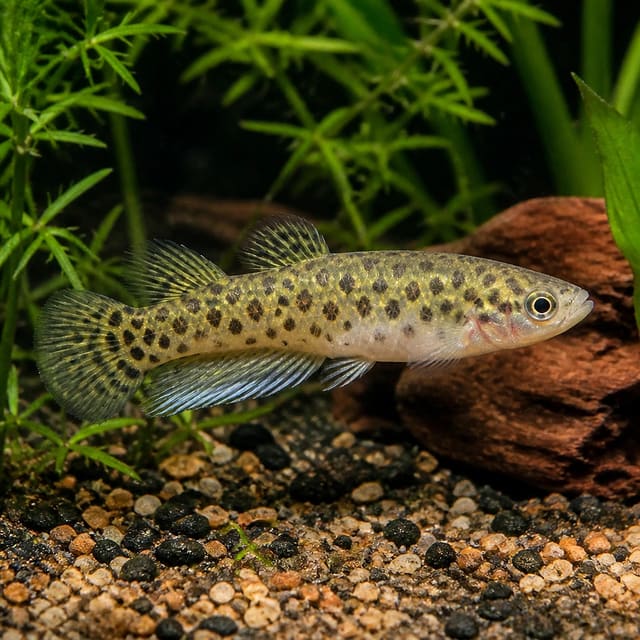
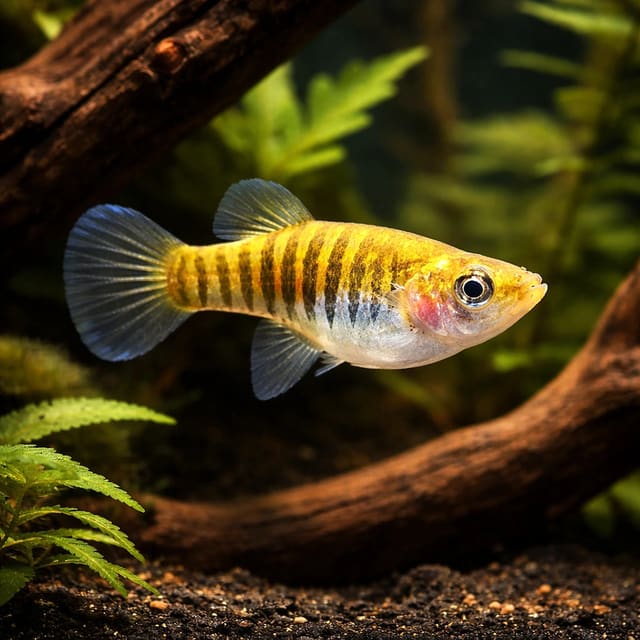
Twoline Skiffia (Skiffia bilineata; Neotoca bilineata)
18–24°C · pH 7–7.5 · 80L
£36.99

A sleek, predatory livebearer with a pike-like profile and a bold personality best suited to species or predator tanks. Moderate care, aggressive. 24-28C, pH 7.0-8.2.
Adult size is the maximum length this species reaches at full maturity (scientific sources). The livestock you receive will be younger and smaller — pick a size above for the actual shipping size. Product-photo provenance and any image-specific limitations are stated on the listing.
Belonesox belizanus
Shoaling fish: kept in a group they feel safer, stay calmer and show their best colour.
Confirm your email, then we’ll send an availability message for this exact item if it returns within 180 days.
This request is only for this product—no newsletter or other promotions. A mail-provider retry may very rarely duplicate the same availability message. Unconfirmed addresses are removed after 48 hours. See our privacy policy.
A sleek, predatory livebearer with a pike-like profile and a bold personality best suited to species or predator tanks. Moderate care, aggressive. 24-28C, pH 7.0-8.2.
Adult size is the maximum length this species reaches at full maturity (scientific sources). The livestock you receive will be younger and smaller — pick a size above for the actual shipping size. Product-photo provenance and any image-specific limitations are stated on the listing.
Maintain these water conditions for optimal health and vibrant colors
The Pike Livebearer (Belonesox belizanus), also known as the pike topminnow or pike killifish, is a sleek, predatory livebearer with a pike-like profile that makes a striking centerpiece for experienced aquarists. Native to Mexico through Nicaragua and also introduced to Florida, USA, this species reaches an impressive 15 cm in length and is the only known member of its genus. The Pike Livebearer exhibits a streamlined, torpedo-shaped body with a flattened head, large predatory jaws, and a surface-oriented hunting behavior perfectly adapted for ambush predation. While highly specialized and requiring careful tankmate selection, this species offers fascinating behavior and a unique predatory presence rarely seen in livebearers. Available for sale UK from specialist suppliers, this species is ideal for experienced aquarists seeking an unusual, predatory livebearer for a species or carefully planned community setup.
Belonesox belizanus exhibits a distinctive elongated, pike-like body shape with a flattened head, large mouth filled with sharp teeth, and eyes positioned high on the head for surface observation. The body coloration is typically olive-brown to greenish-brown on the dorsal surface, fading to silvery-white on the ventral surface, providing excellent camouflage when viewed from above or below. Dark vertical bars or blotches may be present on the flanks, varying in intensity with mood and environment. The dorsal fin is set far back on the body, and the caudal fin is broad and rounded, adapted for rapid acceleration when striking at prey. Females are significantly larger than males, reaching 15-20 cm, while males are smaller at 10-12 cm. Sexual dimorphism is pronounced, with males possessing a modified anal fin (gonopodium) used for internal fertilization. The overall appearance is highly specialized for a predatory, surface-oriented lifestyle.
Belonesox belizanus is native to Central America, ranging from Mexico to Nicaragua, where it inhabits slow-moving rivers, streams, marshes, swamps, and coastal lagoons, including both freshwater and brackish environments. The species has also been introduced to Florida, USA, where it has become established in some waterways. These fish are surface-oriented ambush predators, typically found among dense aquatic vegetation, submerged roots, and floating plants where they lie motionless waiting to strike at small fish, insect larvae, and other prey. The substrate is usually muddy or silty, and water chemistry ranges from neutral to slightly alkaline (pH 7.0-8.2), often with some salinity in coastal areas. Temperatures are warm year-round (24-28°C). Understanding these natural conditions—calm surface waters, heavy vegetation, and the predatory lifestyle—is essential for successful captive husbandry.
A minimum aquarium capacity of 150 liters is essential for an adult Pike Livebearer, with larger volumes (200+ liters) strongly preferred for long-term success. The tank should emphasize horizontal swimming space and surface area, as these fish are surface-oriented hunters. Provide dense planting with species such as Vallisneria, Hygrophila, and Cryptocoryne, and include floating plants such as Pistia, Salvinia, or water sprite to diffuse lighting and provide cover. A dark substrate (sand or fine gravel) enhances their natural camouflage and reduces stress. Include driftwood and smooth rocks to create visual barriers and territorial boundaries. Filtration should be moderate, avoiding strong surface agitation that disrupts their preferred calm surface conditions. A tight-fitting lid or cover glasses are absolutely essential, as Pike Livebearers are powerful jumpers and will escape through even small gaps.
Pike Livebearers are adaptable and tolerant of a range of water parameters. Maintain temperatures between 24-28°C, with 26°C being optimal. The pH should be neutral to slightly alkaline, ranging from 7.0-8.2, though pH 7.5-8.0 is ideal. Water hardness can vary from moderately hard (8 dGH) to hard (20 dGH), and the species can tolerate slight salinity (1-5 ppt) if desired, though this is not necessary for long-term health. Stability is more important than exact values—avoid sudden fluctuations in temperature or chemistry. Maintain zero ammonia and nitrite at all times, and keep nitrates below 40 ppm through regular weekly water changes (25-30%). Good water quality is essential to prevent disease and maintain health in this predatory species.
Belonesox belizanus is a strict carnivore and piscivore (fish-eater), requiring a diet centered on live and frozen meaty foods. Offer small live fish (guppies, mosquito fish, small goldfish) as the staple 2-3 times per week, supplemented with frozen foods such as chopped prawns, mussels, whitebait, lance fish, and large bloodworms. Live foods such as earthworms, insect larvae, and crustaceans provide enrichment and satisfy natural hunting instincts. Some individuals may accept high-quality carnivore pellets or freeze-dried foods, but live and frozen foods are strongly preferred and essential for long-term health. Feed adult fish 3-4 times per week in portions appropriate to their size, and fast one day per week to prevent obesity and support digestive health. Young Pike Livebearers require daily feedings of small live foods such as mosquito larvae, daphnia, and newly born guppies.
Belonesox belizanus is classified as aggressive due to its highly predatory nature. These fish are specialized ambush predators that spend much of their time hovering motionless just below the surface among vegetation, waiting to strike at prey with lightning-fast lunges. They are solitary by nature and territorial toward conspecifics, especially males. Housing multiple Pike Livebearers requires a very large aquarium with ample visual barriers to prevent constant aggression. They are most active during dawn and dusk but will hunt opportunistically throughout the day if prey is available. Their predatory instincts are strong, and they will relentlessly pursue and consume any fish small enough to fit in their mouths. Despite their predatory nature, they are shy and easily startled when approached, often darting to cover or jumping when disturbed. This species is not suitable for typical community aquariums and is best kept alone or with very large, robust tankmates.
Suitable tank mates for Pike Livebearers are extremely limited due to their predatory nature and large mouths. They are best kept alone in a species tank, or with very large, robust fish that cannot be swallowed and are not slow or delicate. Potential companions in very large tanks (300+ liters) include large, fast-swimming cichlids (such as Thorichthys, Cryptoheros, or large Geophagus species), large robust livebearers (large sailfin mollies), or large armored catfish (large plecos). Avoid housing with all small fish (anything under 10 cm), fry, shrimp, small invertebrates, slow or long-finned fish, and peaceful community species. Even fish of moderate size may be at risk if they can fit in the Pike Livebearer's mouth. The safest and most rewarding approach is a species-only setup where their fascinating hunting behavior can be observed without risk to tankmates.
Belonesox belizanus is a livebearer that gives birth to free-swimming young rather than laying eggs. Females can produce relatively large broods of 20-80 fry every 4-6 weeks once mature. Breeding occurs readily in well-maintained aquariums without special intervention. Males court females persistently and mate using the gonopodium to transfer sperm internally. Gestation lasts approximately 4-6 weeks, after which females give birth to fully formed, relatively large fry (8-12 mm). Adults are cannibalistic and will eat their own fry if given the opportunity, so breeding is best done in a separate breeding tank or with heavy cover (dense plants, floating vegetation) to provide hiding spots for fry. Fry are born ready to hunt and should be fed very small live foods such as newly hatched brine shrimp, daphnia, and mosquito larvae daily. Growth is rapid if fed generously, and fry reach sexual maturity in 4-6 months.
Tropical Fish Co is the UK's specialist source for unusual and predatory species, including healthy, acclimatized Pike Livebearers. Every fish is quarantined upon arrival, carefully conditioned on a varied carnivorous diet, and health-checked before dispatch to ensure you receive robust, disease-free specimens. Our expert team provides comprehensive care guides, personalized stocking advice, and ongoing support to help you create the appropriate predator setup for this fascinating species. We offer a live arrival guarantee on all orders, backed by secure, insulated packaging and tracked courier delivery to your door. Whether you're an experienced aquarist seeking an unusual predatory species or building a Central American biotope, our commitment to quality, ethical sourcing, and customer service ensures you receive the finest livestock available. Order your Pike Livebearer today and experience the thrill of keeping one of the aquarium hobby's most specialized and fascinating predatory livebearers.
No reviews for this item yet. Bought one? Honest reviews only, good or bad.
What customers say about ordering from us
I have a small group of long finned mountain minnows. So was delighted to be able to order ten of this variety to increase the genetics in my tank . The ones I recieved are healthy but it’s to early to give a verdict on wether they are of a long finned type since they are small currently.
Gordon Walker · 23 Sept 2026
100% success travel and "installation". Pleased with quality of purchase. The Siamese fighter a bit "shy" so have not yet seen him at his best yet but looking good. Happy customer. GG
George E Garratt · 21 Sept 2026
Reviews of our shop, collected by Judge.me, an independent third-party review collector. Newest first.