Poecilia endler tiger
22–28°C · pH 6.8–8.5 · 40L

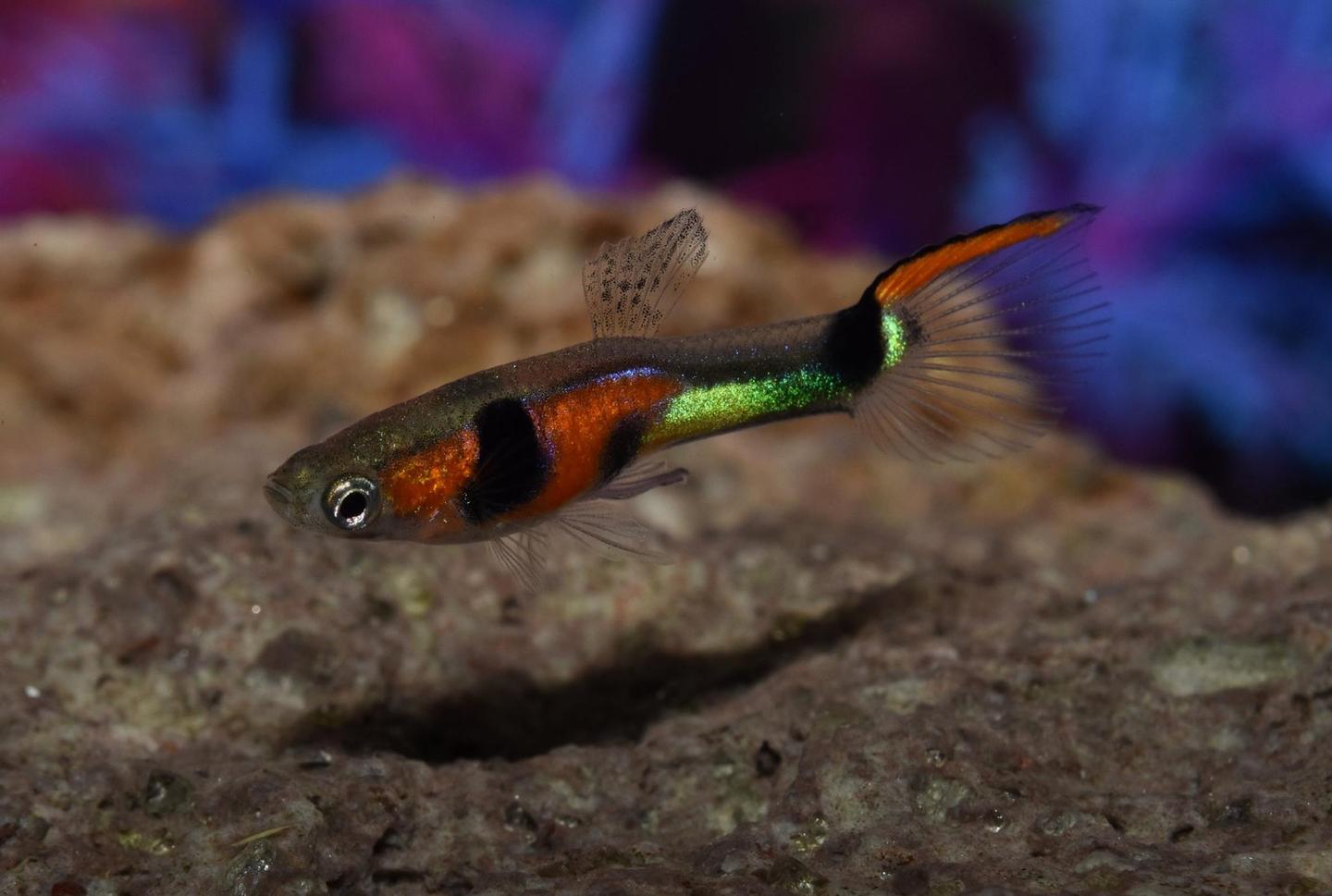
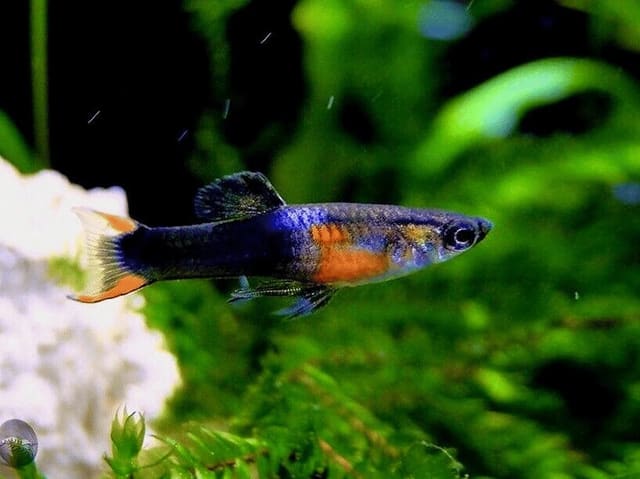
Bright red male Endler guppy (Poecilia wingei) with lively movement and striking colour, ideal for planted nano and peaceful community aquariums. Order today with live arrival guarantee and UK delivery.
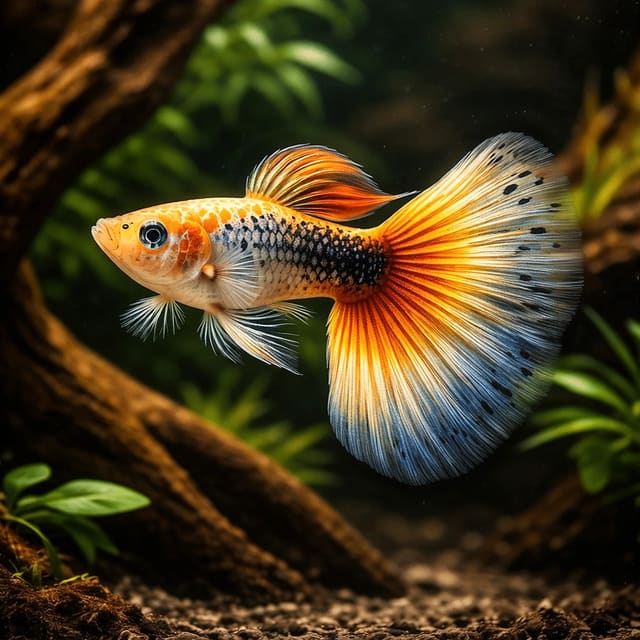
Adult size is the maximum length this species reaches at full maturity (scientific sources). The livestock you receive will be younger and smaller — pick a size variant above for the actual shipping size. Photos are AI-enhanced, so the animal may show subtle colour or marking differences.
Poecilia wingei cobra
Red Male Endler Guppy are a shoaling species — they need 6+ to feel safe and show their full colour. Larger shoals stay calmer, eat better, and look stunning.
Bright red male Endler guppy (Poecilia wingei) with lively movement and striking colour, ideal for planted nano and peaceful community aquariums. Order today with live arrival guarantee and UK delivery.
Adult size is the maximum length this species reaches at full maturity (scientific sources). The livestock you receive will be younger and smaller — pick a size variant above for the actual shipping size. Photos are AI-enhanced, so the animal may show subtle colour or marking differences.

Endler guppies are tiny, brilliantly coloured livebearers that breed freely in community tanks. Hardy, peaceful, and stunning in planted nano setups.
Maintain these water conditions for optimal health and vibrant colors
The Red Male Endler is one of those fish that makes even a simple aquarium look alive. With its glowing red-orange body, metallic flashes, and constant movement, Poecilia wingei has become a favourite for aquarists who want a colourful guppy without the heavy demands of delicate species. This small, peaceful, active livebearer is ideal for a planted nano setup, a mixed livebearer display, or a calm community tank. Adult males usually stay around 2.5-3.5 cm, and with good care the Red Male Endler lifespan is often 2-3 years. In practical terms that means a lively fish with a modest Poecilia wingei tank size requirement, a straightforward guppy fish tank setup, and a forgiving guppy fish temperature range of 22-28°C.
Many keepers choose this fish because it combines the charm of wild-type Endlers with brighter selective colour. It suits beginners, but it also appeals to experienced breeders who enjoy line breeding and comparing Poecilia wingei with Poecilia reticulata. Our detailed photos show the red body pattern, slim Endler shape, and finnage that stands out especially well over dark substrate. Whether you want a hardy red male Endler for beginners, a peaceful aquarium fish UK hobbyists can keep in smaller tropical aquariums, or a striking male to pair with females in a breeding colony, this Poecilia wingei for sale is an excellent choice.
For a full husbandry breakdown, see our Endler guppy care guide.
Poecilia wingei is a close relative of the common guppy, Poecilia reticulata. In the aquarium hobby, Endlers are valued for their smaller size, energetic behaviour, and wild-style patterning. The Red Male Endler sits between true wild influence and selective breeding, giving keepers a bright fish with the classic Endler body shape. Because Endlers and guppies are both livebearers in the Poeciliidae family, they can hybridise, which is why hobbyists often discuss hybrid lines, pure Endler strains, and the difference between Poecilia wingei and standard guppies.
To understand this fish properly, it helps to look at the Red Male Endler habitat and the wider guppy fish natural habitat. Endlers originate from northern South America, especially Venezuela, in warm shallow waters such as lagoons, slow streams, drainage channels, and vegetated margins. When people ask where do guppy fish come from, the answer for Endlers is slightly more specific than for common guppies: true Poecilia wingei is associated with Venezuelan populations, while many aquarium guppies trace back to broader South American and Caribbean stock.
In the wild, guppies and Endlers live in sunlit water rich in plant growth, biofilm, insect larvae, tiny crustaceans, and suspended organic matter. That is why a Poecilia wingei diet should not rely on one dry food alone. These fish spend much of the day picking at microorganisms and tiny edible particles. Hobbyists who ask does guppy fish eat mosquito larvae or do guppy fish eat algae are partly right on both counts: they take mosquito larvae eagerly, and they graze soft algae and biofilm, though they are not a substitute for a dedicated algae eater.
The guppy fish habitat is usually mineral-rich rather than extremely soft. In aquariums, this translates into stable, clean water with moderate to hard hardness rather than ultra-soft blackwater conditions. The species is not a coldwater fish, so while some people try guppy fish in a pond in summer, that only works in warm weather and should not be treated as a year-round UK option. Another common question is where do guppy fish sleep. Like many small livebearers, they rest near cover, often among fine plants or quieter corners of the tank, especially once lights go out.
You may also see searches for fancy guppy vs wild guppy and Poecilia wingei (wild type). The Red Male Endler is not a drab wild fish; it is a selectively appreciated aquarium form with stronger red colour, but it still keeps the slim, darting Endler look that many enthusiasts prefer over heavier fancy guppies.
Mimicking natural habitat improves colour, confidence, and feeding response. Use dense planting, open swimming space, gentle flow, and mineral-rich water. Endlers often show their best reds when they feel secure enough to display continuously rather than hide.
A good setup for this fish is simple, but details matter. If you want to know how to care for a Red Male Endler, start with stability rather than complexity. The basic guppy fish requirements are clean water, warmth, oxygenation, and enough space for constant movement. For a single small male group, the tank size minimum is 40 litres, which also matches sensible guppy fish tank size guidance. A 40-litre aquarium can work, but a 60-litre layout gives better swimming room, more stable chemistry, and easier stocking, which is why many keepers consider a 60-litre tank the sweet spot.
The Poecilia wingei size is small, but these fish are active. A cramped tank increases chasing, stress, and waste concentration. For males only, start at 40 litres. For mixed groups or breeding colonies, 54-60 litres is better. If you keep one male with females, follow the classic ratio of two to three females per male to spread attention and reduce harassment. This helps meet real guppy fish tank requirements rather than just the bare minimum volume on paper.
The ideal water temperature is 24-26°C, though the safe guppy fish temperature range is 22-28°C. If you are asking what is the best temperature for guppy fish, 24-25°C is a strong everyday target because it supports activity, digestion, and long-term health without pushing metabolism too hard. The pH requirements are broad, but aim for 6.8-8.0, with 7.2-7.8 being especially comfortable. For water hardness, moderate to hard water is preferred, roughly 8-20 dGH. These are practical water parameters for most UK aquariums.
Filtration needs are moderate. Endlers appreciate clean, oxygen-rich water, but they do not like being blasted by strong current. A small internal filter, air-driven sponge filter, or gentle hang-on-back unit works well. People often ask can guppy fish live without a filter or can guppy fish live without an air pump. Technically, in very lightly stocked, heavily planted tanks they may survive with minimal equipment, but that is not good practice. A filter improves mechanical and biological stability, and surface movement helps prevent low oxygen. Likewise, can guppy fish live without oxygen and can guppy fish live without an oxygen pump are really water quality questions: they need dissolved oxygen, even if you do not use a separate air stone.
Dark sand or fine gravel makes red males stand out beautifully. Use rooted plants and floating cover to create security. Keeping this Endler in a planted aquarium is one of the best ways to maintain the species, because plants soften sight lines, absorb nitrate, and provide fry refuge. Good choices include Java moss, guppy grass, hornwort, water sprite, and floating Salvinia. If you enjoy collecting Endler varieties, you might display this fish alongside other colour forms such as Guppy Endler Santa Maria Male Beautiful, Gold Endler Guppy, or Endler Rainbow Guppy Male in separate breeding or display tanks to preserve lines.
Moderate lighting for 7-9 hours daily is enough. Strong light can intensify plant growth and make colours pop, but too much with no shade can stress small fish. Floating plants help diffuse brightness. This colourful aquarium fish UK keepers enjoy often looks best under full-spectrum daylight LEDs that bring out red and orange tones.
Always cycle a new aquarium for 4-6 weeks before adding Endlers. Even a hardy fish for a new tank should only be added once ammonia and nitrite are consistently zero. Hardiness is not immunity to poor water chemistry.
The Red Male Endler diet is omnivorous and should be varied. In nature, Endlers browse tiny invertebrates, biofilm, algae films, and organic particles. In the aquarium, a balanced guppy fish diet includes quality micro pellets, fine flakes, vegetable matter, and small frozen or live foods. If you are wondering what guppy fish eat or what guppy fish can eat, think small, frequent, mixed meals rather than one oversized feeding.
A fine tropical micro pellet or crushed flake should form the base of the Poecilia wingei diet. Many hobbyists use guppy fish flakes successfully, but choose a formula with fish protein plus spirulina or plant content. If you are asking what is guppy fish food, the best answer is a small omnivore food designed for livebearers or nano tropical fish.
For stronger colour and breeding condition, add frozen daphnia, baby brine shrimp, cyclops, and occasionally live foods. Does guppy fish eat mosquito larvae? Yes, and they relish them when offered in suitable size. Do guppy fish eat algae? They graze soft films, which is why keepers often see them pecking at surfaces. Just remember that algae grazing is supplemental, not their main nutrition.
The best feeding routine is simple: feed small portions 1-2 times a day, only what they finish in around 30-60 seconds. If you ask when to feed guppy fish, morning and early evening are ideal. Overfeeding quickly spoils water in small tanks and contributes to obesity, constipation, and bacterial issues.
| Time | Food | Amount |
|---|---|---|
| Morning | Micro pellet or crushed flake | Very small pinch |
| Evening | Frozen daphnia, baby brine shrimp, or spirulina flake | What is eaten in under 1 minute |
Can guppy fish eat goldfish food? In an emergency, a tiny amount will not usually kill them, but it is not ideal because goldfish diets are formulated for different digestive and protein needs. Avoid oversized pellets, stale food, and any medicated food unless you are treating a diagnosed issue. Also be careful with rich foods in warm water, because rapid digestion plus overfeeding can foul the tank fast.
People also ask do guppy fish eat each other, do guppy fish eat their babies, and why guppy fish eat their babies. Adult Endlers may eat fry if given the chance, especially in bare tanks. That is not true aggression; it is opportunistic feeding. Dense plants greatly reduce losses.
Explore suitable livebearers, colour strains, and compatible community fish for a balanced tropical setup.
Overfeeding causes ammonia spikes, cloudy water, and digestive stress. Endlers are tiny fish with fast appetites, so it is easy to add too much. Feed less than you think, especially in tanks under 60 litres.
The Red Male Endler is slimmer and more streamlined than many fancy guppies. Typical Poecilia wingei size for males is around 2.5-3.5 cm, with females larger and plainer. Males show the strongest colour, with vivid red to orange body zones, metallic green or gold flashes in some lines, and transparent to patterned fins depending on strain. This is one reason many hobbyists searching for the best Red Male Endler in the UK, or for where to buy Endler guppies in the UK, are specifically looking for males: they deliver immediate visual impact.
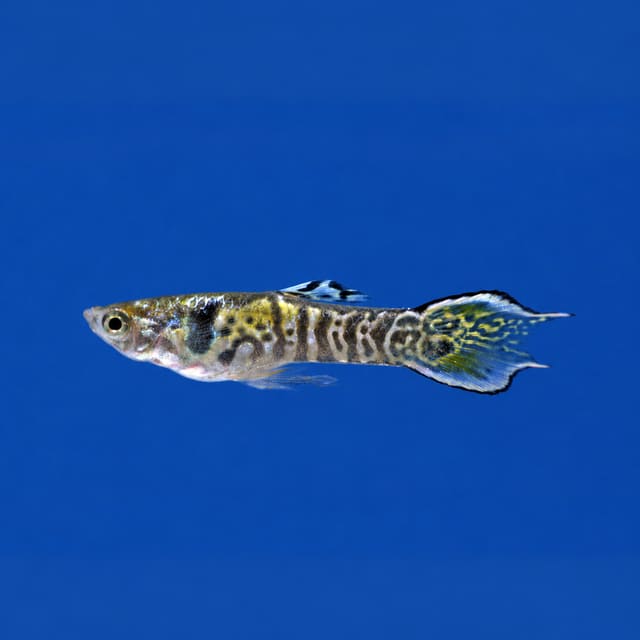
Compared with heavier fancy strains of Poecilia reticulata, Endlers usually have smaller tails and a more athletic shape. That makes them superb constant swimmers. If you compare Endler colour forms such as blue Japan, lime green, El Tigre, and black bar, you will notice that the Red Male sits in a bright, warm-colour niche that contrasts well with green plants and dark substrate.
Females are larger, silver-beige, and less showy. They are essential if you plan to breed Endlers or maintain a colony. A healthy male shows intense body colour and compact proportions. Good diet, stable water, and strong but not harsh lighting all help maintain colour. Poor water quality can lead to clamped fins, faded tones, and increased risk of issues like tail rot in neglected systems.
If you are comparing live Endler guppy for sale UK listings, look for clean finnage, straight backs, bright eyes, and active display behaviour rather than just exaggerated colour editing in images.
This species is widely loved because it is a peaceful community fish. If you are asking what can guppy fish live with, what fish can live with a guppy, or what kind of fish are compatible with guppies, the answer starts with other small, calm fish that enjoy similar water. Endlers are active but not usually harmful. Are guppy fish aggressive? Not in the way cichlids are. Are guppy fish territorial? Generally no, though males may spar, display, and chase in small spaces.
Good companions include small Corydoras, peaceful rasboras, tiny tetras, platies, and some mollies. If you enjoy livebearers, keeping this Endler with other peaceful livebearers can work very well, provided you understand the hybridisation risk with guppies and some Endler lines. For display diversity, consider related fish such as Yellow Tiger Endler Guppy, El Tigre Endler Guppy, and Gold Endler Guppy in separate tanks or carefully planned male-only displays.
People also ask can guppy live with other fish and which fish can live with guppy. Yes, as long as those fish are not fin nippers or predators. Community fish UK keepers often pair Endlers with gentle bottom dwellers and micro-schooling fish in 60-litre and larger aquariums.
Avoid large cichlids, barbs known for fin nipping, and predatory fish. Which fish eat guppy fish? Anything large enough to see them as food, including bigger cichlids and some aggressive community species. Can guppy fish live with goldfish? No, because goldfish need cooler water and produce far more waste. Can guppy fish live with betta fish? Sometimes, but it is risky. Brightly coloured male Endlers may trigger a betta, and the betta may also stress them.
Many aquarists want to keep Endlers with shrimp. Adults usually coexist with larger shrimp and snails, but tiny shrimplets may be eaten. Dense moss, leaf litter, and fine plants improve survival for baby shrimp.
| Species | Compatible? | Notes |
|---|---|---|
| Endler Guppy Female | Yes | Best for breeding groups; maintain enough females per male |
| Black Fire Endler Guppy | Caution | Compatible physically, but may complicate selective breeding through crossing |
| Large cichlids | Avoid | Predatory and stressful for small Endlers |
For stocking ideas, a 60-litre tank might hold 6-8 male Endlers only, or one male with 3 females plus a small group of dwarf Corydoras. This community-tank approach keeps movement in the mid-water while bottom fish use lower levels. Because this is a peaceful aquarium fish UK aquarists often keep in mixed setups, it fits well into freshwater tropical fish UK community plans.
Always quarantine new arrivals for 2-4 weeks before adding them to your main tank. Endlers are hardy, but they can still introduce parasites, bacterial infections, or stress-related disease into an established community.
Red Male Endler breeding is considered easy, which is one reason this species is so popular. If you are researching guppy fish breeding, guppy fish how to breed, or when do guppy fish breed, the key point is that Endlers are livebearers. They do not lay eggs, so questions like what do guppy fish eggs look like and when do guppy fish lay eggs come from confusion with egg-laying species. Instead, females give birth to free-swimming fry after internal fertilisation.
Use a mature 40-60 litre planted aquarium with a stable temperature around 24-26°C. This meets the species' temperature needs and supports fry growth. Add floating plants, moss, and fine-leaved stems. One male with two or three females is a practical ratio. If you want to preserve lines and avoid unwanted hybrids, do not mix them with standard guppies or unrelated Endler strains casually.
Males constantly display, shimmy, and circle females. Guppy fish breeding time varies with temperature, feeding, and female condition, but healthy adults may breed regularly in warm, stable tanks. Hobbyists who want to maintain cleaner, pure Endler lines should keep strains in separate tanks if strain integrity matters.
Because adults may snack on fry, heavy plant cover is your best first defence. Feed newborns powdered fry food, infusoria, microworms, or newly hatched brine shrimp. Growth is fast in warm, clean water with frequent small feeds and regular water changes. This is why many breeders who buy a Red Male Endler in the UK also look for females at the same time.
If your goal is line breeding rather than simply producing more fish, keep each colour strain in its own labelled tank and record parentage. This is especially useful when comparing forms like blue Japan, lime green, black bar strains, and red males, because accidental crossing can blur pattern quality within a few generations.
A practical customer note: many keepers buy a single colourful male first, then later add females after the display tank is fully mature. That staged approach often gives better results than rushing into a colony before the aquarium has enough plant density to protect fry.
Comparison matters because Endlers and guppies are often sold side by side, and many new keepers are unsure whether to choose a Red Male Endler, a fancy guppy, or another Endler strain. The biggest discussion point is Poecilia wingei vs Poecilia reticulata. While both are livebearers and close relatives, Endlers are usually smaller, more streamlined, and more active, while fancy guppies often have larger tails and more exaggerated finnage.
| Feature | Red Male Endler | Fancy Guppy |
|---|---|---|
| Max Size | About 3.5 cm male | Up to 5 cm |
| Care Level | Easy to moderate | Easy |
| Temperature | 22-28°C | 22-28°C |
| Best For | Active planted nano and line breeding | Showy fins and classic guppy look |
If you want a fish with a more natural body shape, less drag from oversized fins, and a lively darting style, choose the Red Male Endler. If you prefer broad tails and dramatic finnage, a fancy guppy may suit you better. This also ties into searches like which guppy fish is best, which is the rare guppy fish, and which is the rarest guppy fish. The answer depends on whether you value rarity, purity, colour, or ease of care.
| Feature | Red Male Endler | Yellow Tiger / Santa Maria Endlers |
|---|---|---|
| Colour Focus | Red-orange body tones | Yellow, tiger, or mixed metallic patterning |
| Display Style | Warm, bold contrast | Striped or multicolour effect |
| Best Use | Single-strain breeding or red-themed tanks | Collectors of Endler colour forms |
| Related Options | Endler Rainbow Guppy Male | Guppy Endler Santa Maria Male Beautiful |
If you are comparing Endler guppy price, Endler colour forms, or Poecilia wingei for sale listings, the Red Male is a very smart choice because it delivers high visual impact without needing a specialist show tank. It is especially good for hobbyists who want a colourful male group or a controlled breeding project.
Strong Red Male Endler health starts with clean water, varied food, and low stress. A healthy male is alert, brightly coloured, constantly swimming, and quick to feed. Fins should be open, the spine straight, and the belly neither pinched nor bloated. If colour fades suddenly or the fish isolates itself, check water first.
Like other livebearers, Endlers can suffer from guppy fish diseases such as fin rot, ich, velvet, wasting, bacterial infections, and parasites. Tail rot usually points back to poor water quality, injury, or chronic stress. Because these fish are small, problems can progress quickly. Early signs include clamped fins, flashing, white spots, frayed tails, shimmying, and loss of appetite.
The safest first response is to test water, improve hygiene, and isolate affected fish if needed. Perform partial water changes, vacuum waste, and review feeding. Many mild cases improve once ammonia, nitrite, and nitrate problems are corrected. Quarantine is especially important when adding new stock from mixed systems. This matters whether you are buying one male or building a breeding colony from several strains.
Never use medications casually without identifying the likely problem. Small livebearers can be sensitive to overdosing, and copper-based treatments are dangerous if your aquarium includes shrimp or other invertebrates.
Good guppy fish enrichment also supports health. Flow breaks, plants, social interaction, and regular feeding opportunities reduce stress. Remember that short online care profiles often miss the biggest truth: a stable routine prevents more disease than medicine does.
Red Male Endler behaviour is active, curious, and social. Males spend much of the day cruising the middle and upper water, displaying to rivals, and investigating food. This is not a shy species. In a well-set-up tank, they are visible from morning to evening and quickly learn where food appears.
Are guppy fish aggressive? Mild chasing between males is normal, especially in smaller groups, but serious damage is uncommon in spacious planted tanks. Endlers are not strongly territorial, but crowding can make them irritable.
To encourage natural behaviour, keep them in groups, provide sight breaks, and avoid oversized tank mates. A hardy, low-maintenance Endler setup still needs environmental structure. Floating plants, dark substrate, and varied feeding all increase confidence and display intensity. In short, this is a lively, interactive fish that rewards observation every day.
When you order an Endler guppy online in the UK, quality should mean more than a bright photo. With this fish, the important details are line clarity, body shape, feeding response, and condition on arrival. Our Red Male Endlers are selected for clean finnage, active swimming, and strong red presentation rather than oversized, fragile finnage. That makes them a practical choice whether you want a display male, a breeding project, or a colourful addition to a peaceful community tank.
Before dispatch, fish are observed for feeding response and general condition, then packed for guppy fish delivery in insulated boxes designed for safe live tropical fish delivery UK. In cold weather, heat packs are used where needed. Each bag is packed to limit slosh stress while keeping oxygen available during transit. That matters for small active fish like Endlers, because stable temperature and careful packing reduce exhaustion on arrival.
If you are comparing guppy fish for sale, guppy fish for sale online, guppy fish for sale UK, guppy fish for sale near me, or guppy fish for sale nearby, the real difference is consistency and fish condition, not just headline price. Buyers also ask about guppy fish delivery time and guppy fish pair price. Delivery timing depends on route and service window, while pair pricing varies with sex ratio and strain. For this listing, you are choosing a single Red Male Endler selected for colour and display quality. That gives you a reliable starting point whether you later add females or build a male-only group.
If you have been searching for an Endler guppy shop UK, to buy Endler guppies online UK, or for live Endler guppy for sale UK, remember that healthier stock is better value than replacing weak fish later. Order your fish with confidence if you want an active, attractive Endler that settles quickly into a properly cycled tropical aquarium.
If you enjoy this Red Male Endler, you may also want to explore other compatible or collectible livebearers. For alternative colour strains, see Gold Endler Guppy, Yellow Tiger Endler Guppy, and El Tigre Endler Guppy. If you are planning a breeding setup, an Endler Guppy Female is the natural companion. Collectors comparing line types may also like the Black Fire Endler Guppy. For a broader look at available strains and related fish, browse our guppy collection to build a colourful, well-matched livebearer aquarium.

22–28°C · pH 6.8–8.5 · 40L

22–28°C · pH 6.8–8.5 · 40L

22–28°C · pH 6.8–8.5 · 40L

22–28°C · pH 6.8–8.5 · 40L

18–26°C · pH 6.5–8 · 30L

23–27°C · pH 7.4–8.4 · 500L

20–27°C · pH 6–7 · 54L

23–27°C · pH 7.4–8.4 · 150L

24–28°C · pH 6.5–7.8 · 300L

20–24°C · pH 7–8 · 45L

24–28°C · pH 6.5–7.5 · 2000L

24–28°C · pH 7.5–8.5 · 200L

24–28°C · pH 5.5–7 · 60L

18–25°C · pH 6–8 · 100L

24–28°C · pH 7–8 · 120L

18–28°C · pH 6.5–8 · 20L

24–27°C · pH 7.5–8.8 · 150L

22–26°C · pH 6–7.5 · 60L

24–28°C · pH 7.5–8.5 · 40L

24–28°C · pH 7.5–8.5 · 500L