Expert
Six-Banded Distichodus (Distichodus sexfasciatus)
22–26°C · pH 6–7.5
£40.89
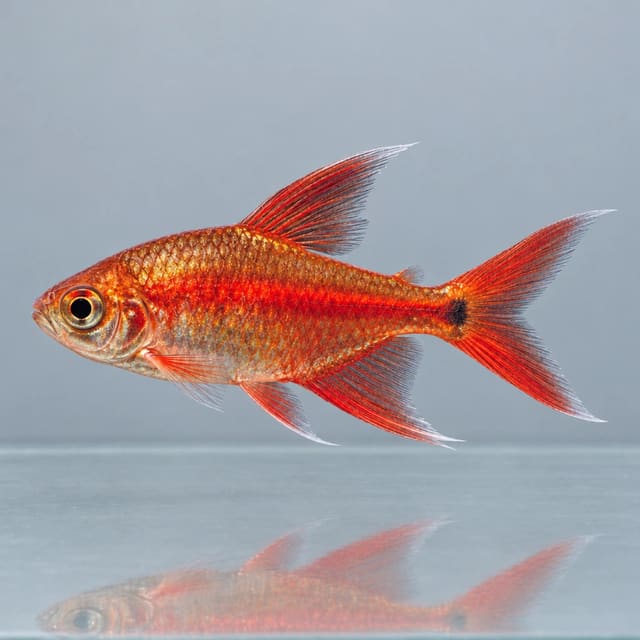
Distichodus Lefini (Distichodus sp. 'Lefini') is a tank-bred African characin named after the Léfini River in the Republic of the Congo, a red-finned, plant-eating fish that UK shops usually sell as a form of the Silver Distichodus, Distichodus affinis. Plan for an adult of about 20 cm, an aquarium of at least 120 × 30 × 30 cm, tough or no plants, and a diet rich in greens. Sold individually as one live fish.
Adult size is the maximum length this species reaches at full maturity (scientific sources). The livestock you receive will be younger and smaller. Product-photo provenance and any image-specific limitations are stated on the listing.
Distichodus sp. 'Lefini'
Save when buying multiple fish. Each quantity is one fish; sex and pair formation are not guaranteed unless the selected variant explicitly states them.
Distichodus Lefini (Distichodus sp. 'Lefini') is a tank-bred African characin named after the Léfini River in the Republic of the Congo, a red-finned, plant-eating fish that UK shops usually sell as a form of the Silver Distichodus, Distichodus affinis. Plan for an adult of about 20 cm, an aquarium of at least 120 × 30 × 30 cm, tough or no plants, and a diet rich in greens. Sold individually as one live fish.
Adult size is the maximum length this species reaches at full maturity (scientific sources). The livestock you receive will be younger and smaller. Product-photo provenance and any image-specific limitations are stated on the listing.
Read the full care guidance when planning conditions for your aquarium.
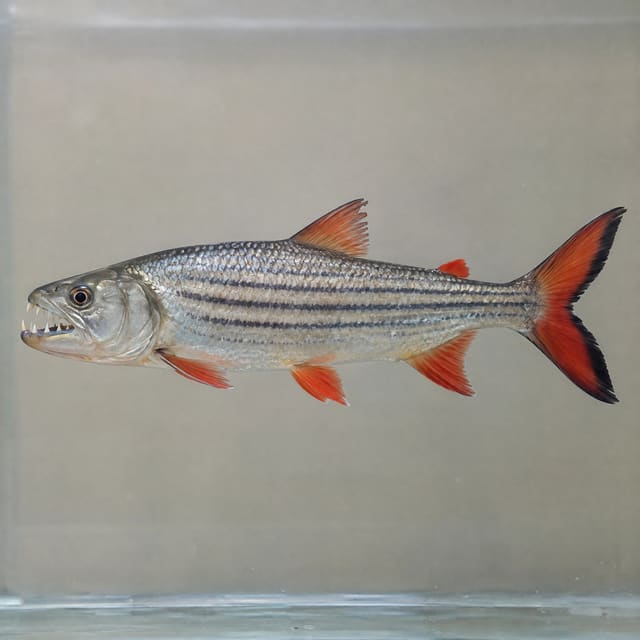
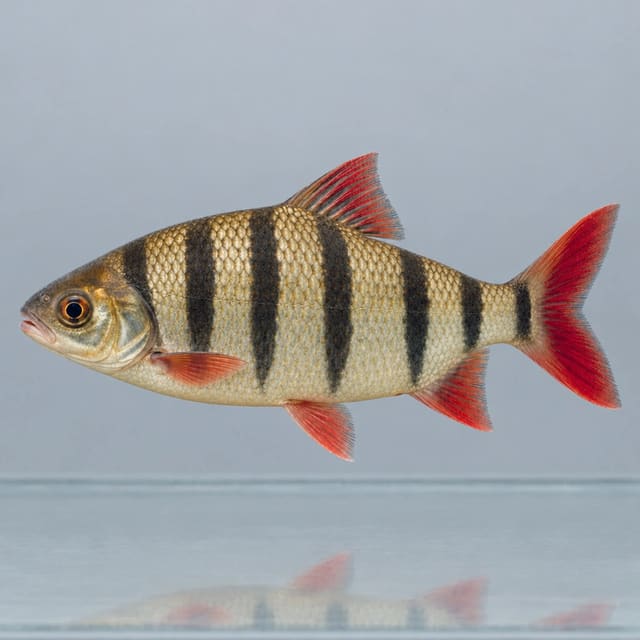
Distichodus Lefini (Distichodus sp. 'Lefini') is a tank-bred African characin with a silvery body and orange-red fins, sold in the UK under the name of the Léfini River, a tributary of the Congo in the Republic of the Congo. It is an active, mid-water fish that eats a lot of plant matter, grows well beyond the size it is sold at, and suits a large, robust aquarium rather than a planted community tank.
The "sp." in the name matters. It means the species behind the trade name has not been formally confirmed. Several UK shops list fish of this name as Distichodus affinis 'Lefini', which would make it a locality form of the Silver Distichodus. Seriously Fish notes that silver distichodus vary in colour, that some variants may represent different species, and that several members of the genus look alike. We therefore sell it under its trade name and base its care on D. affinis, the closest well-documented species, while telling you what to watch for as it grows.
Because it is tank bred, it was raised in captivity rather than collected from the river. Seriously Fish records that D. affinis is now produced commercially for the aquarium trade, and OATA, the UK ornamental fish trade association, notes that most tetras and characins sold today are captive bred.
| Fish | Adult size | Look | Where it lives |
|---|---|---|---|
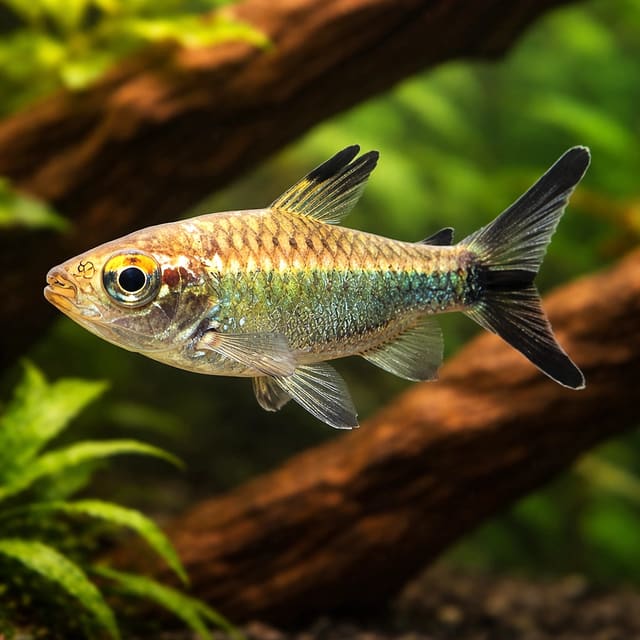
| Silver Distichodus, D. affinis | 20.0 cm total length (FishBase); 200 mm standard length (Seriously Fish) | Silvery body; fins turn bright red as it matures; some fish show a pink sheen underneath | Congo basin, from the lower Congo to the Lualaba (FishBase) |
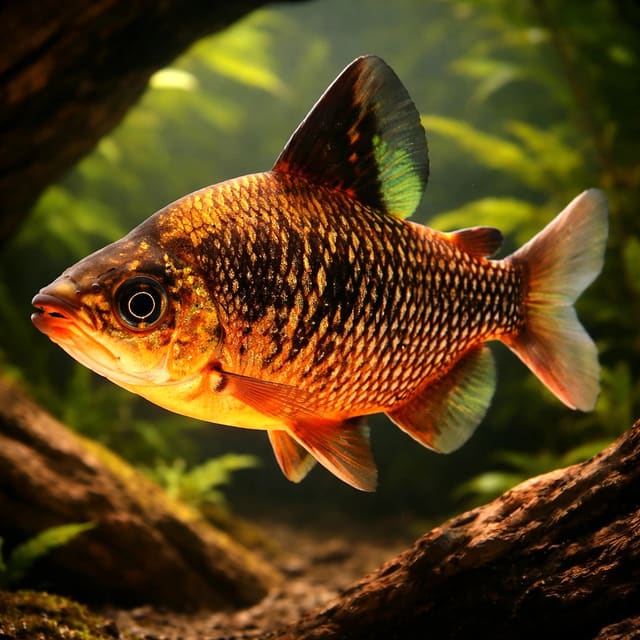
| Six-banded Distichodus, D. sexfasciatus | 76 cm standard length (FishBase) | Juveniles orange and black with six broad bands and red fins; colour fades with age (Seriously Fish) | Congo basin and Lake Tanganyika basin (FishBase) |
| D. teugelsi | 5.7 cm standard length (FishBase) | A small species with no series of spots on the flanks | Léfini and Alima basins and the middle Congo (FishBase) |
The table shows why the name alone is not enough: the Léfini basin is home to more than one Distichodus, and FishBase records the dwarf D. teugelsi there, a much smaller fish than the one sold under this name. See the Silver Distichodus page for the standard form, and browse our African tetras and characins and wider tetras and characins range.
One purchase quantity supplies one live, tank-bred Distichodus Lefini. The only option is "Standard": the fish is not graded into sizes, so it is sent at the size available on the day, which will be a young fish well below adult size. There are no known external differences between males and females, according to Seriously Fish, so sex cannot be chosen.
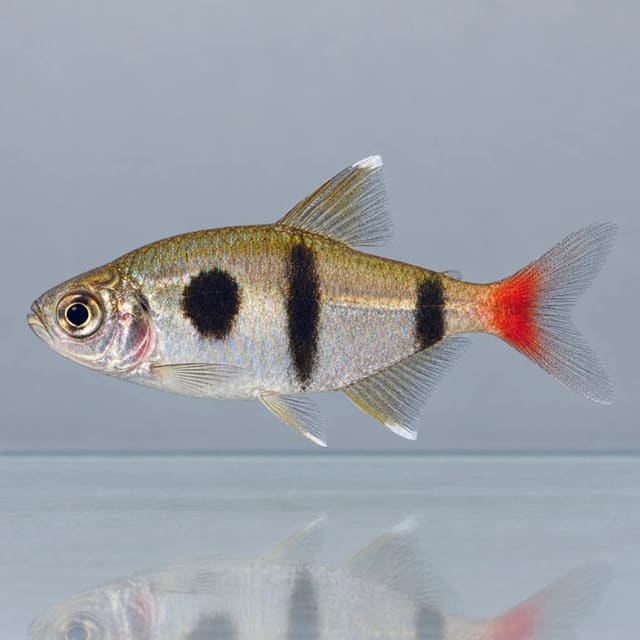
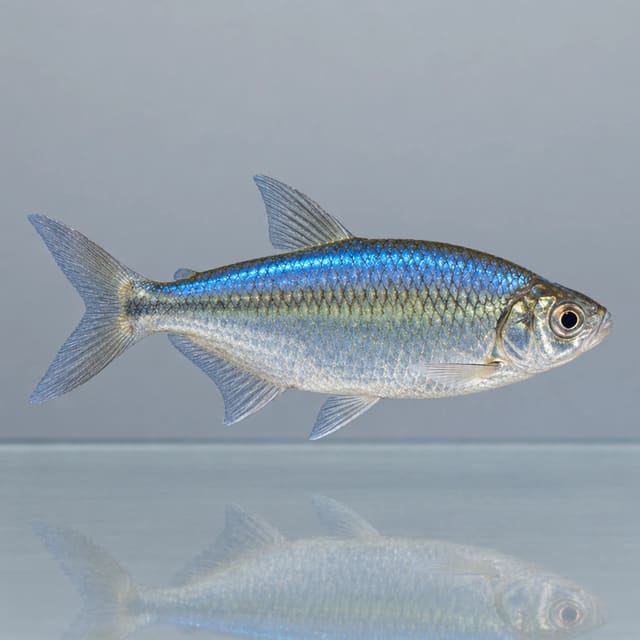
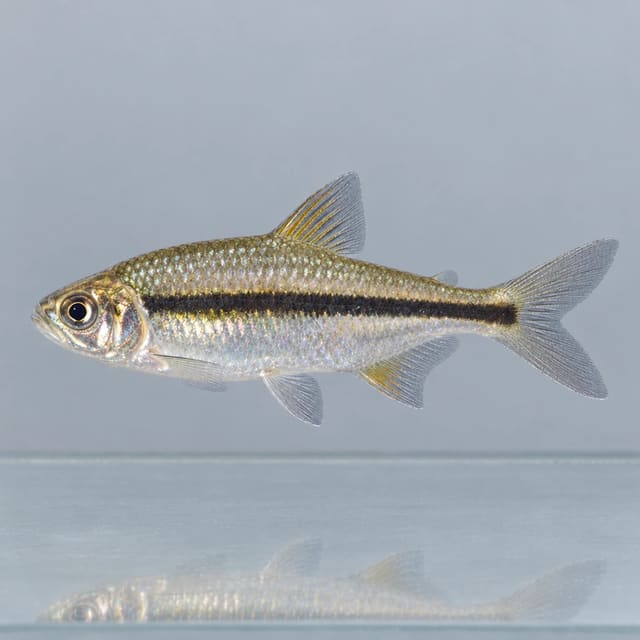
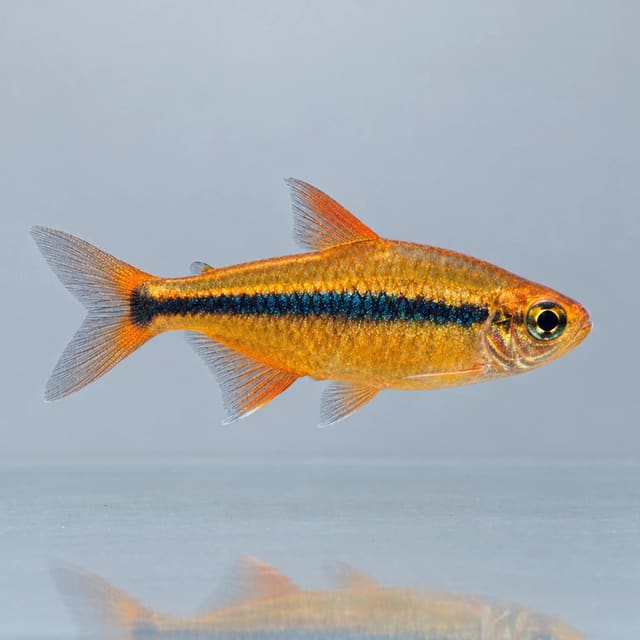
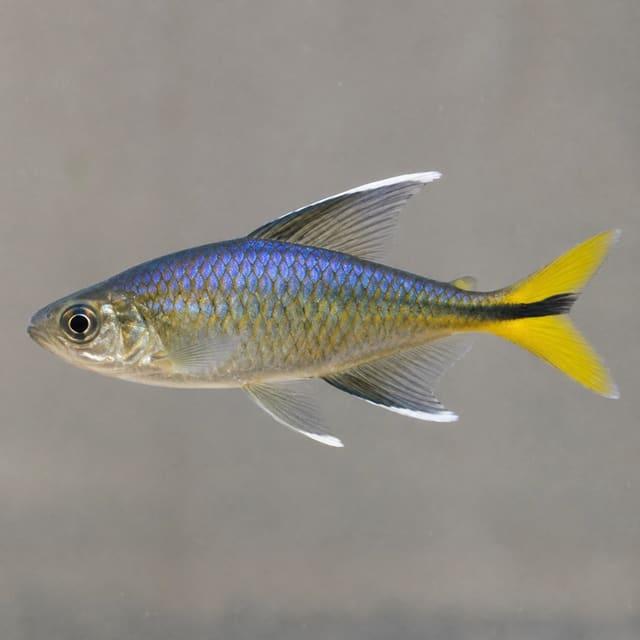
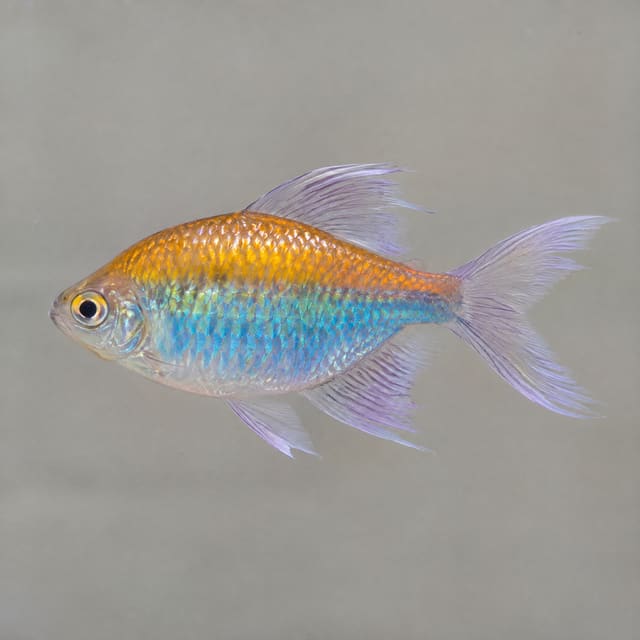
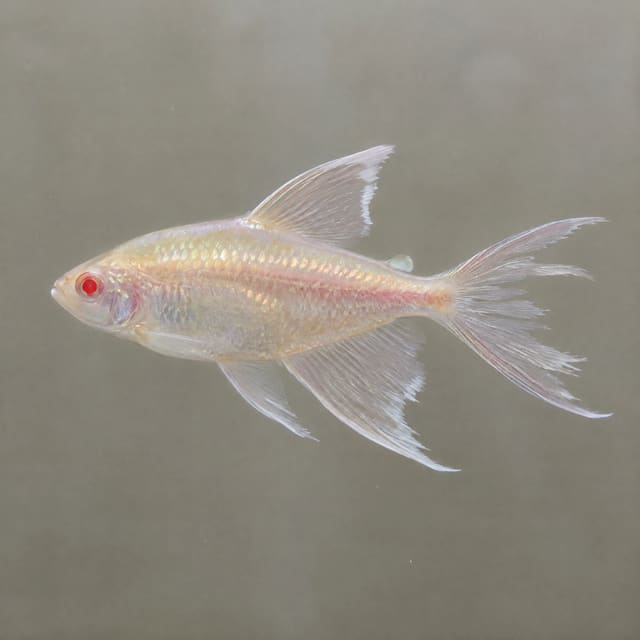
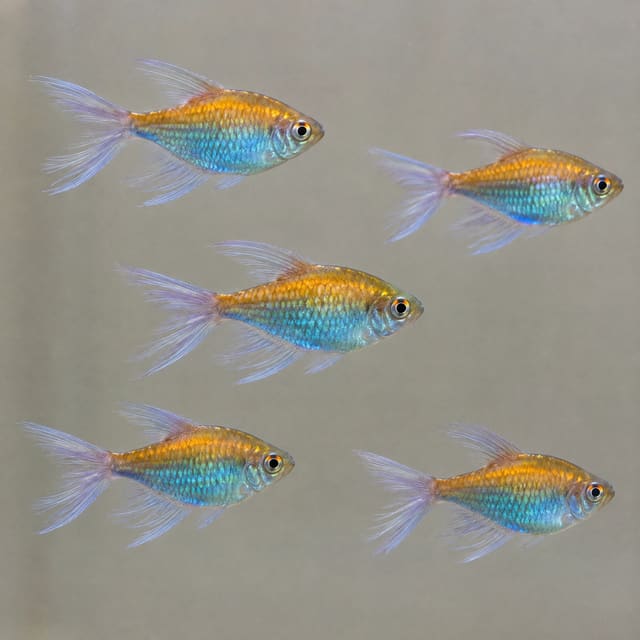
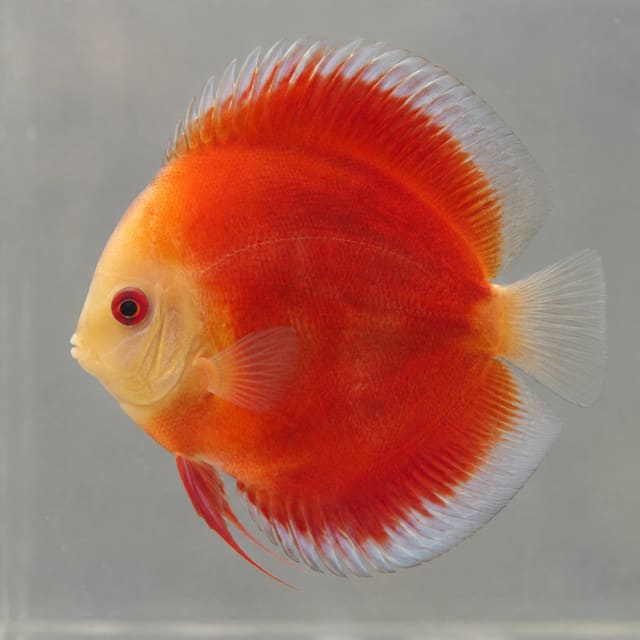
The photographs are representative of the type of fish, not the individual you will receive. Young distichodus change colour and pattern as they grow, and colour is paler for a few days after travel.
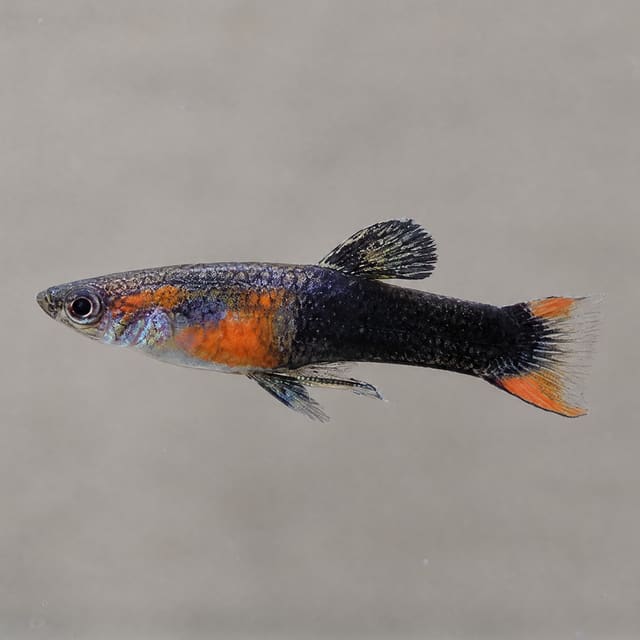
Expect the fins to become a stronger red with age, as Seriously Fish describes for D. affinis. If instead your fish develops six broad black bands across an orange body, please contact us: that is the juvenile pattern Seriously Fish describes for the Six-banded Distichodus, which grows several times larger and needs a far bigger aquarium.
For a fish of about 20 cm, Seriously Fish recommends a tank of at least 120 × 30 × 30 cm, about 108 litres, and describes the species as fairly active. That is a minimum for one fish. A group needs more room, and a tank 150 cm long or more gives a much better swimming lane for several adults. Our tank volume calculator converts any dimensions into litres.
| Planning point | Figure | Source |
|---|---|---|
| Adult size (planned on D. affinis) | About 20 cm | FishBase; Seriously Fish |
| Minimum aquarium | 120 × 30 × 30 cm, about 108 litres | Seriously Fish |
| Activity | Fairly active; open swimming space needed | Seriously Fish |
| Water movement | Some flow is appreciated | Seriously Fish |
| Lid | A secure lid is recommended | OATA |
Seriously Fish says that silver distichodus eat most greenery and are not a good choice for a planted aquarium. Build the layout from smooth rocks and driftwood over sand or gravel, with a long open area for swimming. If you want plants, Anubias and Bolbitis are the ones Seriously Fish suggests, because most fish leave them alone; tie them to wood or stone. Our tough aquarium plants include these epiphytes.
Seriously Fish gives a wide range for D. affinis, and OATA gives the range it recommends for captive-bred tetras and characins. Aim for the overlap and, above all, keep it steady.
| Value | Seriously Fish (D. affinis) | OATA (captive-bred tetras) | Our suggested target |
|---|---|---|---|
| Temperature | 23–27°C (FishBase agrees) | 22–27°C | 24–26°C |
| pH | 6.0–8.0 | 6.5–8.0 | 6.5–7.5 |
| General hardness | 5–20 dGH | 4–12 dGH | 5–12 dGH |
| Carbonate hardness | Not given | 3–10 dKH | 3–10 dKH |
| Ammonia and nitrite | Not given | Zero | Zero |
| Nitrate | Not given | No more than 20 mg per litre above tap water | As low as you can keep it |
Tap water hardness differs a great deal across the UK, so test yours before buying. Treat it with a dechlorinator, test pH and general hardness, and compare the results using our water matcher. This is a tolerant fish, and most dechlorinated tap water within the ranges above will suit it; if yours is far outside them, our water chemistry guide explains how to adjust it slowly.
A fish that grazes all day on plant food produces plenty of waste, so filtration needs to be generous for the adult size. The aquarium must be fully cycled, with ammonia and nitrite at zero, before the fish arrives; OATA warns that adding fish too quickly to an immature tank causes "new tank syndrome". Our aquarium filtration guide explains how to choose and maintain a filter.
Seriously Fish describes D. affinis as omnivorous but says it needs a good proportion of vegetable matter, and suggests bloodworm, Daphnia, frozen peas with the shells removed, Spirulina flake and blanched spinach. A diet with regular plant food also protects the décor, because a hungry plant-eater turns to anything green.
| Food | Role |
|---|---|
| Spirulina flakes | Daily plant-based staple |
| Frozen herbivore food | Vegetable-rich meals several times a week |
| Blanched spinach and peas with the skins removed | Fresh greens from Seriously Fish's list |
| Live bloodworm and live daphnia | Protein and variety, a few times a week |
OATA advises feeding once a day, only as much as the fish eat within a few minutes, because uneaten food breaks down and fouls the water. Watch the portion disappear and lift out what is left. A healthy fish looks well rounded but never swollen.
Read our delivery and live arrival information before ordering, and have the aquarium running, matured and tested before the fish arrives. Our guide on how to acclimatise new fish covers the method in detail; OATA's steps are below.
OATA advises monitoring the fish and the water closely during the first week. A new distichodus may stay near cover at first and colour up over a few days.
Seriously Fish describes D. affinis as not aggressive, but warns that its adult size must be considered when choosing tank mates and that it may nip slow-moving or long-finned fish. Unlike some larger relatives, it can be kept in a group. OATA's general advice is to keep fish with others of similar size and temperament, and to keep boisterous species away from timid or long-finned fish.
| Suits | Avoid |
|---|---|
| Its own kind, in a tank big enough for several adults | Slow-moving fish such as fancy angelfish or bettas |
| Fast, robust mid-water fish such as the Giant Danio | Long-finned fish of any kind |
| Other robust plant-eating characins such as the Silver Dollar, in a large tank | Small fish that could fit in an adult's mouth |
| Sturdy catfish such as the Featherfin Synodontis | Soft-leaved planted aquariums |
These suggestions are our own, based on size and temperament; check any combination with our tank mates checker and always plan for adult sizes.
OATA describes a healthy fish as having clear, bright eyes, undamaged fins, intact scales, no ulcers or lumps, normal swimming and steady breathing. Look each day for changes in:
If anything changes, test the water first, then contact us for advice. Most problems start with water quality, especially in a tank with heavy plant feeding.
Seriously Fish has no record of D. affinis breeding in home aquariums; in nature it spawns in large shoals in open water, and fish for the trade are produced commercially. OATA notes that characins are egg scatterers and that spawning in a community tank is unlikely. Breeding is not a realistic home project for a fish of this size.
It is a trade name for a tank-bred African distichodus. "Lefini" refers to the Léfini River, a tributary of the Congo in the Republic of the Congo, and "sp." means the species has not been formally confirmed. Several UK shops sell fish under this name as Distichodus affinis, the Silver Distichodus.
Possibly. If it is a form of Distichodus affinis, it is the same species with a locality name. Seriously Fish notes that silver distichodus vary in colour and that some variants may be different species, so we sell it under its trade name and plan its care around D. affinis.
Plan for about 20 cm. FishBase gives Distichodus affinis a maximum of 20.0 cm total length and Seriously Fish 200 mm standard length. If your fish develops six broad black bands as it grows, contact us, because that pattern belongs to a much larger species.
For a fish of about 20 cm, Seriously Fish recommends at least 120 × 30 × 30 cm, about 108 litres. A longer, wider tank suits a group and keeps the water steadier.
Yes, most of them. Seriously Fish says distichodus of this type eat most greenery. Anubias and Bolbitis are the plants most often left alone.
Yes. Seriously Fish says that, unlike some other Distichodus, the silver distichodus can be kept in a group, provided the tank is large enough for several adults.
A mixed diet with plenty of plant matter: spirulina flakes or granules, frozen herbivore food, shelled peas and blanched spinach, plus bloodworm and daphnia. Feed once a day, only what it eats within a few minutes.
The fish was raised in captivity rather than collected from the river. Seriously Fish records that Distichodus affinis is now produced commercially for the aquarium trade, and OATA notes that most tetras sold today are captive bred.
No reviews for this item yet. Bought one? Honest reviews only, good or bad.
What customers say about ordering from us
Easy website plenty of info on fish your buying great to pick a time slot
TRACEY DURRANT · 7 Oct 2026
Got some lovely fish thank you
Kevin Mackie · 7 Oct 2026
Reviews of our shop, collected by Judge.me, an independent third-party review collector. Newest first.
Moved by UK carriers licensed to handle live animals
Hand-packed with oxygen bags, poly box, heat pack
Email photos the same day; an optional unboxing video helps us review problems faster — claim terms apply
Klarna & PayPal Pay in 3 at checkout