Yellow-Tailed African Tetra (Alestopetersius caudalis)
22–26°C · pH 6.5–7.5 · 108L
£8.99
African Tigerfish (Hydrocynus vittatus) is a large African fish-eating predator requiring exceptional permanent accommodation. One live fish is supplied in the selected 8–12 cm or 13–18 cm size; ordinary home aquariums are unsuitable.
Hydrocynus vittatus
African Tigerfish (Hydrocynus vittatus) is a large African fish-eating predator requiring exceptional permanent accommodation. One live fish is supplied in the selected 8–12 cm or 13–18 cm size; ordinary home aquariums are unsuitable.
Maintain these water conditions for optimal health and vibrant colors
African Tigerfish (Hydrocynus vittatus) is a powerful, fish-eating African tetra whose adult requirements put it beyond an ordinary home aquarium. Its streamlined body, conspicuous teeth and rapid movement are fascinating, but the purchase decision starts with suitable lifelong accommodation. A small individual is the beginning of a very large predator, and an impressive display aquarium does not automatically provide the space it will need.
One purchase supplies one live fish in your selected size: 8–12 cm or 13–18 cm. The size you select is the size supplied, not the adult size. These are two configured size choices for the same species. Choose only after checking that the receiving system, feeding arrangements and future accommodation are suitable for the animal you will be bringing home.
Sex is guaranteed only when the selected option explicitly states male or female. This African Tigerfish listing has no sex-guaranteed option.
The central welfare issue is unusually clear. The species profile at Seriously Fish discusses an aquarium measuring 300 × 90 × 90 cm, approximately 2,430 litres, and explicitly says that even this is too small for an adult. Treat that example as a warning about scale, not a recommended adult minimum. If your plan depends on an ordinary aquarium upgrade later, this is not an appropriate purchase.
This species belongs to Alestidae, the African tetra family. Family membership does not make it comparable in husbandry to the small shoaling tetras commonly chosen for planted community tanks. Its natural setting includes large African rivers and lakes with warm, well-oxygenated water. Its muscular shape and substantial jaws suit an active predatory life in that environment.
FishBase describes roving groups of similarly sized fish, with the largest animals behaving differently from those smaller groups. In captivity, the specialist guidance is to house it alone or, only in exceptional accommodation, with similarly sized members of its own species. That distinction matters: a wild shoal is not an instruction to buy a standard small group for a domestic aquarium.
Its teeth can damage fish that it cannot swallow whole. Assessing tankmates only by mouth size therefore misses a major risk. A juvenile living temporarily with bigger animals is also a poor guide to what will happen after growth. The compatibility section explains why a mixed predator display should not be assumed suitable.
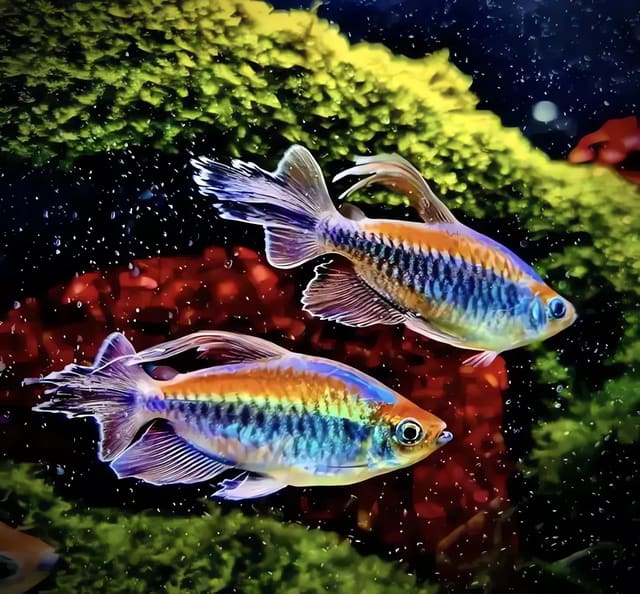
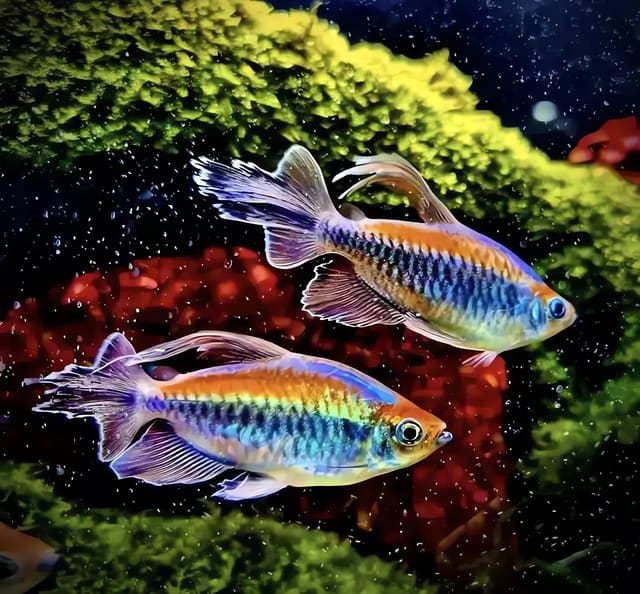
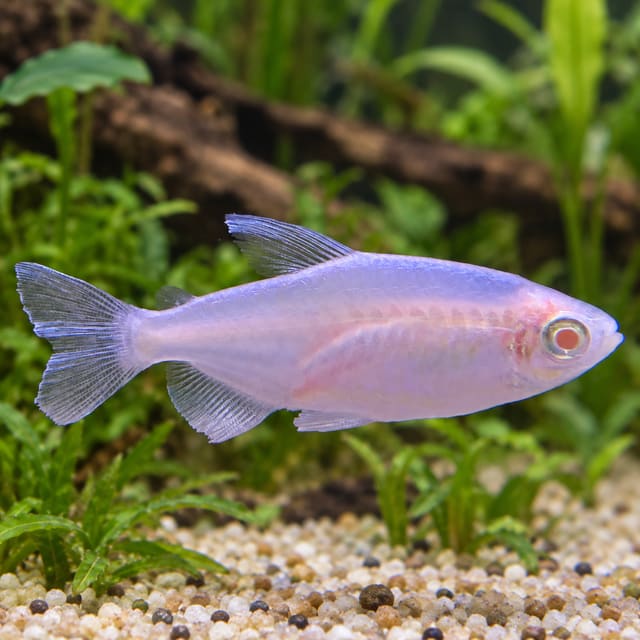
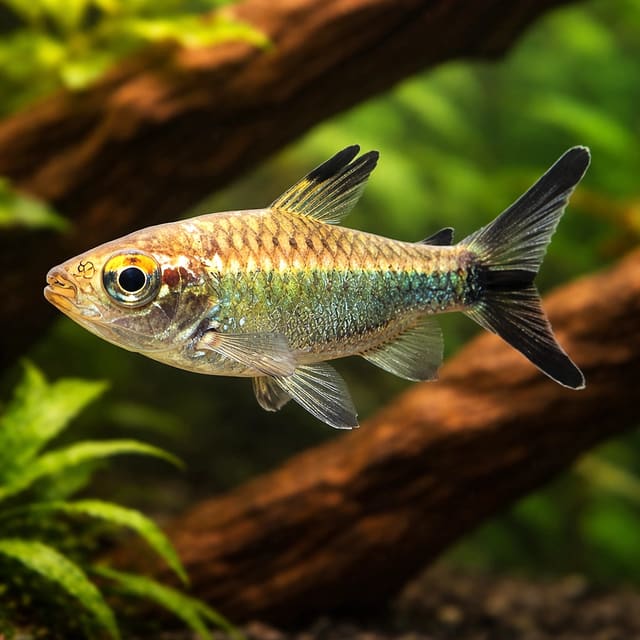
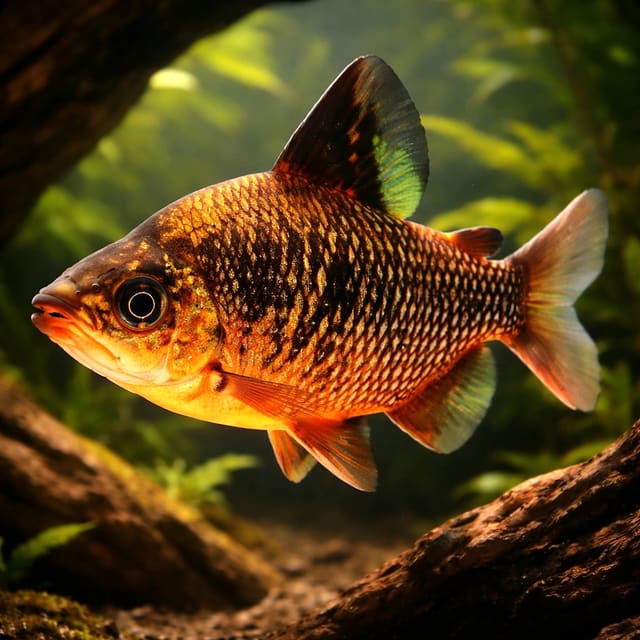
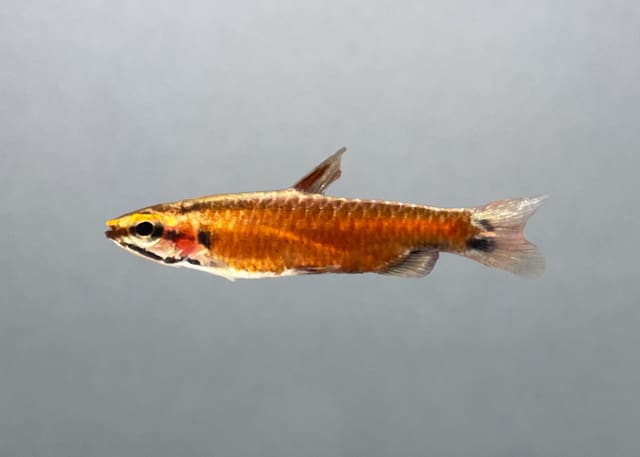
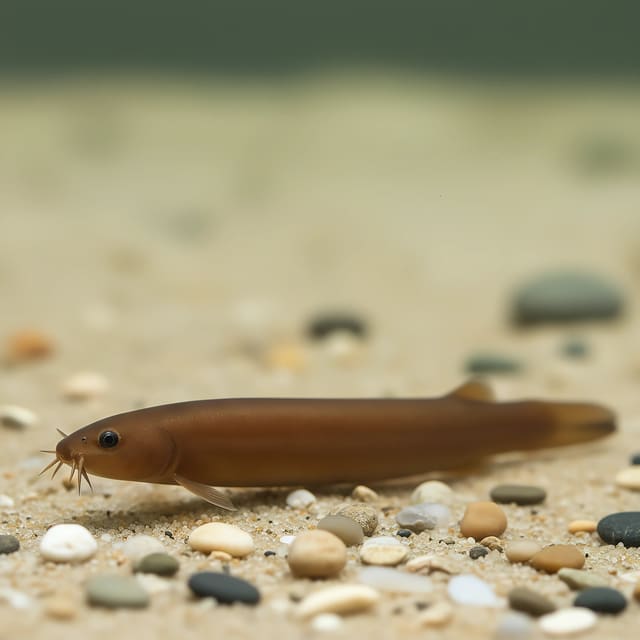
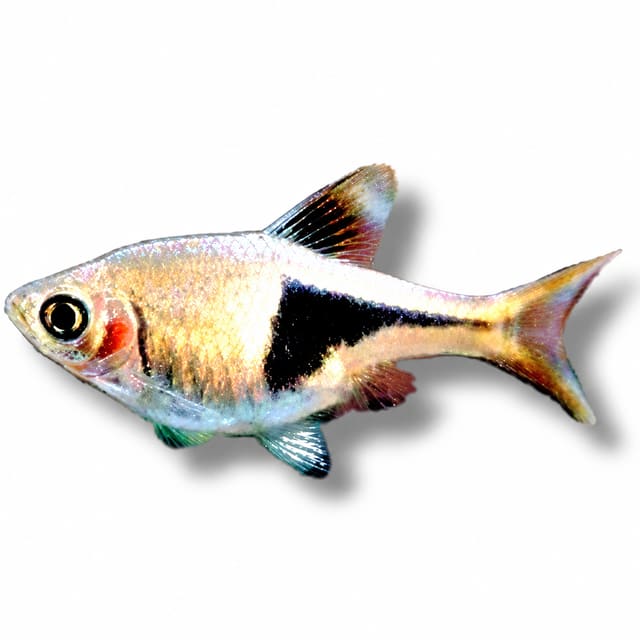
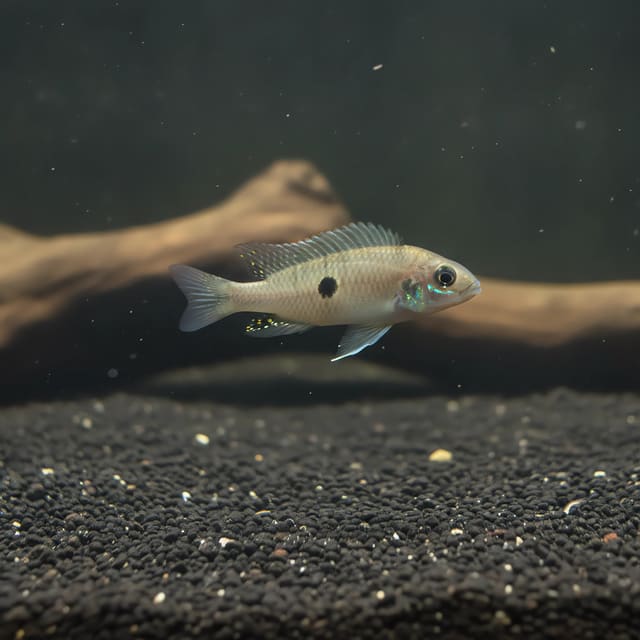
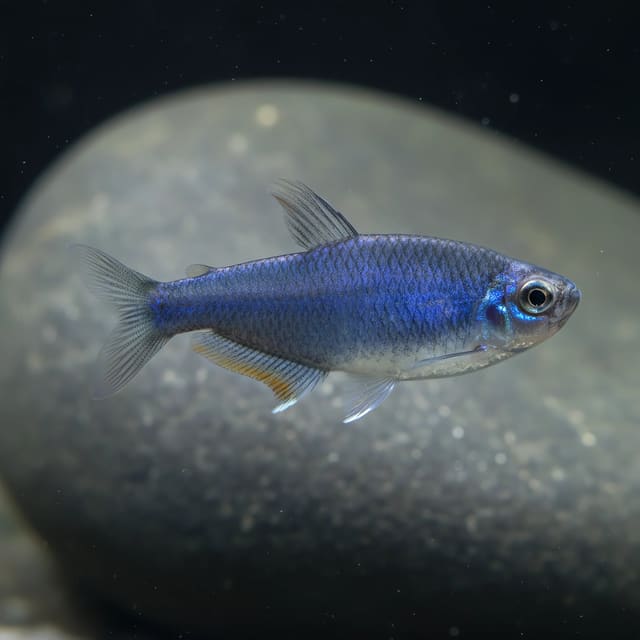
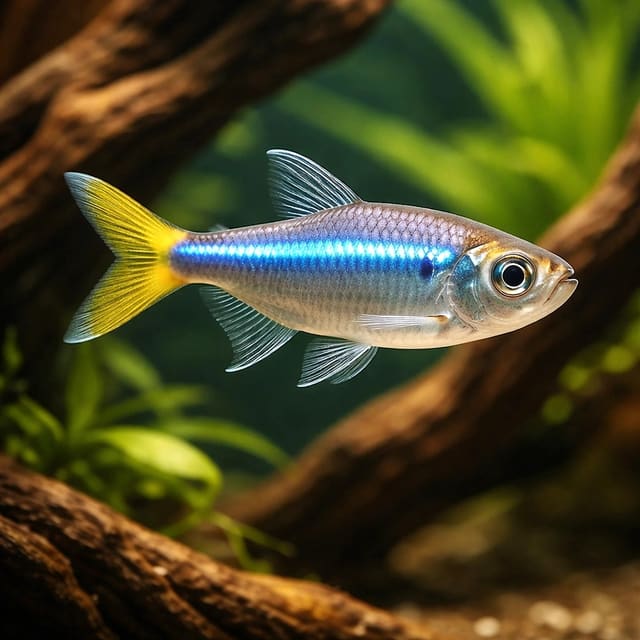
The gallery shows the silver body, dark horizontal striping and prominent teeth associated with the listed animal. The gallery images are representative of this type of animal rather than photographs of the exact animal supplied, so colours can look slightly different from the live animal. A photograph does not provide a scale for either dispatch size or adult housing.
For someone attracted to African tetras but choosing an aquarium for a home, comparing the separate Congo Tetra listing can help frame a different stocking project. Read its own requirements before deciding; it is an alternative to research, never a suggested companion for tigerfish. The wider tetra collection also spans animals with very different adult needs.
A suitable keeper needs more than experience with feeding carnivorous fish. The system must accommodate movement and turning, maintain oxygen and water quality after meals, and allow safe routine work as the fish grows. There must also be a practical response to equipment failure and a realistic long-term home already arranged. These are questions to settle before an order, not problems to solve once the animal has arrived.
Choose another species until that provision is in place. Appreciating the tigerfish does not require keeping one. For an appropriately equipped specialist, the care notes below concentrate on the important decisions: interpreting size records, preserving usable space, feeding without assuming live prey is compulsory, and keeping predation risk separate from water-parameter compatibility.
FishBase records a maximum of 105 cm FL for male/unsexed Hydrocynus vittatus. FL means fork length: the measurement reaches the fork of the tail. It is not total length to the longest tail tip. Seriously Fish gives 1,050 mm SL, equivalent to 105 cm standard length; standard length excludes the tail fin. The two sources therefore attach different measurement conventions to the same numerical length.
Those records should not be blended into an unqualified maximum, nor converted into a guessed whole-fish length. Both communicate an exceptionally large animal. Neither predicts the precise adult length of an individual purchase or supplies a timetable for its growth. For practical planning, retain the large-animal warning and commission appropriate accommodation with specialist advice.
A tank that restricts growth is not a solution to adult size. When considering a future home, ask how the grown fish will move through the water, turn without striking obstacles, and be fed and maintained safely. A quoted capacity alone cannot answer those questions. An installation can hold a large volume while providing an unsuitable footprint or obstructed swimming route.
The 300 × 90 × 90 cm example amounts to 2,430 litres by multiplying the dimensions and dividing cubic centimetres by 1,000. This is a geometric volume before allowance for the actual waterline, substrate and equipment. More importantly, the source rejects even that example for an adult. There is no responsible basis here for presenting either 1,500 litres or 2,430 litres as a sufficient permanent aquarium.
The specialist maintenance guidance favours an open layout, with little decoration beyond a possible sandy base. This follows from the speed and power of the fish. A crowded arrangement of wood, stone and narrow passages reduces useful swimming space and introduces hard surfaces close to the animal during a rapid movement.
Plan the position of equipment and access points as part of the habitat. An open central area is of limited value if the fish repeatedly has to negotiate protruding fittings at either end. Keep the route for routine cleaning and feeding practical, so that maintenance does not depend on moving major decorations around the animal.
Choose any substrate for its role in the working system, not to reproduce the gallery. A photograph can show an attractive setting without demonstrating a safe permanent design for a grown tigerfish. If sand is used, make sure accumulated waste can be located and removed. An elaborate aquascape offers little benefit if it makes the basic duties of observing, feeding and cleaning more difficult.
Discuss containment and safe access with the person designing the installation. With a large, fast predator, opening the aquarium and moving tools around it deserve a deliberate plan. Arrange equipment before working, keep observers clear of the immediate work area, and avoid improvised hand-feeding. These are practical precautions arising from the animal's strength and teeth.
| Factor | Species-profile guidance |
|---|---|
| Temperature | 24–28°C |
| pH | 6.5–8.0 |
| General hardness | 5–25 dGH |
| Oxygen and cleanliness | High water quality and well-oxygenated water |
These temperature, pH and hardness figures are the aquarium guidance given by Seriously Fish for this species. They should be considered together with the much more restrictive space and behavioural requirements. Having tap water within those ranges does not make a tank suitable for the animal.
Use measured aquarium values to plan preparation. General hardness describes dissolved calcium and magnesium and is commonly reported in degrees of general hardness, written dGH. pH describes acidity or alkalinity. These are different properties; a pH reading cannot tell you the hardness. The water chemistry guide explains the tests in a wider aquarium context.
Choose stable conditions within the supported guidance rather than repeatedly changing water to approach an arbitrary midpoint. Before a water change, understand how the replacement supply differs from the aquarium. If you need to modify the supply, establish a repeatable preparation method and obtain advice before bringing the fish into the system.
The water matcher can help organise a comparison of measured values with stated guidance. Use it as one planning aid. It cannot assess swimming room, feeding response, engineering, oxygen delivery or the risk posed to another animal, all of which are central to this species.
A working biological filter is essential. Fish produce ammonia, and beneficial bacteria in a mature filter process ammonia to nitrite and then nitrate. Ammonia and nitrite must not be allowed to accumulate. Clear water alone is not proof that those processes are working: dissolved waste can be present when the aquarium looks clean.
Establish and verify the biological filter before adding the fish. The aquarium preparation guide introduces maturation and basic testing, although tigerfish accommodation requires much more specialised planning than a first aquarium. Follow the nitrogen-cycle principles while seeking an installation designed for this animal's exceptional scale.
Mechanical filtration and biological filtration perform different jobs. Capturing food fragments does not make their waste disappear; material left in a filter continues breaking down. Include inspection and removal of trapped solids in the maintenance plan. Equally, cleaning should preserve the biological media rather than treating the filter as something to sterilise at every service.
Keep a written record of feeding, test results and cleaning. If waste readings change, that record helps distinguish increased feeding from reduced filtration performance or a missed maintenance task. Use actual results to assess the system; the nominal capacity printed on a filter is not a substitute for evidence that the whole installation is handling its load.
Warm, well-oxygenated water is a recurring feature of the species guidance. Plan effective water movement and gas exchange throughout the occupied system, including after feeding and when equipment begins to collect debris. A pump visibly moving water does not by itself prove that all parts of the installation are functioning as intended.
Inspect intakes, outlets and any aeration equipment during routine checks. Reduced output may be the first indication that material has collected where it should be removed. Access matters here: equipment that is difficult to reach is easier to neglect, particularly on a very large installation. Choose a design that can be serviced reliably without unnecessary disturbance.
Have a practical equipment-failure response agreed in advance. Know which components maintain circulation and oxygen provision, how a fault will be recognised, and whom to contact for help with the system. A very large volume may make some changes slower, but it does not eliminate dependence on working equipment.
The natural diet becomes strongly fish-based as tigerfish grow. FishBase describes a shift towards exclusive fish feeding above roughly 90–100 mm in its biology account. That is an observation about feeding ecology, not a formula for a captive meal size or a promise that a particular individual will accept every prepared food.
Live fish are not compulsory. The specialist aquarium account reports successful acceptance of whitebait and other dead foods. Ask what the individual is currently eating and prepare a suitable continuation before arrival. Changing home and changing diet at the same moment can make it harder to tell whether food refusal reflects the new environment or an unfamiliar food.
Observe a feeding attempt closely enough to know what was swallowed and what was dropped. A forceful strike is not the same as a completed meal. Remove uneaten items rather than leaving them behind rocks or in the filter intake, where decomposition adds to the waste load. Practical access to feeding remains is one reason to favour the open layout.
Food should suit the animal's actual size and established feeding response. Do not assume a broad list of predator foods guarantees acceptance or a balanced long-term diet. Discuss diet composition and any transition with a specialist who knows the stock, including how to maintain nutrition when using whole fish or other dead foods.
Use an individual feeding plan suited to the fish and its established diet. Agree an appropriate routine for the individual and assess body condition, appetite and water results together. Increasing the amount offered because a fish strikes enthusiastically is not a useful feeding plan; the system must cope with what is actually eaten and the waste it subsequently produces.
Keep feeding tools and maintenance procedures appropriate to a predator with exposed teeth. Place food without putting fingers close to the mouth, and prepare the task before opening access to the aquarium. If you need advice about a fish that refuses its familiar food, describe recent meals, behaviour and water tests rather than simply adding more alternatives to the tank.
Observe the animal before interrupting it. Look at normal movement, breathing, body condition and appetite, and learn what is usual in this particular system. An unexpected change is more informative when you have a clear baseline. A brief daily observation also helps identify a damaged fitting, reduced outlet flow or food that escaped the previous clean-up.
Test water regularly and increase attention after a change in feeding, stocking or equipment. General aquarium welfare guidance emphasises ammonia and nitrite testing because these compounds are harmful even though they cannot be assessed by looking into the water. Keep results with dates so a trend is visible before it becomes a large departure from the usual readings.
Plan partial water changes around water quality and the needs of the installation. Prepare replacement water with an appropriate conditioner for chlorine or chloramine where present, and avoid abrupt differences in temperature or chemistry. The general maintenance principle is to remove accumulated waste while retaining a stable functioning environment.
When biological media needs cleaning, rinse it gently in removed aquarium water rather than under the tap. Check the equipment manufacturer's service instructions as well as the animal's needs. Service tasks should preserve filtration performance, not reset the system's biology. If several components need attention, think through the effect of taking them out of service together.
Ask for specialist help promptly if breathing, swimming, appetite or body condition changes. Provide the measured temperature and water results, recent maintenance and a description of the change. Avoid choosing a treatment solely from an appearance or a short online comparison; determining the cause comes before medication.
Complete the receiving system and confirm its water quality before arranging delivery. Have the current feeding information, safe transfer equipment and a clear route to the aquarium ready. For an animal of this kind, the receiving and maintenance plan should already have been discussed with the seller and, where needed, an experienced specialist.
Read the current delivery and Live Arrival Guarantee policy before ordering. The store describes hand packing in oxygen-filled bags, an insulated box and a licensed live-animal courier, with the confirmed delivery date and tracking sent by email. Someone must be present to receive the parcel; plan your availability around that confirmation.
Open and inspect the parcel the day it arrives. For a Live Arrival Guarantee claim, record one continuous unboxing video beginning with the sealed parcel and showing the animal still inside its sealed bag, and contact the store the same day with the order number. This video is evidence for a claim. It does not replace appropriate acclimatisation or urgent attention to the animal's condition.
Follow the acclimatisation advice on the store's delivery page and ask the store before improvising if transport conditions concern you. Keep transport water out of the established aquarium when transferring the animal. After introduction, monitor water quality and feeding carefully, allowing the fish to settle into a stable, prepared environment.
Make the everyday responsibilities clear to anyone who will care for the aquarium while you are away. Leave the established food, feeding tools and written instructions together, with a record of normal water readings and the contact details for help. Demonstrate the safe access procedure before handing over responsibility. A substitute keeper should understand which changes require a call and which routine tasks they can complete confidently.
Review that plan as the animal grows. Access that worked with a small fish may become awkward later, and familiar feeding tools may need reassessment. Keep the practical arrangements in step with the animal rather than waiting for a difficult maintenance session to reveal a problem.
The clearest aquarium recommendation is solitary housing or exceptionally spacious accommodation with similarly sized tigerfish. That is a restrictive recommendation, not a list of easy tankmates. A species-only plan avoids exposing unrelated animals to a predator, but keeping several tigerfish still requires careful assessment of space, size and behaviour.
There is no supported fixed group number to recommend here. FishBase's description of similarly sized roving schools concerns wild behaviour in large waters. Copying a general tetra recommendation of five or six fish would ignore both the scale of this species and the limits of the aquarium guidance. A single purchase should not trigger an automatic decision to add a group.
Seriously Fish notes reports of young tigerfish living with larger loricariid catfish or cichlids, while warning against treating those reports as general compatibility advice. The balance changes as the tigerfish grows. An arrangement that appears quiet for a time can still be unsuitable for permanent keeping.
Anything smaller than the tigerfish can be badly injured, including animals too large to swallow in one piece. This is why the usual shorthand of choosing fish too big for the mouth is inadequate. Teeth and powerful bites create a risk of injury as well as complete predation. A robust body shape or defensive armour offers no reliable protection against a bite.
Do not add small fish to provide movement, reassurance or a feeding opportunity. Similarly, a fish chosen to clean the bottom or glass becomes another animal whose welfare must be protected. Routine cleaning belongs to the keeper and the filtration system; it is not a reason to introduce a vulnerable companion.
Two animals can share an acceptable temperature or pH while remaining fundamentally incompatible. For tigerfish, adult space, predation and safe feeding take priority over finding another species within the water range. Assessing water alone can make a dangerous combination seem reassuringly precise.
If several same-species fish are being considered for a specialist installation, evaluate each individual's size and access to food, not simply the total number. Watch for exclusion from space or meals and have a workable response to injury or persistent conflict. The ability to intervene safely must exist before the animals share an enclosure.
Keep comparative shopping separate from stocking a shared tank. An African tetra encountered in a collection or a related-product field may help you choose a different aquarium project. Its appearance alongside this listing never indicates that it can safely live with a tigerfish. Read the animal's own page and design a suitable independent setup for it.
FishBase records 105 cm fork length for male/unsexed fish, while Seriously Fish lists 105 cm standard length. Fork length reaches the tail fork; standard length excludes the tail fin. These differently measured records must not be treated as one unqualified total length. Both describe an exceptionally large animal.
Seriously Fish says that even a 300 × 90 × 90 cm aquarium, approximately 2,430 litres, is too small for an adult. That example is a warning, not an adult minimum. Permanent accommodation needs specialist planning beyond an ordinary home aquarium.
The species guidance favours keeping one alone, or similarly sized members of its own species only in exceptional accommodation. Plan solitary housing unless a specialist has assessed a same-size group and its permanent accommodation. Wild schooling behaviour does not justify a normal small tetra shoal in a home tank.
Its enormous space requirements, powerful feeding behaviour and demanding maintenance make it unsuitable as a beginner purchase. Even an experienced fishkeeper needs an appropriate permanent installation and safe working arrangements before considering one.
It is a fish-eating predator. The specialist aquarium account reports that it can accept whitebait and other dead foods, so live fish are not compulsory. Confirm the individual's established diet and agree a suitable feeding routine before arrival.
The species aquarium profile gives 24–28°C, pH 6.5–8.0 and general hardness of 5–25 dGH, alongside high water quality and good oxygenation. Stable readings must accompany exceptional space provision.
Reports mainly concern juveniles living with larger fish; the risk changes as those juveniles grow. The species profile recommends solitary housing or similarly sized tigerfish in exceptional accommodation. Smaller animals can be seriously injured even when they cannot be swallowed whole.
Tropical Fish Co describes oxygen-filled bags, insulated packing and a licensed live-animal courier. Be present on the confirmed delivery day and inspect the parcel that day. For a Live Arrival Guarantee claim, provide a continuous sealed-parcel unboxing video showing the animal in its sealed bag, and contact the store the same day with your order number.
FishBase: Hydrocynus vittatus describes the species, its natural environment and recorded fork length. The Seriously Fish profile linked in the care section addresses aquarium husbandry and its substantial welfare limitations.
RSPCA aquarium environment guidance explains the general importance of functioning filtration. These references help with different questions: a natural-history size record, aquarium suitability and the underlying care of a filtered aquatic system.
No reviews for this item yet. Bought one? Honest reviews only, good or bad.
What customers say about ordering from us
Easy website plenty of info on fish your buying great to pick a time slot
TRACEY DURRANT · 7 Oct 2026
Got some lovely fish thank you
Kevin Mackie · 7 Oct 2026
Reviews of our shop, collected by Judge.me, an independent third-party review collector. Newest first.