Moderate
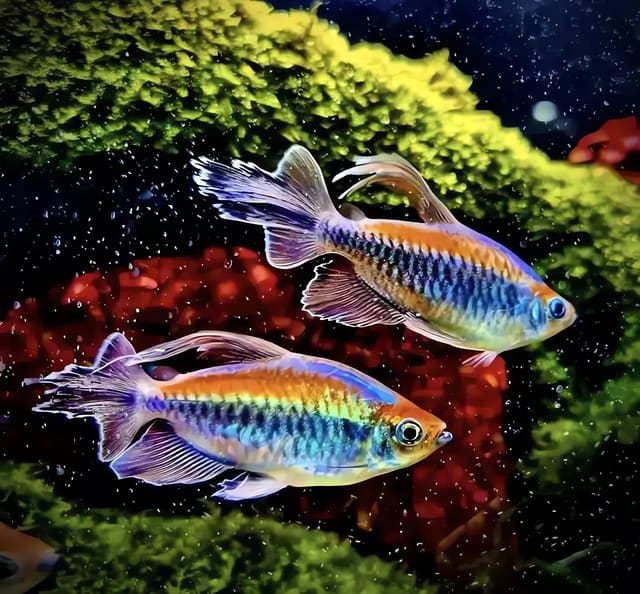
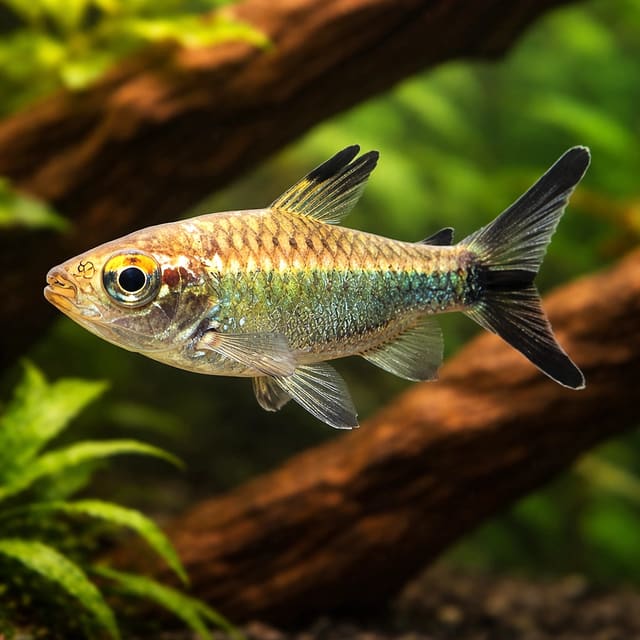
Arnoldichthys spilopterus
23–28°C · pH 6–7.5 · 75L
£27.99

A Congo Basin African characin for larger mature aquariums, with a silver-bronze body, active midwater movement and a plant-heavy omnivorous diet.
Adult size is the maximum length this species reaches at full maturity (scientific sources). The livestock you receive will be younger and smaller — pick a size above for the actual shipping size. Product-photo provenance and any image-specific limitations are stated on the listing.
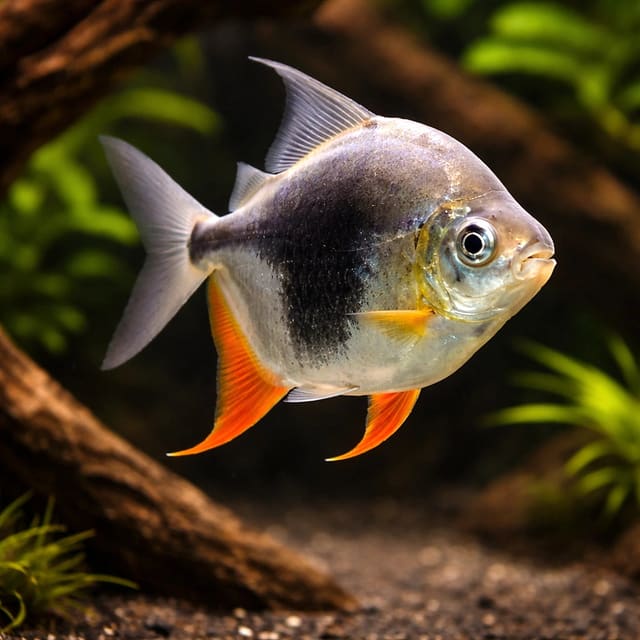
Distichodus affinis
Save when buying multiple fish. Each quantity is one fish; sex and pair formation are not guaranteed unless the selected variant explicitly states them.
Confirm your email, then we’ll send an availability message for this exact item if it returns within 180 days.
This request is only for this product—no newsletter or other promotions. A mail-provider retry may very rarely duplicate the same availability message. Unconfirmed addresses are removed after 48 hours. See our privacy policy.
A Congo Basin African characin for larger mature aquariums, with a silver-bronze body, active midwater movement and a plant-heavy omnivorous diet.
Adult size is the maximum length this species reaches at full maturity (scientific sources). The livestock you receive will be younger and smaller — pick a size above for the actual shipping size. Product-photo provenance and any image-specific limitations are stated on the listing.
Maintain these water conditions for optimal health and vibrant colors
Silver Distichodus (Distichodus affinis) is a Congo Basin African characin from the family Distichodontidae. It is often grouped with African tetras in the aquarium trade because it belongs to the broader characin order, but it should not be treated like a small community tetra. This is a specialist fish for a larger, mature aquarium with robust tank mates, open swimming room, strong filtration and a diet that leans heavily towards vegetable matter.
The size options on this product are juvenile trade sizes, not the final size of the species. FishBase records Distichodus affinis to 20 cm total length, while Practical Fishkeeping notes that aquarium specimens over about 15 cm are already large. Aquarium Glaser also reports smaller mature males and larger females in trade shipments, so the sensible care advice is to plan for an active 15-20 cm fish even when the fish arrives much smaller.
For the right keeper, the appeal is very real. Silver Distichodus has a strong, deep-bodied profile, large reflective scales, alert eyes and red to orange warmth in the fins and face, especially in settled males. It works best as a purposeful feature fish in an African river-style aquarium, not as a delicate nano-fish or a plant-safe centrepiece.
FishBase places Distichodus affinis in freshwater, pelagic Congo Basin habitats, from the lower Congo to the Lualaba, with records across Cameroon, the Central African Republic, the Democratic Republic of the Congo and the Republic of Congo. That Central African origin is important: this page should sit with African tetra and African characin-style livestock, not the old, incorrect regional wording.
In nature, Silver Distichodus is associated with warm tropical freshwater, current and open swimming water. It is a midwater fish with the body shape of an active river swimmer. In aquaria it appreciates a mature system with clean, oxygen-rich water, a steady flow pattern, and enough length to move without constantly meeting the glass.
It can look different from the name suggests. Young or unsettled fish may show a bronze, copper or reddish cast rather than plain silver, and males can show especially attractive red fins. That colour variation is normal for the species and one reason it makes a distinctive display fish once settled.
Use the supplied size as a buying size, not as a housing promise. A small juvenile may arrive at 3-5 cm, but the aquarium should be planned around adult behaviour. A 300 litre aquarium is a sensible minimum for long-term care, and a longer tank is better than a tall narrow one. Good filtration, high oxygen, stable temperature and regular maintenance matter more than decorative complexity.
Decor can be simple and practical: river stones, smooth rocks, driftwood, open swimming space and a secure lid. Keep the centre of the tank open, with cover at the edges so the fish has structure without losing swimming room. A darker substrate can make the reflective scales and warm fin colour stand out, but avoid sharp decor that could damage an active fish.
Most soft aquarium plants are at risk. Practical Fishkeeping specifically warns that many aquatic plants are likely to be nibbled, and Fishipedia gives similar plant-compatibility guidance. If you want greenery, choose tough plants such as Anubias, Bolbitis or Java fern attached to wood or rock, and treat them as decorative cover rather than guaranteed untouched aquascaping.
Silver Distichodus is best fed as a plant-heavy omnivore. Build the staple diet around quality spirulina flakes or pellets, algae wafers, vegetable-based granules and occasional blanched vegetable foods such as shelled peas. Add variety with small portions of frozen foods such as bloodworm, mysis or brine shrimp, but do not make rich animal foods the whole diet.
Feed measured portions that are eaten quickly. Large active fish can produce a heavy waste load, so overfeeding shows up quickly as nitrate, cloudy water or deteriorating plant matter. Regular water changes and a mature biological filter are part of the care plan, not optional extras.
When the fish first arrives, give it a calm settling period. Keep lights subdued, avoid repeated netting, and let it learn the flow, cover and feeding routine. Strong colour and confident movement usually improve after the fish has settled and is feeding consistently.
This is not a predator in the way a large cichlid or predatory catfish can be, but it is too active and potentially too boisterous for tiny, timid or long-finned fish. Choose robust species that enjoy similar warm, well-filtered freshwater and can hold their own in a spacious aquarium. Larger African characins, peaceful medium cichlids from compatible water conditions, sturdy barbs, larger rainbowfish and suitable catfish can work in the right layout.
Avoid nano fish, very delicate species, slow long-finned fish, and anything that depends on lush soft planting. If keeping more than one Silver Distichodus, give serious space and watch group dynamics. Sources differ on whether the species is best kept singly or in a group, so aquarium volume and individual temperament should guide the decision.
Compared with small Congo Tetras, Silver Distichodus is larger, stronger and more plant-focused. Compared with Silver Dollars, it is less round-bodied and belongs to a different African lineage, but the plant-nibbling and large-aquarium planning are similar. Compared with six-banded or other large Distichodus species, D. affinis is one of the more manageable species, though it still deserves specialist planning.
That makes it a good choice for experienced aquarists who want something unusual without jumping straight to a giant species. It is not the right choice for a first community aquarium, a soft planted aquascape, or a small tank built around tiny tetras.
We pack live fish carefully and recommend preparing the aquarium before dispatch: stable temperature, mature filtration, matching water conditions and a quiet place to release the fish. On arrival, float the sealed bag for temperature equalisation, then gradually mix small amounts of aquarium water over 30-45 minutes before release. Keep the lights low for the rest of the day and offer food only once the fish is settled.
Your order is covered by the Tropical Fish Co Live Arrival Guarantee when the delivery and acclimation steps are followed. The guarantee is there to build confidence, but the long-term result still depends on giving this species the space, diet and water quality it needs.
This listing was checked against FishBase for taxonomy, distribution, maximum size and temperature range; Practical Fishkeeping for aquarium size, diet, plant-nibbling and water advice; Aquarium Glaser for trade observations and sexual size/fin colour notes; and Fishipedia/Aqualog for additional husbandry context. Where sources differ, the care advice above uses the more conservative recommendation for a home aquarium.
No reviews for this item yet. Bought one? Honest reviews only, good or bad.
What customers say about ordering from us
I have a small group of long finned mountain minnows. So was delighted to be able to order ten of this variety to increase the genetics in my tank . The ones I recieved are healthy but it’s to early to give a verdict on wether they are of a long finned type since they are small currently.
Gordon Walker · 23 Sept 2026
100% success travel and "installation". Pleased with quality of purchase. The Siamese fighter a bit "shy" so have not yet seen him at his best yet but looking good. Happy customer. GG
George E Garratt · 21 Sept 2026
Reviews of our shop, collected by Judge.me, an independent third-party review collector. Newest first.