Moderate
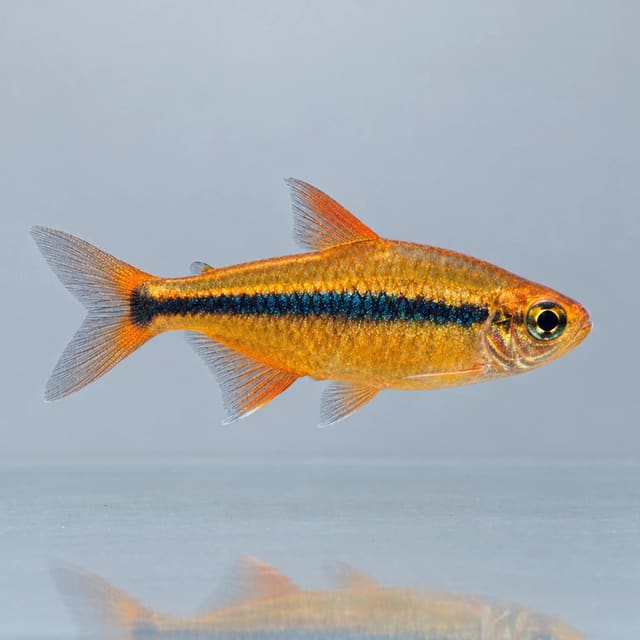
Breuseghem's Moon Tetra (Bathyaethiops breuseghemi)
23–25°C · pH 6.3–7
£26.19
Green's Moon Tetra (Bathyaethiops greeni), also sold as the Green Back Moon Tetra, is a peaceful African tetra from the middle Congo basin that grows to about 6 cm. Keep a group of eight or more in a planted tank of 80 litres or more at 23–26°C. Sold singly as one live fish.
Bathyaethiops greeni
Quantity discounts are pricing offers, not a group-size recommendation. Check the full care guidance and your existing animals before choosing a quantity.
Green's Moon Tetra (Bathyaethiops greeni), also sold as the Green Back Moon Tetra, is a peaceful African tetra from the middle Congo basin that grows to about 6 cm. Keep a group of eight or more in a planted tank of 80 litres or more at 23–26°C. Sold singly as one live fish.
Read the full care guidance when planning conditions for your aquarium.
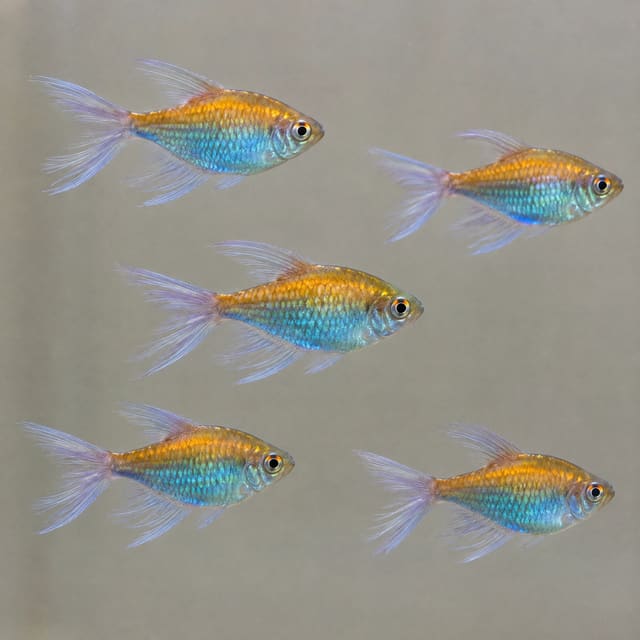
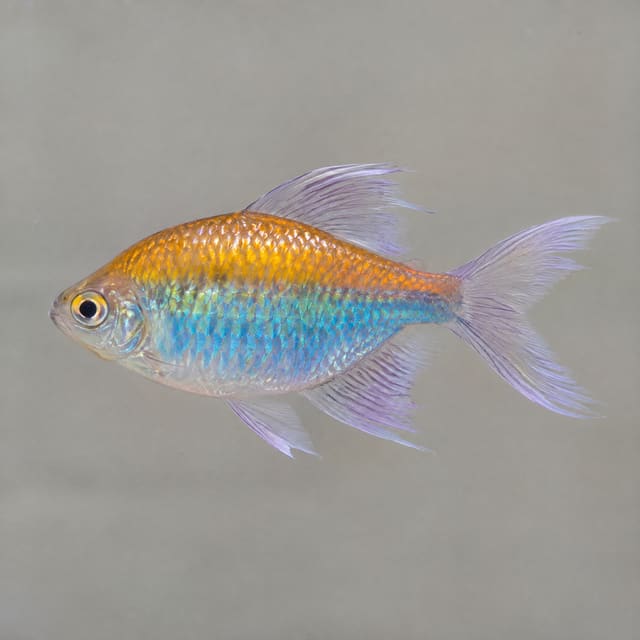
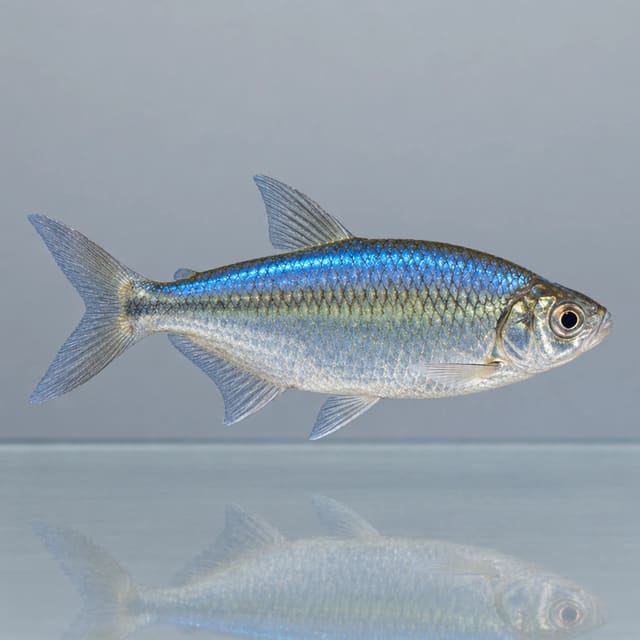
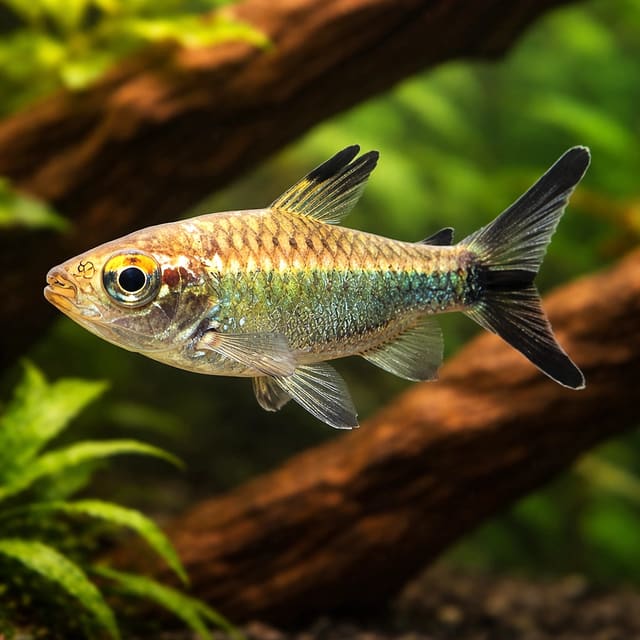
Green's Moon Tetra, also sold as the Green Back Moon Tetra, is a small, peaceful African tetra from the forest rivers of the middle Congo basin. It is a compact, silvery-gold fish with large eyes and clear fins, and a group moving through plants in soft light has the gentle shimmer that gives the moon tetras their name. Few UK shops ever list it, which makes it a rewarding fish for anyone building an African biotope or a calm planted community.
Its scientific name is Bathyaethiops greeni, described by Fowler in 1949. According to Wikipedia, it is the type species of the genus, which means the genus name is anchored to it. The species name greeni is a person's name in Latin form, which is why FishBase gives the English name as Green's moon tetra; "Green Back" is a shop name rather than a description of colour.
| Name | What it tells you |
|---|---|
| Green's Moon Tetra | The English name used by FishBase |
| Green Back Moon Tetra | A trade name for the same fish |
| Bathyaethiops greeni Fowler, 1949 | The scientific name, and the type species of the genus |
| Alestidae | The African tetra family, which also contains the Congo tetra |
| Moon tetras | The six Bathyaethiops species from Cameroon, the Republic of the Congo and the DR Congo |
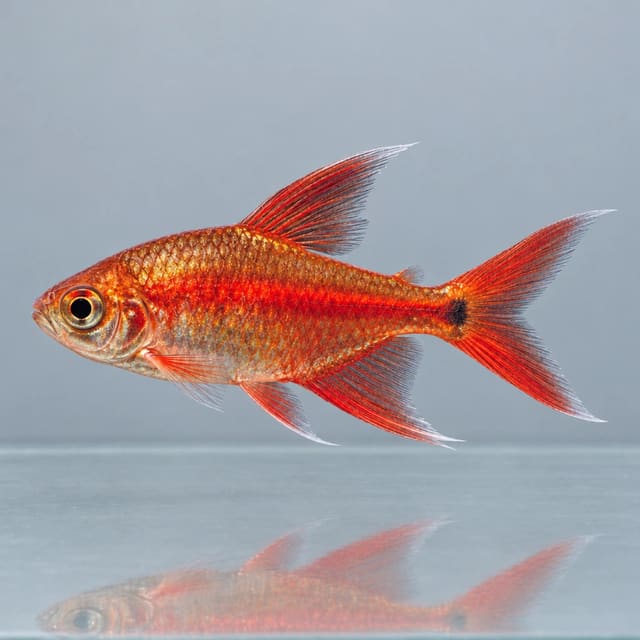
Wikipedia lists six species in the genus: B. atercrinis, B. baka, B. breuseghemi, B. caudomaculatus, B. flammeus and B. greeni. Two of them were described as recently as 2016 by Moritz and Schliewen in a peer-reviewed paper in Zootaxa, which also gives a key to all species: a dwarf species, B. baka, and the red-back moon tetra, B. flammeus, which has a spot in front of the dorsal fin that is bright red in life. Do not confuse that red-back fish with this one. The best-known member, the African moon tetra (B. caudomaculatus), is described as deep-bodied and golden with a large black spot at the base of the tail and a small red spot under the dorsal fin.
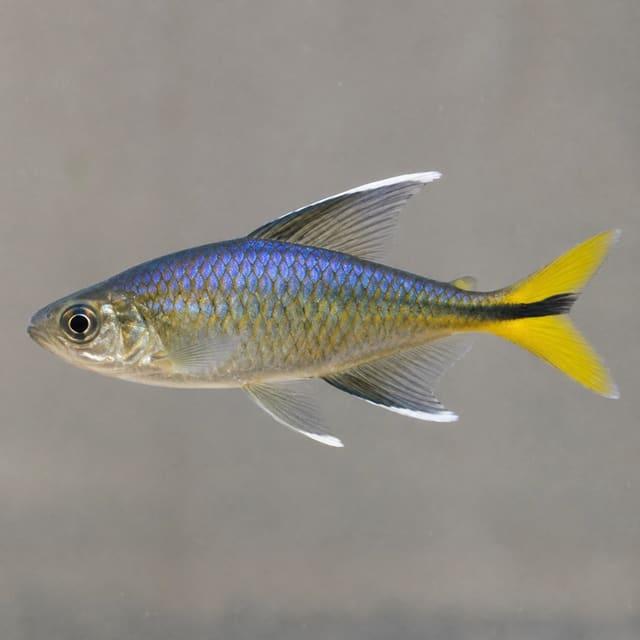
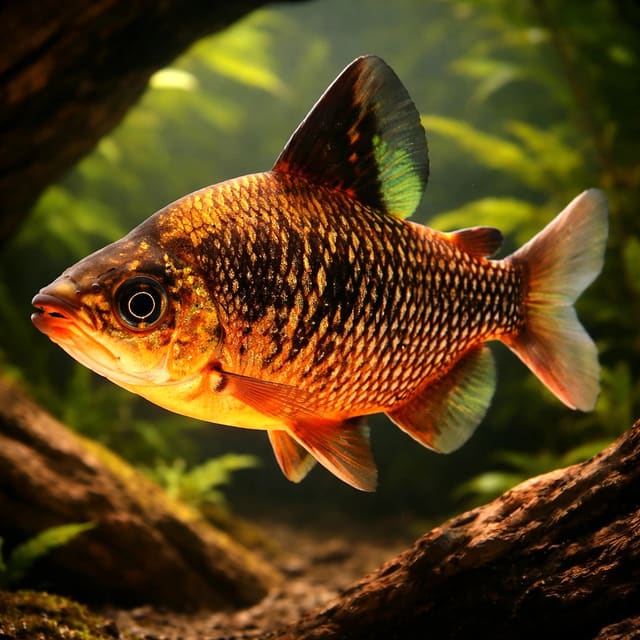
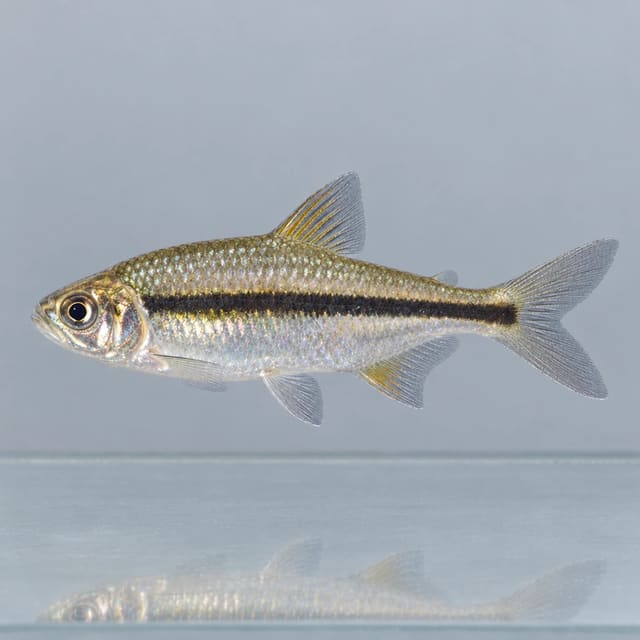
One purchase quantity supplies one live Green's Moon Tetra. The fish are not sexed at sale. Our photographs show a silvery-gold fish with a round dark shoulder spot, two dark bars and red at the base of the tail; markings and colour vary between individuals and fade for a while after a journey.
FishBase describes the species as pelagic, which means it lives in open water rather than on the bottom. A group needs a clear swimming area in the middle of the tank with planting around it.
Wikipedia describes the African moon tetra as living in densely vegetated streams, backwaters and slow rivers, often around underwater structures or below floating plants. Its relatives share that habitat, so the same layout suits Green's Moon Tetra: a well-planted tank with wood, a soft floor and some shade from above.
| Area | What to use | Why it helps |
|---|---|---|
| Surface | Floating plants over part of the tank | Shade and security, as in the wild |
| Middle | An open swimming area | Room for the group to shoal |
| Back and sides | African plants such as Anubias and Bolbitis tied to bogwood | Cover close to open water; both plants grow in shade |
| Floor | Sand or fine gravel | Suits the bottom dwellers that share the tank |
Practical Fishkeeping suggests exactly this kind of biotope for the related Breuseghem's tetra: a sandy floor, bogwood, peaty water and African plants such as Bolbitis and Anubias. Browse our aquarium plants for suitable shade-tolerant species.
FishBase gives only a temperature range for B. greeni, 22–28°C. For pH and hardness we use the values FishBase lists for its two best-known relatives, which come from the same river system, and the general tetra range from OATA.
| Source | Temperature | pH | Hardness |
|---|---|---|---|
| FishBase, B. greeni | 22–28°C | not given | not given |
| FishBase, B. caudomaculatus | 23–27°C | 6.3–7.3 | 5–12°dH |
| FishBase, B. breuseghemi | 22–25°C | 6.0–7.2 | 6–15°dH |
| OATA, tetras in general | 22–27°C | 6.5–8.0 | 4–12°dH |
| Our planning range | 23–26°C | 6.5–7.2 | 5–12°dH |
That range is wider and harder than many Amazon tetras need, so many UK tap waters will be suitable once conditioned, especially in softer areas such as Scotland, Wales and the north-west of England. In very hard areas, blend tap water with reverse osmosis water to bring the hardness down. The water matcher shows which fish share these values. Ammonia and nitrite must read zero; OATA advises keeping nitrate no more than 20 mg/l above your tap water.
A matured filter is essential, and the flow should be moderate, with calmer water among the plants. Practical Fishkeeping notes that African alestid tetras can be sensitive when first imported but are quite simple to keep once established, so stable water in the first weeks matters most.
Wikipedia describes the African moon tetra as omnivorous, eating small aquatic insects and plant matter. Practical Fishkeeping feeds the related Breuseghem's tetra on frozen bloodworm, Daphnia and brine shrimp alongside a good-quality flake. Green's Moon Tetra can be fed the same way.
OATA's method is to switch off the lights, float the sealed bag for about 10 minutes, then add small amounts of tank water over up to 20 minutes before netting the fish across. Practical Fishkeeping adds that ammonia builds up during a long journey and the pH drops, so after the bag is opened the fish should go in promptly. Our guide to acclimatising new fish covers both steps.
| When | What to do | What to look for |
|---|---|---|
| Day 1 | Lights off for the rest of the day | Fish resting among plants; pale colour is normal |
| Day 2 | A small meal of daphnia or flake | Fish coming out to feed |
| Days 3–4 | Test ammonia and nitrite | Both at zero |
| Days 5–7 | First water change | The group shoaling in open water with colour returning |
Practical Fishkeeping recommends a quarantine or hospital tank whatever the source of your fish, and advises buying the related Breuseghem's tetra only once it has been settled for at least a week.
OATA's list of warning signs applies to every tetra: hanging at the surface or sitting on the bottom, fast breathing, clamped fins, flicking against objects, white spots, fluffy growths, a colour much darker or paler than usual, weight loss and poor appetite.
| What you see | Likely cause | First action |
|---|---|---|
| Fast breathing near the surface | Poor water or low oxygen | Test, change water, add surface movement |
| White spots, flicking | White spot | Treat early and keep the temperature stable |
| Fish staying pale and hidden | Group too small, too much light | Add floating plants and more of the same fish |
| Split fins on tank mates | Nipping | Remove long-finned tank mates; enlarge the group |
Green's Moon Tetra is a peaceful fish that suits a calm community. For the related Breuseghem's tetra, Practical Fishkeeping names other African tetras and small West African dwarf cichlids as the best tank mates, and warns it can be a little nippy. We apply the same advice here, together with OATA's rule to keep tetras with fish of similar size and temperament.
| Suits | Avoid |
|---|---|
| African tetras such as the Congo Tetra, the Yellow-Tailed African Tetra and the Long-Finned African Tetra | Large predators that can swallow a 6 cm fish |
| Small West African dwarf cichlids such as the Kribensis; see our kribensis guide | Aggressive or very territorial cichlids |
| Peaceful Congo catfish such as the Black Upside-Down Catfish | Slow fish with long, trailing fins |
| Other calm community fish of a similar size | A group of only one or two moon tetras |
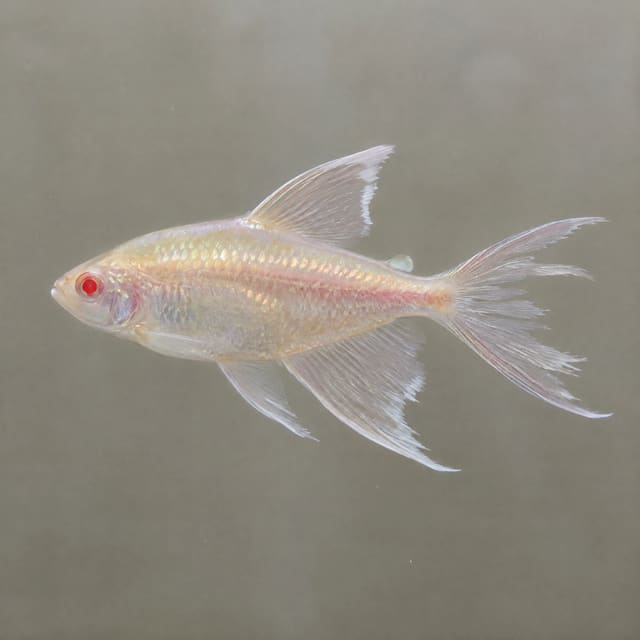
The Congo Tetra is a larger fish that shares the family and the river basin, and a mixed African tetra tank is one of the most attractive ways to keep both. See all our African tetra category fish, or our full range of African and South American tetras.
The sources we checked do not describe how to sex B. greeni or how it breeds. In the African moon tetra, Wikipedia notes that females are generally deeper-bodied and have a smaller red spot under the dorsal fin; in Breuseghem's tetra, Practical Fishkeeping notes that some males show an orangey-red marking on the dorsal fin and just in front of it. Expect similar differences as your group matures. OATA notes that tetras rarely breed successfully in a community tank.
Yes. Both names are used for Bathyaethiops greeni. FishBase lists the English name as Green's moon tetra: greeni is a person's name in Latin form, so it does not describe a green back.
The middle Congo River basin. FishBase records it from the Likouala drainage in the Republic of the Congo and the Ruki and Lake Mai Ndombe drainages in the Democratic Republic of the Congo.
FishBase gives a maximum of 6.0 cm total length. That is smaller than its better-known relatives: FishBase gives the African moon tetra 8 cm and Breuseghem's moon tetra 7 cm.
OATA advises at least five tetras together. Moon tetras do best in a larger group, so we suggest eight or more in a tank of at least 80 litres, ideally 90–100 cm long.
FishBase gives 22–28°C. Its close relatives are listed at pH 6.0–7.3 and 5–15°dH, so aim for 23–26°C, pH 6.5–7.2 and soft to medium hardness. Many UK tap waters are close to this after conditioning.
Yes, with calm fish of a similar size: other African tetras, small West African dwarf cichlids and peaceful catfish. A close relative can be a little nippy, so avoid long-finned fish.
No source we checked describes the sexes of B. greeni. In related moon tetras, males carry more red on or in front of the dorsal fin and females are deeper-bodied, so look for those differences as the fish mature.
Practical Fishkeeping notes that African alestid tetras can be sensitive when first imported. Give them a dim, planted tank, stable water and small meals, and colour usually returns within a week or two.
No reviews for this item yet. Bought one? Honest reviews only, good or bad.
What customers say about ordering from us
Easy website plenty of info on fish your buying great to pick a time slot
TRACEY DURRANT · 7 Oct 2026
Got some lovely fish thank you
Kevin Mackie · 7 Oct 2026
Reviews of our shop, collected by Judge.me, an independent third-party review collector. Newest first.
Moved by UK carriers licensed to handle live animals
Hand-packed with oxygen bags, poly box, heat pack
Email photos the same day; an optional unboxing video helps us review problems faster — claim terms apply
Klarna & PayPal Pay in 3 at checkout