Moderate
Congo Tetra (Phenacogrammus interruptus)
23–28°C · pH 6–7.5 · 150L
£5.99
The Fantastic Red Congo Tetra is a red, long-finned African tetra of the genus Phenacogrammus, sold under a trade name and not identified to species. Plan for 8-10 cm adults, a peaceful shoal of five or more and a planted tank at least 100-120 cm long with clean, soft to medium water at 23-28°C. Sold singly: one live fish per purchase.
Adult size is the maximum length this species reaches at full maturity (scientific sources). The livestock you receive will be younger and smaller. Product-photo provenance and any image-specific limitations are stated on the listing.
Phenacogrammus sp.
Quantity discounts are pricing offers, not a group-size recommendation. Check the full care guidance and your existing animals before choosing a quantity.
The Fantastic Red Congo Tetra is a red, long-finned African tetra of the genus Phenacogrammus, sold under a trade name and not identified to species. Plan for 8-10 cm adults, a peaceful shoal of five or more and a planted tank at least 100-120 cm long with clean, soft to medium water at 23-28°C. Sold singly: one live fish per purchase.
Adult size is the maximum length this species reaches at full maturity (scientific sources). The livestock you receive will be younger and smaller. Product-photo provenance and any image-specific limitations are stated on the listing.
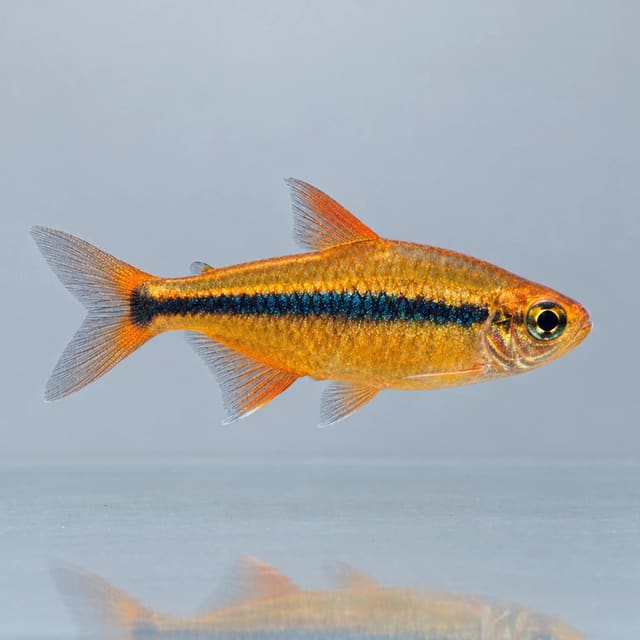
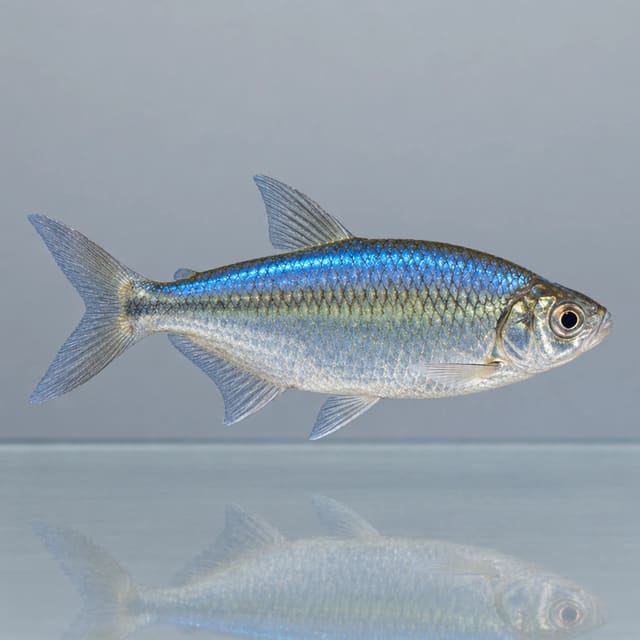
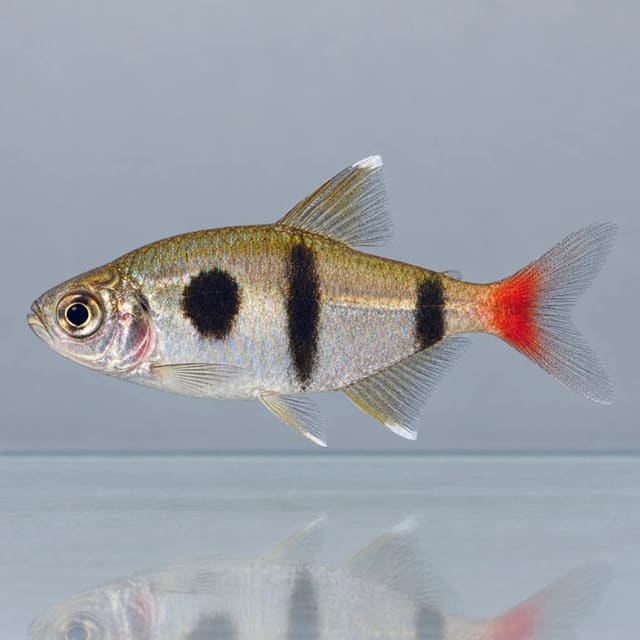
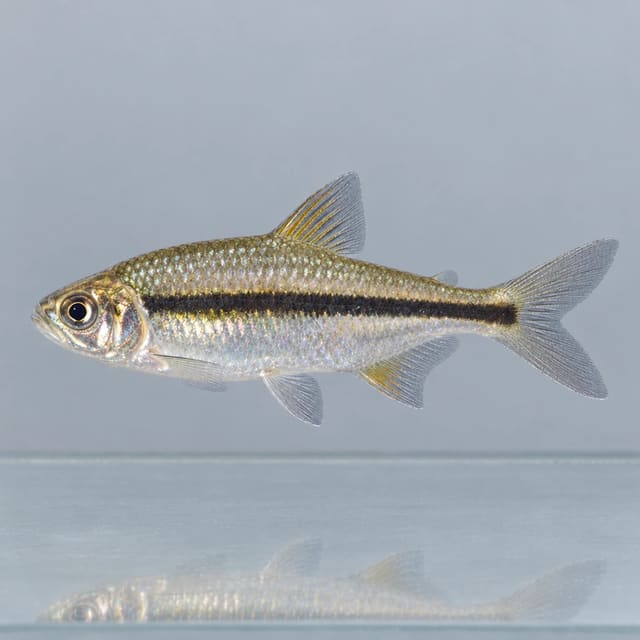
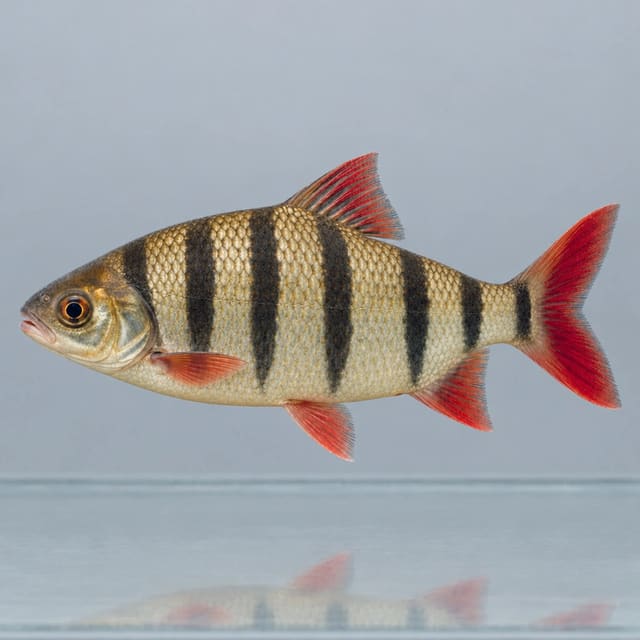
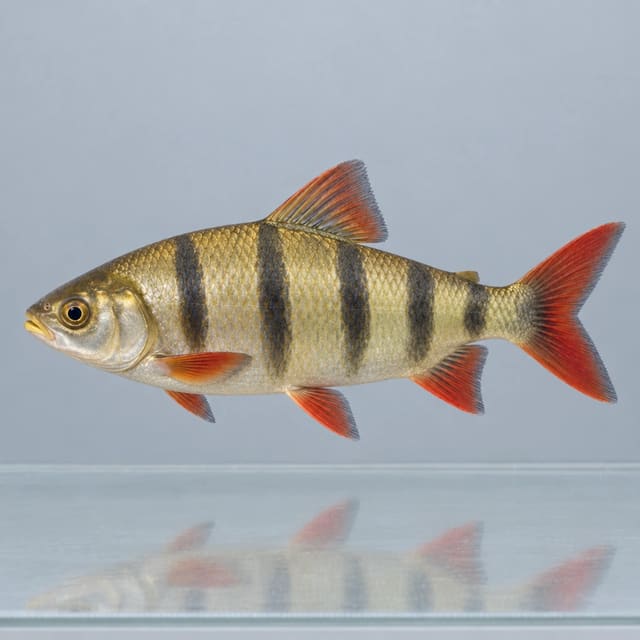
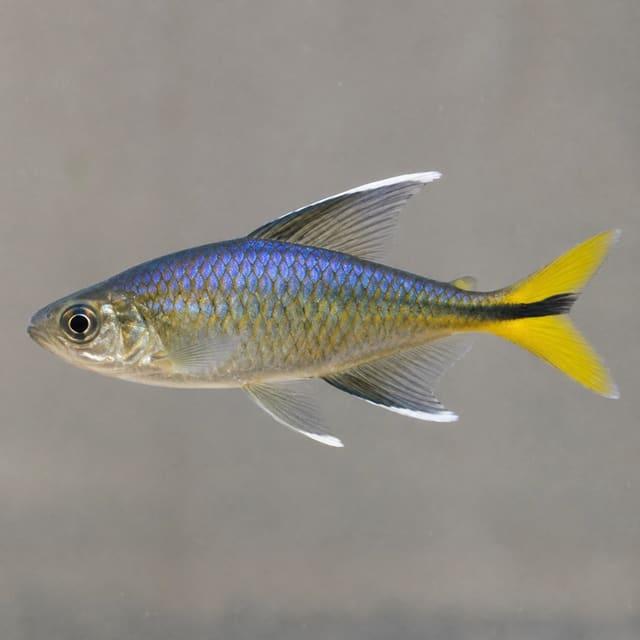
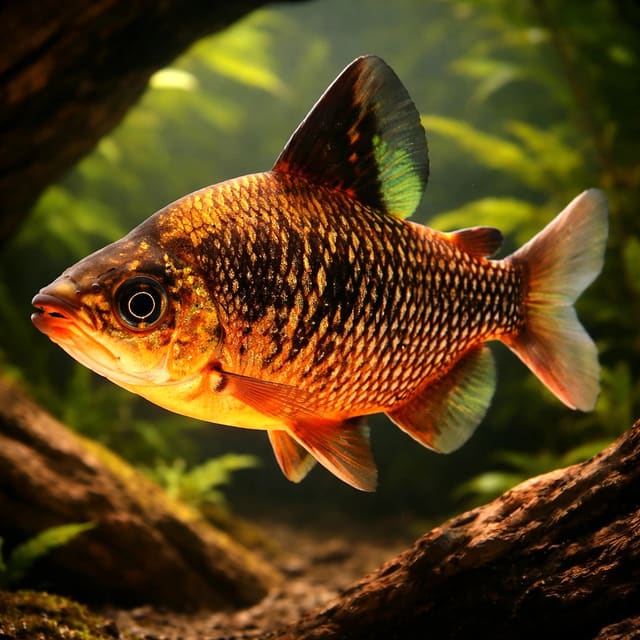
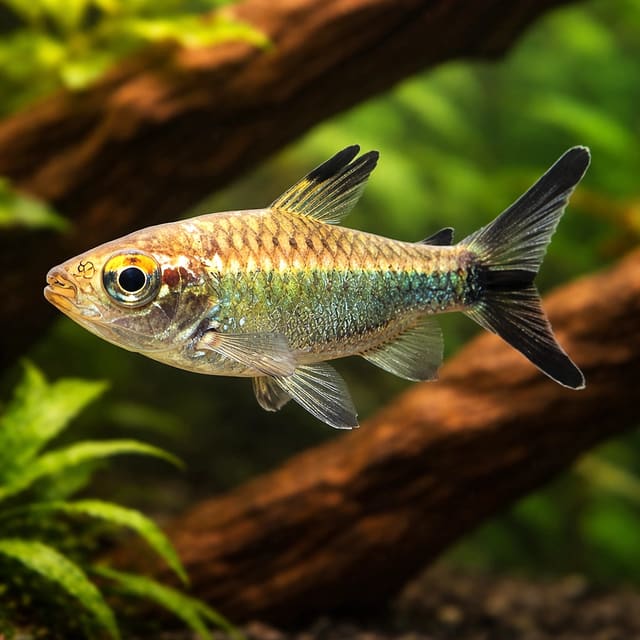
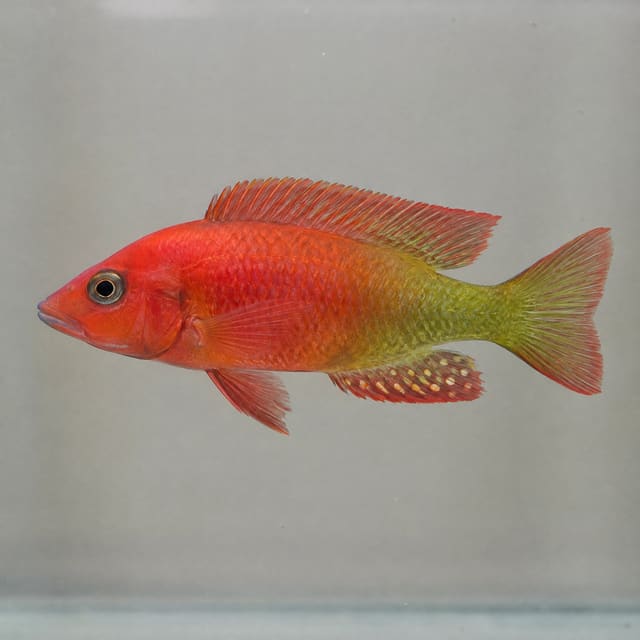
The Fantastic Red Congo Tetra is a red, long-finned African tetra of the genus Phenacogrammus, the same genus as the classic Congo Tetra. The fish in our photographs is a deep red-orange from nose to tail, with golden edges to the scales, a brighter red line along the middle of the body, a dark spot at the base of the tail and long, flowing red fins tipped in white. In a group, under good light, they make one of the most eye-catching shoals in freshwater.
Like all Congo tetras, it is a peaceful, active, mid-water fish that grows larger than most tetras and needs a long, well-planted aquarium with open swimming space. It suits a keeper who already manages a stable community tank and wants a centrepiece shoal rather than a beginner's first fish.
Fantastic Red is a trade name. The fish reaches us identified only to genus, as Phenacogrammus sp., and no species has been formally described under that name. We have not found a published account of where this red form comes from, so we cannot tell you whether it is a wild-collected population or a line developed in captivity, and we do not attach a species name to it. What we can say is that it has the shape, finnage and needs of the Congo tetra group, so its care follows the best-documented member of the genus, the Congo Tetra (Phenacogrammus interruptus). FishBase explains the genus name as Greek for "deceptive" and "letter" or "signal".
| Name you may see | What it tells you |
|---|---|
| Fantastic Red Congo Tetra | The trade name for this red form |
| Phenacogrammus sp. | Identified to genus, not to species |
| Congo Tetra | The group name for Phenacogrammus; strictly the common name of P. interruptus |
| African tetra | The family Alestidae, which includes all Congo tetras |
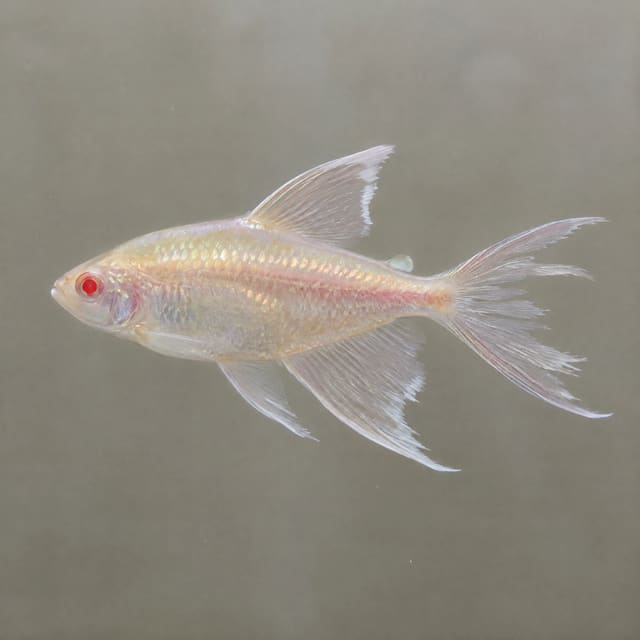
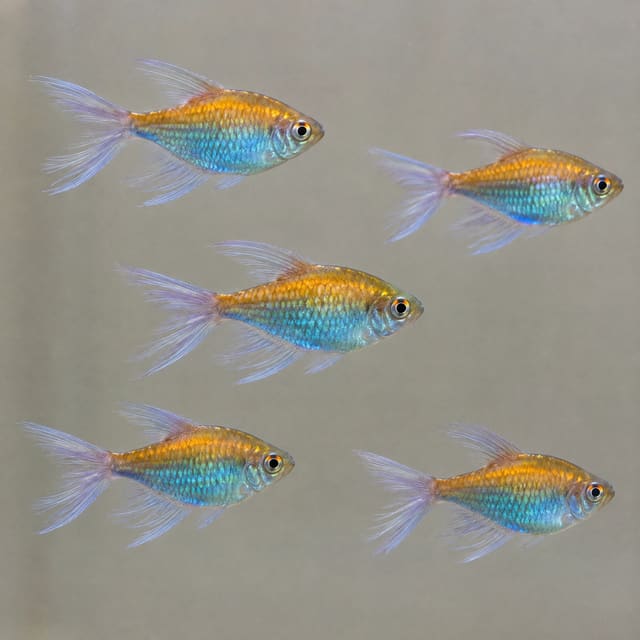
If you prefer the classic species, see our Congo Tetra or the five-pack of Congo Tetras, and for a pale form the Albino Congo Tetra. All of them are on our Phenacogrammus Congo tetras page.
One purchase supplies one live Fantastic Red Congo Tetra, unsexed. The listing has a single option rather than graded sizes, so ask us for the current size if it matters. Congo tetras are shoaling fish, so order a group of at least five together. Seriously Fish notes that Congo tetras are often sold as small, drab fish that colour up as they mature, and that the long fins of the males develop with age and good water. The photographs show the colour form; your fish will vary in shade and finnage and may need several weeks in a settled tank to reach full colour.
Our delivery and Live Arrival Guarantee terms explain dispatch days and what to do if there is a problem on arrival. Phenacogrammus appears without exceptions on the government's checklist of freshwater fish that may be kept in indoor aquaria in England and Wales under the general licence, linked from its guidance on non-native fish.
Congo tetras are big tetras. Because this form is not identified to species, we use the range of the genus to plan the adult size:
| Source | Fish | Maximum size | Aquarium |
|---|---|---|---|
| FishBase | Congo Tetra | 8.0 cm TL (males), 6.0 cm (females) | At least 100 cm long, group of 5+ |
| Seriously Fish | Congo Tetra | 80 mm SL | Base 120 x 30 cm, about 108 litres, for adults |
| FishBase | P. aurantiacus | 10.0 cm TL | Not given |
| OATA | Tetras of 5 cm and over | Not given | At least 80 litres |
So plan for adults of 8–10 cm, males larger than females, in an aquarium at least 100–120 cm long. Seriously Fish adds that young fish can be kept in smaller tanks while they grow. Our guide to the best fish for a 100-litre tank and our stocking calculator help you work out how many fit alongside other fish.
Seriously Fish suggests an African biotope with driftwood branches, floating plants and Anubias, and says the fish show their best colour in any well-planted tank with plenty of open swimming space. A darker floor and some floating cover make the red stand out, and a large shoal lit from the front and above, especially by daylight, is at its most striking.
| Element | Suggestion |
|---|---|
| Swimming space | A clear run along the front of the tank |
| Plants | Anubias and other hardy plants at the back and sides, with floating plants |
| Wood | Driftwood branches for shade and shelter |
| Floor | Sand or fine gravel in a darker shade |
| Lid | A close-fitting cover, a sensible precaution for a fast, easily frightened fish |
Seriously Fish describes slightly acidic, soft water with good circulation as ideal, and both main sources accept a broad range. Where they differ, the table shows both.
| Value | Seriously Fish | FishBase | OATA (captive-bred tetras) |
|---|---|---|---|
| Temperature | 23–28°C | 23–26°C | 22–27°C |
| pH | 6.0–7.5 | 6.0–8.0 | 6.5–8.0 |
| Hardness | 3–18 °dGH | 5–19 dH | 4–12 °dGH |
| Ammonia and nitrite | 0 mg/l (OATA) | ||
| Nitrate | No more than 20 mg/l above your tap water (OATA) | ||
A target of 24–26°C and pH 6.5–7.0 sits inside every source's range. UK tap water differs a lot between regions, so test yours and read our water chemistry guide before deciding whether to soften it. Seriously Fish warns that Congo tetras are sensitive to water quality and that poor conditions spoil the males' fins and cause colour loss, which matters even more in a fish bought for its colour.
Seriously Fish recommends a filter turning the water over four to five times an hour. OATA asks for a 25% water change at least weekly, dechlorinated replacement water and filter media rinsed in old tank water rather than under the tap. Test ammonia, nitrite, nitrate and pH every week, and more often while the shoal is new.
FishBase records that wild Congo Tetras eat worms, small insects, crustaceans and plant matter, and Seriously Fish describes an unfussy omnivore that also takes algae and zooplankton. Seriously Fish advises making live and frozen foods a good part of the diet to bring out the colour. OATA's rule for tetras is to feed once a day, only what they eat within a few minutes.
| Food | How often |
|---|---|
| Good flake or small granule, including a colour food | Daily staple |
| Frozen daphnia, mysis or bloodworm | Three or four times a week |
| Live bloodworm or daphnia | Occasional treat |
| Spirulina flakes or algae wafers | Two or three times a week |
From our range, colour-enhancing flakes, frozen daphnia, frozen mysis, live bloodworm and spirulina flakes cover all of these.
Congo tetras are nervous on arrival. Seriously Fish describes them as easily frightened, especially in small numbers, so introduce the whole group together. OATA's method: lights off, float the sealed bag for 10 minutes, add small amounts of tank water over up to 20 minutes, then net the fish across and discard the bag water. Our acclimatisation guide shows each step.
Keep the lights low for the rest of the day and feed sparingly for the first few days. Expect the shoal to stay near cover at first and to move into open water as it settles. Watch for clamped fins or a fish that stays apart, and test the water every couple of days during the first week.
Seriously Fish calls the Congo tetra peaceful and suitable for most community tanks, but notes that its active swimming and adult size can scare very shy species, while its own shy nature means boisterous tank mates are a poor choice. Never keep it with fin-nippers, which damage the males' long fins. Keep a mixed-sex shoal so the males display to each other.
| Suits | Avoid |
|---|---|
| Other medium African tetras such as the Yellow-Tailed African Tetra and Long-Finned African Tetra | Fin-nipping species |
| Peaceful dwarf cichlids such as the Kribensis | Boisterous or aggressive cichlids |
| Catfish such as the Featherfin Synodontis and Bristlenose Pleco | Large predators that could swallow a tetra |
| Corydoras and rainbowfish | Very small, timid fish that its activity may stress |
Those suggestions follow Seriously Fish. Our kribensis guide covers the classic African partner, and the tank mates tool checks any other mix. See more shoals in our schooling fish collection.
Healthy Congo tetras hold their fins open, swim as a loose group in mid-water and feed eagerly. OATA's warning signs include clamped fins, flicking against decor, shimmying, white spots, fluffy growths, rapid breathing, faded colour and loss of appetite. Ragged fins in males usually point to fin-nipping tank mates or poor water. In almost every case the first step is to test the water and carry out a partial water change, then seek advice before medicating.
Seriously Fish says males are larger and much more colourful, with extended tail filaments and a greatly extended dorsal fin; OATA also notes the males' longer fins. Aquarium Glaser cautions, for the related P. aurantiacus, that sexing is uncertain except with large males, so a bigger group gives the best chance of both sexes.
The Congo Tetra is an egg-scatterer, described by Seriously Fish as "not easy but possible". Breeders condition the best male and a plump female on live and frozen foods, then spawn them in a small tank with a mesh base, subdued light, plant clumps and soft water below neutral. A female may lay up to 300 large eggs over several days, 100–200 being more usual; many fungus in the first 24–48 hours. Eggs hatch in about six days (FishBase and Seriously Fish), and the fry take infusoria at first, then brine shrimp nauplii or microworm after two or three days. No breeding report exists for the Fantastic Red form itself.
Browse the rest of our African tetras and our wider tetras collection for more shoaling fish.
It is a red Congo tetra sold under the trade name Fantastic Red and identified only to genus, as Phenacogrammus sp. No species has been formally described under that name, and we have not found a published account of its origin, so we do not claim a species name for it. It has the shape, long fins and care needs of the Congo tetra group.
Plan for 8-10 cm. In the genus, FishBase records 8.0 cm total length for male Congo Tetras (6.0 cm for females) and 10.0 cm for Phenacogrammus aurantiacus; Seriously Fish gives 80 mm standard length for the Congo Tetra. Males are larger than females.
A tank at least 100-120 cm long. FishBase gives a minimum aquarium length of 100 cm for Congo Tetras and Seriously Fish a base of 120 x 30 cm, about 108 litres, for adults. OATA gives at least 80 litres for tetras of 5 cm and over.
At least five, as FishBase and OATA advise, in a mixed group of males and females. Congo tetras are easily frightened when kept in small numbers, so a group of six to ten looks better and behaves more confidently.
Soft to moderately hard, slightly acidic to neutral water at 23-28 C. Seriously Fish gives pH 6.0-7.5 and 3-18 dGH; FishBase gives 23-26 C, pH 6.0-8.0 and dH 5-19. Most important is clean, stable water: poor conditions spoil the males' fins and colour.
It is an omnivore. Feed a good flake or small granule once a day, with frozen or live foods such as daphnia, mysis and bloodworm several times a week to bring out the red, and some plant-based food such as spirulina flakes or algae wafers.
Peaceful fish that are not too small or too shy: other medium tetras, rainbowfish, Corydoras, Bristlenose plecos, Synodontis and peaceful dwarf cichlids such as kribensis. Avoid fin-nippers and boisterous fish.
The photographs show the colour form. Congo tetras often arrive smaller and paler than adults and colour up as they mature, and the long fins of males develop with age and good water. Individual fish vary.
No reviews for this item yet. Bought one? Honest reviews only, good or bad.
What customers say about ordering from us
Easy website plenty of info on fish your buying great to pick a time slot
TRACEY DURRANT · 7 Oct 2026
Got some lovely fish thank you
Kevin Mackie · 7 Oct 2026
Reviews of our shop, collected by Judge.me, an independent third-party review collector. Newest first.
Moved by UK carriers licensed to handle live animals
Hand-packed with oxygen bags, poly box, heat pack
Email photos the same day; an optional unboxing video helps us review problems faster — claim terms apply
Klarna & PayPal Pay in 3 at checkout