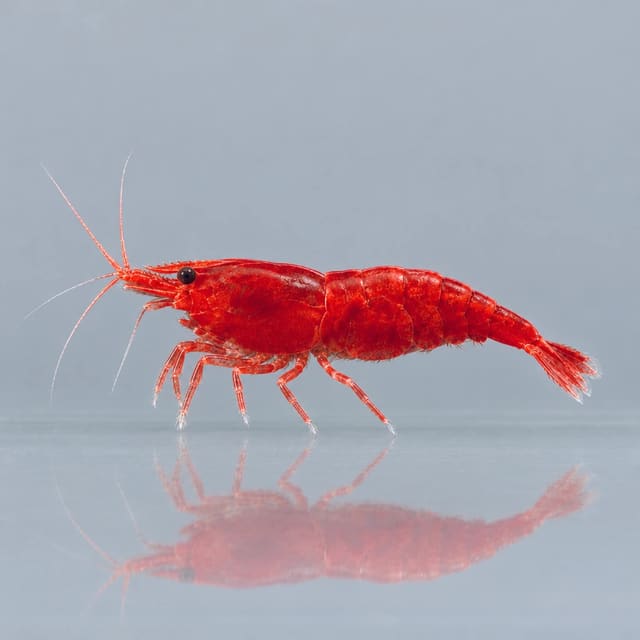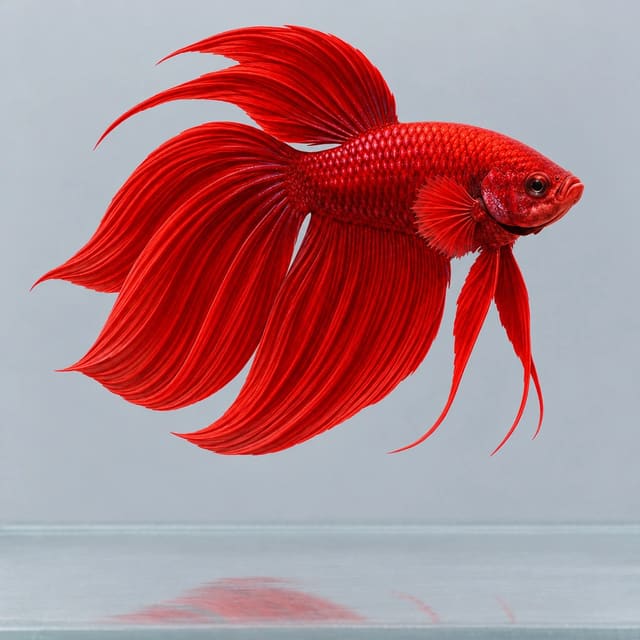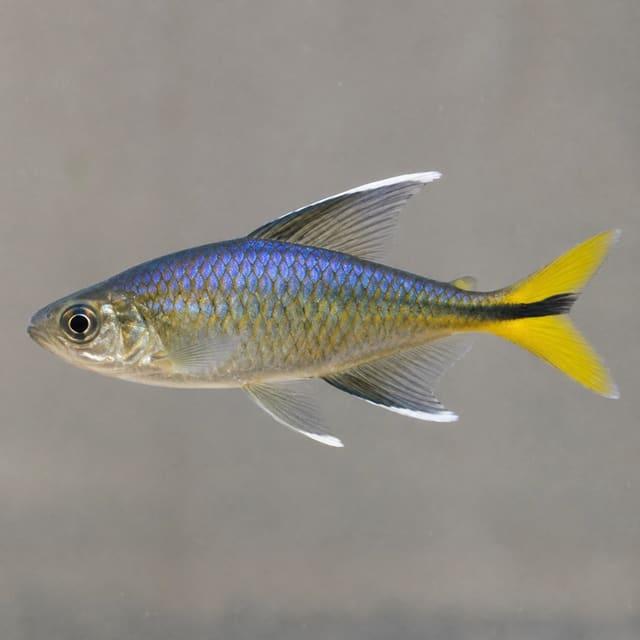
Yellow-Tailed African Tetra (Alestopetersius caudalis)
22–26°C · pH 6.5–7.5 · 108L
£8.99
The Blue Sheen Tetra (Alestes sp.) is a silvery African tetra with an electric-blue iridescence along the back. Keep a group of eight or more in a mature, planted tank of 120 cm or longer at 22–26°C, pH 6.5–7.0, with weekly water changes. Sold individually as one live fish.
Alestes sp.
Quantity discounts are pricing offers, not a group-size recommendation. Check the full care guidance and your existing animals before choosing a quantity.
The Blue Sheen Tetra (Alestes sp.) is a silvery African tetra with an electric-blue iridescence along the back. Keep a group of eight or more in a mature, planted tank of 120 cm or longer at 22–26°C, pH 6.5–7.0, with weekly water changes. Sold individually as one live fish.
Read the full care guidance when planning conditions for your aquarium.
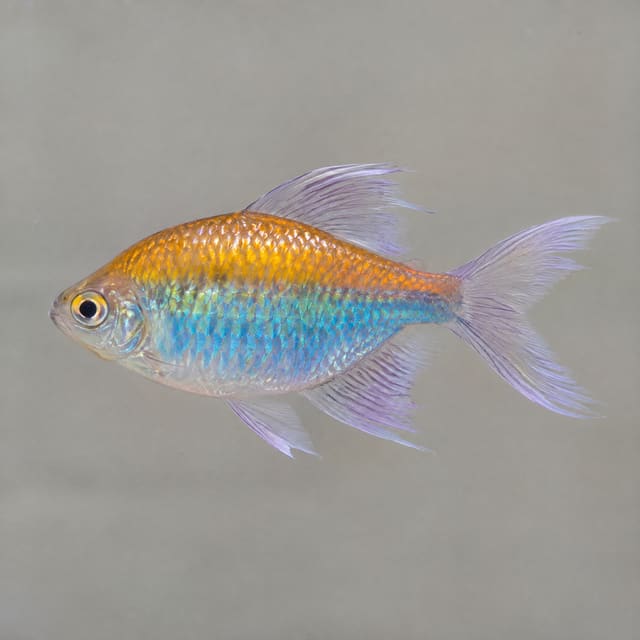
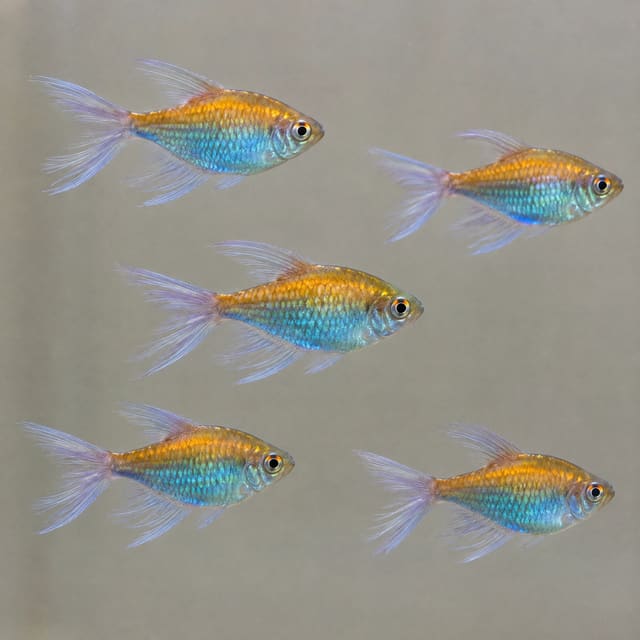
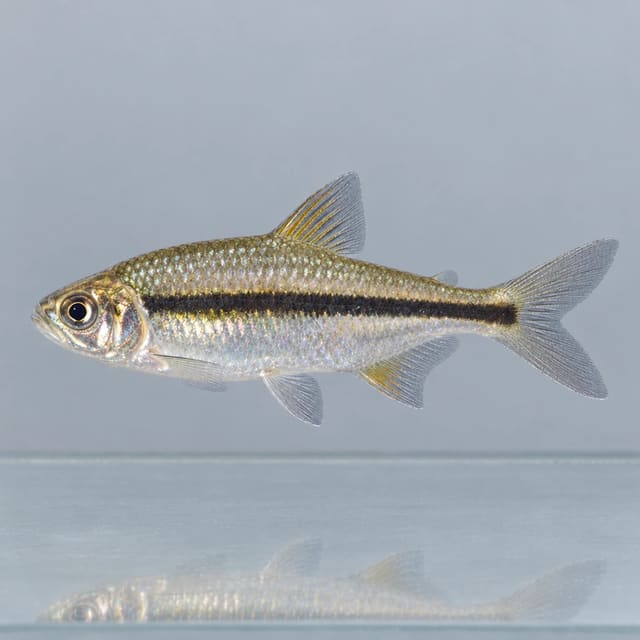
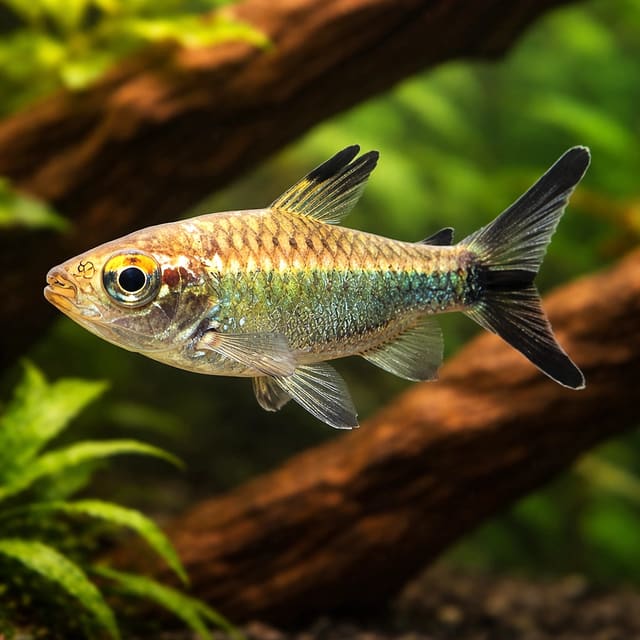
The Blue Sheen Tetra is a silvery African tetra with a striking electric-blue iridescence along the upper flank and back. Under aquarium lights the blue shifts to a gold-green band along the middle of the body, the belly stays bright silver, and the clear fins and forked tail catch the light as the shoal turns. It is an active, open-water fish that looks best in a group swimming along a long, planted tank.
The name needs a word of explanation. “Blue Sheen Tetra” is a trade name rather than a scientific one, and it is not tied to a single published species, so we list this fish as Alestes sp. The care plan on this page is built to suit the African tetras it could be, and we explain the possibilities below so you can plan with your eyes open.
| Suits | Not suited to |
|---|---|
| A mature tank of 120 cm or longer with a lid | New tanks that are still cycling |
| A group of eight or more | One or two fish on their own |
| Soft to moderately hard, stable water with weekly changes | Tanks where nitrate builds up between changes |
| Similar-sized, peaceful African or community fish | Nano fish, slow long-finned fish or aggressive cichlids |
| A keeper happy to feed frozen and live foods | A flake-only routine |
The Blue Sheen Tetra sits with our other tetras, and you can compare it with every species in our African tetra range. Our guide to tetras explains how the African and South American families differ.
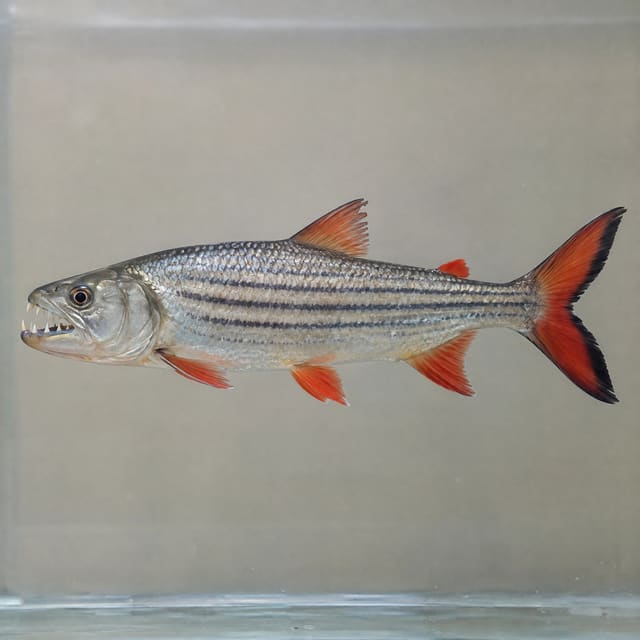
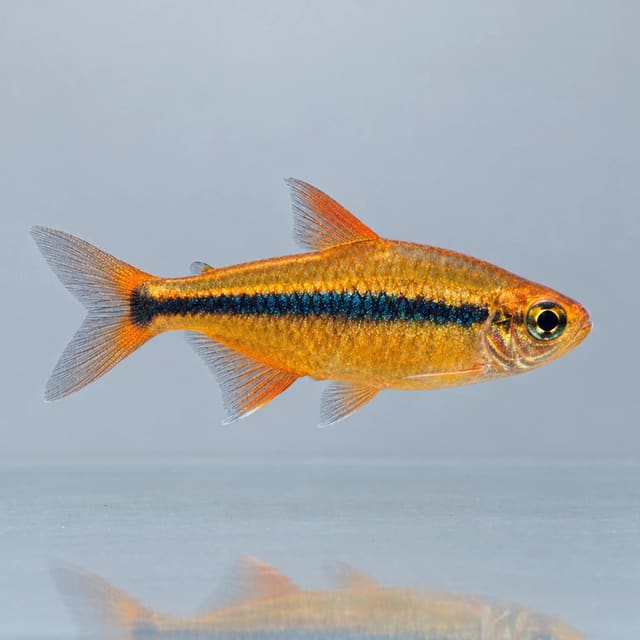
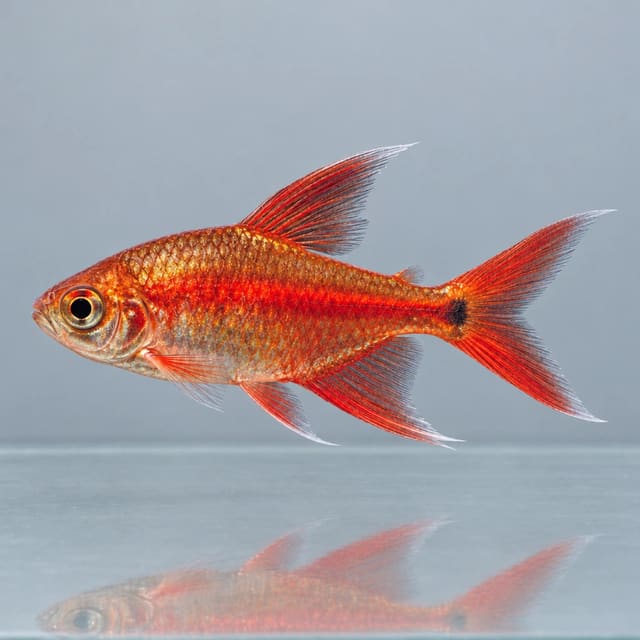
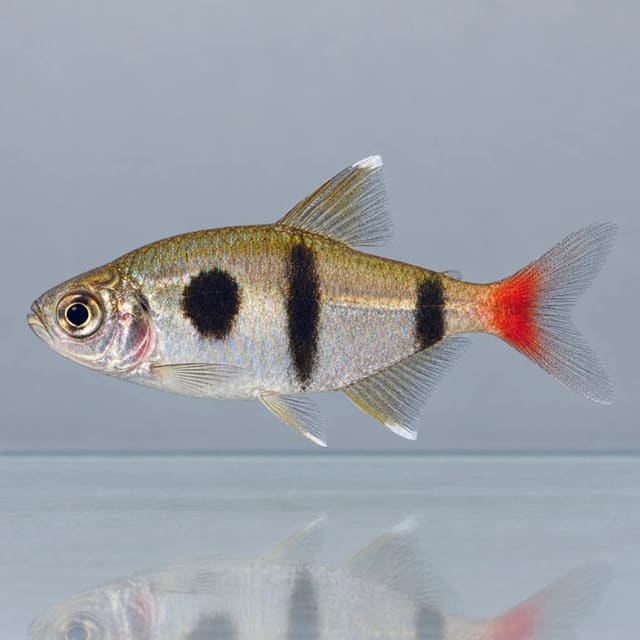
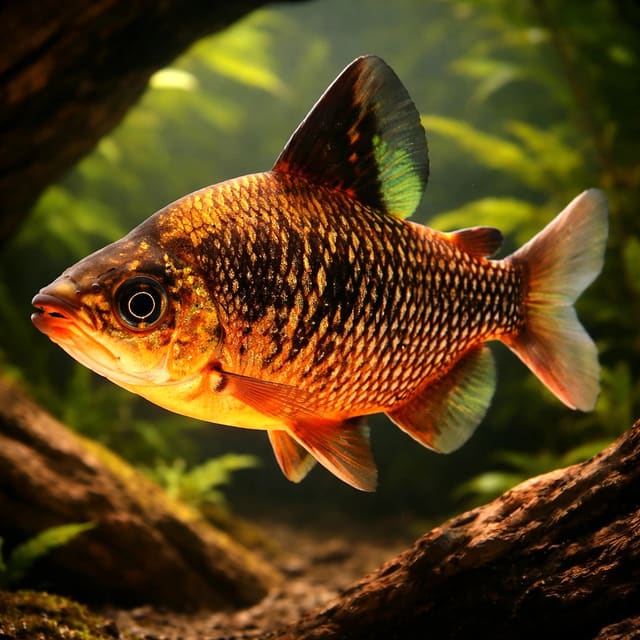
One purchase quantity supplies one live Blue Sheen Tetra. The only option is “Standard”: the fish are not graded into sizes on this listing, so they are sent at the size available at the time and may be young fish well short of adult size. The photographs show the colour of the fish, not the individual you will receive; iridescent blue changes with the angle of the light, and Seriously Fish links the best colour in the blue diamond tetra to a varied diet. Sex is not specified.
Have the aquarium mature, heated and tested before the fish arrive, and read our delivery and live arrival terms before ordering.
African tetras belong to the family Alestidae. In shops the word “Alestes” is used loosely for many of them, but the genus Alestes itself is mostly made up of large river fish: FishBase records Alestes baremoze, for example, at 43 cm. So the “Alestes” in a trade name tells you the fish is an African tetra, not which species it is or how big it grows.
Some UK sellers list a fish called the Blue Sheen Tetra as Alestopetersius smykalai, the blue diamond tetra. Seriously Fish describes that species as an alestid from the Imo and Niger river drainages of Nigeria, reaching 60 mm standard length, rare in the hobby and occasionally traded as the blue diamond tetra. It notes a dark, roughly diamond-shaped mark on the tail base, and that its genus name combines Alestes and Petersius. It is also listed as Vulnerable by the IUCN because of rainforest loss and habitat damage in Nigeria. We have not been able to confirm that this listing is that species, so we do not name it as such.
The other possibility is one of the larger, deeper-bodied African tetras such as Brycinus or Bryconalestes, which are also traded as “Alestes”. Seriously Fish gives the longfin tetra, Bryconalestes longipinnis, an adult size of 125 mm standard length.
| Question | Blue diamond tetra (A. smykalai) | Larger “Alestes” type (longfin tetra) | Our plan for this listing |
|---|---|---|---|
| Adult size | 60 mm SL | 125 mm SL | Plan for up to about 12 cm |
| Tank | 120 × 30 cm, about 108 litres | 120 × 38 cm, about 137 litres | 120 cm long, 150 litres or more |
| Group | 8–10 or more | 6 or more | 8 or more |
| Temperature | 20–28°C | 22–26°C | 22–26°C |
| pH | 5.0–7.0 | 6.0–7.5 | 6.5–7.0 |
| Hardness | 1–10 dGH | 5–19 dGH | 5–10 dGH |
All values in this table come from the Seriously Fish profiles listed in the references.
Both candidate species are fast, open-water swimmers that need length more than height. Seriously Fish suggests a tank 120 cm long for each, and OATA’s UK care sheet for tetras sets 80 litres as a minimum for species of 5 cm or more. Because we cannot rule out the larger fish, choose a tank of 120 cm or longer and around 150 litres or more for a group of eight. Use our tank volume calculator to work out the real water volume of the tank you have in mind.
Fit a lid. Lively, skittish characins can jump when startled, especially in the first days after arrival.
For the blue diamond tetra, Seriously Fish suggests a layout like a flowing stream: rocks of different sizes, sand, fine gravel and water-worn boulders, with driftwood roots and branches if you like, and plenty of open swimming space. It adds that the species also does well in planted tanks. For the larger African tetras it recommends a dark substrate, areas of thick planting and some floating cover to dim the light and make the fish less nervous. Combining those ideas gives a layout that suits either fish.
| Zone | What it gives the shoal |
|---|---|
| Open water along the front, end to end | Room to swim fast, which keeps the shoal calm and fit |
| Rocks, sand and fine gravel in the foreground | A stream-like base that shows off the silver and blue |
| Dense planting at the back and sides | Cover to retreat into when startled |
| Floating plants over part of the surface | Softer light, which reduces skittish dashing |
| Filter outlet along the length | A gentle current, like the rivers these fish come from |
Our aquarium plants include hardy species and floating plants for this kind of set-up.
Seriously Fish gives 20–28°C, pH 5.0–7.0 and 1–10 dGH for the blue diamond tetra, and 22–26°C, pH 6.0–7.5 and 5–19 dGH for the longfin tetra. OATA’s general guidance for tetras is 22–27°C, pH 6.5–8.0 and 4–12°dH. The values that satisfy all three are 22–26°C, pH 6.5–7.0 and 5–10 dGH, so that is what we recommend for the Blue Sheen Tetra.
Tap water in the UK ranges from soft to very hard depending on where you live. Test your supply and use our water matcher to see how close it comes. If your tap water is hard, mixing it with reverse osmosis water is the simplest way to bring hardness and pH down; make changes gradually, not all at once. Always use a tap water conditioner to remove chlorine or chloramine.
| Reading | Aim for | Where it comes from |
|---|---|---|
| Temperature | 22–26°C | Overlap of both Seriously Fish profiles and OATA |
| pH | 6.5–7.0 | Overlap of both Seriously Fish profiles and OATA |
| General hardness | 5–10 dGH | Overlap of both Seriously Fish profiles and OATA |
| Ammonia and nitrite | Zero mg/l | OATA |
| Nitrate | No more than 20 mg/l above your tap water | OATA |
Our water chemistry guide explains how to test and adjust these values.
Both profiles stress water quality. Seriously Fish says the blue diamond tetra is sensitive to fluctuating levels of organic waste, should never be added to a biologically immature tank, and needs weekly water changes of 20–30%. It describes the longfin tetra as very sensitive to deteriorating water, especially nitrate. OATA recommends testing at least weekly and changing about 25% of the water every week. Choose a filter that turns the tank volume over four to five times an hour, as Seriously Fish suggests for both species.
Seriously Fish describes the blue diamond tetra as easy to feed once settled, doing best on regular small live and frozen foods such as bloodworm, Daphnia and Artemia, plus good dried flakes or granules with some plant or algal content. The larger African tetras need more protein, with meaty foods offered regularly. OATA advises feeding once a day and giving only what the fish eat within a few minutes.
A practical rotation is spirulina granules or insect granules as the staple, with frozen daphnia and frozen brine shrimp on most days.
Follow OATA’s floating-bag method, keeping the lights off throughout:
Our article on how to acclimate new fish covers the same routine.
| When | What to do |
|---|---|
| Before arrival | Confirm the tank is fully cycled: zero ammonia and nitrite for at least a week |
| Day one | Lights off, no food |
| Days two to four | Small meals of frozen daphnia or brine shrimp |
| Days five to seven | Introduce granules; check every fish feeds and swims with the group |
| End of the week | Test the water and make the first routine change |
OATA lists the warning signs to look for: fish hanging at the surface or lying on the bottom, colours much paler or darker than normal, more hiding than usual, faster breathing, white spots or fluffy growths, damaged fins and loss of appetite. In a Blue Sheen Tetra, a dull, washed-out sheen is often the first clue that something is wrong.
| If you see | Do this |
|---|---|
| Faded sheen and clamped fins | Test nitrate and pH; change water if either has drifted |
| Dashing and glass-banging | Add floating cover and plants; check for a bullying tank mate |
| Gasping at the surface | Test ammonia and nitrite, increase aeration and change water |
| White spots or fluffy patches | Identify the problem before treating and follow the instructions exactly |
| A fish that stops eating | Offer frozen food and check it is not being outcompeted |
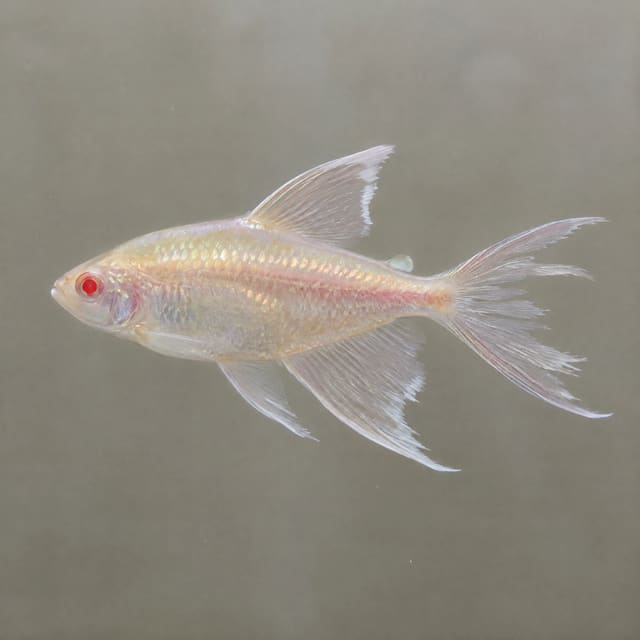
Seriously Fish describes the blue diamond tetra as lively, somewhat skittish but generally peaceful, and suggests comparably sized cyprinids and other alestids, with cichlids, catfish and loaches as further options. For the larger African tetras it recommends a West African community. Either way, the Blue Sheen Tetra sits well with Congo Tetras or Albino Congo Tetras, the African Red-Eyed Tetra and the smaller Yellow-Tailed African Tetra in open water, with a pair of Super Red Kribensis and a group of Black Upside-Down Catfish lower down. Check any other species with our tank mates checker.
| Suits | Avoid |
|---|---|
| Other African tetras of similar size | Nano fish that can be outcompeted or eaten by a larger fish |
| Peaceful dwarf cichlids such as kribensis | Large or aggressive cichlids |
| Synodontis and other peaceful catfish | Slow, long-finned fish such as fancy guppies and bettas |
| Barbs, danios and rainbowfish of similar size | Fin-nippers kept in small groups |
Seriously Fish also notes that rival males of the blue diamond tetra show their best colours when competing for females and position, which is another reason to keep a proper group of both sexes rather than a handful.
Breeding is unlikely in a community tank. Seriously Fish describes the blue diamond tetra as an egg scatterer that shows no parental care and is not bred regularly in the hobby. Its suggested method is to keep a group of adults in a separate tank with a trap that lets eggs fall out of reach, check it often, move the eggs to small containers to hatch in about five days, and feed the free-swimming fry on brine shrimp nauplii. OATA adds that conditioning with live and frozen food and a slightly lower temperature, imitating the rainy season, can trigger spawning in tetras.
OATA reminds keepers never to release aquarium fish or plants into the wild. It is illegal, usually fatal to the fish and can harm native wildlife. Dispose of water, substrate and decor through the drain or household waste.
Blue Sheen Tetra is a trade name for a silvery African tetra with a blue iridescent sheen, and it is not tied to one published species, so we list it as Alestes sp. Some UK sellers list a fish under this name as Alestopetersius smykalai, the blue diamond tetra, but that has not been confirmed for this listing.
That depends on the species, which is why we plan for the larger case. Alestopetersius smykalai reaches about 60 mm standard length, while larger “Alestes”-type tetras such as the longfin tetra reach 125 mm. Set up for a fish of up to about 12 cm and you are covered either way.
At least 120 cm long. Seriously Fish suggests 120 × 30 cm for the blue diamond tetra and 120 × 38 cm for the longfin tetra, so a 120 cm tank of 150 litres or more suits a group whichever fish it turns out to be.
Eight or more. Seriously Fish recommends at least eight to ten blue diamond tetras of both sexes and at least six longfin tetras; one purchase supplies one fish, so order the whole group together.
Aim for 22–26°C, pH 6.5–7.0 and 5–10 dGH, the range that suits both candidate species and sits inside OATA’s general tetra guidance. Keep ammonia and nitrite at zero and nitrate low with weekly water changes.
Small live and frozen foods such as bloodworm, daphnia and brine shrimp, plus good flakes or granules with some plant content. Feed once or twice a day, only what is eaten within a few minutes.
Yes, with fish of a similar size and pace. It is lively and can be skittish, so very slow or very small fish are poor companions. Congo tetras, other African tetras, kribensis and Synodontis catfish suit it well.
In the blue diamond tetra, adult males are more colourful, grow larger and develop longer fins. Young fish are hard to sex, and sex cannot be chosen on this listing.
No reviews for this item yet. Bought one? Honest reviews only, good or bad.
What customers say about ordering from us
Easy website plenty of info on fish your buying great to pick a time slot
TRACEY DURRANT · 7 Oct 2026
Got some lovely fish thank you
Kevin Mackie · 7 Oct 2026
Reviews of our shop, collected by Judge.me, an independent third-party review collector. Newest first.
Moved by UK carriers licensed to handle live animals
Hand-packed with oxygen bags, poly box, heat pack
Email photos the same day; an optional unboxing video helps us review problems faster — claim terms apply
Klarna & PayPal Pay in 3 at checkout