Moderate
Orange Vampire Crab (Geosesarma sp.)
£18.99

The Purple Vampire Crab (Geosesarma dennerle) is a small terrestrial crab from Java, Indonesia. It suits keepers prepared to run a dedicated paludarium with usable land and a biologically filtered freshwater section. Sold individually as one live crab per purchase.
Geosesarma dennerle
The Purple Vampire Crab (Geosesarma dennerle) is a small terrestrial crab from Java, Indonesia. It suits keepers prepared to run a dedicated paludarium with usable land and a biologically filtered freshwater section. Sold individually as one live crab per purchase.
The Purple Vampire Crab (Geosesarma dennerle) is a small terrestrial crab from Java, Indonesia. It suits a keeper prepared to build a dedicated paludarium around usable land, freshwater access and a maintained biological filter. It is not a fish, shrimp or fully aquatic crayfish, so the enclosure must be planned around how a terrestrial crab uses space rather than around open swimming water.
The World Register of Marine Species recognises Geosesarma dennerle as an accepted species in the family Sesarmidae and order Decapoda. Wikipedia describes the species as a small terrestrial crab found in Java and one of the animals called vampire crabs in the aquarium trade. Its colour can resemble Geosesarma bicolor, while anatomical features are used to distinguish the species.
| Suits | Not suited to |
|---|---|
| Keepers planning a dedicated semi-terrestrial paludarium | An enclosure designed only as an ordinary fish aquarium |
| Homes with usable terrestrial space and freshwater access | A layout that treats this terrestrial crab as fully aquatic |
| Keepers able to establish and maintain biological filtration | Adding the crab before the freshwater section is prepared |
| A species-focused plan while companions are assessed | Assuming colour alone settles formal identification |
The recorded 4 cm figure is a dispatch grade, not an adult-size measurement. Do not use it to predict the crab’s final dimensions or calculate a minimum enclosure volume. Instead, judge a proposed home by whether the animal can use the terrestrial area, reach freshwater and shelter, and whether you can inspect and maintain both parts without dismantling the habitat.
This is a retailer-assessed intermediate care project because the terrestrial layout and freshwater system must function together. Prepare the complete enclosure before purchase, establish the filter and decide how routine feeding, testing and cleaning will be carried out. A clear plan for those tasks is more useful than choosing an enclosure from its litre figure alone.
One purchase supplies one Purple Vampire Crab. The 4 cm dispatch grade describes the animal at dispatch and must not be treated as its adult size.
Sex is guaranteed only when the selected option explicitly states male or female. This Purple Vampire Crab listing has no sex-guaranteed option.
Buying more than one increases the number of individual animals. It does not create a pair, establish a sex ratio or show that those animals should share one enclosure. Make a separate housing and filtration decision for every additional crab before increasing the purchase quantity.
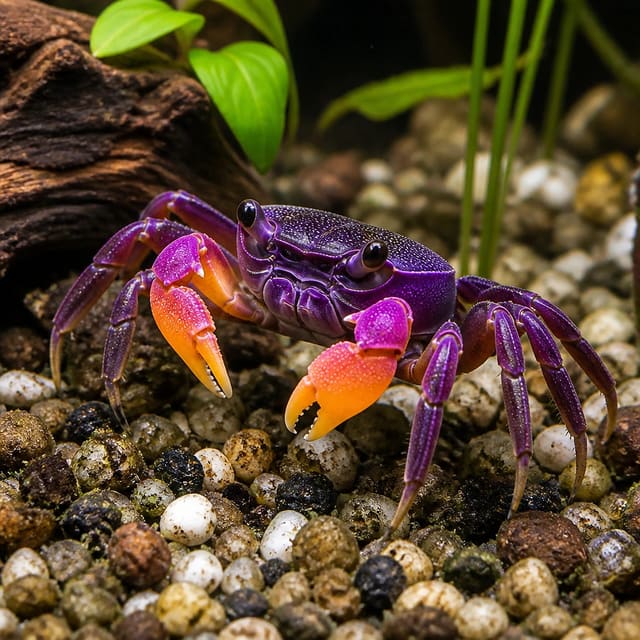
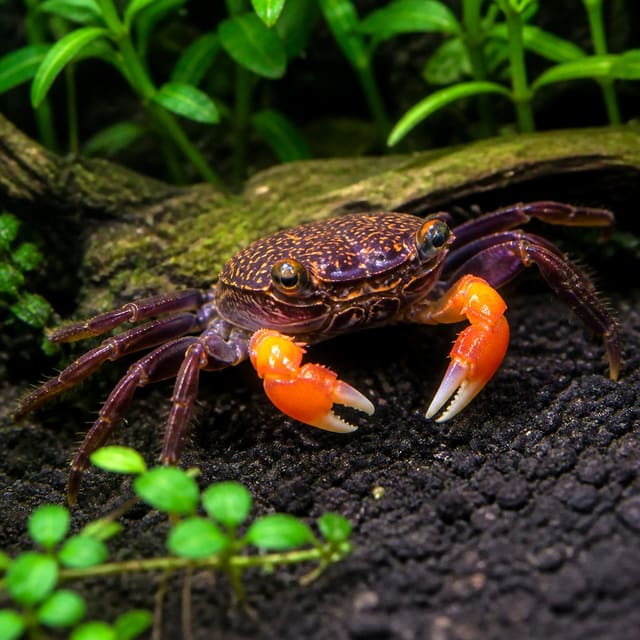
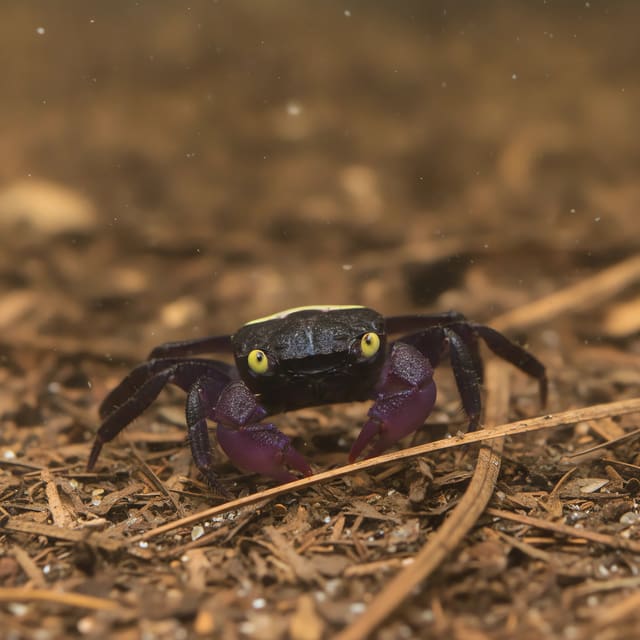
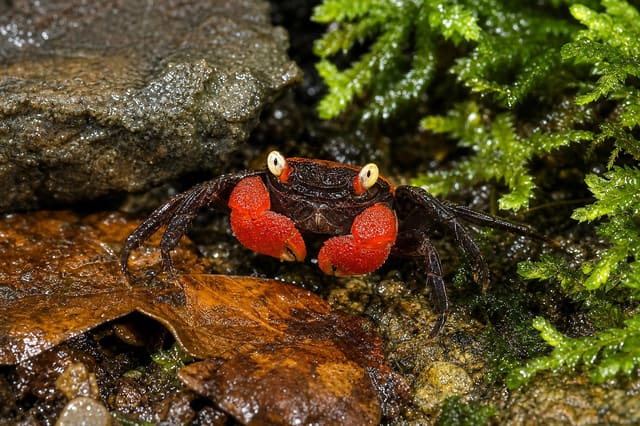
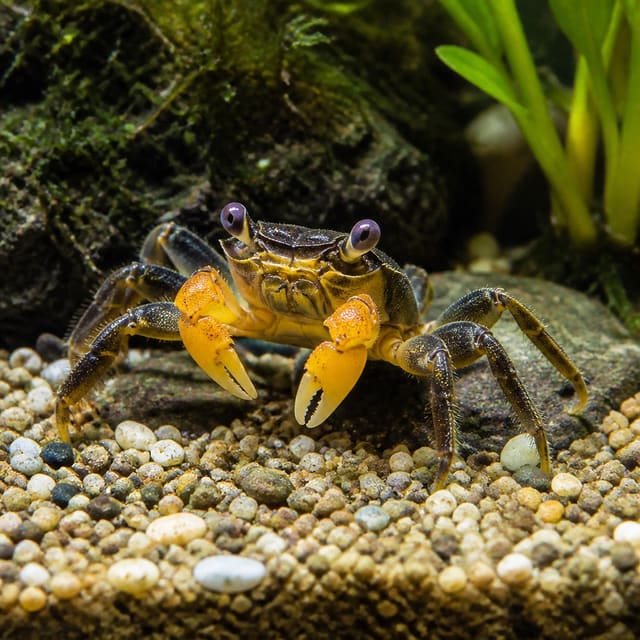
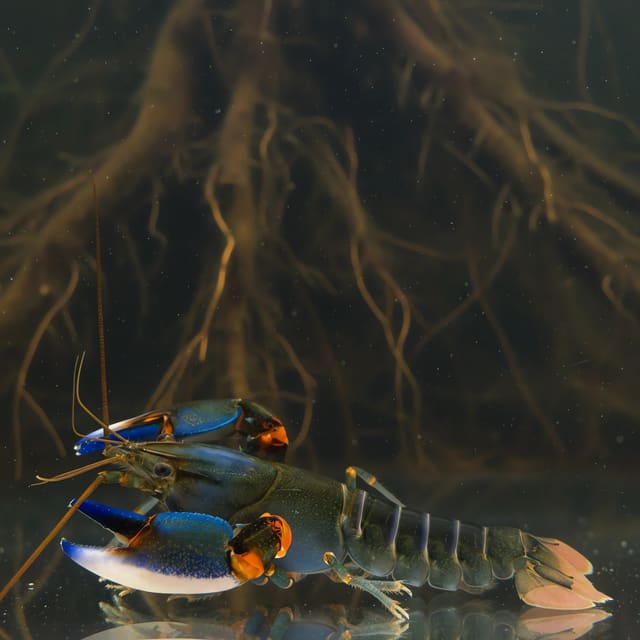
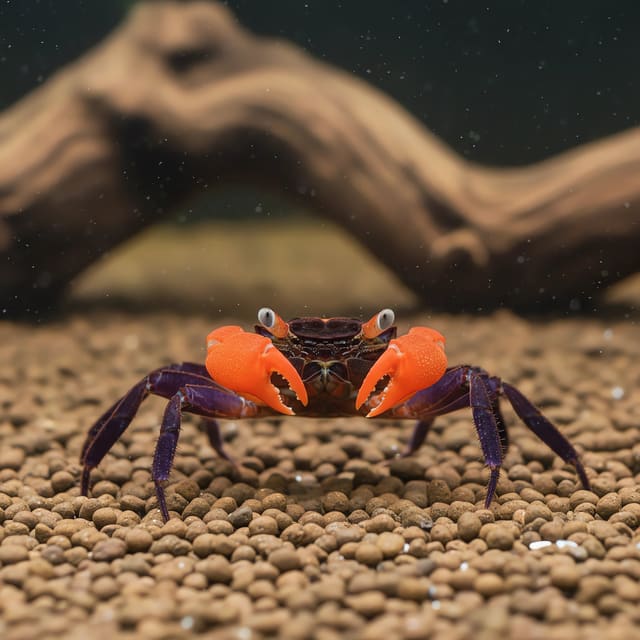
Some gallery images are representative, based on reference photographs of this species, and none shows the exact animal supplied, so colours can look slightly different from the live animal.
Use the gallery to recognise the general appearance associated with this colour form. Do not infer sex, maturity, purchase quantity or an individual pattern from a scene. One gallery scene contains two visible crabs, but the sold unit remains one animal per purchase.
Keep notes under both the common and scientific names so feeding, water tests and observations remain attached to the correct animal. Formal identification depends on anatomical features rather than colour alone, so avoid treating one photograph or colour description as a diagnostic test.
Geosesarma dennerle is a terrestrial crab sold for a semi-terrestrial paludarium. Start with a dedicated enclosure that includes a genuinely usable terrestrial area and a freshwater section you can filter and maintain. An aquarium dominated by open swimming water does not follow the animal’s recorded terrestrial way of life.
Make every part of the layout serve a clear function. The terrestrial area must provide somewhere for the crab to stand and move without remaining in the freshwater section. Freshwater must remain reachable, and the filter must be accessible for inspection. Arrange the enclosure so food and visible waste can be removed without taking the entire structure apart.
| Enclosure decision | Practical test |
|---|---|
| Terrestrial area | Can the crab use land as the principal part of its home? |
| Freshwater section | Can the water be conditioned, filtered, tested and maintained? |
| Connection between zones | Can the animal reach both parts of the paludarium? |
| Inspection | Can you check the crab and equipment without dismantling everything? |
| Waste control | Can uneaten food and debris be found and removed? |
Do not select an enclosure from height or total litres alone. Those measurements say little about how much terrestrial space the crab can use or how practical the freshwater section will be to maintain. Compare layouts by usable surfaces, access and the work required to keep the aquatic system functioning.
Complete structural work before the animal arrives. Moving the boundary between land and water after introduction can disrupt the habitat and freshwater filter. Run the finished system, check that equipment remains accessible and practise the maintenance route before livestock is placed inside.
Browse the shrimps and crustaceans collection to compare different invertebrate types, but choose the habitat from the named animal. A terrestrial vampire crab must not be treated as interchangeable with a fully aquatic crustacean simply because both belong to a broad retail category.
Manage the freshwater section as an aquatic system rather than as decoration. Test it, record the results and respond to trends before adding more animals or increasing feeding. Clear-looking water can still contain dissolved waste, so appearance is not a substitute for measurement.
No numerical temperature, pH or hardness range is attached to this profile. Establish stable conditions for the completed paludarium and avoid abrupt, unmeasured corrections. Record temperature and pH with the date, then compare readings taken at the same place and time so genuine movement can be separated from testing variation.
| Check | Decision it supports |
|---|---|
| Temperature | Shows whether conditions remain stable between daily checks |
| pH | Shows whether freshwater chemistry is changing over time |
| Ammonia | Indicates whether toxic waste is entering the water faster than it is processed |
| Nitrite | Indicates whether the biological filter is completing the next stage of waste processing |
| Nitrate | Helps track the longer-term result of feeding, waste and maintenance |
The water chemistry guide explains what common aquarium tests measure and why the results matter. Write down the unit shown by each test rather than recording only a number. A value without its unit, date and test type is difficult to compare later.
Use the water matcher after measuring the actual enclosure. Enter test results from the paludarium rather than relying only on a regional water-company average, because the useful comparison is with the water the animal will encounter.
A working biological filter supports bacteria that process animal waste. The RSPCA’s aquarium filtration guidance explains that toxic ammonia is converted to nitrite, which is also toxic, and then to the safer nitrate. This is general aquarium guidance rather than a species-specific optimum, but it explains why the paludarium’s freshwater section must be prepared and maintained.
Do not judge filter maturity from water clarity. Use suitable tests and record ammonia, nitrite and nitrate before introduction. Check that the filter is operating normally and that its media has not dried out or been removed during the final enclosure build.
The invertebrate aquarium preparation guide offers a practical checklist for establishing a freshwater system before livestock arrives. Apply its preparation principles to the aquatic part of this paludarium while retaining the terrestrial layout required by this crab.
Every animal and every meal adds material that the enclosure must process. A test completed before introduction is therefore a starting point rather than permanent proof of capacity. Repeat the measurements after the crab begins feeding and whenever the stocking or feeding load changes.
For example, two purchased animals create a different filtration load from one animal even when they share the same identity. Do not treat them as one biological addition. Prepare the habitat and filtration capacity first, then watch the measured response rather than relying on the water’s appearance.
A ready paludarium has two parts: the physical layout serves a terrestrial crab, and the freshwater system is operating with biological filtration. Both must be in place before the animal is introduced.
Choose a nutritionally complete food labelled for terrestrial freshwater crabs and follow its feeding directions. Keep the routine measurable and prevent uneaten food from accumulating in the freshwater section.
Begin with a controlled amount that can be observed and removed. Place food where you can check whether it has been taken without dismantling the habitat. A feeding location hidden beneath permanent structures makes it difficult to distinguish consumption from decay.
| What you observe | What to do next |
|---|---|
| Food remains uneaten | Remove it and reduce the next amount |
| Food enters the freshwater section | Remove the debris and check water quality |
| Interest in food changes | Compare behaviour with recent water tests and maintenance |
| More animals are added | Reassess both food input and filtration load |
| Water readings worsen after feeding | Reduce waste input and inspect filter operation |
Do not increase the amount automatically because food disappears from view. Confirm that the crab is taking it rather than that pieces are being lost beneath décor or carried into water. Make one small change at a time and record the result.
Feeding and water management are linked. Material left to decay adds waste, while a sudden increase in food changes the demand placed on the biological filter. Test the freshwater when leftovers accumulate, feeding changes substantially or more animals are introduced.
Keep packaging instructions for the chosen food so portion guidance and storage conditions remain accessible. Replace food that has become damp, spoiled or contaminated. A clean, controlled routine provides a clearer view of appetite and makes water-quality changes easier to trace.
Because no exact schedule is established here, use the product directions and the crab’s observed response without turning one day’s appetite into a permanent rule. Consistent records of food offered, food removed and water tests provide the most useful basis for adjustment.
Maintain the freshwater section regularly enough to keep the biological filter operating and prevent visible waste from accumulating. Base partial water changes and equipment cleaning on measured results, the amount of food entering the system and the filter’s normal flow.
| Maintenance check | Action |
|---|---|
| Water tests | Record ammonia, nitrite and nitrate with units and dates |
| Visible debris | Remove accessible waste without dismantling the whole habitat |
| Replacement water | Prepare it before beginning the water change |
| Filter operation | Check that flow and equipment remain normal |
| Filter media | Preserve the biological media while clearing a genuine blockage |
| Care log | Note what was changed so later readings can be interpreted |
The RSPCA explains that the filter’s bacteria carry out the conversion from ammonia to nitrite and then nitrate. Protect that biological function during maintenance. Avoid replacing or heavily disturbing all established filter media during the same session unless equipment failure leaves no alternative.
Test before maintenance when you need to understand the condition that developed since the last check. Record the result, remove accessible waste and complete the planned work. Afterwards, confirm that the filter is running and that the freshwater remains reachable.
A partial water change should correct accumulated waste without creating an abrupt environmental shift. Prepare replacement water consistently and avoid changing several unrelated parts of the paludarium at the same time. When one change produces an unexpected result, the care log should make the cause easier to identify.
Regular maintenance should preserve the filter while controlling waste. It should not become a complete rebuild of the crab’s habitat. If every cleaning session requires the terrestrial layout to be dismantled, revise the service access before that design creates repeated disruption.
Learn the crab’s usual pattern of movement, shelter use and feeding. Observe from outside the enclosure before moving anything. A consistent routine makes a genuine change easier to recognise than repeated disturbance followed by guesswork.
| Change noticed | First practical response |
|---|---|
| Reduced interest in food | Remove leftovers and test the freshwater |
| Different use of land or water | Check access to both areas and review recent changes |
| Unusual inactivity | Confirm filter operation and compare current readings with the care log |
| Repeated attempts to leave one area | Inspect the layout and equipment without handling the crab |
| Visible injury or loss of normal movement | Record the condition and seek prompt advice |
Begin with measured environmental checks. Inspect the filter, test the water and review any recent increase in food, livestock or maintenance. This sequence identifies practical problems without relying on colour alone, which can be misleading in a crab whose appearance varies between images and lighting conditions.
Change one controllable factor at a time unless an immediate hazard requires faster action. Several simultaneous adjustments make it difficult to identify which condition mattered and may destabilise the freshwater section further.
Keep a short log containing the date, food offered, water-test results, filter maintenance and notable behaviour. The entries do not need to be long. Their value comes from making trends visible and connecting a change with a recent event.
If a health change concerns you, contact us with clear photographs, the recent water readings and a description of what changed. Include whether the crab can move normally, whether it has fed and whether any equipment or enclosure work took place beforehand.
The first month should establish a repeatable pattern of receipt, observation, feeding, water testing and filter maintenance. Preparation continues after introduction because the biological filter must respond to the actual amount of food and waste entering the freshwater section.
These steps come from the Tropical Fish Co delivery policy. Keep the video with the order details and inspect the parcel on the day it arrives.
Read the complete log rather than judging the system from its latest result. Stable readings, normal filter operation, controlled feeding and predictable use of the enclosure show that the routine is becoming repeatable. Rising waste, repeated leftovers or a persistent behavioural change calls for investigation before any increase in livestock.
Continue the same sequence after the first month. Test, observe and maintain the system in a consistent order so each result can be interpreted. Do not reduce care simply because the water looks clear or the crab has begun using a regular shelter.
Plan the Purple Vampire Crab as the principal animal in a dedicated paludarium. Assess every fish, shrimp, snail or other crab individually because this terrestrial crab’s layout and filtration needs may conflict with those of an aquatic companion.
Start with the enclosure rather than a list of species names. This crab is terrestrial, while a fish or fully aquatic invertebrate depends on aquatic space. A proposed mixed home must preserve the crab’s usable land while providing the other animal with its own complete environment and maintaining the freshwater filter under the combined waste load.
| Proposed addition | Screening decision |
|---|---|
| Fish | Check whether its aquatic-space needs conflict with the terrestrial paludarium layout |
| Shrimp or other aquatic invertebrate | Assess its water requirements and the enlarged filtration load |
| Another crab | Treat it as a separate animal requiring its own space and behaviour assessment |
| Any mixed setup | Prepare a way to separate the animals if the plan fails |
Do not infer compatibility from retail category, shared use of freshwater or similar common names. Two animals can both be described as freshwater invertebrates while using very different parts of an enclosure.
Check four points before considering a companion. First, can the terrestrial area remain fully usable? Second, can the freshwater section serve the aquatic animal without displacing the crab’s habitat? Third, can the biological filter process the combined feeding and waste? Fourth, can either animal be moved promptly if its welfare changes?
Without clear answers to all four questions, keep the setup species-focused. This avoids turning the basic enclosure design into a compromise and makes feeding, waste and behavioural changes easier to trace to the animal concerned.
The compatibility limit here is uncertainty rather than a claim that every possible companion must be avoided. Make the decision from the complete needs of both animals and the actual paludarium, not from a gallery scene or a shared category label.
One purchase supplies one animal, while keeping more than one crab is a separate stocking decision. Do not treat purchase quantity as a group-care recommendation or assume that two animals form a pair.
Every additional crab increases feeding and waste. The freshwater filter must process the resulting load, and the terrestrial area must remain usable for the enlarged plan. Review both parts of the paludarium before increasing numbers.
Shared identity does not guarantee compatible individual behaviour. Use no preset numerical group size or sex ratio, and do not assume a pairing outcome. Keep that uncertainty in the plan by retaining a practical separation route.
Do not use an image showing two animals as group-care guidance. That scene describes what is visible in the gallery, while the offer remains one animal per purchase and the housing decision depends on the actual enclosure.
Contact us for a stocking and compatibility assessment before increasing numbers. Include the usable layout, current livestock count, filter type and recent water readings so the discussion can address the complete system rather than total litres alone.
After any addition, compare feeding, use of the enclosure and water results with the earlier log. A change in one animal’s access to resources or a rise in aquatic waste means the enlarged plan needs reassessment. Do not make another addition while the previous change is still producing uncertain results.
The safest planning sequence is capacity first, animal second and reassessment third. That sequence prevents the purchase quantity from becoming an accidental stocking recommendation.
The 4 cm figure is its dispatch grade rather than an adult-size measurement. Plan the paludarium around usable terrestrial space, freshwater access and maintainable filtration instead of treating 4 cm as its final size.
Use a dedicated semi-terrestrial paludarium with enough usable land for the crab and a freshwater section you can filter, test and maintain. Choose dimensions from the functional layout rather than total litres alone.
No numerical group size or guaranteed pairing outcome applies here. Assess every additional crab separately, prepare extra housing and repeat water tests after the feeding and waste load increases.
It suits a keeper prepared for an intermediate paludarium project in which the terrestrial layout and biologically filtered freshwater section must work together. Prepare the complete habitat and maintenance routine before the crab arrives.
Choose a nutritionally complete food labelled for terrestrial freshwater crabs and follow its directions. Offer a controlled amount where it can be observed, remove leftovers and test the freshwater if waste accumulates.
Keep the completed paludarium stable and measure temperature and pH rather than estimating them. Record each result with its unit and date, avoid abrupt unmeasured changes and investigate ammonia or nitrite promptly.
No universal behaviour outcome is promised. Screen fish by whether their aquatic-space needs conflict with the crab’s terrestrial paludarium and prepare separate accommodation before attempting a mixed setup.
No universal companion is named for this crab. Keep the paludarium species-focused unless every proposed animal has compatible habitat needs, the filter can handle the combined waste and separation is ready.
Start filming every delivery while the parcel is still sealed, then open it in one continuous take with the animal still in the sealed bag. Someone must be present to receive it; float the bag for 20–30 minutes and never pour the bag water into the aquarium.
No reviews for this item yet. Bought one? Honest reviews only, good or bad.
What customers say about ordering from us
I have a small group of long finned mountain minnows. So was delighted to be able to order ten of this variety to increase the genetics in my tank . The ones I recieved are healthy but it’s to early to give a verdict on wether they are of a long finned type since they are small currently.
Gordon Walker · 23 Sept 2026
100% success travel and "installation". Pleased with quality of purchase. The Siamese fighter a bit "shy" so have not yet seen him at his best yet but looking good. Happy customer. GG
George E Garratt · 21 Sept 2026
Reviews of our shop, collected by Judge.me, an independent third-party review collector. Newest first.