By Sophie Harding
Moderate
Vampire Crab Colour Mix (Geosesarma sp.)
£9.09
Shrimps & Crustaceans · Buying Guide
Our UK vampire crab guide - Geosesarma colour forms, the paludarium they actually need, group size, diet and safe live delivery. Shop in stock now.
12 products in stock today
Live prices and stock. Every fish covered by our Live Arrival Guarantee.




22–28°C
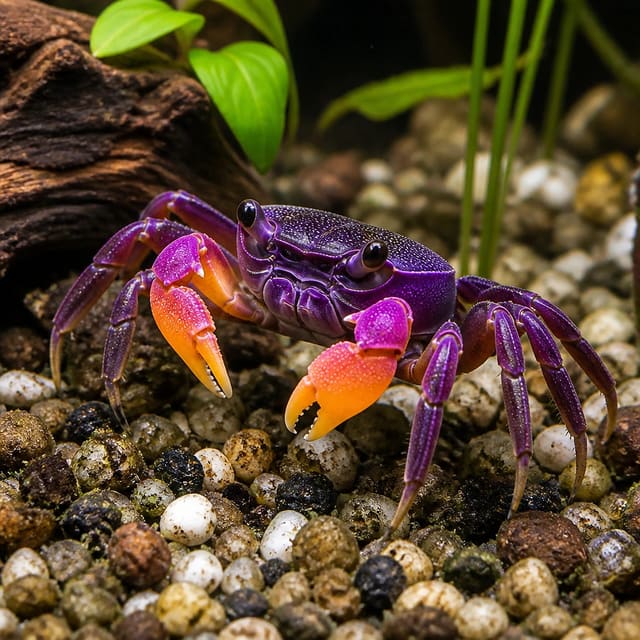
22–27°C · pH 7.5–8 · 40L
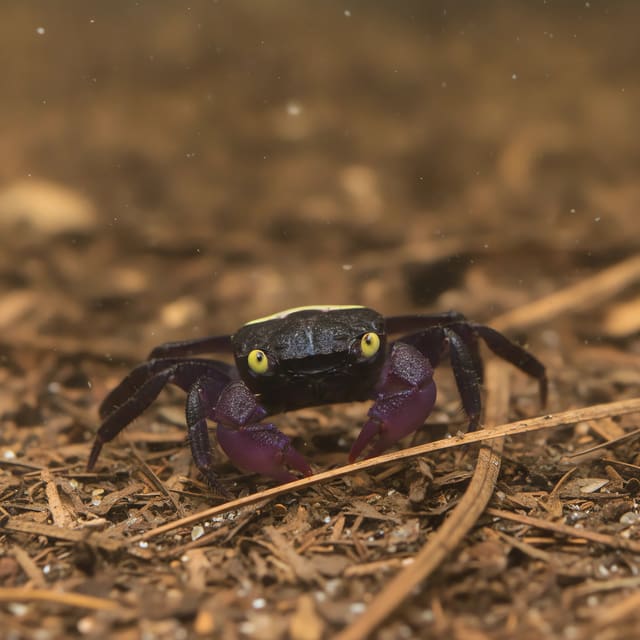
22–28°C · pH 7.5–8 · 40L
Our trained assistant knows this vampire crab page inside out. Ask it anything — water parameters, tank mates, how many to buy — or have it read the guide aloud while you set up your tank.
You have seen a photo - a crab the colour of an amethyst with glowing yellow eyes - and you want one for your aquarium. Here is the problem almost every UK guide skips: a vampire crab is not an aquarium animal. Drop one into a normal flooded fish tank and it drowns. That single misunderstanding is the most common way these crabs die in their first week, and it is entirely avoidable.
I'm Sophie Harding, the invertebrate specialist here at Tropical Fish Co - shrimp, snails and crabs are my lane, and vampire crabs are the animal I get the most "why did it die?" emails about. Almost every one traces back to the same cause: the crab was kept like a fish. Vampire crabs are Geosesarma, a genus of small semi-terrestrial crabs from the forest streams of Indonesia. In the wild they climb roots and rocks at the water's edge and only soak in the shallows. They breathe air. They need land.
This page is the answer I'd give a customer standing at our tanks asking "can I just put it in my shrimp tank?" The short answer is no - you need a paludarium (part land, part shallow water). The longer answer, below, covers the colour forms we stock, how to build the enclosure, group size, what they really eat, how they moult and breed, and the honest truth about tank mates. Get the setup right and a vampire crab is one of the most characterful little animals in the hobby - they're alert, they recognise feeding time, and watching a group go about its evening on a mossy bank is a different kind of fishkeeping entirely.
I'll also be straight about where they don't fit. If you want a colourful animal to drop into an existing community aquarium, a vampire crab is the wrong choice and I'd point you at shrimp instead. If you're up for a small land-and-water build, though, you're in exactly the right place. Let's get it right from the start.
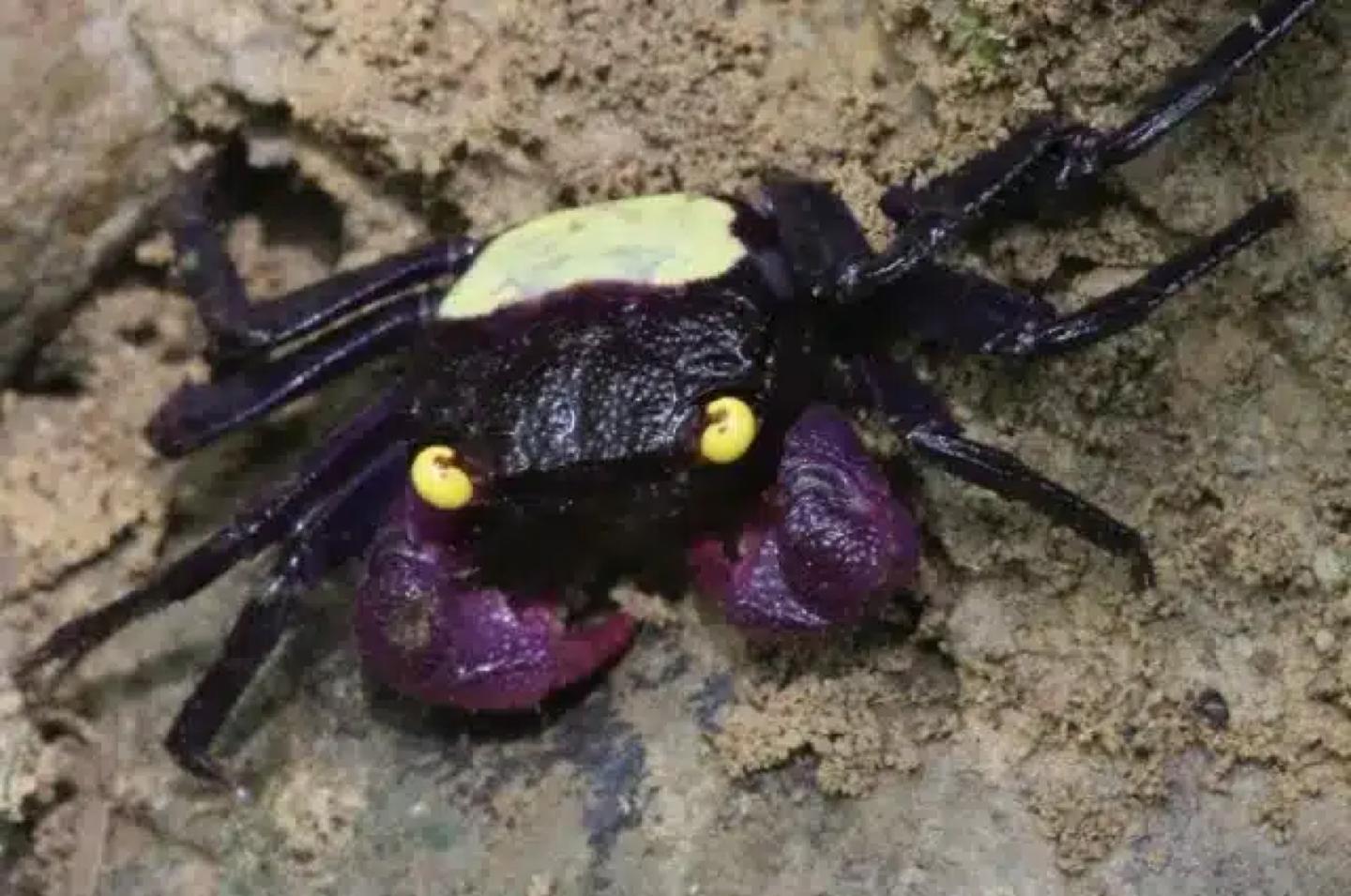
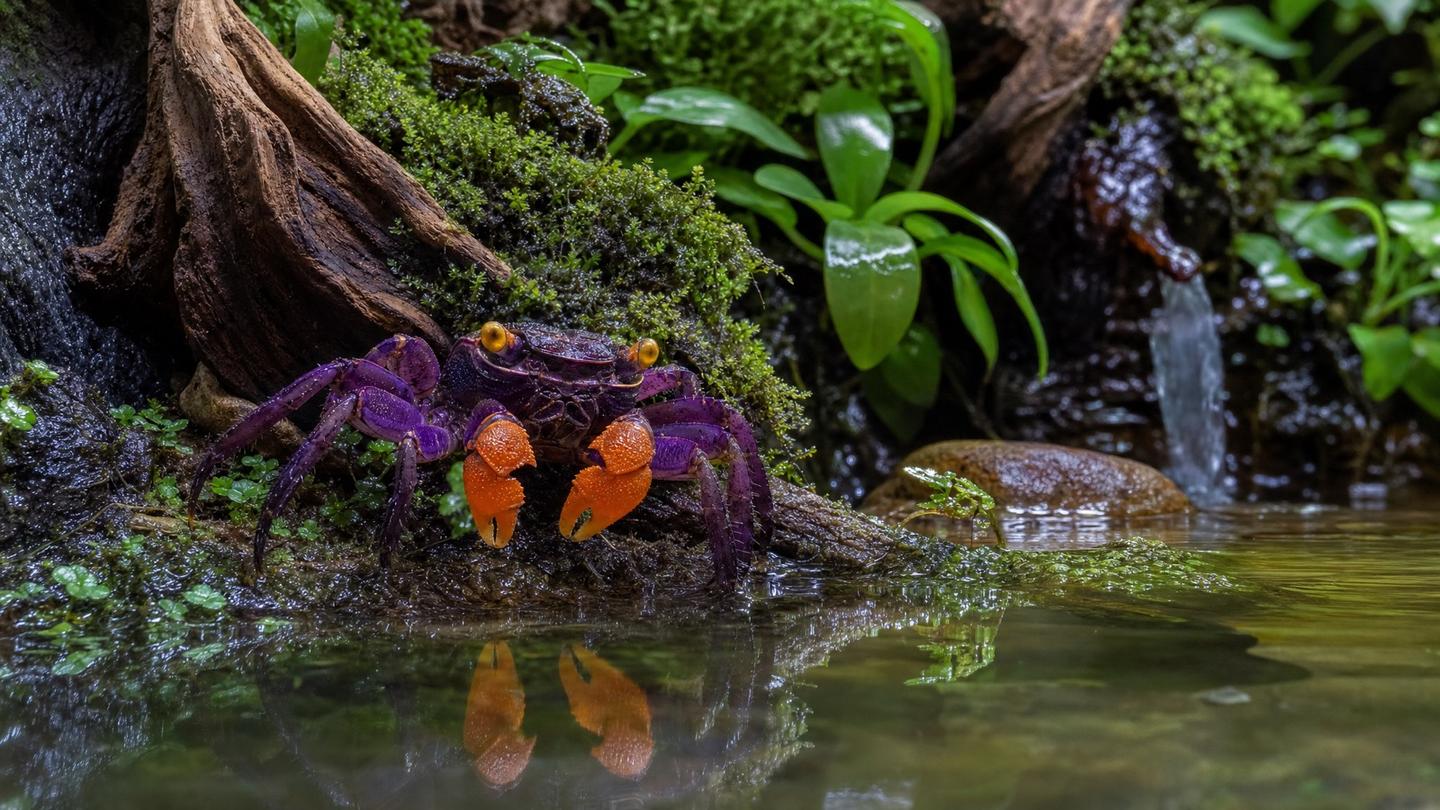
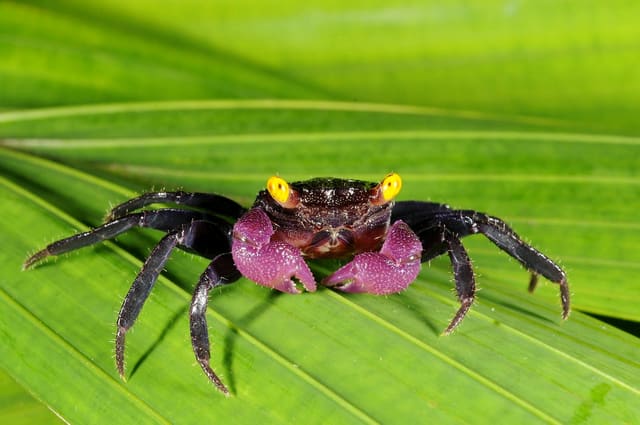
A vampire crab (Geosesarma) showing the trademark jewel colouring and raised eyes. Photo: Tropical Fish Co.
The vampire crab is a young animal in science as well as the hobby, and it has a few genuinely surprising traits.
Before you pick a colour, pick the right type of enclosure. This table sets the vampire crab against the two fully-aquatic inverts people most often confuse it with - because if you wanted "a colourful thing for my planted tank," one of the shrimp may actually be what you're after.
| What you're choosing | Vampire crab (Geosesarma) | Cherry shrimp (Neocaridina) | Amano shrimp (Caridina) |
|---|---|---|---|
| Lives underwater? | No - needs land | Yes - fully aquatic | Yes - fully aquatic |
| Enclosure | Paludarium (land + shallow water) | Standard planted tank | Standard planted tank |
| Needs a sealed lid? | Yes - escape artist | No | Helpful (jumpers) |
| Adult size | ~2.5 cm body, 4-5 cm legspan | 2-3 cm | 4-5 cm |
| Safe with small shrimp/fry? | No - opportunistic | Yes (adults) | Yes |
| Breeds at home in fresh water? | Yes (direct development) | Yes, easily | No (needs brackish larval stage) |
| Best kept as | Crab-only jungle display | Community-safe colony | Algae crew |
If the words "build a paludarium" already feel like too much, the right column is your animal - start with our cherry shrimp guide instead. If a land-and-water jungle excites you, read on.
A paludarium is simply a tank that is mostly land with a section of shallow water. It is the only correct home for a vampire crab. Here is the build I set up for our display crabs.
Every vampire crab loss I'm asked about is one of two mistakes. Drowning - the crab was kept in a flooded tank with no land to climb out onto. Drying out - the crab escaped through an unsealed lid. Get the land area and the lid right and you've eliminated the two biggest risks before you even choose a colour.
Two biological events define life with vampire crabs, and knowing them turns "is my crab dying?" panic into calm observation.
Moulting. Like all crustaceans, vampire crabs grow by shedding their shell. A crab about to moult goes quiet and hides; afterwards you'll often find what looks like a dead crab lying still - it's almost always the empty shed shell, and the real crab is tucked away while its new soft shell hardens over a day or two [3]. Never disturb a freshly-moulted crab, and leave the old shell in the tank - the crab eats it back to recover calcium. Persistent soft or deformed shells point to a calcium shortfall, so a cuttlebone or calcium-rich food in the enclosure is cheap insurance.
Breeding. This is the genuinely special part. Most crabs can't reproduce in fresh water because their larvae need the sea - but Geosesarma have direct development: a mated female carries roughly 20-80 eggs folded under her tail (her "apron") for about a month, then releases fully formed miniature crabs - no free-swimming larval stage at all [2]. In a settled, well-fed, single-colour paludarium with good cover, this can happen at home with no special intervention. The tiny crabs are vulnerable to being eaten, so dense moss and leaf litter give them the hiding space they need to survive.
Because vampire crabs breed true to type, a single-colour group (say, all purple) produces purple babies. Mix several colour forms in one tank and the offspring blur into muddy, indistinct crabs over a generation or two. If you ever want to raise young - or simply keep a clean-looking colony - keep one colour form per enclosure.
All the crabs below are Geosesarma forms with the same core care - the same paludarium, the same diet, the same lid. The differences are colour and how widely available each form is. Care needs are effectively identical across the trade colour morphs [3], so choose on looks and on keeping one form per tank.
| Colour form | What you see | Notes |
|---|---|---|
| Purple (G. dennerle) | Violet shell, cream carapace patch, yellow eyes | The classic, best-documented form - described in 2015 |
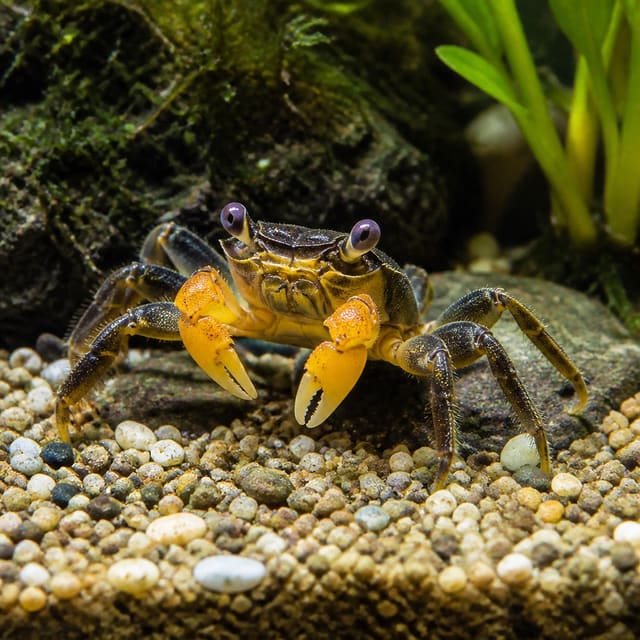
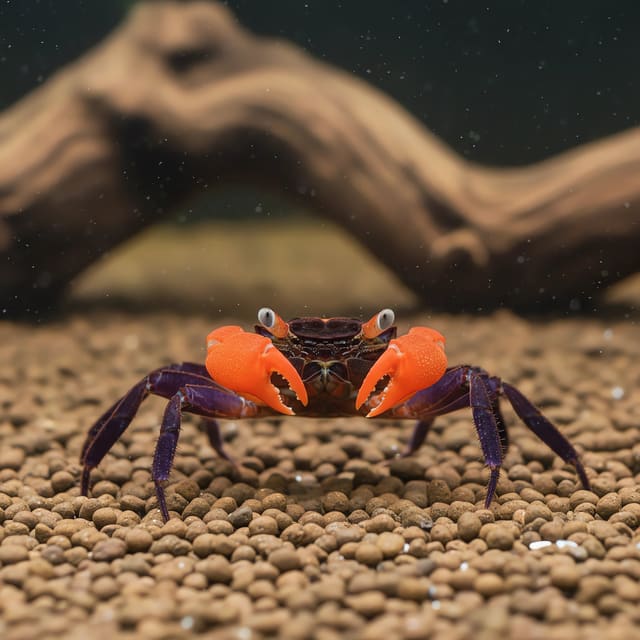
| Vampire Orange / Banana | Warm orange to yellow body | High-contrast against green moss; very showy |
| Red Tomato / Red Carnaval | Deep red shell and legs | Bold colour; striking under dim evening light |
| Vampire Yellow / Golden Eye | Pale-yellow body, gold eyes | Lighter palette; reads well on dark hardscape |
| Batik / White-leg / Violet | Patterned or pale-limbed forms | Collector forms - rarer, prices a little higher |
There's no "hardier colour" - they're all the same care. Pick the colour you'll enjoy watching, then keep that one form alone so any babies come out the same colour.
People budget for the crabs and forget the enclosure. Here's the honest shopping list for a small starter paludarium, so there are no surprises.
| Item | Rough UK cost | Why it matters |
|---|---|---|
| 3-5 crabs (one colour form) | £35-£80 | The animals themselves - our forms run roughly £11-£17 each |
| 40-60 L tank with a tight lid | £40-£70 | The lid is the part that keeps them alive - don't skip it |
| Substrate, cork bark, slate (land build) | £20-£35 | Builds the two-thirds land area they need |
| Moss, leaf litter, hardy plants | £15-£30 | Cover, grazing and humidity |
| Small heater + sponge/trickle filter | £20-£40 | Holds 22-28 °C and keeps the shallow water clean |
| Calcium source + crab/shrimp food | £10-£15 | Successful moulting and a balanced omnivore diet |
A realistic first paludarium lands around £140-£270 all-in. It's a one-off build - after that you're only topping up food and the occasional plant.
Here's where I'll be blunt, because the welfare matters: vampire crabs are not a community animal. They're semi-aggressive toward other crabs and opportunistic toward anything slow or sleeping [3]. There is no list of "guaranteed-safe vampire crab tank mates" - any small fish, shrimp or shrimplet sharing the water risks being eaten at dusk.
So I don't frame the animals below as tank mates. I frame them as other inverts that suit a similar land-and-water build - usually in their own enclosures, occasionally cohabiting only if you've got the space, the cover and an acceptance of risk. The one genuinely peaceful, fully-aquatic exception is the Thai micro crab, which is too tiny and gentle to threaten anything (but is itself at risk from a vampire crab, so keep it separately).
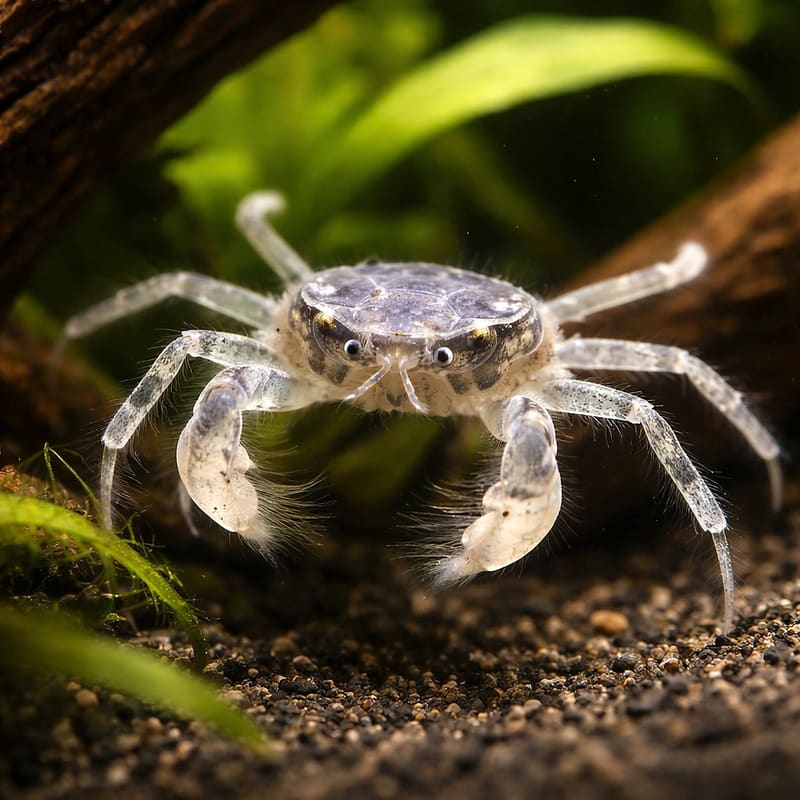
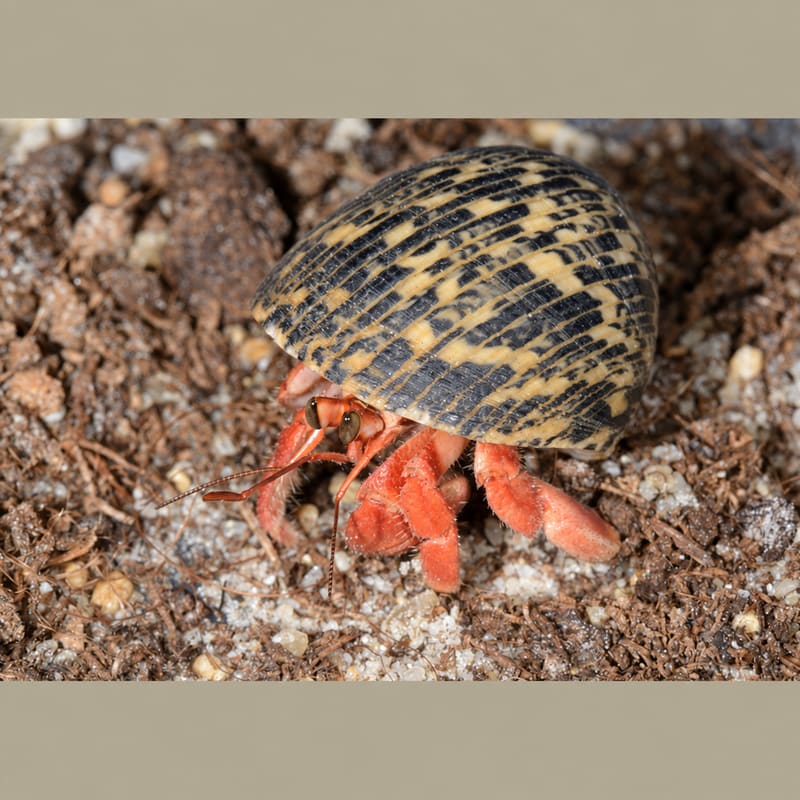
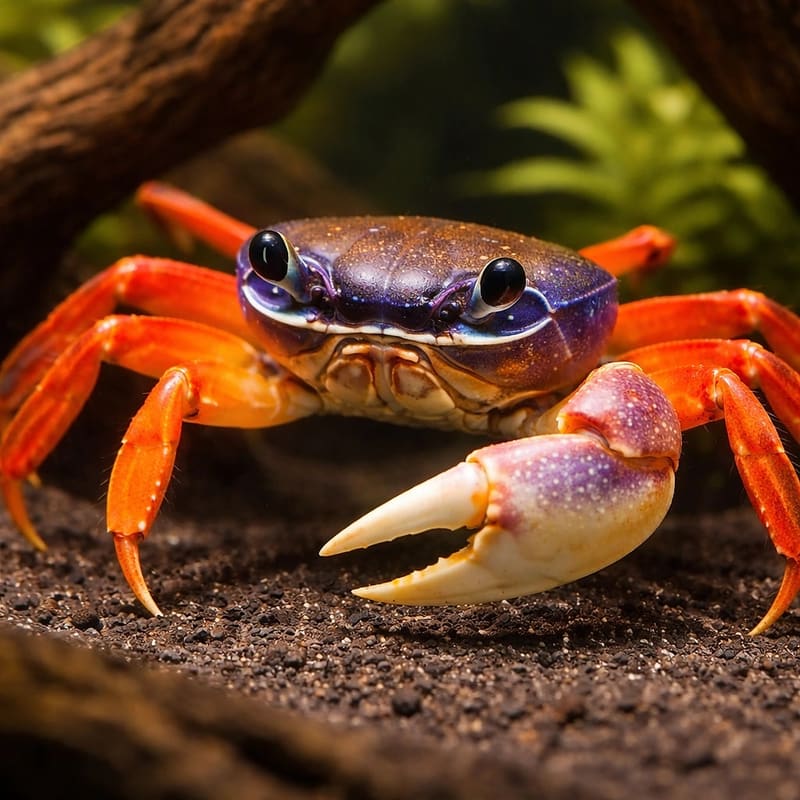
Land-and-water inverts that suit a similar build - kept in their own enclosures unless you have the space and accept the risk. Thai Micro Crab (K072) - tiny, peaceful, fully aquatic. Vietnam Red Sesarma (K503) - a semi-terrestrial cousin. Land Hermit Crab (9156) and Patriot/Rainbow Land Crab (K086) - terrestrial paludarium animals with their own needs.
The clip below is a settled planted invert tank from our warehouse. It shows the kind of dense moss, leaf litter and gentle water a paludarium's water section should imitate - the difference for crabs is that you raise two-thirds of it into dry land they can climb out onto.
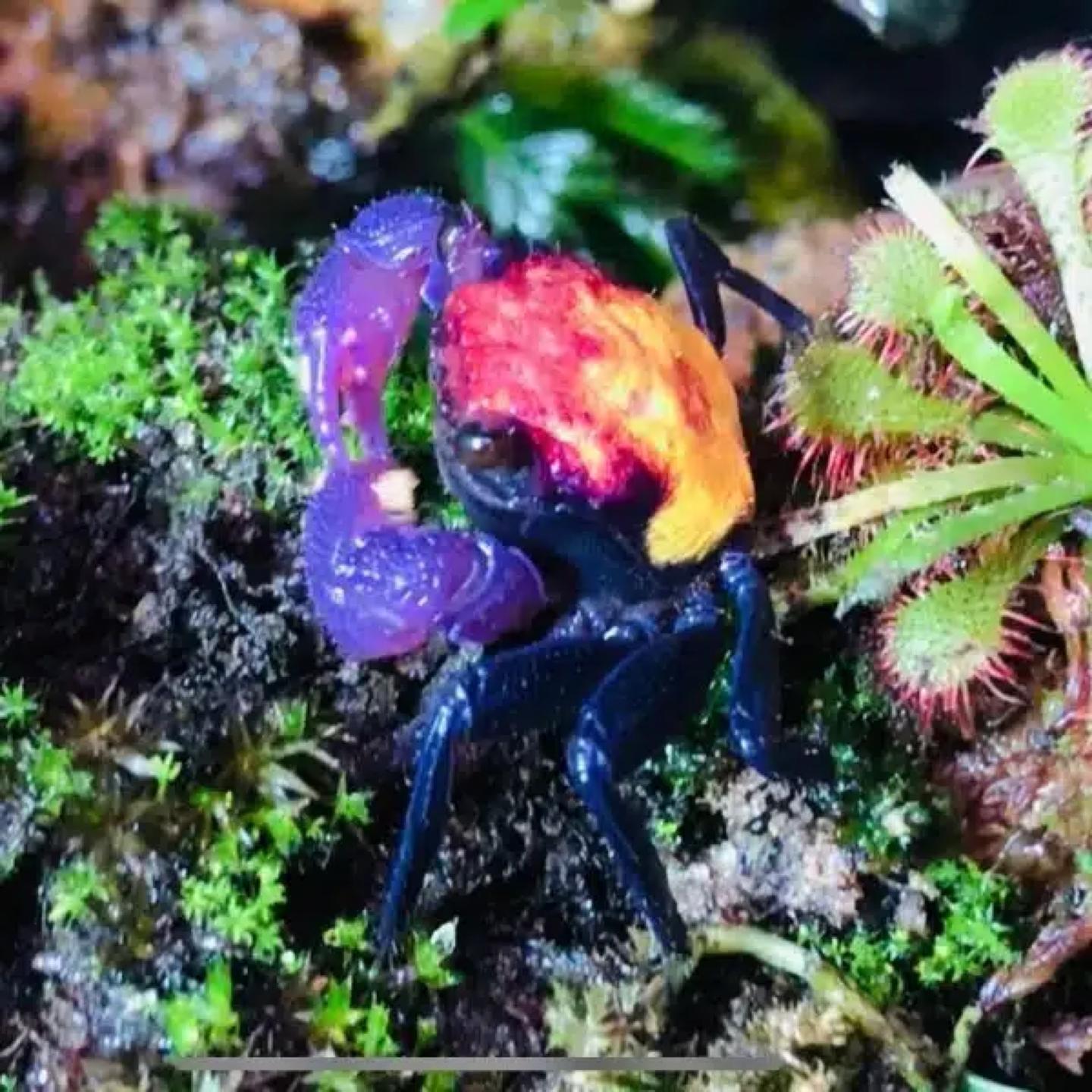
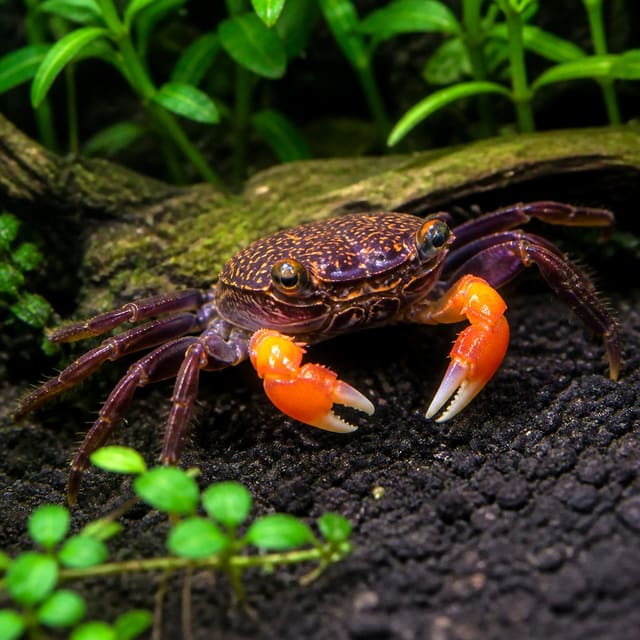
A red colour-form Geosesarma. Single-colour groups breed true; mixed colours produce muddy offspring over generations. Photo: Tropical Fish Co.
Vampire crabs ship via a licensed live-animal courier in damp, ventilated packaging - never standing water, because a sealed crab in deep water can drown in transit. Like all live crustaceans reaching the UK, Geosesarma are imported under the Fish Health Inspectorate's framework rather than bred here at scale [5], so the animal you receive has already had a long journey - gentle acclimation matters. It's a little different from fish or shrimp, because you're settling a semi-terrestrial animal, not a swimmer [6].
Crabs moult to grow, and a freshly-moulted crab is soft, pale and defenceless for a day or two. If you see a "second crab" lying still it's almost always a shed shell, not a death - leave it, the crab will eat it back for calcium. Never handle or move a soft, newly-moulted crab.
Most vampire-crab problems are environmental, not disease, and they show up as behaviour changes. Work down this table before you reach for any treatment - nine times out of ten the fix is the enclosure, not the crab.
| What you see | Most likely cause | What to do |
|---|---|---|
| Crab lethargic in deep water, won't climb out | No dry land / water too deep | Rebuild for two-thirds land; let it reach air immediately |
| Crab missing from the tank entirely | Escaped through a lid gap | Seal every opening around filters/cables; search warm dark corners fast |
| A pale, still "dead" crab on its back | Recent moult (shed shell) | Leave it - the crab will eat the shell back for calcium [3] |
| Soft, deformed new shell after moulting | Calcium deficiency | Add cuttlebone / calcium-rich food; check hardness sits 4-16 dGH |
| One crab constantly chasing/cornering others | Overcrowding or wrong sex ratio | More hides and cover; aim for 1 male : 2+ females |
| Crab hides for weeks, never seen | Kept singly, or too little cover | Add a small same-colour group; pile on moss, bark and leaf litter |
| Sudden deaths after a water change | Chlorine / parameter swing | Always dechlorinate; change the shallow water in small amounts |
| Tank mate (shrimp/fish) disappearing | Predation at dusk | Expected - vampire crabs aren't community-safe; separate them |
A realistic timeline so you know what's normal and what isn't. Most new keepers worry in week one when the crabs vanish - that's expected, not a problem.
| When | What's happening | What to do |
|---|---|---|
| Before they arrive | Paludarium built and stable | Run the tank for 1-2 weeks first; confirm temperature 22-28 °C and a sealed lid |
| Days 1-3 | Crabs hide and explore at night | Lights low, no feeding day one, then feed lightly; don't go hunting for them |
| Week 1 | They start claiming hides and territories | Watch at dusk; check the lid seal again; offer varied food, remove leftovers |
| Weeks 2-4 | Confident roaming and surface climbing | Establish a light feeding rhythm; spot-clean uneaten food and old leaf litter |
| Weeks 4-8 | First moults likely | Leave shed shells in place; never disturb a soft crab; keep calcium available |
| Months 2-3 | Settled colony behaviour; possible berried female | If a female is carrying eggs, leave the tank undisturbed and keep cover dense for any young |
If a crab is still hiding permanently past week two and you're keeping it singly, that's the cause - add a small same-colour group and behaviour normalises.
Vampire crabs sit in the wider UK invertebrate-keeping scene, which is small but genuinely helpful - and far better for honest husbandry advice than a quick web search. None of these are shops; they're hobbyist communities and references worth bookmarking.
For a video walkthrough of a full paludarium build and feeding routine, the care guide below is a good watch before you start [6].
Vampire crabs sit at the crossover of the shrimp and snail world, so the husbandry foundations carry straight over from our invert guides.
Visual route into the rest of our UK live-fish range.
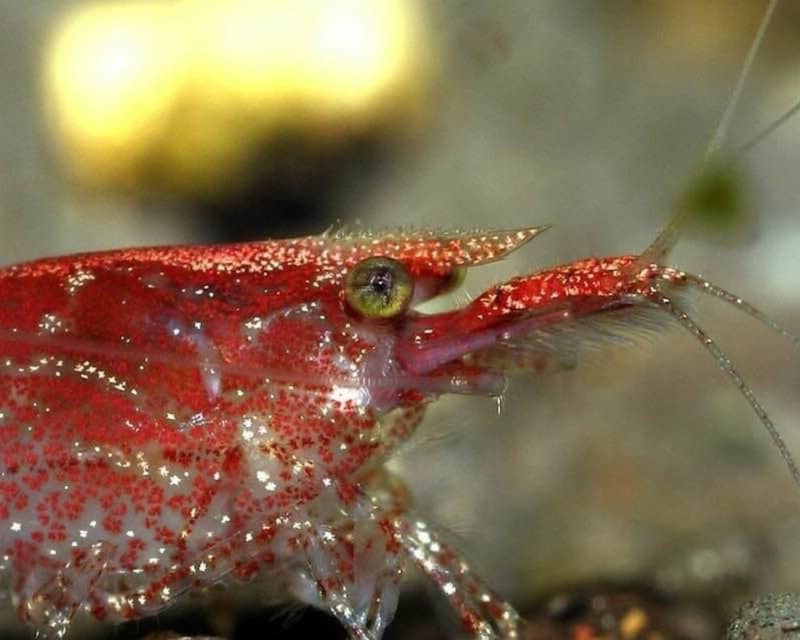
Cherry, Amano, Crystal, Tiger, Bamboo and Caridina shrimp, plus crayfish and crabs. Grade and size stated per listing; shrimp travel well and arrive alive.
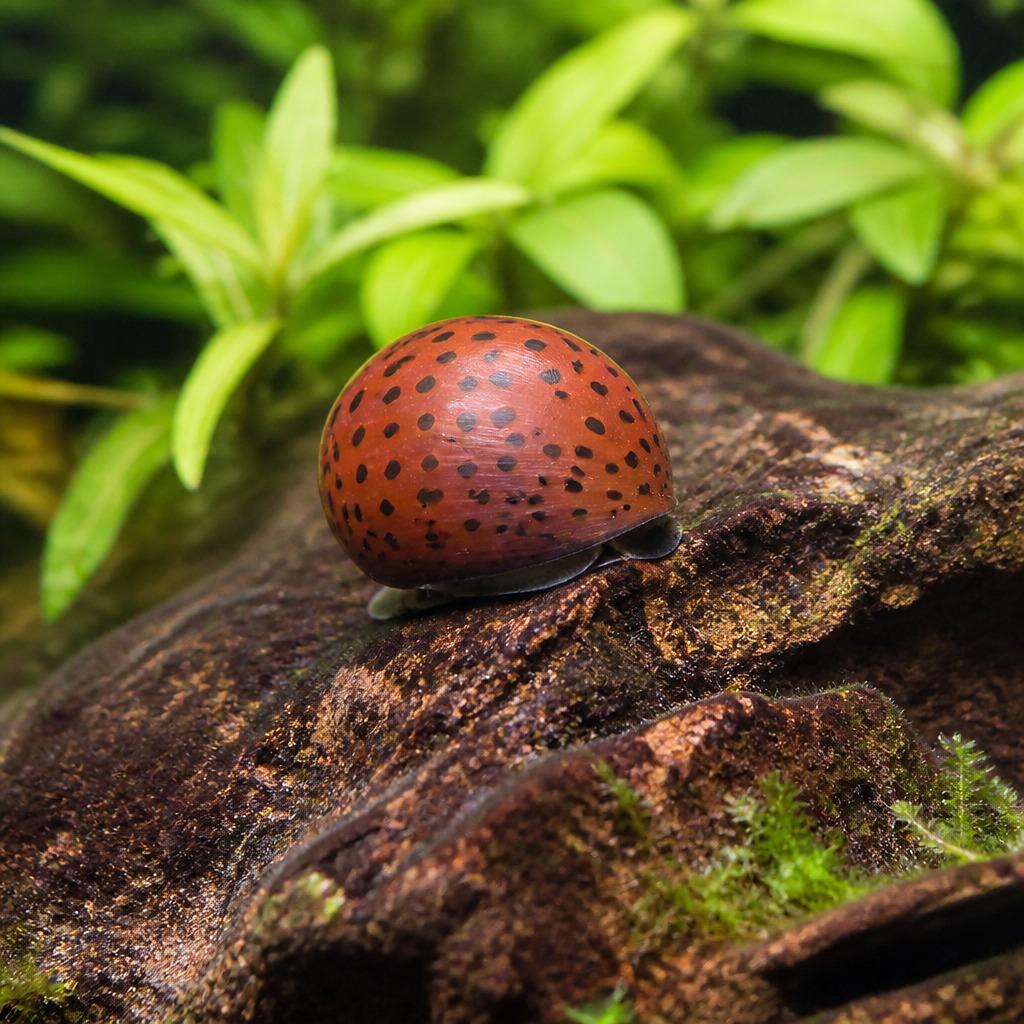
Shop freshwater aquarium snails in the UK. Compare current species, adult size, water needs, diet, breeding risk, compatibility, prices and availability.
Material factual claims cite the sources below; store policy and cautious inference are labelled in the article. Sources are grouped by type so you can judge their weight at a glance.
Formal description of G. dennerle and G. hagen. Source for size, range, and the freshwater direct-development life cycle.
Genus-level taxonomy, distribution, and direct-development reproduction summary with primary-literature citations.
UK hobbyist husbandry reference - amphibious setup, diet, crepuscular behaviour.
Trade-history note on the 2015 naming of G. dennerle and G. hagen.
Video walkthrough of paludarium setup, group ratios, and feeding.
UK regulatory framework covering live crustacean imports (Geosesarma are imported, not UK-bred at scale).
Fishkeeping moves fast and we want every guide spot-on. If you think something here is wrong, out of date, or could be clearer, tell us — our team reads every message and updates the page.
Suggest an editCherry, Amano, Crystal, Tiger, Bamboo and Caridina shrimp, plus crayfish and crabs. Grade and size stated per listing; shrimp travel well and arrive alive.
Shop freshwater aquarium snails in the UK. Compare current species, adult size, water needs, diet, breeding risk, compatibility, prices and availability.
Shrimp keeping in the UK: choose an identified freshwater shrimp, test your water, mature the filter, and plan feeding, cover and tank mates safely.
Nerite snail care for UK aquariums: identify species, plan mature grazing surfaces, understand egg capsules, prevent escapes and screen tank-mate risks.
Shrimp & Invertebrate Specialist · 12+ years in the hobby
Sophie has been breeding freshwater shrimp in her Bristol spare room since 2014, starting with a single colony of neocaridina and now running twelve species-specific tanks. Her shrimp guides on Tropical Fish Co lean heavily on first-hand breeding data — moults logged, water parameters tested with Salifert kits, and cull-rate stats that no YouTube video will give you.