Moderate
Purple Vampire Crab (Geosesarma dennerle) – Semi-Terrestrial Paludarium Crab
£8.09

Red Carnival Vampire Crab is a Geosesarma sp. trade form for a secure, humid, primarily land-based paludarium. Provide accessible clean freshwater, deep burrowing substrate, leaf litter, hides and a varied diet. One purchase supplies one live unsexed crab at the supplier's 2–3 cm dispatch grade.
Geosesarma sp.
Red Carnival Vampire Crab is a Geosesarma sp. trade form for a secure, humid, primarily land-based paludarium. Provide accessible clean freshwater, deep burrowing substrate, leaf litter, hides and a varied diet. One purchase supplies one live unsexed crab at the supplier's 2–3 cm dispatch grade.
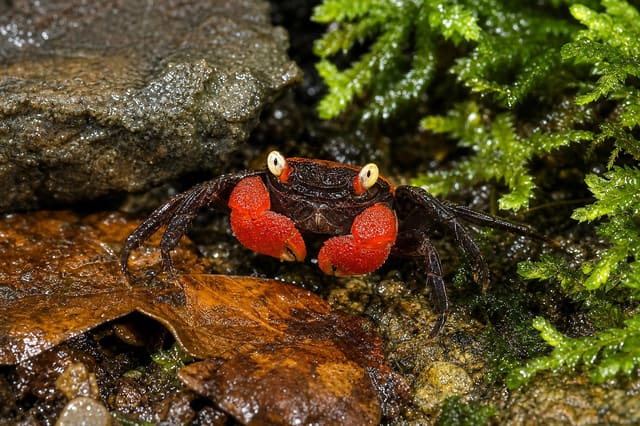
Red Carnival Vampire Crab is the aquarium trade name for this bright red-orange crab. Its scientific label is Geosesarma sp., meaning the genus is known but no species is assigned. The exact species has not been identified, so the care advice here follows the genus Geosesarma and its care group. Colour alone cannot separate closely related crabs, so Red Carnival remains a trade colour name rather than a species diagnosis.
One purchase supplies one live crab. This offer is supplied at a 2–3 cm dispatch grade. That is the size range used for supply, not a claim about the animal's final adult size. It is best used to judge whether your prepared enclosure has escape-proof gaps, safe access between land and water, and hiding spaces the arrival can actually use.
Sex is guaranteed only when the selected option explicitly states male or female. This Red Carnival Vampire Crab listing has no sex-guaranteed option. The image cannot establish sex, and buying more than one does not create a promised pair or a known group balance. This page therefore concentrates on what can be planned reliably for one crab: a land-led habitat, accessible fresh water, cover, varied food and close observation.
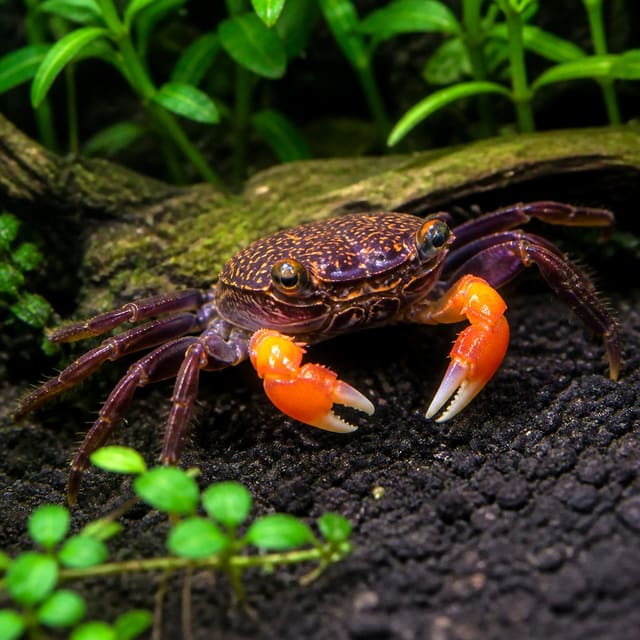
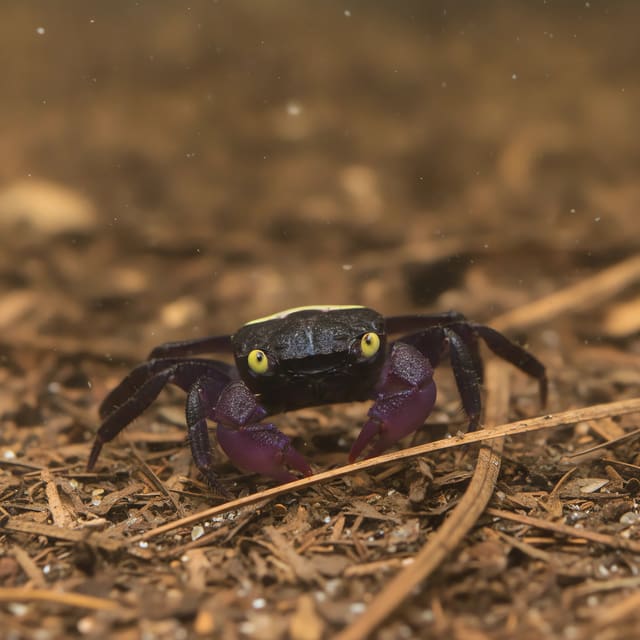
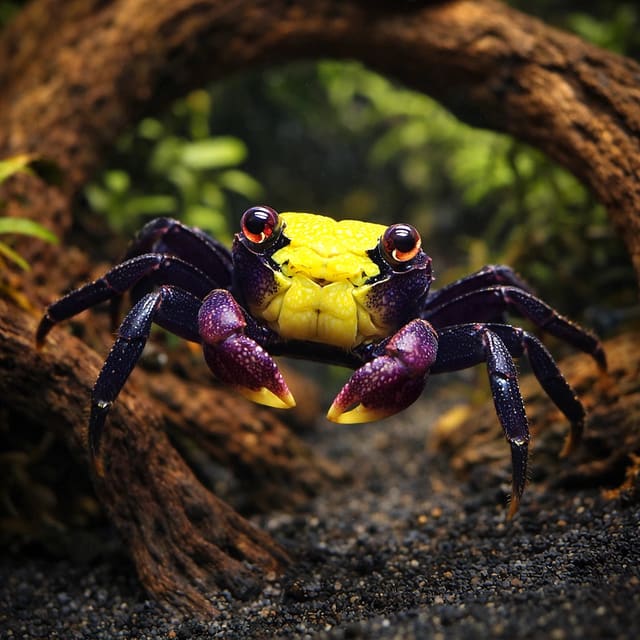
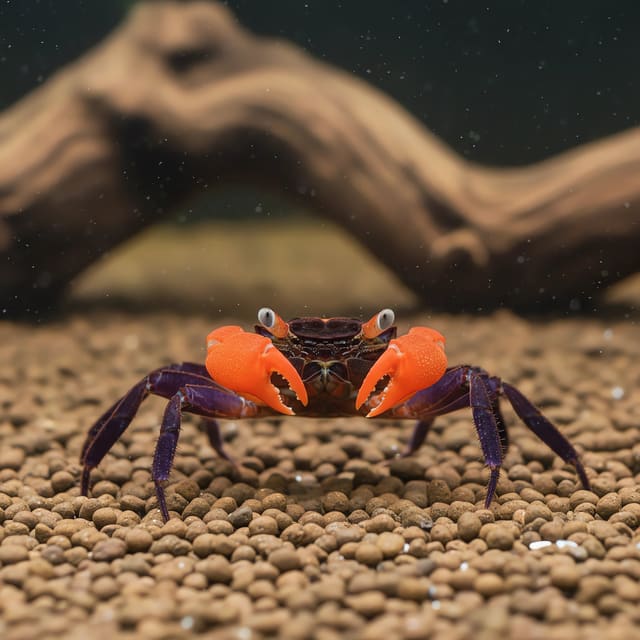
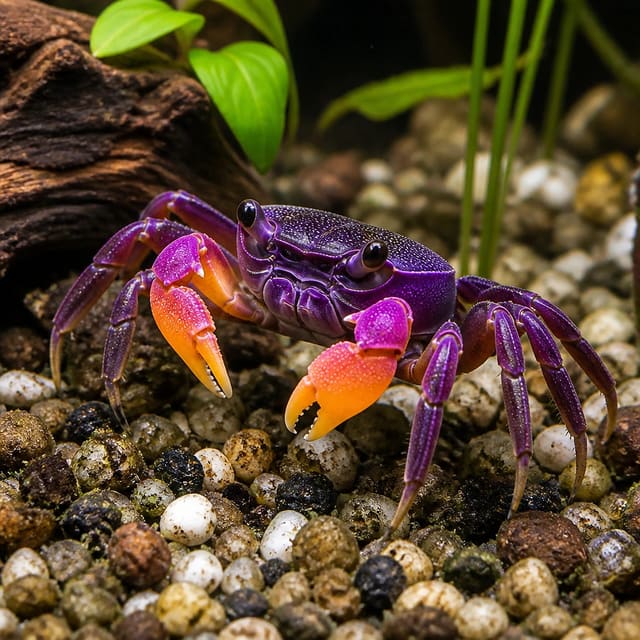
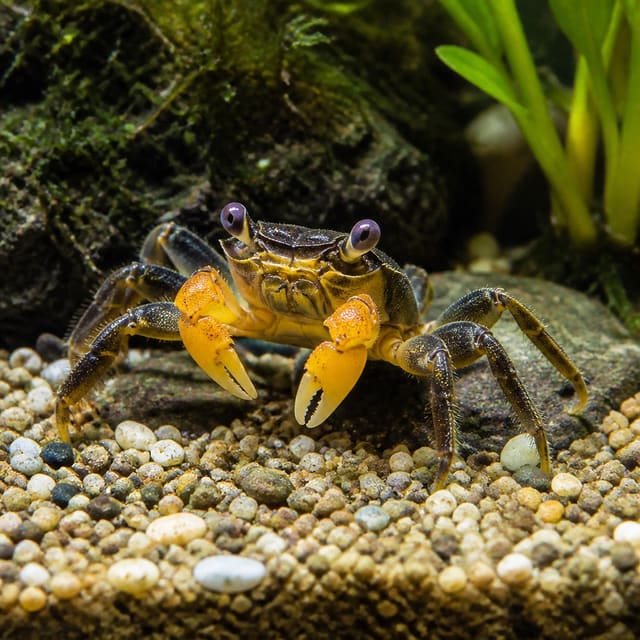
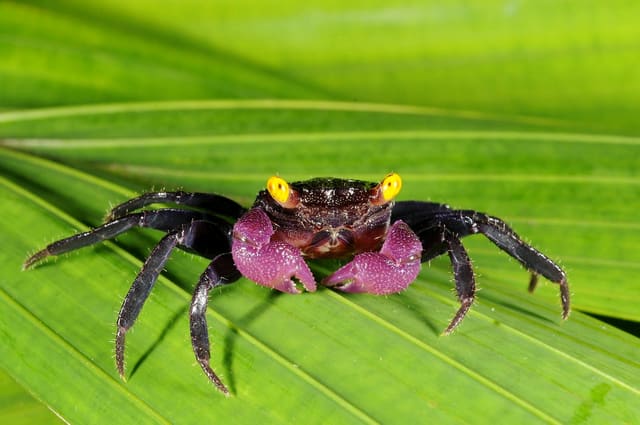
Gallery images have been digitally enhanced to improve image quality. Natural colour, pattern, size and maturity can vary between live animals. The pictured orange-red crabs illustrate the trade presentation, but they do not promise the colour intensity, maturity, sex or exact markings of the animal supplied.
The World Register of Marine Species record for Geosesarma places the genus in the family Sesarmidae. The genus-level label keeps the offer distinct from a named species and leaves Red Carnival as the useful trade colour name.
Red Carnival remains a useful shopping name because it distinguishes this offer from other trade colours. It does not make the gallery a colour guarantee. A crab may appear brighter or darker according to maturity, recent moult, lighting, background and how settled it feels. Choose the offer because you can provide the right habitat, not because you expect an exact shade from a photograph.
This is not a crab for a conventional fish aquarium with a token rock above the water. It spends most of its time on land while still needing safe access to clean freshwater. A keeper who enjoys building and maintaining a humid planted paludarium is a better match than someone seeking a bottom-dwelling animal for an existing community tank.
Before ordering, inspect the enclosure from a crab's point of view. Check the lid, cable exits, ventilation slots, background edges and pipework for climbable routes. Make sure the route into and out of the water has traction and cannot trap the crab behind decor. Press gently around cork, stones and wood to confirm that nothing can shift onto a burrow. Then confirm that food can be placed and removed without dismantling the main retreats.
| Buyer question | Practical answer |
|---|---|
| What is supplied? | One live unsexed crab at the supplier's 2–3 cm dispatch grade. |
| What should be ready? | A secure, humid, primarily land-based paludarium with accessible clean freshwater. |
| Who does it suit? | An intermediate keeper comfortable managing land, water, substrate moisture, feeding and escape prevention together. |
| Can it be added to a fish tank? | A dedicated paludarium is the safer starting point; fish cohabitation should not be assumed. |
Plan the complete habitat before treating the crab as an addition to an established display. The shrimps and crustaceans collection is useful when comparing other offers, but similarity in shop category does not prove that two animals can share a habitat.
The care level is listed as intermediate because several systems meet in one enclosure. The crab needs usable land, a freshwater area, humid cover, stable substrate, safe ventilation and routine waste removal. None of those tasks is difficult in isolation; success comes from keeping all of them working without creating stagnant ground, unsafe water, overheating or an escape route.
Give the crab a large, connected land area rather than scattered islands. The surface should allow walking, foraging, sheltering and choosing between damp and less saturated places. A steep ornamental bank that is mostly roots and vertical stone may look dramatic but offers little usable ground. Broad terraces, gentle ramps and several covered routes are more practical.
The Geosesarma care account describes crabs spending most of their time on land while using freshwater, with soil or sand, moss, leaf litter and cork cover. Build those functions into connected usable land, safe water access and several sheltered routes.
Use a deep, moisture-retentive substrate that can hold a burrow without becoming a compacted swamp. A suitable soil-and-sand structure, softened with moss and capped with leaf litter, gives the crab material to move and places to forage. Depth should be judged by function: the layer must be deep enough for the crab to dig and retreat while remaining stable around hardscape. Avoid fertilisers, pesticides, sharp fragments and decorative materials whose coatings are not safe for invertebrates.
Provide more than one kind of cover. Cork bark can form a dry-sided retreat; leaf litter creates broken sightlines and a moist surface; plants and roots give shaded routes. Set every heavy item directly and securely so a burrow cannot undermine it. Check under cover during maintenance without repeatedly stripping the habitat apart. A crab that can choose a retreat is less likely to be forced into the open whenever the room becomes busy.
Ventilation and humidity have to work together. A sealed, dripping box encourages stagnant conditions, while an open mesh top may dry the substrate too quickly and create escape gaps. Use controlled ventilation, monitor how fast the surface and deeper layers dry, and adjust misting or freshwater additions to the enclosure rather than following a rigid timetable. The aim is persistently humid shelter with air exchange, not permanently waterlogged soil.
A secure lid is essential even when the walls seem high. Crabs can use textured backgrounds, silicone seams, tubing, plants and power cables as climbing routes. Close small gaps without blocking safe ventilation. Recheck after every maintenance session because a moved cable or displaced piece of cork can turn into a ladder.
The Los Angeles Zoo vampire-crab profile also illustrates wet soil beside freshwater, land use and burrowing. These practical habitat features reinforce the connected, land-led layout.
A good layout gives the crab several sheltered ways to move between its main resources. One route can follow leaf litter towards the freshwater edge, while another passes behind cork or planting to a feeding place. This makes the whole land area functional instead of concentrating every activity at one exposed shoreline. Keep those routes wide enough for the crab and easy enough for you to inspect without moving the main hardscape.
Think about maintenance access while arranging the enclosure. A removable feeding tile or small dish can keep soft food away from deep soil. An open view of the freshwater margin helps you spot debris, while covered retreats remain undisturbed farther back. If every task requires lifting cork, uprooting plants or collapsing a burrow, routine care will be disruptive. A stable layout lets you clean one small area while the crab keeps another secure retreat.
Test the finished structure before the animal arrives. Add water, allow the substrate to settle, then inspect slopes and heavy pieces again. Watch where water wicks into the land and where condensation gathers. If the freshwater section floods the main burrowing layer or the upper surface dries immediately, alter the structure before it becomes the crab's home. The aim is a durable humid landscape rather than a temporary display assembled on delivery day.
The water section should be freshwater, clean and accessible from more than a single awkward drop. Provide a textured slope, wood or stone route that the crab can grip in both directions. Avoid deep smooth-sided containers from which a small crab cannot climb. Keep the interface visible enough that you can remove waste and check for a trapped animal without dismantling the land.
Treat the water as a real living-water system even though it occupies only part of the paludarium. Uneaten food, faeces and decaying leaves can pollute a small volume quickly. Mature the aquatic section before arrival, test it regularly and change water in measured amounts rather than waiting for an odour or visible cloudiness. The aquarium preparation guide explains cycling and stable water for sensitive invertebrate systems; use those water-management principles while remembering that this crab also needs an extensive land habitat.
The OATA freshwater crab and crayfish guide includes vampire crabs within a wider group. It gives 22–27°C, pH 7.0–8.0 and 8–18 dGH as broad group guidance. Those figures are not a measured optimum for Red Carnival and do not define the exact needs of this trade form. They are useful only as context while you seek stable, clean freshwater and avoid sudden changes.
Measure the actual water rather than relying on the label of a conditioner or substrate. The water chemistry guide covers the meaning of common readings, and the water matcher can help compare measured values with stated guidance. Use the measured readings to keep the freshwater section stable and make any necessary adjustment gradually.
Choose pumps or filters so the water stays clean without creating an exposed intake, a powerful current or an escape route. Shield moving parts and tubing. A small aquatic section may need frequent modest maintenance because it has little dilution capacity. If the design has no practical filtration, compensate with especially careful feeding, testing and water changes; do not let still water become foul.
Invertebrates require particular care around medicines, algaecides, fertilisers and tap-water treatments. OATA warns about copper, so use only products explicitly suitable for crustaceans and check every active ingredient. Never assume that a treatment safe for fish is safe for a crab. Remove the cause of poor water first where possible, and seek specialist advice before medication.
Keep the land-water boundary clean as well. Siphon debris from the water, lift spoiled food from the soil and replace badly decomposed patches of litter without sterilising the whole habitat. Sudden complete rebuilds remove shelter and change moisture conditions at once. Small, regular tasks make the environment more predictable.
Keep a simple record of the water readings, the amount changed and anything removed from the enclosure. Trends matter: a gradual change in the aquatic section or a faster build-up of food waste gives you time to adjust the routine before conditions deteriorate. Test replacement water as well as the paludarium when the result is unexpected, and make changes in small deliberate steps.
Top-up water and water-change water perform different jobs. Topping up replaces evaporation but leaves dissolved waste behind; a measured water change removes part of that waste. Marking the normal water level makes evaporation easier to notice and prevents the access slope from becoming too steep as the level falls. Keep the refill gentle so the bank is not eroded and the crab's retreats are not flooded.
Inspect the aquatic margin after feeding and after moving decor. A shifted leaf can block a shallow route, and buried food can be carried into the water later. Removing a small problem promptly is less disruptive than draining or rebuilding the enclosure. This close, regular attention is one reason the listing is better suited to an intermediate keeper than to someone expecting a low-maintenance aquarium ornament.
Burrowing and hiding are normal uses of the habitat, not inconveniences to design away. A new crab may remain out of sight while it explores quieter routes. Place food near cover, inspect it later and look for indirect signs such as moved litter or reduced food. Repeatedly lifting every hide can make observation easier for the keeper but removes the security the enclosure is supposed to provide.
Maintain a moisture gradient through structure. Lower layers can remain damp while some exposed surfaces are merely humid, giving the crab choice. If the entire substrate is saturated, burrows may collapse and food can spoil quickly. If it dries throughout, cover ceases to function as a humid refuge. Learn the weight, colour and feel of the prepared substrate so gradual change is noticed before it becomes a crisis.
Leaf litter is both cover and a foraging surface. Add clean, invertebrate-safe leaves and replace only the material that has become unsuitable. Moss can hold moisture around retreats, but it should not conceal stagnant pockets or make access to the water hard to inspect. Plants should be free from pesticide residues and established firmly enough that routine crab movement does not expose sharp supports.
A shed exoskeleton may be mistaken for a dead animal. Do not pull a hidden crab into the open to check. Observe carefully, leave secure cover undisturbed and avoid unnecessary handling. The old shell may be used as a mineral resource, so removal is not automatically required unless it is fouling the habitat. Moulting intervals can vary, so a calendar should not override what you can observe in the enclosure.
Handling should be exceptional. A crab can be injured by a fall or by being restrained, and it may defend itself when cornered. If a move is necessary, prepare the destination first and guide the animal into a suitable container rather than gripping limbs. Keep doors and lids controlled throughout the transfer.
Record practical observations: where the crab shelters, whether food disappears, how the water tests, how quickly the substrate dries and whether ventilation produces condensation. These notes are more useful than comparing daily visibility with another keeper's crab. They let you adjust one variable at a time while leaving the core habitat stable.
Feed Red Carnival Vampire Crab as a scavenging omnivore. A quality prepared crab or crustacean food can provide a dependable base, supplemented with suitable small animal foods and modest plant matter. The direct Geosesarma account lists prepared crab food, animal foods, fruit and greens; OATA and the zoo account also support a mixed animal-and-plant menu. Taken together, that varied menu is more useful than treating the crab as an animal that should receive only insects.
Offer small portions at accessible feeding places near cover. A crab that does not cross an exposed enclosure to eat may still feed readily at the mouth of a retreat. Use more than one placement if the layout has separate sheltered zones, then check what remains. Remove soft food before it spoils, especially where it can be dragged into the freshwater area or buried in wet substrate.
Change foods gradually and watch the response. A varied menu does not mean a random large buffet every day. Rotate appropriate items, keep the prepared staple consistent and avoid heavily seasoned human food. Fruit and richer animal foods should be small components, not a reason to leave sugary or protein-rich scraps in a warm humid enclosure.
Body condition is harder to judge in a shelled animal than in a fish, so use several signs together: regular interest in food, purposeful movement when active, normal use of retreats and the absence of persistent distress behaviour. Reduced visibility by itself is not proof of illness. Sudden failure to take previously accepted food, loss of coordination, repeated escape attempts or an unusual inability to use land and water deserve closer attention.
Build feeding into maintenance. Count what you put in, note where it went and recover leftovers. Clear blocked water routes, check the lid, inspect ventilation and test the aquatic section on a routine. Work quietly around hides and avoid turning every maintenance task into a full excavation. If a health problem is suspected, contact a suitably experienced aquatic or exotic-animal professional and describe the habitat, recent water results, foods and changes.
Never use copper-containing treatment casually. Check plant products and pest-control products too, because residues can enter through decor or water. Quarantine or rinse new natural materials as appropriate, and do not collect leaf litter from places exposed to pesticides, road pollution or animal waste.
Start with a modest portion that can be found again. If food consistently remains, reduce the next serving rather than letting a warm, damp enclosure absorb the excess. If it disappears, look for signs that it was eaten rather than dragged into a burrow or the freshwater section before increasing the amount. This approach keeps feeding responsive without relying on a rigid schedule.
Use feeding time to inspect function rather than forcing the crab into view. Confirm that access routes remain open, the water has no trapped food and the substrate around the feeding place is not sour or waterlogged. A clean dish can be moved between sheltered positions, which gives the crab privacy and gives the keeper a clearer idea of what has been consumed.
Have the paludarium running, secure and stable before dispatch. Confirm that land cover is humid, freshwater is clean, every access slope is safe and the lid closes around cables and ventilation. Place a retreat near the intended release point so the crab can leave the transfer container without crossing an exposed open area.
Be present to receive the parcel and record every delivery in one continuous take from the sealed parcel through opening. Keep the outer box visible, open calmly and show the animal before the transport container is disturbed. This protects a genuine claim and creates a useful record even when arrival is normal. The current delivery and Live Arrival Guarantee policy explains the attendance, same-day inspection and contact requirements.
This is a primarily land-based crab, so do not apply the fish floating-bag routine. Move the crab safely into the prepared humid habitat without adding transport water. Use a stable container or gentle guided transfer rather than picking it up by a limb. Close the enclosure immediately and recheck every opening.
Give the crab quiet cover after release. Reduce disturbance, leave suitable food near a retreat and avoid excavating the substrate to make it visible. Confirm indirectly that water access remains open and that no hardscape shifted during the transfer. A new crab may hide; the useful question is whether the habitat gives it safe choices, not whether it appears for display immediately.
Observe closely without repeated handling during the first days. Check the lid, water condition, leftover food and signs of movement. Keep moisture and routine steady rather than changing the layout because the crab selects one hide. If the animal arrived in poor condition, contact the shop the same day with the continuous unboxing video, order number and clear description of what you found.
Do not add transport water to the paludarium. Do not combine the new arrival with fish or other crabs as an improvised settling method. A dedicated prepared enclosure makes it easier to see whether the crab eats, moves and uses freshwater normally without competition or disturbance.
A dedicated Red Carnival paludarium is the clearest starting point. OATA advises caution with fish in broad freshwater-crab care, and the practical habitat needs already differ: the crab requires extensive usable land, while fish depend on enough stable aquatic space. Trying to satisfy both in a small mixed display can leave neither animal with the environment it needs.
Freshwater describes the water section; it does not make this crab an animal for a conventional fish tank. The water area is one part of a land-led habitat. Fish may compete for food, investigate a vulnerable crab, or be at risk from a scavenging crustacean; no fish species should be assumed universally safe with this crab. A fish that tolerates the water values still may not suit the space, feeding pattern or physical layout.
The same restraint applies to other crabs. This offer has no established group number, sex ratio or aggression profile. Buying several unsexed animals does not create a planned social group. If a keeper later considers more than one, the decision requires reliable identity, ample usable land, multiple independent retreats and a contingency enclosure; none of those turns an unknown group into a guarantee.
Snails, shrimp and other invertebrates are not automatic companions either. Shared category, small size or similar humidity is not sufficient. Food competition, predation, treatment sensitivity and different access needs all require assessment. Empty companion lists are more honest than attractive but speculative names.
If another inhabitant is being considered, assess it in this order: habitat type, land and water allocation, temperature and water compatibility, feeding access, escape security, adult space, behaviour and what will happen during a vulnerable period. Prepare a separate enclosure before testing any arrangement. Compatibility is an ongoing observation, not a one-time label.
For most buyers, the best display comes from making the crab itself the focus. Plants, leaf litter, cork, visible freshwater margins and discreet feeding sites provide plenty to watch without adding an animal that complicates the welfare plan. A species-appropriate landscape is more rewarding than a crowded novelty mix.
Any mixed arrangement needs a complete spare habitat, not merely a transport tub. Separation may be needed because of feeding pressure, habitat damage or simple uncertainty about what happens out of sight. Preparing that option first prevents a rushed move into unsuitable conditions. It also makes a dedicated first set-up the most practical route for learning this crab's normal behaviour.
Observe how the crab uses the enclosure before considering another animal. Which retreats does it select? Does it feed only under cover? How much of the freshwater margin does it use? Those observations improve the habitat even if it remains a single-animal display. They are not a substitute for reliable identity or species-specific compatibility information, but they stop the keeper from designing around an imagined behaviour.
It is a semi-terrestrial Geosesarma crab that spends most of its time on land but still uses freshwater. A secure humid paludarium provides connected land for shelter and foraging, plus safe water access; a conventional fully aquatic fish tank does not.
Make most of the enclosure connected, usable land and provide a smaller clean freshwater section. Use broad terraces, sheltered routes and grippy slopes or decor so the crab can walk, forage, hide, and enter and leave the water safely. Keep the bank stable and the water edge easy to inspect.
Use deep moisture-retentive soil or a soil-and-sand structure that can support burrowing, with moss, leaf litter, cork and planted cover. Secure heavy hardscape so digging cannot undermine it, and keep several shaded retreats available.
Offer a varied scavenging and omnivorous menu built around quality prepared crab food, with suitable small animal foods and modest plant matter. Feed small portions near cover and remove leftovers before they spoil the soil or freshwater.
Crustaceans can be harmed by copper-containing medicines and other products that may be acceptable for fish. Check every active ingredient and use only treatments, conditioners and plant products specifically suitable for invertebrates.
Do not assume so. Broad freshwater-crab guidance advises caution with fish, and this crab needs a land-led habitat that may not provide enough suitable aquatic space for fish. A dedicated paludarium is the safer starting point.
The offer is identified only as Geosesarma sp. Red Carnival is its trade colour name, not a species epithet. The crab should not be assigned a precise native range, adult size or species-specific behaviour from colour or photographs.
Mature and test the aquatic section, remove uneaten food and waste, and make measured water changes before pollution becomes visible. Shield intakes, avoid strong flow and make every route in and out of the water safe.
Have the secure humid paludarium running before delivery and be present for the parcel. Record the sealed parcel through opening, then move the crab calmly into its prepared habitat without adding transport water. Do not use a fish floating-bag routine.
WoRMS: genus-level Geosesarma classification in Sesarmidae. Geosesarma and OATA care references: semi-terrestrial land use, accessible freshwater, burrowing cover, varied feeding and broad freshwater-crab water context. Los Angeles Zoo: additional habitat context for a named vampire crab.
No reviews for this item yet. Bought one? Honest reviews only, good or bad.
What customers say about ordering from us
I have a small group of long finned mountain minnows. So was delighted to be able to order ten of this variety to increase the genetics in my tank . The ones I recieved are healthy but it’s to early to give a verdict on wether they are of a long finned type since they are small currently.
Gordon Walker · 23 Sept 2026
100% success travel and "installation". Pleased with quality of purchase. The Siamese fighter a bit "shy" so have not yet seen him at his best yet but looking good. Happy customer. GG
George E Garratt · 21 Sept 2026
Reviews of our shop, collected by Judge.me, an independent third-party review collector. Newest first.