Moderate
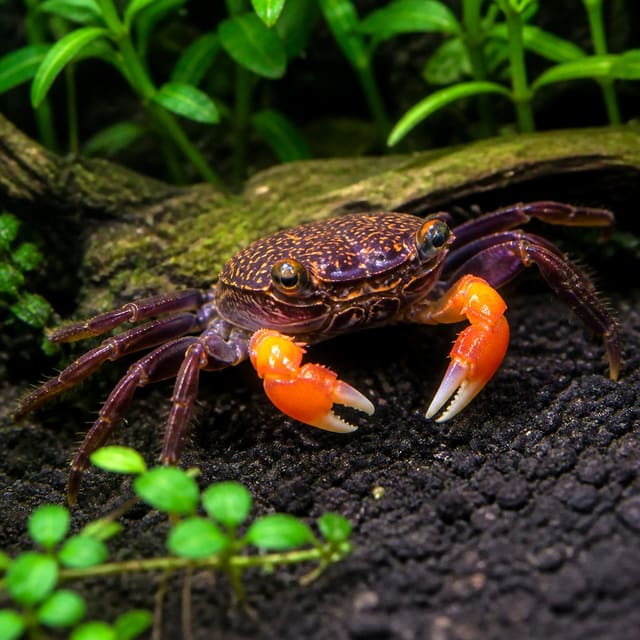
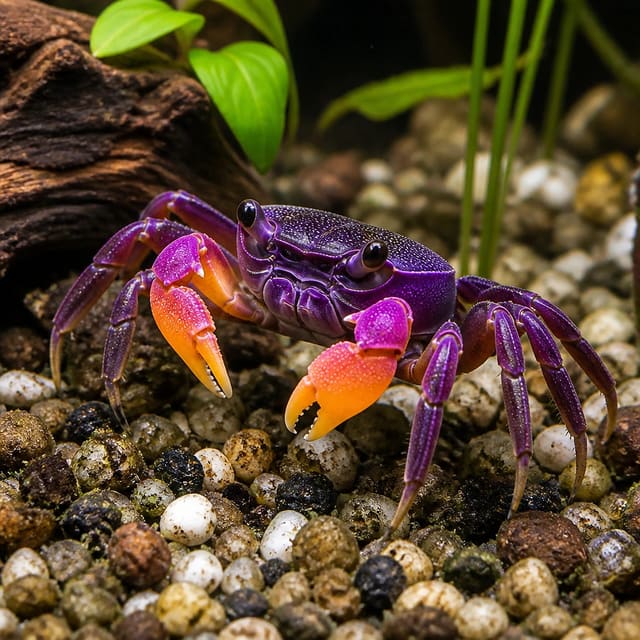
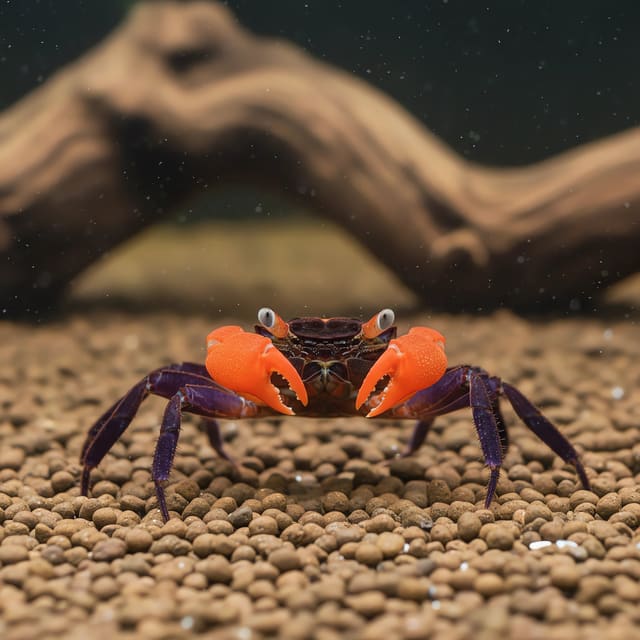
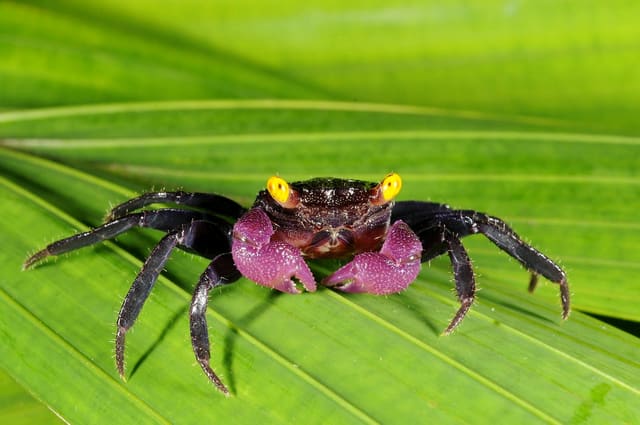
Purple Vampire Crab (Geosesarma dennerle) – Semi-Terrestrial Paludarium Crab
£8.09

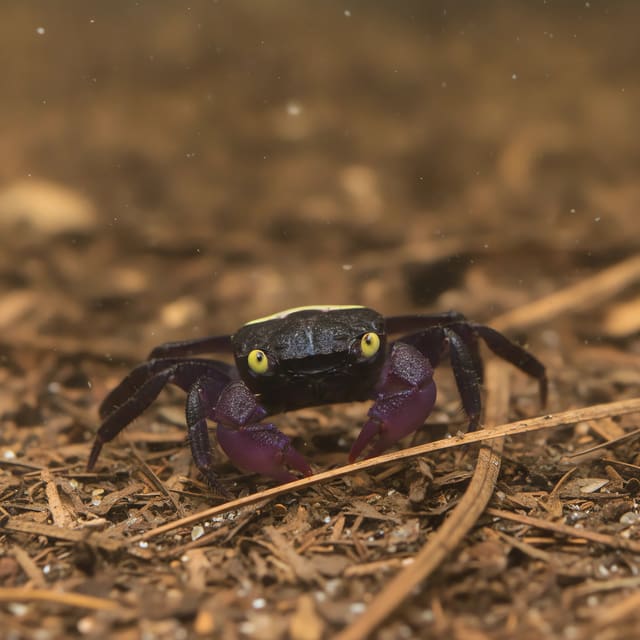
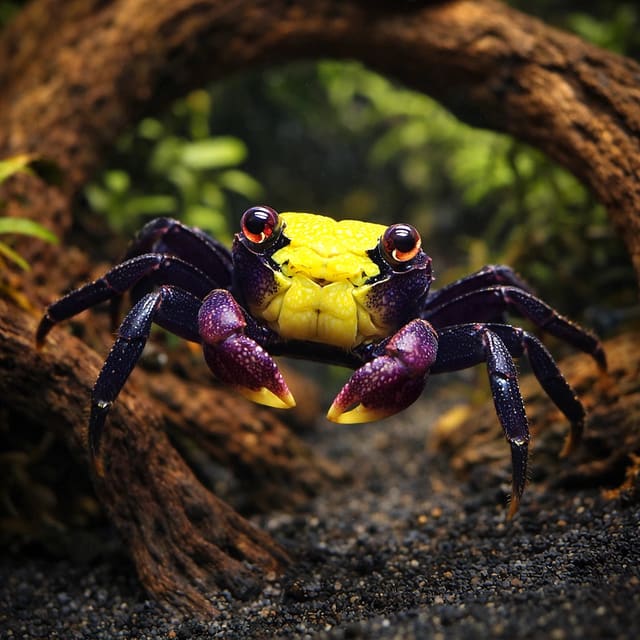
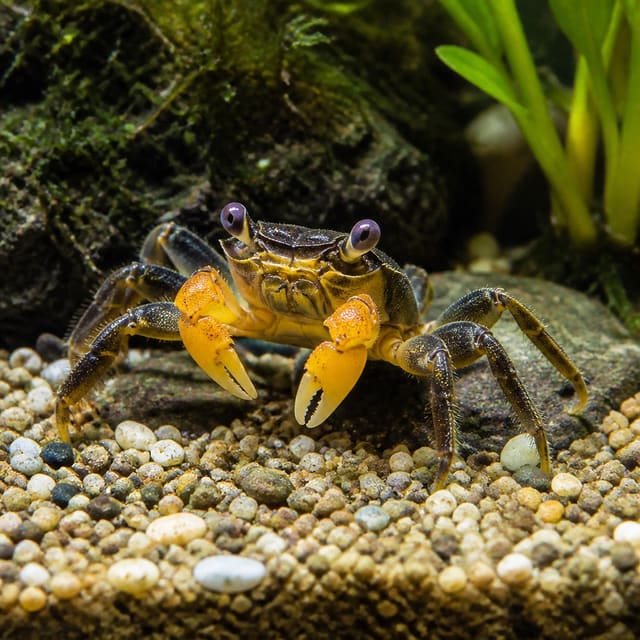
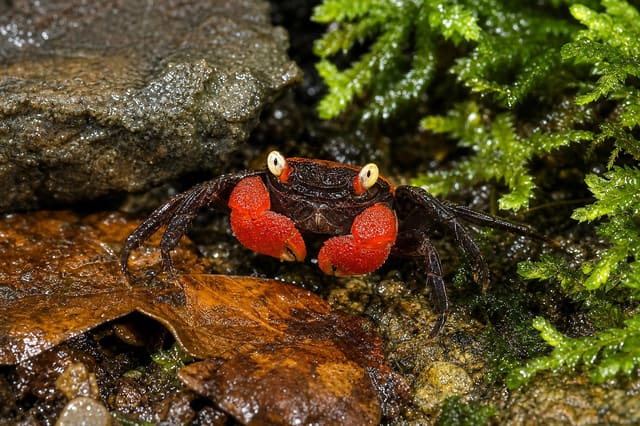
Black Vampire Crab (Geosesarma sp.) is a semi-terrestrial crab supplied as one live animal at a 2–3 cm dispatch grade. It suits an intermediate keeper able to provide a secure, humid, land-led paludarium with accessible clean fresh water, burrowing substrate, leaf litter, hides and a varied animal-and-plant diet.
Geosesarma sp.
Black Vampire Crab (Geosesarma sp.) is a semi-terrestrial crab supplied as one live animal at a 2–3 cm dispatch grade. It suits an intermediate keeper able to provide a secure, humid, land-led paludarium with accessible clean fresh water, burrowing substrate, leaf litter, hides and a varied animal-and-plant diet.
The Black Vampire Crab is a small, land-led Geosesarma offered as one live crab per purchase. The supplier dispatch grade for this offer is 2–3 cm; that is the size supplied, not a claimed adult measurement. The crab is sold by its established trade colour name, while the responsible scientific label remains Geosesarma sp.
The exact species has not been identified, so the care advice here follows the genus Geosesarma and its care group. That distinction matters. It gives the keeper a useful, honest plan without attaching a named-species locality, maximum size, lifespan or breeding history to an animal whose species has not been established.
One purchase supplies one animal, so a photograph showing more than one crab never changes the sale unit. Sex is guaranteed only when the selected option explicitly states male or female. This Black Vampire Crab listing has no sex-guaranteed option.
| Suits | A keeper prepared to build and manage a humid, escape-resistant, semi-terrestrial paludarium |
|---|---|
| Main habitat | Extensive usable land with accessible clean fresh water, burrowing substrate, leaf litter and secure cover |
| Feeding approach | A varied menu combining suitable prepared crab food, small animal foods and plant matter |
| Community approach | A dedicated crab set-up is the cautious starting point; fish require particular care |
This is a rewarding choice for someone who wants to design an enclosure around the animal rather than add a crab to an existing fish tank. The interesting work is in balancing damp land, fresh water, air exchange, cover and security. Once those pieces are planned as one habitat, routine observation becomes much easier: you can see whether the land stays usable, whether food is being taken and whether the water pool remains clean.
We class the care level as intermediate. That is a store assessment of the set-up and monitoring involved, not a biological fact or a suggestion that the crab is fragile. The animal needs two connected environments, and mistakes such as a fully aquatic layout, an exposed land area, a steep pool edge or an escape gap are more consequential than they would be in a simple planted aquarium.
Gallery images have been digitally enhanced to improve image quality. Natural colour, pattern, size and maturity can vary between live animals.
If you want to compare this offer with other invertebrate choices, browse the shrimp and crustacean collection. A related listing is an alternative to consider, not proof that two animals can share an enclosure.
Geosesarma crabs use fresh water, but specialist husbandry accounts describe them as spending most of their time on land. The practical consequence is more important than a fashionable percentage: the animal needs enough continuous land to walk, shelter, feed and burrow without every route running along the water's edge. A tiny island in a large aquarium is not the same thing as a semi-terrestrial habitat.
Sketch the usable footprint before placing hardscape. Mark the damp retreat areas, feeding points, route to the pool and the places where you will inspect or remove waste. Then look at the enclosure from crab height. Tall ornaments that seem to divide the view from above may leave one open corridor at ground level, while a beautiful pool may have only one exit.
The transition between land and water should be firm, shallow and easy to grip. Sloping substrate can work when it is retained securely; cork, textured wood or stable stone can create additional approaches. Give the crab a way out even if one route becomes blocked by moved leaf litter. Avoid smooth, vertical pool walls and loose towers that could collapse when the animal digs beneath them.
Freshwater access does not mean the entire land area should be saturated. Build a moisture gradient: wetter soil and moss near the pool, humid shelter in the middle, and firmer surfaces that let the crab move without constantly sinking into soft material. This variety gives the animal choices and gives you clearer signs when the enclosure is becoming uniformly waterlogged or too dry.
A useful land bed holds moisture while remaining structured enough for walking and burrowing. Soil and sand are supported components for Geosesarma husbandry, and moss, leaf litter and cork add the sheltered surface complexity these crabs use. Depth matters functionally: a decorative dusting over glass cannot behave like a burrowing layer.
Place heavy stones, wood and hide roofs on stable foundations rather than balancing them on loose substrate. A crab can change the ground around a feature, so test each piece before filling the enclosure. A safe hide has a stable roof, a usable entrance and enough separation from neighbouring retreats that the whole land area does not funnel through one doorway.
Keep some sight of the ground. A keeper still needs to find uneaten food, inspect the pool edge and notice a collapsed burrow. Naturalistic does not have to mean inaccessible. Removable pieces of leaf litter or cork can provide cover while allowing careful inspection when needed.
The water area is part of the crab's home, not a decorative bowl that can be ignored. Use dechlorinated fresh water and keep waste, moulding food and loose substrate from accumulating in it. A biologically established aquatic section can process waste more predictably than freshly filled water, but it still needs testing and observation.
The store's freshwater invertebrate set-up guide is useful for understanding the aquatic side of maturation. Apply that cycling principle to the pool while remembering that this crab also needs a very different, land-led enclosure. The general water-chemistry guide explains what ammonia, nitrite and nitrate readings mean and why a clear-looking pool can still be unsafe.
Choose the water-management method to fit the actual pool. A sufficiently sized section may support gentle filtration with an intake the crab cannot enter; a very small pool may be better managed by controlled renewal and close testing. In either case, the aim is stable, clean freshwater rather than strong flow. Keep electrical equipment and warm, humid conditions safely separated, and make sure cables cannot lift the lid or create a climbing gap.
UK industry guidance publishes water figures for a broad crayfish and freshwater-crab group that expressly includes vampire crabs. Those figures are a screening reference for the group, not an exact optimum for this Black Vampire trade form. Record the water you actually use, watch stability, and use the water-parameter matcher to organise readings against appropriately scoped guidance rather than turning a single generic figure into a species claim.
Sudden changes deserve more attention than chasing a theoretical perfect number. Check the source water as well as the pool, because a planned water renewal can otherwise introduce a large difference in chemistry. Temperature stability, clean freshwater and a safe route out of the pool belong together; none substitutes for the others.
Make the water area easy to reach with a test tube, siphon or small cleaning tool without dismantling the land bank. If a pool is hidden behind fixed hardscape, waste can collect where neither the crab nor the keeper benefits from it. A removable cover near the water edge can preserve security while keeping the working area accessible.
Watch how land material moves after misting, feeding and ordinary crab activity. Fine substrate washing into the pool can cloud the water and reduce the depth of a sloping exit. Retaining the bank with stable stone, wood or planting helps keep the two zones connected without allowing them to collapse into one muddy basin. Correct the cause of repeated debris rather than simply clearing the same blockage.
When readings or appearance change, work through the likely inputs: a food item carried into water, disturbed substrate, decaying plant matter, a neglected corner or a change in source water. This is more useful than replacing large amounts of water reflexively. The aim is a pool whose condition can be understood and kept stable alongside the damp land area.
A warm, humid environment with wet soil beside fresh water is consistent with specialist and zoological accounts for this genus, but useful humidity comes from the whole design. Moist substrate, leaf litter, planting and a freshwater area create sheltered microclimates. Ventilation then helps prevent every surface from becoming stale and permanently soaked.
Read the enclosure rather than relying on condensation alone. Constantly streaming glass can accompany waterlogged soil and poor air movement; a clear pane does not prove that burrows are dry. Check the substrate below the surface, observe the condition of leaves and moss, and note whether food deteriorates unusually quickly. Make small adjustments and give the system time to settle before changing several variables at once.
A secure lid is essential. Inspect cable ports, ventilation panels, feeding hatches and the top of tall cork or plants. The important gap is not only one large enough for the body at rest; a climbing animal can reach corners that looked irrelevant during the build. Use fastenings that remain secure in humidity and can still be opened calmly for maintenance.
Plan maintenance around security. Decide where the crab can retreat while you remove a food dish or clean the pool, and never leave the enclosure open while you fetch equipment. A clear routine protects the animal without requiring rough handling. If you cannot account for the crab immediately, check shelters and burrows patiently before moving hardscape.
Direct Geosesarma care material supports a mixed menu: prepared crab food, small animal foods, fruit or greens and other plant matter are all described. The useful conclusion is a varied omnivorous or scavenging approach, not the contradictory idea that the crab must be treated as a strict insectivore.
Use a suitable prepared crab food as a dependable foundation, then rotate modest additions from the supported animal- and plant-based categories. Variety reduces dependence on the strengths or weaknesses of one item. It also lets you observe preference without assuming that the favourite food is nutritionally complete.
Let observation determine portion size. A hidden crab may feed when the room is quiet, so an untouched-looking dish immediately after placement tells you little. Check later for actual loss of food and for pieces carried into shelters. If leftovers remain repeatedly, reduce the amount rather than allowing waste to become part of the humid habitat.
A naturalistic leaf-litter floor offers additional foraging texture, but it does not remove the need for a planned diet. Likewise, plant material is one part of a mixed menu, not proof that any houseplant or garden leaf is safe. Use known, enclosure-safe materials and keep chemicals used on decorative plants out of the paludarium.
This sequence keeps maintenance focused on welfare rather than tidiness alone. A visually spotless paludarium can still be too exposed, while a layer of sound leaf litter can be useful habitat. Remove what is decaying or fouling the enclosure, preserve stable shelter, and avoid stripping every surface simply to make it look new.
Burrowing is part of the supported habitat picture for at least a directly documented Geosesarma species and is consistent with the deep-substrate plan used here. Treat a closed burrow carefully: do not assume the crab is missing and dig immediately. First check whether the entrance, surrounding substrate and other signs suggest normal occupation. The genus-level care scope does not justify attaching a precise moult timetable to the offer.
Crustaceans require caution around copper. Read the complete label of medications, fertilisers and water treatments, and use a product only when it clearly states suitability for freshwater decapod crustaceans at the intended dose. “Fish safe” is not an adequate substitute. If treatment is necessary, account for the land and water components that may both retain a chemical.
Have the secure, humid paludarium operating before delivery. The land should be structured, the freshwater pool accessible and clean, and the lid ready to close without leaving a cable gap. Be present to receive the parcel; a live animal should not wait unattended.
The current delivery and Live Arrival Guarantee policy explains the evidence needed if something has gone wrong. For a claim, record one continuous unboxing video beginning with the parcel still sealed, then opening it while the animal remains in its transport container. Keep the order number available and contact the business on the day of arrival.
Do not transplant a fish floating-bag routine into this semi-terrestrial context. Open calmly in a secure room, prevent an escape route, and move the crab safely into the prepared humid enclosure without adding transport water to the freshwater pool. Place it where it can reach shelter and water without crossing an exposed obstacle course.
Expect observation to be quiet rather than theatrical. Check that the crab can move normally, reach cover and find the pool exit. Give it security instead of repeatedly lifting hides. Record concerns with time and context so a change in posture, movement or feeding can be described accurately if advice is needed.
The safest starting point is a paludarium designed around this crab alone. That is not a claim that every possible companion will fail; it is a sensible response to the animal's specialised land-water habitat and to industry guidance that advises caution with fish. A conventional community aquarium usually asks the crab to live in the wrong shape of environment before temperament is even considered.
Compatibility has three layers: whether the animals can occupy the same physical habitat, whether they can avoid or injure one another, and whether the keeper can meet both sets of environmental needs without compromise. Passing only one layer is not enough. A fish that tolerates the pool's water still may have too little swimming space, while a land invertebrate may share humidity but compete for the same shelters.
OATA's wider freshwater-crab guidance specifically calls for caution with fish. The most responsible buying plan is therefore not to choose a fish by name and hope. Consider the shallow water footprint, the crab's access to it, the fish's escape space and the difficulty of monitoring an encounter behind hardscape. If those conditions cannot be evaluated confidently, keep the crab separately.
Shrimp, snails and other crabs should not be assumed universally suitable. There is also no sound basis here for a fixed number, sex ratio or social grouping for this trade form. Avoid turning general comments about the genus into a formula. One carefully designed home for one crab is a valid plan, and it avoids making group behaviour part of the purchase.
Other vampire-crab listings can be useful alternatives when choosing which animal to keep, but they are not compatibility recommendations. A similar common name does not prove that two trade forms share the same behaviour, identity or social needs.
If any answer is uncertain, separation is the sound decision. Do not use the absence of immediate conflict as proof of long-term compatibility. A well-covered enclosure can conceal competition, and a crab's use of land and water can change what the keeper is able to see.
It is a semi-terrestrial crab that spends most of its time on land while still using fresh water. Give it a humid, escape-resistant enclosure with extensive usable land, a clean accessible pool, moisture-retentive substrate and several sheltered routes. A fully aquatic fish tank does not provide that land-led habitat.
Make land the main living area and let the crab reach and leave the freshwater section without a difficult climb. Use firm slopes, cork, wood or stone as transitions, keep the pool clean, and provide damp substrate, leaf litter and cover on land. Avoid a steep-sided pool that could trap a crab.
Use a deep, moisture-retentive land substrate that can support burrowing, then add leaf litter, moss and stable cork-bark or similar hides. The surface should offer both sheltered damp places and firmer routes. Check that heavy pieces cannot shift if the crab excavates beneath them.
Offer a varied menu rather than one food: a suitable prepared crab food, small animal foods and modest plant matter are all supported choices. Place small portions where they stay reasonably clean, observe what is taken, and remove decaying leftovers before they foul the humid land or freshwater pool.
Treat copper as unsafe unless the exact product clearly states that it is suitable for freshwater decapod crustaceans at the intended dose. Move cautiously with any medication, fertiliser or water treatment because an aquarium product being safe for fish does not make it safe for a crab.
A dedicated crab paludarium is the prudent starting point. Industry care guidance advises caution with fish, and the shallow water plus extensive land needed by the crab is unlike a normal community aquarium. Do not use an alternative crab product as proof of compatibility, either.
No. Black Vampire is a trade description, while the scientifically supportable identity for this offer is Geosesarma sp. Care is therefore kept at genus and relevant freshwater-crab-group level rather than borrowing precise biology, locality or breeding claims from a named species.
Have the secure humid paludarium ready and be present for delivery. If you may need the Live Arrival Guarantee, record one continuous unboxing video from the sealed parcel through opening while the animal remains in its transport container. Open calmly, move the crab safely without adding transport water, and observe it closely.
Identity is kept at genus level using the World Register of Marine Species record for Geosesarma. The genus overview supplies general natural-history context, not an identity for this trade colour.
Practical care draws chiefly on the OATA crayfish and freshwater-crab care sheet and a direct Geosesarma husbandry account. The Los Angeles Zoo account of G. dennerle is used only to corroborate land use, wet planted soil, burrowing and mixed scavenging for that named species.
The RSPCA aquarium-environment guidance supports general biological-filtration and water-quality principles for the aquatic section. The named-species details from other vampire crabs are not transferred into an exact size, range, lifespan or breeding claim for this offer.
No reviews for this item yet. Bought one? Honest reviews only, good or bad.
What customers say about ordering from us
I have a small group of long finned mountain minnows. So was delighted to be able to order ten of this variety to increase the genetics in my tank . The ones I recieved are healthy but it’s to early to give a verdict on wether they are of a long finned type since they are small currently.
Gordon Walker · 23 Sept 2026
100% success travel and "installation". Pleased with quality of purchase. The Siamese fighter a bit "shy" so have not yet seen him at his best yet but looking good. Happy customer. GG
George E Garratt · 21 Sept 2026
Reviews of our shop, collected by Judge.me, an independent third-party review collector. Newest first.