Thai Micro Spider Crab (Limnopilos naiyanetri)
£6.99
The Leopard Crab (Parathelphusa pantherina) is a freshwater crab in Gecarcinucidae from Indonesia. It suits advanced keepers planning a dedicated setup; OATA’s freshwater-crab guidance gives 22–27°C, pH 7.0–8.0 and 8–18°dGH. Sold individually.
Parathelphusa pantherina
The Leopard Crab (Parathelphusa pantherina) is a freshwater crab in Gecarcinucidae from Indonesia. It suits advanced keepers planning a dedicated setup; OATA’s freshwater-crab guidance gives 22–27°C, pH 7.0–8.0 and 8–18°dGH. Sold individually.
Maintain these water conditions for optimal health and vibrant colors
The Leopard Crab (Parathelphusa pantherina), also known as the Panther Crab, is an Indonesian freshwater crab in the family Gecarcinucidae. WoRMS accepts Parathelphusa pantherina as the species name. It suits an advanced keeper who is ready to plan a special freshwater-crab setup, manage water quality closely and keep fish out of the enclosure.
A Wikipedia summary of the species places it in Indonesia and describes it as Endangered, with nickel mining around its lake-shore habitat affecting water quality. That wild range describes the species; it does not identify the origin of an individual animal sold through the aquarium trade.
Keep the aquarium at 22–27°C, pH 7.0–8.0 and 8–18°dGH. OATA’s freshwater-crab sheet sets those figures as group guidance, not a species-specific optimum. Ammonia and nitrite must remain at zero, while nitrate must not exceed 20 mg per litre above the normal tap-water level.
Compatibility is the decisive planning point. OATA warns that freshwater crabs are opportunistic and may hunt small or slow-swimming fish, then recommends that they are not mixed with fish and are best kept in a dedicated setup. Choose this animal for a crab-focused aquarium rather than trying to fit it into a conventional fish community.
| Suits | Not suited to |
|---|---|
| An advanced keeper prepared for a special setup | A standard community aquarium containing fish |
| A dedicated freshwater-crab plan | An enclosure chosen without a species assessment |
| Daily measured feeding and weekly maintenance | A hands-off care routine |
| Water kept within 22–27°C and pH 7.0–8.0 | Unmeasured or unstable aquarium conditions |
One purchase supplies one Leopard Crab. The dispatch grade is approximately 4–6 cm, which describes the animal’s size around dispatch rather than its eventual adult size. Plan the permanent enclosure through a species assessment instead of treating the dispatch measurement as a limit on growth or space.
Sex is guaranteed only when the selected option explicitly states male or female. This Leopard Crab listing has no sex-guaranteed option.
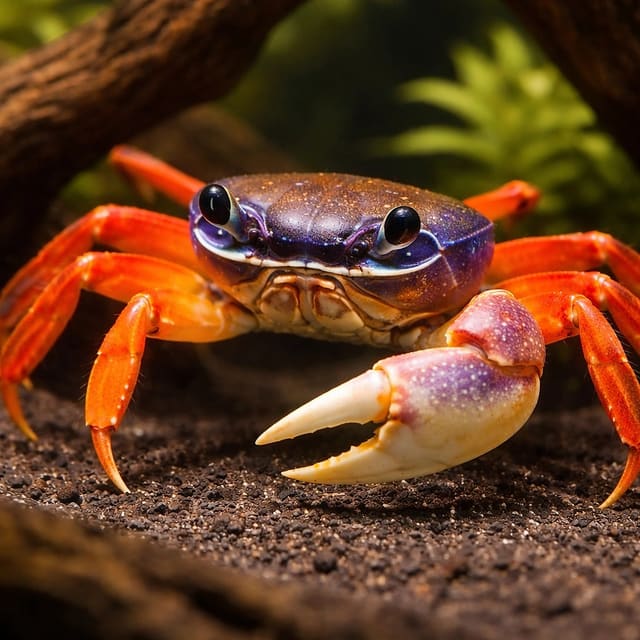
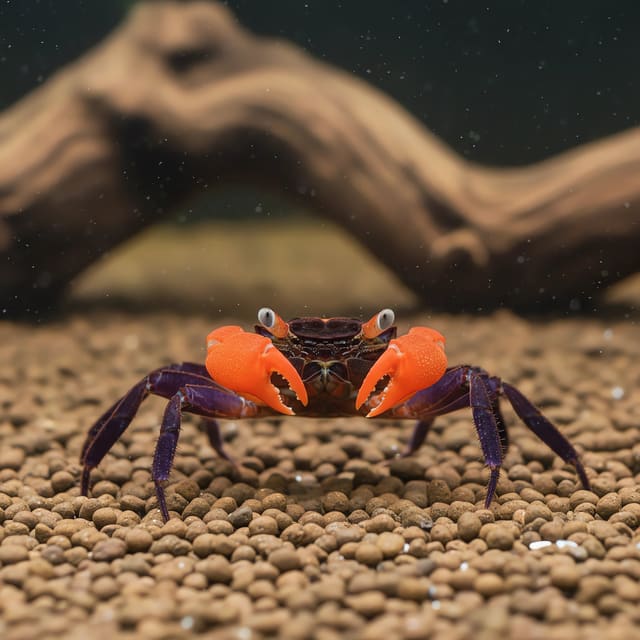
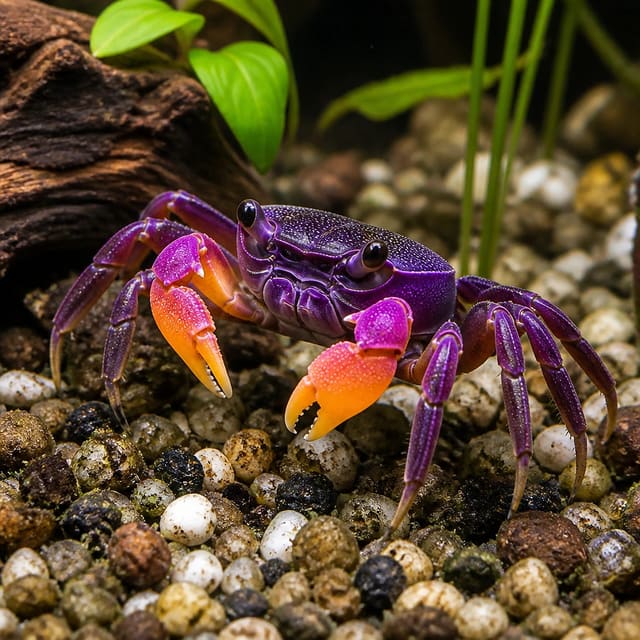
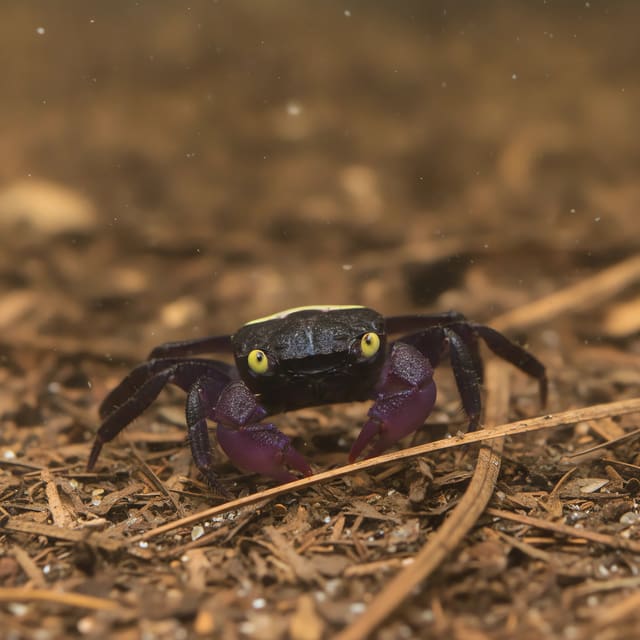
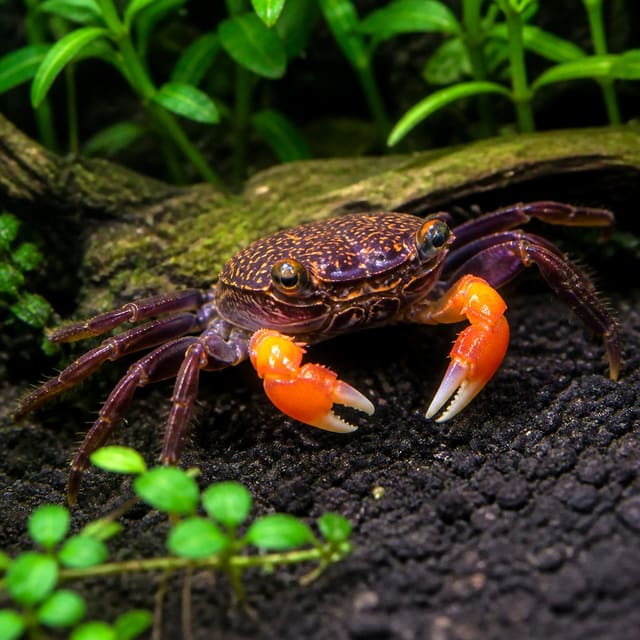
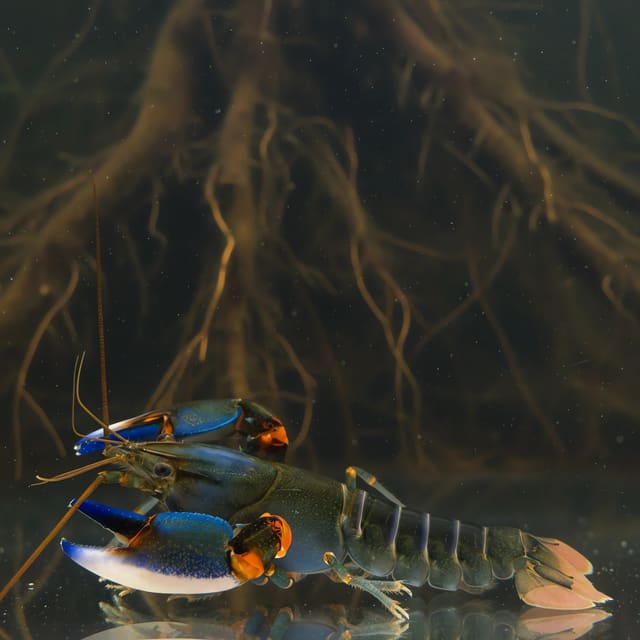
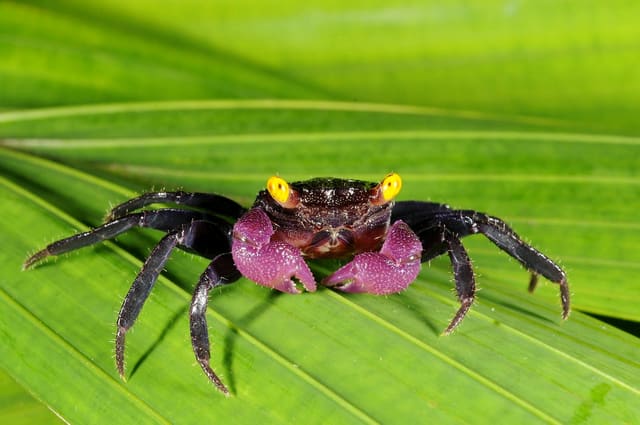
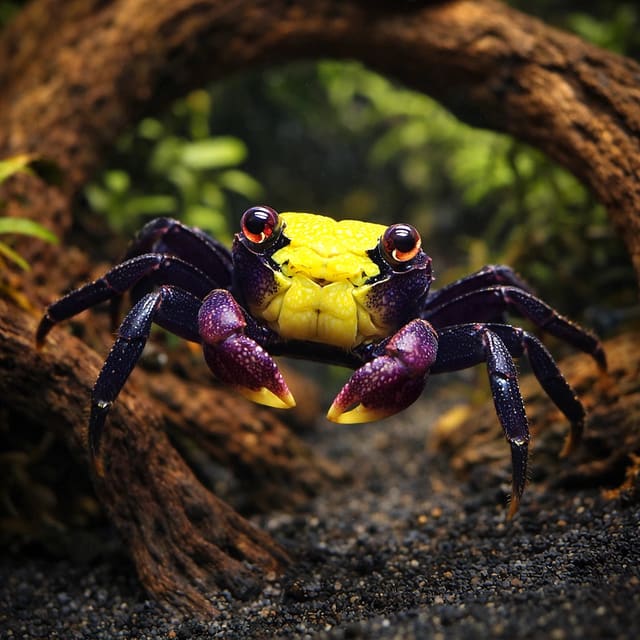
The gallery images are representative of this type of animal rather than photographs of the exact animal supplied, so colours can look slightly different from the live animal.
The visible example shows the animal’s spotted trade-name appearance, but a photograph must not be used to infer sex, age or origin. Base the purchase decision on the identified species, the dispatch grade and the care requirements rather than expecting every individual to match the precise shade or arrangement of markings in the gallery.
Keep this offer separate from other livestock decisions. You can browse the wider shrimps and crustaceans collection for comparison, but another invertebrate should not be assumed to share this crab’s care or compatibility requirements.
Keep the temperature at 22–27°C, pH at 7.0–8.0 and general hardness at 8–18°dGH. Use 10–15°dKH as the carbonate-hardness range. These OATA freshwater-crab values are the working aquarium ranges for this plan.
Measure the aquarium rather than relying on the appearance of clear water. Ammonia must be zero mg per litre and nitrite must be zero mg per litre. Nitrate must not exceed 20 mg per litre above the normal level in the tap water used for the aquarium. Our water-chemistry guide explains what the principal test results mean, while the water matcher can compare measured values with the stated ranges.
| Test result | Decision |
|---|---|
| Temperature below 22°C or above 27°C | Return it to the 22–27°C working range before adding the crab. |
| pH below 7.0 or above 8.0 | Resolve the mismatch before introduction. |
| General hardness below 8°dGH or above 18°dGH | Assess the source water and planned adjustment before purchase. |
| Ammonia or nitrite above zero | Do not add livestock; allow the biological filter to establish and retest. |
| Nitrate more than 20 mg/l above tap water | Restore water quality through the maintenance routine and retest. |
Consistency matters because even small amounts of pollution can stress freshwater crabs. Record results at the same point in the maintenance cycle so that a change can be recognised early. A result within range today is not a substitute for the weekly testing routine.
Settle the intended salinity during the pre-purchase setup assessment. OATA notes that freshwater-crab species differ: some remain fully aquatic, some require access above the water line and some originate in estuarine conditions. Treat these as setup questions to resolve for the identified crab rather than making a change based only on the word “freshwater”.
Introduce the crab only after the aquarium and biological filter have matured and tests show zero ammonia and zero nitrite. Beneficial bacteria must be able to process the waste created by the animal and its food. Adding livestock before that bacterial population is ready risks new tank syndrome, in which ammonia and nitrite rise to harmful levels.
The RSPCA’s aquarium guidance explains the filtration process: a working biological filter supports bacteria that convert toxic ammonia to toxic nitrite and then to the safer nitrate. OATA applies the same need for established beneficial bacteria when introducing crayfish and freshwater crabs.
Our guide to preparing and maturing a first invertebrate aquarium can help with the preparation sequence. Use the Leopard Crab values on this page for the animal itself rather than borrowing another invertebrate’s care figures.
Stocking changes alter the load placed on the filter. Even after a mature system has accepted one animal, another addition increases waste and usually increases feeding. OATA therefore advises increasing freshwater-crab numbers slowly. Test after a change and remain alert for any movement away from zero ammonia or zero nitrite.
A mature filter still needs water changes and inspection. Biological filtration converts waste; it does not remove the need to control nitrate, siphon solid debris or prevent uneaten food from breaking down. Treat filtration, testing and maintenance as connected parts of one routine.
Choose the enclosure through a pre-purchase assessment that considers its dimensions, water volume, water chemistry, land or above-water access and salinity together. OATA describes freshwater crabs as animals requiring a special setup and advises checking that the aquarium is an appropriate size for the intended species before it is introduced.
Freshwater-crab requirements are not interchangeable. Some species live submerged throughout life, while others require an area above the water line in which to forage and hide. OATA also notes that some traded species come from estuarine conditions and may need a small amount of salt. Ask us to assess the intended enclosure, water-and-land arrangement, salinity and stocking plan together before purchase.
Use the assessment to choose the permanent aquarium rather than starting with a small temporary enclosure based on the approximately 4–6 cm dispatch grade. That grade tells you the expected size around dispatch; it is not an adult-space calculation.
Do not use the gallery scene as a setup diagram. Sand and pebbles are visible in the representative image, but visual scenery is not a care specification. Build the enclosure around the assessed needs of the species and the tested water rather than reproducing a photographic background.
Complete this work before the arrival day. A ready, mature enclosure allows the policy acclimatisation steps to lead directly to release instead of leaving the animal waiting while water, filtration or enclosure form is reconsidered.
Feed once a day and allow about 30 minutes for the crab to eat. Remove the feeding decision from guesswork by offering a measured amount, watching whether it is taken and preventing a build-up of uneaten food. Excess food breaks down and releases toxic waste into the water.
OATA describes crayfish and freshwater crabs as omnivorous scavengers. For crabs, its feeding guidance includes meaty frozen foods such as mysis, prawns or krill; plant foods such as courgette, cucumber and lettuce; and prepared foods such as sinking crustacean pellets, algae wafers and dried algae.
| Food type | Examples named by OATA |
|---|---|
| Meaty frozen food | Mysis, prawns or krill |
| Plant food | Courgette, cucumber or lettuce |
| Prepared sinking food | Crustacean pellets or algae wafers |
| Dried plant food | Dried algae |
Use variety rather than relying indefinitely on one food. Rotate among the named food types while preserving the once-daily schedule. Watch the animal during the approximately 30-minute feeding period so the next portion reflects what it actually handled without leaving excess behind.
If food remains after the feeding period, remove it and reduce the next portion. If the crab repeatedly loses interest in food, treat that as a health or water-quality warning rather than solving it by adding more. Test ammonia, nitrite, nitrate, temperature and pH, then compare the result with the normal record for the aquarium.
freshwater crabs should only be fed once a day. A small animal does not justify repeated feeding sessions, and a larger appetite does not remove the need to prevent waste. The approximately 4–6 cm dispatch grade should not be turned into a fixed portion because appetite, food form and the amount left after 30 minutes must guide adjustment.
Use the varied omnivorous rotation above, paired with direct observation and water-quality control.
At least once every week, complete a 25% partial water change. Use a siphon to remove solid waste from the gravel where needed. Treat replacement tap water with conditioner to remove harmful chlorine or chloramine before adding it to the aquarium.
Test the water at least once per week. Ammonia and nitrite must remain at zero mg per litre, and nitrate must not exceed 20 mg per litre above the normal tap-water level. Check temperature, pH and hardness at the same time so a change in the aquarium or source water is recognised before it becomes a larger problem.
Check the filter for blockages. If cleaning is needed, do not run it under the tap. Rinse the media lightly in aquarium water removed during the partial water change. This reduces the number of beneficial bacteria lost and avoids exposing the established bacterial population to chlorine or chloramine.
| Timing | Action |
|---|---|
| Daily | Feed only once, observe the crab and clear food left after about 30 minutes. |
| At least weekly | Test the water and complete a 25% partial water change. |
| During the water change | Treat replacement water and siphon accumulated solid waste. |
| When the filter needs cleaning | Rinse it lightly in removed aquarium water; do not run it under the tap. |
| After adding livestock | Watch ammonia and nitrite closely while the bacterial population adjusts. |
Good maintenance supports both the crab and the filter. Feeding adds organic material, the animal produces waste, bacteria process ammonia and nitrite, and water changes control the resulting accumulation. Skipping one part places more pressure on the others.
Keep a simple dated log of test readings, water changes and feeding observations. The purpose is practical comparison: a move away from the usual activity, colour, feeding response or water values is easier to recognise when the normal pattern has been written down.
Do not respond to a poor test merely by cleaning every part of the filter. Preserve the biological media, correct water quality through the established change routine and retest. The target remains zero ammonia, zero nitrite and controlled nitrate.
Watch for changes in activity, colour, temperament, breathing, appearance, body condition and feeding. OATA identifies increased inactivity, restlessness, unusual behaviour, darker or paler colour, greater aggression, increased hiding, altered breathing effort, abnormal swelling, weight change and reduced interest in food as signs that require attention.
Moulting deserves direct observation. Difficulties during moulting, incomplete shedding of the exoskeleton or a change in the normal moulting frequency belong on the same warning list. Record what is visible without inferring a diagnosis from colour or one isolated posture.
When a concerning change is visible on arrival, preserve the continuous unboxing video, keep the animal inside the sealed bag while its condition is recorded and contact us the same day with the order number. Follow the current policy process before release if a Live Arrival Guarantee claim is needed.
For later observations, compare the change with the crab’s established normal pattern and the aquarium log. A darker or paler colour, a different feeding response or increased hiding becomes more useful when it can be compared with dated water tests and previous behaviour.
Water testing is the first practical check because freshwater crabs can be stressed by even small amounts of pollution. Keep the response focused on measurable conditions and visible changes rather than adding an unplanned treatment.
Be present to receive the parcel because live animals cannot be left unattended. The parcel is hand-packed in pure oxygen inside an insulated poly box, with a heat pack when the weather calls for it. Read the current delivery and Live Arrival Guarantee policy before the expected arrival.
Film every delivery from the sealed parcel onward. The continuous sequence preserves the information required if a Live Arrival Guarantee claim must be raised. Keep the order number with the video and report an arrival problem the same day.
Complete the aquarium checks before the parcel arrives rather than adding them to the unboxing sequence. The enclosure should already have a mature filter, zero ammonia, zero nitrite, temperature of 22–27°C, pH of 7.0–8.0 and general hardness of 8–18°dGH.
The float period is 20–30 minutes. Keep the bag sealed while its condition is being recorded, then float the bag and release the crab without pouring the bag water into the aquarium.
Once the crab has entered the prepared enclosure, return to the normal observation plan: note its activity, colour, breathing, appearance and interest at the next scheduled feeding. Keep feeding to once daily and avoid adding extra food merely to encourage immediate activity.
Avoid fish. OATA states that freshwater crabs are opportunistic, may hunt small and slow-swimming fish, and are best kept in a dedicated setup rather than mixed with fish. This is the supported compatibility rule for the Leopard Crab plan.
Do not turn that warning into a list of supposedly safe fish. Speed, size, swimming level, fin shape or robustness does not create a universal companion rule here. If the intended aquarium already contains fish, choose a separate dedicated setup for the crab.
| Proposed plan | Decision |
|---|---|
| A community aquarium with fish | Avoid; use a separate dedicated crab setup. |
| A mature fishless enclosure | Continue the assessment of dimensions, setup type, salinity and water values. |
| A new fishless enclosure | Mature the biological filter and obtain zero ammonia and zero nitrite first. |
| An enclosure intended for another crab | Assess cohabitation and space before increasing numbers. |
Compatibility between individual Leopard Crabs should not be assumed. OATA advises increasing the number of freshwater crabs slowly because the beneficial bacterial population must grow as livestock and feeding increase. That instruction protects biological capacity; the cohabitation decision still needs an individual assessment.
The approximately 4–6 cm dispatch grade does not make fish mixing safer and does not establish the space needed for more than one crab. Keep dispatch size, permanent enclosure planning and compatibility as separate decisions.
Assess shrimp, snails and additional crabs individually rather than treating them as automatic companions. Keep the aquarium dedicated, the water measured and any stocking increase slow.
Add freshwater crabs slowly and reassess the biological filter whenever stocking or feeding rises. Beneficial bacteria established during aquarium maturation need time to increase as more waste enters the system. Moving too quickly can cause new tank syndrome and harmful ammonia or nitrite.
For example, an aquarium measuring 26°C, pH 7.4 and 12°dGH sits within the OATA freshwater-crab ranges. It is not ready if ammonia or nitrite is detectable, and it is not a suitable Leopard Crab plan if fish are present. All parts of the screen must pass together.
A second example is a fishless aquarium with zero ammonia and nitrite but an undecided water-and-land layout. Pause the purchase decision until the enclosure form and salinity have been assessed. Good nitrogen-cycle results do not answer a separate setup question.
A third example is a mature dedicated enclosure after an increase in livestock. Maintain the once-daily feeding limit, test at least weekly and look for a movement away from zero ammonia or zero nitrite. If food accumulates after about 30 minutes, remove it and reduce the next portion rather than allowing it to add to the filter load.
This sequence keeps each decision in its proper place: fish are avoided, physical setup is assessed, water is measured and stocking changes are made slowly.
Treat the approximately 4–6 cm dispatch grade as its arrival size, not an adult measurement. Plan permanent space through a pre-purchase assessment that considers the crab’s longer-term space needs and enclosure type.
Choose the aquarium through a pre-purchase retailer assessment of its dimensions, setup form, water and stocking plan. OATA advises checking that an aquarium is an appropriate size for the freshwater-crab species before introduction.
Plan the number through an individual compatibility and space assessment rather than a fixed group rule. OATA advises increasing freshwater-crab numbers only slowly so the established beneficial bacteria can adjust as waste and feeding rise.
We rate it advanced because it needs a special setup assessment, a dedicated plan without fish, measured water, a mature biological filter and regular maintenance.
Feed once daily and allow about 30 minutes for eating. OATA’s freshwater-crab guidance names mysis, prawns, krill, courgette, cucumber, lettuce, sinking crustacean pellets, algae wafers and dried algae as foods for a varied omnivorous diet.
Keep it at 22–27°C and pH 7.0–8.0, with general hardness of 8–18°dGH. OATA sets these as freshwater-crab group values; ammonia and nitrite must remain at zero mg per litre.
Avoid mixing it with fish. OATA warns that freshwater crabs are opportunistic and may hunt small and slow-swimming fish, then recommends a dedicated setup.
Use a dedicated setup without fish. Assess any proposed companion animal individually before changing the stocking plan.
Start filming every delivery with the parcel sealed and the outer box visible before opening it or floating the bag. Open it in one continuous take, show the crab inside the sealed bag, then float the bag for 20–30 minutes before releasing without pouring the bag water into the aquarium.
No reviews for this item yet. Bought one? Honest reviews only, good or bad.
What customers say about ordering from us
Easy website plenty of info on fish your buying great to pick a time slot
TRACEY DURRANT · 7 Oct 2026
Got some lovely fish thank you
Kevin Mackie · 7 Oct 2026
Reviews of our shop, collected by Judge.me, an independent third-party review collector. Newest first.