Red Devil Vampire Crab (Geosesarma hagen)
£9.99
Vampire yellow crab (Geosesarma sp.) is a small semi-terrestrial crab, supplied as one live crab per purchase. Give it a humid, escape-resistant paludarium that is mostly land, with a pool of clean fresh water it can walk in and out of, deep damp substrate for burrowing, leaf litter and cork or moss hides, and a varied diet of crab food, small animal foods, fruit and greens. It is best kept in a dedicated crab set-up rather than a fish aquarium.
Geosesarma sp.
Save when buying more. Each quantity is one crab; sex is not guaranteed unless the listing explicitly states it.
Vampire yellow crab (Geosesarma sp.) is a small semi-terrestrial crab, supplied as one live crab per purchase. Give it a humid, escape-resistant paludarium that is mostly land, with a pool of clean fresh water it can walk in and out of, deep damp substrate for burrowing, leaf litter and cork or moss hides, and a varied diet of crab food, small animal foods, fruit and greens. It is best kept in a dedicated crab set-up rather than a fish aquarium.
The Vampire yellow crab is a small semi-terrestrial crab of the genus Geosesarma, sold here as one live crab per purchase at a 4 cm size grade. Before you order, plan where it will live. This is a crab for a humid, securely lidded paludarium with plenty of usable land and a pool of clean fresh water, not for an ordinary fish aquarium. Crabs in this genus spend most of their time on land and venture into the water when they choose, so the enclosure has to offer both.
Vampire crab is the name keepers and the Ornamental Aquatic Trade Association (OATA) use for crabs of the genus Geosesarma. The word yellow in this crab's trade name describes its colour form; it is not part of a scientific name. Geosesarma is an accepted genus in the family Sesarmidae, as recorded by the World Register of Marine Species. The exact species has not been identified, so the care advice here follows the genus Geosesarma and its care group.
Small size is part of the appeal and part of the challenge. At genus level, the Wikipedia summary of Geosesarma describes carapaces that are typically less than 10 mm across and notes that these crabs live and reproduce on land. A body that small explains why a tight lid and sealed cable gaps matter as much as the planting.
The land-based life cycle is worth understanding before you buy. Because the larval stages of these crabs take place inside the egg, they do not need open water to complete their development, and they spend their lives mostly out of it. A keeper who builds for a land animal first, and then adds a clean pool it can reach easily, is building for the way this crab actually lives.
| Suits | Keepers ready to build and look after a humid, escape-resistant paludarium |
|---|---|
| Sold as | One live crab per purchase |
| Size supplied | 4 cm size grade, which is not an adult-size figure |
| Scientific label | Geosesarma sp., family Sesarmidae |
| Lifestyle | Semi-terrestrial: mostly on land, with easy access to fresh water |
| Diet | Omnivorous scavenger: crab food, small animal foods, fruit and greens |
| Fish | Best kept in a dedicated set-up rather than a community aquarium |
You will find this crab in our aquarium shrimp and crustaceans collection, but its needs are different from those of fully aquatic shrimp. Think of it as a small animal that lives in a damp, planted garden with a pool, rather than as an aquarium invertebrate.
Each unit of quantity is one live crab, and the listing has a single 4 cm size grade that describes the size supplied. Treat that figure as a size grade rather than a carapace width or an adult-size promise. With the species unnamed, the genus-wide carapace figure above is general natural history, not a growth forecast for this particular form.
Sex is guaranteed only when the selected option explicitly states male or female. This Vampire yellow crab listing has no sex-guaranteed option.
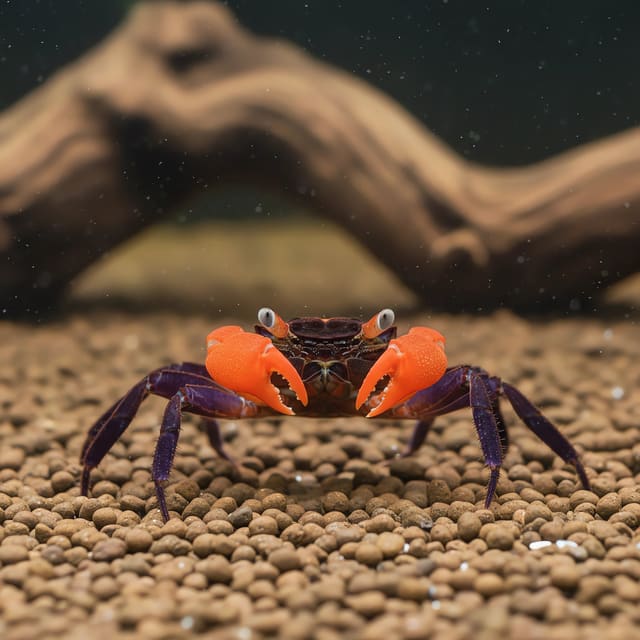
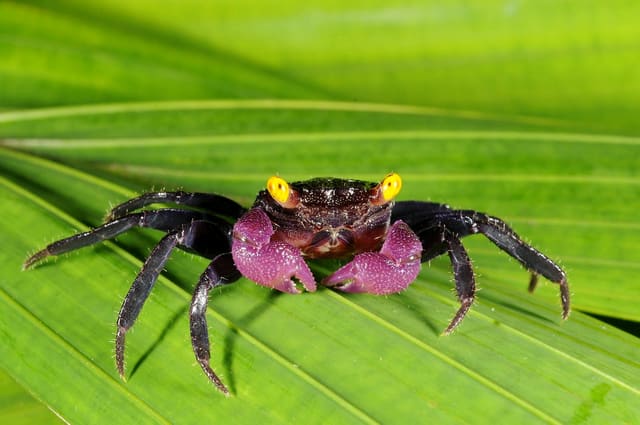
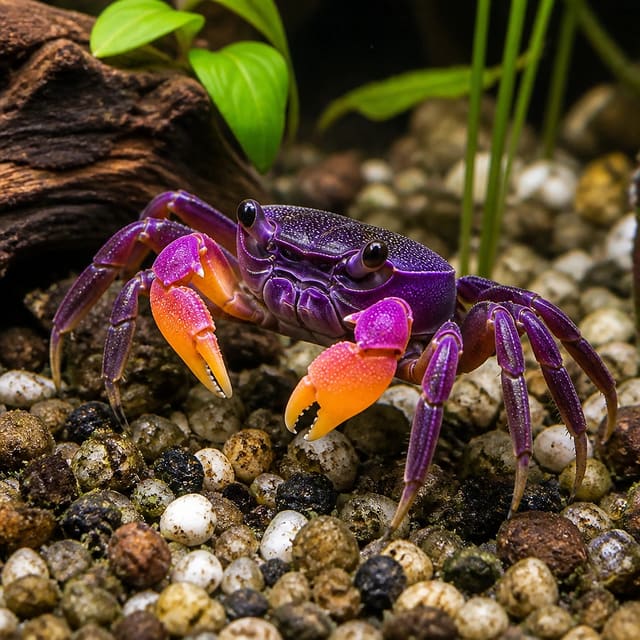
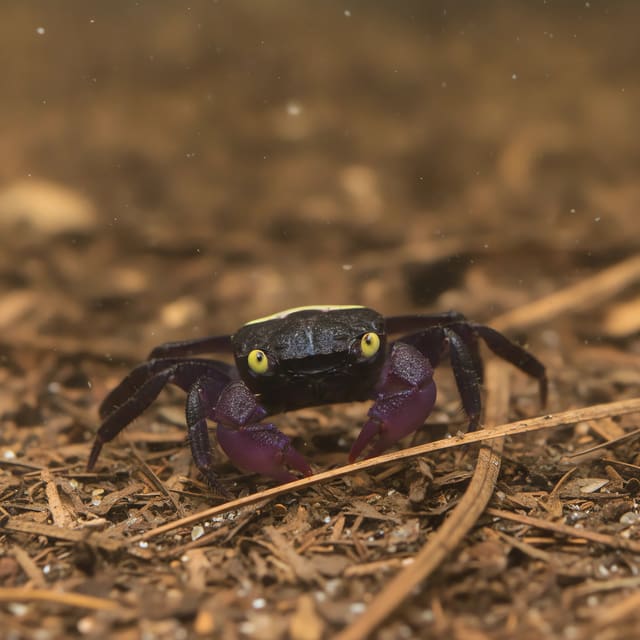
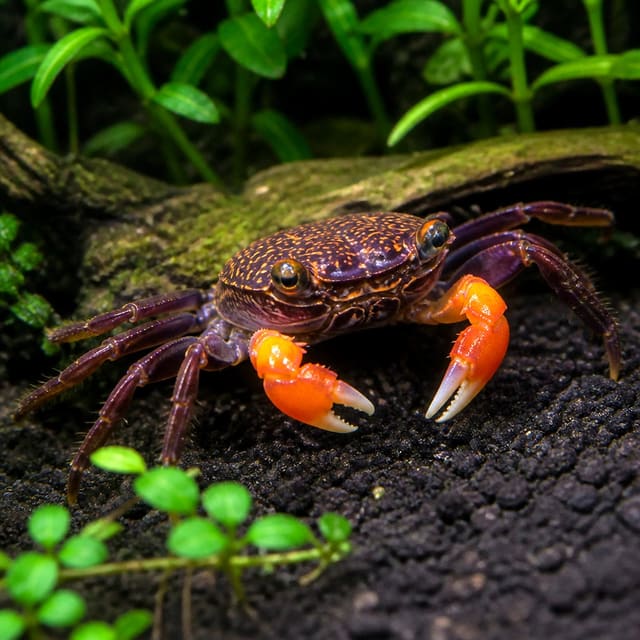
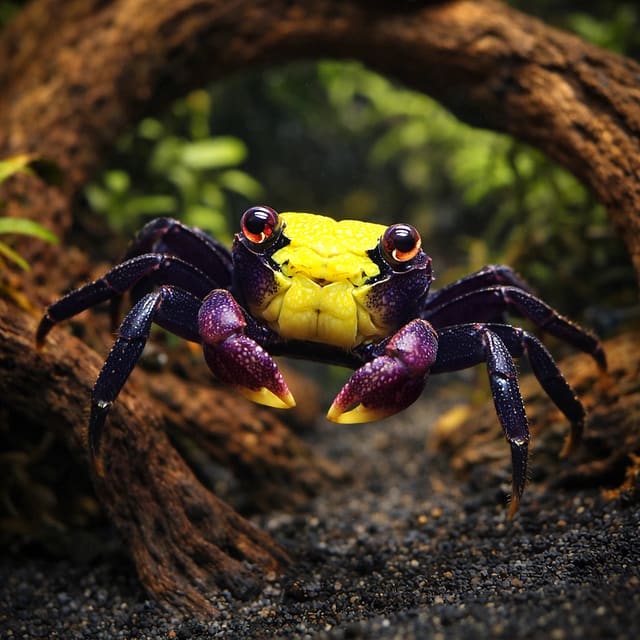
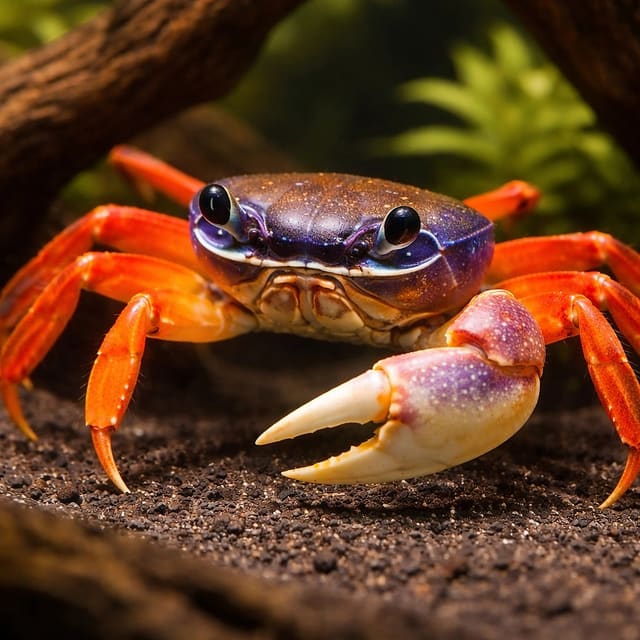
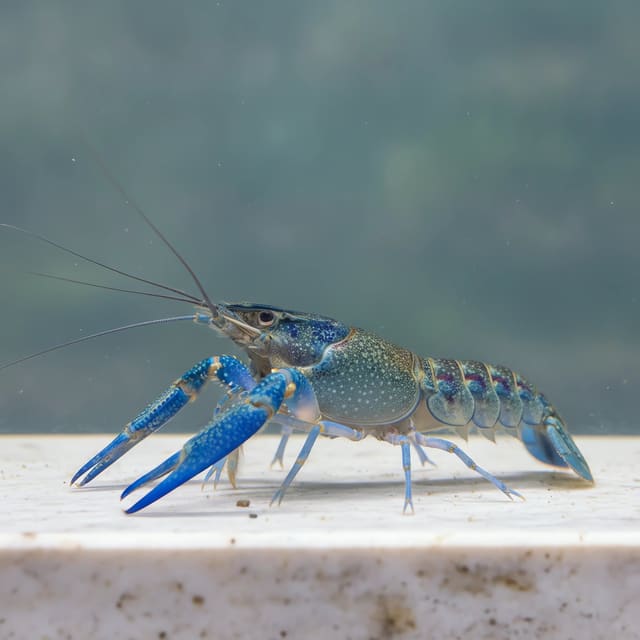
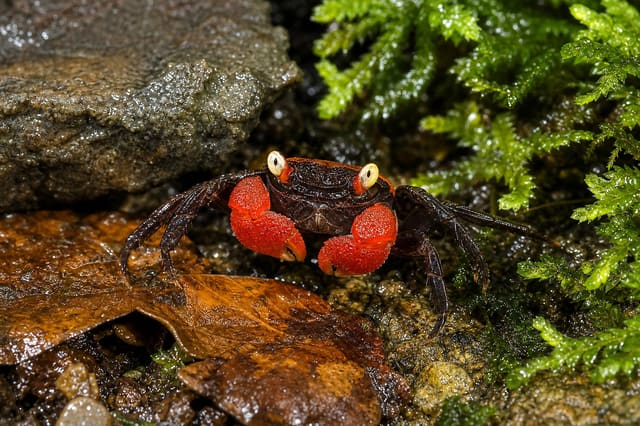
The gallery photograph shows a crab with yellow-orange claws, purple eyes and darker legs standing on fine, mixed gravel beside a mossy rock. Gallery images have been digitally enhanced to improve image quality. Natural colour, pattern, size and maturity can vary between live animals. Your crab will have its own shading, and colour can look different under your lighting and against your substrate.
To keep more than one crab, increase the quantity when you order; each unit is another crab of the same size grade. Read the space and cover notes in the care sections first, because every extra crab needs its own burrows and hiding places.
A keeper's care sheet written for Geosesarma sp. by The Tye-Dyed Iguana describes these crabs as spending most of their time on land while venturing into water. The Los Angeles Zoo, writing about one named relative, Geosesarma dennerle, describes a warm, humid, thickly planted habitat with wet soil beside fresh water, extensive use of land and burrowing. The zoo's account is about that species only, yet the shared picture is clear. Plan the enclosure as a damp land garden with a pool, not as an aquarium with a small island.
Getting the balance right has practical effects on welfare. A fully aquatic tank gives the crab nowhere to leave the water. An enclosure with too little land crowds every crab onto the same few surfaces and the same few hides. A generous land area with varied cover lets the crab choose between open and sheltered ground, and between land and water, which is exactly the choice a semi-terrestrial animal needs.
Most glass enclosures built for paludaria or small terraria can work, provided the lid fits closely and every gap is sealed. Semi-terrestrial crabs leave the water readily, and a crab this small can slip through openings around cable holes, filter pipes, hinges and sliding panels. Check the lid before the crab arrives and again after every maintenance session, because a lid left slightly open after feeding is an easy way for a small crab to get out.
Choose a footprint that leaves room for a proper land area, a pool you can maintain and several separate hides. Floor area matters more than height for a crab that lives and digs on the ground, although a little height lets you plant the back of the enclosure and build cover at different levels.
Use a deep, moisture-retentive substrate that will hold a burrow. The Tye-Dyed Iguana sheet builds the land from soil and sand, topped with moss, with leaf litter and cork bark for cover. Keep the substrate moist throughout so burrows keep their shape and the air above stays humid; the zoo's picture of wet soil beside fresh water is a good model.
Moss and living plants need light to stay healthy, and healthy planting is what keeps the land area damp, shaded and full of cover. Give the enclosure a regular day and night, position any light so it does not bake one corner, and make sure there is always a shaded, humid retreat under cork bark or dense leaves.
Give the crab a pool of clean fresh water that it can walk into and climb out of without effort. Slope the substrate into the water, or build ramps from stones, roots or cork, so there is always a gentle exit on more than one side. Keep the pool large enough that its quality does not swing with every meal, and look after it like a small aquarium, which the next section covers.
| Feature | What to provide |
|---|---|
| Lid | Close-fitting, with cable and pipe gaps sealed |
| Land | Most of the floor area, built from moist soil and sand |
| Water | A clean freshwater pool with gentle exits |
| Cover | Moss, leaf litter, cork bark and dense planting |
| Air | Humid, held by damp substrate, plants and a close lid |
Building the paludarium in a sensible order saves a great deal of rework, and it gives the pool time to mature before the crab arrives. The sequence below suits most small crab enclosures; adapt it to the layout you have in mind.
A final check before the crab arrives takes only a moment: look for gaps around the lid, a clear exit from the water on more than one side, damp but not flooded substrate, and at least one hide for every crab you plan to keep.
The pool may be small, but it is still water the crab lives beside and walks into. The RSPCA's guidance on aquarium environments explains why filtration matters: fish release ammonia, which is toxic, and a working biological filter lets beneficial bacteria convert it to nitrite, which is also toxic, and then to nitrate, which is safer. The same nitrogen cycle runs in a paludarium pool, where crab waste and leftover food break down, and in the damp substrate around it.
Mature the water section before the crab arrives, using the same approach you would use for a first aquarium. Our guide to preparing and maturing a first tank walks through that process. After that, keep the pool clean with small, regular partial water changes, prompt removal of leftovers and a close eye on anything decaying at the water's edge.
OATA's care sheet for crayfish and freshwater crabs names vampire crabs among the animals it covers. It gives 22–27 °C, pH 7.0–8.0 and 8–18 °dH as general guidance for that whole group. Those figures describe a wide range of crabs and crayfish, so use them as a broad reference for the pool rather than an exact target for this unnamed form. From day to day, clean, stable, tested water matters more than chasing a single number.
If test kits are new to you, this explanation of which aquarium water values to test and why is a good place to start. You can then enter your own results in our water parameter matcher to see how your tap or pool water compares with published guidance.
Humidity comes from the enclosure itself. Moist substrate, living moss and plants, open water and a close-fitting lid all help to hold it. The zoo describes warm, humid conditions for Geosesarma dennerle, and the keeper's sheet describes a humid, land-based set-up for Geosesarma sp., so aim for air that feels damp and a substrate that never dries out.
Measure rather than guess. A thermometer on the land side and another in the pool show whether a cool UK room is pulling the enclosure well below the group's general range. Place the paludarium away from direct sun, radiators and draughts, all of which cause fast swings in temperature and humidity.
A small, humid enclosure changes quickly. Make every adjustment gradually, whether you are changing water, rearranging hides or adding plants. Top up evaporation with clean fresh water so the pool keeps its volume, and avoid big one-off water changes that alter the chemistry in a single step. A stable enclosure is easier on the crab and easier for you to read, because any change in its behaviour stands out.
Vampire crabs are omnivorous scavengers, and variety is the heart of a good feeding plan. The Tye-Dyed Iguana's menu for Geosesarma sp. combines prepared crab food, small animal foods, fruit and greens. OATA's crab guidance also points keepers to a varied diet of animal and plant foods, and the Los Angeles Zoo describes Geosesarma dennerle scavenging on animal and plant material.
Offer small portions on the land area, on a flat stone or shallow dish near cover, so the crab can find the food and you can see what has been eaten. Start with a little and adjust to what disappears. It is far easier to add a second small portion than to clean up after an oversized one.
Remove leftovers, especially fruit and animal foods, before they spoil. In a warm, humid enclosure, uneaten food grows mould and fouls the substrate and the pool quickly, and prompt removal is the simplest way to keep a small paludarium healthy.
Rotate through the food types over the week rather than relying on one product. Variety makes it more likely that the crab receives what it needs, and it keeps feeding interesting for a scavenger that searches its surroundings for food. Watch appetite and activity over time; a crab that stops taking food it normally accepts is a reason to check water, humidity, temperature and hygiene.
Crabs grow by moulting. A freshly moulted crab is soft and vulnerable, which is one reason plentiful hides and secure burrows matter so much. A crab that spends time buried or tucked under cork bark is using its cover as intended, so resist the urge to dig it out. A cast-off shell can look surprisingly like a whole crab; look closely before assuming a loss.
OATA's crab guidance calls for treatments that are safe for invertebrates and free from copper. Read the ingredients of any medicine, water treatment or additive before it goes anywhere near the enclosure. Keep household sprays, polishes and insecticides away from the lid and any ventilation, because a small invertebrate in a closed, humid space has little protection from airborne chemicals.
Check the basics first: water test results, leftovers and mould, substrate moisture, humidity, temperature and any product used recently in or near the enclosure. Correct one thing at a time and make changes gradually, so the crab is not faced with a second sudden shift while it is already under strain.
Have the paludarium fully built before you order: land planted and moist, hides in place, lid sealed and the pool matured and tested. Make sure someone will be at the delivery address to receive the parcel, because live animals cannot be left unattended. Our delivery and Live Arrival Guarantee page sets out the terms in full.
Your crab is hand-packed by our team, travels in an insulated box with a heat pack when the weather calls for it, and is carried by a licensed live-animal courier.
If anything has gone wrong, contact us the same day with your order number and the unboxing video. WhatsApp is the fastest route, and we will arrange a replacement or refund.
Expect the crab to explore, dig or disappear under cover for a while; that is normal behaviour in a new enclosure. Offer a small first meal once it has had time to settle, remove whatever is left, and resist moving hides to find it. Watch for the crab using both land and water over the following days, and keep up the same gentle routine of checking the lid, the pool and leftovers.
What can be said about this trade form's biology comes from its genus. According to the Wikipedia summary of the genus, Geosesarma are small freshwater or terrestrial crabs, typically less than 10 mm across the carapace. They live and reproduce on land, with the larval stages taking place inside the egg rather than in open water. The genus is recorded from India, Indonesia, Malaysia, Thailand, the Philippines, the Solomon Islands and Hawaii.
That list describes the whole genus, not the home of this crab. Because the Vampire yellow trade form has no species name, no single country or habitat can honestly be attached to it. What the genus picture does give you is a clear model for the enclosure: damp land, cover, fresh water close at hand and a life lived mainly out of the water.
We leave home breeding out of this guide. Reproduction details, clutch sizes and development times differ between species, and without a species name the responsible approach is to concentrate on good everyday care: damp land, clean water, varied food and plenty of cover.
OATA advises caution when crabs share an aquarium with fish, and for this crab the simplest answer is a dedicated set-up. A paludarium built mainly as land, with a pool the crab can walk out of, is not a fish habitat, and a community fish tank gives a semi-terrestrial crab nowhere to live as it needs. Give the Vampire yellow crab an enclosure of its own.
If you would like several crabs, plan for them together from the start. Every crab needs access to land, water, food and cover without having to pass through another crab's hiding place, so increase burrowing depth, hides and feeding spots with each addition. There is no fixed number that suits every enclosure; start modestly, watch how the crabs share space and food, and add animals only when the layout clearly has room.
The dedicated-set-up approach applies to other crustaceans too. The simplest plan is to keep this paludarium for Geosesarma crabs rather than mixing in crayfish or unrelated crabs, whose size, habits and water needs differ. If you enjoy aquatic invertebrates as well, keep them in their own aquarium.
Choose plants that enjoy damp, humid conditions, and use moss, leaf litter and cork bark freely. Because the crab burrows, anchor plants firmly, grow some on wood or stone, and expect the substrate surface to change as tunnels appear. Keep décor free of sharp edges at the pool margins and away from the lid seal.
This crab rewards keepers who enjoy building a small planted world and watching what happens in it. It suits someone who is happy to maintain a humid enclosure with both land and water, keep the pool clean, feed small varied portions and check the lid every time.
Treat the crab as an animal to watch rather than hold. When you do need to move it, guide it gently into a small container rather than picking it up, and keep the lid closed whenever your hands are out of the enclosure.
It is a semi-terrestrial crab. Crabs of this genus spend most of their time on land and venture into water, so it needs a humid paludarium with a large land area and a pool of clean fresh water rather than a fully aquatic tank.
Build most of the enclosure as damp land, then add a pool of clean, tested fresh water with sloping substrate, stones or roots so the crab can walk in and out easily. Mature the pool before the crab arrives, remove waste promptly and refresh part of the water regularly.
Use a deep, moisture-holding mix of soil and sand that keeps its shape when the crab digs, then add moss, a layer of leaf litter and cork bark or similar shelters. Plenty of cover lets the crab burrow, hide and moult in security.
Offer a varied omnivorous menu: prepared crab food, small animal foods, and small pieces of fruit and greens. Feed small amounts on the land area and remove leftovers before they spoil, because uneaten food fouls a warm, humid enclosure quickly.
No. Treat the Vampire yellow crab as a copper-sensitive invertebrate: use only invertebrate-safe, copper-free products in or near its enclosure, and read the ingredients of any medicine or water treatment before use.
A dedicated set-up is the better plan. OATA advises caution when crabs and fish share an aquarium, and a paludarium built mainly as land leaves little space for fish anyway, so give the crab a lidded enclosure of its own.
The species has not been identified. It belongs to the accepted genus Geosesarma in the family Sesarmidae, and Vampire yellow is a trade name for this colour form, so its care follows the genus and its care group.
Humidity comes from the set-up itself: keep the soil and sand substrate moist, grow moss and plants, include the freshwater pool and fit a close lid. Re-moisten dry patches with clean water and keep the enclosure away from radiators, direct sun and draughts.
It is an animal to watch rather than hold. If you need to move it, guide it gently into a small container instead of picking it up, and keep the lid closed whenever your hands are out of the enclosure.
It is hand-packed by our team and carried by a licensed live-animal courier, and someone needs to be at the delivery address to receive it. Start a continuous unboxing video with the parcel still sealed, keep filming as you open it, then move the crab gently onto damp land near cover in its ready paludarium without adding the transport water. Our delivery page explains the Live Arrival Guarantee terms.
Yes. Use a close-fitting, escape-resistant lid and seal the gaps around cables and pipework. Small semi-terrestrial crabs leave the water readily and can slip through narrow openings, and the lid also helps keep the air humid.
Geosesarma crabs dig and use cover, so time spent in a burrow, under leaf litter or behind cork bark is normal. Check that the lid is secure and that food is being taken, keep conditions stable and avoid digging the crab out.
No reviews for this item yet. Bought one? Honest reviews only, good or bad.
What customers say about ordering from us
Easy website plenty of info on fish your buying great to pick a time slot
TRACEY DURRANT · 7 Oct 2026
Got some lovely fish thank you
Kevin Mackie · 7 Oct 2026
Reviews of our shop, collected by Judge.me, an independent third-party review collector. Newest first.