Moderate
Black Pinto Taiwan Bee Shrimp (Caridina cantonensis)
20–25°C · pH 5.5–6.8 · 20L
£44.99
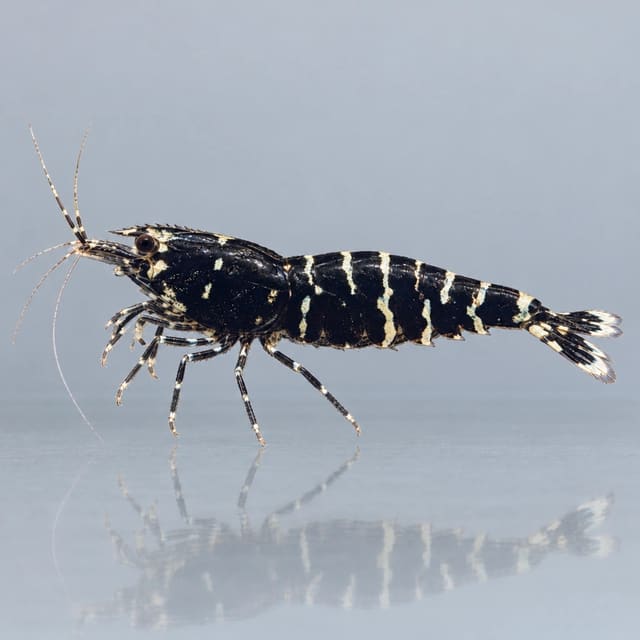
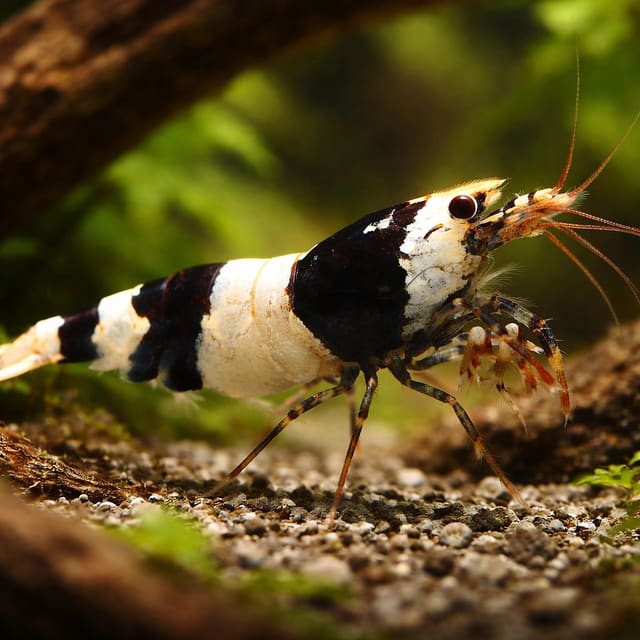
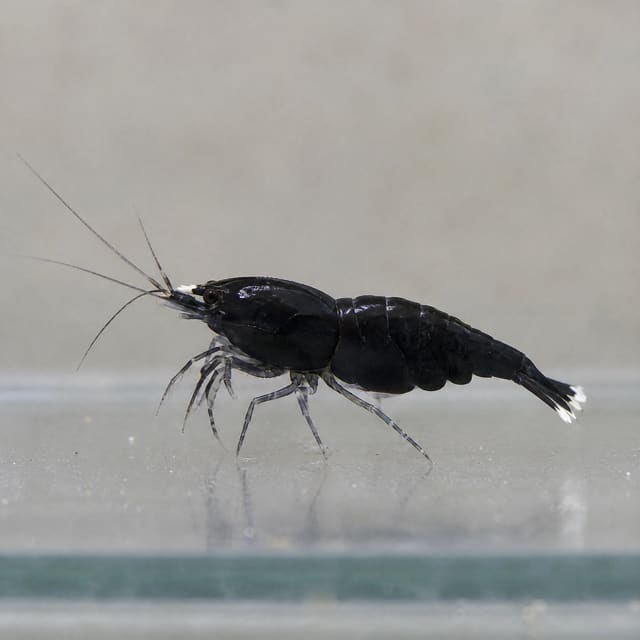
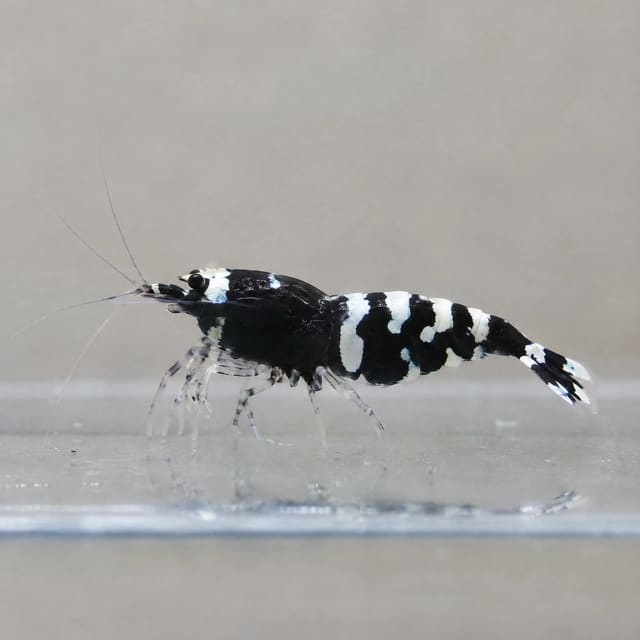
The Black Tiger Shrimp is a dark colour line of the tiger shrimp, with a black body, cream stripes and cream marbling on the head. One of the more forgiving Caridina, it suits a mature planted tank at about 20–24°C, pH 6.5–7.5 and GH 4–10, often with tested tap water. Sold individually as one live shrimp.
Adult size is the maximum length this species reaches at full maturity (scientific sources). The livestock you receive will be younger and smaller. Product-photo provenance and any image-specific limitations are stated on the listing.
Caridina sp.
Choose a quantity for your aquarium. Discount thresholds are pricing offers, not a stocking recommendation.
The Black Tiger Shrimp is a dark colour line of the tiger shrimp, with a black body, cream stripes and cream marbling on the head. One of the more forgiving Caridina, it suits a mature planted tank at about 20–24°C, pH 6.5–7.5 and GH 4–10, often with tested tap water. Sold individually as one live shrimp.
Adult size is the maximum length this species reaches at full maturity (scientific sources). The livestock you receive will be younger and smaller. Product-photo provenance and any image-specific limitations are stated on the listing.
Read the full care guidance when planning conditions for your aquarium.
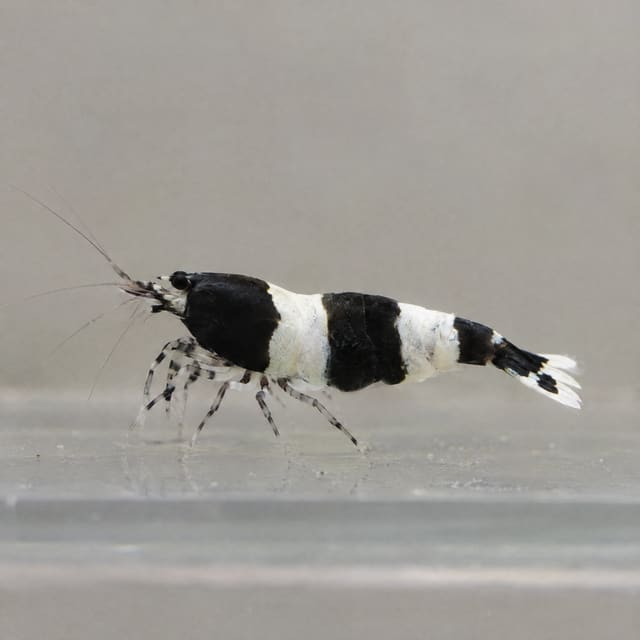
The Black Tiger Shrimp is a dark colour line of the tiger shrimp, with a black body crossed by cream stripes and a cream marbling over the head. The legs and antennae are banded, the tail fan carries pale tips, and in a planted tank the stripes catch the light as the shrimp graze. It is a smart, natural-looking shrimp that shows up well against green moss and pale stone.
Black Tiger Shrimp sit at the tougher end of the Caridina family. Shrimp Science rates the black tiger easy and gives it a wider range of water than any bee shrimp, while The Shrimp Farm rates the related blue and red tigers moderate or intermediate. That makes this a sensible step for a keeper who has kept cherry shrimp and wants a first Caridina without moving to reverse osmosis water and acid soils straight away.
| Suits | Not suited to |
|---|---|
| A cycled, planted tank of about 38 litres or more | A brand-new tank |
| Water around 20–24°C, pH 6.5–7.5, GH 4–10, KH 2–6 | Very hard, alkaline water or large daily swings |
| A group of five or more | One or two shrimp alone |
| A shrimp tank or one with Neocaridina, Amano shrimp and snails | Bee shrimp, other tiger colours, or shrimp-eating fish |
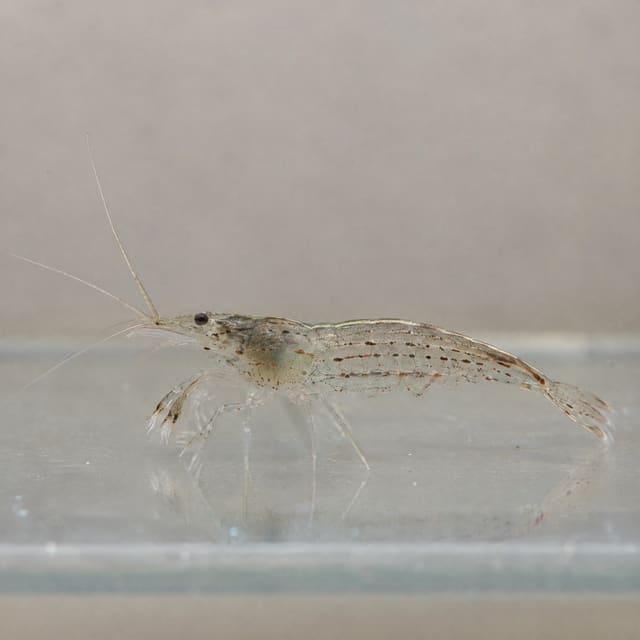
Several shrimp on sale carry stripes, and they are not interchangeable. The tiger shrimp was formally described in 2014 by Klotz and von Rintelen; Seriously Fish’s summary describes the wild animal as semi-transparent with dark stripes over the head shield and the first six body segments and an unmarked tail fan. Black tigers are bred from it and keep the stripes, but the body has turned dark.
| Shrimp | What it looks like | Group |
|---|---|---|
| Black Tiger (this shrimp) | Dark body with cream stripes and marbling | Tiger shrimp line |
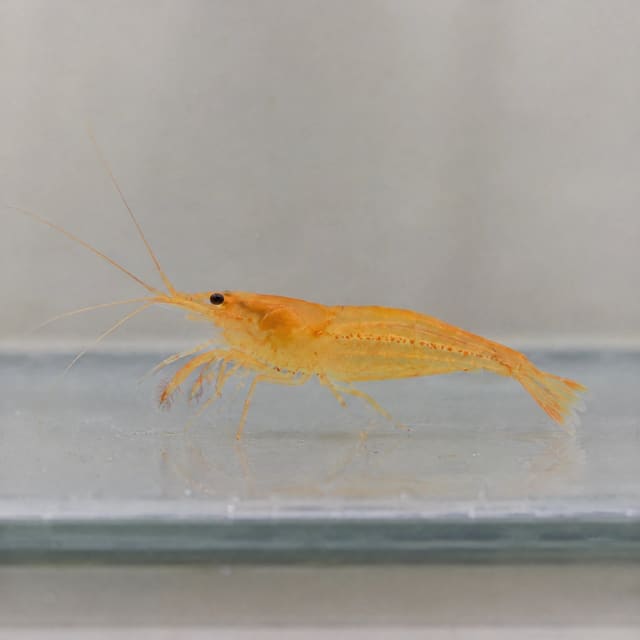
| Wild-type Tiger Shrimp | Clear to amber body with dark stripes | Tiger shrimp |
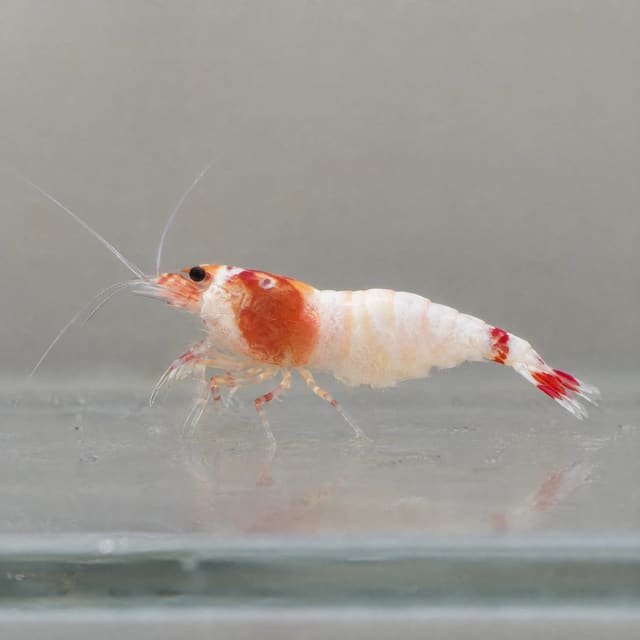
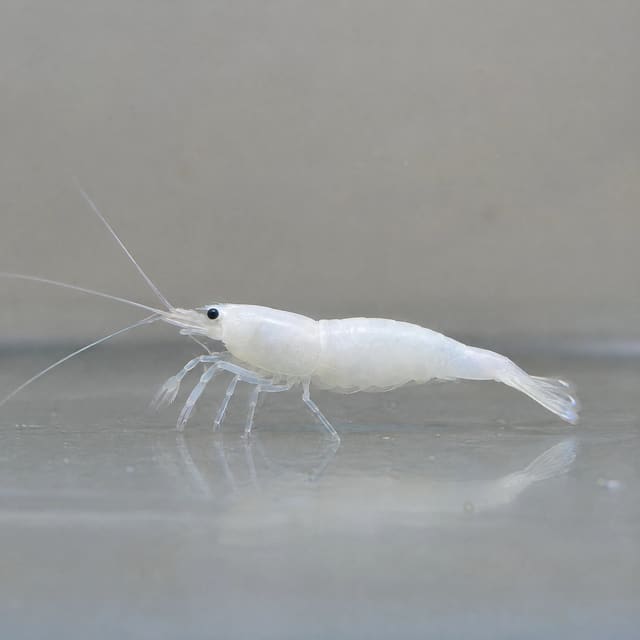
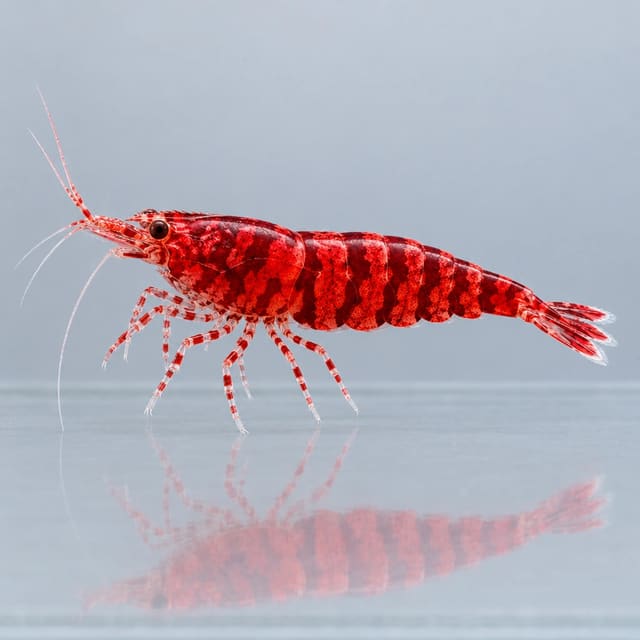
| Raccoon Tiger Shrimp | White body with bold black bands | Tiger-type line |
| Crystal black and other bee shrimp | Black and white blocks of colour, no fine tiger stripes | Bee shrimp, softer water |
The naming is still settling. The bee and tiger shrimp were both sold for years as Caridina cantonensis; the 2014 study named the tiger Caridina mariae, and Wikipedia notes later genetic work placing the two as each other’s closest relatives. Shrimp Science still lists black tigers as C. cantonensis, while The Shrimp Farm uses C. mariae. We list ours as Caridina sp.
One purchase is one live Black Tiger Shrimp. Set the quantity for the group you want. There is one standard option: the shrimp are not graded by length before dispatch, so a group can include shrimp at slightly different stages of growth. Our livestock delivery page sets out the dispatch days and packing.
This is the standard grade. Shrimp Science describes lower grades of black tiger as more translucent or patchy than the best, sometimes with a dark blue cast, so expect visible cream marbling and some variation from shrimp to shrimp. Our photographs show the typical look; they are representative images, not pictures of the shrimp you will receive. Eye colour varies within black tiger stock and is not guaranteed. If you want the deepest, most solid black, we also list a high grade selection of the same shrimp.
OATA advises keeping shrimp in groups of at least five, and Fishipedia gives the same minimum for the tiger shrimp. A group spreads out, grazes openly and quickly includes both sexes; The Shrimp Farm notes that adult females are larger, with a curved underside and a dark saddle of developing eggs behind the head.
Adults reach about 3 cm according to Shrimp Science, 2–3 cm according to Fishipedia, and up to 1.5 inches, about 3.8 cm, according to The Shrimp Farm. They spend their day picking over every surface, so the useful space in a shrimp tank is the floor, the wood, the stones and the plant leaves rather than open water.
Shrimp Science sets 5 US gallons, about 19 litres, as the minimum and recommends 10 gallons, about 38 litres, or more; The Shrimp Farm calls 38 litres a good start for a beginner; Fishipedia gives 20 litres; and OATA sets 10 litres for a small group of shrimp. The larger figure is kinder to a growing colony and much easier to keep steady.
Because tiger shrimp accept the near-neutral values in the water table below, they do not need the acid-buffering soils used for bee shrimp. OATA recommends sand or fine gravel, ideally with live plants, because shrimp forage through it, and The Shrimp Farm likes a black substrate because shrimp colours stand out best against a dark background. A dark sand or fine gravel suits black tigers well.
The sources overlap in a comfortable middle ground. Pick values inside it and keep them steady from week to week.
| Reading | Aim for | Source ranges |
|---|---|---|
| Temperature | 20–24°C | Shrimp Science 20–25°C; The Shrimp Farm 65–75°F (about 18–24°C); Fishipedia 15–26°C |
| pH | 6.5–7.5 | Shrimp Science 6.5–8.0; The Shrimp Farm and Fishipedia 6–7.5 |
| GH | 4–10 | Shrimp Science and The Shrimp Farm 4–10 |
| KH | 2–6 | The Shrimp Farm 2–6; Shrimp Science 1–8 |
| TDS | 150–250 ppm | The Shrimp Farm 150–250; Shrimp Science 130–250 |
| Ammonia and nitrite | Zero | OATA |
| Nitrate | Low | OATA: within 20 mg/L of tap water; Fishipedia: under 50 mg/L |
OATA’s general shrimp range, 17–27°C, pH 6.5–8.0, 4–18 dGH and 3–15 dKH, is wider; it covers all common aquarium shrimp, and the tiger values above sit at its softer end.
Many keepers can use conditioned tap water for tiger shrimp, which is a real advantage over bee lines. Test GH, KH and pH from the tap. If the readings sit inside the table, condition the water to remove chlorine and chloramine, as OATA advises, and use it. If your water is harder, The Shrimp Farm suggests reverse osmosis water to bring it down, usually by mixing RO with tap water until GH and KH fall into range. Our water matcher tool shows how close your water is, and the water chemistry care guide explains each test.
A gentle sponge filter, or any filter with a cover over its intake, keeps shrimp and young out of the impeller, says The Shrimp Farm. A filter is essential at any size, according to OATA, and The Shrimp Farm recommends a heater to prevent sudden temperature changes.
OATA recommends a 25 percent water change at least once a week and The Shrimp Farm suggests 20 percent a week, matched for temperature. Either works when the new water is close to the tank’s readings and is added slowly.
Black tigers graze algae and biofilm most of the time. Shrimp Science notes that a mature, heavily planted tank may supply most of their food, topped up with algae wafers, bee pollen, shrimp pellets and blanched vegetables. The Shrimp Farm adds nettle, algae tablets and the odd frozen mosquito larvae, and warns that leftover food must come out within a few hours because overfeeding is a major cause of death.
OATA suggests feeding shrimp two or three times a week, leaving food for at least 30 minutes and then removing the rest. Feed more often only in a young tank with little natural growth, and always in amounts the group finishes.
| Day | Meal |
|---|---|
| Monday | A pinch of shrimp sticks |
| Wednesday | A small piece of algae wafer or algae tablet |
| Friday | A blanched spinach or nettle leaf, removed after a few hours |
| Other days | Nothing: the group grazes biofilm |
Shrimp react badly to sudden changes in water. Give them a quiet evening to adjust. OATA’s method is to turn the lights off, float the sealed bag for 10 minutes to even out the temperature, then add tank water to the bag slowly over at least 30 minutes and net the shrimp into the tank with as little bag water as possible. If your water is very different from the water they arrive in, extend this into a slow drip. Our acclimatisation guide shows a simple drip line.
| When | What to look for |
|---|---|
| First evening | Shrimp starting to explore and pick at surfaces |
| Days one to three | Some hiding is normal; colour may look paler while they settle |
| Days four to seven | Open grazing; small meals cleared quickly |
| First moults | A cast skin is normal, as OATA notes; leave it for the shrimp to eat |
OATA’s warning signs for shrimp are a useful checklist: unusual inactivity or restlessness, colour turning darker or paler, more hiding than usual, changes in breathing, white spots, damaged shells or missing legs, swelling and loss of appetite. Shrimp are very sensitive to copper, which can kill them at low levels; Fishipedia warns that this includes copper in plant fertilisers and some foods, not only medicines.
| Problem | Likely cause | Action |
|---|---|---|
| Shrimp gathering at the surface | Poor water or low oxygen | Test ammonia and nitrite; increase surface movement |
| Failed or stuck moults | Sudden water change or unsuitable hardness | Check GH and how much water you are changing at once |
| Losses after a new plant or treatment | Copper or another chemical | Remove the plant or stop the treatment and change water |
| Washed-out colour across the group | Stress or temperature | Check temperature, nitrate and recent changes |
The Shrimp Farm lists Neocaridina such as cherry shrimp, Babaulti and Amano shrimp, nerite snails and Thai micro crabs as companions for tiger shrimp, and Shrimp Science suggests cherry shrimp for colour contrast. Neocaridina cannot interbreed with Caridina, so the colours stay separate.
Bee shrimp are a different matter. The Shrimp Farm warns that bee shrimp cross with tiger shrimp, and Fishipedia advises against mixing shrimp of one genus. Keep black tigers away from crystal red, Taiwan bee and pinto shrimp, and from other tiger colours if you want black young.
| Suits | Avoid |
|---|---|
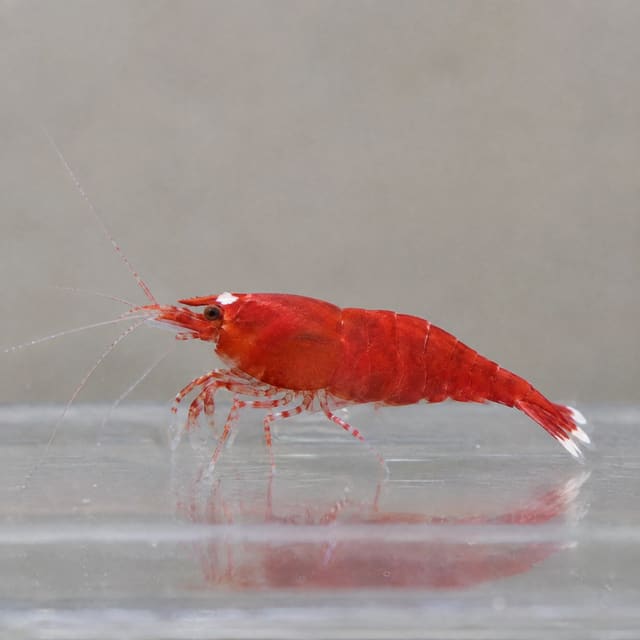
| Cherry shrimp such as the Fire Red Shrimp | Crystal red, Taiwan bee and pinto shrimp |
| Babaulti shrimp such as the Striped Babaulti Shrimp | Other tiger colours, if you want to keep the line dark |
| Nerite snails such as the Batik Nerite Snail | Any fish that can fit a shrimp in its mouth |
| Very small, mellow fish such as pygmy corydoras, with care and never in a breeding tank | Crayfish and larger crabs; copper-based treatments |
Our tank mates tool checks any mix before you add it.
Tiger shrimp breed in plain fresh water with no larval stage. Fishipedia describes the young as fully formed and able to fend for themselves from birth. The Shrimp Farm says the female carries her eggs for about 30 days and that a red tiger clutch can give 20 or more young. Moss and leaf litter give the newborns cover and food, and a sponge filter keeps them from being drawn into the intake.
Not every youngster will match its parents. The Shrimp Farm notes that in tiger lines body colour is not always passed on, so some young may be paler or more marbled. Keep the darkest adults for breeding if you want the colony to stay black.
Explore more striped and patterned shrimp in our Caridina range, see every freshwater shrimp we sell, visit the shrimps and crustaceans shop, and read our UK freshwater shrimp guide and shrimp-keeping guide.
A dark, selectively bred colour line of the tiger shrimp, a small freshwater shrimp from southern China now named Caridina mariae. It has a black body with cream stripes and marbling. Older labels call tigers Caridina cantonensis, so we sell it as Caridina sp.
Same shrimp and same care; the high grade is selected for a deeper, more solid black and cleaner stripes. This standard grade can show more cream marbling, some translucent areas or a dark blue cast, which Shrimp Science describes as typical of lower grades.
It is one of the more forgiving. Shrimp Science rates black tigers easy and The Shrimp Farm rates tiger lines moderate; they accept harder, less acidic water than bee shrimp, but still need a mature tank and steady readings.
Often, if your tap water tests within about GH 4–10, KH 2–6 and pH 6.5–7.5 after conditioning. If it is harder, The Shrimp Farm suggests using reverse osmosis water to bring the values down.
Yes. Cherry shrimp are Neocaridina and cannot interbreed with Caridina; Shrimp Science and The Shrimp Farm both list them as companions. Keep it away from bee shrimp and other tiger colours, which it can cross with.
At least five. OATA and Fishipedia both give five as the minimum group, and a larger group gives you males and females for breeding.
Only with care. Any fish that can fit a shrimp in its mouth will eat it, and fish take newborn shrimp. The Shrimp Farm notes some keepers succeed with very small, mellow fish such as pygmy corydoras or otocinclus, but recommends a shrimp-only tank for breeding.
Shrimp Science gives 1–2 years, and OATA says shrimp live a couple of years in a mature tank with good water.
No reviews for this item yet. Bought one? Honest reviews only, good or bad.
What customers say about ordering from us
Easy website plenty of info on fish your buying great to pick a time slot
TRACEY DURRANT · 7 Oct 2026
Got some lovely fish thank you
Kevin Mackie · 7 Oct 2026
Reviews of our shop, collected by Judge.me, an independent third-party review collector. Newest first.
Moved by UK carriers licensed to handle live animals
Hand-packed with oxygen bags, poly box, heat pack
Email photos the same day; an optional unboxing video helps us review problems faster — claim terms apply
Klarna & PayPal Pay in 3 at checkout