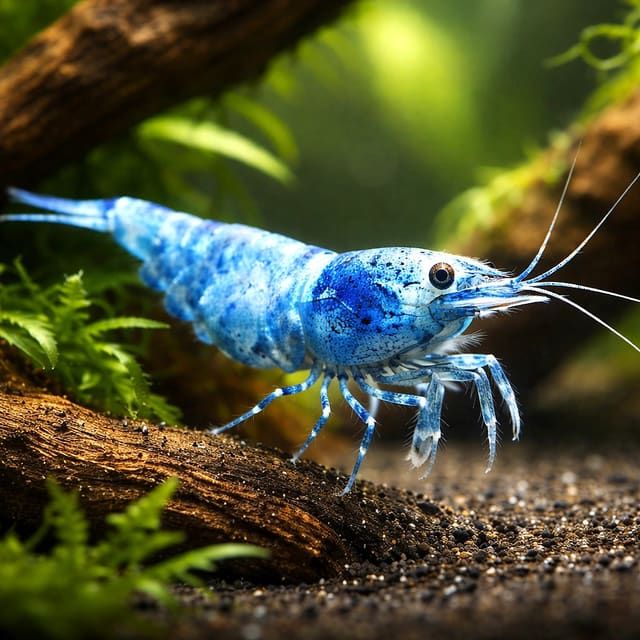
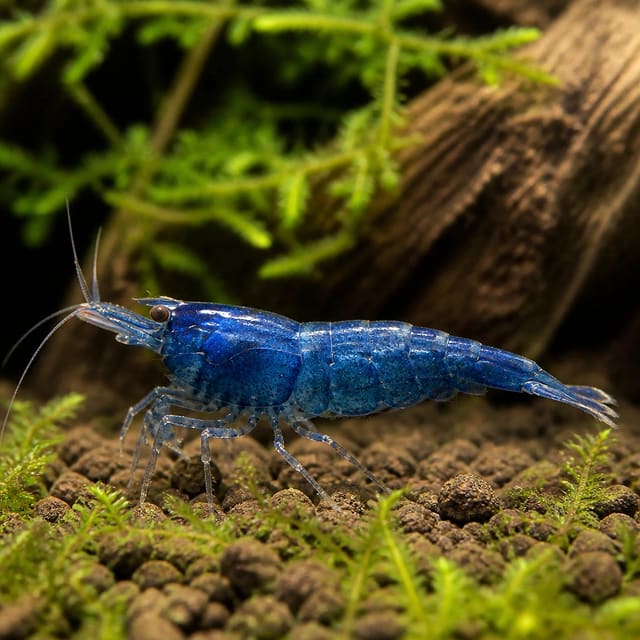
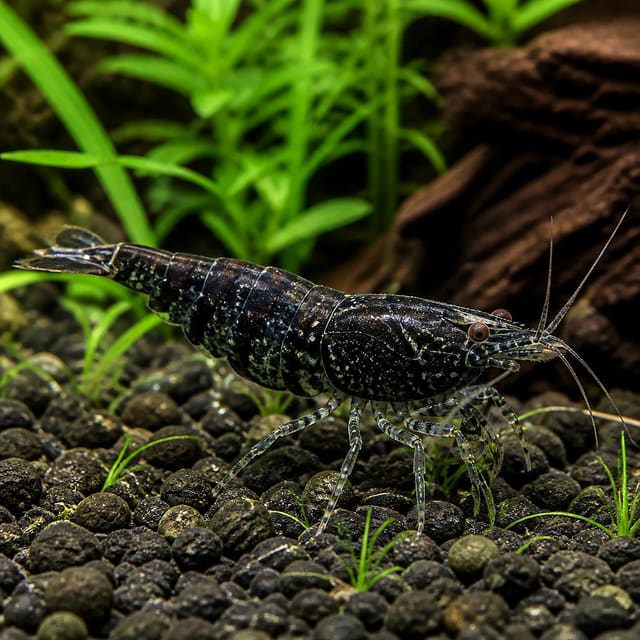
Red Wine Taiwan Bee Shrimp (Caridina cantonensis)
17–27°C · pH 6.5–8
£43.99

Striking Red Wine Hinomaru Shrimp with sought-after Taiwan Bee patterning for planted freshwater tanks. Buy today with live arrival guarantee and UK delivery.
Adult size is the maximum length this species reaches at full maturity (scientific sources). The livestock you receive will be younger and smaller. Product-photo provenance and any image-specific limitations are stated on the listing.
Caridina cantonensis
Lives in groups: kept together they stay settled, active and show their best colour.
Confirm your email, then we’ll send an availability message for this exact item if it returns within 180 days.
This request is only for this product—no newsletter or other promotions. A mail-provider retry may very rarely duplicate the same availability message. Unconfirmed addresses are removed after 48 hours. See our privacy policy.
Striking Red Wine Hinomaru Shrimp with sought-after Taiwan Bee patterning for planted freshwater tanks. Buy today with live arrival guarantee and UK delivery.
Adult size is the maximum length this species reaches at full maturity (scientific sources). The livestock you receive will be younger and smaller. Product-photo provenance and any image-specific limitations are stated on the listing.
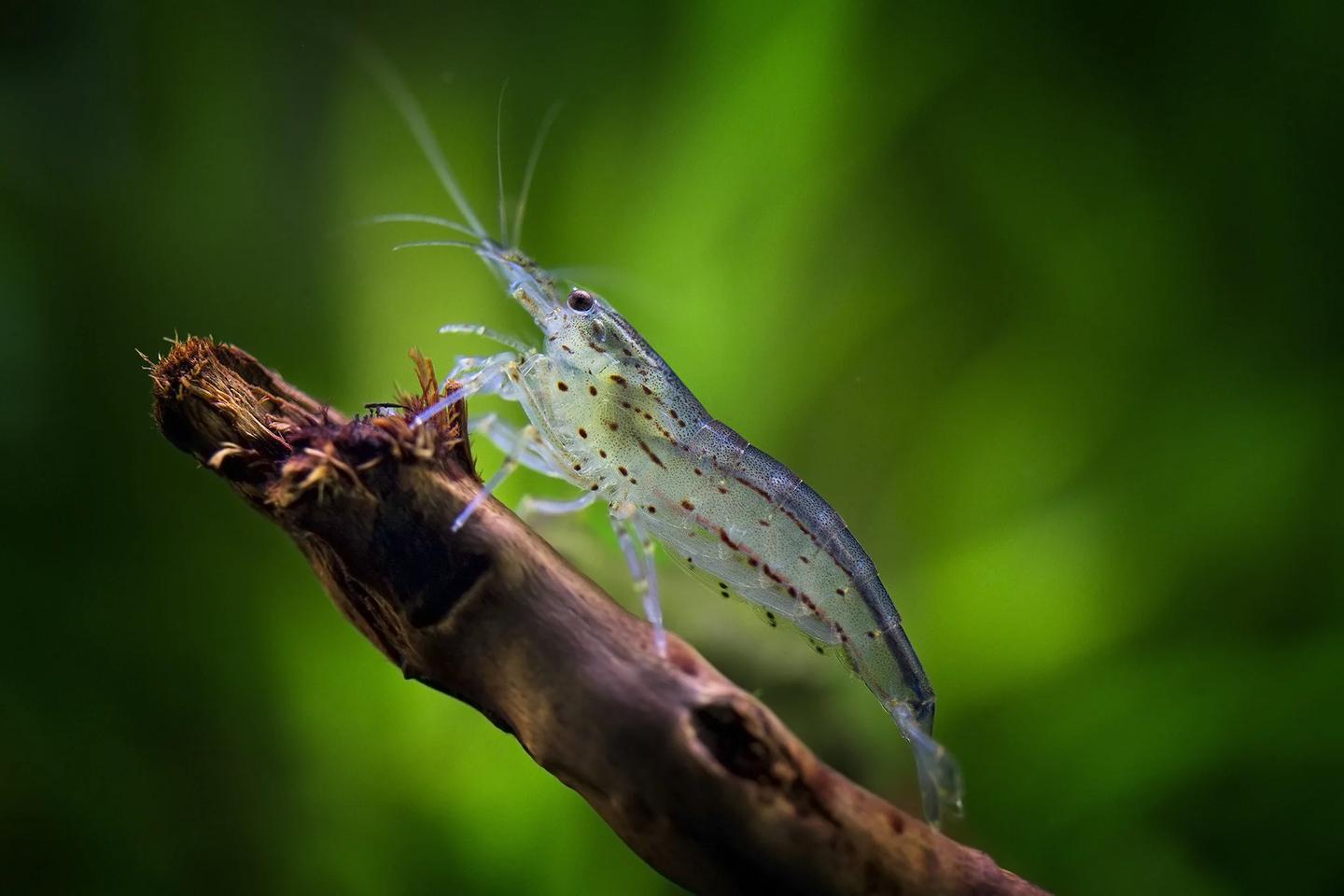
Start with a mature, filtered aquarium. OATA's broad UK guidance suggests approximately 20 litres for Amano Shrimp and at least five for social shrimp, with a larger aquarium when fish are present. Treat those as cautious planning screens—not biological minima or a per-litre formula. Match the complete adult community, test your water, protect the filter inlet and never buy them as a guaranteed algae cure.
Maintain these water conditions for optimal health and vibrant colors
The Red Wine Hinomaru Shrimp is one of the most striking Taiwan Bee shrimp available to serious keepers of aquarium shrimp UK collections. This selectively bred form of Caridina cantonensis combines a deep, saturated wine-red body with the crisp circular Hinomaru-style pattern that made Taiwan Bees famous in the first place. Adults stay compact at around 2.5 cm, but what they lack in size they make up for in detail, contrast, and constant activity across wood, moss, leaf litter, and stone. If you have been searching for a true red wine hinomaru shrimp care guide, the key point is simple: these shrimp reward stable, soft, acidic water with exceptional colour and breeding potential.
This is not the best choice for a rough-and-ready mixed tank, but it is an excellent choice for aquarists ready to meet specific red wine hinomaru shrimp tank requirements. The ideal red wine hinomaru shrimp aquarium setup uses active substrate, mature biofilm, gentle filtration, and tightly controlled red wine hinomaru shrimp water parameters. Their peaceful nature, manageable red wine hinomaru shrimp minimum tank size, and fascinating colony behaviour make them highly desirable in dedicated shrimp aquariums. See our detailed photos showing the rich red wine color, clean pattern edges, and body shape that distinguish quality stock. For keepers wanting a refined Taiwan Bee with real collector appeal, Red Wine shrimp offer beauty, challenge, and the satisfaction of keeping one of the hobby’s standout Caridina lines.
Red Wine Hinomaru Shrimp belong to the bee shrimp branch of Caridina cantonensis, a species native to Taiwan and developed in the aquarium hobby into many sought-after Taiwan Bee lines. The Red Wine form is closely related to other selectively bred shrimp such as Red Ruby Shrimp, Crystal Red Shrimp, and King Kong Shrimp. In the hobby, they are valued for pattern quality, colour depth, and their place in advanced Caridina breeding projects.
Although the Red Wine Hinomaru pattern is a captive-bred aquarium strain, its species roots trace back to Taiwan, where Caridina cantonensis originated in cool, soft, mineral-light streams. When aquarists ask invertebrates where do they live or where do invertebrates mostly live, the answer varies widely, but bee shrimp ancestors are associated with freshwater stream habitats rather than ponds, estuaries, or marine reefs. Unlike questions such as where do sea invertebrates live or what invertebrate is a jellyfish, this shrimp is a strictly freshwater invertebrate adapted to clean, oxygen-rich water.
In nature, these shrimp graze on biofilm, algae films, decomposing leaves, and microscopic organic matter. That natural feeding style explains why mature tanks outperform sterile new setups. It also helps answer why why are invertebrates important to the ecosystem: shrimp recycle detritus, break down plant matter, and help move nutrients through the food web. In aquariums, they play a similar clean-up role, though they should never be treated as disposable maintenance animals.
Many customers compare them to native freshwater shrimp UK species, wild freshwater shrimp UK finds, or even ask about freshwater shrimp UK rivers. Red Wine Hinomaru Shrimp are not a UK native species and should be kept only in aquariums, not released outdoors. They are also not suitable for a freshwater shrimp in pond UK setup, a freshwater shrimp UK pond, or anything similar to a cherry shrimp UK pond idea, because their soft-water needs and temperature sensitivity make ponds too unstable in most of Britain.
As for odd search queries like who sang red wine originally, they have nothing to do with shrimp care, but they do show how often the name “Red Wine” catches attention. In the aquarium world, this name refers to the shrimp’s rich body tone, not a beverage style. Their true habitat is a calm, mature, low-TDS freshwater aquarium that imitates shaded stream conditions.
Mimicking the natural habitat of bee shrimp improves survival and colour. Use leaf litter, moss, aged wood, and stable soft water rather than a bare tank. In our experience, Red Wine shrimp settle faster and graze more confidently when they can move between shaded surfaces rich in biofilm.
The best red wine hinomaru shrimp tank setup is a mature, species-focused aquarium built around stability. While the stated red wine hinomaru shrimp minimum tank size is 20 litres, most keepers get better long-term results in 25-45 litres because extra water volume reduces swings in pH, temperature, and dissolved waste. If you are planning a proper red wine hinomaru shrimp aquarium setup, think of consistency first and decoration second.
The core red wine hinomaru shrimp tank requirements are simple: stable water, low bioload, lots of grazing area, and no predators. A 20-litre tank can house a starter group of 6-10 shrimp, but if you are wondering how many red wine hinomaru shrimp per tank, a 30-litre setup is much safer for building a red wine hinomaru shrimp colony. More floor area means more biofilm, more feeding spots, and less competition during moulting.
The correct red wine hinomaru shrimp water parameters are the most important part of care. Aim for a red wine hinomaru shrimp water temperature of 20-25°C, with 21-23°C often giving the best balance between colour, longevity, and breeding. If you search red wine hinomaru shrimp temperature, red wine hinomaru shrimp water temperature, red wine temperature, red wine temp, or even red wine temperature storage, the aquarium answer is that these shrimp dislike heat spikes. Keep pH between 5.5 and 6.8, and maintain very soft water with low carbonate hardness.
The ideal red wine hinomaru shrimp GH KH requirements are generally GH around 4-6 and KH close to 0-1, usually achieved with remineralised RO water. These red wine hinomaru shrimp GH KH requirements matter because excess KH can overwhelm active substrate and push pH upward. Their preferred red wine hinomaru shrimp water hardness is 0-6 dGH, and these are very different from generic freshwater shrimp requirements for hardier Neocaridina. For UK keepers, this is one of the biggest differences between a basic shrimp tank and a true Caridina system.
A sponge filter or shrimp-safe matten filter is ideal. Gentle flow keeps oxygen high without sucking in shrimplets. If you use a hang-on-back or canister filter, cover the intake with a fine pre-filter sponge. Mature sponge filtration also produces the microbial films that shrimp constantly graze.
Use an active buffering shrimp soil designed for Caridina. This helps maintain the acidic conditions needed for red wine hinomaru shrimp ideal conditions. A dark substrate also improves visual contrast, making the white Hinomaru markings and wine-red body appear stronger in photos and in person.
Red wine hinomaru shrimp with plants is one of the best combinations in shrimp keeping. A heavily structured tank gives them security and more feeding surfaces. Red wine hinomaru shrimp in planted aquarium layouts do especially well with mosses, Bucephalandra, floating plants, and small-leaved epiphytes. If you like similar Caridina styles, compare them with Red Wine Shrimp, Black Crystal Shrimp, or Panda Hinomaru Taiwan Bee Shrimp in similarly planted setups. And for anyone asking are plants invertebrates, no: plants are not invertebrates, but they are extremely useful in shrimp tanks.
Moderate lighting for 6-8 hours daily is usually enough. Too much light can trigger nuisance algae before the tank matures, while too little may limit plant growth. The goal is a balanced system, not maximum brightness.
Always cycle the tank for 4-6 weeks before adding Caridina. In our experience, new keepers lose more Taiwan Bees to immature tanks than to any single disease. A tank that looks clean is not the same as a tank that is biologically ready.
The ideal red wine hinomaru shrimp diet is varied, light, and based around constant grazing rather than heavy meals. In nature, Caridina cantonensis feed on biofilm, algae films, decaying plant matter, and microscopic organisms. In captivity, the best red wine hinomaru shrimp feeding guide combines natural grazing with measured supplemental feeding. If you are asking how often should you feed freshwater shrimp or how often to feed freshwater shrimp, the answer is less than most beginners think.
A mature tank should provide part of the diet through biofilm and soft algae. Supplement this with quality shrimp pellets, shrimp sticks, or specialised Caridina foods. This is the foundation of a sensible freshwater shrimp uk diet and a practical red wine hinomaru shrimp diet for long-term health.
Blanched spinach, courgette, nettle, mulberry leaves, and Indian almond leaves can all be used in moderation. Protein-rich foods should be occasional rather than constant, especially in warm water. Shrimp also benefit from mineral support during moulting, but avoid random additives unless you understand your water chemistry.
Pollen-based foods, bee shrimp powders, and occasional high-quality protein treats can help condition breeding adults. This is useful when building a colony or supporting berried females. Unlike human searches such as red wine and diet coke, why red wine with red meat, eat red wine, or can you eat freshwater shrimp, shrimp nutrition is about bioavailability, moulting support, and water cleanliness, not flavour pairing.
Feed once daily or every other day in small amounts that are cleared within 2-3 hours. In a mature tank with lots of biofilm, many keepers feed only 4-5 times per week. This answers both how often should you feed freshwater shrimp and how often to feed freshwater shrimp: lightly, consistently, and based on how much natural grazing the tank already provides.
| Time | Food | Amount |
|---|---|---|
| Morning | Biofilm grazing / no added food | Natural |
| Evening | Shrimp pellet or leaf-based food | Very small portion, removed if uneaten |
Questions like do red wines need to breathe and how long red wine breathe are irrelevant to the drink-vs-shrimp confusion, but how invertebrates breathe is useful: shrimp exchange gases through gills, so oxygen-rich, clean water is essential. Avoid overfeeding because decaying food strips oxygen and raises ammonia. Also note that invertebrate safe ich treatment matters greatly in shrimp tanks, since many medications are not safe for Caridina.
Overfeeding causes ammonia spikes, bacterial blooms, and moulting stress. If food remains after a few hours, you are feeding too much. Red Wine Hinomaru Shrimp do best in tanks where they are encouraged to graze naturally between small, clean meals.
The defining feature of this shrimp is its intense dark red to burgundy body colour combined with a clear Hinomaru-style white marking. The name “Red Wine” refers to the depth of tone rather than any link to beverage categories like red wines types, red wine brands, red wine cabernet, or red wine rioja. In shrimp terms, the colour should look rich and dense rather than washed out. Our photos show the strong contrast that collectors look for when selecting Taiwan Bee stock.
Adults usually reach about 2.5 cm. Females are larger, deeper-bodied, and often carry a fuller underside for eggs. Males are slimmer and typically show a lighter build. If you are deciding between lines, the Red Wine sits visually apart from brighter forms like Red Ruby Shrimp and more patterned alternatives such as Red Pinto Shrimp.
Some buyers arrive via searches like what are big red wine glasses called, what are considered light red wines, what is a very light red wine, what is big red wine, or what does big red wine mean. For shrimp keepers, those phrases translate loosely into depth of colour and body saturation. A high-grade Red Wine should show a full, velvety red field rather than a pale translucent shell. Dark substrate, stable minerals, and a calm environment all help maintain that finish.
Questions like what day is national red wine day, what day red wine, what day red wine 2024, and what day red wine is best are unrelated to care, but they do highlight how memorable the name is. In aquarium terms, the “best day” to view their colour is after a stable moult cycle, in soft water, under moderate lighting, with a mature diet rich in natural grazing.
If you are asking what can live with freshwater shrimp, the safest answer for Red Wine Hinomaru Shrimp is: very little, unless it is proven shrimp-safe. These are peaceful dwarf shrimp, not defensive invertebrates. Their small size, slow feeding style, and vulnerable moulting periods mean that most fish will eventually pick off shrimplets or stress adults. So while some hobbyists search for the best shrimp for community tank, this species is best in a species-only setup or with very carefully chosen companions.
The best red wine hinomaru shrimp tank mates are other peaceful Caridina kept under matching water conditions, plus a few non-predatory invertebrates. Suitable options include Crystal Red Shrimp, Black Crystal Shrimp, Red Ruby Shrimp, Panda Hinomaru Taiwan Bee Shrimp, and in some advanced setups King Kong Shrimp. Small snails are usually fine as well. Otocinclus may work in mature larger tanks, but even then, shrimplet survival is usually better without fish.
Most fish are not truly red wine hinomaru shrimp safe with fish, even when shops label them peaceful. Tetras, rasboras, gouramis, bettas, cichlids, loaches, and livebearers all pose some level of risk. Crayfish are completely unsuitable. Neocaridina are often avoided not because they attack, but because their care needs differ and mixed setups can complicate breeding projects. For anyone researching red wine hinomaru shrimp safe tank mates, think “gentle, tiny, and water-compatible” rather than “community fish.”
A practical 30-litre setup might hold 10-15 Red Wine Hinomaru Shrimp and a few small snails. A 45-litre breeding tank could support a growing red wine hinomaru shrimp colony with no fish at all. This is a more realistic answer to what can live with freshwater shrimp than the usual overstocked community-tank advice. If your goal is maximum shrimplet survival, species-only is best.
| Species | Compatible? | Notes |
|---|---|---|
| Crystal Red Shrimp | ✅ Yes | Similar water needs; good in dedicated Caridina tanks |
| Black Crystal Shrimp | ✅ Yes | Compatible parameters and peaceful behaviour |
| Small community fish | ⚠️ Caution | Adults may survive, but shrimplets are often eaten |
| Crayfish | ❌ Avoid | Predatory and dangerous to all dwarf shrimp |
A full red wine hinomaru shrimp care guide should always stress compatibility because losses are often blamed on water when the real problem is predation. If you are learning how to care for red wine hinomaru shrimp, start with a species tank and add complexity later. Keepers moving up from cherry shrimp care uk often underestimate how much more sensitive Taiwan Bees can be.
Always quarantine new arrivals for 2-4 weeks before adding them to a shrimp tank. This protects your colony from parasites, bacterial issues, and accidental exposure to unsuitable medications. It also gives you time to confirm that any so-called shrimp-safe companion really is safe.
Red wine hinomaru shrimp breeding is moderate in difficulty. They are not impossible to breed, but they need stable soft water, mature biofilm, and minimal stress. If you want to build a quality red wine hinomaru shrimp colony, focus on consistency rather than chasing rapid reproduction. These are not freshwater shrimp that don't breed; they will reproduce in the aquarium when conditions are right, but they are less forgiving than Neocaridina.
Use a dedicated 20-30 litre Caridina tank with active substrate, sponge filtration, and stable temperature around 21-23°C. This range supports good colour and embryo development. A serious freshwater shrimp uk breeder will usually work with remineralised RO water to control GH and KH precisely. Females are larger than freshwater shrimp uk male counterparts and develop a broader abdomen for carrying eggs.
After moulting, receptive females release pheromones that trigger active searching behaviour in males. You may see sudden bursts of swimming around the tank. If you have ever wondered how often do freshwater shrimp breed, the answer depends on age, nutrition, and stability. Healthy adult females may become berried repeatedly across the year in a settled tank.
The female carries the eggs beneath her abdomen and fans them continuously. At around 22°C, hatching often occurs after about 28 days. Unlike species with free-swimming larval stages, bee shrimp hatch as miniature versions of the adults. That makes them easier to rear than species with complex invertebrate larvae phases. For educational context, terms like invertebrate larvae types and significance, invertebrate larvae types and significance notes, and invertebrate larvae types and significance pdf apply broadly to zoology, but not to the direct-development pattern seen here.
New shrimplets need biofilm-rich surfaces more than large foods. Powdered shrimp foods can help, but mature moss and leaf litter are even more important. This is where understanding invertebrate reproduction, invertebrate reproduction and development, and even academic phrases like invertebrate reproduction & development impact factor or invertebrate reproduction and development journal becomes practical: development success in shrimp is tightly linked to environment.
To improve grade consistency, separate your best patterned adults into a dedicated breeding tank and cull only for health, vigour, and pattern goals. Stable low-KH water and a mature microbial layer matter more than heavy feeding. Many experienced invertebrate breeders get better juvenile survival by disturbing the tank less, not by adding more products.
Choosing between Taiwan Bee lines can be difficult because many share the same species background but differ in pattern, colour density, and collector appeal. A comparison helps if you are deciding whether to buy this shrimp for display, breeding, or a broader Caridina project.
| Feature | Red Wine Hinomaru Shrimp | Crystal Red Shrimp |
|---|---|---|
| Max Size | 2.5 cm | 2.5-3 cm |
| Care Level | Moderate | Moderate |
| Temperature | 20-25°C | 20-24°C |
| Price | £23.22 | Varies by grade |
| Best For | Taiwan Bee collectors and selective breeding | Classic bee shrimp keepers |
| Feature | Red Wine Hinomaru Shrimp | Red Ruby Shrimp |
|---|---|---|
| Pattern | Distinct Hinomaru-style marking | More solid red coverage |
| Visual Impact | High contrast pattern focus | Bold block-colour look |
| Care Needs | Soft acidic Caridina setup | Soft acidic Caridina setup |
| Breeding Goal | Pattern refinement | Colour saturation |
| Best For | Collectors of patterned Taiwan Bees | Fans of deep red Caridina |
Choose Red Wine Hinomaru Shrimp if you want a patterned Taiwan Bee with a refined, collector-grade look. Choose Red Ruby Shrimp if you prefer heavier red coverage, or Crystal Red Shrimp if you want a classic bee shrimp line with broad hobby recognition. If you enjoy darker contrast, compare them with Black Crystal Shrimp or King Kong Shrimp. For keepers asking about red wines types or a red wine types chart, the shrimp equivalent is this: Red Wine is the patterned, deeper-toned specialist choice within the red Caridina group.
They are not ideal red wine hinomaru shrimp for beginners if your tap water is hard and you do not want to use RO, but they are an excellent next step after mastering easier shrimp. In the right setup, their red wine hinomaru shrimp lifespan and breeding performance are very rewarding.
Healthy Red Wine Hinomaru Shrimp are active grazers with steady movement, good colour, clean shell surfaces, and normal moulting. Most problems come from unstable water, contamination, or unsuitable medication rather than from classic fish diseases. This matters because many new keepers ask can invertebrates get ich or can invertebrates carry ich. Shrimp do not develop ich in the same way fish do, but they can carry water, surfaces, or contaminants from infected systems.
The most common issues are failed moults, bacterial stress, unexplained deaths after water changes, and losses after exposure to copper. Shrimp may also become lethargic in overheated tanks or when TDS swings sharply. If colour fades and activity drops, check temperature, pH, GH, KH, and ammonia immediately.
Always start with water quality. Large emergency changes can be as risky as the problem itself, so correct issues gradually with matched water. If disease is suspected, use only invertebrate safe ich treatment or shrimp-safe medications clearly labelled as copper-free. Never assume a fish remedy is safe for Caridina.
Prevent problems with stable parameters, light feeding, consistent remineralisation, and careful quarantine. Questions like how long to quarantine invertebrates matter here: 2-4 weeks is a sensible minimum for new shrimp or tank mates. This is especially important in mixed shrimp rooms or when buying from multiple sources. Random search terms such as which freshwater shrimp ukes, which freshwater shrimp ukraine, which freshwater shrimp ukulele, and which freshwater shrimp uky are not meaningful for care, but they do remind us that source quality varies widely, so quarantine every time.
Some buyers also land on pages through unrelated searches like red wine health benefits, how much red wine is good for health, or how much red wine is healthy. For shrimp, “health benefits” means clean water, safe minerals, and low stress. There is no shortcut product that replaces proper husbandry.
NEVER use copper-based medications with invertebrates. Copper is lethal to shrimp even at low levels. Check fish medications, plant fertilisers, and some tap-water treatments before they enter the tank.
Red Wine Hinomaru Shrimp are peaceful, social grazers that spend most of the day picking across substrate, moss, wood, and leaves. They are most confident in groups of 6 or more, though larger groups show better natural behaviour. In a settled colony, you will see constant low-level activity rather than dramatic swimming.
They are not aggressive and do not defend territories, but they do compete gently for food. Moulting individuals often hide for a short time, especially in brighter tanks. Males may suddenly dart around the aquarium after a female moults and releases pheromones, which is one of the clearest signs that breeding conditions are good.
If you want to encourage natural behaviour, provide fine-textured surfaces, shaded zones, and a mature microbial layer. Tanks with moss, leaf litter, and calm flow produce more confident grazing. In sparse tanks, shrimp often appear shy when they are really just exposed.
For keepers moving from general freshwater shrimp uk guide searches to species-specific care, this is where Red Wine shrimp become especially enjoyable: they reward patience. Once settled, they spend nearly every hour doing something interesting, from grazing and moulting to carrying eggs and exploring every part of the lower tank.
Our Red Wine Hinomaru Shrimp are selected for the traits that matter in a Taiwan Bee line: rich body colour, clean contrast, active feeding response, and good overall condition on arrival. We do not treat this shrimp like a generic mixed-grade Caridina. This matters if you are comparing red wine hinomaru shrimp price UK options and wondering why quality varies so much between sellers.
Each batch is checked for activity, shell condition, and acclimation response before dispatch. Because Caridina are sensitive, we pack them with insulation appropriate to season, use breathable or oxygenated professional bagging methods, and include heat packs in colder weather when needed. Customers looking for red wine hinomaru shrimp delivery UK, red wine hinomaru shrimp online UK, or buy freshwater shrimp online uk need more than a box and label; they need careful handling from packing bench to doorstep.
We also give realistic care guidance. If your water is unsuitable, we would rather you prepare first than lose shrimp. That is especially important for people searching where to buy red wine hinomaru shrimp UK, buy red wine hinomaru shrimp UK, order red wine hinomaru shrimp UK, red wine hinomaru shrimp for sale UK, red wine hinomaru shrimp shop UK, shrimp for sale UK, or buy shrimp UK. The right seller should help you succeed after the order, not just take the order.
For UK hobbyists, we also understand the practical side of freshwater shrimp uk requirements and the confusion around freshwater shrimp uk import requirements. Buying from established UK stock avoids many of the risks tied to long transit and parameter shock. If you are tempted by a cheap red wine hinomaru shrimp UK listing, remember that weak or poorly acclimated Caridina are rarely a bargain.
Order your Red Wine Hinomaru Shrimp today with confidence if your tank is mature, soft-water ready, and built for Taiwan Bees. This is a standout shrimp for aquarists who appreciate detail, colour depth, and the long-term satisfaction of keeping a proper Caridina colony.
If you are building a Taiwan Bee setup, consider adding related Caridina lines for comparison or future projects. Red Ruby Shrimp offer heavier red coverage, while Crystal Red Shrimp are a classic bee shrimp favourite. For stronger black-and-white contrast, look at Black Crystal Shrimp or the darker King Kong Shrimp. If you enjoy pattern-focused Taiwan Bees, Panda Hinomaru Taiwan Bee Shrimp and Black Pinto Shrimp are well worth comparing. These species all suit dedicated soft-water shrimp aquariums and make excellent reference points when planning a long-term Caridina collection.
No reviews for this item yet. Bought one? Honest reviews only, good or bad.
What customers say about ordering from us
I have a small group of long finned mountain minnows. So was delighted to be able to order ten of this variety to increase the genetics in my tank . The ones I recieved are healthy but it’s to early to give a verdict on wether they are of a long finned type since they are small currently.
Gordon Walker · 23 Sept 2026
100% success travel and "installation". Pleased with quality of purchase. The Siamese fighter a bit "shy" so have not yet seen him at his best yet but looking good. Happy customer. GG
George E Garratt · 21 Sept 2026
Reviews of our shop, collected by Judge.me, an independent third-party review collector. Newest first.