−11%
Moderate
Amano Shrimp (Caridina multidentata)
£5.33£5.99

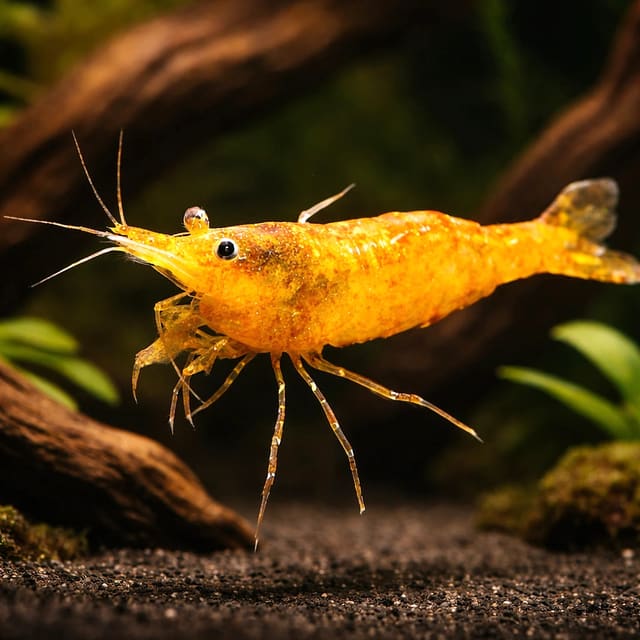
The Raccoon Tiger Shrimp (Caridina sp.) is a freshwater atyid shrimp; Caridina occurs widely in tropical and subtropical waters across Asia, Oceania and Africa. For its care group, OATA gives 17–27°C, pH 6.5–8.0 and 4–18°dH, with a mature filtered aquarium and cautious fish compatibility. Sold individually at a dispatch size of 1–1.5 cm.
Caridina sp.
Lives in groups: kept together they stay settled, active and show their best colour.
The Raccoon Tiger Shrimp (Caridina sp.) is a freshwater atyid shrimp; Caridina occurs widely in tropical and subtropical waters across Asia, Oceania and Africa. For its care group, OATA gives 17–27°C, pH 6.5–8.0 and 4–18°dH, with a mature filtered aquarium and cautious fish compatibility. Sold individually at a dispatch size of 1–1.5 cm.
Start with a mature, filtered aquarium. OATA's broad UK guidance suggests approximately 20 litres for Amano Shrimp and at least five for social shrimp, with a larger aquarium when fish are present. Treat those as cautious planning screens—not biological minima or a per-litre formula. Match the complete adult community, test your water, protect the filter inlet and never buy them as a guaranteed algae cure.
Maintain these water conditions for optimal health and vibrant colors
The Raccoon Tiger Shrimp (Caridina sp.) is a freshwater shrimp in the family Atyidae. It suits a keeper who can prepare a mature, filtered aquarium, test its water and screen every proposed fish companion for predatory behaviour. WoRMS recognises Caridina as an accepted genus, while the animal’s trade identity stops at genus level rather than naming a species.
The wider genus occurs in tropical and subtropical freshwater across Asia, Oceania and Africa, as described in the Caridina genus overview. That broad distribution describes the genus and should not be turned into a locality or origin claim for this particular trade form.
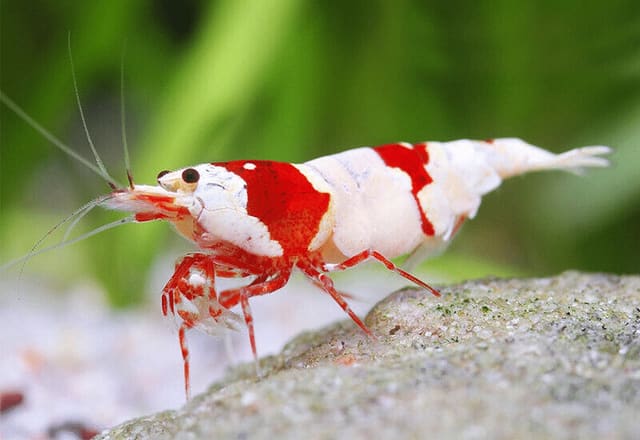
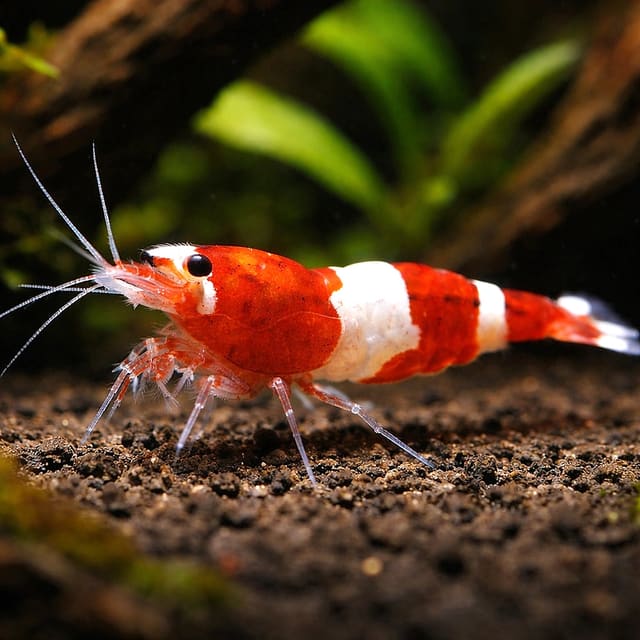
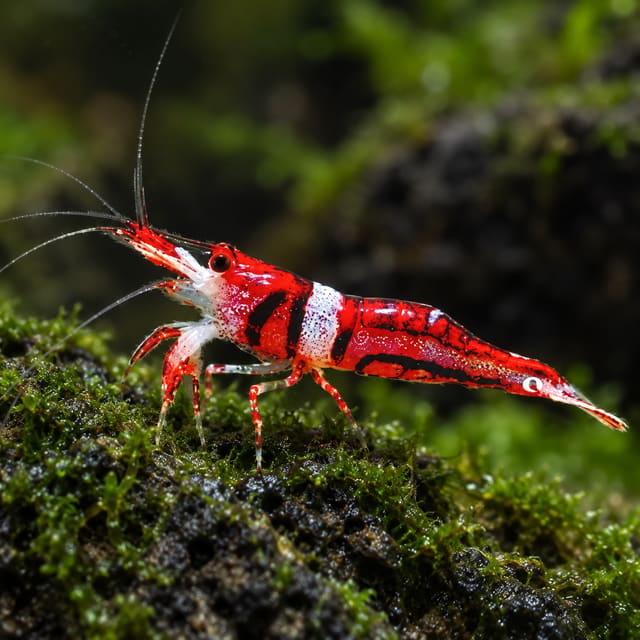
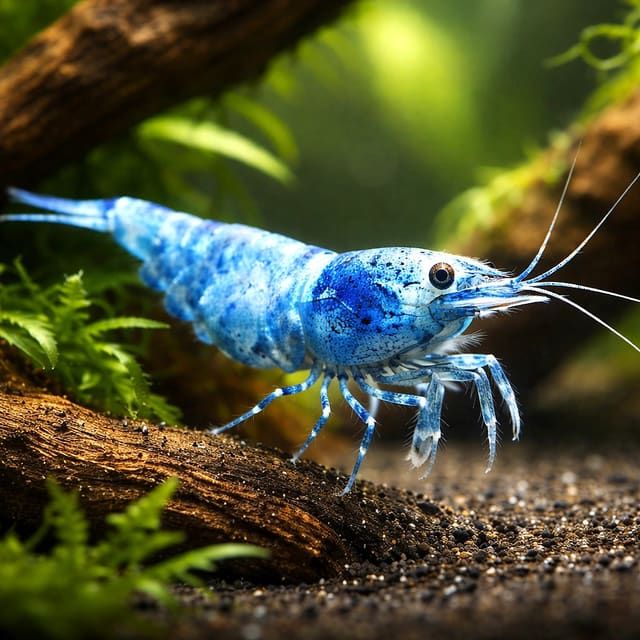
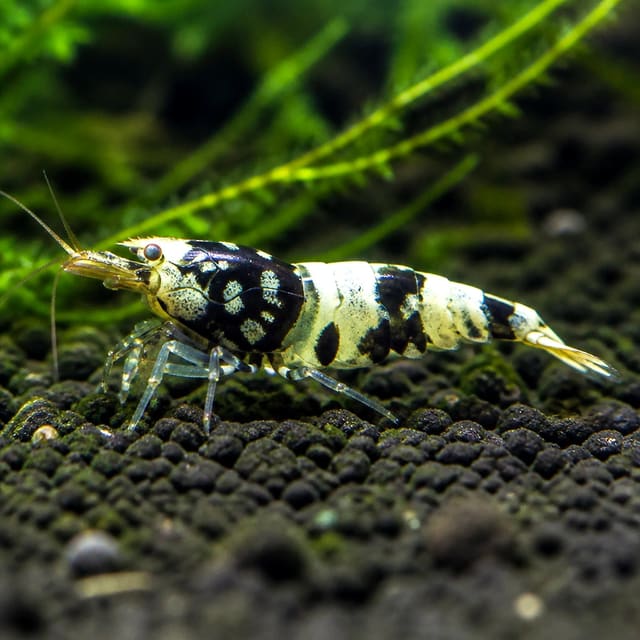
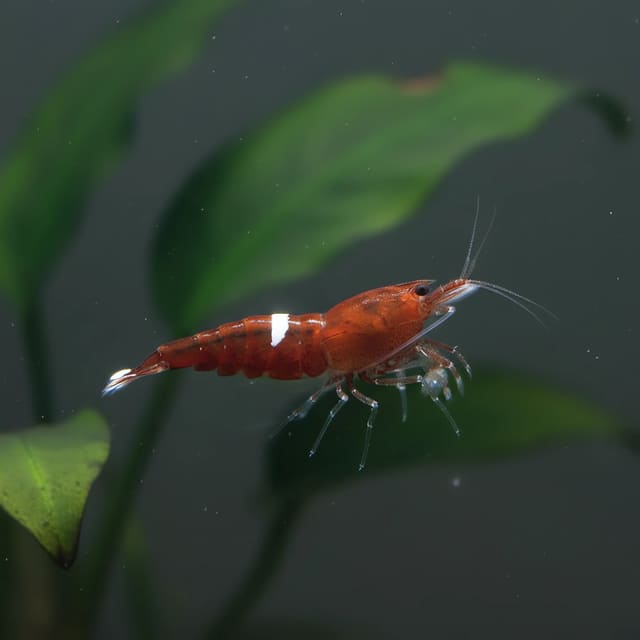
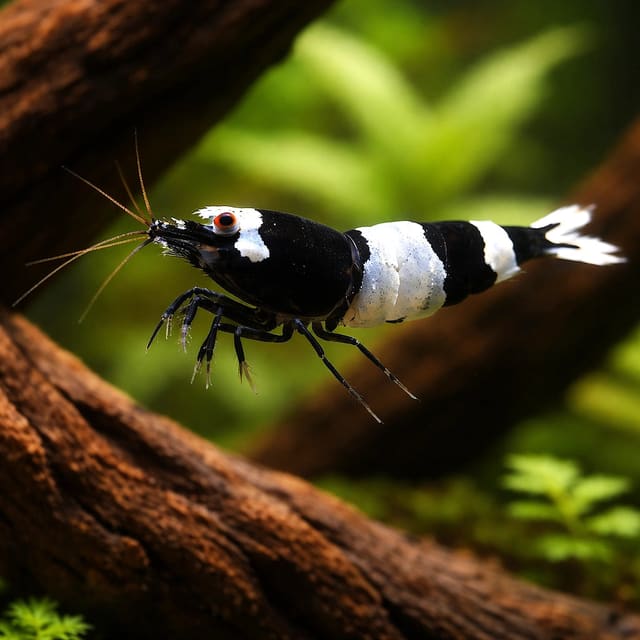
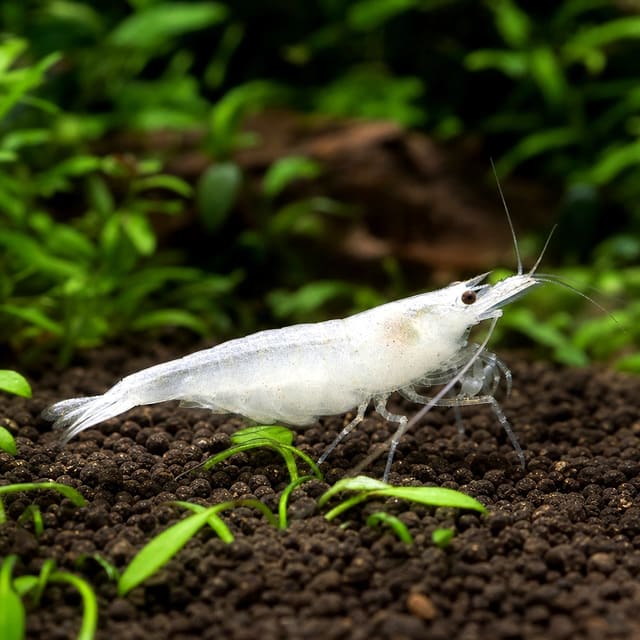
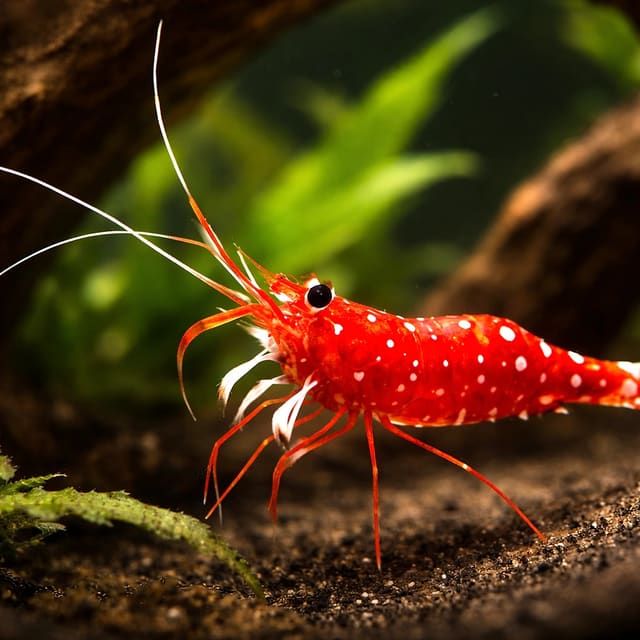
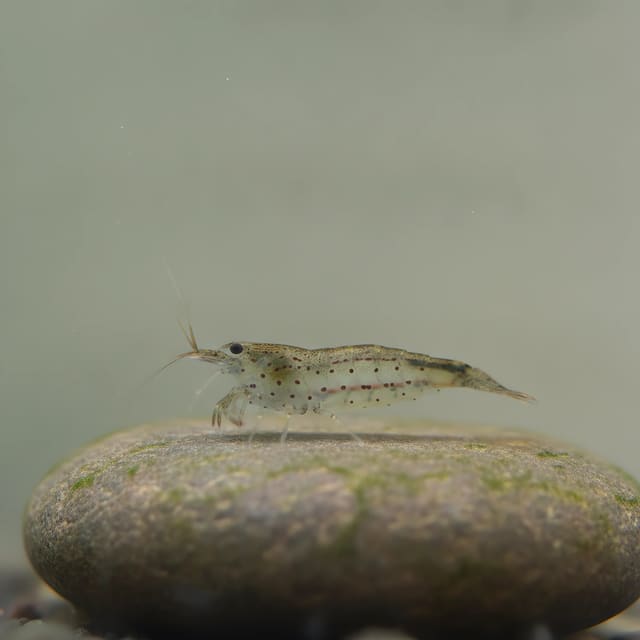
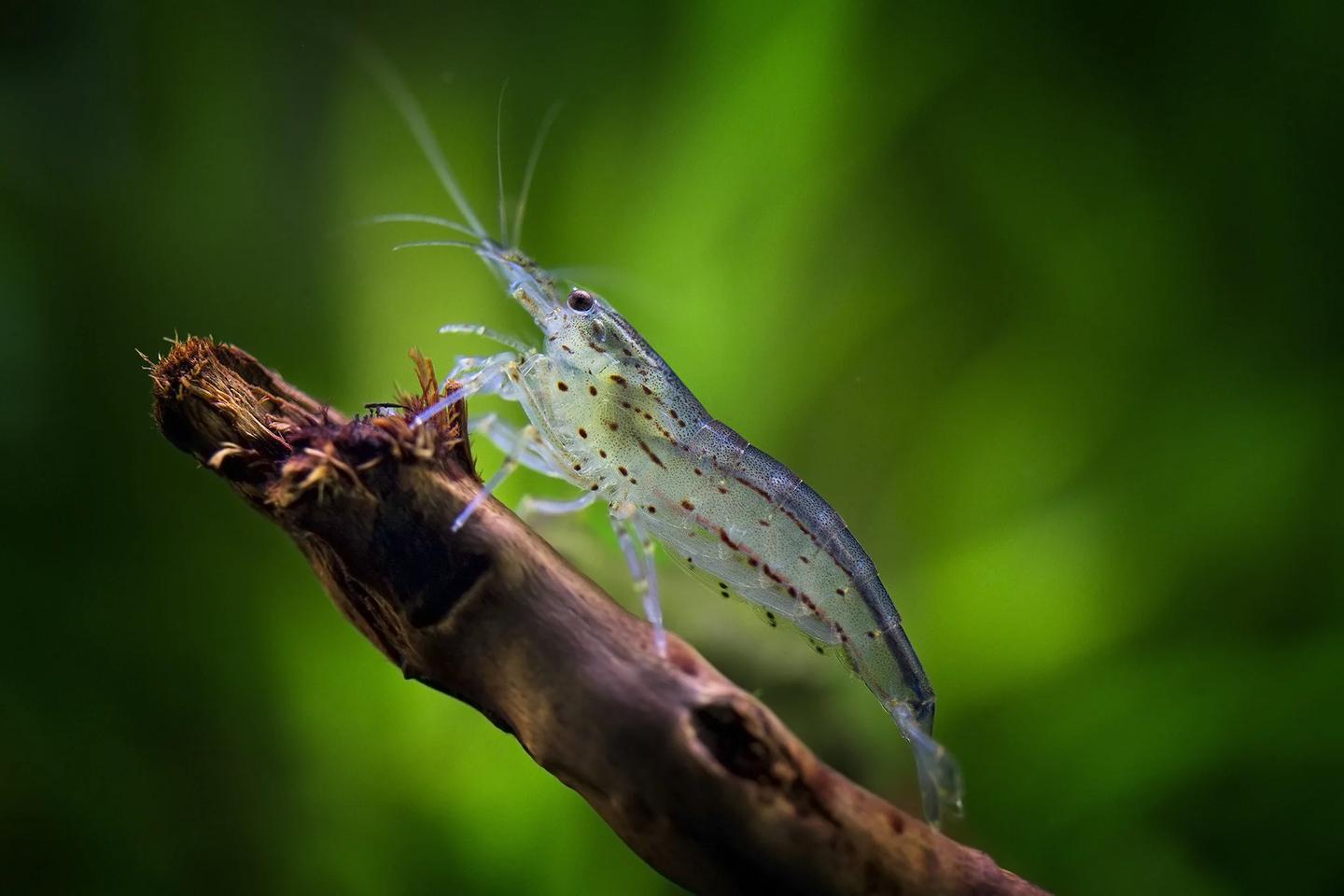
“Raccoon Tiger” is the trade name for the contrasting pattern associated with this shrimp. In the gallery, a pale translucent shrimp with irregular black bands and patches and long antennae rests on a rounded green stone. Pattern is useful for recognising the trade form, but it does not turn the genus label into a named species.
Plan care around freshwater-shrimp requirements and stable aquarium conditions. A working filter, zero ammonia, zero nitrite, measured feeding, regular testing and protection from copper are more important than trying to assign a species from appearance alone.
Choose this shrimp when you are prepared to keep a filtered aquarium within the freshwater-shrimp care range and maintain it consistently. OATA advises zero ammonia and zero nitrite, regular testing and gradual stocking so the filter’s beneficial bacteria can adjust as livestock and feeding increase.
A shrimp-focused aquarium removes the main compatibility problem: fish may eat shrimp when the shrimp fits in their mouth, and predatory species present a direct risk. Mixed aquariums need more space than a shrimp group alone and a separate assessment of every proposed companion.
| Suits | Not suited to |
|---|---|
| A mature aquarium with an essential working filter | A newly stocked aquarium showing ammonia or nitrite |
| A keeper able to test water at least weekly | A routine that relies on appearance instead of water tests |
| A setup with gravel or sand, plants and shelter | An aquarium without cover or suitable resting surfaces |
| A carefully planned shrimp group | Fish that can swallow the shrimp or are known predators |
| Treatments expressly labelled safe for invertebrates | Copper exposure, including low levels |
Use your aquarium’s actual temperature, pH and hardness when deciding whether it fits. Our freshwater shrimp and crustaceans collection helps you compare identities, but each animal still needs its own compatibility and water assessment.
Prepare the filter and habitat before adding livestock. Add shrimp gradually rather than increasing the population quickly, because every addition increases waste and feeding demand. This protects the biological filter from the imbalance OATA calls new tank syndrome.
One purchase supplies one live Raccoon Tiger Shrimp at a dispatch size of 1–1.5 cm. That measurement describes the animal when supplied, so use it for receiving and filter-intake planning rather than as a mature-size figure.
The exact species has not been identified, so the care advice here follows the genus Caridina and its care group. This keeps the identity at the level established for the animal instead of assigning a familiar species from its markings.
Sex is guaranteed only when the selected option explicitly states male or female. This Raccoon Tiger Shrimp listing has no sex-guaranteed option.
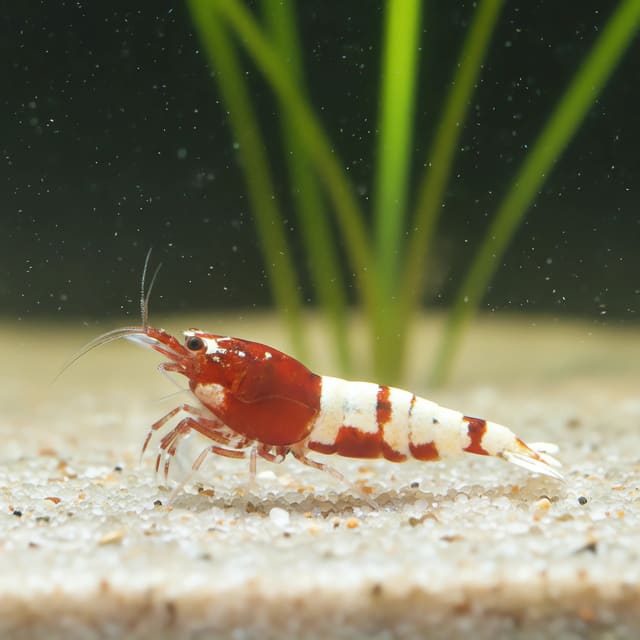
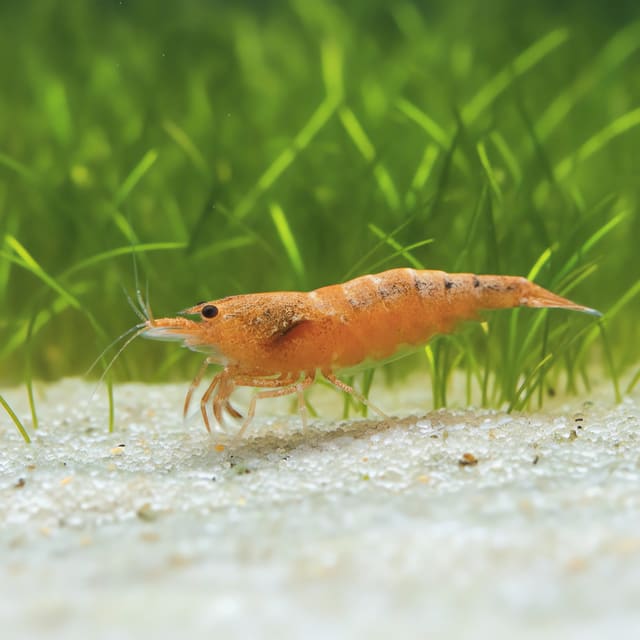
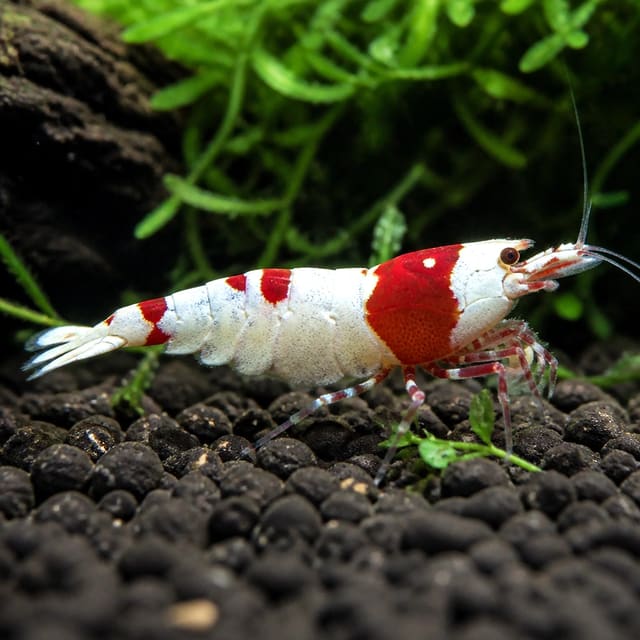
The gallery images are representative of this type of animal rather than photographs of the exact animal supplied, so colours can look slightly different from the live animal.
Build the aquarium for a shrimp group and for stable conditions, not around the small volume occupied by one dispatch-size animal. The care-group aquarium guidance starts at 10 litres for a group of small freshwater shrimp and becomes larger when fish are included.
Keep the aquarium at 17–27°C, pH 6.5–8.0 and general hardness of 4–18°dH. Carbonate hardness should be 3–15°dKH. OATA’s freshwater shrimp and snail guidance gives these values for the care group, not a species-specific optimum.
Hold ammonia at zero mg per litre and nitrite at zero mg per litre. Keep nitrate from exceeding 20 mg per litre above the normal level in your tap water. These waste values are immediate operating limits rather than targets to approach deliberately.
A value lying inside the range is only one part of a suitable aquarium. Temperature, pH, hardness, ammonia, nitrite and nitrate need to be considered together. Test the aquarium rather than assuming that clear water is chemically safe.
| Measure | Care-group instruction |
|---|---|
| Temperature | Keep between 17°C and 27°C |
| pH | Keep between 6.5 and 8.0 |
| General hardness | Keep between 4°dH and 18°dH |
| Carbonate hardness | Keep between 3°dKH and 15°dKH |
| Ammonia | Keep at zero mg per litre |
| Nitrite | Keep at zero mg per litre |
| Nitrate | Do not exceed 20 mg per litre above normal tap-water levels |
Use our aquarium water chemistry guide to understand what each test measures, then enter measured results in the water matcher. Record the date and values so changes are visible before they become large.
For example, an aquarium at 22°C and pH 7.2 still fails the readiness check if ammonia is measurable. Correct the waste problem before adding the shrimp, even though the temperature and pH sit inside the group ranges. The same decision applies when ammonia is zero but nitrite is measurable: delay the addition and allow the biological filter to process the waste reliably.
Hardness also needs both figures. A general-hardness result inside 4–18°dH does not replace the carbonate-hardness test, which should remain within 3–15°dKH. Write both readings beside the temperature and pH so the complete water picture can be compared at the next weekly test.
Use an aquarium of at least 10 litres for a group of small freshwater shrimp. OATA recommends a larger aquarium when shrimp share the setup with fish, because the combined livestock require more space and create a greater filtration load.
Choose more water volume when practical. Larger aquariums change more slowly, making temperature and water quality easier to keep stable. The 10-litre figure is therefore a care-group minimum for a small shrimp group, not a reason to stop considering stocking, maintenance or mixed-aquarium demands.
Cover the base with aquarium gravel or sand. Add live plants where possible, because plants create cover and usable surfaces within the aquarium. Where live plants are not used, OATA recommends plastic plants and suitable ornaments such as plant pots or model caves so the shrimp still have shelter.
Aquarium volume does not replace water testing. A larger setup offers more stability, but ammonia or nitrite still requires action. Likewise, a decorated aquarium is not ready until its filter has matured and the water meets the required values.
Prepare the full setup before the shrimp arrives. Our freshwater shrimp keeping guide covers the sequence for preparing and maturing a first aquarium before livestock is introduced.
For a shrimp-only group, begin with the 10-litre minimum and then judge whether the chosen aquarium leaves enough usable room for gravel or sand, shelter, the filter and routine cleaning. If adding fish, do not apply that same minimum to the mixed setup. Select a larger aquarium before combining the livestock and include the fish in the filtration assessment.
Check the habitat from the shrimp’s position. Shelter should be distributed through the aquarium rather than concentrated in one inaccessible corner. During maintenance, clean reachable waste while leaving the remaining plants and ornaments in place, so the animal continues to have cover throughout the routine.
Run an effective filter in every aquarium used for this shrimp. OATA calls the filter essential, while the RSPCA’s aquarium filtration guidance explains why a working biological filter matters: beneficial bacteria process toxic ammonia into nitrite and then into the safer nitrate stage.
Allow the filter’s bacterial population to establish before adding livestock. Once the aquarium is running, increase shrimp numbers slowly. The beneficial bacteria need time to adjust whenever livestock numbers and feeding rise; adding too much too quickly can leave the filter unable to process the increased waste.
Tap water may contain chlorine or chloramine that can kill part of the beneficial bacterial population. When cleaning is necessary, rinse the filter lightly in water removed during a partial water change. Never rinse it under the tap.
Filter care and stocking pace work together. A healthy bacterial population processes waste, but it cannot compensate indefinitely for rapid additions, excessive food or missed maintenance. If ammonia or nitrite appears, stop adding livestock and correct the water-quality problem before increasing the biological load again.
Before the first addition, confirm that the filter is running without blockage and that both ammonia and nitrite test at zero. After adding livestock, continue the weekly tests and compare them with the earlier readings. A zero result for both means the routine remains on track; a measurable result means the next livestock addition must wait.
When filter flow falls, inspect for blockage before assuming the entire unit needs aggressive cleaning. If the media requires attention, use the water removed during that week’s partial change and rinse lightly. Return the media promptly so the established bacteria continue processing waste.
Feed this shrimp from the freshwater-shrimp care group’s herbivorous grazing pattern. OATA describes freshwater shrimp and snails as generally herbivorous animals that graze algae in the aquarium. Supplement that grazing with algae wafers or commercial pellets made for freshwater shrimp.
Offer supplemental food two or three times a week. Leave pellets or wafers for at least 30 minutes so the shrimp have time to feed, then judge the next portion from how much was eaten. The aim is enough access without allowing repeated excess to collect.
| What you observe | What to do next |
|---|---|
| Food is being eaten within the feeding period | Continue with the same measured portion |
| A substantial amount remains | Reduce the next portion |
| Food is repeatedly left to break down | Remove the excess and review feeding quantity |
| Shrimp show reduced interest in food | Test water and check for other health changes |
Overfeeding creates a water-quality problem. Uneaten food breaks down and releases waste, increasing the load on the biological filter. This is why frequency, portion size and observation belong together: a feeding routine is only successful when ammonia and nitrite remain at zero.
Algae grazing does not remove the need for supplemental food. Conversely, adding pellets does not justify covering the aquarium with more food than the shrimp can use. Feed, wait, observe and adjust the following portion rather than adding a second helping during the same session.
Begin with one measured portion of algae wafer or shrimp pellet and note how much remains after at least 30 minutes. If the shrimp use the food without a substantial remainder, repeat that portion at the next scheduled feed. If food remains in quantity, remove the excess and make the next serving smaller.
Keep the schedule at two or three supplemental feeds each week rather than responding to every sighting with extra food. Pair feeding observations with the weekly ammonia and nitrite tests. When either waste reading rises above zero, stop increasing portions, remove uneaten food and correct the aquarium’s water quality.
Change 25% of the aquarium water at least once every week. Treat replacement tap water with a conditioner that removes harmful chlorine or chloramine before it enters the aquarium. A siphon can be used during the change to remove solid waste from the gravel.
Test the water at least weekly. Measure ammonia and nitrite every time, keeping both at zero mg per litre. Track nitrate against the limit of no more than 20 mg per litre above the normal level in the tap water.
Do not run the filter under the tap. Chlorine or chloramine may damage the beneficial bacteria living in its media. Preserving that population helps the aquarium continue processing waste after maintenance.
Weekly testing gives context to what you see. Clear water can still contain ammonia or nitrite, while a shrimp’s change in activity or feeding may be connected to a water-quality shift. Written results make it easier to recognise a trend and respond before values rise further.
Maintenance should reduce accumulated waste without disrupting the filter’s biological function. The water change, conditioner, test kit and filter inspection are therefore one joined routine rather than separate optional jobs.
During each of the first four weekly routines, record the ammonia, nitrite and nitrate results before changing water. Complete the 25% partial change, condition the replacement tap water and inspect the filter for blockage. Keeping the order consistent makes one week comparable with the next.
If ammonia or nitrite becomes measurable, treat that result as a stop signal for further stocking. Check the filter, remove excess food and continue testing while the water-quality problem is corrected. If nitrate approaches its limit, confirm that the partial change and waste removal were completed fully rather than postponing the next routine.
Use only treatments labelled safe for aquatic invertebrates. Freshwater shrimp are very sensitive to copper and will die when exposed even to low levels, so check every aquarium treatment before adding it.
Observe the animal’s usual activity, colour, feeding and posture. OATA recommends watching for changes in swimming behaviour, including unusual inactivity or restlessness, as well as darker or paler colour, increased hiding, altered breathing and reduced interest in food.
| Change seen | Immediate check |
|---|---|
| Unusual inactivity or restlessness | Test ammonia, nitrite and temperature |
| Darker or paler colour | Review water results and recent aquarium changes |
| More hiding than usual | Check water quality and compatibility pressure |
| Changed breathing effort | Test water promptly and inspect filter operation |
| White spots, lesions or abnormal growths | Record the appearance and check treatment safety before dosing |
| Exoskeleton damage or lost appendages | Review physical hazards and companion behaviour |
| Reduced food intake | Remove excess food and test the aquarium |
Other warning signs include abnormal swelling, noticeable loss or gain in body condition and time spent in areas with higher oxygen levels. One observation should lead to measured checks, not an unplanned mixture of fish medications.
Water quality is the first practical checkpoint because ammonia, nitrite, excess nitrate and filter failure can affect the whole aquarium. Treatment safety is the second: a product intended for fish may still be dangerous to shrimp. Keep the label and dose instructions together, and do not use the product unless it expressly covers invertebrate safety.
When behaviour or appearance changes, write down exactly what changed before reaching for a product. Test ammonia and nitrite, check temperature and inspect the filter. Compare those findings with the shrimp’s feeding response, colour, hiding and breathing effort so the next action addresses a measured problem.
Read the entire treatment label before opening the container. If it contains copper or does not expressly identify the dose as safe for aquatic invertebrates, keep it out of the aquarium. Continue monitoring the animal and water while choosing an appropriate response rather than combining several fish treatments.
Arrange for someone to receive the parcel because live animals must not be left unattended. The shrimp is hand-bagged in pure oxygen, placed in an insulated box and packed with a heat pack when the weather calls for one.
Follow the current delivery and Live Arrival Guarantee policy as soon as the parcel is received. Film every delivery continuously from the sealed parcel onward before opening it, showing the parcel still sealed, the parcel being opened and the shrimp still inside the bag.
Float the bag for 20–30 minutes before releasing the shrimp.
Keep the delivery page accessible until the animal has been unpacked and acclimatised. It contains the current reception, unpacking and claim requirements in one place.
Choose who will receive the parcel before the delivery window and make sure that person can begin the unpacking procedure immediately. Keep a device ready so filming can begin while the parcel remains sealed, and leave enough access beside the aquarium to float the bag.
Film continuously from the sealed parcel through opening and showing the shrimp inside the bag, float the bag for 20–30 minutes, release the shrimp and keep the bag water out of the aquarium.
Avoid any fish that can fit the shrimp in its mouth and any species known to be predatory. OATA gives this direct compatibility rule for freshwater shrimp because common aquarium fish may eat them.
For fish outside those two clear exclusions, compatibility remains conditional. Assess the fish’s adult mouth size, feeding behaviour, predatory behaviour, water requirements and the space needed by the combined livestock. A fish described broadly as a community animal still needs this individual screening.
| Question | Decision |
|---|---|
| Can the fish fit the shrimp in its mouth? | Stop: avoid the combination |
| Is the species known to be predatory? | Stop: avoid the combination |
| Do its water needs overlap 17–27°C, pH 6.5–8.0 and 4–18°dH? | Continue only if all required values overlap |
| Is the aquarium larger than the 10-litre shrimp-group minimum? | Continue the space and filtration assessment |
| Can the filter handle the combined waste load? | Add livestock only gradually |
Do not use plants, caves or ornaments as a reason to ignore a failed predation check. Shelter is part of good shrimp habitat, but it does not change a fish’s mouth size or known feeding behaviour.
Plan the aquarium around the most vulnerable animal. If a proposed fish may swallow the shrimp, choose a shrimp-focused setup instead. This gives the shrimp access to the aquarium without requiring cover to function as its only protection.
Start with predation, not water. If the fish can swallow a 1–1.5 cm dispatch-size shrimp, the decision is to avoid the combination. The same stop decision applies when the fish is known to be predatory. Do not continue to water or space checks after either result.
If both predation checks pass, compare the complete water requirements and confirm that the aquarium is larger than the shrimp-group minimum. Then assess whether the established filter can process the combined waste. Passing one stage does not cancel another: matched pH cannot make a predator suitable, and a non-predatory fish cannot share water outside its required range.
Plan for social shrimp keeping without treating one fixed head count as universal. OATA describes shrimp species as usually social and recommends at least 10 litres for a group of small freshwater shrimp. The workable number still depends on aquarium volume, filtration, feeding and water quality.
Add animals gradually. Each addition increases waste and feeding, so the biological filter’s bacterial population needs time to adjust. Rapid stocking can produce unhealthy ammonia or nitrite through new tank syndrome.
A purchase supplies one shrimp, but the sold unit is not a recommendation to keep the animal alone. Build the group progressively within the capacity of the aquarium rather than adding a large number to a newly matured filter.
Related shrimp products should be compared as separate animals, not assumed to be companions. Water overlap, adult mouth size where fish are involved, predatory behaviour, space and biological load all need their own assessment before two livestock choices share an aquarium.
Begin with the aquarium rather than a target head count. Confirm at least 10 litres for a small shrimp group, zero ammonia, zero nitrite and a working filter. Add livestock gradually, continue the feeding routine and complete the next weekly water tests before deciding whether the biological load can increase.
If the new reading remains at zero for ammonia and nitrite and food is not accumulating, the filter and feeding routine have passed that checkpoint. If either reading becomes measurable or substantial food remains, pause additions. Correct the waste source and restore safe readings before reconsidering the group.
It is supplied at 1–1.5 cm, which is its dispatch size rather than a mature-size figure. Plan the aquarium around the freshwater-shrimp care group and allow for growth.
OATA recommends at least 10 litres for a group of small freshwater shrimp and a larger aquarium when fish are included.
OATA describes shrimp species as usually social. Build the group gradually within the aquarium’s space, filtration and water-quality capacity.
It suits a keeper who can mature a filtered aquarium, test water at least weekly, change 25% weekly and prevent copper exposure.
OATA’s care-group guidance describes freshwater shrimp as generally herbivorous algae grazers. Supplement grazing with algae wafers or shrimp pellets two or three times weekly and allow at least 30 minutes for feeding.
OATA’s freshwater-shrimp guidance gives 17–27°C, pH 6.5–8.0 and general hardness of 4–18°dH for the care group.
Plan compatibility around the risk from fish to the shrimp. OATA advises against fish that can swallow freshwater shrimp and against species known to be predatory.
Consider only fish that cannot fit the shrimp in their mouth and are not known predators, then check water overlap, aquarium space and filtration. Other combinations retain individual uncertainty.
Film every delivery continuously from the sealed parcel onward before opening it, showing the parcel sealed, being opened and the shrimp still in the bag. It is hand-bagged in pure oxygen, insulated and given a heat pack when weather calls for one, then carried by a licensed live-animal courier. Someone must receive it; float the bag for 20–30 minutes and never pour bag water into the aquarium.
No reviews for this item yet. Bought one? Honest reviews only, good or bad.
What customers say about ordering from us
I have a small group of long finned mountain minnows. So was delighted to be able to order ten of this variety to increase the genetics in my tank . The ones I recieved are healthy but it’s to early to give a verdict on wether they are of a long finned type since they are small currently.
Gordon Walker · 23 Sept 2026
100% success travel and "installation". Pleased with quality of purchase. The Siamese fighter a bit "shy" so have not yet seen him at his best yet but looking good. Happy customer. GG
George E Garratt · 21 Sept 2026
Reviews of our shop, collected by Judge.me, an independent third-party review collector. Newest first.