−11%
Moderate
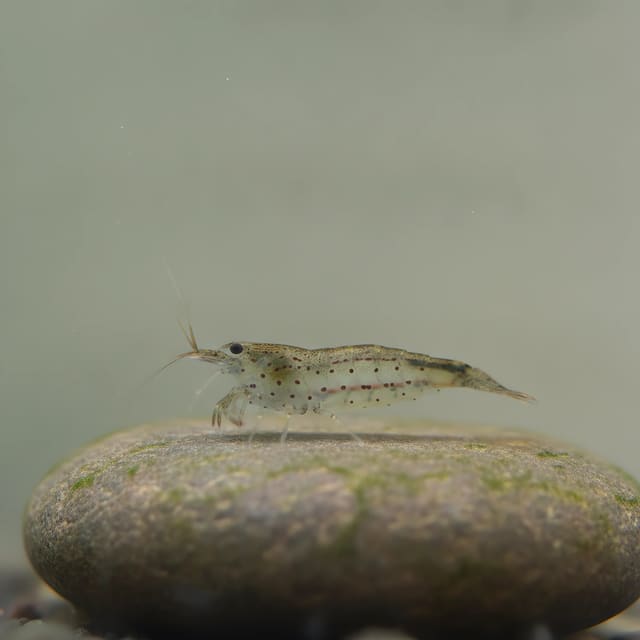
Amano Shrimp (Caridina multidentata)
£5.33£5.99

The Blue Bolt Shrimp (Caridina sp. "Taiwan Bee") is an atyid freshwater shrimp from a genus found across tropical and subtropical Asia, Oceania and Africa. It suits a mature, filtered aquarium; OATA’s group guidance recommends at least 10 litres for small freshwater shrimp, 17–27°C, pH 6.5–8.0 and 4–18°dH. Sold individually as one live shrimp at a 1–1.3 cm dispatch grade.
Caridina sp. "Taiwan Bee"
Lives in groups: kept together they stay settled, active and show their best colour.
The Blue Bolt Shrimp (Caridina sp. "Taiwan Bee") is an atyid freshwater shrimp from a genus found across tropical and subtropical Asia, Oceania and Africa. It suits a mature, filtered aquarium; OATA’s group guidance recommends at least 10 litres for small freshwater shrimp, 17–27°C, pH 6.5–8.0 and 4–18°dH. Sold individually as one live shrimp at a 1–1.3 cm dispatch grade.
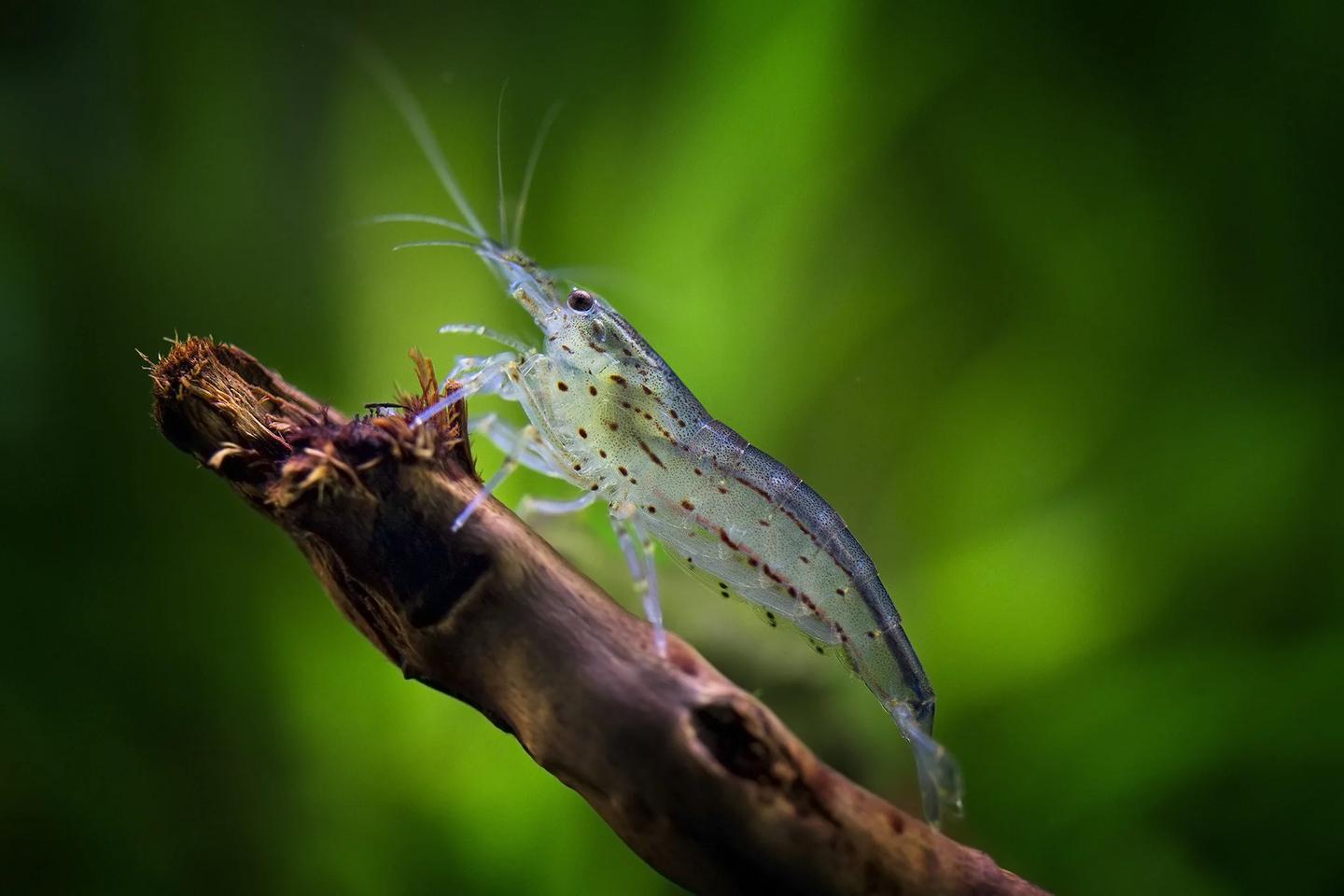
Start with a mature, filtered aquarium. OATA's broad UK guidance suggests approximately 20 litres for Amano Shrimp and at least five for social shrimp, with a larger aquarium when fish are present. Treat those as cautious planning screens—not biological minima or a per-litre formula. Match the complete adult community, test your water, protect the filter inlet and never buy them as a guaranteed algae cure.
Maintain these water conditions for optimal health and vibrant colors
The Blue Bolt Shrimp (Caridina sp. “Taiwan Bee”) is a freshwater shrimp in the family Atyidae. It suits a keeper who can prepare a mature, filtered aquarium, test the water regularly and protect invertebrates from copper and predatory tank mates. WoRMS recognises Caridina as an accepted genus in Atyidae. The animal is identified to that genus rather than to one species.
The genus has a broad natural range. Wikipedia describes Caridina as freshwater shrimp found in tropical and subtropical parts of Asia, Oceania and Africa. That range describes the genus and should not be read as a collection locality or breeding origin for this Blue Bolt trade form.
Keep the aquarium at 17–27°C, pH 6.5–8.0 and 4–18°dH general hardness. Carbonate hardness can be 3–15°dKH. OATA’s freshwater shrimp and snail guidance provides these broad group values, not a species-specific optimum. It also recommends an aquarium of at least 10 litres for a group of small freshwater shrimp, with a larger aquarium when fish are included.
| Suits | Not suited to |
|---|---|
| A mature aquarium with an established filter | A newly filled or biologically immature aquarium |
| Water kept within the stated group values | Water that is changed abruptly without testing |
| A group plan with at least 10 litres for small shrimp | A container chosen only around the dispatch measurement |
| Careful compatibility screening | Predatory species or fish able to swallow the shrimp |
| Invertebrate-safe aquarium treatments | Copper exposure, even at low levels |
This shrimp helps graze nuisance algae, but it remains a living aquarium animal with its own feeding and water-quality needs. Choose it for a properly managed freshwater aquarium rather than as a substitute for maintenance.
One purchase supplies one live Blue Bolt Shrimp. Its recorded dispatch grade is 1–1.3 cm, which describes the size supplied rather than an adult-size promise. Plan the permanent aquarium around the needs of a group of small freshwater shrimp, not around this handling measurement.
The exact species has not been identified, so the care advice here follows the genus Caridina and its care group. “Blue Bolt” and “Taiwan Bee” identify the aquarium trade form, while Caridina sp. keeps the scientific identity at genus level. The label does not assign the shrimp to Caridina cantonensis or establish a particular geographical origin.
Sex is guaranteed only when the selected option explicitly states male or female. This Blue Bolt Shrimp listing has no sex-guaranteed option.
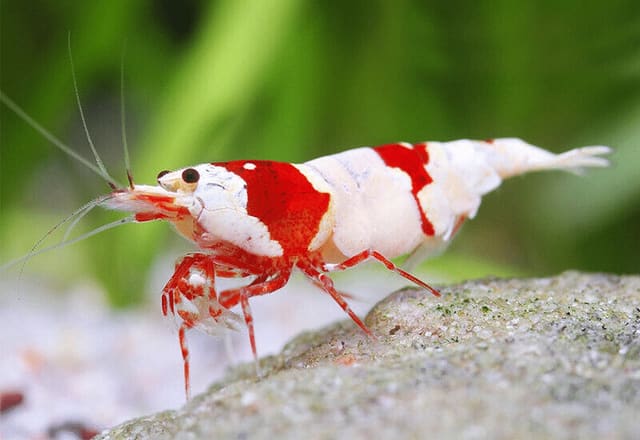
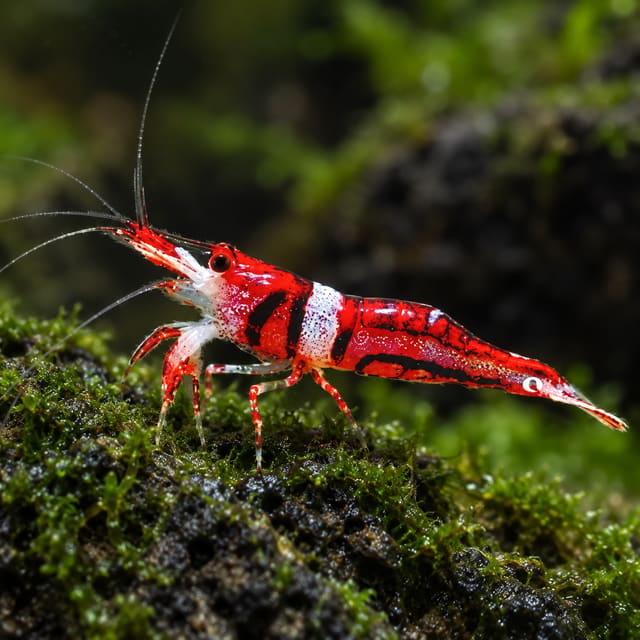
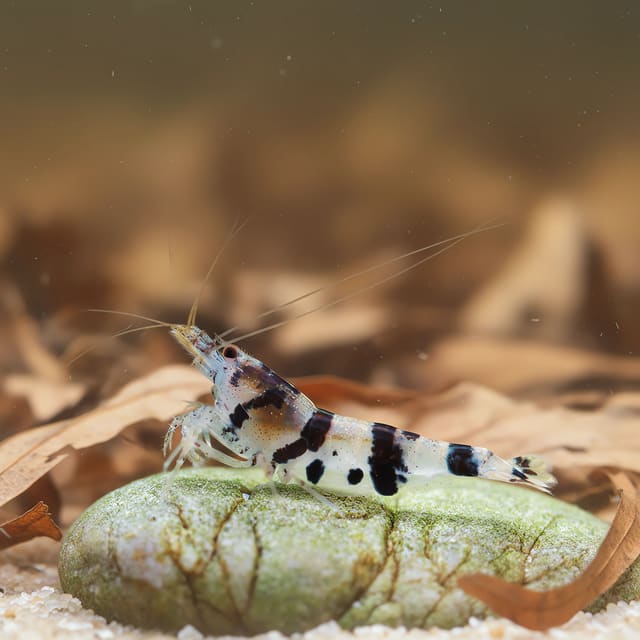
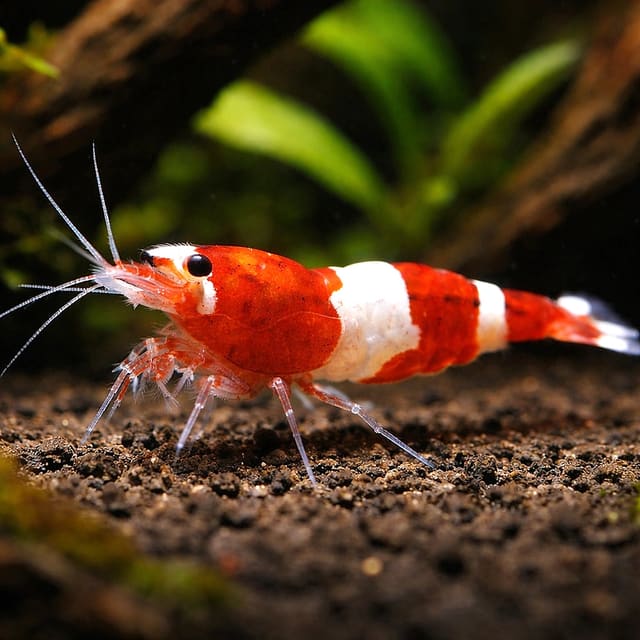
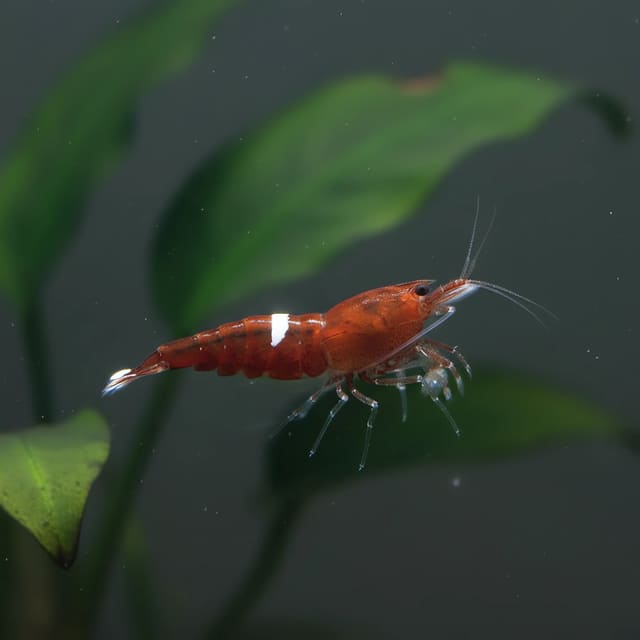
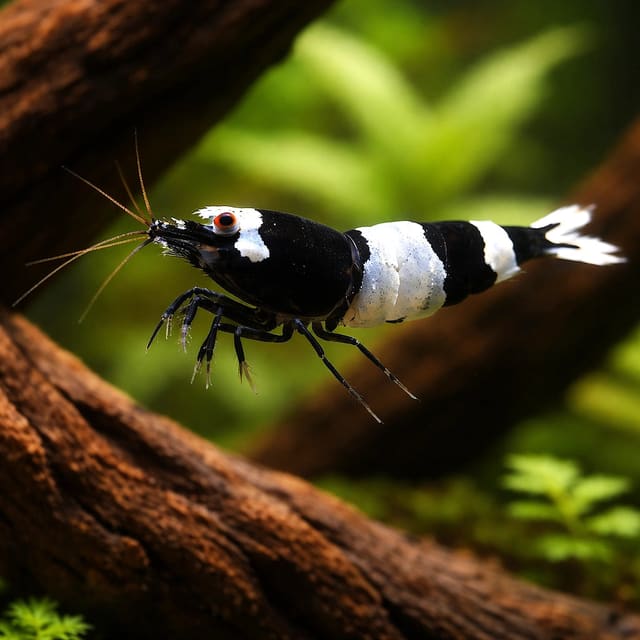
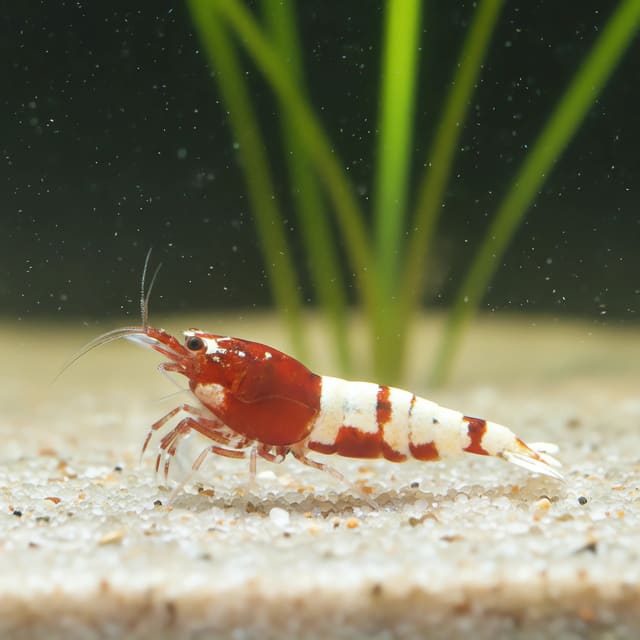
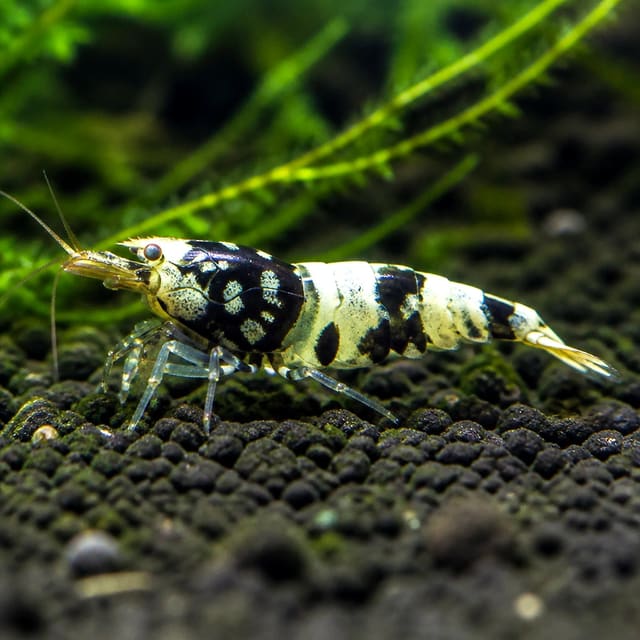
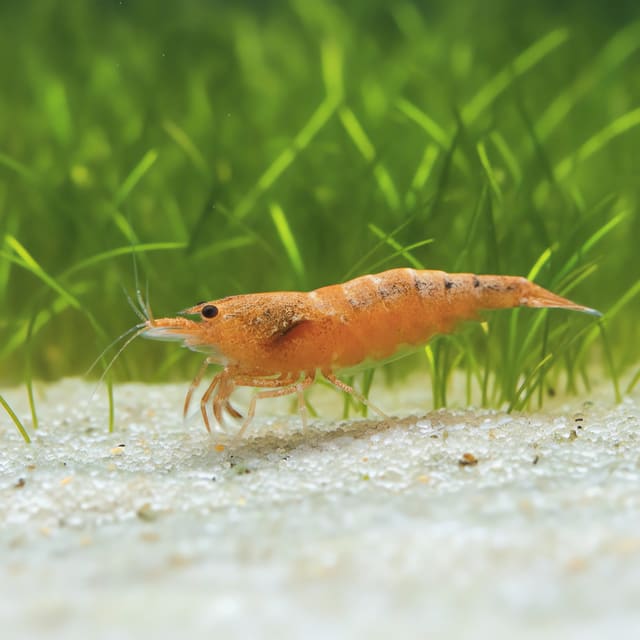
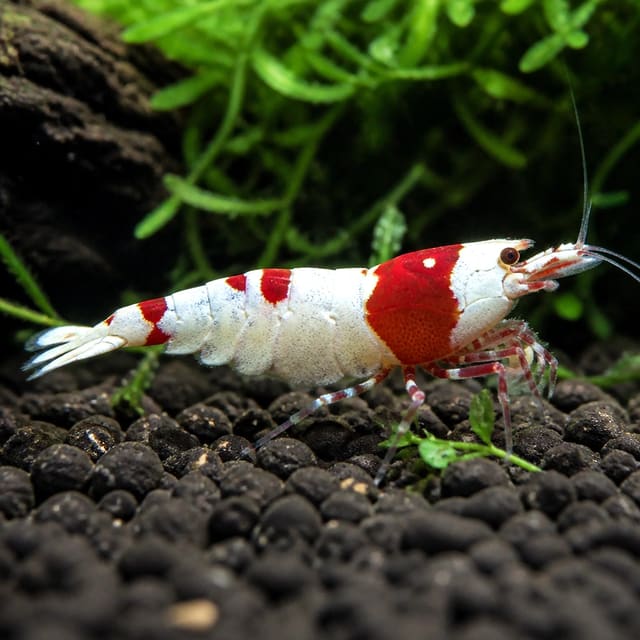
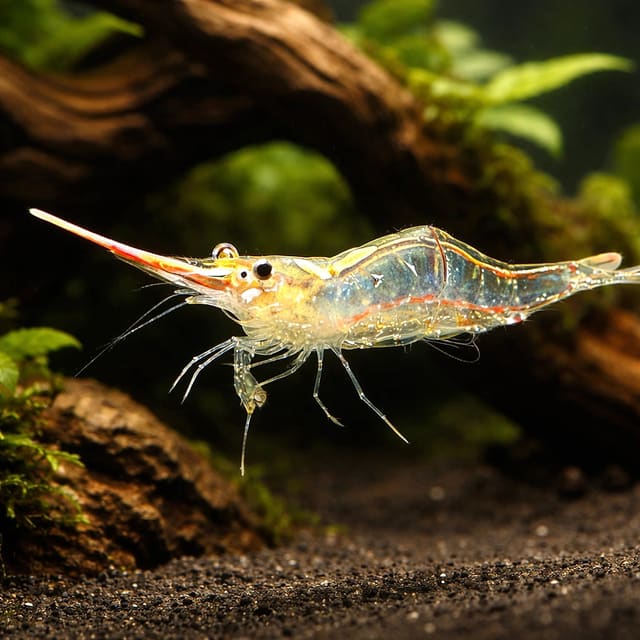
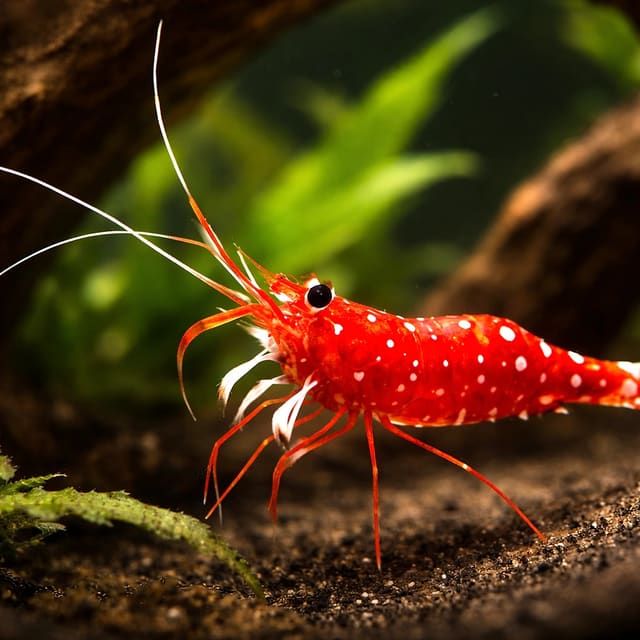
The gallery images are representative, based on reference photographs of this kind of animal, so colours can look slightly different from the live animal.
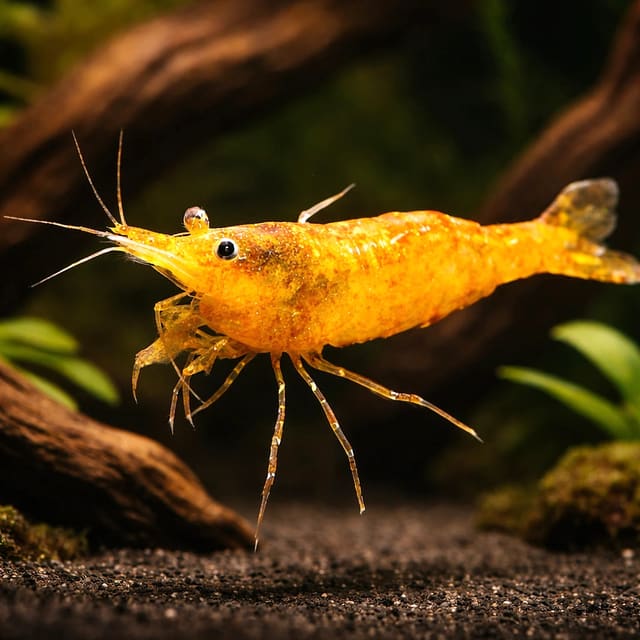
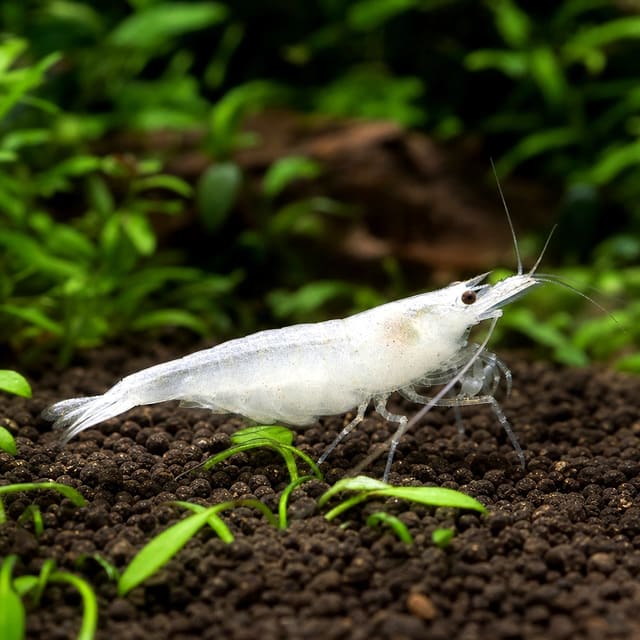
The illustrations show blue and pale mottled shrimp with segmented bodies and long antennae in planted aquarium scenes. One illustration contains two shrimp, but the commerce unit remains one live shrimp per purchase. Use the gallery to understand the depicted trade form and aquarium presentation rather than to count the animals supplied.
Browse the current shrimps and crustaceans collection when comparing freshwater invertebrates. Compare identity, water needs and the unit supplied separately; another shrimp listing is not automatically a compatible companion.
Maintain 17–27°C, pH 6.5–8.0, general hardness of 4–18°dH and carbonate hardness of 3–15°dKH. These values belong together as freshwater-shrimp and snail guidance; do not isolate one number while allowing the other measurements to drift.
Keep ammonia at 0 mg/L and nitrite at 0 mg/L. Nitrate should not exceed 20 mg/L above the normal level in the tap water used for the aquarium. For example, if conditioned tap water measures 10 mg/L nitrate, the corresponding OATA ceiling is 30 mg/L in the aquarium. This is an addition to the tap-water baseline, not a universal reading detached from the source water.
Record the tap-water nitrate result alongside the aquarium result. A single aquarium number cannot show whether the permitted rise has been exceeded unless the normal tap-water level is known. Repeat testing at least weekly, and investigate any ammonia or nitrite reading rather than treating it as a routine background level.
| Measurement | Decision it supports |
|---|---|
| Temperature | Confirms the aquarium remains within 17–27°C |
| pH | Checks that acidity or alkalinity remains within 6.5–8.0 |
| General hardness | Places dissolved mineral hardness within 4–18°dH |
| Carbonate hardness | Checks the 3–15°dKH group range |
| Ammonia and nitrite | Confirms both toxic nitrogen compounds remain at 0 mg/L |
| Nitrate | Measures the rise above the normal tap-water baseline |
Our aquarium water chemistry guide explains what the tests measure. Enter the results into the water-matching tool to compare the aquarium with the stated guidance, then make gradual, measured adjustments rather than reacting to one isolated result.
Treat replacement tap water with conditioner before it enters the aquarium so chlorine or chloramine is removed. Match the replacement water carefully enough to avoid an abrupt change across several values at the same time.
Use an aquarium of at least 10 litres for a group of small freshwater shrimp. OATA advises choosing as large an aquarium as is reasonable because a larger water volume generally keeps temperature and water quality more stable. Increase the planned volume when fish will share the aquarium.
The 1–1.3 cm dispatch grade is not a reason to use a temporary undersized container. Set up the permanent aquarium before the shrimp arrives and make the decision from group space, water stability, filtration and the total stocking plan.
Prepare and mature the aquarium before livestock is added. The filter’s beneficial bacterial population must be able to process the waste produced by the animals and their food. A filled aquarium is not automatically mature merely because its temperature and pH fall inside the target range.
| Plan | Required response |
|---|---|
| Small shrimp group without fish | Start at 10 litres or more and provide filtration, substrate and cover |
| Shrimp kept with fish | Use a larger aquarium and complete the predation screen first |
| Aquarium without live plants | Add plastic plants and suitable ornaments for shelter |
| New or recently disrupted filter | Allow the biological filter to mature before increasing livestock |
Follow our shrimp-keeping setup guide while preparing the aquarium. The practical goal is a filtered, mature and sheltered home whose measured water remains stable during ordinary feeding and maintenance.
Keep a functioning filter in every aquarium used for this shrimp. The filter removes waste and supports beneficial bacteria that convert toxic ammonia into nitrite and then into the safer compound nitrate. The RSPCA’s general aquarium guidance explains this biological filtration process.
Before introducing shrimp, test the aquarium and confirm that ammonia and nitrite are both 0 mg/L. Continue testing at least once each week after livestock is added. A clear-looking aquarium can still contain dissolved nitrogen waste, so visual cleanliness cannot replace water tests.
Increase the number of shrimp, snails or fish gradually. Every addition increases waste and usually increases feeding, so the filter’s bacterial population must grow to handle the extra load. Adding too many animals too quickly can cause new tank syndrome, with ammonia and nitrite rising to harmful levels.
| Checkpoint | Action |
|---|---|
| Before the first addition | Confirm a mature filter and 0 mg/L ammonia and nitrite |
| After increasing livestock | Maintain the weekly test schedule and watch for behavioural changes |
| When ammonia appears | Stop further additions and address water quality immediately |
| When nitrite appears | Treat the reading as a harmful filtration problem, not a normal stage |
| When filter flow falls | Check for a blockage and clean the media by the supported method |
Check the filter regularly for blockages. If cleaning is needed, rinse the media lightly in aquarium water removed during a partial water change. Do not run it under the tap, because chlorine or chloramine may kill the beneficial bacterial population established in the media.
Avoid replacing functioning media merely because it looks discoloured. The useful bacteria live on its surfaces. Maintenance should restore flow while retaining enough of that living filtration community to continue processing waste.
Feed this shrimp two or three times a week. Freshwater shrimp generally graze algae in the aquarium, but OATA recommends supplementing that grazing with algae wafers or commercial pellets made for freshwater shrimp.
Give only enough food for the animals present. Leave pellets or wafers for at least 30 minutes so the shrimp have time to feed. Prevent uneaten food from accumulating afterwards, because decomposing food releases toxic waste and can push ammonia, nitrite or nitrate upwards.
| What you observe | What to do |
|---|---|
| The shrimp graze and the portion is consumed | Keep the same modest amount and two-or-three-times-weekly schedule |
| Food remains after the feeding period | Reduce the next portion and check for waste accumulation |
| Several animals compete for one small piece | Distribute a suitable total portion across more than one spot |
| Interest in food falls unexpectedly | Test the water and compare behaviour with the shrimp’s normal pattern |
| Ammonia, nitrite or nitrate rises | Review feeding quantity and the biological filter before adding more food |
Algae grazing does not remove the need for prepared food, and adding this shrimp does not replace aquarium maintenance. Control nuisance algae by managing light, waste and water quality while feeding the shrimp as an animal in its own right.
Do not turn variety into overfeeding. Rotating a suitable algae wafer and a purpose-made freshwater-shrimp pellet provides the forms named in the group guidance without placing several foods in the aquarium at the same sitting.
At least once every week, change 25% of the aquarium water. Treat the replacement water with tap-water conditioner before adding it so harmful chlorine or chloramine is removed. Use a siphon where helpful to remove solid waste from the gravel.
Test the water at least once per week. Ammonia and nitrite must remain at 0 mg/L, while nitrate must stay within 20 mg/L above the normal tap-water level. Record the results so a gradual change becomes visible before it develops into an acute water-quality problem.
The instruction is a 25% partial water change at least once a week. “At least” applies to how often the change occurs; it does not turn 25% into a minimum quantity that should routinely be exceeded without a reason.
| Maintenance error | Safer action |
|---|---|
| Running filter media under the tap | Rinse it lightly in removed aquarium water |
| Adding untreated replacement water | Use conditioner before the water enters the aquarium |
| Waiting for visible distress before testing | Test at least weekly as a routine |
| Ignoring a blocked filter | Check flow and clear the blockage without destroying the media bacteria |
| Reading nitrate without testing tap water | Compare it with the normal tap-water baseline |
Good husbandry matters because freshwater shrimp can be stressed by small amounts of pollutants. A repeatable routine protects both the shrimp and the filter processes on which the aquarium depends.
Be present to receive the parcel and prepare the mature aquarium before it arrives. Read the current delivery and Live Arrival Guarantee policy in advance so the unboxing record and acclimatisation steps can be completed in the required order.
Film every arrival from the sealed parcel onward. If anything is wrong, contact us the same day with the order number and the continuous unboxing video. Keep the shrimp inside the sealed bag long enough for its condition to be shown before release.
Before release, the receiving aquarium should already meet the freshwater-shrimp guidance: 17–27°C, pH 6.5–8.0, 4–18°dH general hardness and 3–15°dKH carbonate hardness. Ammonia and nitrite must be 0 mg/L. These are aquarium preparation checks, while the numbered list above is the store’s arrival sequence.
After release, observe whether the shrimp can support itself, move normally and begin showing its usual activity. Avoid compensating for travel by adding a large meal; return to the normal schedule of feeding only two or three times each week.
Learn the shrimp’s normal activity, colour, hiding pattern and feeding response. Individual freshwater shrimp vary, but a change from the animal’s own normal behaviour can provide an early warning that the aquarium or animal needs attention.
| If you see | Do this |
|---|---|
| A sudden behaviour change | Test temperature, ammonia, nitrite, nitrate and the main water values |
| Reduced feeding | Check water quality before offering additional food |
| Several animals affected together | Review recent water changes, feeding and anything added to the aquarium |
| Reduced filter flow | Check for blockages and restore operation without tap-rinsing the media |
| A need for treatment | Confirm that the product is explicitly safe for invertebrates |
Freshwater shrimp are very sensitive to copper and will die if exposed even to low levels. Check every treatment before use and never assume that a product intended for fish is also safe for shrimp. This copper rule applies even when the aquarium’s temperature, pH and nitrogen tests appear normal.
Act on a pattern rather than trying to correct several measurements blindly. Test first, identify what changed and restore the established care routine without creating another abrupt swing.
Avoid any fish that can fit the shrimp in its mouth, and avoid species known to be predatory. These are unconditional exclusions from OATA’s freshwater-invertebrate guidance. A fish described as a community species still needs this physical and behavioural screen before it shares the aquarium.
Common aquarium fish may eat freshwater shrimp, so mixing requires caution even when obvious predation has not been observed. Screen the exact species, the aquarium size and its water requirements before adding it. Treat every fish as requiring individual screening; no fish kind is an automatic companion for this genus-level Blue Bolt trade form.
| Proposed companion | Decision |
|---|---|
| Fish able to fit the shrimp in its mouth | Avoid |
| Species known to be predatory | Avoid |
| Other common aquarium fish | Use caution and complete the mouth-size, behaviour, water and space checks |
| Other freshwater shrimp | Consider only after matching water requirements and total stocking |
| Freshwater snails | Consider only after matching water requirements and total stocking |
Plants and ornaments provide useful shelter, but they do not convert a predatory species or a fish capable of swallowing the shrimp into an acceptable companion. Use cover as part of the shrimp’s normal habitat after the exclusion rules have been applied.
Account for aquarium capacity as well as predation. OATA recommends a larger aquarium when freshwater shrimp or snails are kept with fish. Adding a companion also adds waste and feeding demand, so increase livestock slowly enough for the biological filter to respond.
Use only treatments safe for every invertebrate in a mixed aquarium. A companion’s usual medication requirements cannot override the rule that this shrimp will die if exposed even to low levels of copper.
Plan to keep this social shrimp as part of a group rather than designing a solitary display. Use at least 10 litres for a group of small freshwater shrimp, then choose the group and any later additions according to the aquarium’s measured capacity. Increase numbers slowly so the beneficial bacteria can adjust to the added waste and feeding.
Compatibility is more than whether two animals attack each other. The shared aquarium must remain within 17–27°C, pH 6.5–8.0, 4–18°dH general hardness and 3–15°dKH carbonate hardness, while ammonia and nitrite stay at 0 mg/L. Every addition also has to fit the available space and filtration capacity.
Observe the animals after a stocking change. Increased hiding, unusual activity, altered breathing effort, reduced feeding or a colour change can signal a problem. Test the water first, then reconsider the companion plan if the aquarium remains within range but the behavioural change continues.
Keep the exclusion rules simple: no predatory species and no fish capable of fitting the shrimp in its mouth. Everything else requires individual screening rather than an automatic endorsement.
Plan Blue Bolt Shrimp as a small freshwater shrimp under OATA’s group guidance; 1–1.3 cm is its dispatch grade, not an adult-size figure. Use at least 10 litres for a group rather than sizing the aquarium around the dispatch measurement.
Use at least 10 litres for a group of small freshwater shrimp. OATA recommends a larger aquarium when fish are included because the extra space improves environmental stability and accommodates the additional stocking.
Keep it as part of a group rather than planning a solitary display. OATA recommends at least 10 litres for a group of small freshwater shrimp and says to increase livestock numbers slowly so the biological filter can adjust.
Blue Bolt Shrimp suits a keeper prepared to mature a filtered aquarium, test the water weekly, maintain 0 mg/L ammonia and nitrite and avoid copper. Complete those steps before treating it as a first aquarium animal.
It grazes algae and should receive algae wafers or commercial freshwater-shrimp pellets two or three times a week. Leave the food for at least 30 minutes and prevent uneaten food from building up.
Keep Blue Bolt Shrimp at 17–27°C and pH 6.5–8.0. OATA’s freshwater shrimp and snail guidance also gives 4–18°dH general hardness and 3–15°dKH carbonate hardness as broad group values.
Plan compatibility around predation rather than assuming a temperament: avoid predatory species and any fish able to fit this shrimp in its mouth. Screen every other proposed companion individually for behaviour, water requirements and space.
Other freshwater shrimp or snails can be considered after matching their water requirements and total stocking. Use caution with common aquarium fish, and avoid fish able to swallow the shrimp and all species known to be predatory.
Start filming with the parcel still sealed before floating the bag. Open it in one continuous take, show the shrimp inside the sealed bag, then float the bag for 20–30 minutes before releasing it without pouring bag water into the aquarium.
No reviews for this item yet. Bought one? Honest reviews only, good or bad.
What customers say about ordering from us
I have a small group of long finned mountain minnows. So was delighted to be able to order ten of this variety to increase the genetics in my tank . The ones I recieved are healthy but it’s to early to give a verdict on wether they are of a long finned type since they are small currently.
Gordon Walker · 23 Sept 2026
100% success travel and "installation". Pleased with quality of purchase. The Siamese fighter a bit "shy" so have not yet seen him at his best yet but looking good. Happy customer. GG
George E Garratt · 21 Sept 2026
Reviews of our shop, collected by Judge.me, an independent third-party review collector. Newest first.