−11%
Moderate
Amano Shrimp (Caridina multidentata)
£5.33£5.99

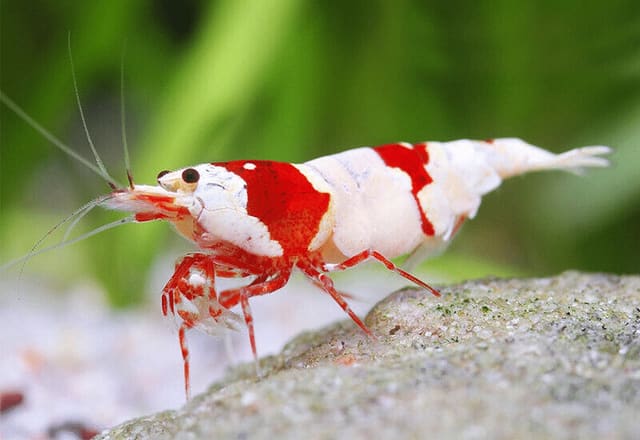
The Red Wine Taiwan Bee Shrimp (Caridina cantonensis) is a freshwater shrimp in the family Atyidae from China and Hong Kong, and possibly Vietnam, that reaches 3 cm. It suits keepers with a mature, filtered aquarium; OATA’s group guidance gives at least 10 litres for a small shrimp group, 17–27°C, pH 6.5–8.0 and 4–18°dH. Sold individually at a dispatch size of 1–1.3 cm.
Adult size is the maximum length this species reaches at full maturity (scientific sources). The livestock you receive will be younger and smaller. Product-photo provenance and any image-specific limitations are stated on the listing.
Caridina cantonensis
Lives in groups: kept together they stay settled, active and show their best colour.
The Red Wine Taiwan Bee Shrimp (Caridina cantonensis) is a freshwater shrimp in the family Atyidae from China and Hong Kong, and possibly Vietnam, that reaches 3 cm. It suits keepers with a mature, filtered aquarium; OATA’s group guidance gives at least 10 litres for a small shrimp group, 17–27°C, pH 6.5–8.0 and 4–18°dH. Sold individually at a dispatch size of 1–1.3 cm.
Adult size is the maximum length this species reaches at full maturity (scientific sources). The livestock you receive will be younger and smaller. Product-photo provenance and any image-specific limitations are stated on the listing.
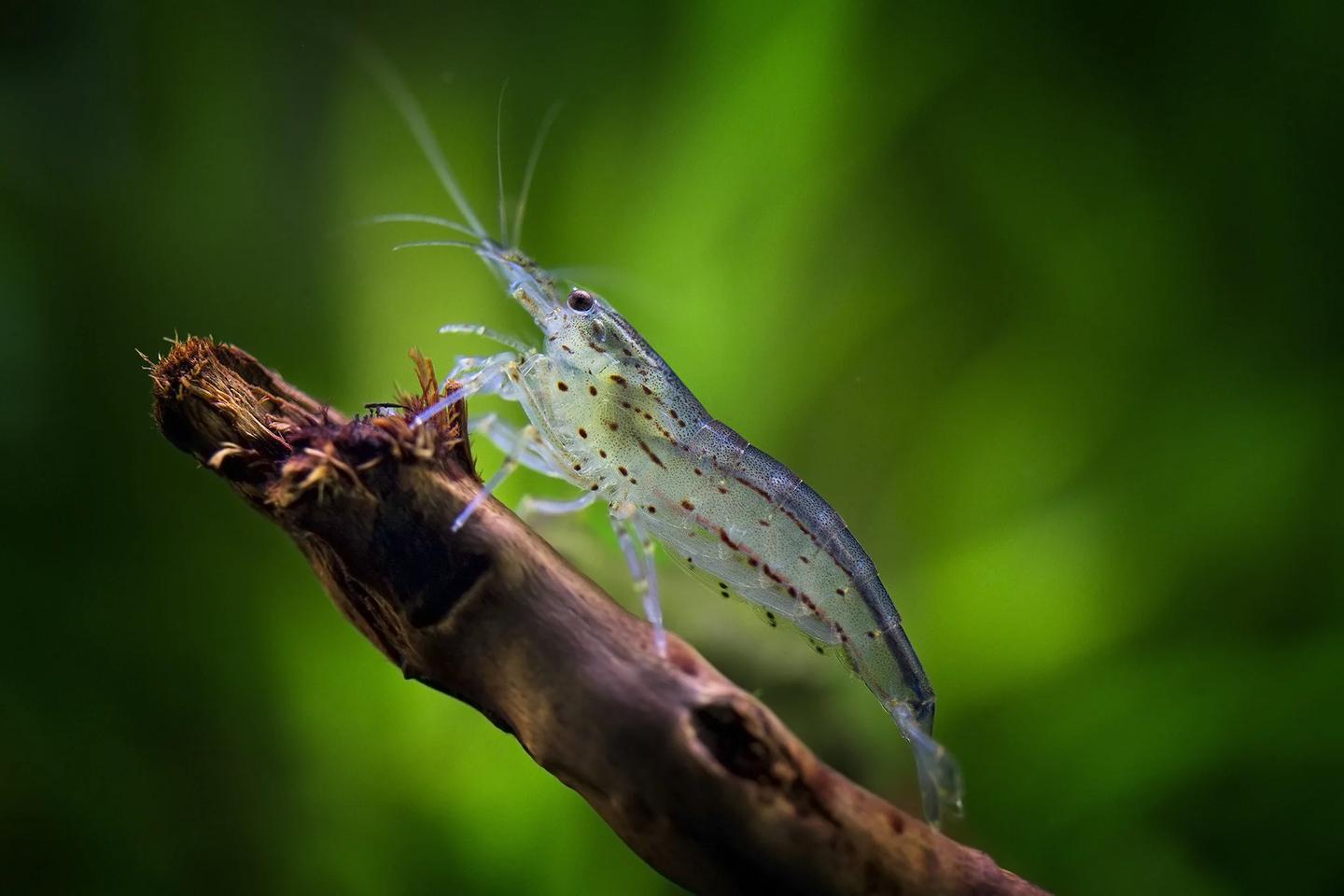
Start with a mature, filtered aquarium. OATA's broad UK guidance suggests approximately 20 litres for Amano Shrimp and at least five for social shrimp, with a larger aquarium when fish are present. Treat those as cautious planning screens—not biological minima or a per-litre formula. Match the complete adult community, test your water, protect the filter inlet and never buy them as a guaranteed algae cure.
Maintain these water conditions for optimal health and vibrant colors
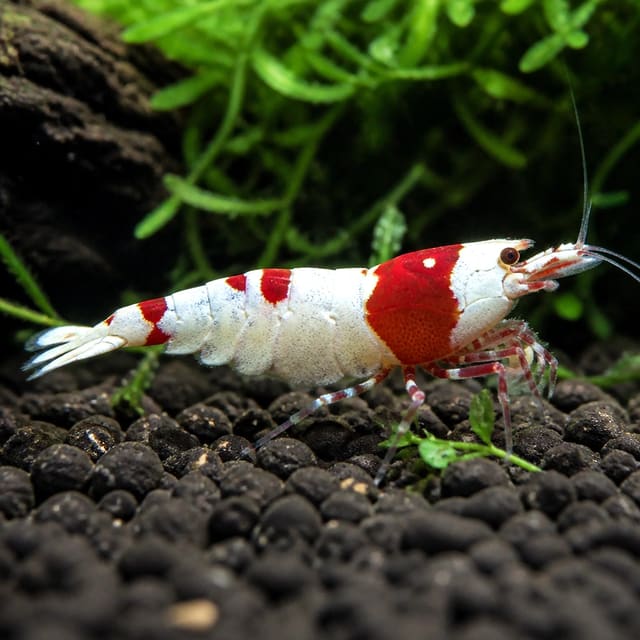
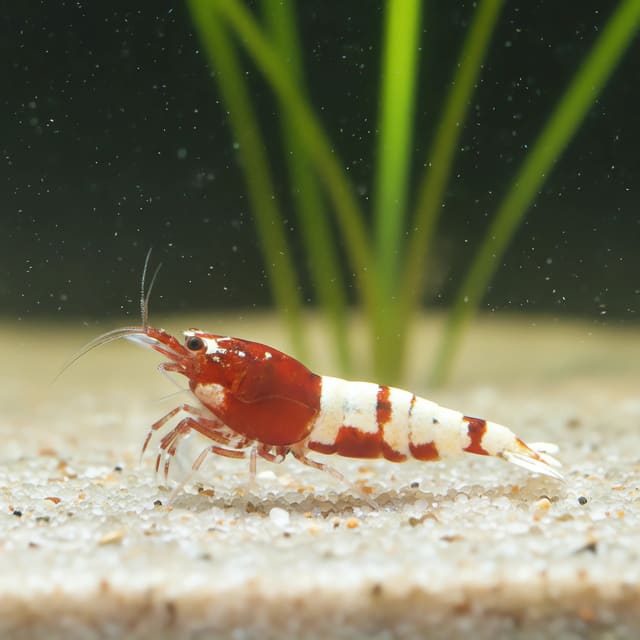
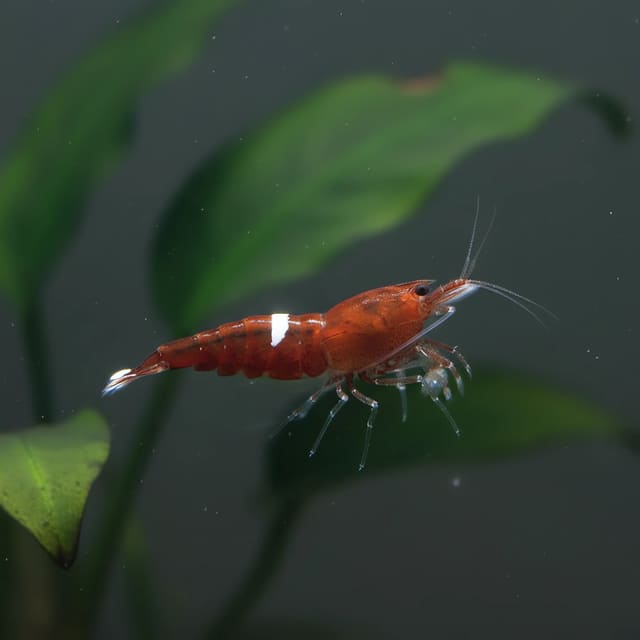
Red Wine Taiwan Bee Shrimp is a red-and-white aquarium form of Caridina cantonensis, a freshwater bee shrimp in the family Atyidae. It is native to China and Hong Kong, and possibly Vietnam, and reaches an adult planning size of 3 cm. It suits a keeper who can prepare a mature, filtered aquarium, test the water every week, maintain stable conditions and screen every proposed companion for predatory behaviour and mouth size. The World Register of Marine Species accepts Caridina cantonensis in Atyidae.
Wikipedia’s bee shrimp summary describes the species as a scavenger that eats small pieces of decayed vegetation and algae. That distribution describes the species in nature rather than the origin of the individual animal purchased here. Modern bee shrimp forms are often selectively bred for their appearance.
This is a good choice when you want a small grazing invertebrate and can commit to weekly testing, partial water changes and cautious stocking. If you are comparing forms or planning a wider invertebrate display, browse our shrimp and crustacean collection.
One purchase supplies one Red Wine Taiwan Bee Shrimp. The dispatch size is 1–1.3 cm, which describes the animal at dispatch rather than its eventual size. Plan the aquarium around an adult-size reference of 3 cm.
A small dispatch animal still needs the complete adult setup from its first day in the aquarium. Do not use the 1–1.3 cm size to reduce filtration, water testing, cover or planned aquarium volume. The biological filter must process waste regardless of the animal’s current length, and the aquarium should remain suitable as it grows.
| Decision | What applies |
|---|---|
| Purchase unit | One animal per purchase |
| Dispatch size | 1–1.3 cm |
| Adult planning size | 3 cm |
Sex is guaranteed only when the selected option explicitly states male or female. This Red Wine Taiwan Bee Shrimp listing has no sex-guaranteed option.
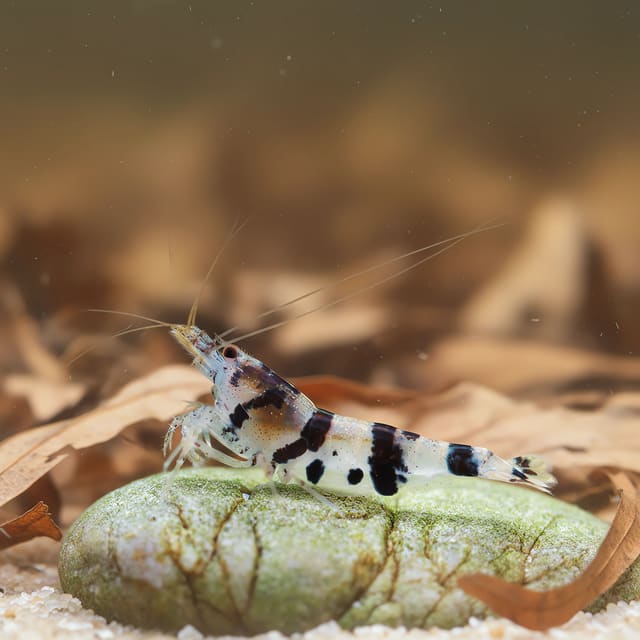
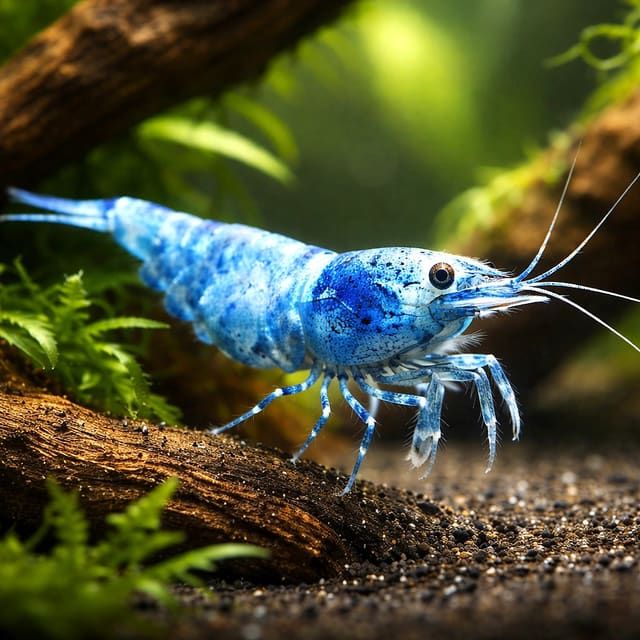
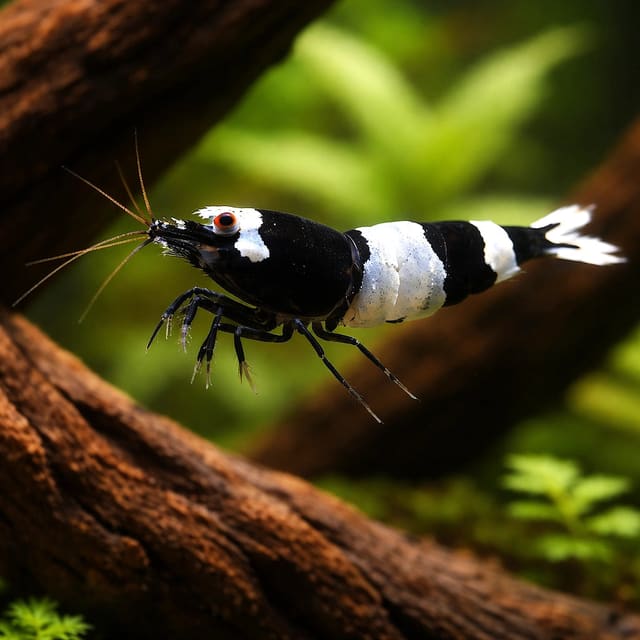
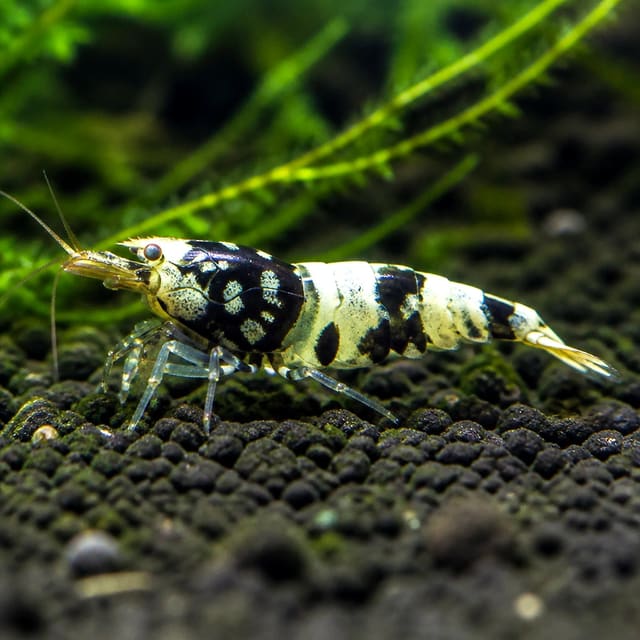
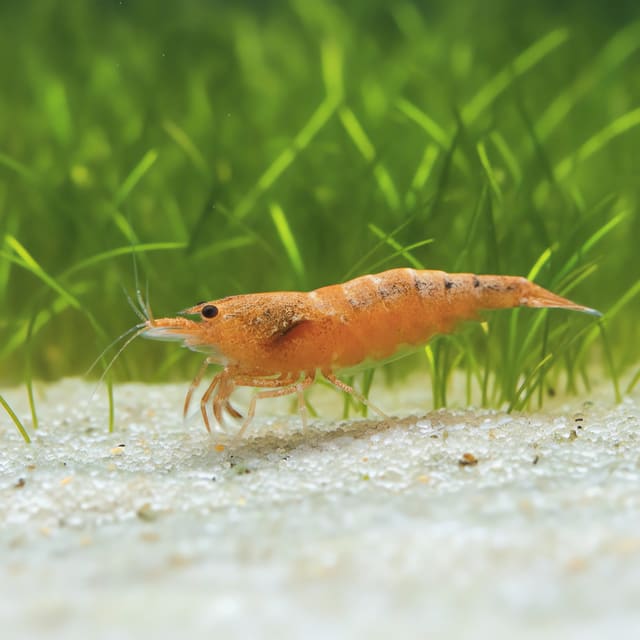
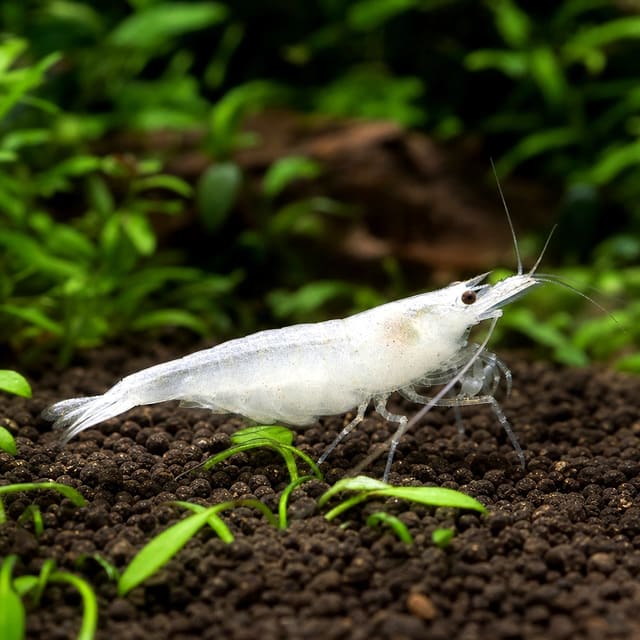
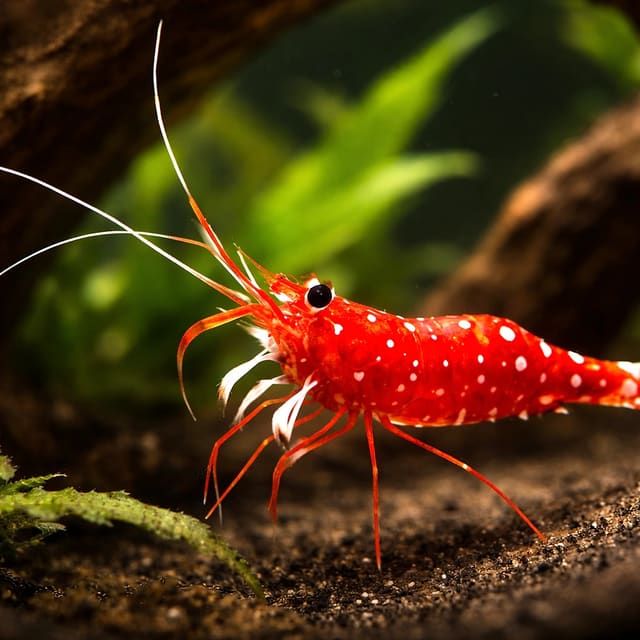
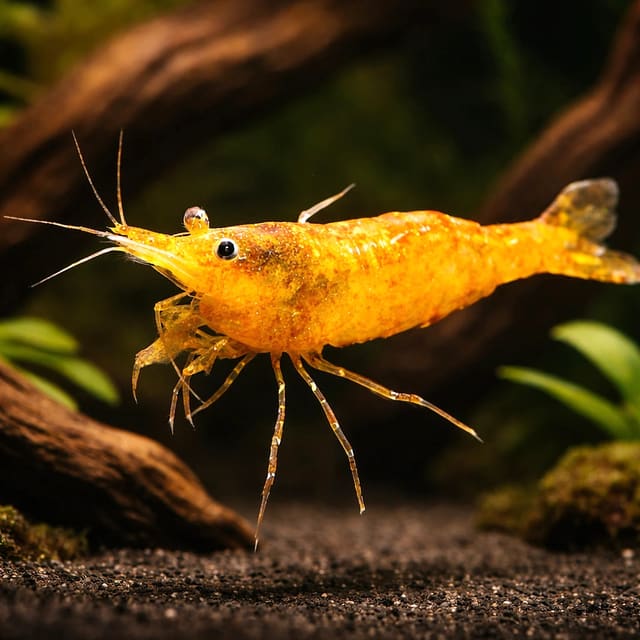
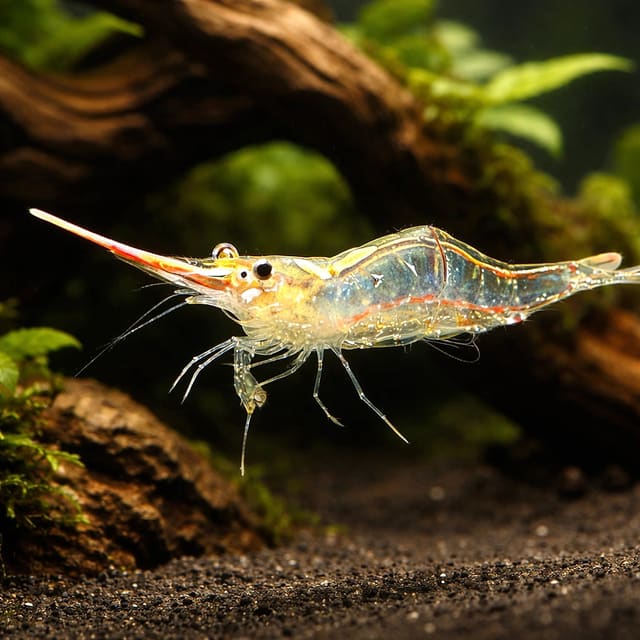
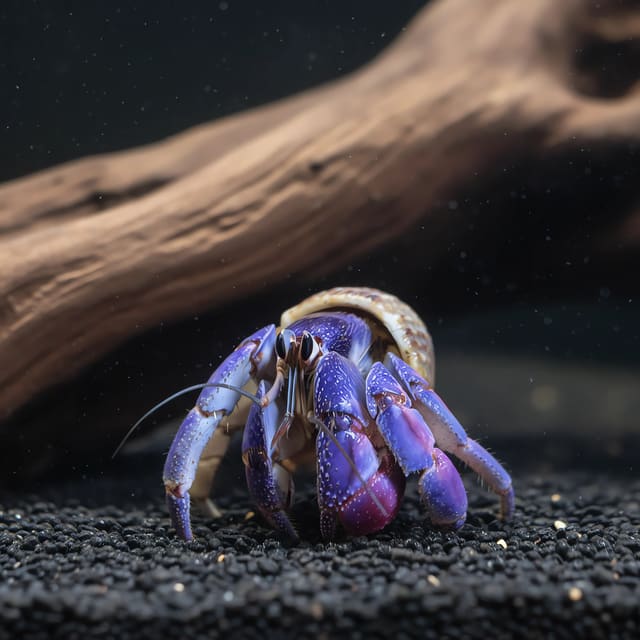
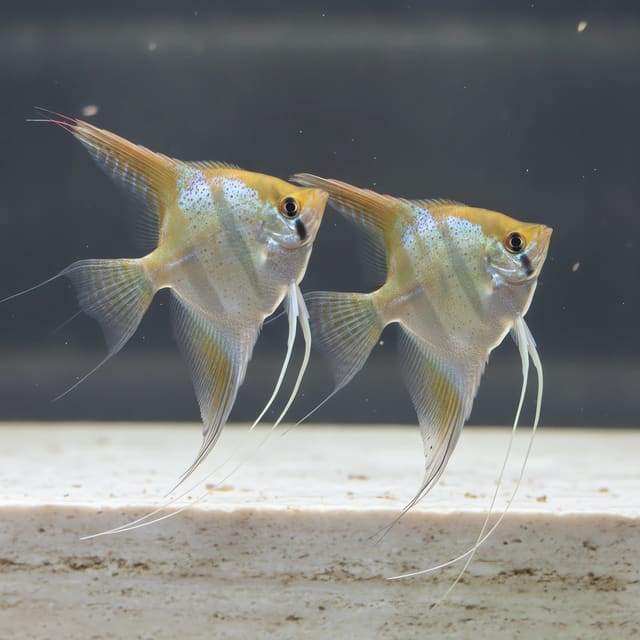
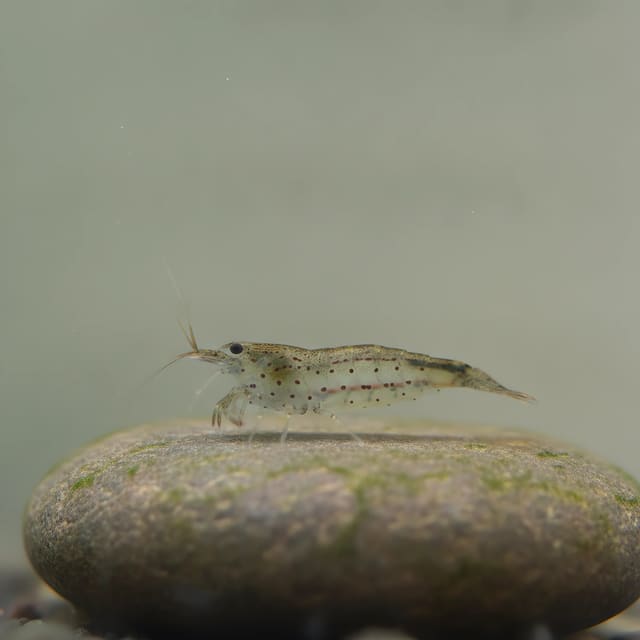
The gallery images are representative, based on reference photographs of this species, so colours can look slightly different from the live animal.
Gallery scenes may show one or two shrimp to illustrate their markings and aquarium context. The number visible in an image does not alter the purchase unit. For dispatch days, delivery arrangements and guarantee conditions, read the current delivery and Live Arrival Guarantee policy.
OATA’s freshwater shrimp and snail guidance gives 17–27°C, pH 6.5–8.0, general hardness of 4–18°dH and carbonate hardness of 3–15°dKH for the group. These are broad planning limits, not a species-specific optimum for the Red Wine colour form.
| Planning point | Value or action |
|---|---|
| Adult-size reference | 3 cm |
| Aquarium volume | At least 10 litres for a group of small freshwater shrimp |
| With fish | Use a larger aquarium and complete the predation screen |
| Temperature | 17–27°C |
| pH | 6.5–8.0 |
| General hardness | 4–18°dH |
| Carbonate hardness | 3–15°dKH |
| Ammonia | Zero mg per litre |
| Nitrite | Zero mg per litre |
| Nitrate | Not more than 20 mg per litre above the normal tap-water level |
| Suits | Not suited to |
|---|---|
| A mature, filtered aquarium | An unfiltered or biologically immature aquarium |
| A planned social shrimp group | Fish able to fit the shrimp in their mouths |
| Weekly testing and 25% partial water changes | Species known to be predatory |
| Invertebrate-safe aquarium treatments | Any aquarium exposed to copper, even at low levels |
The 10-litre figure is an “at least” instruction for a small shrimp group, not a reason to squeeze the setup into the smallest container. A larger aquarium offers more water in which changes in temperature and water quality can be diluted, making environmental conditions more stable. Fish increase both the compatibility question and the required space, so they should never be added merely because the adult shrimp is small.
Use the complete set of values when assessing a tank. A temperature inside 17–27°C does not compensate for detectable ammonia, and suitable pH does not compensate for nitrite. The aquarium is ready only when its filter, water measurements, volume and cover work together.
Start with a mature aquarium of at least 10 litres for a small group and fit an aquarium filter. OATA describes a filter as essential for freshwater shrimp and recommends gravel or sand, ideally with live plants for cover. Where live plants are not used, plastic plants and suitable ornaments such as model caves can provide shelter.
The filter is more than a device that moves water. The RSPCA’s aquarium filtration guidance explains that beneficial bacteria in a working biological filter convert toxic ammonia into nitrite and then into the safer nitrate. Maturing the filter establishes the bacterial population needed to process waste after livestock and food enter the aquarium.
| Check | Ready condition |
|---|---|
| Aquarium | At least 10 litres for a small shrimp group |
| Filter | Running, mature and free from blockages |
| Ammonia | Zero mg per litre |
| Nitrite | Zero mg per litre |
| Substrate | Aquarium gravel or sand |
| Cover | Live plants or suitable artificial plants and ornaments |
If either ammonia or nitrite is detectable, postpone the introduction. Adding an animal before the biological filter can manage waste risks unhealthy concentrations as feeding begins. Check the filter for blockages and continue monitoring rather than treating the calendar alone as proof that the aquarium is mature.
Arrange cover without sacrificing access for routine maintenance. You need to reach the substrate with a siphon, inspect the filter and remove uneaten prepared food while leaving sheltered areas where shrimp can move out of open view. Our shrimp-keeping guide can help you organise the preparation and maturation stages before livestock enters the aquarium.
Before deciding that the aquarium is ready, follow the route you will use during weekly care. Confirm that you can reach exposed areas of gravel or sand with the siphon, remove a food pellet after its feeding window and inspect the filter without dismantling all the cover. If an ornament blocks maintenance or traps food where it cannot be recovered, reposition it before the shrimp enters. This preserves shelter while making the supported testing, waste-removal and filter checks practical every week.
Test temperature, pH, ammonia, nitrite and nitrate, and include general and carbonate hardness when comparing the aquarium with the planning range. Each result answers a different question: temperature shows the thermal condition, pH shows acidity or alkalinity, hardness describes dissolved-mineral conditions, and nitrogen tests show whether waste is being processed safely.
Use 17–27°C, pH 6.5–8.0, 4–18°dH and 3–15°dKH together. Keep ammonia and nitrite at zero mg per litre. Nitrate should not rise more than 20 mg per litre above the normal level in the tap water, so test the tap-water baseline rather than judging the aquarium result in isolation.
| Result | Decision |
|---|---|
| Ammonia above zero | Do not add livestock; inspect filtration, waste and feeding |
| Nitrite above zero | Do not add livestock; check biological-filter performance |
| Nitrate rising | Compare it with the tap-water baseline and review maintenance |
| Temperature outside 17–27°C | Bring the aquarium into range before introduction |
| pH or hardness outside range | Resolve the mismatch before adding the shrimp |
Test at least once a week and keep the results together. A sequence makes gradual movement easier to recognise than isolated readings. The practical goal is not to chase one measurement while ignoring the others; it is to maintain an aquarium in which the full set stays suitable and toxic nitrogen compounds remain absent.
Use our aquarium water-chemistry guide to understand what each test measures. When you have current results, the water matcher provides a clear way to compare them with the stated range before making the stocking decision.
For example, an aquarium reading of 15 mg per litre nitrate cannot be assessed fully until it is compared with the normal tap-water reading. If the tap water measures 5 mg per litre, the aquarium is 10 mg per litre above that baseline; record both figures so the next weekly result can be compared on the same basis. Apply the same discipline to the other tests by recording the value, date and any recent feeding, stocking or maintenance change instead of relying on memory.
Bee shrimp are scavengers that eat small pieces of decayed vegetation and algae in nature. In the aquarium, freshwater shrimp generally graze algae, but that grazing should be supplemented so the animals receive enough food. Use an algae wafer or a commercial pellet made for freshwater shrimp.
Offer prepared food two or three times a week rather than adding it every day. Leave a wafer or pellet for at least 30 minutes so the shrimp has time to feed. After that grazing window, inspect the aquarium and remove excess food before it breaks down and adds toxic waste to the water.
| What you observe | What to do next |
|---|---|
| Shrimp approaches the food and grazes | Allow at least 30 minutes for feeding |
| Food remains after the feeding period | Remove the excess and offer less next time |
| Food repeatedly accumulates | Reduce the portion rather than increasing cleaning alone |
| Interest in food falls | Check water quality and look for other health changes |
“Two or three times a week” is the schedule for prepared food, not a reason to ignore the animal between meals. Shrimp can continue grazing on algae and decaying plant fragments while no pellet or wafer is present. Natural grazing and controlled supplements therefore perform different jobs.
Avoid feeding extra merely because the aquarium looks clean. Uneaten food decomposes, releasing waste that the filter must process. This is especially important when the biological filter is adapting to newly introduced livestock or when the aquarium holds a small volume of water.
Make one adjustment at a time. If food remains, reduce the next portion while keeping the established meal frequency. If feeding interest changes together with unusual activity, colour, breathing or appearance, treat it as a health observation and check the water rather than trying a succession of new foods.
Choose two or three meal days across the week and inspect the same feeding place after at least 30 minutes. Record whether the shrimp approached, how much prepared food remained and whether the animal’s activity differed from earlier meals. If leftovers appear twice in succession, reduce the next portion and remove the excess rather than adding another meal. When the food disappears but the shrimp was not seen feeding, observe the next meal before assuming that a larger portion is needed.
Prepare for the introduction by testing the aquarium rather than relying on its appearance. Ammonia and nitrite must each read zero mg per litre, while temperature, pH and hardness should sit inside the planning ranges. Confirm that the filter is operating without a blockage and that plants or ornaments provide cover.
Increase shrimp numbers slowly. Beneficial bacteria established while the filter matures must increase as more livestock and food add waste. Several additions made too quickly can leave too few nitrifying bacteria to cope, allowing ammonia or nitrite to rise through new tank syndrome.
During the first week, complete at least the normal weekly water test and inspect behaviour, colour, breathing, appearance, condition and feeding. Inactivity, unusual restlessness, darker or paler colour, increased hiding, greater breathing effort, body damage or reduced feeding all justify an immediate check of ammonia, nitrite, temperature and filter operation.
Continue testing at least weekly and carry out a 25% partial water change at least once a week with conditioned replacement water. Record whether the shrimp grazes and accepts prepared food during the two or three weekly meals. A month of results gives four or more water-quality checkpoints and makes changes easier to identify.
Do not add another group simply because the first animal is visible and feeding. Use the filter’s measured performance as the deciding factor. Stable zero ammonia and nitrite, controlled nitrate, regular feeding response and an unobstructed filter provide a stronger basis for the next gradual addition.
Treat any detectable ammonia or nitrite after an addition as a stop signal for further stocking. Inspect the filter, remove uneaten food and continue testing while the aquarium returns to zero readings. The same pause applies if feeding falls, activity changes or the filter becomes obstructed. This keeps the next decision tied to the aquarium’s measured capacity rather than to a planned date or the fact that another animal would complete the intended group.
Carry out a 25% partial water change at least once a week. Use a siphon to remove solid waste from the gravel or sand, and treat replacement tap water with a conditioner that removes chlorine or chloramine before it enters the aquarium.
| Aquarium volume | 25% water change |
|---|---|
| 10 litres | 2.5 litres |
| 20 litres | 5 litres |
| 40 litres | 10 litres |
| 60 litres | 15 litres |
These examples apply the same 25% instruction to different aquarium volumes. Measure from the aquarium’s working water volume and prepare the replacement water before adding it. The conditioner step matters because chlorine and chloramine can harm the beneficial bacteria that keep the biological filter functioning.
Check the filter for blockages during maintenance. If it needs cleaning, rinse it lightly in aquarium water removed during the partial water change. Do not run the filter under the tap, because chlorine or chloramine may kill beneficial bacteria established in the media.
Water changes and filter care have connected but distinct purposes. The water change dilutes accumulated waste and removes solids; biological filter bacteria continue converting ammonia and nitrite. Protecting both processes is safer than cleaning the aquarium while damaging the bacterial population on which it depends.
Keep the routine consistent even when the water looks clear. Ammonia and nitrite cannot be judged by sight, and a visually clean aquarium can still require testing, waste removal and filter attention.
Calculate the 25% amount, prepare enough replacement water and add the required conditioner before beginning. Place removed aquarium water aside if the filter needs a light rinse, because that water protects the established media from direct tap-water exposure. Once the change is complete, confirm that the filter has restarted and is not blocked. Then record the test results and water-change amount so the next check follows the same working volume and method.
Freshwater shrimp are invertebrates and are highly sensitive to copper. They will die if exposed even to low levels, so check every treatment before it enters the aquarium and use it only when it is explicitly safe for invertebrates. Do not assume a treatment intended for an aquarium containing fish is automatically suitable for shrimp.
Routine observation helps connect a visible change with a practical water or equipment check. Establish what normal activity, colour and feeding look like in your aquarium, then respond when that pattern changes.
| Warning sign | First action |
|---|---|
| Increased inactivity or restlessness | Test ammonia and nitrite and inspect the filter |
| Darker or paler colour | Check water values and recent aquarium changes |
| More hiding than usual | Review water quality and companion behaviour |
| Changed breathing rate or effort | Check water quality and filter operation promptly |
| White spots, lesions or discolouration | Separate observation from treatment choice; check invertebrate safety |
| Exoskeleton damage or lost appendages | Inspect companions and aquarium conditions |
| Weight change or abnormal swelling | Review feeding and water-test results |
| Reduced interest in food | Remove leftovers and test the aquarium |
A water check should include ammonia, nitrite, temperature and the other routine measurements, not colour alone. Also inspect the filter for a blockage and look for uneaten food that may be breaking down. Where a companion could have caused physical damage, reassess it using the predation and mouth-size screen.
Do not respond to an unexplained symptom by adding a succession of treatments. Copper sensitivity makes treatment selection especially important, while inappropriate medication may add another hazard without resolving the original problem. For persistent symptoms, lesions, swelling, breathing changes or losses, contact us with the water results, recent maintenance and treatment history so the health change can be assessed.
When a warning sign appears, note its time and compare it with the most recent feeding, water change, livestock addition, filter cleaning or treatment. Test the aquarium before changing several parts of the routine at once. Remove uneaten food, inspect filter flow and record the shrimp’s activity, colour, breathing and appearance. A clear sequence of observations helps distinguish a water-quality problem, a companion interaction and a treatment-safety concern while avoiding an unnecessary series of aquarium interventions.
Freshwater shrimp should not be mixed with fish that can fit them in their mouths or with any species known to be predatory. OATA also warns that common aquarium fish may eat shrimp, so a community label or small body size is not enough by itself to establish compatibility.
| Companion characteristic | Decision |
|---|---|
| Can fit the shrimp in its mouth | Avoid |
| Known to be predatory | Avoid |
| May target small invertebrates | Do not proceed without a clear assessment |
| Cannot swallow the shrimp and is not predatory | Continue to the water, space and feeding checks |
Use the adult mouth size and normal feeding behaviour of the proposed fish, not only its size when purchased. The Red Wine shrimp begins here at 1–1.3 cm and uses a 3 cm adult planning size, so the screen must account for a small animal at dispatch as well as its eventual size.
Passing the predation screen is only the first stage. Compare the companion’s temperature, pH, general hardness and carbonate-hardness needs with 17–27°C, pH 6.5–8.0, 4–18°dH and 3–15°dKH. Check that the planned aquarium is larger than the 10-litre baseline used for a small shrimp group, because an aquarium containing fish needs additional space.
Feeding also needs to remain manageable. The shrimp receives prepared food two or three times a week and needs at least 30 minutes to graze. A companion that immediately consumes every wafer or pellet can prevent the shrimp from feeding, while extra food added to compensate can break down and raise waste.
Compatibility is conditional rather than universal. For a stocking and compatibility assessment, contact us with the proposed species, adult size, normal diet, aquarium volume and measured water values.
Begin with the strictest question: can the fish swallow a 1–1.3 cm shrimp, or is it known to be predatory? If either answer is yes, avoid the combination and do not rely on extra cover to reverse that decision. If both answers are no, compare the fish’s adult requirements with the full shrimp water range, choose an aquarium larger than 10 litres and decide how the shrimp will receive at least 30 minutes with prepared food. A failure at any stage stops the plan before livestock is mixed.
Freshwater shrimp species are usually social, so plan a group rather than treating the purchase unit as a solitary-care instruction. Each purchase still supplies one animal, allowing the group to be built at a pace the mature filter can support.
Additions should be gradual because every extra animal and prepared meal increases the waste that beneficial filter bacteria must process. Test ammonia and nitrite after additions as part of the weekly routine and pause further additions if either rises above zero.
| Plan | Decision |
|---|---|
| Shrimp-focused aquarium | Removes the fish mouth-size and predation question |
| Shrimp with fish | Use a larger aquarium and exclude mouth-fit or predatory fish |
| Shrimp with another invertebrate | Compare water, adult size, feeding and predatory behaviour first |
A shrimp-focused aquarium still needs complete care: at least 10 litres for the group, an essential filter, gravel or sand, cover, weekly testing and a 25% partial water change at least once a week. Removing fish reduces one compatibility risk but does not replace water-quality control.
For another shrimp or snail, compare the required temperature, pH, hardness, adult size and diet. Proceed only when the same aquarium can meet both animals’ needs and neither is predatory. Similar appearance or a shared trade word should not be used as the compatibility test.
Watch the animals after any addition. Increased hiding, restlessness, physical damage, reduced feeding or changed colour can indicate that the plan needs reassessment. Check the water and observe interactions before adding more livestock. If uneaten food accumulates because animals are not feeding normally, remove it and reduce the next portion rather than allowing it to decay.
This approach keeps three decisions separate: one purchase supplies one animal, shrimp are normally planned socially, and the group must grow slowly enough for the filter and aquarium volume to support it.
After adding an animal, keep the normal weekly test and maintenance cycle in place before deciding on the next addition. Confirm that ammonia and nitrite remain at zero mg per litre, nitrate stays within the stated limit, prepared food is being eaten and filter flow remains unobstructed. If hiding, colour, breathing, appearance or feeding changes, pause and investigate. A planned social group is built through repeated stable checkpoints rather than by adding several animals simply because each purchase unit is small.
Red Wine Taiwan Bee Shrimp reaches an adult planning size of 3 cm. This is OATA’s figure for the smaller Caridina cantonensis colour variants.
Use a mature, filtered aquarium of at least 10 litres for a small shrimp group. OATA gives this as broad group guidance, and an aquarium containing fish needs to be larger.
Plan a group because OATA describes freshwater shrimp species as usually social, but it gives no numeric minimum for this form. Add animals slowly so the mature filter can adjust as feeding and waste increase.
Choose it only if you can provide a mature filter, test the water at least weekly, keep ammonia and nitrite at zero mg per litre and prevent copper exposure. These routines matter more than attaching a beginner label.
It scavenges algae and small pieces of decaying plant matter. Supplement its grazing with an algae wafer or commercial freshwater-shrimp pellet two or three times a week, allowing at least 30 minutes to feed.
OATA’s freshwater shrimp guidance gives 17–27°C, pH 6.5–8.0 and general hardness of 4–18°dH for the group. Keep ammonia and nitrite at zero mg per litre.
OATA describes freshwater shrimp species as usually social. Screen every companion by mouth size and predatory behaviour, and respond to increased aggression, hiding or physical damage by checking interactions and water quality.
Avoid fish able to fit the shrimp in their mouths and any species known to be predatory. For other shrimp or snails, compare water requirements, adult size, diet and predatory behaviour before mixing them.
Film every delivery continuously from the sealed parcel as it is opened, with the shrimp still inside the sealed bag before anything is disturbed. Have someone present to receive the parcel, inspect it the same day, float the bag for 20–30 minutes before releasing the shrimp and never pour the bag water into the aquarium.
No reviews for this item yet. Bought one? Honest reviews only, good or bad.
What customers say about ordering from us
I have a small group of long finned mountain minnows. So was delighted to be able to order ten of this variety to increase the genetics in my tank . The ones I recieved are healthy but it’s to early to give a verdict on wether they are of a long finned type since they are small currently.
Gordon Walker · 23 Sept 2026
100% success travel and "installation". Pleased with quality of purchase. The Siamese fighter a bit "shy" so have not yet seen him at his best yet but looking good. Happy customer. GG
George E Garratt · 21 Sept 2026
Reviews of our shop, collected by Judge.me, an independent third-party review collector. Newest first.