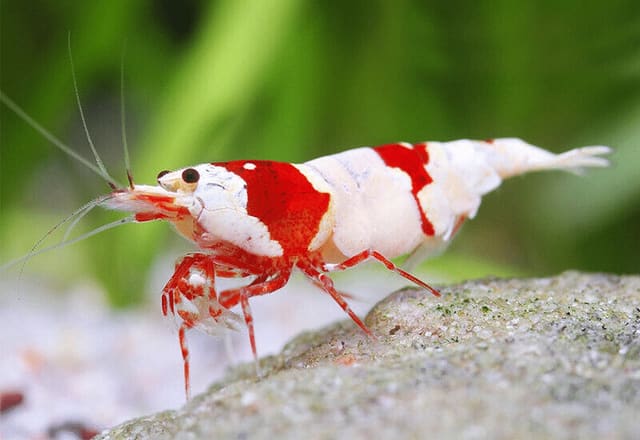
Crystal Red / Red Bee Shrimp (Caridina cantonensis) – 1–2.5cm Sizes
17–27°C · pH 6.5–8
£11.99

King Kong Taiwan Bee Shrimp (Caridina sp.) is a boldly patterned freshwater bee shrimp, sold as one live shrimp per purchase and supplied at 1–1.3 cm. It needs a mature aquarium of soft, acidic water held steady, no fish large enough to eat it, and the company of others of its kind, since bee shrimp prefer to live in groups.
Caridina sp.
Lives in groups: kept together they stay settled, active and show their best colour.
King Kong Taiwan Bee Shrimp (Caridina sp.) is a boldly patterned freshwater bee shrimp, sold as one live shrimp per purchase and supplied at 1–1.3 cm. It needs a mature aquarium of soft, acidic water held steady, no fish large enough to eat it, and the company of others of its kind, since bee shrimp prefer to live in groups.
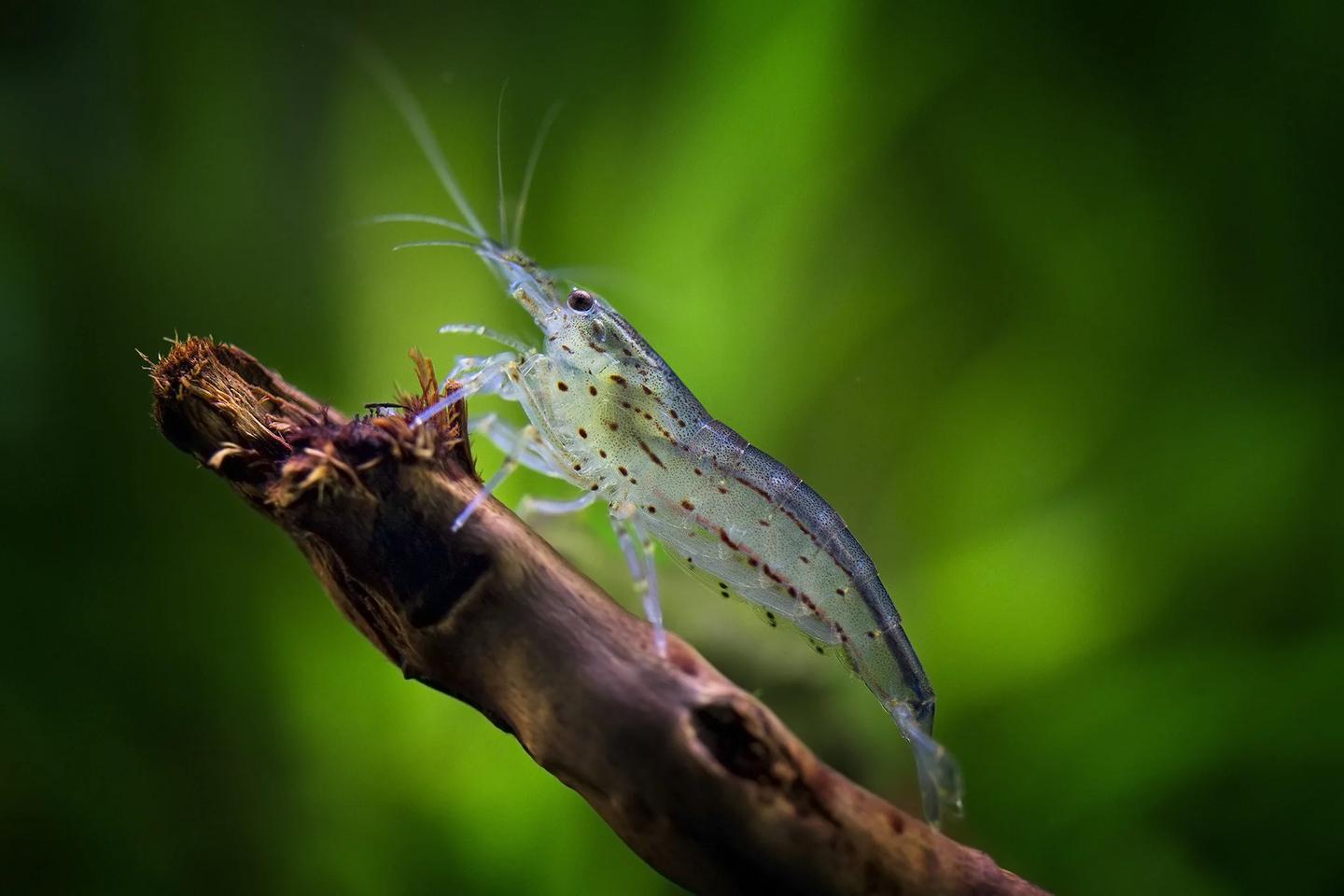
Start with a mature, filtered aquarium. OATA's broad UK guidance suggests approximately 20 litres for Amano Shrimp and at least five for social shrimp, with a larger aquarium when fish are present. Treat those as cautious planning screens—not biological minima or a per-litre formula. Match the complete adult community, test your water, protect the filter inlet and never buy them as a guaranteed algae cure.
Maintain these water conditions for optimal health and vibrant colors
This is the King Kong Taiwan Bee Shrimp (Caridina sp.), a small freshwater bee shrimp with a striking black and white pattern. Each purchase supplies one live shrimp, sent at 1–1.3 cm. It needs a mature aquarium of soft, acidic water that is held steady, with no fish large enough to swallow it, and because bee shrimp prefer to live in groups it is best bought as part of a colony rather than as a single animal.
The exact species has not been identified, so the care advice here follows the genus Caridina and its care group. For this shrimp that group is the bee shrimp and their Taiwan colour forms. The water targets, set-up and acclimation advice below follow two specialist bee-shrimp references, the Shrimp and Snail Breeder guide to bee shrimp and a Practical Fishkeeping feature on the King Kong, Panda and Red Ruby Taiwan bees. The Ornamental Aquatic Trade Association (OATA) care sheet for freshwater shrimp and snails supplies the everyday husbandry that applies to all aquarium shrimp, alongside welfare advice on filtration and our own delivery terms.
| Suits | A keeper with a mature, stable aquarium of soft, acidic water, kept for shrimp or with small, peaceful companions |
|---|---|
| Poor fit | A first shrimp, a new tank, hard and alkaline water, and aquariums with fish big enough to eat a shrimp |
| You receive | One live shrimp per purchase, supplied at 1–1.3 cm |
| Identity | Genus Caridina, family Atyidae; species not identified |
| Water | Soft and acidic: 20–24°C, pH 6.0–6.8, GH 3–6, KH 0–2 |
| Aquarium | About 40 litres recommended, because larger volumes stay more stable |
| Key hazard | Copper: invertebrates will die if exposed even to low levels |
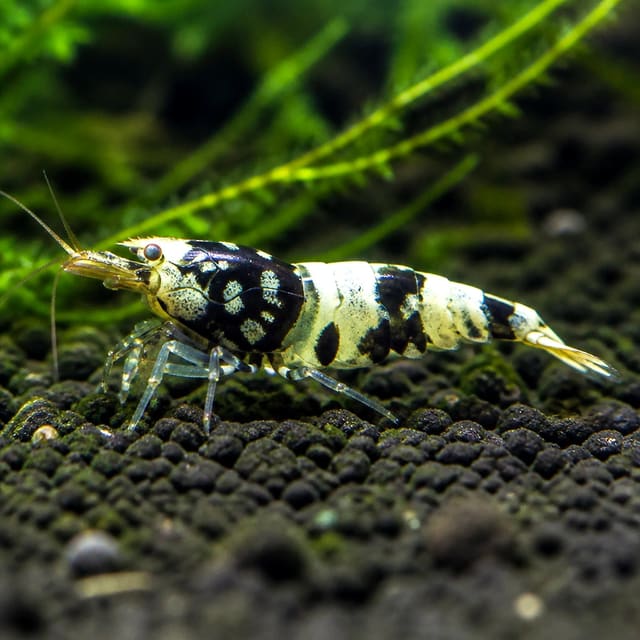
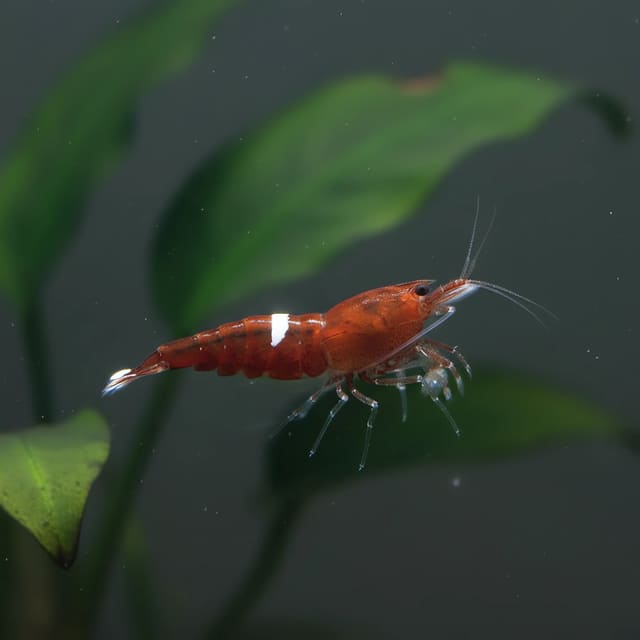
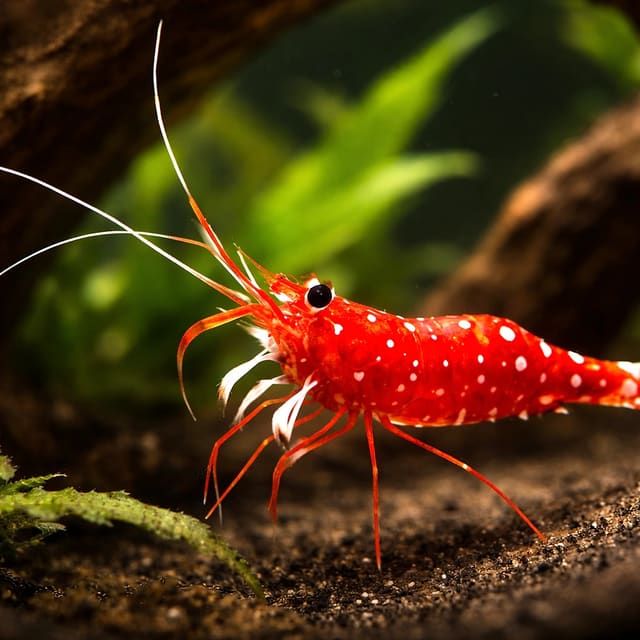
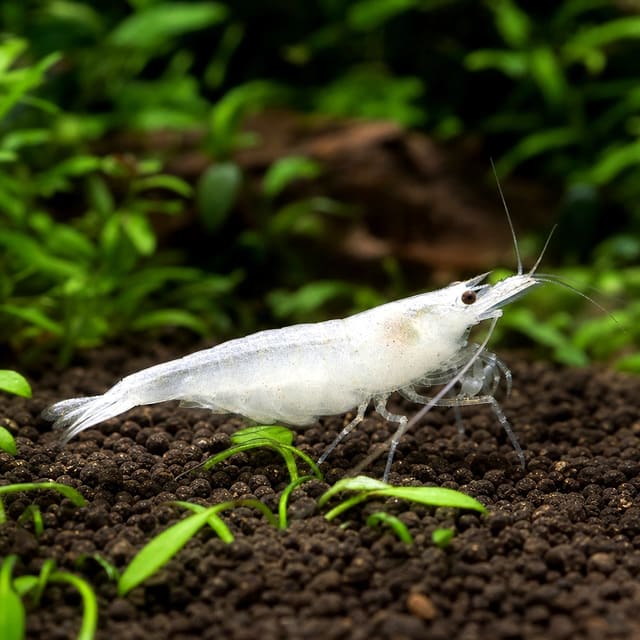
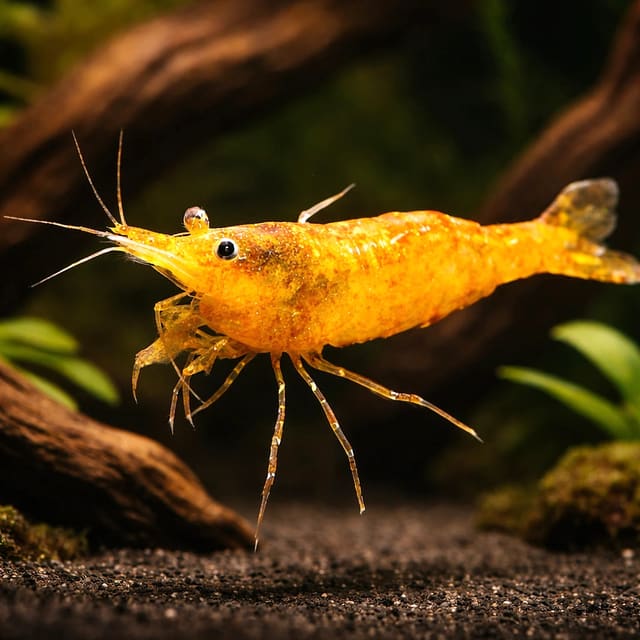
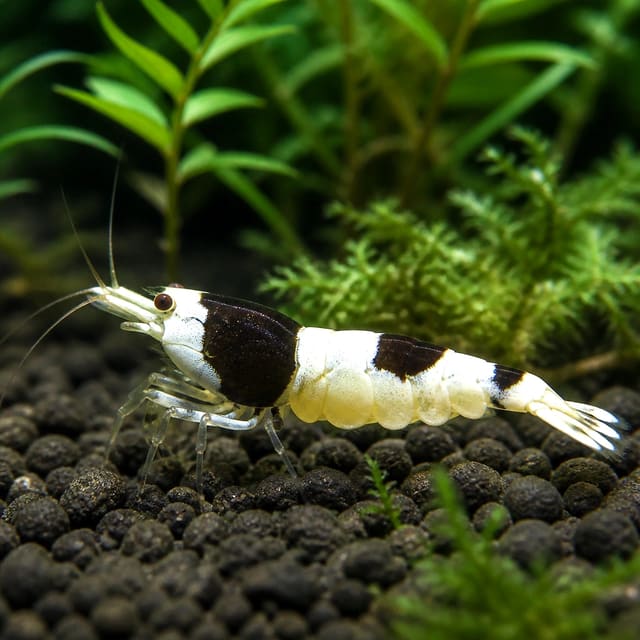
"King Kong" is a trade name for a dark-bodied Taiwan bee shrimp. The shrimp photographed here have a glossy black head and body, a white patch around the eye and snout, broad white bands across the abdomen and a white-tipped tail, with slender black legs and fine antennae. The balance of black and white differs from shrimp to shrimp, so enjoy the photographs as a guide to the look rather than a promise of a particular pattern.
Gallery images have been digitally enhanced to improve image quality. Natural colour, pattern, size and maturity can vary between live animals. Sex is guaranteed only when the selected option explicitly states male or female. This King Kong Taiwan Bee Shrimp listing has no sex-guaranteed option.
Bee shrimp are kept for colour and for the pleasure of watching a busy group at work. OATA notes that freshwater shrimp are popular partly because they help to control nuisance algae, grazing it from plants and surfaces. A King Kong group moving across green plants or dark gravel shows off that contrast of black and white, and a shrimp-only aquarium lets you enjoy the group without the risk that fish bring.
Each unit you order is one shrimp, so choose the quantity that suits your aquarium and your plans. Bee shrimp are peaceful, not territorial and prefer large groups, and a bigger colony feels safer and behaves more confidently. OATA asks you to increase numbers slowly, so a steady start followed by later additions is kinder to the filter than buying every shrimp at once. If you intend to keep more than one colour form, read each listing's own care notes before combining them.
If you are putting together a shrimp tank with several colour forms, you can browse our shrimps and crustaceans collection. The guide below covers the name and identity, aquarium planning, water, arrival, feeding, weekly care and health, companions and common questions.
Two labels appear on this shrimp. "King Kong Taiwan Bee" is a hobby trade name describing a colour form, and Caridina sp. is the scientific label, meaning the genus is known but the species is not named.
The World Register of Marine Species (WoRMS), which includes freshwater genera such as this one, lists Caridina as an accepted genus in the family Atyidae, within the Decapoda, the crustacean order that includes shrimp, crabs and lobsters. Wikipedia's Caridina article describes the genus as freshwater shrimp found widely in tropical and subtropical waters of Asia, Oceania and Africa. Those facts confirm what kind of animal you are buying: a freshwater shrimp, not a marine one, from a large and varied genus.
Writing in Practical Fishkeeping, shrimp specialist Chris Lukhaup describes King Kong, Panda, Blue Bolt, Red Ruby and Golden as colour morphs from Taiwan that arose from a spontaneous mutation in the tanks of a breeder working with Red Bee shrimp. He also notes that the Crystal Red shrimp at the root of these lines is still scientifically unidentified, labelled Caridina cf. cantonensis for the time being, and may be an undescribed species. That is why this line is sold under the genus name. The Shrimp and Snail Breeder guide likewise lists King Kong and Taiwan bee among the many names used for bee shrimp colour forms.
Lukhaup found the requirements of the different bee shrimp varieties and forms to be practically identical, so the care of this King Kong line follows the bee shrimp as a whole. In practical terms, that means:
OATA describes the Amano shrimp as growing slightly larger than the smaller shrimp species but as less colourful. The Shrimp and Snail Breeder guide adds that the colour strains bred from bee shrimp are especially demanding about water, in contrast to their Neocaridina relatives. If you want a bigger, plainer algae grazer, an Amano shrimp is an alternative; if you want pattern and contrast and can offer soft, stable water, a bee shrimp such as this King Kong line is the more decorative choice.
A bee shrimp tank rewards patience more than equipment. The decisions that matter are volume, the water you fill it with, the substrate, filtration and cover, and all of them are about keeping conditions steady.
OATA recommends an aquarium of at least 10 litres for a group of small freshwater shrimp, larger if the shrimp will live with fish, and advises buying as large a tank as is reasonable because temperature and water quality stay more stable in a bigger volume. The Shrimp and Snail Breeder guide says bee shrimp can be housed in 20 litres or less but does not recommend it without shrimp-keeping experience, and suggests about 40 litres as the more common and recommended size, because bee shrimp are more sensitive to changes in water quality. At the Taiwanese breeding station Practical Fishkeeping visited, no breeding tank was smaller than 80 litres, since larger systems are easier to keep stable.
Whatever the size, a filter is always essential. The RSPCA explains that animals release ammonia, which is toxic, and that a working biological filter lets beneficial bacteria turn it into nitrite, also toxic, and then into nitrate, which is safer. Those bacteria take time to establish, which is why a shrimp should only go into an aquarium that has already been matured. A sponge filter suits bee shrimp well: the Shrimp and Snail Breeder guide recommends sponge or matten filters, which are safe for baby shrimp and give a large surface to graze, together with good aeration, because these shrimp come from mountain streams. If this is your first set-up, our shrimp-keeping care guide walks through preparing and maturing an aquarium before livestock arrives.
For bee shrimp the substrate does a job beyond looks. The Shrimp and Snail Breeder guide explains that an active, buffering substrate, which lowers pH, plays a crucial role when pH must stay below 7.0, and it is the usual way to keep soft water on the acidic side. Practical Fishkeeping describes a breeding station that used inert fired-clay granules instead; an inert substrate like that does not influence the water, so it only works when the water itself is already very soft. OATA advises live plants to provide cover, and wood or ornaments add more surfaces for grazing and places to hide, which matters most while a shrimp is moulting.
Bee shrimp need soft, acidic water. The targets below come from the Shrimp and Snail Breeder guide to bee shrimp, which lists King Kong and Taiwan bee among the bee shrimp's names. They are aquarium targets for bee shrimp and their Taiwan colour forms, so treat them as the zone to hold steady.
| Parameter | Bee shrimp aquarium target |
|---|---|
| Temperature | 20–24°C |
| pH | 6.0–6.8 |
| General hardness (GH) | 3–6 |
| Carbonate hardness (KH) | 0–2 |
| Total dissolved solids (TDS) | 120–150 |
| Ammonia | Zero |
| Nitrite | Zero |
| Nitrate | Below 20 ppm |
These shrimp come from soft water. On a visit to bee shrimp habitats in South China and Hong Kong, Chris Lukhaup found them in shallow, heavily shaded brooks with no detectable carbonate hardness and a pH of only 5.8, a typical softwater rivulet. Those are wild readings, not aquarium settings, but they explain why hard, alkaline water suits bee shrimp poorly. The Shrimp and Snail Breeder guide notes that bee shrimp appreciate acidic water, and that although they can sometimes thrive at a neutral pH of 7.0, that only comes after several generations bred in those conditions.
The Shrimp and Snail Breeder guide advises against tap water for bee shrimp and uses only reverse osmosis or de-ionised (RO/DI) water. That water contains no minerals, so pH, KH, GH and TDS are set by adding a shrimp remineraliser until the readings reach the targets above. Our water chemistry guide explains what each test measures, and the water matcher tool lets you compare your own readings with these targets.
Stability matters more than hitting an exact number. Bee shrimp are more sensitive to changes in water quality than many shrimp, and the Shrimp and Snail Breeder guide warns that big, sudden changes can cause serious moulting problems. Pick values inside the targets that your routine can hold, test regularly, and make any correction gently over several days rather than in one step.
Aim for 20–24°C. Practical Fishkeeping reports that bee shrimp can be kept successfully at 17–22°C, close to the temperatures of their habitats, with 22–24°C used for breeding, and it warns that many shrimp react badly to a quick rise in temperature, young shrimp most of all, while falling temperatures seem to be less of a problem. A heater stops the water dropping in a cold room; in a warm spell, check the thermometer at least daily, because a quick rise is the bigger danger.
OATA's care sheet for freshwater shrimp and snails gives far wider values for the group as a whole: 17–27°C, pH 6.5–8.0, general hardness 4–18 dGH and carbonate hardness 3–15 dKH. OATA calls them a general guide and asks keepers to check the needs of their particular shrimp before buying. Bee shrimp belong at the soft, acidic end, so use the targets above. OATA's zero ammonia and nitrite still apply, as does its nitrate limit of no more than 20 mg per litre above tap water.
Being invertebrates, freshwater shrimp are very sensitive to copper and will die if exposed even to low levels, and the Shrimp and Snail Breeder guide adds that shrimp do not tolerate copper-based medications. Always make sure that any treatment added to the aquarium is safe for invertebrates, and read the label of every medicine, plant product and additive before it goes into a tank with shrimp.
Shrimp travel in bags filled with pure oxygen, hand-packed by our team into an insulated poly box, with a heat pack added when the weather calls for it. A licensed live-animal courier carries the parcel on a tracked service, and we email the tracking number and your confirmed delivery date so you can plan to be at home. The full terms are on our delivery and Live Arrival Guarantee page.
The float time comes from our delivery terms. The slow water adjustment after it is bee-shrimp practice: the Shrimp and Snail Breeder guide advises acclimating very slowly, over 2–3 hours, and Practical Fishkeeping stresses that these shrimp must be adapted quite slowly to any new water parameters, adding small amounts at long intervals. The same guide recommends quarantining new shrimp before adding them to an established colony.
Contact us on the day your shrimp arrive; WhatsApp is fastest. Send your order number and the unboxing video, and we will arrange a replacement or refund. The Live Arrival Guarantee requires someone at the address to receive the parcel, the parcel to be opened and inspected the same day, and a continuous video that starts with the parcel still sealed. Our courier may ask us for that evidence when we raise a claim, which is why the video keeps things quick and fair.
Grow the group slowly once the first shrimp are in. OATA explains that the beneficial bacteria in a matured filter need to increase every time livestock is added and feeding goes up; add too many too quickly and you risk new tank syndrome, where ammonia and nitrite climb and shrimp can become ill or die. Test a little more often than usual in the first weeks.
OATA describes freshwater shrimp as generally herbivorous grazers that pick at algae growing in the aquarium. A mature tank with plants and established surfaces supplies part of their diet naturally, and the rest comes from you.
OATA's guidance is to feed freshwater shrimp only two or three times a week. Give them time to eat: leave pellets or wafers in place for at least 30 minutes so the whole group has a chance to find the food. After that, remove what is left, because uneaten food breaks down and releases toxic waste into the water.
| Feeding step | What to do |
|---|---|
| Frequency | Two or three times a week |
| Food | Algae wafers or freshwater shrimp pellets |
| Time allowed | At least 30 minutes before clearing leftovers |
| Warning sign | Food lying uneaten, or rising ammonia, nitrite or nitrate |
More shrimp means more food and more waste. OATA points out that the filter's bacteria must increase every time livestock is added and feeding goes up, so raise the amount you feed in step with the group and keep an eye on ammonia and nitrite after each increase. If you are unsure how much a growing group needs, OATA suggests asking your retailer for advice on feeding levels.
Feeding time is the best moment to check on your shrimp. OATA lists reduced intake or lack of interest in food among the early signs of a problem, so a group that gathers readily on food is reassuring, while shrimp that ignore it are a prompt to test the water.
A short, regular routine keeps shrimp water stable. OATA stresses that good husbandry is essential, because freshwater shrimp can be stressed by even the smallest amounts of ammonia and nitrite, and bee shrimp add a need for consistency: each batch of new water should match the last as closely as possible.
When the filter needs cleaning, never run it under the tap: any chlorine or chloramine present may kill the beneficial bacteria living in the media. Rinse it lightly in the tank water you have just removed during the partial water change, which keeps the loss of bacteria to a minimum.
Like all shrimp, bee shrimp shed their exoskeleton as they grow, and a shrimp that has just moulted can sit still for a while and look lifeless. The Shrimp and Snail Breeder guide advises leaving a moulting shrimp untouched, as it is very vulnerable at that point, and leaving the shed shell in the tank, where the shrimp will eat it later. Repeated moulting trouble is a signal to check how steady your water has been, since big, sudden changes are a known cause.
Each shrimp behaves a little differently, but OATA lists changes that can reveal a problem before it becomes a real health issue:
| Area | What to look for |
|---|---|
| Activity | More inactivity than usual, restlessness or unusual behaviour |
| Colour | Turning darker or paler than normal; stressed bee shrimp also dull their colour for a while |
| Temperament | Changes in aggression, or hiding more than normal |
| Breathing | Changes in breathing rate or effort, or more time in areas with higher oxygen |
| Appearance | White spots, discolouration, lesions, abnormal growths, damage to the exoskeleton or loss of appendages |
| Condition | Noticeable weight gain or loss, or abnormal swelling |
| Feeding | Reduced intake or lack of interest in food |
Test ammonia, nitrite and nitrate straight away, then pH, GH and TDS, and compare them with your usual readings. Look for a recent change such as a plant treatment, a missed water change or a different batch of prepared water. Correct the water gently with a partial water change, and only add a treatment that is clearly safe for invertebrates. If you are still concerned, speak to your OATA retailer.
OATA's view is that freshwater shrimp are generally compatible with most species in the aquarium, with two firm exceptions: they should not be mixed with any fish that can fit them in its mouth, or with any species known to be predatory. OATA also warns that shrimp may be eaten by common aquarium fish. For bee shrimp, the Shrimp and Snail Breeder guide goes further: a tank kept only for shrimp is the ideal, and any companions should be quiet, peaceful animals that can share the same soft, acidic water.
| Companion | Guidance |
|---|---|
| Fish that can fit a shrimp in its mouth | Avoid |
| Species known to be predatory | Avoid |
| Large or aggressive fish | Avoid |
| Most crayfish and freshwater crabs | Avoid |
| Small frogs such as African dwarf frogs | Avoid: they will try to catch shrimp |
| Snails | Caution: some suffer shell wear when pH stays below 7.0 |
| Other peaceful shrimp that need the same soft water | Suitable |
| Any other fish | Caution: check with your retailer first and allow a larger aquarium |
A tank kept only for bee shrimp removes the predation question and lets you run the water entirely for them. If you want fish as well, OATA says the aquarium will need to be larger, and it recommends checking with your retailer before mixing shrimp with any fish species. Mouth size is the test to apply: a fish that can fit a shrimp in its mouth is a risk to it, whatever its reputation for being peaceful, and any companion must also be comfortable in soft, acidic water. Leave out predatory, large or aggressive fish, ask your retailer about the exact fish first, and size the aquarium up from the 40 litres recommended for bee shrimp alone.
Other shrimp that need the same soft, acidic water can share a bee shrimp aquarium. Snails need more thought, because some suffer shell attrition when pH stays below 7.0, and the Shrimp and Snail Breeder guide advises keeping bee shrimp away from most crayfish and freshwater crabs. Add newcomers one batch at a time so the filter can adjust.
OATA notes that snails are not social creatures but that shrimp species usually are, and the Shrimp and Snail Breeder guide describes bee shrimp as completely harmless, not territorial and happiest in large groups. A colony is therefore the natural way to keep them. It also means the whole group needs enough grazing and food, which is another reason to feed carefully and keep numbers in step with the size of the aquarium.
Shrimp are supplied at 1–1.3 cm. Adult size depends on the species, and this line is sold at genus level, so we do not quote an adult length for it. OATA groups bee shrimp with the smaller aquarium shrimp, below the larger Amano shrimp.
Bee shrimp do best in a larger, stable volume: the Shrimp and Snail Breeder guide recommends about 40 litres and advises against 20 litres or less without shrimp-keeping experience. OATA's minimum for a group of small shrimp is 10 litres, with more room if fish share the tank, and a working filter is essential whatever the size.
Bee shrimp are peaceful, not territorial and prefer large groups, so plan to keep this shrimp with others of its kind rather than alone. Build the group up in stages, because the filter bacteria need time to catch up each time you add livestock.
Not as a first shrimp. The Shrimp and Snail Breeder guide says bee shrimp should not be a beginner's first choice because their needs leave little room for mistakes, and Practical Fishkeeping describes rather high requirements. It suits a keeper with a fully matured aquarium, soft water made from RO water and a steady routine of testing and water changes.
Freshwater shrimp are generally herbivorous and graze algae in the aquarium. Add algae wafers or pellets made for freshwater shrimp two or three times a week, leave the food for at least 30 minutes so the shrimp can feed, and avoid overfeeding.
Aim for 20–24°C and pH 6.0–6.8, with GH 3–6, KH 0–2 and TDS 120–150, the soft, acidic targets that bee-shrimp specialists recommend. Keep ammonia and nitrite at zero and nitrate below 20 ppm, and hold the values steady, because sudden changes can cause moulting problems.
Fin-nipping is a fish habit, and a small shrimp poses no such risk to fish. The danger runs the other way: fish that can fit a shrimp in their mouth, and predatory species, may eat it.
Other peaceful shrimp that need the same soft, acidic water, or small peaceful species that cannot fit a shrimp in their mouth. Avoid predatory species, large or aggressive fish, most crayfish and freshwater crabs, and small frogs such as African dwarf frogs, and check any fish with your retailer before mixing.
We hand-pack each order in bags of pure oxygen inside an insulated poly box, adding a heat pack when the weather calls for it, and a licensed live-animal courier delivers on the date we email you. Someone must be in to receive it. Film a continuous unboxing video from the sealed parcel before opening, then float the bag for 20–30 minutes. Bee shrimp then benefit from a slow adjustment: add small amounts of aquarium water over about 2–3 hours before netting them in without the bag water. Any Live Arrival Guarantee claim needs that video on the same day.
Public sources behind this guide:
No reviews for this item yet. Bought one? Honest reviews only, good or bad.
What customers say about ordering from us
I have a small group of long finned mountain minnows. So was delighted to be able to order ten of this variety to increase the genetics in my tank . The ones I recieved are healthy but it’s to early to give a verdict on wether they are of a long finned type since they are small currently.
Gordon Walker · 23 Sept 2026
100% success travel and "installation". Pleased with quality of purchase. The Siamese fighter a bit "shy" so have not yet seen him at his best yet but looking good. Happy customer. GG
George E Garratt · 21 Sept 2026
Reviews of our shop, collected by Judge.me, an independent third-party review collector. Newest first.