Moderate
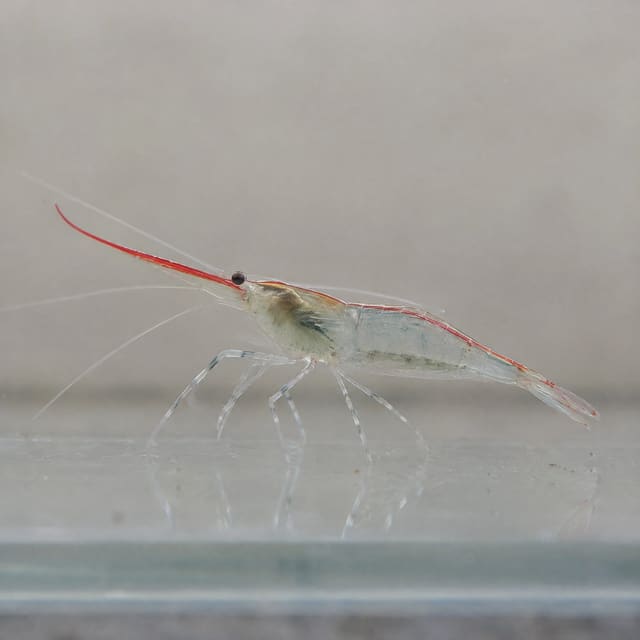
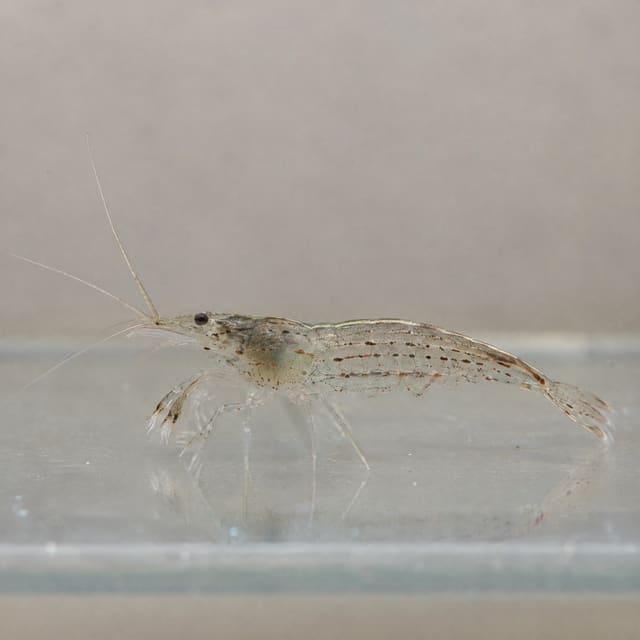
Amano Shrimp (Caridina multidentata)
From £3.49Some sizes on sale
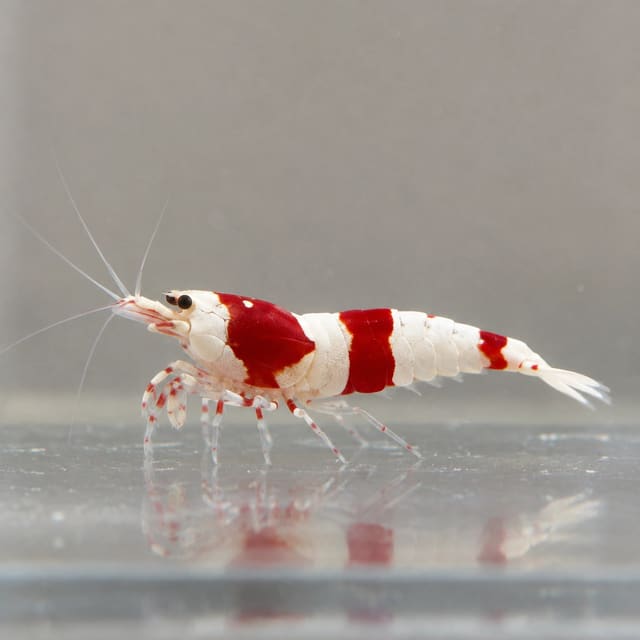
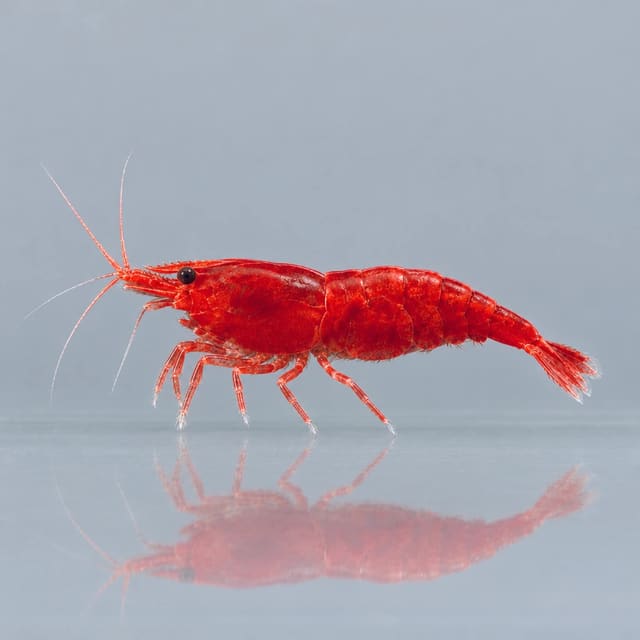
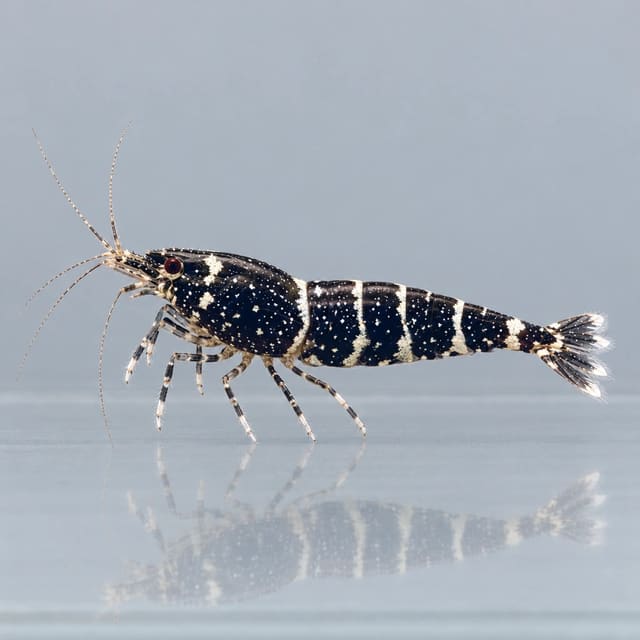
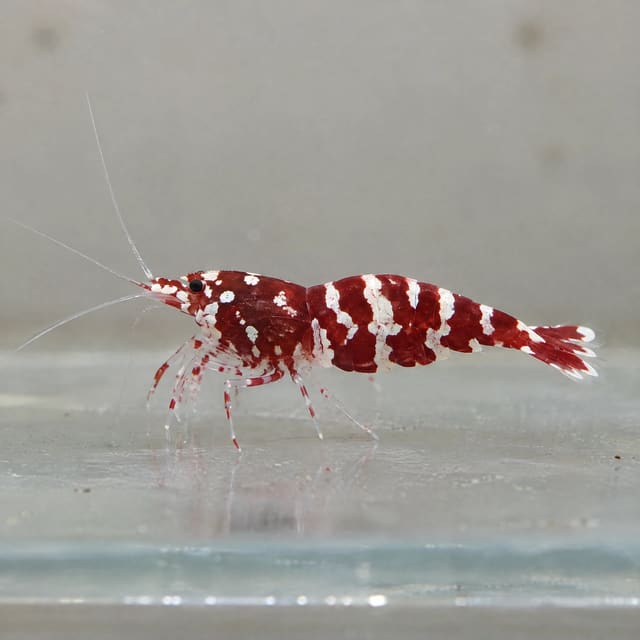
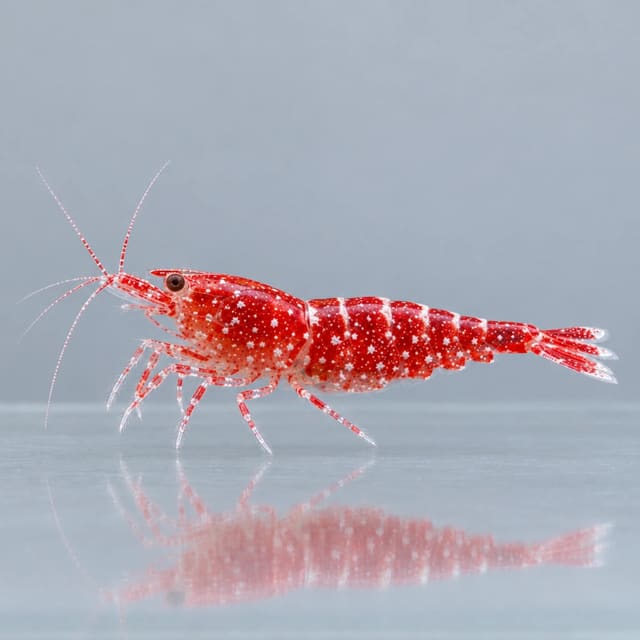
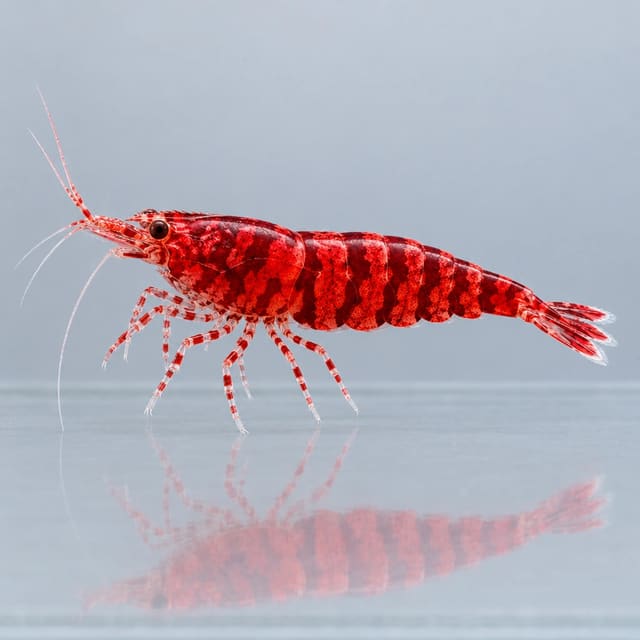
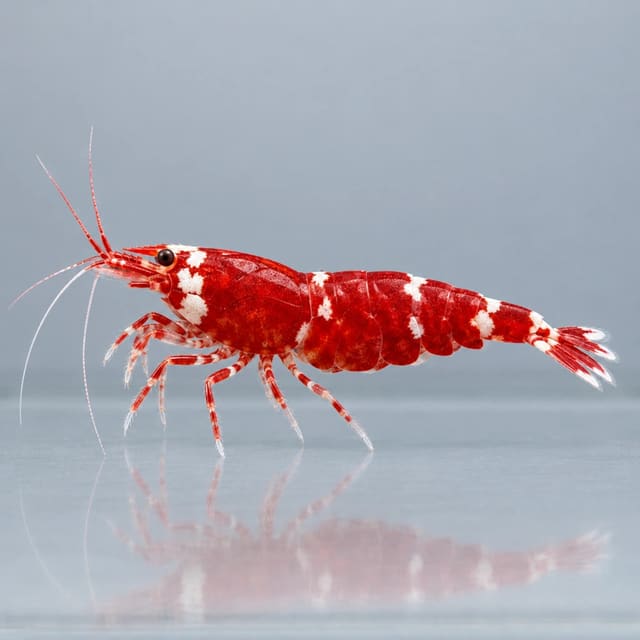
The Red Tiger Shrimp is a selectively bred tiger shrimp with dark red stripes on a clear, orange-tinted body and dark eyes. Keep at least five in a mature, planted tank at 17–24°C, pH 6.5–7.2, GH 4–10 and KH 3–6, with no fish large enough to eat them. Sold individually as one live shrimp.
Adult size is the maximum length this species reaches at full maturity (scientific sources). The livestock you receive will be younger and smaller. Product-photo provenance and any image-specific limitations are stated on the listing.
Caridina sp.
Choose a quantity for your aquarium. Discount thresholds are pricing offers, not a stocking recommendation.
The Red Tiger Shrimp is a selectively bred tiger shrimp with dark red stripes on a clear, orange-tinted body and dark eyes. Keep at least five in a mature, planted tank at 17–24°C, pH 6.5–7.2, GH 4–10 and KH 3–6, with no fish large enough to eat them. Sold individually as one live shrimp.
Adult size is the maximum length this species reaches at full maturity (scientific sources). The livestock you receive will be younger and smaller. Product-photo provenance and any image-specific limitations are stated on the listing.
Read the full care guidance when planning conditions for your aquarium.
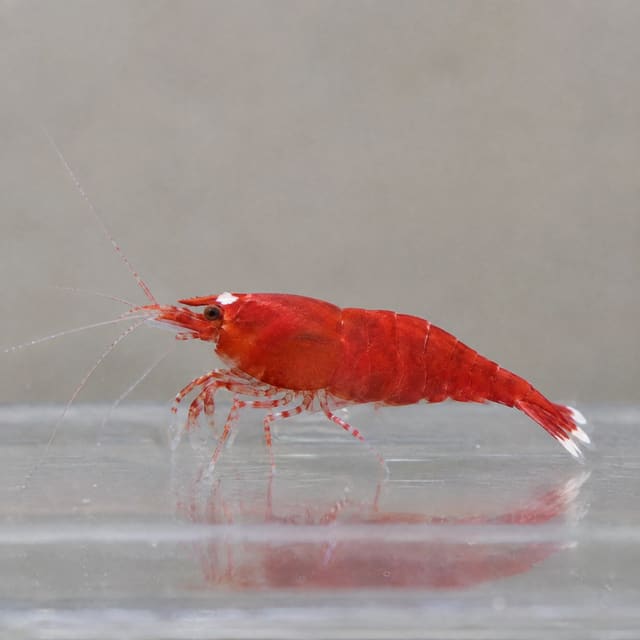
The Red Tiger Shrimp is a selectively bred dwarf shrimp with bold, dark red stripes running across a clear, orange-tinted body. The stripes are broadest over the tail section, the head is freckled with fine red dots, and the long legs and antennae are banded red and clear. The eyes are dark. A group grazing over moss and dark soil shows off the stripes far better than any single shrimp can.
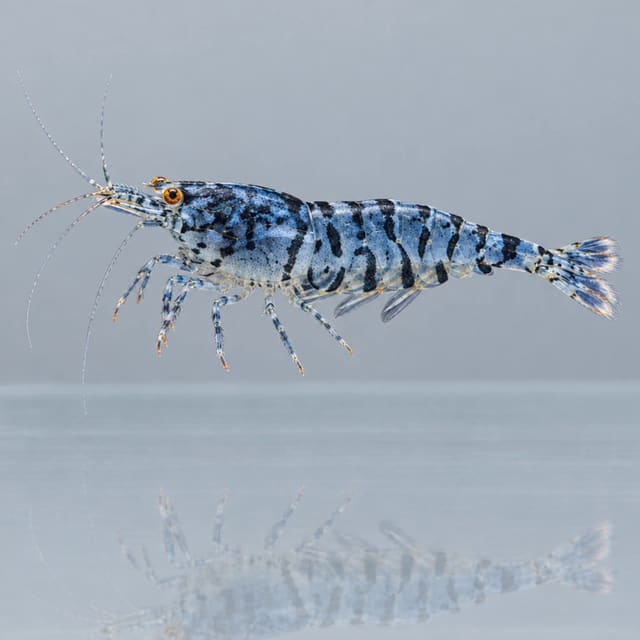
It is a colour line of the tiger shrimp. The Shrimp Farm lists it as Caridina mariae ‘Red Tiger’ and notes that some sellers still use the older name Caridina cantonensis. Because aquarium lines are not always pure, we sell it as Caridina sp. Wild tiger shrimp are translucent to greyish with black stripes; breeders selected the red-striped form from them.
Red Tigers sit between the hardy cherry shrimp and the demanding bee shrimp. They want softer water than cherry shrimp, but they are more forgiving of small changes than crystal red or Taiwan bee lines, which makes them a good next step for keepers moving into Caridina.
| Suits | Not suited to |
|---|---|
| A mature, planted tank of 20 litres or more | A tank that has not finished cycling |
| Soft to moderately soft water, steady at 17–24°C | Very hard, alkaline tap water used untreated |
| A shrimp-only tank, or one with cherry shrimp, Amano shrimp and snails | Fish big enough to eat shrimp |
| A group of five or more | A single shrimp kept on its own |
| Keepers who want a line that breeds true | Tanks holding bee shrimp, which can cross with tigers |
See our full range of shrimps and crustaceans, the freshwater shrimp category and the Caridina shrimp range.
One purchase quantity supplies one live Red Tiger Shrimp. The only option is “Standard”: the line is not graded into sizes, so shrimp are sent at the size available on the day, usually young adults. Sex is not specified. The photographs show the colour line rather than the individual shrimp; stripe width and the depth of the red vary, and The Shrimp Farm notes that females are usually larger and more strongly coloured than males.
Read our delivery and live arrival information before ordering, and have the tank mature and tested before the shrimp arrive.
For years the hobby treated tiger and bee shrimp as forms of one species. In 2014 Klotz and von Rintelen, in work summarised by Seriously Fish, described the tiger shrimp as a species of its own, Caridina mariae, from two localities in Guangdong province, southern China, one of them a swampy area where they measured pH 7.0. The same study found that ornamental bee strains belong to Caridina cantonensis, and Wikipedia records later work placing the two species as each other’s closest relatives. That close kinship is why tigers and bees can still cross in an aquarium.
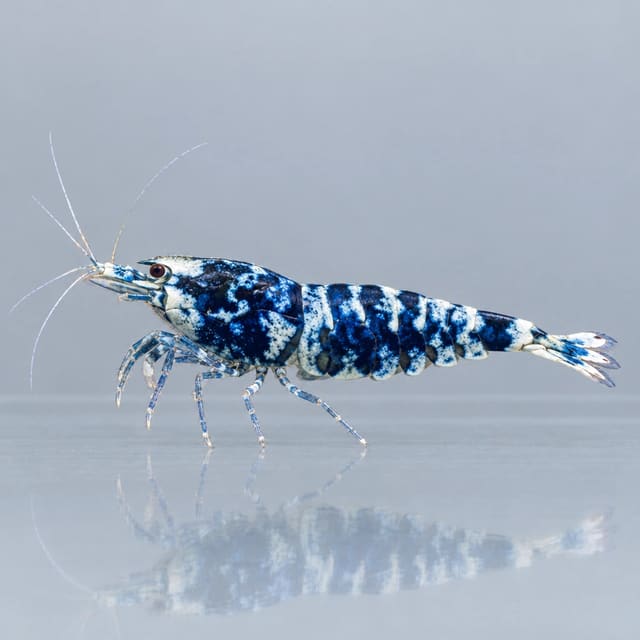
Selective breeding has turned the plain wild tiger into many lines. Practical Fishkeeping’s Chris Lukhaup reported that German-bred Black Tiger shrimp were rated very highly by Japanese keepers, and The Shrimp Farm lists red, orange and blue tiger lines, some with orange eyes. The Red Tiger offered here has dark eyes.
| Line | How it looks |
|---|---|
| Wild tiger | Translucent to greyish body with black stripes |
| Red Tiger | Clear to orange-tinted body with red stripes and dark eyes |
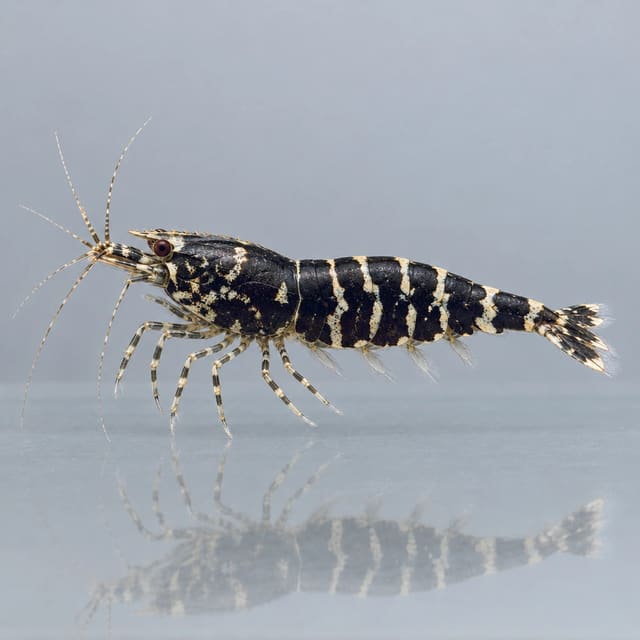
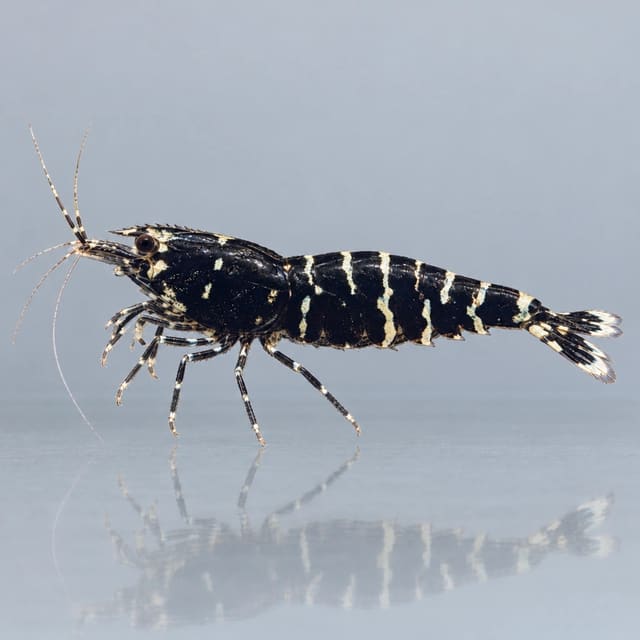
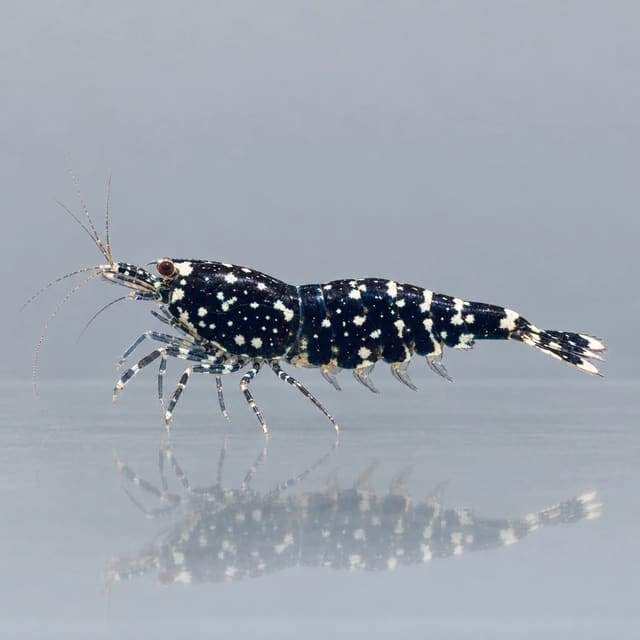
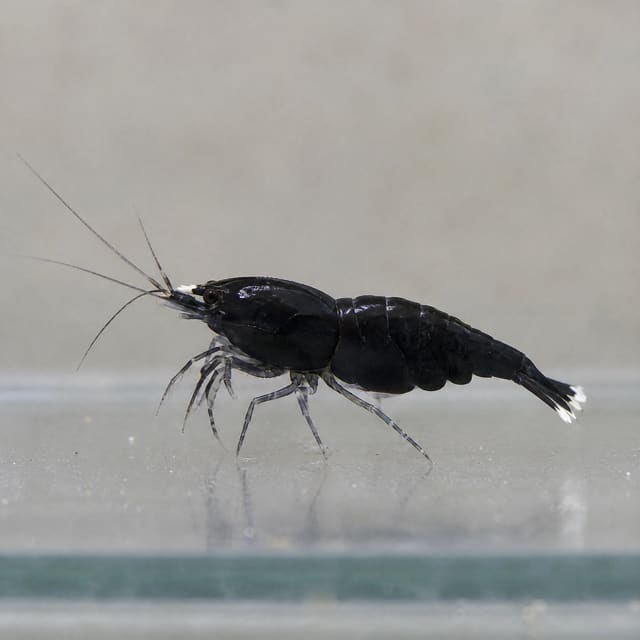
| Black Tiger | Dark body, a line developed by German breeders |
| Orange-eyed tigers | Tiger lines selected for bright orange eyes |
OATA sets 10 litres as the minimum for a small shrimp group. The Shrimp Farm says Red Tigers can live in about 19 litres (5 US gallons) but recommends about 38 litres (10 gallons) or more, because larger volumes hold their water values more steadily. Use a sponge filter, which gives gentle flow and keeps young shrimp out of the intake, and a heater if your room gets cold. A lid stops shrimp jumping out.
The Shrimp Farm recommends a black substrate, which brings out the red stripes, and plenty of cover: Java moss and other live plants, shrimp tubes, driftwood, rocks and dried botanicals such as Indian almond leaves. A planted tank also keeps up the biofilm the shrimp graze all day.
| Zone | What it gives the shrimp |
|---|---|
| Moss on wood or stone | Biofilm to graze and shelter for young and moulting shrimp |
| Open dark substrate at the front | A clear feeding spot that shows off the stripes |
| Leaf litter and shrimp tubes | Extra hiding places and grazing surfaces |
| A sponge filter | Gentle flow with no risk to the smallest shrimp |
The Shrimp Farm gives 17–24°C (62–75°F), pH 6.0–7.2, KH 2–6, GH 4–10 and TDS 150–250 for Red Tigers, and says they prefer soft, slightly acidic water. OATA’s broader planning values for freshwater shrimp are 17–27°C, pH 6.5–8.0, 4–18 dGH and 3–15 dKH. The overlap of the two is a sensible target: 17–24°C, pH 6.5–7.2, GH 4–10 and KH 3–6.
UK tap water ranges from soft to very hard depending on where you live. In a soft-water area your tap water, treated with a conditioner, may already fit. In a hard-water area, The Shrimp Farm suggests reverse osmosis water; many keepers blend it with tap water or remineralise it to reach the target GH. Test before you buy and compare your results with these targets using our water matcher.
| Reading | Aim for | Sources |
|---|---|---|
| Temperature | 17–24°C, steady | The Shrimp Farm 17–24°C; OATA 17–27°C |
| pH | 6.5–7.2 | The Shrimp Farm 6.0–7.2; OATA 6.5–8.0 |
| General hardness | 4–10 dGH | The Shrimp Farm 4–10; OATA 4–18 |
| Carbonate hardness | 3–6 dKH | The Shrimp Farm 2–6; OATA 3–15 |
| TDS | 150–250 ppm | The Shrimp Farm |
| Ammonia and nitrite | Zero mg/l | OATA |
| Nitrate | No more than 20 mg/l above your tap water | OATA |
| Copper | None | OATA |
Our water chemistry guide explains how to test hardness and pH, and our guide to the aquarium nitrogen cycle explains why the tank must be mature before shrimp arrive.
Red Tigers graze biofilm, algae and detritus, but The Shrimp Farm says they still need extra food: one or two pieces of a prepared shrimp food a day, without overfeeding, plus blanched vegetables, frozen foods such as mosquito larvae and algae pellets. Indian almond leaves give a long-lasting grazing surface as they break down. OATA suggests a lighter schedule of two or three feeds a week, with food left for at least 30 minutes and leftovers removed. In a well-planted, mature tank with plenty of biofilm, the lighter schedule is enough; in a newer tank, small daily feeds help.
Shrimp are stressed by bright light, temperature extremes, noise and movement, OATA notes, so go straight to the tank when the box arrives and use its floating-bag method:
If your tank water is much softer or harder than the water in the bag, take longer over the mixing step. Slow is never harmful; rushing is.
| When | What to do |
|---|---|
| Before arrival | Test ammonia, nitrite, nitrate, pH and hardness; check the temperature is steady |
| Day one | Keep the light low and leave the shrimp to settle without food |
| Days two to seven | Offer a very small portion and check it is found |
| Every day | Count the shrimp you can see; a shed skin is not a dead shrimp |
| End of the week | Retest the water and do the first routine water change |
OATA recommends testing weekly and changing 25% of the water at least once a week, using conditioned water and rinsing filter sponges in removed tank water, never under the tap. With Red Tigers, the key is matching the new water to the old: same temperature and similar hardness, added slowly.
Healthy Red Tigers spread out over moss and wood and graze almost constantly, with a few hidden while they moult. OATA lists the changes that point to a problem.
| If you see | Do this |
|---|---|
| Shrimp suddenly inactive, or restless and swimming hard | Test ammonia, nitrite, pH and temperature at once |
| Colour much paler or darker than normal | Compare with last week’s readings and any recent change |
| A shrimp stuck in its old shell | Check general hardness against the 4–10 dGH target |
| White spots, lesions, damaged shell or lost legs | Test the water and ask us before using any treatment |
| Less feeding than usual | Check portion size and leftovers, then test the water |
The Shrimp Farm describes Red Tigers as easy and prolific breeders. After mating, the female carries her eggs on her swimmerets for around 30 days, and 20 or more young can hatch. There is no larval stage: the babies are tiny, fully formed shrimp that need no special care. For comparison, Wikipedia gives 28 days to hatching at 22°C for the closely related bee shrimp.
Expect a life of a couple of years in a well-matured tank, as OATA says for freshwater shrimp.
OATA’s rule is never to keep shrimp with fish that can fit them in their mouth, or with predatory species. The Shrimp Farm adds that Red Tigers breed faster with no fish at all, although some keepers house them with Pygmy Corydoras or Otocinclus, which rarely eat baby shrimp. It lists cherry shrimp, Babaulti shrimp and Amano shrimp as suitable shrimp companions, with Thai micro crabs and snails. Our tank mates checker can help you screen any fish.
| Usually suits | Avoid |
|---|---|
| Amano shrimp and cherry shrimp | Bee shrimp, including crystal red and Taiwan bee lines |
| Striped Babaulti Shrimp | Fish big enough to swallow a shrimp |
| Thai Micro Spider Crab and snails | Predatory fish, crayfish and larger crabs |
| Pygmy Corydoras or Otocinclus, if you accept a few lost young | Copper-based medicines and fertilisers |
We also sell the wild-patterned Tiger Shrimp and the boldly marked Raccoon Tiger Shrimp. Keep each line in its own tank if you want the young to keep their look. For background on the whole group, read our shrimp-keeping guide.
OATA reminds keepers never to release aquarium animals or plants into the wild. Dispose of old substrate, plant trimmings and water through household waste or the drain, never into ponds, streams or gardens.
A selectively bred line of the tiger shrimp with red stripes instead of the black stripes of wild tigers. The Shrimp Farm lists it as Caridina mariae ‘Red Tiger’; older labels call it Caridina cantonensis, so we sell it as Caridina sp.
One live shrimp of the Standard option, sex not specified. Order at least five to start a group, as OATA recommends.
It is a good second shrimp. The Shrimp Farm rates it intermediate, a step up from cherry shrimp, because it wants softer water and steady conditions, but it is more forgiving than bee shrimp.
Soft to moderately soft, slightly acidic to neutral water: 17–24°C, pH 6.5–7.2, GH 4–10 and KH 3–6 satisfy both The Shrimp Farm and OATA. The Shrimp Farm adds TDS 150–250.
Around 3 cm. OATA gives about 3 cm for this group of dwarf shrimp and The Shrimp Farm gives a maximum of 1.5 in, about 3.8 cm. Females grow larger and chunkier than males.
Only if the room falls below about 17°C. Their range is 17–24°C, so a small heater keeps a tank steady through a cold UK winter; avoid letting it overheat in summer.
Yes. The Shrimp Farm lists Neocaridina such as cherry shrimp as suitable tank mates, as they do not interbreed. Keep them away from bee shrimp, which can cross with tigers.
Usually, yes. Females carry their eggs for about 30 days and 20 or more young can hatch as tiny shrimp. The line breeds true, so the young look like their parents.
No reviews for this item yet. Bought one? Honest reviews only, good or bad.
What customers say about ordering from us
Easy website plenty of info on fish your buying great to pick a time slot
TRACEY DURRANT · 7 Oct 2026
Got some lovely fish thank you
Kevin Mackie · 7 Oct 2026
Reviews of our shop, collected by Judge.me, an independent third-party review collector. Newest first.
Moved by UK carriers licensed to handle live animals
Hand-packed with oxygen bags, poly box, heat pack
Email photos the same day; an optional unboxing video helps us review problems faster — claim terms apply
Klarna & PayPal Pay in 3 at checkout