Moderate
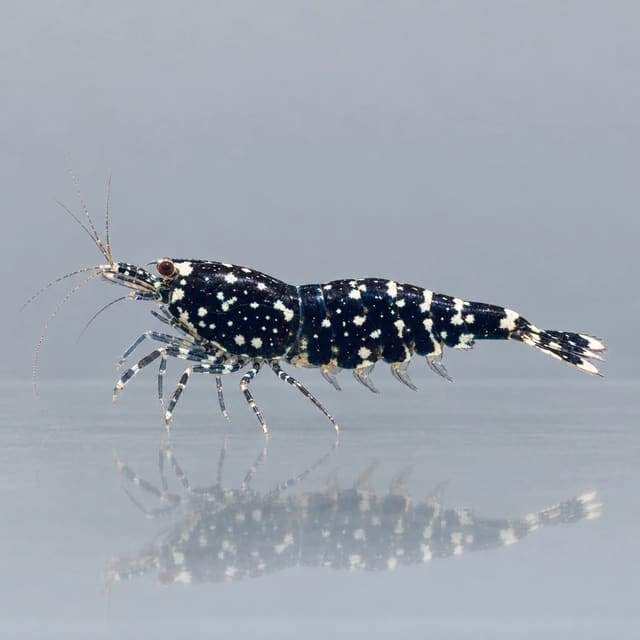
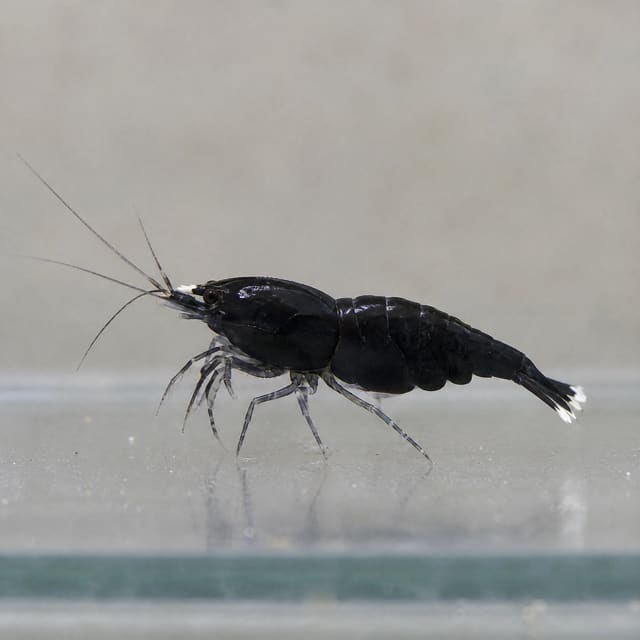
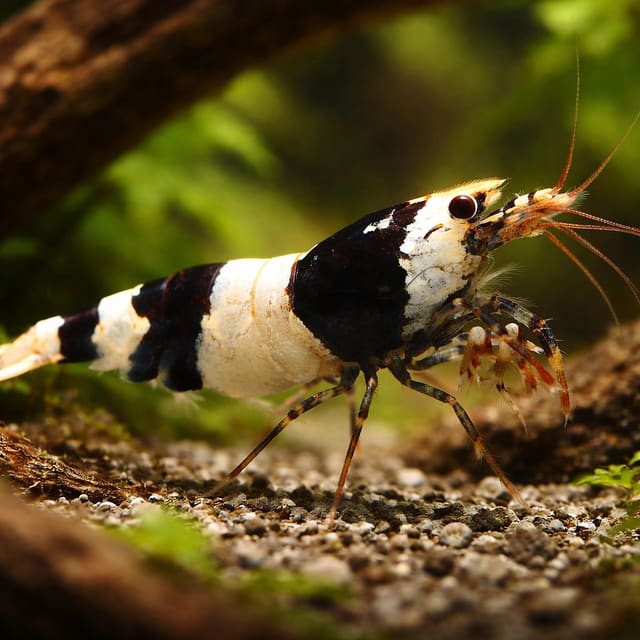
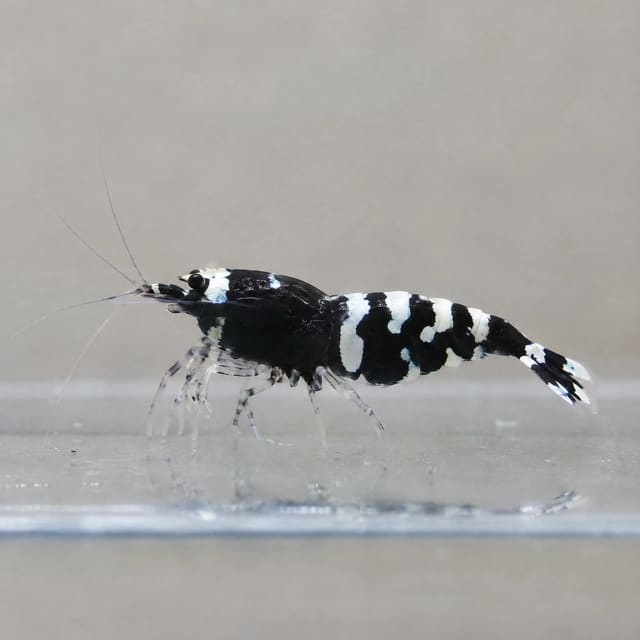
Black Pinto Taiwan Bee Shrimp (Caridina cantonensis)
20–25°C · pH 5.5–6.8 · 20L
£44.99
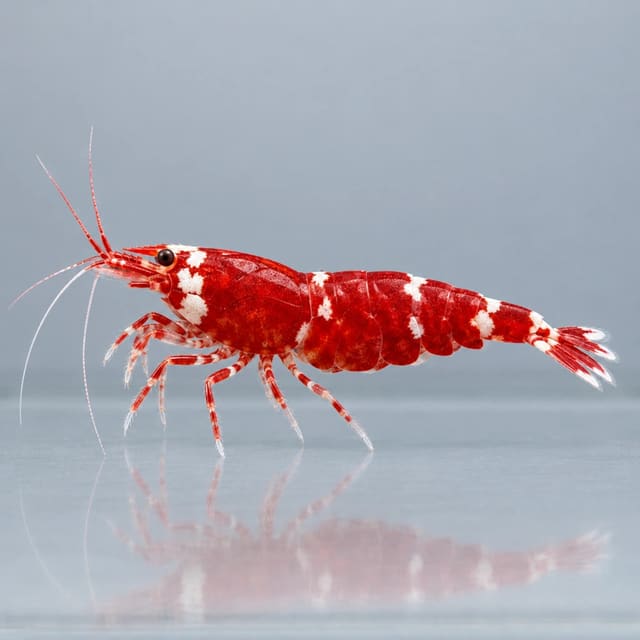
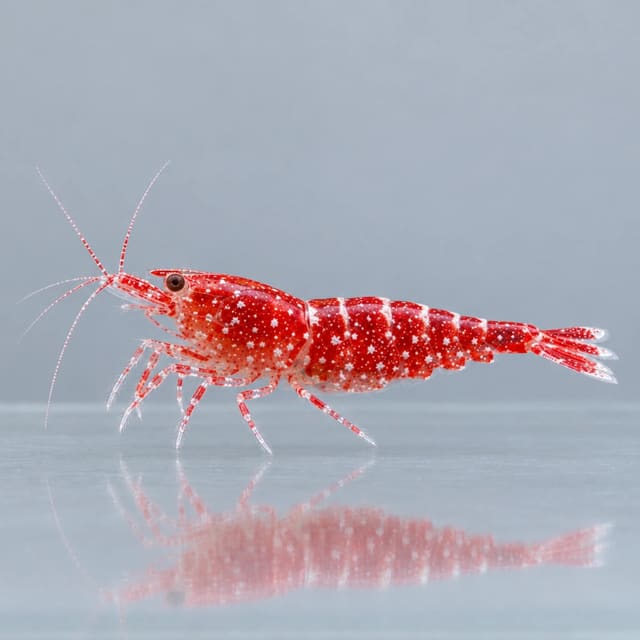
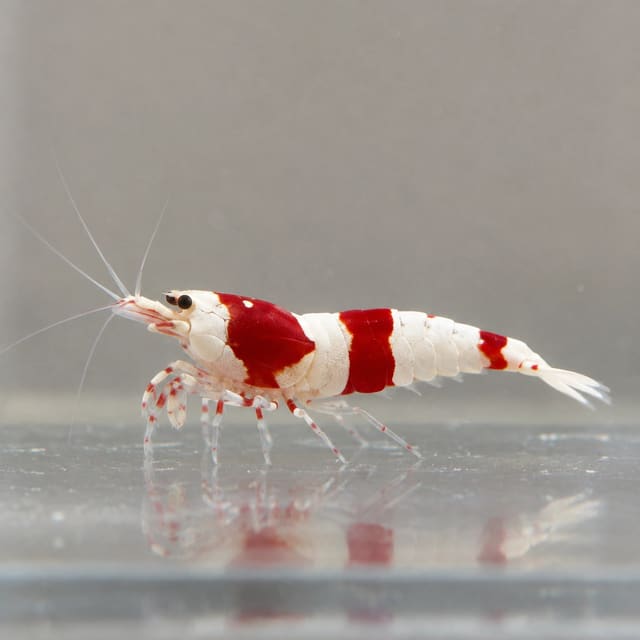
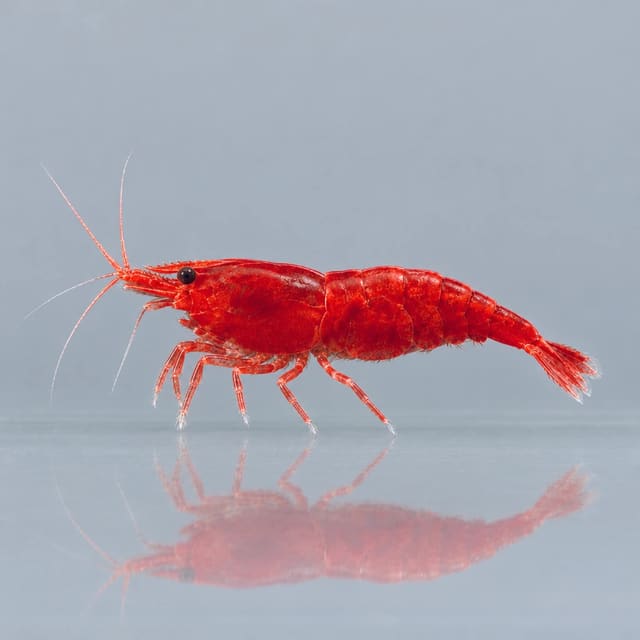
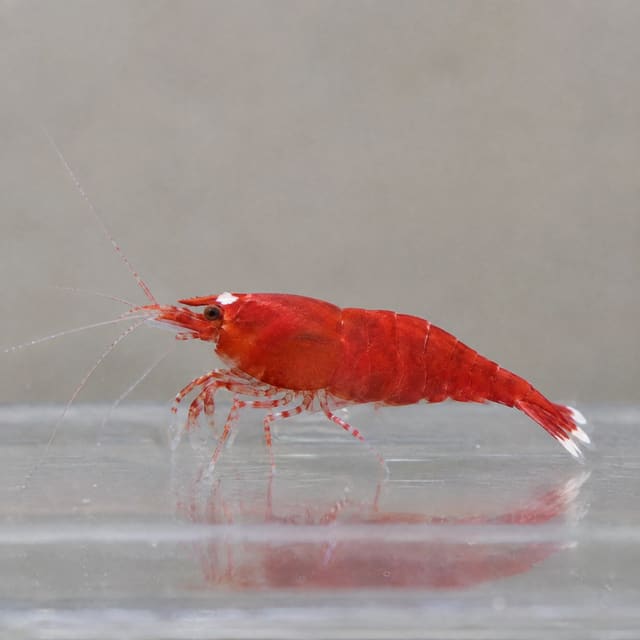
The high grade Red Tiger Shrimp is a selected red form of the tiger shrimp group (Caridina), deep red with dark bands across the body and banded legs. Keep a group of five or more in a mature tank with soft, slightly acidic, very clean water at about 18–23°C. Sold singly as one live shrimp.
Caridina sp.
Choose a quantity for your aquarium. Discount thresholds are pricing offers, not a stocking recommendation.
The high grade Red Tiger Shrimp is a selected red form of the tiger shrimp group (Caridina), deep red with dark bands across the body and banded legs. Keep a group of five or more in a mature tank with soft, slightly acidic, very clean water at about 18–23°C. Sold singly as one live shrimp.
Read the full care guidance when planning conditions for your aquarium.
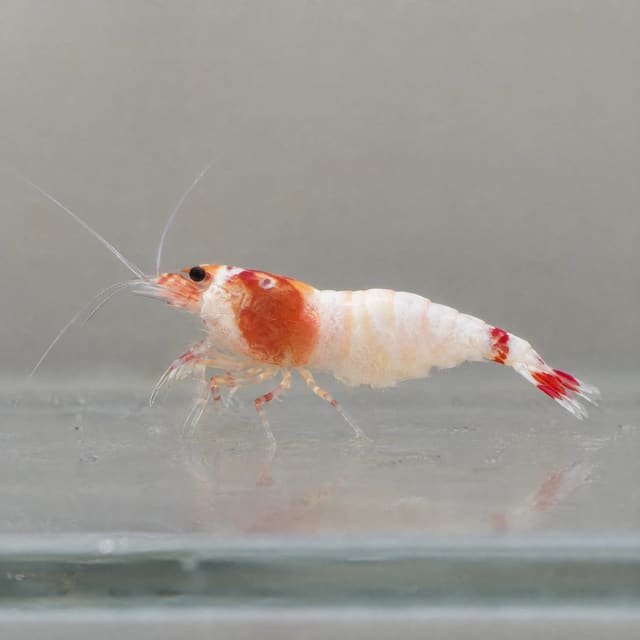
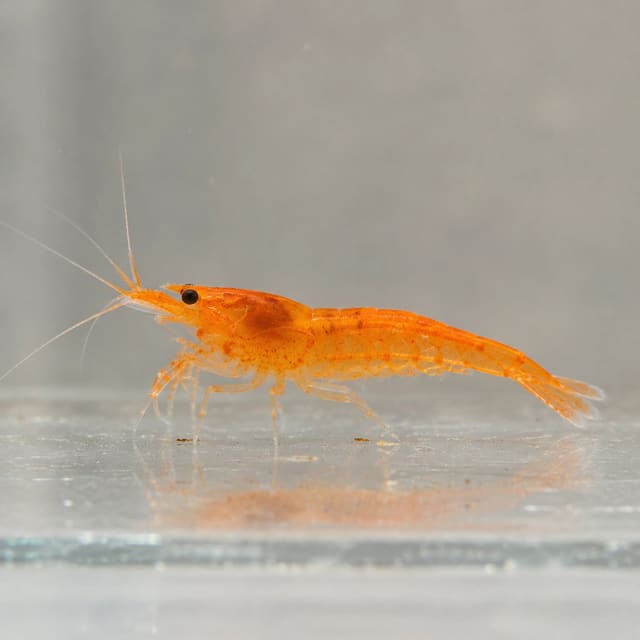
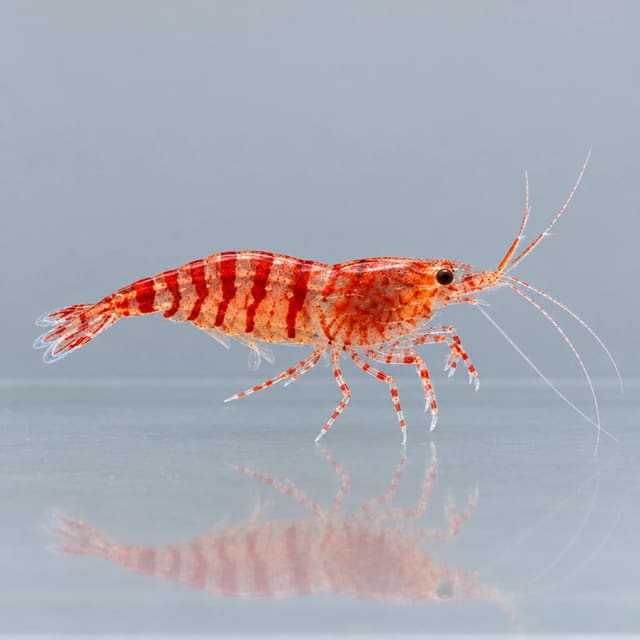
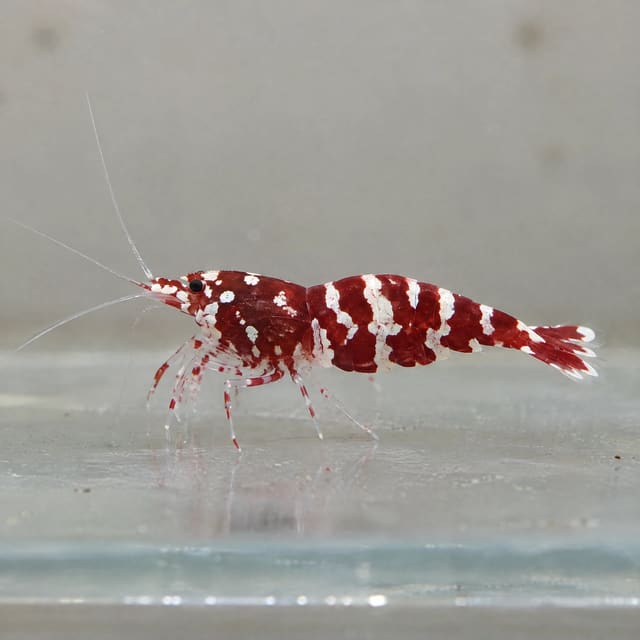
The high grade Red Tiger Shrimp is a dwarf freshwater shrimp from the tiger shrimp group of Caridina, bred for a deep red body crossed by darker wine-red bands. The shrimp in our photographs carries those bands from the back of the head right along the tail, with red and white banded legs and long, banded antennae. It is a natural next step for keepers who have already succeeded with cherry shrimp and want a striped shrimp, as long as they are willing to prepare soft, slightly acidic water.
The wild tiger shrimp was only given a scientific name in 2014. Seriously Fish reports that Werner Klotz and Thomas von Rintelen described it as Caridina mariae, after it had long been treated as a colour variant of Caridina cantonensis. Their peer-reviewed paper in Zootaxa was based on shrimp collected from hill streams in Guangdong Province and Hong Kong between 2004 and 2013, using both body shape and DNA. The same Seriously Fish report illustrates a red colour mutation that appeared in an aquarium population of C. mariae descended from shrimp collected near Conghua City, which shows how a red tiger can arise in captivity.
| Name | What it tells you |
|---|---|
| Red Tiger Shrimp | The trade name for a red-bodied, dark-banded tiger shrimp form |
| High grade | Selected for a deeper red and cleaner, darker banding than ordinary stock |
| Caridina mariae | The wild tiger shrimp, from southern China, named in 2014 |
| Caridina cantonensis | The closest relative, and the name tiger shrimp were once sold under |
| Caridina sp. | How we label this line, because the exact ancestry of aquarium tiger lines is not documented |
There is no published grading standard for tiger shrimp that we can point you to, so instead of relying on the word "high grade" we describe what the photographs show and let them set your expectations.
One purchase quantity supplies one live Red Tiger Shrimp. Shrimp are not sexed at sale size. Colour depth and the exact banding differ from shrimp to shrimp, and a newly moved shrimp is often paler for a while, so the photographs show the colour form rather than the individual you will receive.
This is the single most important decision with a Red Tiger. Practical Fishkeeping's introduction to shrimp explains that the Caridina bee and tiger shrimp prefer slightly cooler, softer and more acidic water than cherry shrimp, and that most keepers use pure reverse osmosis (RO) water with a mineral product added back. It also says they are not really difficult once the water is right.
| Source | Temperature | pH | General hardness | Carbonate hardness |
|---|---|---|---|---|
| Practical Fishkeeping (bee and tiger shrimp) | 18–23°C | 6.0–6.8 | 5 GH | 0–2 KH |
| Wikipedia, Caridina mariae | 18–24°C | 6.0–7.5, about 6.5 preferred | "very clean, soft water" | not given |
| Practical Fishkeeping salt review (tiger shrimp grouped with Neocaridina) | not given | about 7.0–7.5 | 6–8 GH | not given |
| Wild swamp habitat near Conghua (Seriously Fish) | not given | 7.0 | conductivity 40 µS | not given |
| Our planning range | 18–23°C | 6.5–7.0 | 5–8 GH | 0–2 KH |
The sources do not agree exactly. The temperature is where Practical Fishkeeping and Wikipedia overlap; the pH runs from Wikipedia's preferred 6.5 to the 7.0 measured in the wild swamp; the hardness runs from Practical Fishkeeping's 5 GH to the 6–8 GH that its salt review gives for tiger shrimp. Aim for the middle and, above all, keep the values steady.
Test your tap water's GH and KH before buying, or compare it with our water matcher. If it is far harder than the planning range, Practical Fishkeeping's advice is RO water remineralised with a GH booster; its salt review notes a typical dose of about 6 g per 20 litres of RO water and stresses that such salts are made for RO water, because they cannot soften tap water. If preparing water is not for you, a cherry shrimp such as our Super Red Sakura Shrimp or anything in our cherry shrimp range will thrive in medium-hard water with far less effort.
OATA gives 10 litres as the minimum for a group of small shrimp and adds that bigger is generally more stable. We recommend 20 litres or more for Red Tigers, because soft, lightly buffered water changes more quickly in a small volume, and a breeding group keeps growing.
Avoid limestone and similar rocks in a soft-water tank. Practical Fishkeeping suggests a drop of vinegar as a quick test: if the rock fizzes, it contains lime and will harden the water.
Practical Fishkeeping's author prefers air-driven sponge filters for shrimp, because the sponge becomes a grazing ground for young shrimp. Whatever filter you use, cover the intake: Wikipedia notes that young tiger shrimp can be pulled into filter intakes.
Our shrimp-keeping guide covers filter choice and water changes for every kind of dwarf shrimp.
A mature tank feeds Red Tigers around the clock with biofilm and soft algae. OATA describes shrimp as mainly herbivorous grazers and suggests algae wafers or shrimp pellets two or three times a week, left in for at least 30 minutes, with care not to overfeed. Practical Fishkeeping's author feeds every other day and also offers blanched stinging nettle, dandelion, spinach, courgette and cucumber.
| Step | What to do |
|---|---|
| Choose the food | Small sinking pieces such as our Caridina nano sticks, or a piece of our green algae wafers |
| Portion | Less than you expect; the group should gather and clear it within a few hours |
| Placement | One open spot, on a small dish if you like, so you can see what is eaten |
| Clean-up | Remove what is left the same day; uneaten food breaks down into toxic waste |
Feed nothing on the first day after arrival, and skip a feed whenever you see food left over from the last one.
Practical Fishkeeping's acclimatisation guide describes Caridina shrimp as very sensitive to changes in water chemistry and recommends the drip method for them. Float the closed bag first so the temperatures equalise, then pour the shrimp and their water into a small dark container and siphon tank water in through airline tubing at one to two drops a second.
| Checkpoint | What to do |
|---|---|
| Before arrival | Zero ammonia and nitrite, stable temperature, GH and pH in the planning range |
| The drip | Allow one to two hours; the acclimatisation guide uses a TDS pen and stops when both waters read about the same |
| Release | Net the shrimp across and leave the container water behind |
| First day | Lights low, no food; let them find the grazing surfaces |
| Days two to seven | Small feeds only and a daily look for normal grazing |
| End of week | Full water test, then your first routine water change |
The introduction to shrimp gives a similar method, dripping for about an hour until the volume has tripled or quadrupled. The two articles differ on time, so let the water readings, not the clock, decide when to stop.
Shrimp grow by shedding their shell, and an empty shell can look like a dead shrimp. Practical Fishkeeping gives an easy rule: a moult is never coloured and a dead shrimp is never transparent. It also names failed moults as a common cause of death and links them to GH, KH and minerals that are out of balance, which is one more reason to keep the hardness steady.
| If you see | Do this first |
|---|---|
| Shrimp stuck part-way out of a moult | Test GH and KH; check the mineral dose in your prepared water |
| Deaths after a water change | Compare the new water's temperature, pH and hardness with the tank |
| Frantic swimming or shrimp on their sides | Test ammonia and nitrite and look for a copper source |
| Fluffy white growths on the body | Practical Fishkeeping names Vorticella; isolate and seek advice |
| Tiny worms on the head between the eyes | Practical Fishkeeping names the flatworm Scutariella; treatment success varies |
| Faded colour | Review stress, diet and water stability before anything else |
Treat copper as a hard limit: OATA says shrimp are very sensitive to it and even low levels can kill them. Practical Fishkeeping adds insecticides on new plants, nicotine, scented candles and flea sprays to the list of household dangers.
Practical Fishkeeping explains that Caridina crosses do not revert to a brown wild form the way cherry shrimp do; instead, mixing produces new patterns. Its list of hobby forms includes the "Tibee", a tiger x bee cross, so tigers and bee shrimp can clearly breed together. If you want pure Red Tigers, give them their own tank.
| Shrimp | Interbreeds with Red Tigers? | Water match |
|---|---|---|
| Crystal Red Bee Shrimp and other bee shrimp | Yes, tiger x bee crosses exist | Soft, acidic; a good match |
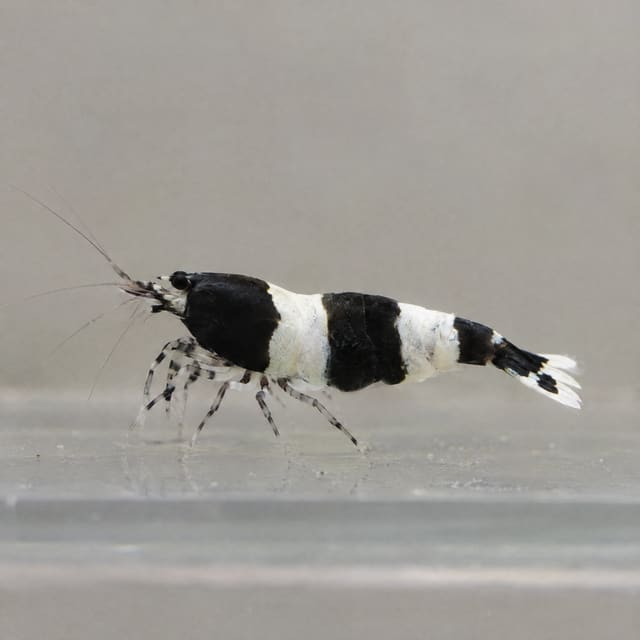
| Tiger Shrimp, Raccoon Tiger Shrimp and Fancy Tiger Pinto Shrimp | Expect mixed young | Similar soft water |
| Cherry shrimp (Neocaridina) | No; a different genus, and Practical Fishkeeping says offspring are unlikely to be viable | Prefer harder water; a compromise for both |
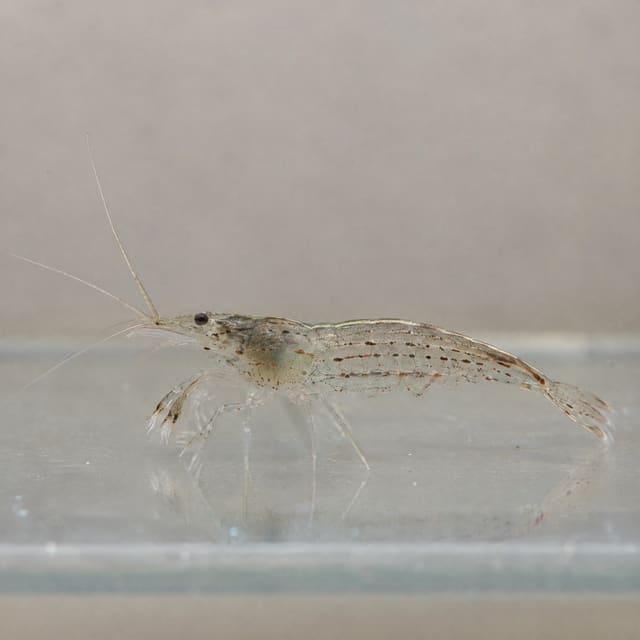
| Amano Shrimp | No; OATA notes Amano larvae need brackish water | More tolerant; up to about 5 cm, OATA notes |
Browse every species in our Caridina shrimp category or the wider freshwater shrimp category to plan one line per tank.
OATA's rule is to avoid any fish that can fit a shrimp in its mouth, and any predatory species. Practical Fishkeeping's Neocaridina FAQ, written for cherry shrimp but resting on the same size logic, calls Otocinclus the safest companions, even with newborn shrimp, and names smaller Corydoras and small plecs as possibly safe.
| Suits | Avoid |
|---|---|
| Otocinclus such as our Golden Otocinclus, if they share the soft water | Any fish large enough to swallow a shrimp |
| Snails such as our Sun Nerite Snail | Crayfish, large crabs and predatory fish |
| A shrimp-only tank, for the most young | Bee shrimp and other tigers, if you want a pure line |
| Dense moss, so even small fish leave the young some cover | Copper-based medicines or plant treatments |
See every invertebrate we keep in shrimps and crustaceans.
Tiger shrimp skip the free-swimming, feeding larval stage that Amano shrimp need. Wikipedia describes direct development, with a single non-feeding larval stage that already resembles the adult: after a gestation of about 30 days, the young are born at no more than 3 mm, already looking like small adults, and grow on through successive moults. Practical Fishkeeping notes that a moulting female releases scent that sets the males searching, and that young shrimp need nothing more than biofilm, or a little powdered spirulina as extra food.
| Stage | What the sources say |
|---|---|
| Egg carrying | About 30 days (Wikipedia, C. mariae); Practical Fishkeeping gives about three weeks as a general shrimp figure |
| Hatching | Young up to 3 mm, looking like miniature adults |
| First breeding | Practical Fishkeeping says shrimp begin breeding at about six months |
| Lifespan | Wikipedia gives 1–2 years, though without a reference; OATA says a couple of years in a well-kept tank |
To keep the colony a strong red, choose the reddest, most evenly banded adults as your breeders and move paler young to another tank. Never release shrimp or their young into ponds, streams or drains. Our freshwater shrimp buying guide compares the main shrimp groups if you are still choosing.
No. Cherry shrimp are Neocaridina davidi. The Red Tiger is a Caridina, from the tiger shrimp group, so it prefers softer, more acidic water than cherry shrimp and will not interbreed with them.
It means these shrimp were selected for a deeper red and cleaner, darker banding than ordinary stock. There is no published grading standard for tiger shrimp, so judge by the photographs, which show the form.
Not well. Practical Fishkeeping gives tiger and bee shrimp GH about 5 and KH 0–2. If your tap water is far harder, use RO water remineralised for shrimp, or choose cherry shrimp instead.
At least five, as OATA recommends for shrimp. A group settles better than one or two shrimp and is far more likely to contain both sexes for breeding.
They can. Practical Fishkeeping lists tiger x bee hybrids among the Caridina forms in the hobby. Keep them in separate tanks if you want pure Red Tigers.
Usually not in a heated room. The sources give 18–23°C or 18–24°C, so a small heater only helps if the room falls below about 18°C in winter.
Allow one to two hours. Drip tank water into the shipping water at one to two drops a second until the two waters match, as Practical Fishkeeping describes.
No. Wikipedia describes direct development: the young hatch looking like small adults after about 30 days of gestation and graze biofilm in a mature tank.
No reviews for this item yet. Bought one? Honest reviews only, good or bad.
What customers say about ordering from us
Easy website plenty of info on fish your buying great to pick a time slot
TRACEY DURRANT · 7 Oct 2026
Got some lovely fish thank you
Kevin Mackie · 7 Oct 2026
Reviews of our shop, collected by Judge.me, an independent third-party review collector. Newest first.
Moved by UK carriers licensed to handle live animals
Hand-packed with oxygen bags, poly box, heat pack
Email photos the same day; an optional unboxing video helps us review problems faster — claim terms apply
Klarna & PayPal Pay in 3 at checkout