Moderate
Amano Shrimp (Caridina multidentata)
From £3.49Some sizes on sale
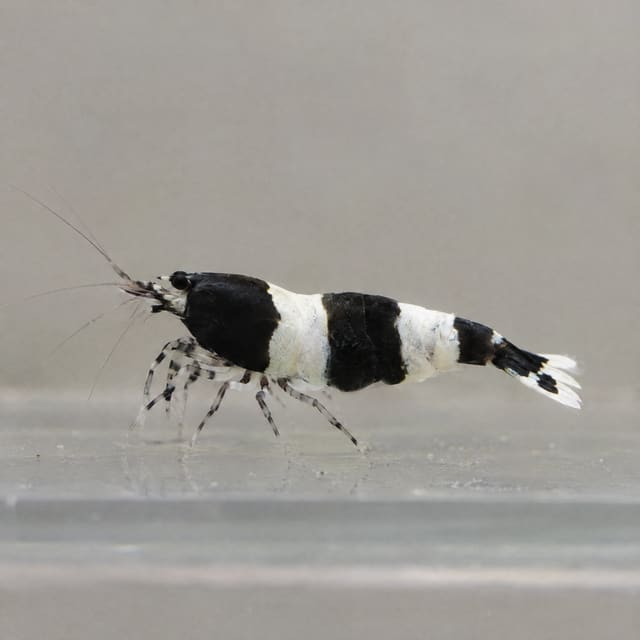
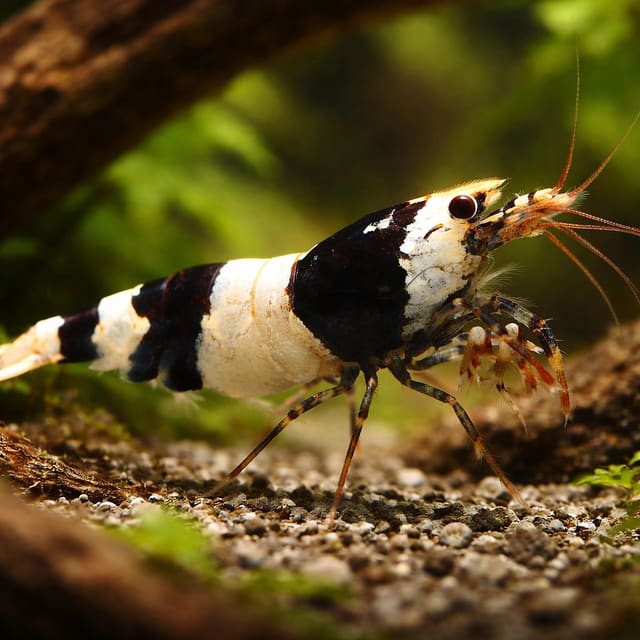
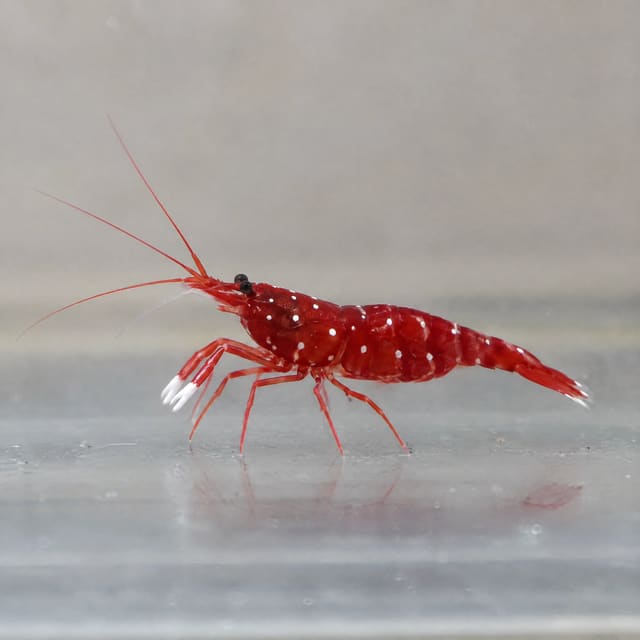
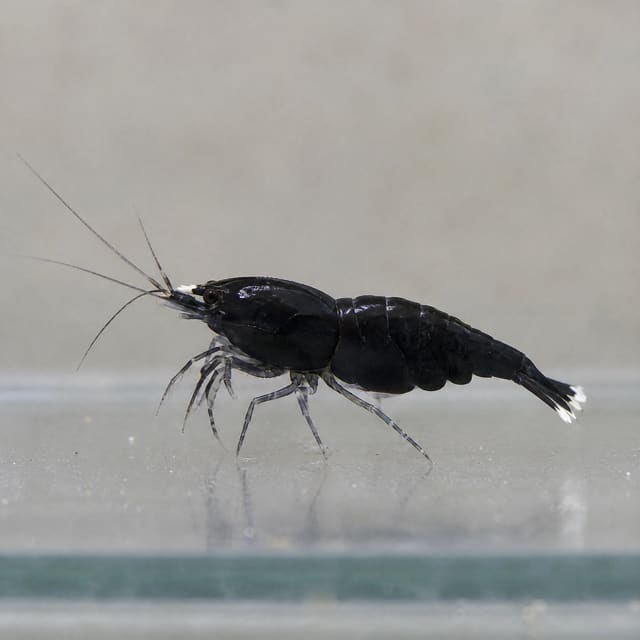
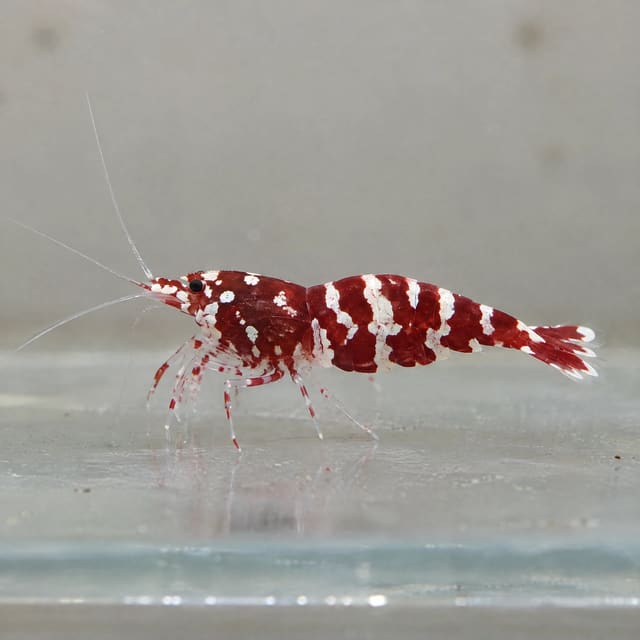
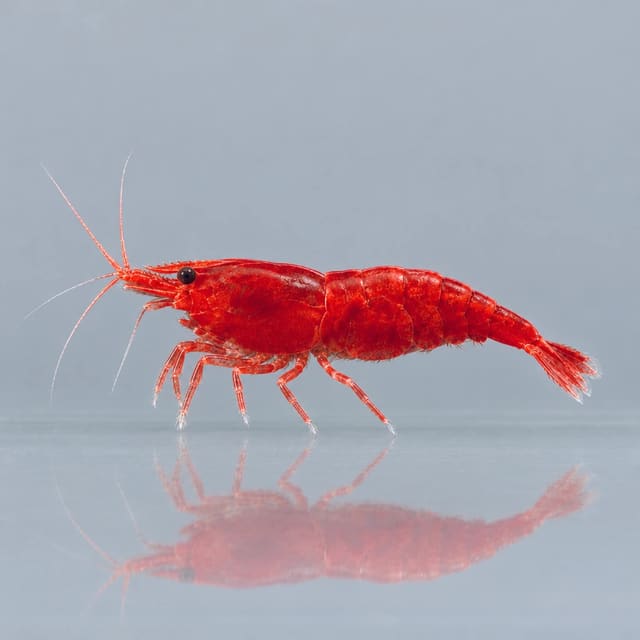
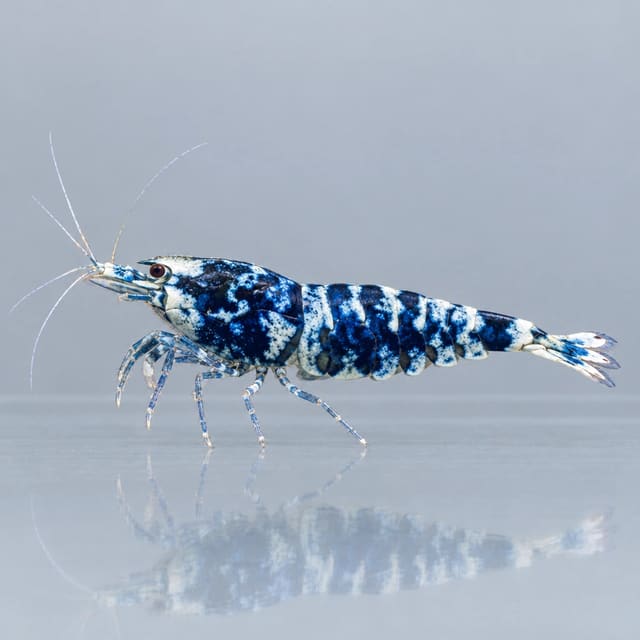
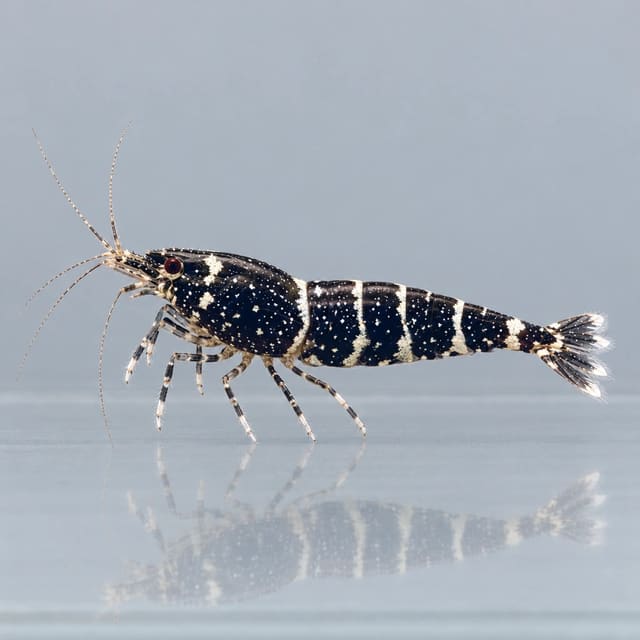
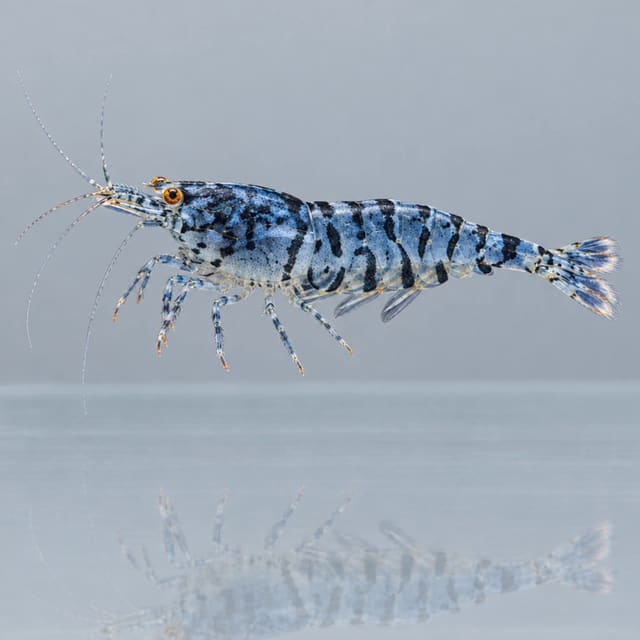
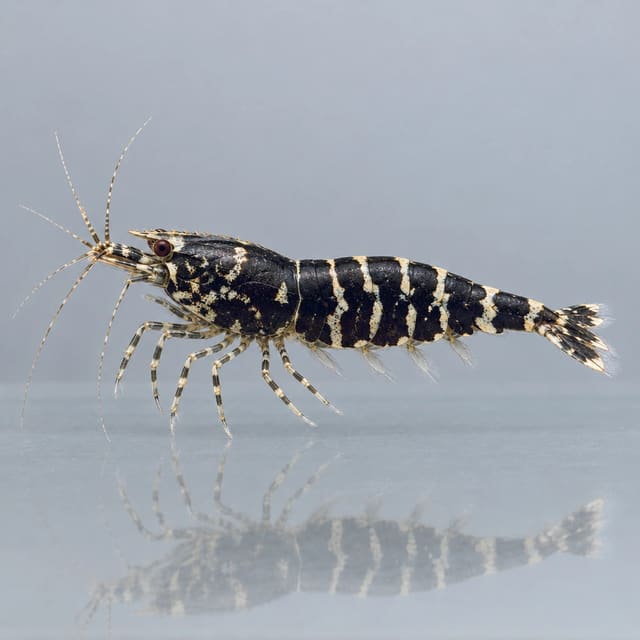
Assorted galaxy and boa shrimp are line-bred Caridina hybrids from Taiwan bee and tiger shrimp, with white mottling and star-like spots on a red or black body. Each shrimp is picked from a mixed batch, so no two match. They need soft, acidic, stable water; sold singly, keep five or more.
Caridina cantonensis × Caridina mariae (hybrid)
Choose a quantity for your aquarium. Discount thresholds are pricing offers, not a stocking recommendation.
Assorted galaxy and boa shrimp are line-bred Caridina hybrids from Taiwan bee and tiger shrimp, with white mottling and star-like spots on a red or black body. Each shrimp is picked from a mixed batch, so no two match. They need soft, acidic, stable water; sold singly, keep five or more.
Read the full care guidance when planning conditions for your aquarium.
Galaxy shrimp are dark or red dwarf shrimp scattered with white mottling and tiny star-like spots, and boa shrimp are a related pattern from the same breeding family. This assorted listing brings you one shrimp from a mixed batch of galaxy and boa patterns on red or black bases, so every shrimp is different. They are line-bred hybrids of two Caridina species, made for keepers who already have a stable soft-water tank and want something more unusual than a crystal red.
The Shrimp Farm traces the galaxy to Taiwan. Breeders first crossed Taiwan bee shrimp with tiger shrimp, giving the “TiBee”. Crossing those back to Taiwan bees gave the “TaiTiBee”, and a spotted type of TaiTiBee became known as the pinto. Galaxies were refined from pintos, first bred by Leon Su of Taiwan, known in the hobby as SKYFISH, and reached the market in the mid-2010s. Practical Fishkeeping names the TiBee and TaiTiBee crosses too. The galaxy's name comes from the spots on its cheeks, which look like small stars.
Two wild species stand behind the pattern. Bee and Taiwan bee shrimp are colour forms of Caridina cantonensis: Klotz and von Rintelen showed in 2014 that ornamental bee strains group genetically with that species. The same study described the tiger shrimp as a separate species, Caridina mariae, from Guangdong in southern China. A galaxy or boa is therefore best labelled Caridina cantonensis × Caridina mariae, and shops often simply write Caridina sp.
| Name | What it is |
|---|---|
| TiBee | Taiwan bee shrimp crossed with tiger shrimp |
| TaiTiBee | A TiBee crossed back to Taiwan bee |
| Pinto | A spotted type of TaiTiBee |
| Galaxy | Refined from pintos: white mottling and star-like cheek spots on a coloured body |
| Fishbone | A galaxy whose back stripes are joined by an unbroken line |
| Boa | A newer pattern created from fishbone galaxies; no published standard yet |
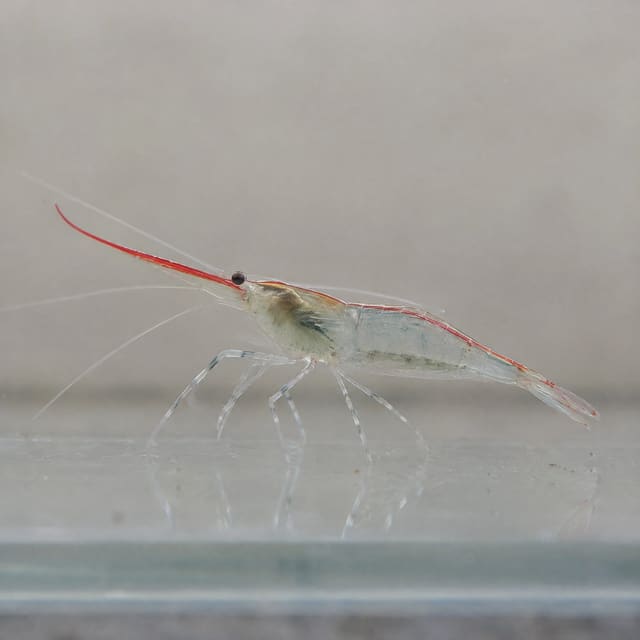
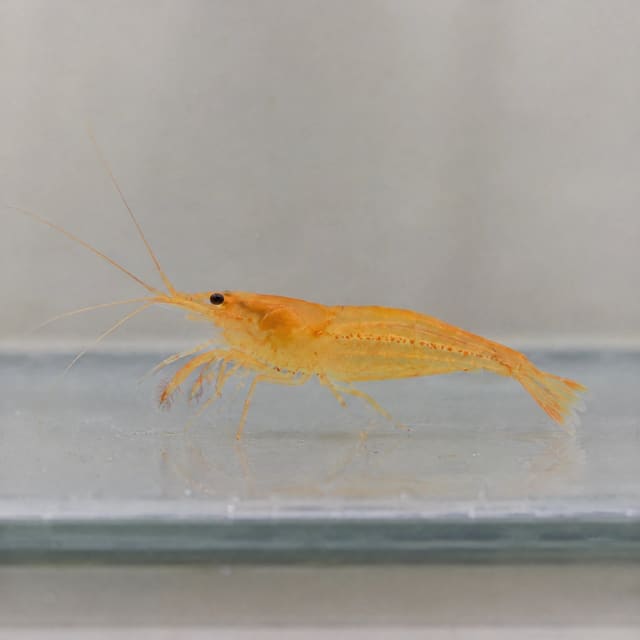
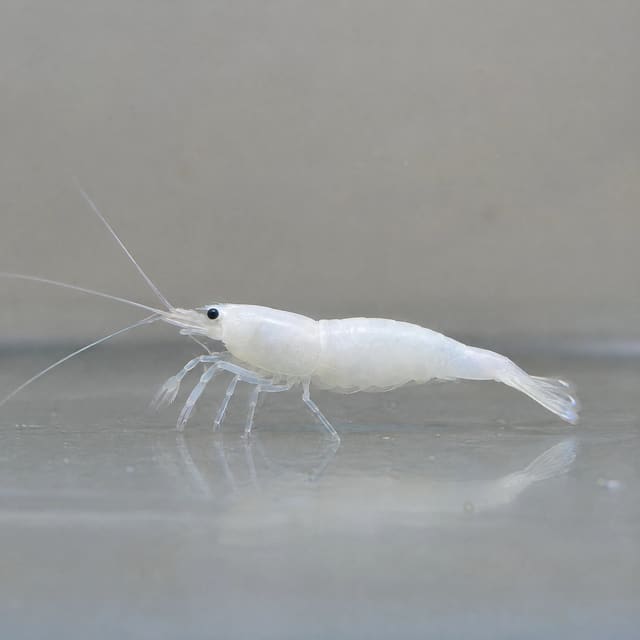
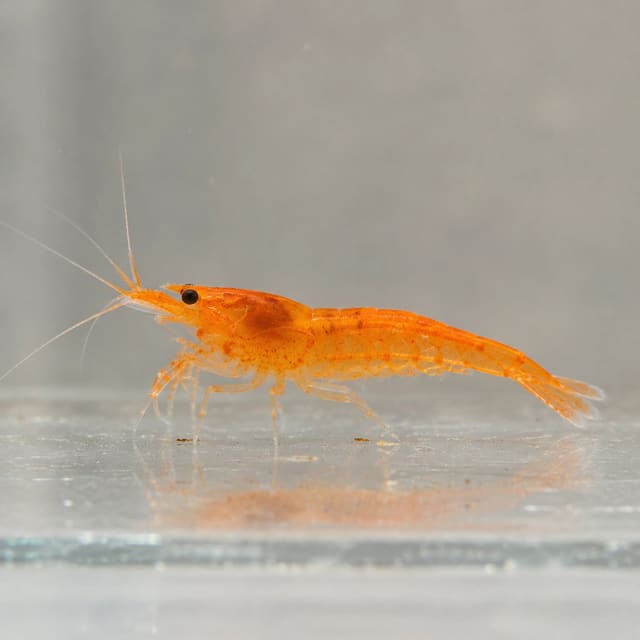
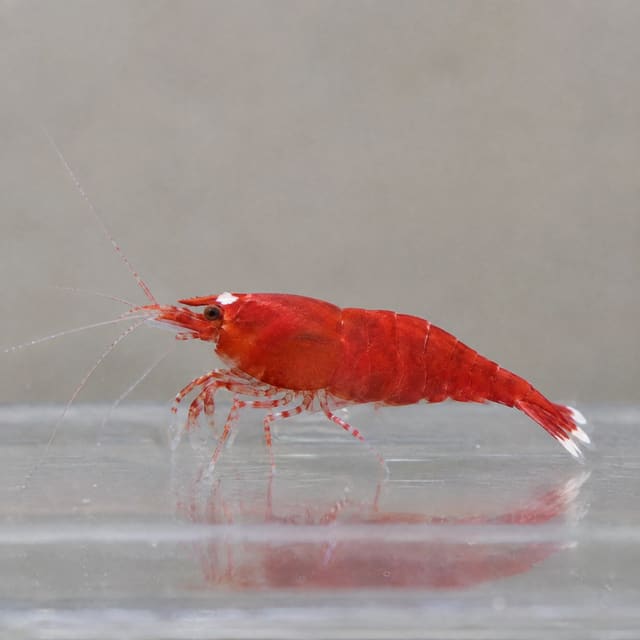
Each purchase is one live shrimp, picked from a mixed batch of red-based and black-based galaxy and boa shrimp. You cannot choose the colour or pattern. The photos show one black galaxy as an example; the shrimp you receive may be red or black, more or less spotted, with a galaxy or boa pattern. There is one option, Standard, because the shrimp is not offered in size grades.
The Shrimp Farm says red galaxies are the most sought-after, and that value rises with more white and more cheek spots, with a metallic sheen adding more. An assorted group is not graded in that way: it is a mix of what the batch contains, which is exactly why it suits keepers who enjoy variety.
Our stocking calculator helps you check the load if the shrimp share a tank.
Galaxy and boa shrimp are dwarf shrimp, and The Shrimp Farm gives a lifespan of one to two years. OATA plans around 3 cm for the small popular shrimp, and none of our sources gives a separate adult size for galaxies.
The Shrimp Farm recommends at least 5 US gallons (about 19 litres), with bigger tanks preferred for stability, an active substrate, a heater with a thermostat and plenty of cover from rocks, wood and live plants. OATA's floor is 10 litres for a group of small shrimp, and our shrimp keeping guide treats 20 litres as a cautious starting point. Find the true volume of your tank with our tank volume calculator before you add minerals.
| Item | Why |
|---|---|
| Active shrimp soil | Helps hold pH low and steady (Horvath, The Shrimp Farm); some soils release ammonia for a couple of weeks, so cycle first |
| No lime-bearing rock | Rock that fizzes with vinegar raises hardness and pH (Horvath) |
| Moss, plants and wood | Grazing surfaces and cover for berried females and young |
| Heater with thermostat | Holds the temperature steady through cold UK nights |
| Lid | OATA recommends one because shrimp can jump |
| Sponge filter or covered intake | OATA calls a filter essential; a sponge keeps newborn shrimp out of the intake |
Both parent species come from soft streams in southern China. Klotz and von Rintelen recorded pH 6.0 and a conductivity of 33 µS in Hong Kong bee shrimp streams, and pH 7.0 and 40 µS at a tiger shrimp site near Conghua. Chris Lukhaup measured brooks in the same region at 12 µS and pH 5.8. Aquarium advice follows suit:
| Source | Temperature | pH | Hardness and TDS |
|---|---|---|---|
| The Shrimp Farm (galaxy) | 20–24°C (68–75°F) | 5.5–6.8 | GH 3–6, KH 0–1, TDS 80–150 |
| Practical Fishkeeping, Horvath (bee shrimp group) | 18–23°C | 6.0–6.8 | about 5 GH, 0–2 KH |
| Practical Fishkeeping, Lukhaup (Taiwan bee-type breeding) | 17–22°C kept, 22–24°C breeding | 6.4–6.9 | 200 µS/cm conductivity |
| OATA (all small freshwater shrimp and snails) | 17–27°C | 6.5–8.0 | 4–18 dGH, 3–15 dKH |
OATA's ranges are wide because they cover hardy shrimp and snails too. For galaxies, aim for the overlap of the specialist figures: a steady 22°C, pH 6.0–6.8, GH 4–6, KH 0–1 and TDS 80–150. Keep ammonia and nitrite at zero and nitrate within 20 mg per litre of your tap water, as OATA advises. Wikipedia notes that prolonged high temperatures raise deaths and reduce egg survival in bee shrimp, so protect the tank from summer heat.
The Shrimp Farm recommends reverse osmosis (RO) water with a bee shrimp remineraliser for most tap water, and Practical Fishkeeping's Gabor Horvath says most bee shrimp keepers do the same, adding general hardness without carbonate hardness. Enter your tap water's pH and hardness in our water matcher to see how far it is from the target; Neale Monks warns that hard tap water without RO or other mineral-free water may make bee-type shrimp difficult. If you do use tap water, treat it with a conditioner from our water care range. Top up evaporation with plain RO so minerals do not build up, and use a TDS pen to keep the reading steady. Our water chemistry guide explains GH, KH and pH in plain terms.
OATA advises a 25% partial water change at least once a week, with weekly tests for ammonia, nitrite, nitrate, pH and hardness. With galaxies the key word is gentle. Lukhaup warns that young shrimp react badly to quick temperature rises and stresses good aeration, because shrimplets stay in a small area where waste can kill them. Rinse filter sponges in removed tank water, never under the tap.
| Step | How |
|---|---|
| Test | Temperature, pH, GH, KH or TDS, ammonia, nitrite and nitrate |
| Prepare | Remineralise RO water to the tank's GH and TDS and bring it to tank temperature |
| Change | Siphon about a quarter of the water from the soil surface, then refill slowly |
| Check | Count the shrimp, look for berried females and remove any uneaten food |
The Shrimp Farm suggests a good formulated shrimp food, one or two pieces a day, with leftovers removed within a few hours, and lists blanched vegetables, algae tablets, gel foods, frozen foods and Indian almond leaves as extras. It also advises leaving algae and biofilm for the shrimp to forage. OATA's guideline for shrimp is two or three feeds a week, leaving food for at least 30 minutes, so the sources differ on frequency. In a mature tank full of biofilm, less is safer.
Practical Fishkeeping calls Caridina shrimp very sensitive to changes in water chemistry and recommends drip acclimatisation. Keep the lights off. Float the sealed bag for about 10 minutes to match temperature, as OATA advises, then pour the shrimp and their water into a small clean container. Run tank water in through airline tubing at one or two drips per second and compare the TDS of both waters with a pen. When the readings are very similar, usually after a couple of hours, net the shrimp into the tank and discard the bag water. Practical Fishkeeping also notes that bag water can become more acidic during long transport, so open the box as soon as it arrives. How we pack and send live shrimp is set out on our delivery page.
OATA lists the warning signs: unusual inactivity or restlessness, paler or darker colour, more hiding, changed breathing, white spots or lesions, damaged shells or missing limbs, swelling and poor appetite. Test the water before anything else. OATA also warns that shrimp are very sensitive to copper, which can kill at low levels, so check every medicine and additive. Horvath adds that some imported plants carry insecticide residues lethal to shrimp, so use shrimp-safe plants.
The Shrimp Farm says galaxies breed more slowly than Neocaridina cherry shrimp. Berried females are hard to spot because their spotted, opaque colour hides the eggs, so a magnifying glass helps. The eggs hatch after about a month, and the young emerge fully formed, needing no special care. Horvath notes that shrimp usually start breeding at around six months.
Galaxy and boa patterns come from crossing different Caridina. Horvath explains that such crosses do not revert to a wild form but produce mixed patterns, and The Shrimp Farm says it takes many generations of selection to reach a given look, even though breeders have stabilised their lines considerably. From an assorted group, expect young with a range of colours and patterns. If you want to fix one look, The Shrimp Farm suggests selecting by pattern once the young are a few weeks old and keeping a second tank for the rest.
The Shrimp Farm advises against keeping galaxies with fish, and OATA warns against any fish that can fit a shrimp in its mouth or any predatory species. Newborn shrimp are tiny, so a shrimp-only tank is the safe choice. Run any idea through our tank mates checker.
| Suits | Avoid |
|---|---|
| More galaxy and boa shrimp | Tiger, Taiwan bee, crystal red or crystal black shrimp, which would cross with them |
| Cherry shrimp, which will not hybridise with bee-type Caridina (Practical Fishkeeping) | Fish, especially any able to eat shrimp |
| Mosses and shrimp-safe plants | Ramshorn snails in very soft, acidic water, where The Shrimp Farm says their shells can dissolve |
| Leaf litter and wood for grazing | Copper-based treatments |
For a single pattern rather than a mix, the Fancy Tiger Pinto Shrimp comes from the same tiger and bee crosses, and the Red Pinto Taiwan Bee Shrimp and Black Pinto Taiwan Bee Shrimp show the spotted pinto pattern the galaxy was refined from. The plain Tiger Shrimp represents the tiger parent, and the King Kong Taiwan Bee Shrimp and Red Ruby Taiwan Bee Shrimp the Taiwan bee side. Explore more in the Caridina shrimp category, the freshwater shrimp category and our full shrimps and crustaceans range.
OATA reminds keepers that it is illegal to release aquarium animals or plants into the wild, and hybrid shrimp are no exception. Put old soil, plants and water in household waste or down the drain, never into ponds or streams.
A patterned dwarf shrimp with white mottling and star-like spots on a dark or red body. The Shrimp Farm explains that galaxies were refined from pinto shrimp, which come from crosses between Taiwan bee and tiger shrimp, and were first bred in Taiwan in the mid-2010s. The name comes from the spots on the cheeks that look like little stars.
A newer pattern from the same family. The Shrimp Farm notes that fishbone galaxies, whose back stripes join in an unbroken line, were used to create the boa. There is no published standard for the boa pattern, so treat it as a sister pattern of the galaxy rather than a separate kind of shrimp.
No. This is an assorted listing: each shrimp is picked from a mixed batch of red-based and black-based galaxy and boa shrimp, so colour and pattern cannot be chosen. Order several for a varied group.
They need the same soft, acidic, stable water and a little more precision. The Shrimp Farm gives pH 5.5–6.8, 20–24°C, GH 3–6, KH 0–1 and TDS 80–150 for galaxies, and recommends RO water with a remineraliser in most areas. Keep them in a mature tank and change the water gradually.
Not reliably. Breeders have stabilised their lines considerably, but the pattern comes from crosses, and Practical Fishkeeping explains that mixed Caridina produce new patterns rather than reverting to one look. Expect a range of patterns among the young, especially from an assorted group.
At least five. OATA recommends groups of five or more because shrimp are social, and a larger group gives you both sexes. Each purchase is one shrimp.
The Shrimp Farm advises against fish, and OATA warns against any fish that can fit a shrimp in its mouth. Newborn shrimp are tiny, so a shrimp-only tank is the safest home. Cherry shrimp can share it, as they will not cross with these Caridina.
No reviews for this item yet. Bought one? Honest reviews only, good or bad.
What customers say about ordering from us
Easy website plenty of info on fish your buying great to pick a time slot
TRACEY DURRANT · 7 Oct 2026
Got some lovely fish thank you
Kevin Mackie · 7 Oct 2026
Reviews of our shop, collected by Judge.me, an independent third-party review collector. Newest first.
Moved by UK carriers licensed to handle live animals
Hand-packed with oxygen bags, poly box, heat pack
Email photos the same day; an optional unboxing video helps us review problems faster — claim terms apply
Klarna & PayPal Pay in 3 at checkout