Moderate
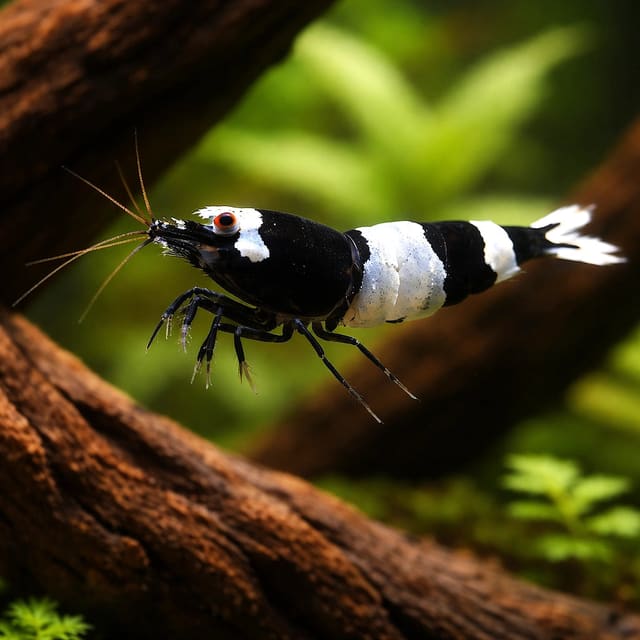
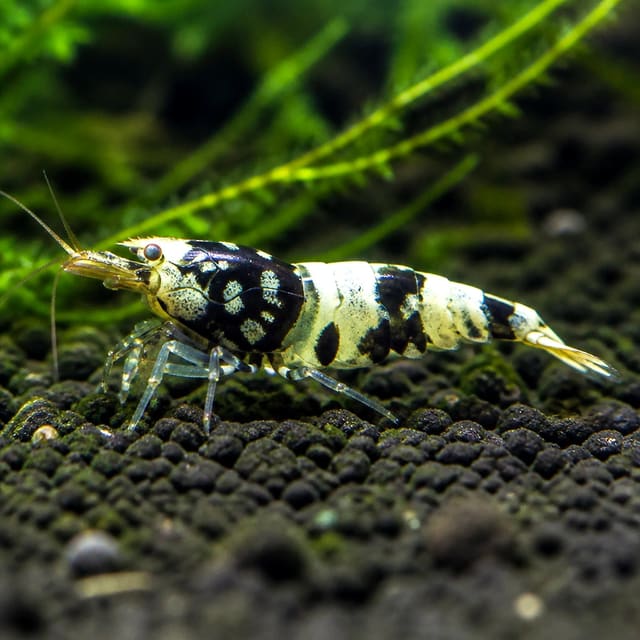
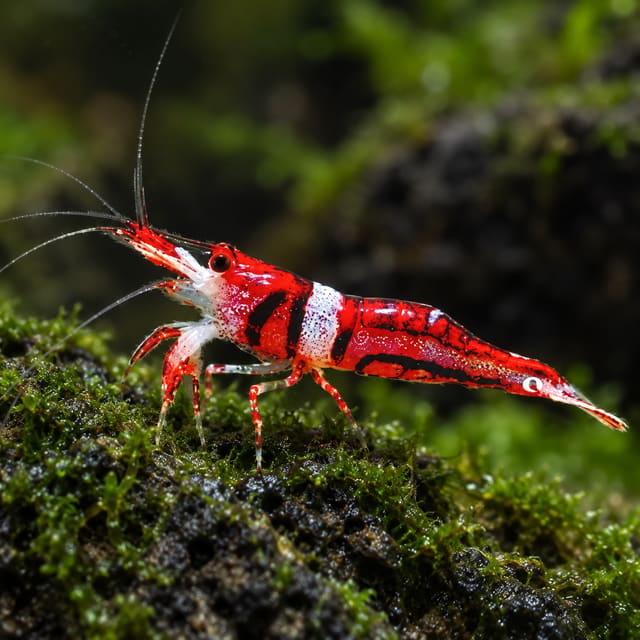
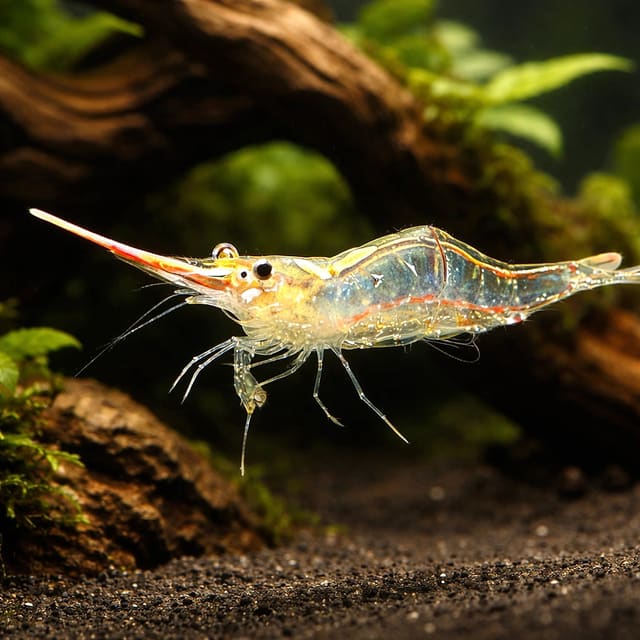
Red Nose Pinocchio Shrimp (Caridina sp.)
17–27°C · pH 6.5–8
£6.99

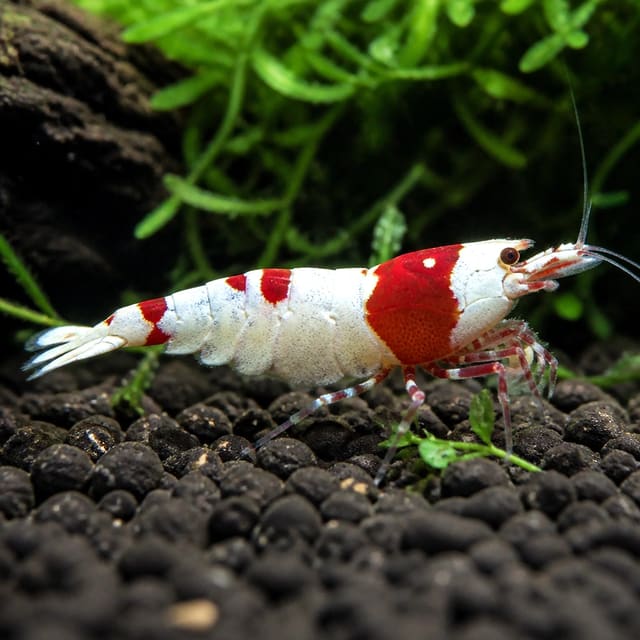
Cardinal Sulawesi shrimp with vivid red patterning, ~1.3cm. Expert care, peaceful; 24-28C, pH 7.8-8.5, 30L+ or species tank.
Adult size is the maximum length this species reaches at full maturity (scientific sources). The livestock you receive will be younger and smaller. Product-photo provenance and any image-specific limitations are stated on the listing.
Caridina dennerli
Lives in groups: kept together they stay settled, active and show their best colour.
Cardinal Sulawesi shrimp with vivid red patterning, ~1.3cm. Expert care, peaceful; 24-28C, pH 7.8-8.5, 30L+ or species tank.
Adult size is the maximum length this species reaches at full maturity (scientific sources). The livestock you receive will be younger and smaller. Product-photo provenance and any image-specific limitations are stated on the listing.
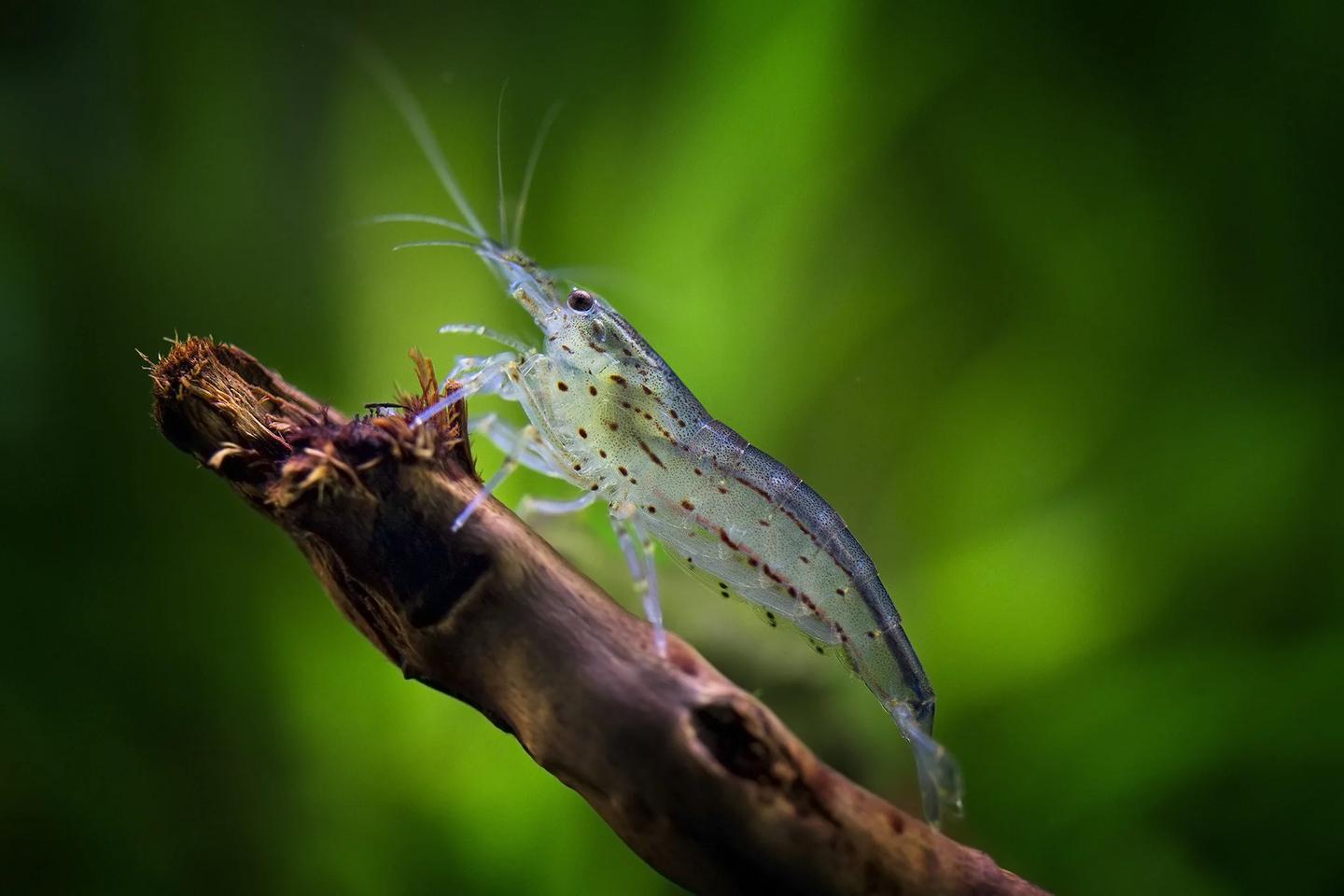
Start with a mature, filtered aquarium. OATA's broad UK guidance suggests approximately 20 litres for Amano Shrimp and at least five for social shrimp, with a larger aquarium when fish are present. Treat those as cautious planning screens—not biological minima or a per-litre formula. Match the complete adult community, test your water, protect the filter inlet and never buy them as a guaranteed algae cure.
Maintain these water conditions for optimal health and vibrant colors
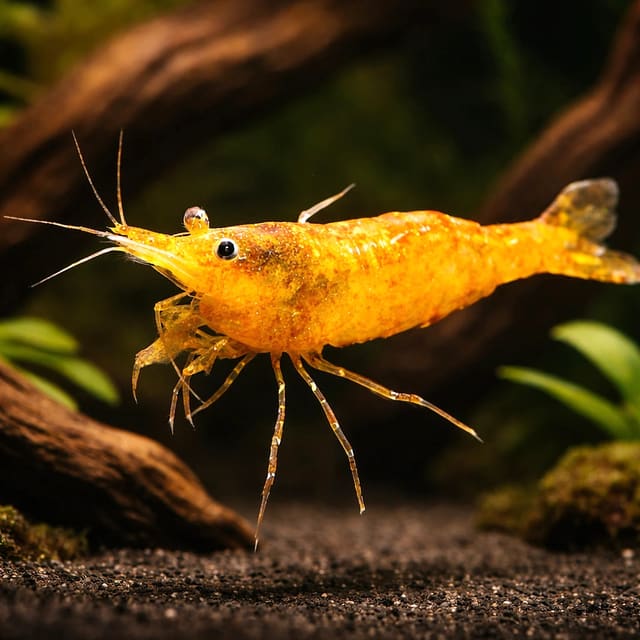
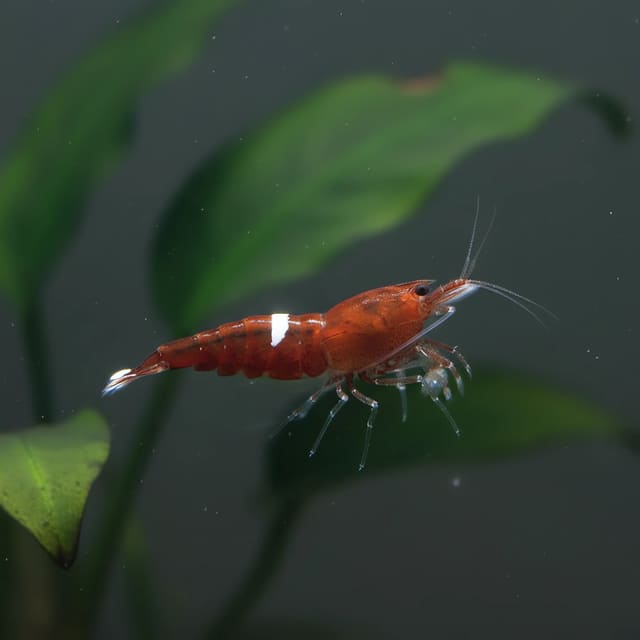
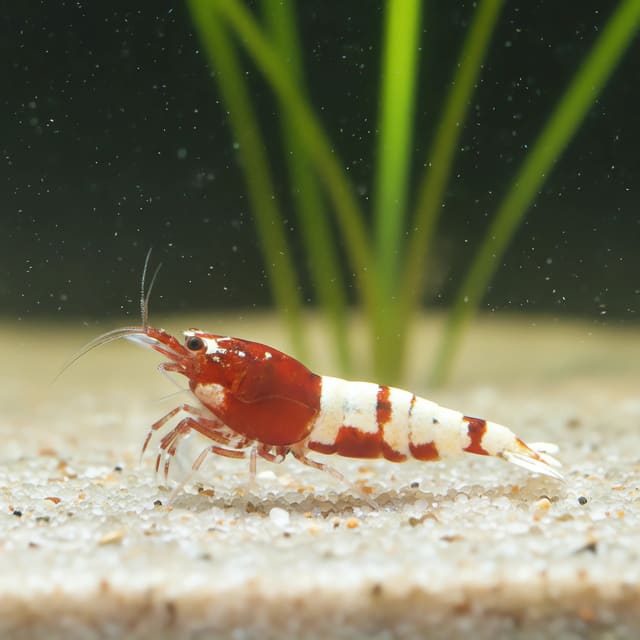
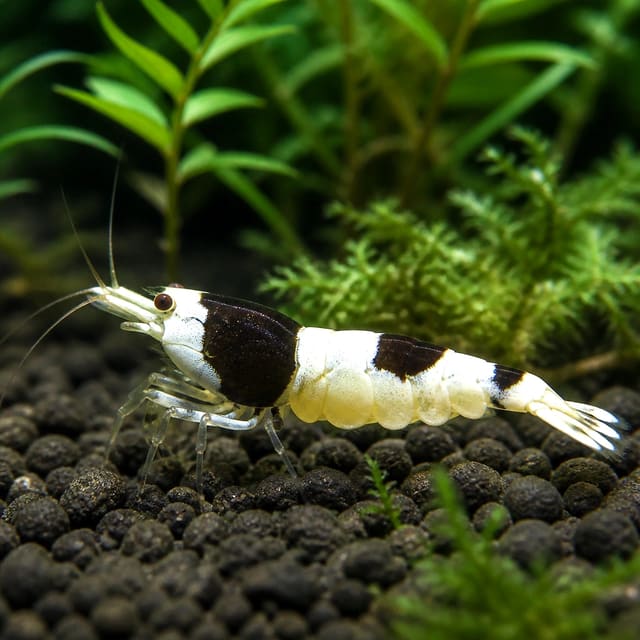
Among Sulawesi shrimp, the Cardinal is the one most keepers recognise on sight — vivid patterning carrying the deep red its name promises, packed into a 1.3 cm Caridina. The record rates its care expert and describes a grazer in the truest sense: an omnivorous, microphagous feeder that works surfaces methodically across the bottom of the tank, hour after hour. Watching a colony do exactly that is most of the pleasure of keeping them — red at this saturation is unusual in freshwater invertebrates, and on a Sulawesi shrimp it comes paired with behaviour worth the admission price on its own.
It runs slightly cooler than some Sulawesi cousins at 24–28 °C, still paired with firmly alkaline water of pH 7.8–8.5 and hardness between 6 and 12 dGH. Thirty litres is the recorded minimum, and a shrimp-only species tank is explicitly listed among its suitable arrangements — often the simplest route to success with livestock this demanding. Expect a two-year lifespan and a completely peaceful disposition once the water is right and stays right. That slightly gentler temperature floor of 24 °C gives UK keepers a little more flexibility than the hottest Sulawesi species demand, though stability still matters more than the number itself.
If company is added, keep to the record: other peaceful dwarf shrimp, snails, and small peaceful fish with no appetite for shrimp. Cichlids, barbs, large tetras, loaches, crayfish and any predatory or shrimp-eating fish are all named exclusions — a longer-than-usual avoid list that underlines just how vulnerable a 1.3 cm grazer really is. When in doubt, leave a candidate tankmate out; the species tank option is always there.
A dedicated Cardinal colony in a warm, alkaline species tank is the arrangement the record points towards — and by some distance the most rewarding way to keep them. Build the system around stable warmth and alkaline chemistry and the Cardinal repays the preparation. UK delivery is by licensed live-animal courier with a live arrival guarantee on every order.
No reviews for this item yet. Bought one? Honest reviews only, good or bad.
What customers say about ordering from us
I have a small group of long finned mountain minnows. So was delighted to be able to order ten of this variety to increase the genetics in my tank . The ones I recieved are healthy but it’s to early to give a verdict on wether they are of a long finned type since they are small currently.
Gordon Walker · 23 Sept 2026
100% success travel and "installation". Pleased with quality of purchase. The Siamese fighter a bit "shy" so have not yet seen him at his best yet but looking good. Happy customer. GG
George E Garratt · 21 Sept 2026
Reviews of our shop, collected by Judge.me, an independent third-party review collector. Newest first.