Moderate
Amano Shrimp (Caridina multidentata)
£3.59

Red Nose Pinocchio Shrimp (Caridina sp.) is a small freshwater shrimp supplied at the stated 1–1.5 cm trade grade. Best for a mature, filtered, shrimp-safe aquarium with stable tested water and conservative tankmate choices.
Caridina sp.
Lives in groups: kept together they stay settled, active and show their best colour.
Red Nose Pinocchio Shrimp (Caridina sp.) is a small freshwater shrimp supplied at the stated 1–1.5 cm trade grade. Best for a mature, filtered, shrimp-safe aquarium with stable tested water and conservative tankmate choices.
Start with a mature, filtered aquarium. OATA's broad UK guidance suggests approximately 20 litres for Amano Shrimp and at least five for social shrimp, with a larger aquarium when fish are present. Treat those as cautious planning screens—not biological minima or a per-litre formula. Match the complete adult community, test your water, protect the filter inlet and never buy them as a guaranteed algae cure.
Maintain these water conditions for optimal health and vibrant colors
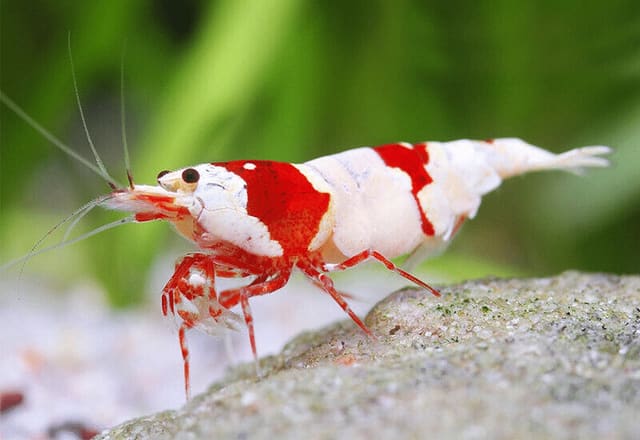
Red Nose Pinocchio Shrimp is the trade name used for this small, long-rostrumed freshwater shrimp. It is offered under the Caridina red nose trade identity and supplied at 1–1.5 cm. Keep that name as an offer label rather than treating it as proof of a wild origin, adult maximum or breeding method.
That distinction matters in practice. A shrimp can look delicate while still needing very deliberate husbandry: a fully matured biological filter, measurable zero ammonia and nitrite, gentle handling, a steady temperature and water free from unsafe copper exposure. The attraction is the fine-scale movement and clear red-nosed appearance shown in the gallery, but the purchase decision should be led by the aquarium you can maintain rather than by colour alone.
One purchase supplies one live shrimp. The stated 1–1.5 cm figure is the dispatch grade for this listing, not an adult-size promise. There is no sex-guaranteed option. Sex is guaranteed only when the selected option explicitly states male or female. This Red Nose Pinocchio Shrimp listing has no sex-guaranteed option.
This shrimp suits a keeper who already has a mature, filtered freshwater aquarium and is prepared to treat broad care figures as a starting point rather than a precise species prescription. It is especially sensible for someone willing to test the water, make small planned adjustments and screen every medication, fertiliser and tankmate for invertebrate safety.
| Suits | Think again when |
|---|---|
| A mature filter and stable test results are already in place | The aquarium is newly filled or still cycling |
| Fish can be screened by adult mouth size and predatory behaviour | Existing fish may swallow small shrimp |
| Weekly testing and careful partial water changes are realistic | Care would depend on topping up water and reacting only to visible problems |
| Every medicine and additive can be checked for invertebrate safety | Copper-based treatment may be needed in the shared aquarium |
It is a poor impulse choice for a newly filled tank, a vase without filtration, or a community where fish are selected only because they are described as peaceful. OATA's central compatibility warning is physical and easy to apply: do not mix freshwater shrimp with fish able to fit them in their mouth, or with known predators. A calm-looking fish can still investigate and eat a very small crustacean.
If you are planning a dedicated invertebrate setup, start with the practical sequence rather than a shopping list: cycle the filter, confirm stable test results, provide grazing surfaces and shelter, then add livestock gradually. Our freshwater shrimp setup guide explains that preparation in more detail.
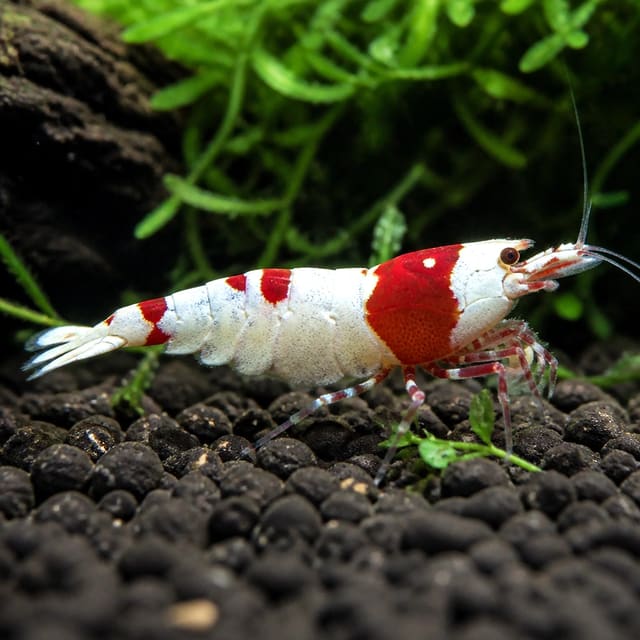
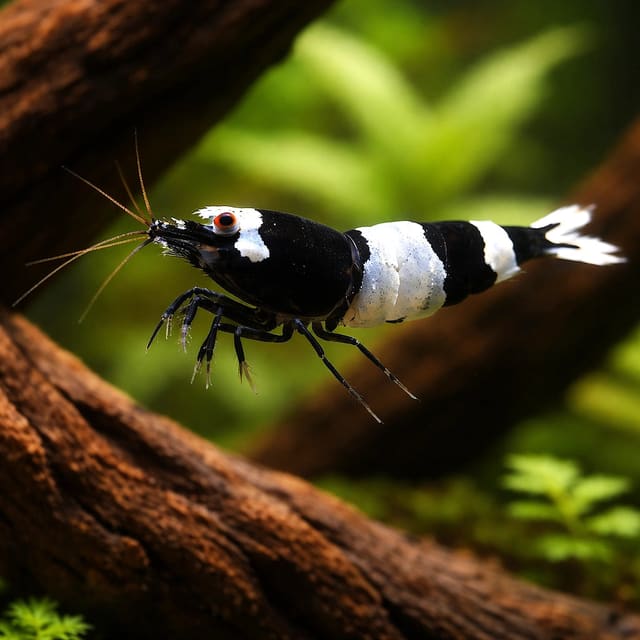
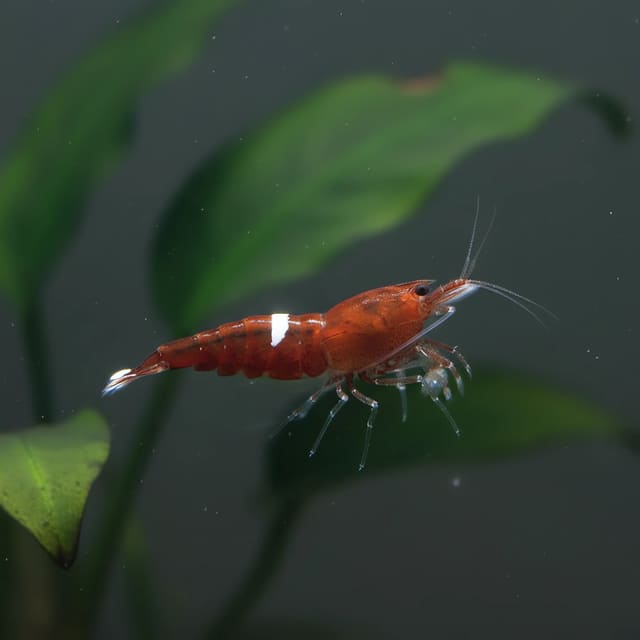
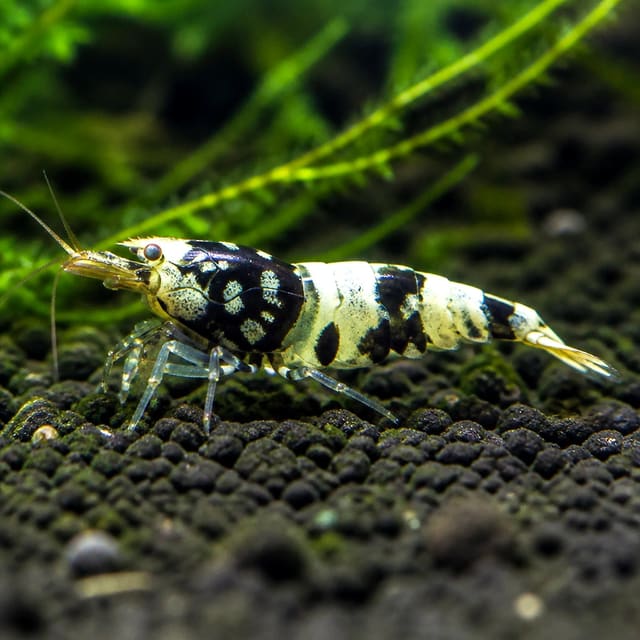
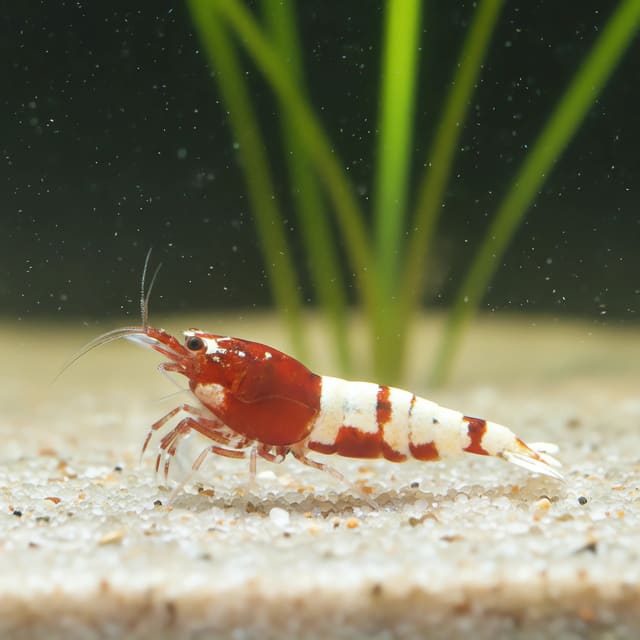
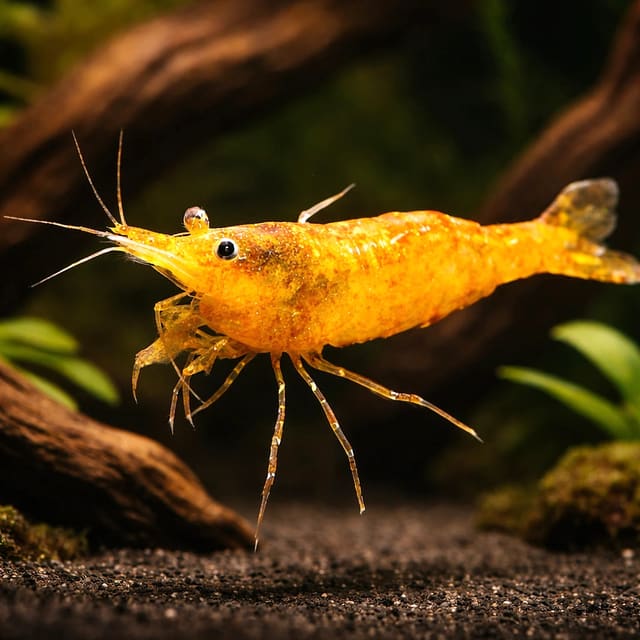
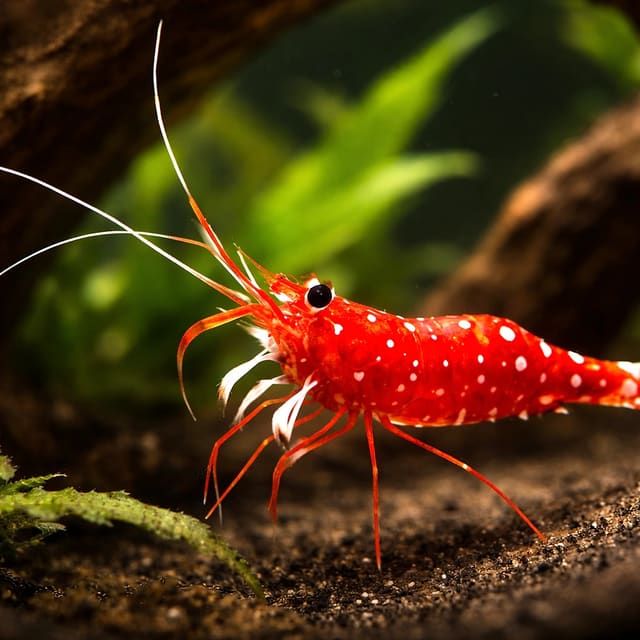
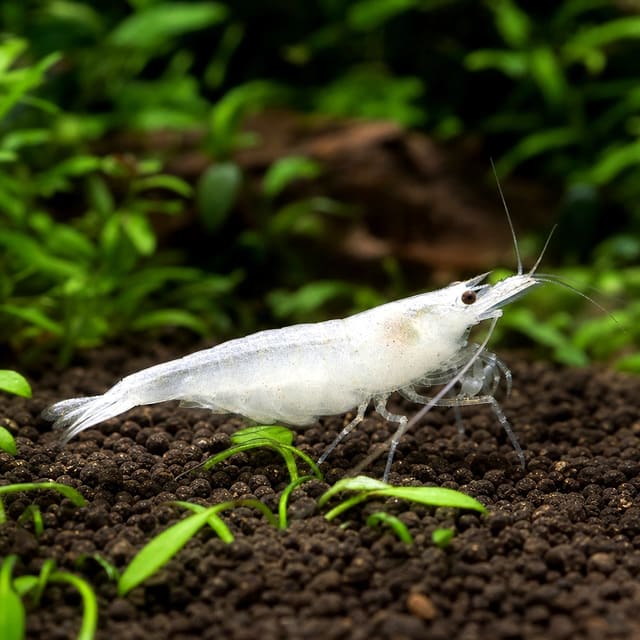
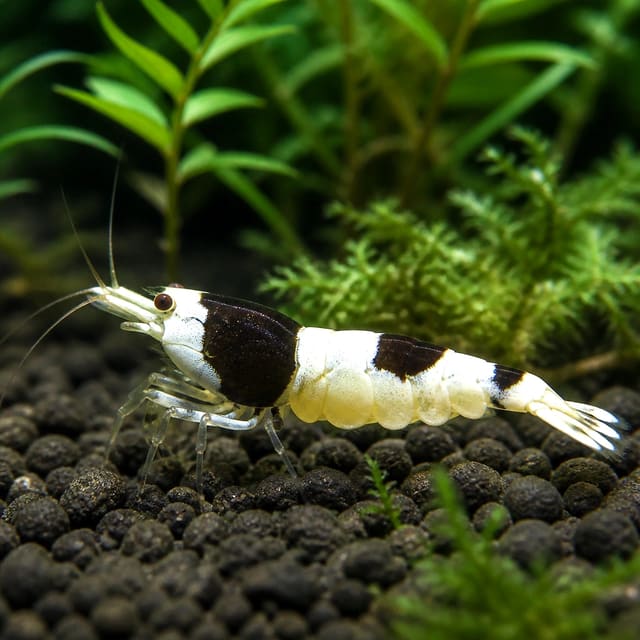
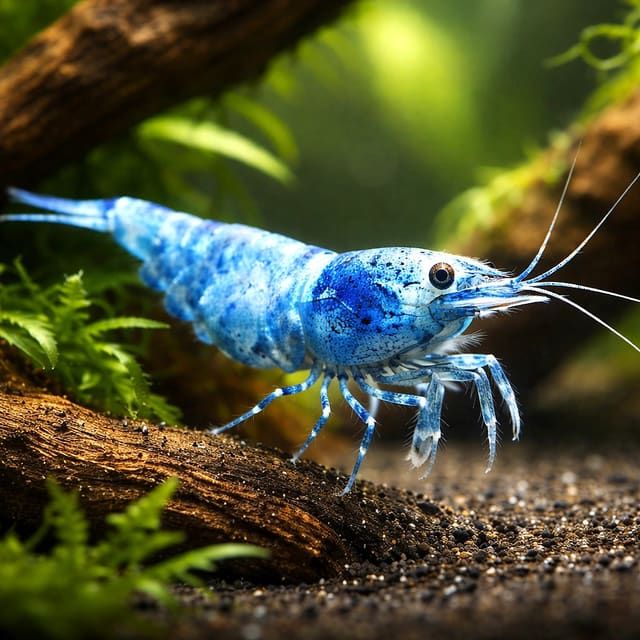
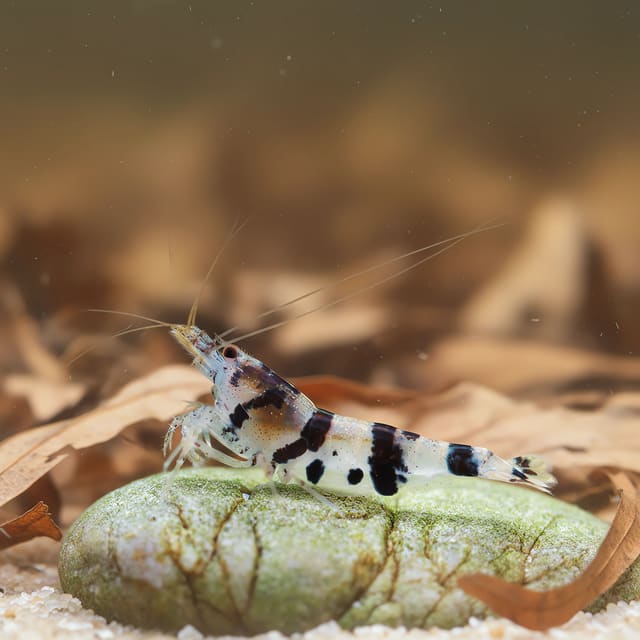
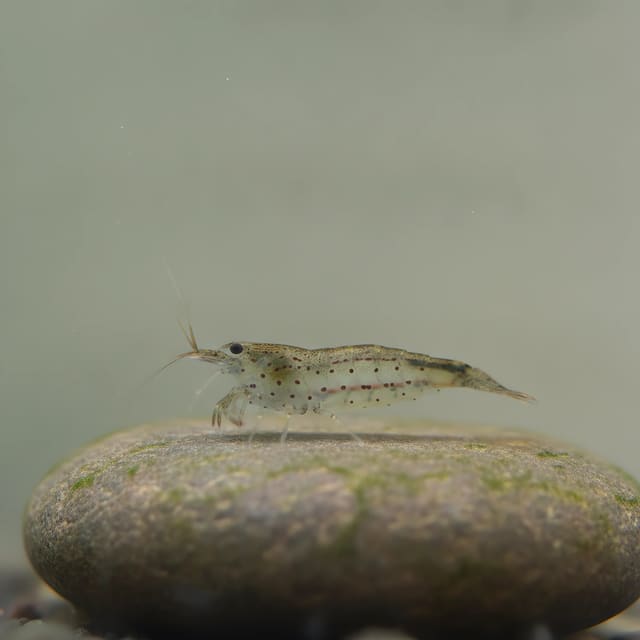
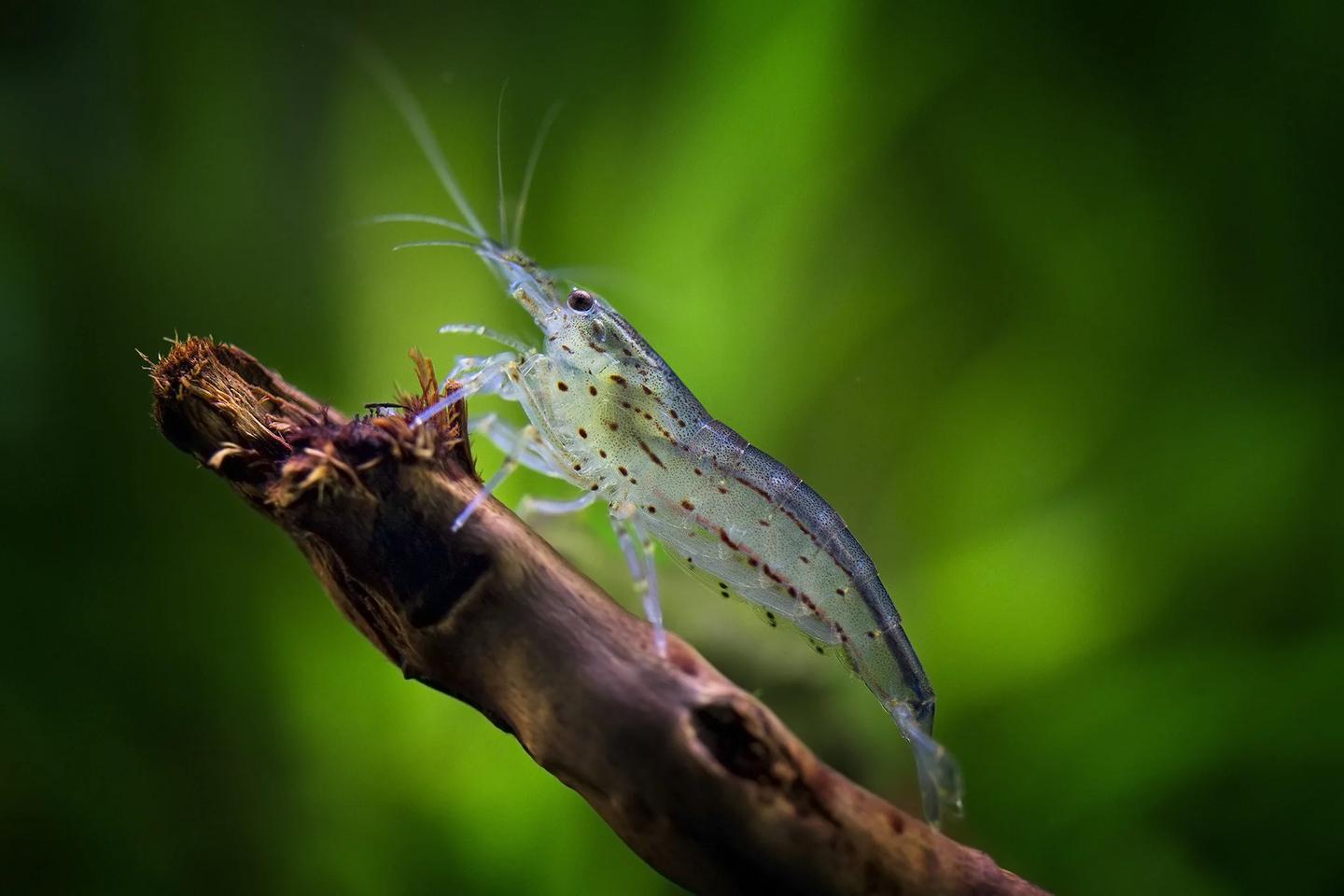
The four images show one or two translucent shrimp with an elongated red rostrum in aquarium or clean-background scenes. They are useful for understanding the general form and scale of detail you may notice, but they cannot promise the scientific identity or precise colour pattern of the animal supplied.
Gallery images have been digitally enhanced to improve image quality. Natural colour, pattern, size and maturity can vary between live animals. Lighting, background, stress, moult stage and the individual animal can all change what the eye or camera records. Use the written offer for the supplied unit and grade; use the gallery to understand the visible trade form.
You can browse the wider shrimp and crustacean collection to compare clearly named offers. Related product links on this page are comparisons, not a claim that different shrimp types should automatically share one aquarium.
OATA's UK freshwater shrimp and snail care sheet explicitly describes its parameter ranges as general guidance for the group and tells keepers to seek species-specific advice. Because this animal is offered under a trade identity, use the ranges below as broad working boundaries.
First compare the broad range with your tap water and established aquarium. Ask whether a closer target is available for the incoming stock. Record that holding-water answer before planning acclimation or any mineral adjustment. If the answer remains uncertain, avoid aggressive adjustment. Sudden changes in temperature, dissolved minerals or pH can be more disruptive than a stable value within a broadly suitable range.
Use 17–27 °C, pH 6.5–8.0, 4–18 dGH and 3–15 dKH only as OATA group-level guidance. Adult maximum, lifespan, an exact group number and a species minimum aquarium remain open planning questions, so the practical emphasis is on maturity, stability, shelter and conservative compatibility.
| Measure | Reviewed guidance and scope |
|---|---|
| Temperature | 17–27 °C under OATA's broad freshwater shrimp and snail guidance; not a species-specific optimum |
| pH | 6.5–8.0 under the same broad group guidance |
| General hardness | 4–18 dGH under broad group guidance |
| Carbonate hardness | 3–15 dKH under broad group guidance |
| Ammonia and nitrite | Zero mg/l |
| Nitrate | OATA says no more than 20 mg/l above the normal tap-water level |
Ammonia and nitrite are the immediate red flags. A mature biological filter houses bacteria that process waste through the nitrogen cycle; an aquarium can look clean while still being chemically unsafe. Test before purchase, after introducing the shrimp and whenever feeding, behaviour or maintenance changes.
Hardness deserves attention because it describes dissolved minerals and buffering rather than cleanliness. Do not chase a number with repeated additives unless you understand both the product and your baseline water. The aquarium water-chemistry guide explains what the common tests measure, while the water matcher can help organise a comparison. Neither tool turns the broad group range into a species-specific target.
A working filter is not simply a pump moving clear water. Its media supports the bacteria that convert toxic ammonia to nitrite and then to the less immediately toxic nitrate. The RSPCA describes filtration as vital, and OATA warns that adding livestock faster than the bacterial population can respond can cause new tank syndrome.
Cycle and test the aquarium before the shrimp arrives. Confirm that ammonia and nitrite remain at zero under the tank's normal feeding load. If the system has recently been cleaned, moved, medicated, heavily replanted or left without livestock, test again rather than assuming an old cycle is intact. A mature tank is a biological state demonstrated by stable results, not merely a number of days on a calendar.
Add animals gradually. Every new animal and every extra portion of food raises the amount of waste the system must process. For such a small invertebrate, the temptation is to think the bioload is irrelevant; the safer view is that its sensitivity makes early warning and steady routine more important, not less.
OATA gives at least 10 litres as broad guidance for a group of small freshwater shrimp or snails and says more space is needed when fish are included. That is not a verified minimum for this exact trade identity. Treat it as a lower group-level reference and choose the aquarium around stability, stocking and usable habitat.
Larger water volume changes temperature and chemistry more slowly. It also gives you more space for plants, wood, stones or other surfaces where natural films can develop, and more options for placing a gentle filter intake away from vulnerable animals. The benefit is not empty litres; it is a forgiving system with enough surface area and cover.
Use aquarium gravel or sand and provide live plants where practical. OATA also accepts artificial plants and suitable ornaments as cover. Check every decoration for sharp edges and every intake for a route small shrimp could enter. A sponge pre-filter can make an intake safer while adding another grazing surface, provided flow and maintenance remain adequate.
A shrimp-friendly layout should offer several kinds of surface: fine substrate, plant leaves, wood and stable hardscape. These areas are useful not because the shrimp will clean the aquarium for you, but because they collect the natural films and small food particles that freshwater shrimp commonly investigate.
Spread cover through the aquarium rather than creating one crowded hiding place. An animal moving from one side to the other should be able to pause out of direct view. This becomes especially important after moulting, when a shrimp's new exoskeleton has not fully hardened. Shelter is broad group guidance, so choose plants, caves and substrate for safety, water compatibility and ease of maintenance rather than following a compulsory recipe.
Keep the layout serviceable. You still need to reach the substrate, inspect the filter and remove uneaten food. If dense decoration traps waste where it cannot be siphoned, it has stopped helping. Aim for a balance between cover, open observation areas and straightforward maintenance.
OATA describes freshwater shrimp and snails generally as algae grazers and recommends supplementing that grazing with algae wafers or suitable commercial shrimp pellets. It advises feeding only two or three times a week, allowing at least 30 minutes for pellets or wafers to be found, and taking care not to overfeed.
Apply that advice by observing what actually happens. Place a modest portion where the shrimp can reach it, note how quickly interest develops and remove obvious excess before it softens and disperses. A quiet animal may take longer to approach food than an established group, so feeding should not become a contest with fast fish.
Algae in the aquarium is not a complete ration and this shrimp should not be bought as a maintenance tool. Equally, adding food every time the animal is visible can quickly create a waste problem. Uneaten food breaks down into the same nitrogen cycle the filter must manage. Adjust the portion to the number of animals, available natural grazing and measured water quality.
OATA strongly recommends a weekly partial water change of about 25% as broad group husbandry and weekly testing for ammonia and nitrite. The exact routine may need adjustment for the aquarium, but a modest, repeatable schedule is safer than waiting for a visible crisis and then making a very large correction.
Treat replacement tap water with an appropriate conditioner before it reaches the animals. Match temperature reasonably and avoid rapid shifts in chemistry. Siphon accessible solid waste without stripping every surface. The goal is to export waste while preserving the mature biological system and the useful grazing environment.
Check the filter for blocked flow. If media needs cleaning, rinse it lightly in the aquarium water removed during the change rather than under the tap; chlorine or chloramine may kill the beneficial bacteria established in the media. Do not replace all media at once unless the manufacturer and an urgent contamination problem make that unavoidable.
Record test results. A short note of date, temperature, pH, ammonia, nitrite and any unusual behaviour is far more useful than memory when a pattern changes. It also helps you distinguish a one-off reading from a trend that needs action.
OATA warns that freshwater shrimp and snails are very sensitive to copper and will die if exposed even to low levels. Before using a medicine, fertiliser, algae treatment or tap-water additive, read the label for invertebrate safety and the actual active ingredients. A product tolerated by fish is not automatically safe for shrimp.
If treatment is needed, do not improvise a dose or combine products. Confirm that the diagnosis, product and aquarium volume are correct, and seek qualified advice where there is uncertainty. Treat the cause only with a shrimp-safe product and a dose calculated for the true water volume.
Contamination can also come from tools, buckets or ornaments previously used with medication. Keep shrimp equipment clearly identified where practical. After any suspected exposure, test what can be tested, increase observation and obtain expert advice promptly rather than adding another chemical to counter the first.
Be present on the confirmed delivery day and have the mature aquarium, conditioner and testing equipment ready. Inspect the outside of the parcel before opening it. If there is a concern, the store's Live Arrival Guarantee process requires a continuous unboxing video showing the parcel sealed, the opening and the animal still inside its sealed bag.
The store policy says to float the bag for 20–30 minutes before release and not to pour transport water into the aquarium. Keep the bag away from strong light and avoid leaving it unattended. Temperature equalisation is only one part of a careful transfer; the most important preparation is that the receiving aquarium already has stable, suitable water.
Read the current delivery and Live Arrival Guarantee policy before the parcel is due, because it contains the claim conditions and contact route. The video is evidence for a claim, not a biological care requirement after a healthy arrival.
Spend the first days watching patterns rather than expecting constant display. OATA recommends watching freshwater shrimp for changes in activity, colour, feeding, breathing effort, body condition, swelling, lesions, abnormal growths, exoskeleton damage or lost appendages. One hidden period does not prove illness, but a combination of changes deserves investigation.
Start with water tests because ammonia, nitrite and a sudden parameter shift can affect every animal. Check equipment, temperature and recent maintenance. Look for chasing by tankmates and for blocked access to food. Avoid treating on appearance alone, especially when the exact species identity is not confirmed.
Keep observations factual: when the change began, which animals are affected, the measured water values and what changed recently. Clear evidence helps a retailer or aquatic professional give better advice. It also prevents a normal moult or short hiding period being turned into a cycle of unnecessary chemical treatments.
Compatibility starts with a blunt question: can the fish swallow the shrimp? OATA advises that freshwater shrimp should not be mixed with any fish that can fit them in its mouth or with a species known to be predatory. This warning is more dependable than a broad community-fish label.
Body shape matters as much as nominal length. A fish with a wide mouth may take a slender shrimp even when the two animals look similar in total length. Juvenile fish can also grow into a future risk. Check adult size and feeding behaviour before adding the fish, not after the shrimp begin disappearing.
No list can promise universal tankmates because individual behaviour, aquarium layout, stocking density and water needs interact. Introduce only when there is ample cover, observe closely and be prepared to separate animals. If maintaining or breeding the shrimp is the priority, a shrimp-focused aquarium removes much of the uncertainty.
Two peaceful animals are not compatible if one needs conditions that keep the other under constant stress. Compare temperature, pH and mineral needs, remembering that the values available here are only broad shrimp-group guidance. Do not pick the overlap of two large ranges and assume it is ideal for both.
Snails and other shrimp are mentioned in general group material, but that does not make every species safe or suitable. Consider competition for food, the risk of crossbreeding where relevant, adult size and whether a treatment needed by one animal would be unsafe for another. Quarantine and hygiene planning are also part of compatibility.
When evidence for a proposed companion is weak, the honest answer is to wait. A stable single-purpose aquarium is better than a visually varied community built on guesses. Add one change at a time so that any behavioural or water-quality effect can be understood.
OATA says shrimp species are generally social, while this trade identity has no exact group number. The right group plan therefore depends on tank maturity, available cover, filtration and the total stocking level rather than a universal minimum printed on a card.
Add gradually and monitor the biological response. More shrimp also means more food and waste, even when each individual is tiny. If the tank contains fish, its volume and cover must account for the fish as well; OATA specifically says the broad 10-litre group starting point needs to be larger when fish are present.
Do not interpret the pair image as a two-animal sale or proof of a bonded pair. It is a representative scene. One purchase supplies one animal, with no sex guarantee.
Write down the actual volume, temperature, pH, general hardness, carbonate hardness, ammonia, nitrite and nitrate. Confirm the filter is mature and flowing properly. Check that replacement water can be conditioned and matched without a sudden change. A planted appearance alone is not proof that the biological system is ready.
Count the animals already present and compare every fish by adult mouth size and predatory behaviour. Make sure food can reach a small shrimp without being taken immediately by faster fish. Decide where the shrimp can shelter and how you will protect the filter intake. If the aquarium is intended for a group, add gradually and watch both waste and feeding response.
Have liquid tests or another reliable method ready, along with conditioner, a dedicated siphon and shrimp-safe food. Read all medication and fertiliser labels for copper and invertebrate warnings. Choose a weekly time for testing and partial water changes so care does not depend on noticing a crisis. Keep a small written baseline so a later change can be compared with real results rather than memory.
One purchase supplies one shrimp at the stated 1–1.5 cm dispatch grade. The listing gives no sex guarantee and no verified adult maximum. Buy only when that scope and the conservative care plan fit what you want to keep.
This listing is supplied at the stated 1–1.5 cm trade grade. That is a dispatch grade, not a verified adult maximum. The exact species behind this trade label has not been resolved in the reviewed identity records, so no adult-size promise is made.
No species-specific minimum has been verified for this listing. OATA gives at least 10 litres as broad guidance for a group of small freshwater shrimp or snails, with more space needed when fish are present. Choose stability, filtration and usable cover over the smallest possible container.
Freshwater shrimp are generally social, but there is no exact group number for this trade identity. Plan a small group only after checking the aquarium can support the added waste and that every tankmate is shrimp-safe.
A new keeper can learn the routine, but this is not a good choice for an immature or unstable aquarium. The useful skills are cycling the filter, testing ammonia and nitrite, matching the existing water, avoiding copper and feeding sparingly.
OATA advises that freshwater shrimp generally graze algae and should also receive a suitable algae wafer or commercial shrimp pellet. Feed modestly, allow time for the food to be found and remove excess before it breaks down and damages water quality.
Only broad freshwater-shrimp guidance is verified here: 17–27 °C and pH 6.5–8.0, with 4–18 dGH and 3–15 dKH. These are not species-specific optima. Match the source water where possible and prioritise gradual, stable conditions.
Freshwater-shrimp group guidance focuses on the greater practical risk: fish may eat a shrimp that fits into their mouth. Watch actual behaviour and separate animals if repeated chasing or injury occurs.
OATA advises avoiding any fish large enough to swallow the shrimp and any species known to be predatory. Similar water needs are also essential. A shrimp-focused setup is the clearest option when the safety of a proposed fish has not been established.
Tropical Fish Co hand-bags live animals in oxygen, uses an insulated poly box and adds a heat pack when conditions call for it. A licensed live-animal courier carries the parcel. For a Live Arrival Guarantee claim, contact the team on the day of arrival with the order number and a continuous video showing the sealed parcel being opened and the animal still in its bag.
Water, feeding, maintenance and compatibility use the following public welfare and trade-body references.
The Caridina red nose trade identity is carried conservatively. Adult maximum, lifespan and breeding method are therefore left open rather than presented as settled species facts.
No reviews for this item yet. Bought one? Honest reviews only, good or bad.
What customers say about ordering from us
I have a small group of long finned mountain minnows. So was delighted to be able to order ten of this variety to increase the genetics in my tank . The ones I recieved are healthy but it’s to early to give a verdict on wether they are of a long finned type since they are small currently.
Gordon Walker · 23 Sept 2026
100% success travel and "installation". Pleased with quality of purchase. The Siamese fighter a bit "shy" so have not yet seen him at his best yet but looking good. Happy customer. GG
George E Garratt · 21 Sept 2026
Reviews of our shop, collected by Judge.me, an independent third-party review collector. Newest first.