Moderate
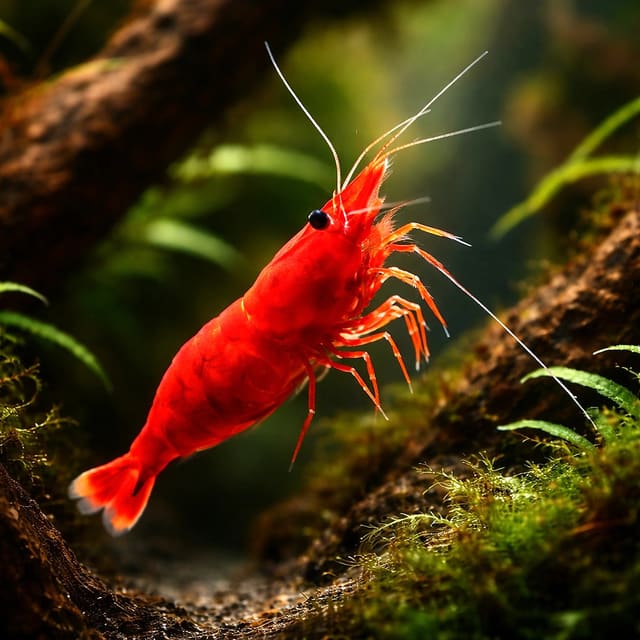
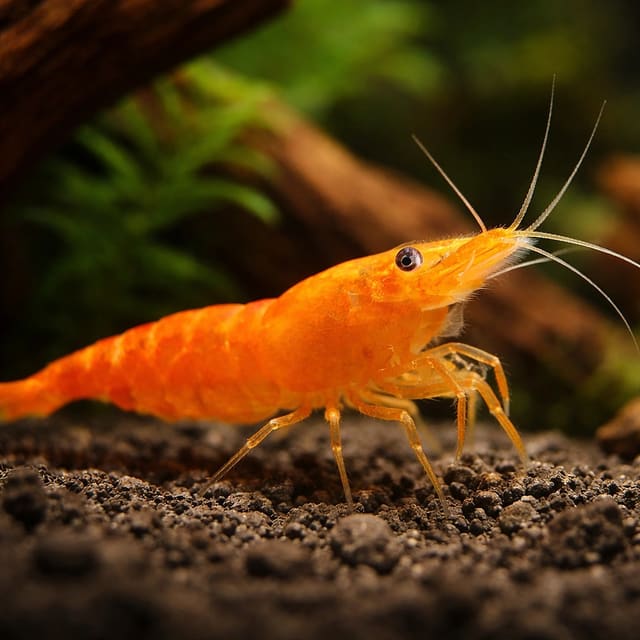
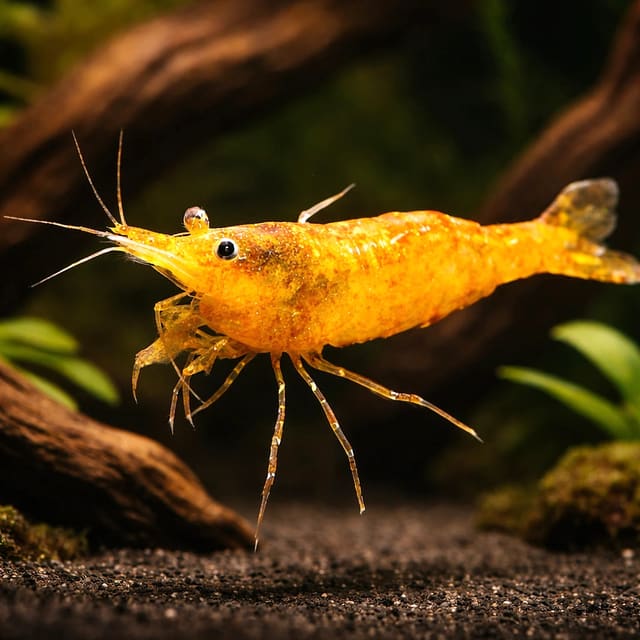
Orange Rili Shrimp (Neocaridina davidi)
17–27°C · pH 6.5–8 · 20L
£12.99

Buy Black Pinto Shrimp for a bold Taiwan Bee look in planted aquariums. Moderate care and ideal for experienced keepers. Order now for UK delivery.
Adult size is the maximum length this species reaches at full maturity (scientific sources). The livestock you receive will be younger and smaller. Product-photo provenance and any image-specific limitations are stated on the listing.
Caridina cantonensis
Lives in groups: kept together they stay settled, active and show their best colour.
Buy Black Pinto Shrimp for a bold Taiwan Bee look in planted aquariums. Moderate care and ideal for experienced keepers. Order now for UK delivery.
Adult size is the maximum length this species reaches at full maturity (scientific sources). The livestock you receive will be younger and smaller. Product-photo provenance and any image-specific limitations are stated on the listing.
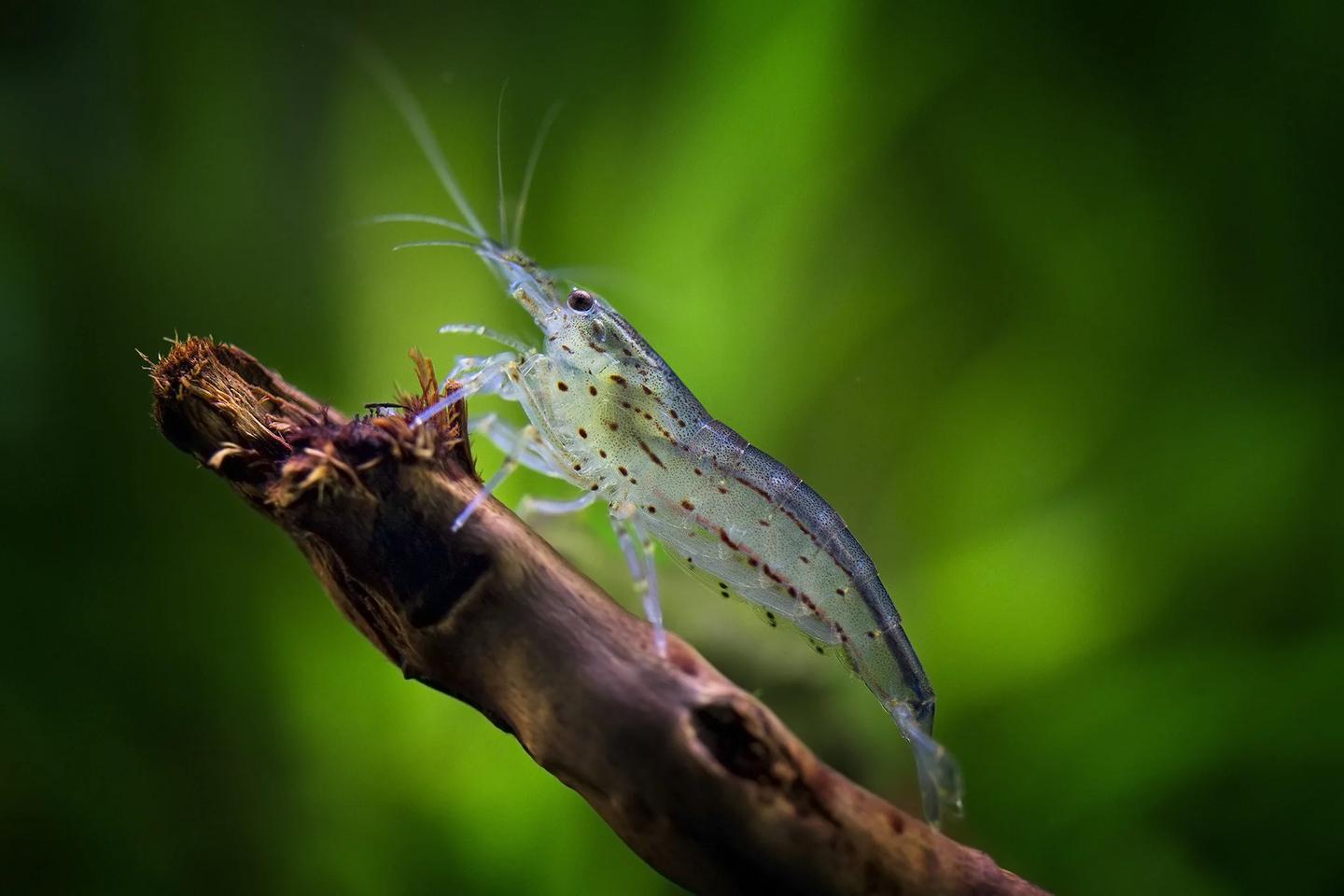
Start with a mature, filtered aquarium. OATA's broad UK guidance suggests approximately 20 litres for Amano Shrimp and at least five for social shrimp, with a larger aquarium when fish are present. Treat those as cautious planning screens—not biological minima or a per-litre formula. Match the complete adult community, test your water, protect the filter inlet and never buy them as a guaranteed algae cure.
Maintain these water conditions for optimal health and vibrant colors
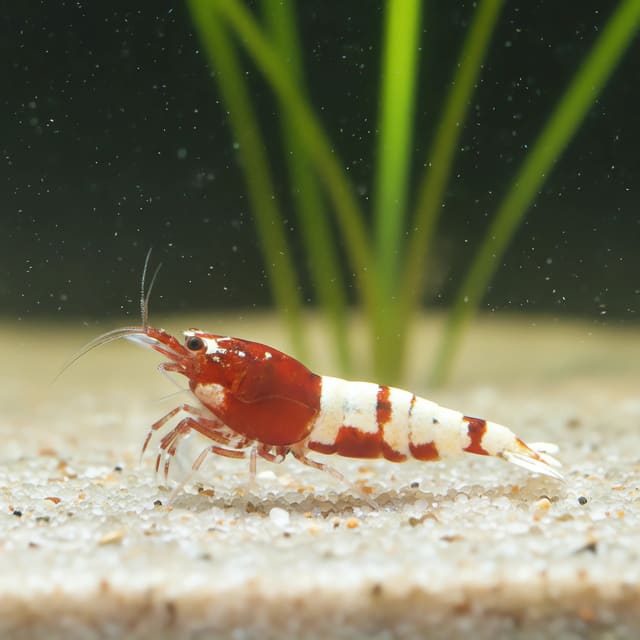
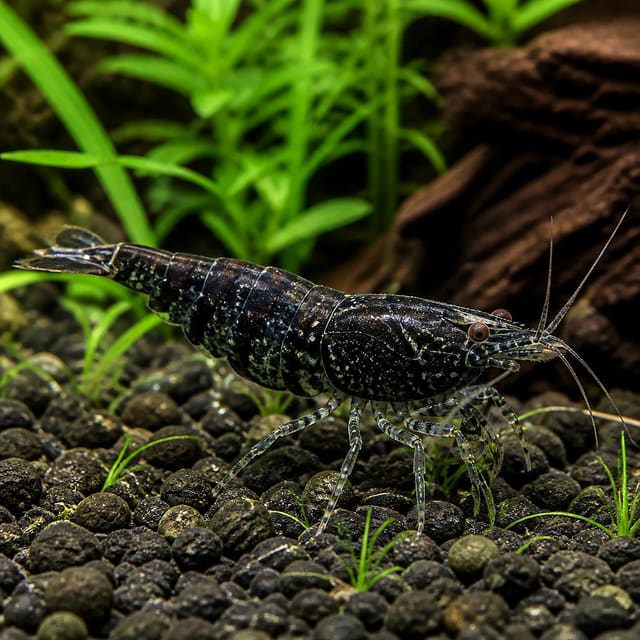
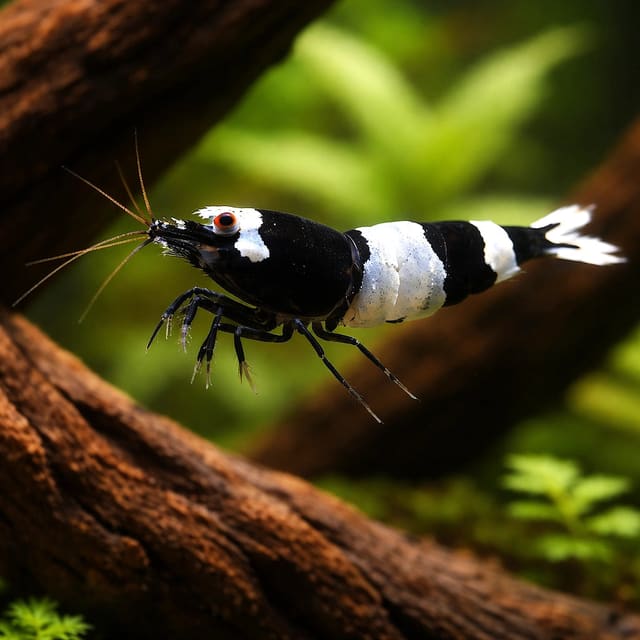
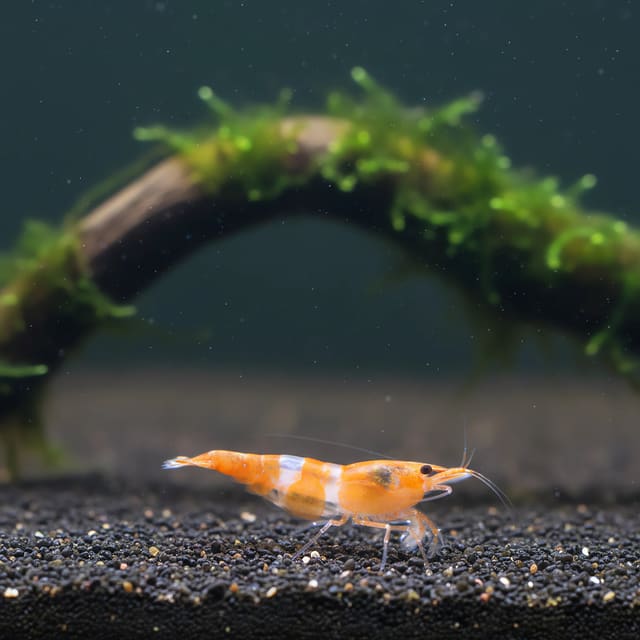
The Black Pinto Shrimp is one of the most striking choices in the freshwater shrimp UK hobby. A selectively bred form of Caridina cantonensis, this Taiwan Bee shrimp combines crisp black-and-white patterning with the delicate, active grazing behaviour that makes dwarf shrimp so rewarding to keep. Adults reach around 2.5 cm, live for roughly 18-24 months, and do best in stable, soft, slightly acidic water. That makes them a moderate-care species rather than a true beginner shrimp, but for keepers willing to follow a proper black pinto shrimp care guide, the results can be exceptional. See our detailed photos showing the contrast, shell coverage, and pattern quality that shrimp keepers look for when choosing aquarium shrimp UK stock.
If you have been searching for shrimp for sale UK, freshwater shrimp for sale uk, or wondering where to buy black pinto shrimp UK, this variety stands out because it brings collector-grade appearance without needing a huge aquarium. A well-planned black pinto shrimp aquarium setup can fit into a 20-litre nano tank, provided the black pinto shrimp water parameters are kept stable. Their peaceful nature, compact size, and fascinating foraging habits make them ideal for a dedicated shrimp aquarium or a carefully planned invertebrate display with shrimp-safe tank mates. For aquarists who want a rarer Caridina with real visual impact, Black Pintos offer pattern, movement, and breeding potential in one elegant package.
Black Pinto Shrimp belong to the bee shrimp complex within Caridina cantonensis. In the aquarium hobby, Taiwan Bee lines such as Pinto, Bolt, and other patterned forms were developed through selective breeding for shell colour, contrast, and pattern arrangement. They are closely related to crystal bee shrimp and other specialist Caridina varieties kept by advanced shrimp enthusiasts.
Black Pinto Shrimp are captive-bred aquarium strains descended from bee shrimp native to Taiwan. In the wild, Caridina cantonensis comes from cool, clean hill streams with soft water, low dissolved minerals, leaf litter, smooth stones, and constant oxygenation. That natural history explains most freshwater shrimp requirements for this species: stable chemistry, low pollution, and plenty of surfaces for biofilm growth.
Unlike uk native freshwater shrimp, native freshwater shrimp uk, or species associated with freshwater shrimp uk rivers, Black Pintos are not a pond or river shrimp suited to outdoor British conditions. Searches for freshwater shrimp in pond uk, freshwater shrimp uk pond, freshwater pond shrimp uk, cherry shrimp uk pond, pond shrimp for sale uk, river shrimp for sale uk, or live river shrimp for sale uk usually refer to very different animals and very different care. Black Pintos are specialist aquarium shrimp, not wild freshwater shrimp uk stock and not one of the uk freshwater shrimp species found naturally in British waters.
In their ancestral habitat, water tends to be soft, low in carbonate hardness, and slightly acidic because of decomposing leaves and mineral-poor runoff. These shrimp spend much of the day grazing on microbial films, soft algae, and tiny particles trapped among mosses and roots. Recreating that environment in captivity is the key to long-term success. A shrimp tank that looks a little understated to a fish keeper often feels perfect to Caridina: dark substrate, moss, wood, leaf litter, and gentle but constant filtration.
For keepers comparing them to other options in aquarium shrimp UK, Black Pintos sit firmly in the specialist Caridina camp rather than the hardier Neocaridina group. They reward patience with better pattern retention, stronger breeding results, and more confident behaviour.
Mimicking the cool, soft-water stream conditions of Taiwan improves moulting, feeding response, and juvenile survival. In practice, that means active buffering substrate, remineralised RO water, lots of moss, and avoiding sudden swings in temperature or TDS.
A successful black pinto shrimp tank setup starts with stability, not decoration. If you are learning how to set up a shrimp aquarium, think of Black Pintos as a species that needs consistency more than complexity. The ideal black pinto shrimp aquarium setup uses mature filtration, a biologically active tank, and water tailored to Caridina rather than general community fish.
The black pinto shrimp minimum tank size is 20 litres, which matches the basic black pinto shrimp tank requirements for a starter colony. That said, 30-45 litres is often easier because a larger water volume resists sudden changes in pH, temperature, and waste concentration. If you are asking how many black pinto shrimp per tank, a practical starting point is 6-10 shrimp in 20 litres, then allowing the black pinto shrimp colony to build naturally. Overstocking too early can make feeding and waste control harder.
The most important part of black pinto shrimp water parameters is softness and stability. Aim for a black pinto shrimp temperature of 20-25°C, with many keepers finding 21-23°C ideal for long-term health. The recommended black pinto shrimp water temperature should not swing quickly between day and night. pH should sit between 5.5 and 6.8, while the black pinto shrimp GH KH requirements are best met with low KH and a GH of roughly 4-6 dGH. These are stricter than many general aquarium shrimp requirements, which is why Black Pintos are not usually sold as a casual impulse purchase.
A mature sponge filter is the classic choice for a shrimp tank setup uk because it offers high biological filtration and very low risk to shrimplets. Small hang-on-back filters can also work if the intake is covered with a fine pre-filter sponge. Moderate aeration is helpful because Caridina appreciate well-oxygenated water. Strong current is unnecessary, but dead spots should be avoided.
Many keepers ask about shrimp gravel versus sand for shrimp tank layouts. For Black Pintos, the best answer is usually an active shrimp soil rather than inert gravel. Active substrates buffer pH downward and help maintain the acidic conditions Caridina prefer. Fine dark substrate also improves visual contrast, making the white patterning look cleaner in photos and in person. Inert sand can work only if the water chemistry is already controlled with RO and remineralisation, but it offers less margin for error.
Plants for shrimp tank setups should focus on surface area and shelter. Mosses, subwassertang, bucephalandra, Anubias nana petite, and floating plants all help. Black Pintos do very well as black pinto shrimp with plants, and a black pinto shrimp in planted aquarium can be both practical and beautiful if you avoid heavy fertiliser dosing and copper-containing treatments. Fine-leaved plants and mosses trap food particles, grow biofilm, and give shrimplets safe grazing zones.
If you want visual variety in your shrimp room, compare this species with the pattern-rich Red Pinto Shrimp, the icy tones of Red Bolt Taiwan Bee Shrimp, or the striped look of Racoon Tiger Shrimp. For Neocaridina-style planted tanks, many hobbyists also keep Blue Rili Shrimp or Blue Mary Shrimp in separate setups.
Moderate lighting for 6-8 hours daily is enough. Bright lights without plant cover can make shrimp shy, while a planted tank with shaded areas encourages natural grazing. Too much light often leads to nuisance algae rather than useful biofilm.
Always cycle the tank for 4-6 weeks before adding shrimp. In a mature Caridina setup, the invisible food source matters as much as the food you add. Biofilm, algae film, and microbial growth are what keep new arrivals settled and shrimplets alive.
The ideal black pinto shrimp diet is varied, light, and based around constant grazing rather than heavy meals. In nature, these shrimp pick at biofilm, soft algae, decaying leaves, and tiny organic particles. In the aquarium, a good black pinto shrimp feeding guide combines natural grazing surfaces with a quality shrimp food offered in small portions.
Staple feeding should include specialised shrimp pellets, wafers, or sticks designed for Caridina. These should provide plant matter, minerals, and stable ingredients that do not foul the water quickly. Leaves such as Indian almond or guava can stay in the tank and support microbial growth. This is one of the easiest ways to show new keepers how to care for black pinto shrimp properly.
Blanched spinach, courgette, nettle, or spinach-based shrimp foods can be offered occasionally. Protein should be moderate, not excessive. During colony growth and black pinto shrimp breeding, a little extra protein can help, but overdoing it often causes moulting issues or water quality problems. Questions such as how often should you feed freshwater shrimp and how often to feed freshwater shrimp have the same answer: feed lightly, then let them graze naturally between meals.
Bee pollen, shrimp lollies, and powdered shrimplet foods can be useful for conditioning breeders and supporting baby shrimp. Some keepers ask about brine shrimp eggs for sale uk or other high-protein foods, but Black Pintos do not need heavy meaty feeding like predatory marine shrimp. They are not related in care terms to searches such as frozen mantis shrimp for sale uk, baby mantis shrimp for sale uk, or baby peacock mantis shrimp for sale uk. Likewise, searches like can you eat freshwater shrimp, can you eat freshwater shrimp uk, or what size shrimp for stuffed shrimp are culinary questions rather than aquarium care topics. These are ornamental invertebrates, not food shrimp or feeder shrimp for sale uk.
Feed 3-5 times per week in a mature tank, or tiny daily amounts in a heavily stocked breeding setup. A useful rule is to offer only what the colony can finish in 2-3 hours. If food remains the next morning, reduce the portion. This matters because shrimp produce very little waste individually, but uneaten food can still trigger ammonia spikes in a nano tank.
| Time | Food | Amount |
|---|---|---|
| Morning | Natural grazing only or tiny powdered shrimplet food | Very small pinch |
| Evening | Shrimp pellet, leaf, or blanched veg | What colony eats in 2-3 hours |
A useful comparison product if you want to see how algae-grazing Neocaridina differ from specialist Caridina feeding and care.
Another popular shrimp line for keepers comparing diet, grazing behaviour, and ease of feeding in planted nano tanks.
Overfeeding causes ammonia spikes, bacterial blooms, and unstable moulting. If you notice detritus worms or a "worm like creature in pond" style outbreak in the substrate, the issue is usually excess food rather than hunger.
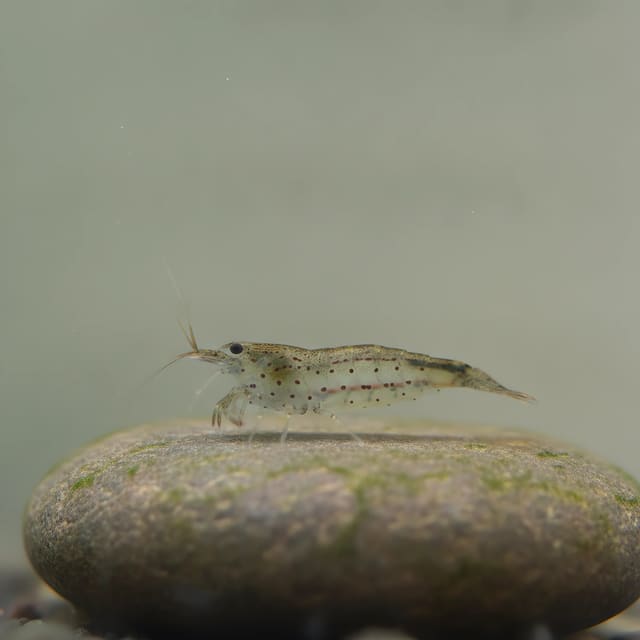
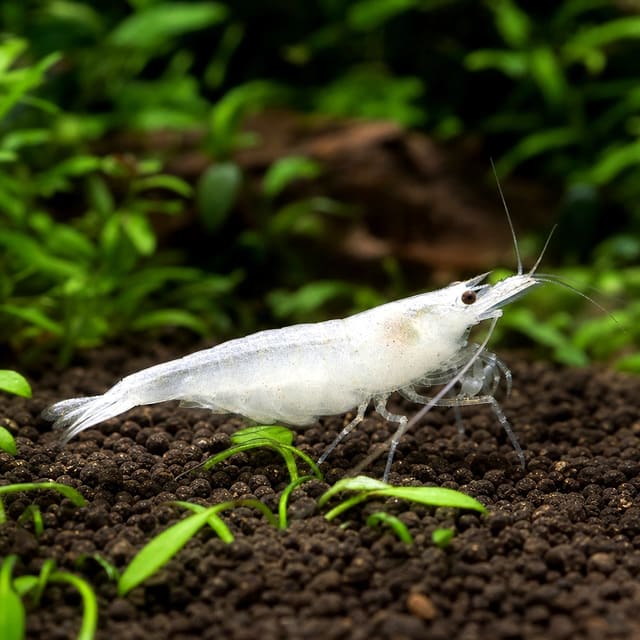
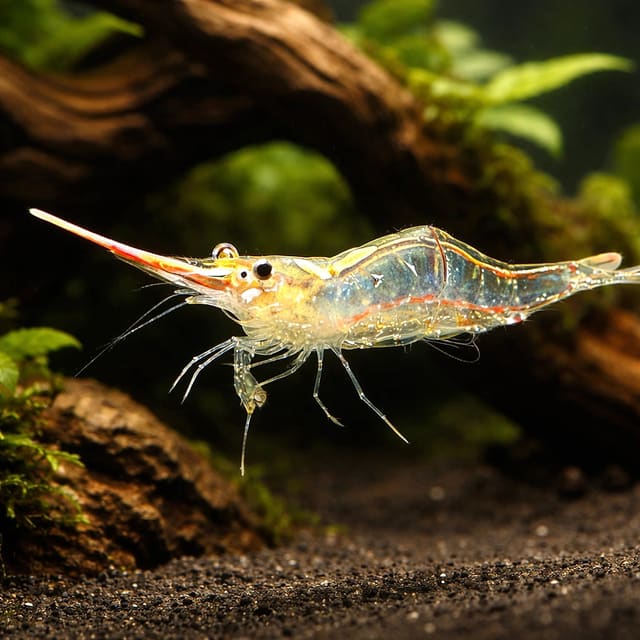
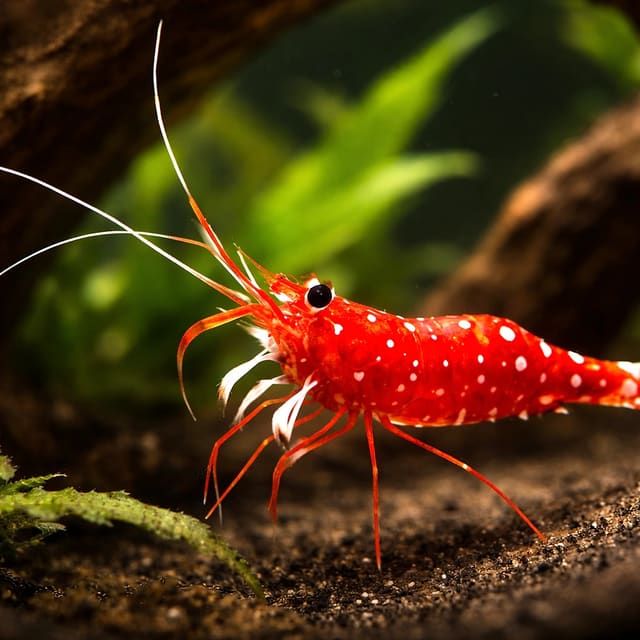
Black Pinto Shrimp are prized for their bold contrast. Adults grow to around 2.5 cm and have the compact, slightly arched body typical of bee shrimp. The shell pattern can vary from heavy black coverage with white bands to more broken pinto-style markings that create a marbled or patched look. This variation is part of the appeal, and it is why black pinto shrimp grading matters to collectors who want cleaner pattern edges, stronger white coverage, or more unusual layouts.
The best specimens show deep black pigmentation rather than washed-out grey. Our photos show the intense contrast that hobbyists expect when shopping black pinto shrimp online UK or looking to order black pinto shrimp UK. Females are usually slightly larger, deeper-bodied, and often carry a more rounded underside for egg carrying. Males tend to be slimmer and more active in open water when searching for a receptive female.
Good colour depends on genetics, stable water, and proper feeding. A dark substrate often improves visual depth, while stress, poor water quality, or frequent parameter swings can dull the shell. The expected black pinto shrimp lifespan is around 18 months to 2 years, and healthy adults will moult regularly. During black pinto shrimp moulting, the shrimp may hide for a short time until the new shell hardens.
Buyers often compare them with crystal bee shrimp, Blue Bolts, and tiger-based Caridina. If you are choosing by visual style, Black Pintos offer one of the strongest monochrome looks in the hobby. They are especially effective in a planted aquascape where the black-and-white shell pattern stands out against green moss and wood.
Black Pintos are peaceful, but their size means compatibility must be judged from the shrimp's point of view, not the fish's. Many fish sold as community species will still eat baby shrimp and may harass adults. So while people often search for the best shrimp for community tank, Black Pintos are usually best in a dedicated shrimp aquarium or with only the gentlest companions.
The safest black pinto shrimp tank mates are other peaceful invertebrates and a few specialised fish. Small snails are excellent, which answers the common question about shrimp and snails: yes, they usually mix very well. Nerites, ramshorns, and other non-predatory snails help with leftover food and algae without threatening shrimp. Otocinclus can work in mature, stable tanks, but only when the aquarium is fully established and heavily planted.
For shrimp-only displays, compatible Caridina lines make more sense than fish. You may want to compare this species with Red Pinto Shrimp, Red Bolt Taiwan Bee Shrimp, or Racoon Tiger Shrimp. If you prefer easier Neocaridina, look at Super Red Sakura Shrimp, Blue Rili Shrimp, or Blue Mary Shrimp in separate tanks.
Most fish are not truly black pinto shrimp safe with fish. Tetras, rasboras, gouramis, cichlids, bettas, loaches, and livebearers may all prey on shrimplets. Crayfish are a definite no. Larger snails are generally fine, but predatory invertebrates are not. Avoid mixing with Neocaridina if your goal is a specialist Caridina setup, especially when water chemistry needs differ. Searches such as what can live with freshwater shrimp often produce over-optimistic advice; the safest answer is still shrimp-only or near shrimp-only.
In a 20-30 litre setup, a species-only colony is ideal. In a 45-litre planted tank, a colony of 15-25 Black Pintos with a few small snails works well. In larger aquascapes, a cautious combination with Otocinclus may succeed, but only if there is dense moss cover and the keeper accepts some shrimplet losses. If your priority is maximum breeding, avoid fish entirely.
| Species | Compatible? | Notes |
|---|---|---|
| Red Bolt Taiwan Bee Shrimp | ✅ Yes | Similar Caridina care needs; best in dedicated shrimp setups. |
| Small snails | ✅ Yes | Excellent clean-up companions and generally shrimp-safe. |
| Blue Rili Shrimp | ⚠️ Caution | Different ideal water chemistry; better kept in separate systems. |
| Most community fish | ❌ Avoid | Adults may survive, but shrimplets are usually eaten. |
Buyers often compare Black Pintos with amano shrimp, cherry shrimp for sale, and other listings for freshwater shrimp UK. Amanos are larger and less likely to be eaten, while cherry shrimp are usually easier and more forgiving. Black Pintos are not the default best shrimp for community tank, but they are among the best for a specialist Caridina display. If you are specifically searching black pinto shrimp safe tank mates, think snails first, fish second.
Always quarantine new arrivals for 2-4 weeks before adding them to a shrimp colony. Even harmless-looking fish or snails can introduce parasites, planaria, or bacterial issues that spread quickly in small invertebrate tanks.
Black pinto shrimp breeding is very achievable once the tank is mature and stable, but it is not as forgiving as breeding cherry shrimp. This species produces fully formed miniature shrimplets rather than a larval stage, so there is no brackish-water phase. That makes breeding practical at home, but only if the adults are healthy and the water remains consistent.
A dedicated 20-30 litre breeding tank is ideal. Use the same soft, acidic conditions described above, with plenty of moss and leaf litter. If you are asking how often do freshwater shrimp breed, healthy adult females may become berried regularly in a stable colony, especially after moulting. The female is larger than the male and has a deeper abdomen for carrying eggs.
After a female moults, she releases pheromones into the water. Males respond by swimming actively around the tank in search of her. This burst of movement is normal and often one of the first signs that breeding is underway. Once fertilised, the female carries eggs under her abdomen and fans them constantly to keep them oxygenated.
At around 22°C, eggs often hatch in roughly 28 days. Higher temperatures can speed development, but they may also reduce egg viability and shorten adult lifespan. For that reason, many experienced keepers prefer the lower-middle part of the recommended range. Newly hatched shrimplets look like tiny adults and immediately begin grazing on biofilm.
Dense moss, powdered shrimp foods, and mature surfaces are the keys to juvenile survival. Avoid large water changes and avoid cleaning the tank too aggressively. A well-established black pinto shrimp colony often raises more young when the keeper does less, not more. This is one reason why searches for freshwater shrimp that don't breed often come from keepers who accidentally prevent breeding through over-maintenance rather than species choice.
The main problems are failed moults, dropped eggs, and poor shrimplet survival. These usually trace back to unstable minerals, sudden TDS changes, overfeeding, or immature tanks. If you want to buy black pinto shrimp UK stock with breeding in mind, start with a group rather than a pair. Buyers searching black pinto shrimp for sale UK, live black pinto shrimp UK, black pinto shrimp price UK, or even shrimps for sale near me should remember that healthy breeding stock is worth more than the cheapest listing.
For stronger juvenile survival, keep a separate mature sponge filter running in another tank for several weeks before setting up a breeder. Moving that seeded filter into the breeding tank gives shrimplets immediate access to microbial food and a stable bacterial base.
Choosing between shrimp types matters because care level, water chemistry, and breeding goals differ more than many new keepers expect. The most common comparison is black pinto shrimp vs cherry shrimp. Both are attractive dwarf shrimp, but they suit different aquarists.
| Feature | Black Pinto Shrimp | Cherry Shrimp |
|---|---|---|
| Max Size | About 2.5 cm | About 2.5-3 cm |
| Care Level | Moderate | Easy to moderate |
| Temperature | 20-25°C | 18-28°C |
| Price | £35.8 | Usually lower |
| Best For | Soft-water Caridina specialists | Beginner planted shrimp tanks |
| Feature | Black Pinto Shrimp | Amano Shrimp |
|---|---|---|
| Max Size | About 2.5 cm | Up to 5 cm |
| Care Level | Moderate | Easy |
| Breeding at Home | Possible in freshwater | Difficult; larvae need special rearing |
| Best Use | Collector shrimp colony | Algae control in community tanks |
| Best For | Pattern and selective breeding | Utility and hardiness |
If you are looking to buy neocaridina shrimp, want simple care similar to cherry shrimp care uk, or have been browsing neocaridina shrimp for sale uk and cherry shrimp for sale uk, cherry shrimp are usually the easier starting point. If you want specialist Caridina patterning and are ready to provide soft, acidic water, Black Pintos are far more distinctive. They also compare well with crystal bee shrimp, but offer a more unusual pattern style.
For shoppers comparing colour options, you may also want to view White Spotted Red Shrimp, Super Red Sakura Shrimp, and Cherry Shrimps Neocaridina Davidi Algae. Each suits a different water type and skill level.
The best sign of a healthy Black Pinto Shrimp is steady grazing, regular moulting, strong colour, and normal social behaviour. Healthy shrimp move calmly over surfaces, pick constantly at biofilm, and do not remain motionless for long periods unless recently moulted. A thriving colony should include visible juveniles, active adults, and females that occasionally become berried.
Most health issues are environmental rather than infectious. Failed moults, sudden deaths after water changes, lethargy, and poor breeding are usually linked to unstable minerals or poor water quality. This is why Black Pintos are not ideal as black pinto shrimp for beginners unless the keeper is prepared to monitor parameters carefully. If you are wondering how many black pinto shrimp per tank, remember that crowding increases waste and stress.
External parasites are less common in well-managed shrimp systems, but planaria, hydra, and bacterial imbalances can appear in overfed tanks. Many keepers searching aquarium shrimp uk healthcare are really dealing with husbandry errors rather than disease. Good feeding control, stable temperature, and careful acclimation prevent most losses.
Prevention starts with quarantine, slow drip acclimation, and avoiding contamination from fish medications. Keep a close eye on black pinto shrimp in planted aquarium systems where fertilisers or treatments may contain copper. If a shrimp dies unexpectedly, test temperature, pH, GH, ammonia, nitrite, and nitrate before adding any medication. In many cases, a series of small, matched-parameter water changes is safer than chemical treatment.
NEVER use copper-based medications with shrimp. Even trace amounts can be lethal to Black Pinto Shrimp and other invertebrates. Always check plant fertilisers, fish medicines, and algae treatments before use.
Black pinto shrimp behaviour is one of the pleasures of keeping them. They are peaceful, social in loose groups, and active throughout the day when they feel secure. Most of their time is spent grazing on surfaces, picking through moss, and exploring wood, leaves, and substrate for edible films. In a mature tank, they are surprisingly busy animals.
They are not aggressive and do not defend territories, but they do respond strongly to environmental quality. In a poor setup they become shy, hide more often, and show less feeding confidence. In a stable tank with good cover, they will forage openly, especially in a larger group of 6 or more. This is another reason a species-only colony works so well.
Moulting and breeding create the most dramatic behavioural changes. A freshly moulted shrimp may hide briefly, while males often dart actively around the tank after a female releases mating pheromones. In a mature colony, these bursts of movement are normal and often a sign that the environment is working well.
Black Pinto Shrimp are not a mass-market impulse species. They need careful handling, stable water, and proper packing, so sourcing matters. Our Black Pintos are selected for clear pinto-style contrast, active feeding response, and condition suitable for specialist shrimp keepers looking for aquarium shrimp for sale uk rather than generic mixed stock. If you have been searching black pinto shrimp shop UK, black pinto shrimp delivery UK, black pinto shrimp online UK, or order black pinto shrimp UK, the key difference is not just price but how well the shrimp have been conditioned before dispatch.
Before shipping, shrimp are checked for activity, body condition, and response to food. They are packed for transit in insulated materials, with seasonal heat packs when needed, and sent by tracked delivery. That matters for delicate Caridina because temperature swings during transit can affect moulting and survival. Customers looking for live freshwater shrimp for sale uk, buy aquarium shrimp online uk, aquarium shrimp for sale uk nearby, or even freshwater shrimp pets at home alternatives often choose specialist stock because the conditioning is more consistent.
We also recognise that buyers compare widely before choosing. You may also be searching amano shrimp for sale uk, amano shrimp for sale uk pets at home, ghost shrimp for sale uk, live ghost shrimp for sale uk, blue dream shrimp for sale uk, blue tiger shrimp for sale uk, sulawesi shrimp for sale uk, wood shrimp for sale, giant fan shrimp for sale uk, or live gammarus shrimp for sale uk. Black Pintos fill a different niche: specialist soft-water dwarf shrimp for keepers who value pattern, breeding potential, and colony aesthetics over simple algae control.
Order your Black Pinto Shrimp today with confidence if you want a true Caridina showpiece for a mature shrimp setup.
Building a dedicated shrimp room or planning your next colony? Compare Black Pintos with Red Pinto Shrimp for a warmer pattern style, or try Red Bolt Taiwan Bee Shrimp if you prefer lighter Taiwan Bee colours. For a tiger-pattern alternative, see Racoon Tiger Shrimp. If you want easier Neocaridina options for harder water, browse Blue Mary Shrimp or Super Red Sakura Shrimp. And if you are comparing classic beginner favourites, Cherry Shrimps Neocaridina Davidi Algae are a useful reference point for colour, grazing behaviour, and simpler care.
No reviews for this item yet. Bought one? Honest reviews only, good or bad.
What customers say about ordering from us
I have a small group of long finned mountain minnows. So was delighted to be able to order ten of this variety to increase the genetics in my tank . The ones I recieved are healthy but it’s to early to give a verdict on wether they are of a long finned type since they are small currently.
Gordon Walker · 23 Sept 2026
100% success travel and "installation". Pleased with quality of purchase. The Siamese fighter a bit "shy" so have not yet seen him at his best yet but looking good. Happy customer. GG
George E Garratt · 21 Sept 2026
Reviews of our shop, collected by Judge.me, an independent third-party review collector. Newest first.