Kaira River Prawn (Macrobrachium dayanum)
17–27°C · pH 6.5–8
£13.99

A small Indian freshwater prawn with interesting behavior, best kept in a secure species-style setup or with sturdy tankmates. Moderate care, semi-aggressive. 22-28C, pH 6.5-7.8.
Macrobrachium banjarae
Lives in groups: kept together they stay settled, active and show their best colour.
Confirm your email, then we’ll send an availability message for this exact item if it returns within 180 days.
This request is only for this product—no newsletter or other promotions. A mail-provider retry may very rarely duplicate the same availability message. Unconfirmed addresses are removed after 48 hours. See our privacy policy.
A small Indian freshwater prawn with interesting behavior, best kept in a secure species-style setup or with sturdy tankmates. Moderate care, semi-aggressive. 22-28C, pH 6.5-7.8.
Maintain these water conditions for optimal health and vibrant colors
The aquarium shrimp Macrobrachium banjarae is a small Indian freshwater prawn with intriguing behaviour and distinctive appearance, best suited to secure species-style setups or carefully planned community tanks with sturdy tankmates. Endemic to freshwater habitats across India, this species offers aquarists an opportunity to keep a lesser-known, moderately challenging invertebrate that displays fascinating natural foraging and territorial behaviours. Available for sale UK hobbyists seeking unusual freshwater shrimps will find Macrobrachium banjarae a rewarding addition, though its semi-aggressive temperament and predatory tendencies require careful consideration when selecting tankmates and planning aquarium layout.
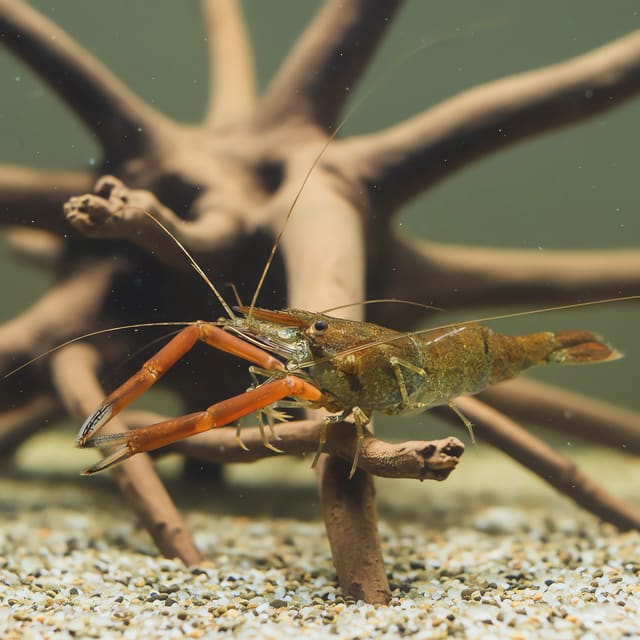
Macrobrachium banjarae displays subtle earthy tones ranging from translucent grey to light brown, often with faint banding or mottling along the body and rostrum. The rostrum is long and serrated, characteristic of the Macrobrachium genus, and the claws are moderately sized and used for feeding and defence. At 3cm, juveniles are relatively small, though this species likely grows larger than this size at maturity, as is typical for Macrobrachium prawns. The eyes are prominent on stalks, providing excellent vision for nocturnal hunting. Colouration can vary depending on diet, substrate, and stress levels, with well-fed, secure specimens displaying the most vibrant tones.
Endemic to freshwater rivers, streams, and pools across several Indian states including Andhra Pradesh, Karnataka, Madhya Pradesh, Maharashtra, and West Bengal, Macrobrachium banjarae inhabits clear to moderately turbid waters with rocky or sandy substrates and abundant hiding places. These environments feature moderate to slow currents, stable tropical temperatures, and plenty of submerged wood, leaf litter, and vegetation. In the wild, this species is an opportunistic omnivore and scavenger, foraging for detritus, biofilm, small invertebrates, and plant matter. Recreating these natural conditions supports healthy behaviour and reduces stress.
Provide a minimum of 60 litres for a single specimen or small group, with ample floor space and numerous hiding places. Use a fine sand or smooth gravel substrate to protect the delicate underside. Furnish the aquarium with caves, driftwood, rocks, and dense planting using hardy species such as Java fern, Anubias, and Java moss. Install a secure, tight-fitting lid, as Macrobrachium prawns are capable climbers and may attempt to escape. Maintain excellent water quality with efficient filtration and regular partial water changes. Provide moderate to low lighting to replicate shaded natural habitats and reduce stress.
Macrobrachium banjarae is an omnivorous scavenger that accepts a wide variety of foods. Offer sinking shrimp pellets, algae wafers, blanched vegetables such as spinach and courgette, and biofilm-rich surfaces. Supplement with occasional protein-rich foods including frozen or live bloodworms, daphnia, brine shrimp, and small pieces of raw shrimp or fish. Provide calcium-rich foods such as cuttlebone or specialised invertebrate supplements to support healthy moulting. Feed in the evening when the prawn is most active, and remove uneaten food after a few hours to maintain water quality. A varied diet promotes vibrant colouration and overall health.
This species is semi-aggressive and exhibits predatory behaviour, particularly at night when it is most active. Macrobrachium banjarae spends daylight hours hidden in caves or under décor, emerging after dark to forage and hunt. It is territorial and may defend its chosen hiding place from other prawns or tankmates. During moulting, the prawn will seek shelter and remain hidden until the new exoskeleton hardens, a vulnerable period lasting several days. Observe carefully if housed with fish, as this species can catch small or slow tankmates. It is best suited to species-only setups or housing with robust, fast-swimming fish.
Best kept in a species-only setup or with robust, similarly sized tankmates that are too large and fast to be preyed upon. Small peaceful fish such as ember tetras or chili rasboras may be at risk if they venture near the prawn's hiding place at night. Non-aggressive snails may be tolerated depending on size, though small specimens could be vulnerable. Avoid small shrimp and fry, slow or long-finned fish, aggressive fish, other Macrobrachium prawns, and very small bottom-dwelling invertebrates. Careful observation is essential if housing with tankmates, and be prepared to separate if predation occurs.
Breeding in captivity is not well documented and, like many Macrobrachium species, may involve larval stages that require brackish to saline water before juveniles can return to freshwater. If breeding is attempted, provide excellent water quality, stable parameters, and abundant hiding places for egg-bearing females. Larvae are planktonic and require specialised care with appropriate salinity and microscopic foods. Most aquarists keep Macrobrachium banjarae for display rather than breeding, though dedicated enthusiasts with appropriate equipment and experience may achieve success with careful research and preparation.
Provide excellent filtration and a secure lid to prevent escapes, as this species is a capable climber and can leave the aquarium. Avoid all copper-based medications, which are highly toxic to crustaceans. Maintain stable water chemistry and provide adequate calcium to support healthy moulting and exoskeleton development. After moulting, leave the shed exoskeleton in the tank for the prawn to consume as a calcium source. Monitor tankmates closely, especially at night, and be prepared to separate if predation occurs. This species is best suited to experienced aquarists comfortable managing semi-aggressive, predatory invertebrates with specialised care requirements.
Tropical Fish Co is a trusted UK supplier of healthy, responsibly sourced freshwater invertebrates including Macrobrachium banjarae. Each specimen is carefully selected for active behaviour, robust health, and excellent condition. Our livestock is quarantined and health-checked before dispatch, ensuring you receive only the finest quality. We provide expert care advice, detailed species information, and ongoing support to help you succeed with your aquarium. With fast, secure delivery across the UK and a commitment to sustainable fishkeeping practices, Tropical Fish Co is your reliable partner for premium freshwater prawns and aquatic livestock.
No reviews for this item yet. Bought one? Honest reviews only, good or bad.
What customers say about ordering from us
I have a small group of long finned mountain minnows. So was delighted to be able to order ten of this variety to increase the genetics in my tank . The ones I recieved are healthy but it’s to early to give a verdict on wether they are of a long finned type since they are small currently.
Gordon Walker · 23 Sept 2026
100% success travel and "installation". Pleased with quality of purchase. The Siamese fighter a bit "shy" so have not yet seen him at his best yet but looking good. Happy customer. GG
George E Garratt · 21 Sept 2026
Reviews of our shop, collected by Judge.me, an independent third-party review collector. Newest first.