Moderate
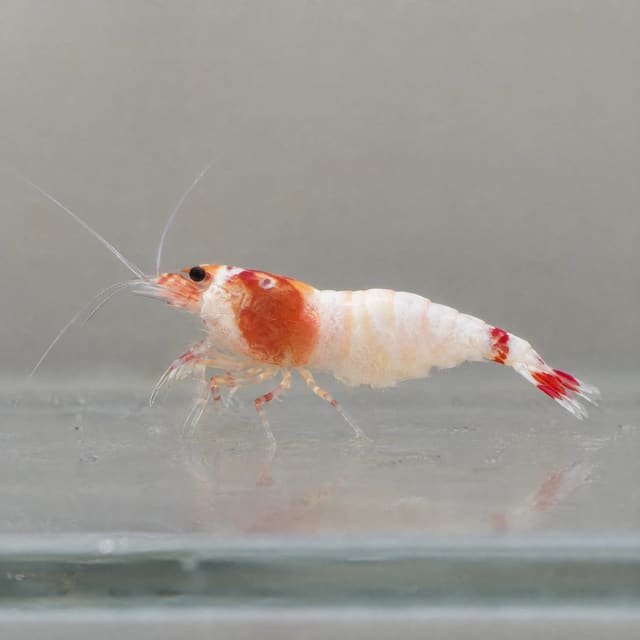
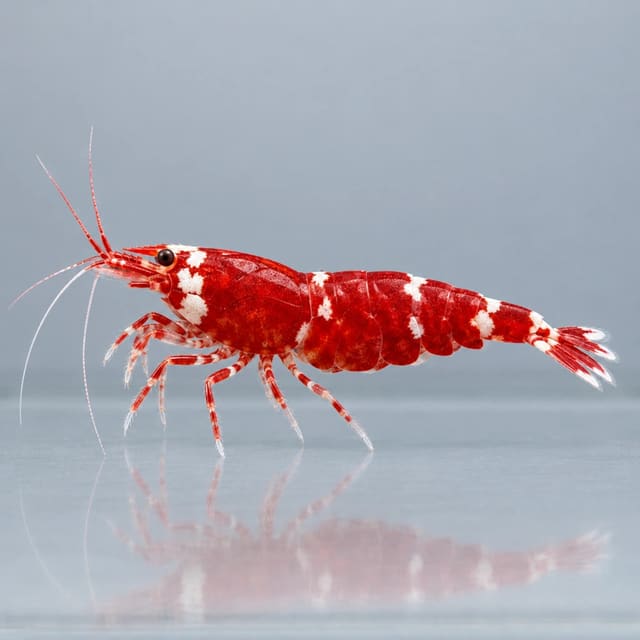
Red Wine Hinomaru Taiwan Bee Shrimp (Caridina cantonensis)
20–25°C · pH 5.5–6.8 · 20L
£23.99
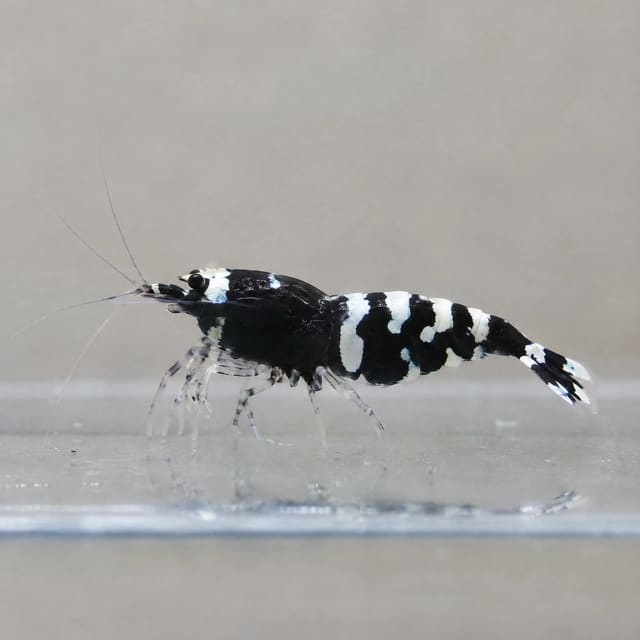
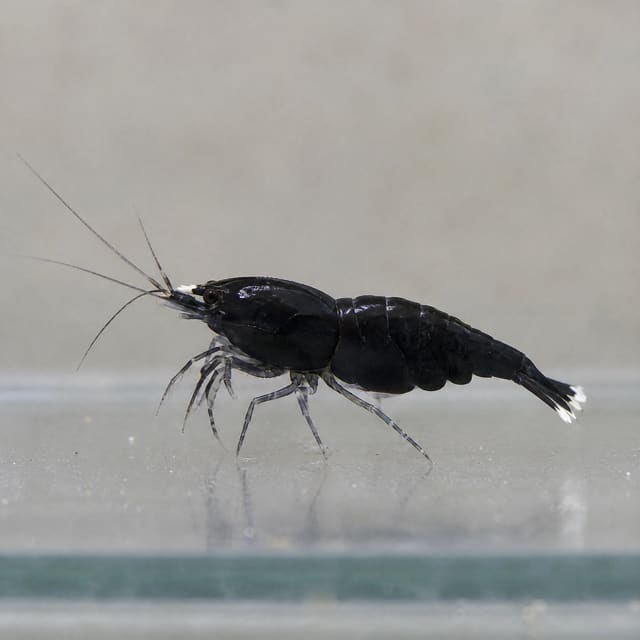
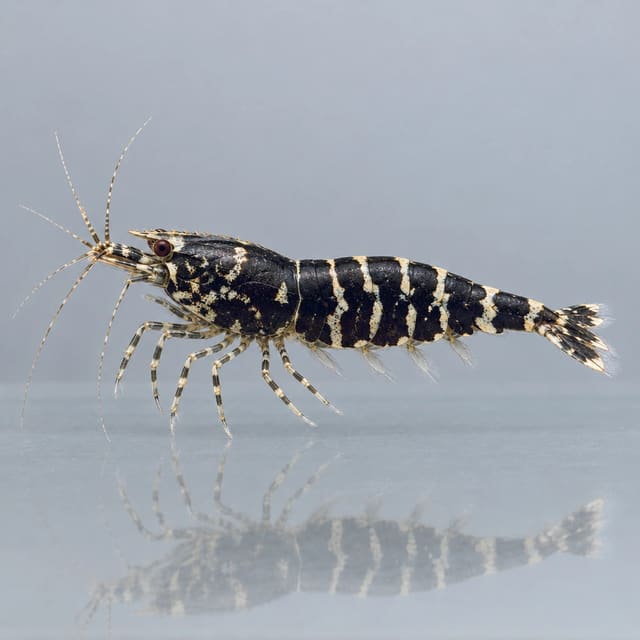
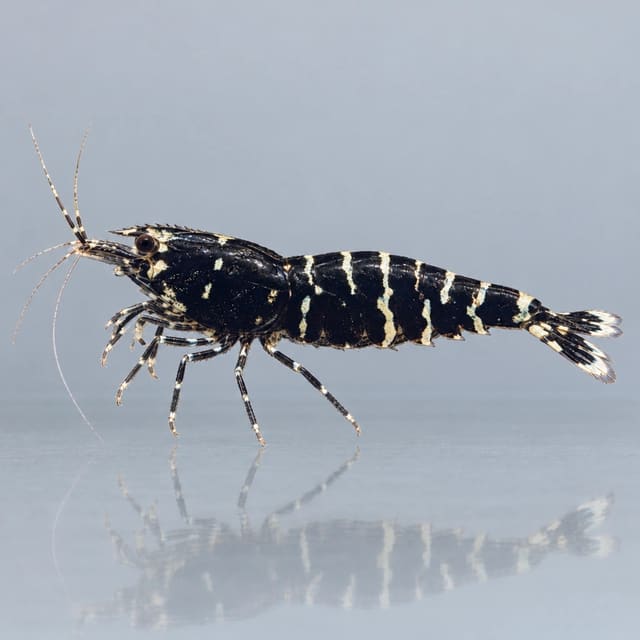
The Black Zebra Stardust Shrimp is a line-bred pinto Caridina with a jet-black body, white zebra bands across the tail and fine white speckles over the head and back. It needs a mature, soil-based tank of soft, acidic water held steady at about 22–23°C, GH 3–6 and KH 0–1. Sold individually as one live shrimp.
Adult size is the maximum length this species reaches at full maturity (scientific sources). The livestock you receive will be younger and smaller. Product-photo provenance and any image-specific limitations are stated on the listing.
Caridina sp.
Choose a quantity for your aquarium. Discount thresholds are pricing offers, not a stocking recommendation.
The Black Zebra Stardust Shrimp is a line-bred pinto Caridina with a jet-black body, white zebra bands across the tail and fine white speckles over the head and back. It needs a mature, soil-based tank of soft, acidic water held steady at about 22–23°C, GH 3–6 and KH 0–1. Sold individually as one live shrimp.
Adult size is the maximum length this species reaches at full maturity (scientific sources). The livestock you receive will be younger and smaller. Product-photo provenance and any image-specific limitations are stated on the listing.
Read the full care guidance when planning conditions for your aquarium.
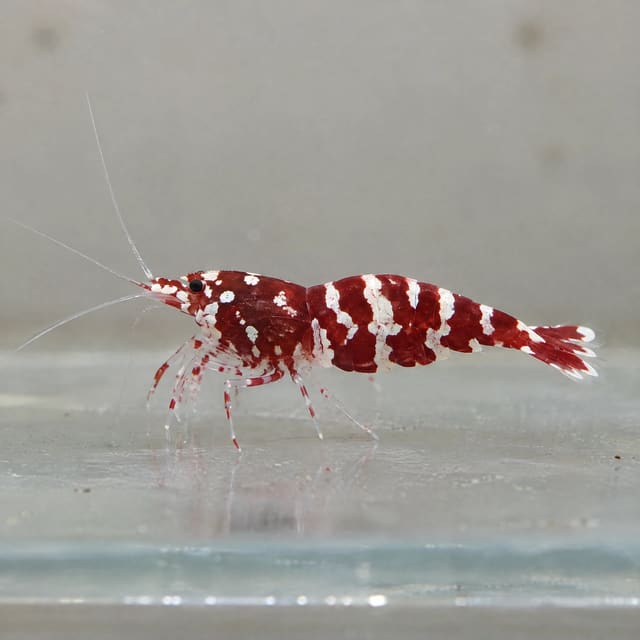
The Black Zebra Stardust Shrimp is a line-bred dwarf shrimp from the soft-water Caridina group with a deep black body, clean cream-white bands across the tail section and a fine scatter of white speckles over the head and back. The legs and antennae are ringed black and white and the tail fan is edged in white. Seen against dark soil it looks like a night sky crossed by chalk stripes, which is the picture its trade name is trying to paint.
The name is assembled from pattern words that shrimp breeders use. The Shrimp Farm’s pinto guide defines a zebra pinto as a pinto with zebra stripes in place of random mottling, and a stardust pinto as a galaxy-patterned shrimp whose tiny white dots spread across the whole body rather than staying on the cheeks. Black is simply the base colour; red forms are bred too. There is no published breed standard or pedigree for this exact line, so we sell it under the honest label Caridina sp.
| Term | What it means | Where to look |
|---|---|---|
| Black | The base body colour, as deep and even as possible | Head, body and tail |
| Zebra | White stripes across the body segments instead of uneven spots | Mostly the tail section |
| Stardust | Tiny white dots spread over the body, developed from the galaxy pattern | Head, back and sides |
| Pinto | The family of patterned lines bred from Taiwan bee and tiger shrimp | The whole shrimp |
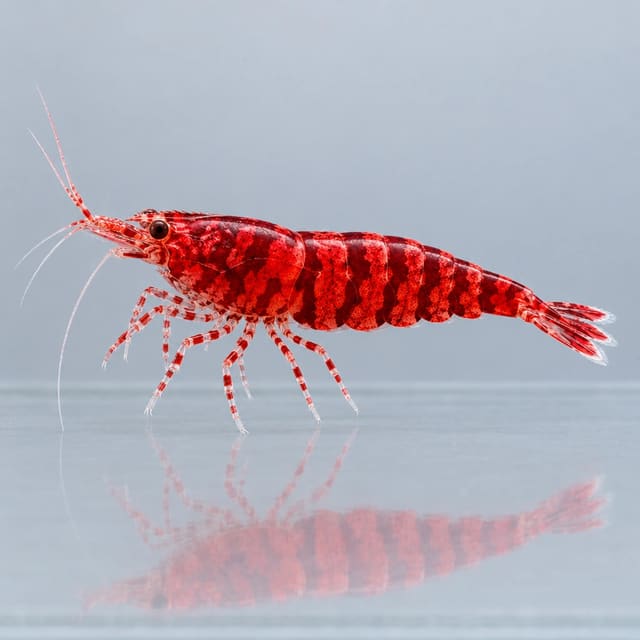
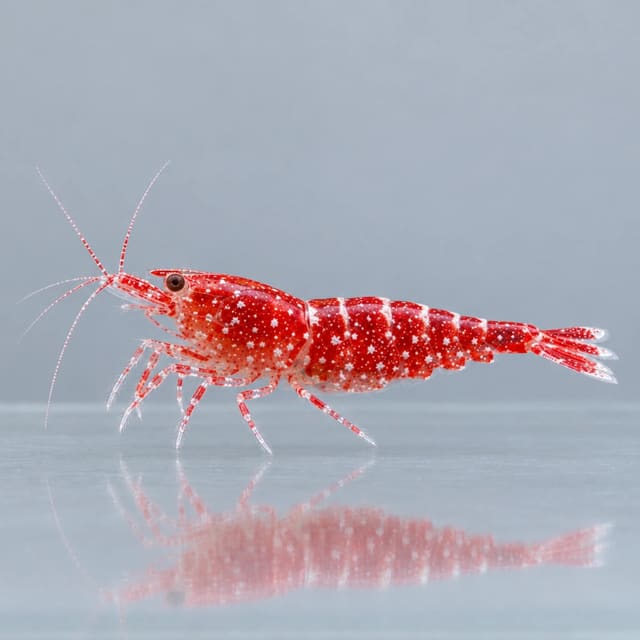
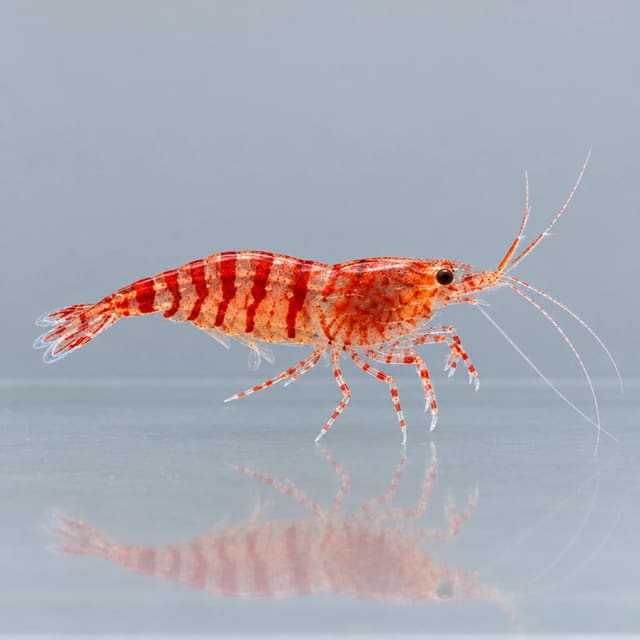
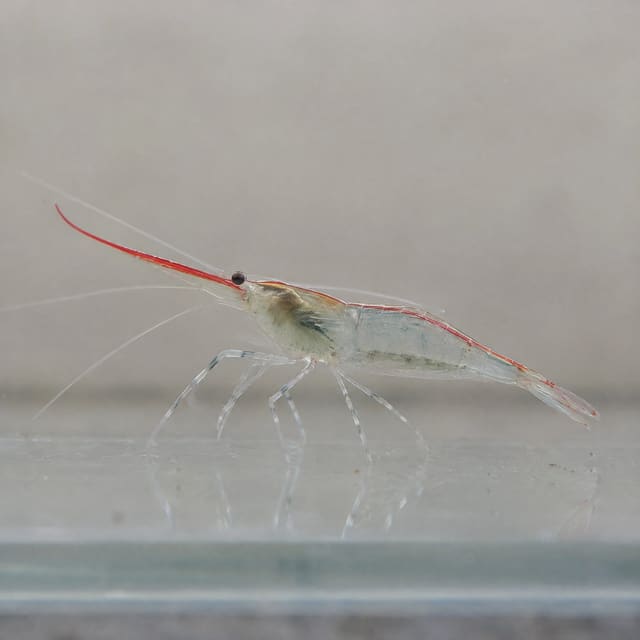
Our photographs show the look this line is bred for. They are representative images, not portraits of the shrimp you will receive: stripe width, the number of speckles and the depth of black differ from shrimp to shrimp, and young shrimp often show less pattern than adults.
Pinto shrimp are aquarium creations. According to The Shrimp Farm, breeders first crossed Taiwan bee shrimp with tiger shrimp to make a “TiBee”, crossed that back to Taiwan bee to make a “TaiTiBee”, and called the mottled TaiTiBees pintos. The guide traces the first pintos to German breeders; a black form with white spots reached the market in the early 2010s. Taiwanese breeders, notably Leon Su of SKYFISH, then refined the galaxy, fishbone and boa varieties, and galaxy shrimp reached the hobby in the mid-2010s. The galaxy name comes from the star-like dots on the cheeks.
Both parent groups now have proper names. In 2014 Klotz and von Rintelen, in work summarised by Seriously Fish, described the tiger shrimp as Caridina mariae and found that ornamental bee strains such as crystal red, King Kong and blue bolt group genetically with Caridina cantonensis. The Shrimp Farm instead files Taiwan bees under Caridina logemanni, a Hong Kong stream species described in the same 2014 paper. The sources disagree, and for a hybrid line the label Caridina sp. is the accurate one.
Each purchase is one live Black Zebra Stardust Shrimp. Set the quantity to the number of shrimp you want. The listing has a single standard option because the shrimp are not graded by length before dispatch, and shrimp in one order can differ slightly in size, colour and pattern. Our delivery information page explains how livestock is packed and which days it is sent.
OATA, the UK ornamental fish trade body, advises keeping shrimp in groups of at least five because smaller groups cause stress. If you want to breed the line, a larger start pays off: Gensou suggests a founding colony of 15–20 shrimp of mixed grades. Buying several at once also gives you both sexes. Mature females are larger than males with a deeper abdomen, according to the Wikipedia account of Caridina cantonensis, and berried females carry their eggs under the tail.
Expect an adult of about 3 cm. OATA gives about 3 cm for colour forms of Caridina cantonensis, the bee side of this shrimp’s ancestry, and no source publishes a separate figure for the zebra stardust line.
Tank advice varies with the source. OATA sets 10 litres as the minimum for a group of small shrimp, The Shrimp Farm’s galaxy guide says at least 5 US gallons (about 19 litres) for a colony, and its pinto guide recommends 10 gallons (about 38 litres) or more. Larger volumes hold soft water more steadily, which matters more than anything else with a sensitive line, so aim for the upper figure.
Pinto keepers almost always use an active buffering soil, which pulls the pH down and holds carbonate hardness near zero. The Shrimp Farm suggests replacing it every one to two years and Gensou every 12–15 months, because its buffering wears out and Gensou links old soil to softer patterns within a generation. Gensou’s Taiwan bee guide gives a depth of 3–5 cm.
Give the colony plenty of grazing surface and places to hide while moulting. Java moss, other mosses, slow-growing epiphytes on wood, and a few dried leaves all grow the biofilm that shrimp eat, and the leaves add a longer-lasting food as they break down. The white bands and speckles stand out best over dark soil.
The specialist guides agree on soft, acidic, mineral-poor water and disagree only on how far to push it. Choose values inside the overlap and then keep them still: sudden swings harm these shrimp more than any single reading.
| Reading | Aim for | What the sources say |
|---|---|---|
| Temperature | 22–23°C, never above 25°C | Pinto guide 62–74°F (about 17–23°C); galaxy guide 68–75°F (about 20–24°C); Gensou 22–24°C |
| pH | Below 7, held steady by the soil | Pinto guide 5.5–7; galaxy guide 5.5–6.8; Gensou 5.5–6.0 |
| GH (general hardness) | 3–6 | Pinto and galaxy guides 3–6; Gensou 3–5 |
| KH (carbonate hardness) | 0–1 | Pinto and galaxy guides 0–1; Gensou 0 |
| TDS | About 100–150 ppm | Pinto and galaxy guides 80–150 ppm; Gensou 100–120 ppm |
| Ammonia and nitrite | Zero | OATA |
| Nitrate | As low as possible | OATA: no more than 20 mg/L above your tap water |
Heat is the reading UK keepers most often miss. Gensou reports moulting problems and duller patterns within two to three weeks above 25°C, and Wikipedia notes that long periods of high temperature raise death rates in the bee shrimp parent species. In a summer heatwave, a small clip-on fan blowing across the water surface, as Gensou suggests for Taiwan bees, helps keep the tank cool.
OATA’s broad shrimp range of 17–27°C, pH 6.5–8.0, 4–18 dGH and 3–15 dKH is written to cover hardy shrimp such as cherry shrimp; pinto lines need the soft end of it and below. Many UK tap supplies are harder than GH 6 and carry carbonate hardness that will exhaust an active soil, so the pinto and galaxy guides use reverse osmosis water remineralised with a GH-only shrimp mineral. Gensou adds one useful habit: top up evaporation with plain RO water, because minerals do not evaporate and remineralised top-ups slowly push TDS up. Our guide to aquarium water chemistry explains GH, KH and TDS, and the water matcher tool compares your readings with the species you keep.
A filter is essential at any tank size, says OATA, but it must not catch shrimp. Gensou recommends air-driven sponge filters and fitting a pre-filter sponge over the intake of any other filter, because young shrimp are easily drawn in. When you clean the sponge, squeeze it in water taken from the tank rather than under the tap, as OATA advises, so the bacteria that process waste survive.
Sources differ on water changes. OATA’s general advice for shrimp is a 25 percent change at least once a week, while The Shrimp Farm’s pinto guide prefers smaller changes added slowly so the water never shifts suddenly. Whatever volume you choose, make the new water match the tank for temperature, GH and TDS and add it gradually.
In a mature tank most of a pinto colony’s food is biofilm grown on wood, leaves, moss and soil. The pinto guide treats formulated food as a small supplement, and every source warns that overfeeding is a common cause of colony crashes.
Feeding frequency is another point where the sources disagree. OATA suggests feeding shrimp two or three times a week, leaving food for at least 30 minutes and then removing what is left. The Shrimp Farm’s galaxy guide gives one or two pieces of shrimp food daily, removed after a few hours. Gensou offers a biofilm food two or three times a week, pellets once or twice a week and blanched leaves such as spinach or nettle about once a month, and treats food still lying uneaten after two to three hours as a sign of overfeeding. Start at the lower end and increase only if the group clears every meal quickly.
| Item | How much | Why |
|---|---|---|
| Sinking shrimp sticks or pellets, such as our Caridina nano sticks | A small pinch the group clears within two to three hours | Balanced daily nutrition |
| Blanched spinach or nettle | A small piece, occasionally | Variety, calcium and trace minerals |
| Dried leaves | One or two, always in the tank | Slow-release food and biofilm |
| Frozen bloodworm | None | Gensou links high-protein foods to pattern softening |
New shrimp meet a sudden change in water when they leave the bag, and soft-water lines feel that change more than most. OATA’s basic method is to switch off the lights, float the sealed bag for 10 minutes to match temperature, add tank water to the bag slowly over at least 30 minutes, then net the shrimp out with as little bag water as possible. For Taiwan bee lines Gensou goes further, dripping tank water in for at least two hours until the TDS is within 10 ppm of the tank. For a soft-water pinto the longer drip is the safer choice. Our acclimatisation guide shows a simple drip set-up.
| When | What to do |
|---|---|
| Before ordering | Confirm ammonia and nitrite have read zero for two weeks and TDS, GH and temperature are stable |
| On arrival | Lights off, float the bag, then drip for at least two hours until TDS matches within 10 ppm |
| First day | Keep the lights low and leave the shrimp to explore; do not chase them with a net |
| Days two to seven | Offer very small meals, remove leftovers, check temperature and TDS daily |
| End of week one | Run a full test; a cast skin is normal, as OATA notes, because shrimp moult often |
Shrimp show trouble through behaviour and colour long before losses. OATA’s list of warning signs includes unusual inactivity or restlessness, colour that turns darker or paler, extra hiding, changes in breathing, white spots, damaged shells, missing legs and loss of appetite. Shrimp are very sensitive to copper, which kills them at low levels, so check every treatment and plant fertiliser is labelled invertebrate-safe.
| If you see | Do this |
|---|---|
| A white band across the back of a moulting shrimp | A failed moult; Gensou links it to low GH or mineral imbalance, so check GH and TDS |
| Several deaths in a day or two | Usually a sudden change in water; test TDS, pH and temperature at once |
| A milky, spreading discolouration | Gensou describes this as bacterial infection; remove the affected shrimp quickly |
| Shrimp hanging at the surface or clustering at the outlet | Test ammonia and nitrite, check temperature and add surface movement |
| Faded pattern over weeks | Check temperature is under 25°C and the soil is not exhausted |
The Shrimp Farm’s galaxy guide advises against keeping these shrimp with other Caridina of the bee and tiger group unless you want hybrids, and recommends against any fish. Mixed young are usually plainer than either parent, so one line per tank keeps the pattern you paid for. Neocaridina shrimp belong to a different genus and cannot interbreed with Caridina, so the same guide says they can share the tank.
| Suits | Avoid |
|---|---|
| Its own line, in a group of five or more | Any fish, including small nano fish, in a breeding tank |
| Neocaridina shrimp such as the Black Rose Shrimp, if they cope with the soft water | Pinto relatives such as the Black Pinto Taiwan Bee Shrimp and the Fancy Tiger Pinto Shrimp, unless you want mixed young |
| A shrimp-only planted tank with moss and wood | Bee lines such as the Crystal Black Shrimp, and all tiger shrimp |
| A few snails, accepting that The Shrimp Farm warns shells may erode in soft, acidic water | Copper-based treatments and fertilisers |
Use our tank mates tool to double-check any other animal before it goes in.
Like their bee shrimp ancestors, pintos develop directly: the female carries her eggs under her tail and the young hatch as tiny, fully formed shrimp, so no separate rearing tank is needed. The Shrimp Farm says young appear after about a month and look after themselves from the start; Wikipedia gives 28 days at 22°C for Caridina cantonensis. Gensou counts 15–25 eggs in a galaxy clutch, fewer than in crystal red shrimp, and expects the first berried females around 10–14 weeks after a tank has matured.
Breeding is slow compared with cherry shrimp, and the pattern is not fixed. Expect a mixture of strongly speckled, striped and plainer young in every generation. Keepers who want to improve a line move the plainest shrimp to a second tank and breed only from the best patterned adults, which is the selection The Shrimp Farm and Gensou both describe.
Browse the rest of our Caridina shrimp category, the wider freshwater shrimp range and the full shrimps and crustaceans collection, or read our guide to freshwater shrimp in the UK and the shrimp-keeping care guide before you set up.
A line-bred pinto shrimp with a black body, white zebra bands across the tail and fine white speckles over the head and back. Pinto lines come from crossing Taiwan bee shrimp with tiger shrimp, so it is sold as Caridina sp. rather than as one named species.
One live shrimp. Set the quantity to the number you want; OATA advises keeping shrimp in groups of at least five, and a breeding colony is easier to start with more.
Expect about 3 cm. OATA gives about 3 cm for colour forms of Caridina cantonensis, the bee shrimp side of its ancestry; no source publishes a separate figure for this line.
Soft, acidic water held steady: GH 3–6, KH 0–1, TDS roughly 80–150 ppm, pH below 7 and about 22–23°C, never above 25°C. In most homes that means reverse osmosis water remineralised with a GH-only shrimp mineral over an active soil.
The Shrimp Farm says Neocaridina such as cherry shrimp can share a tank because they cannot interbreed with Caridina. Fish are not recommended, and Gensou advises removing even very small fish because they eat newborn shrimp.
Not always. Pinto and galaxy lines do not breed true. Gensou reports that two top-grade galaxy parents typically give 30–50 percent young with strong galaxy patterning, so expect a mix and select the best for breeding.
Only if you accept hybrids. It can cross with Taiwan bee, crystal and tiger shrimp, and the young are usually plainer, so keep other bee and tiger lines in a separate tank.
The Shrimp Farm gives 1–2 years for galaxy shrimp, and OATA says shrimp live a couple of years in a mature tank with good water.
No reviews for this item yet. Bought one? Honest reviews only, good or bad.
What customers say about ordering from us
Easy website plenty of info on fish your buying great to pick a time slot
TRACEY DURRANT · 7 Oct 2026
Got some lovely fish thank you
Kevin Mackie · 7 Oct 2026
Reviews of our shop, collected by Judge.me, an independent third-party review collector. Newest first.
Moved by UK carriers licensed to handle live animals
Hand-packed with oxygen bags, poly box, heat pack
Email photos the same day; an optional unboxing video helps us review problems faster — claim terms apply
Klarna & PayPal Pay in 3 at checkout