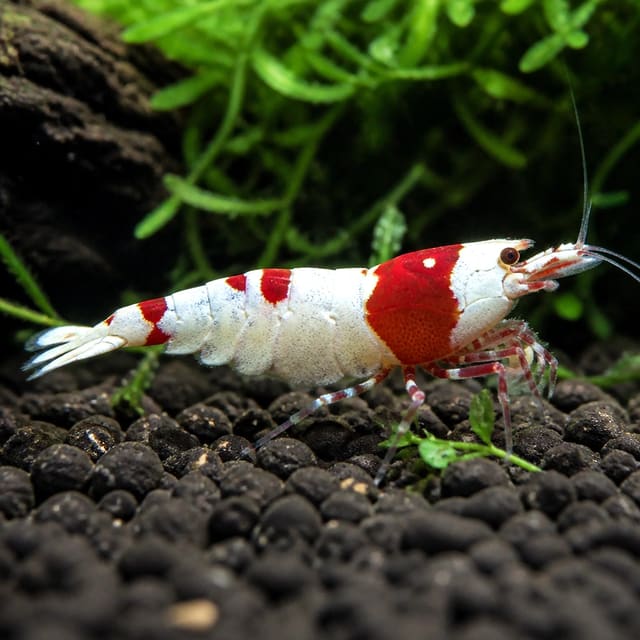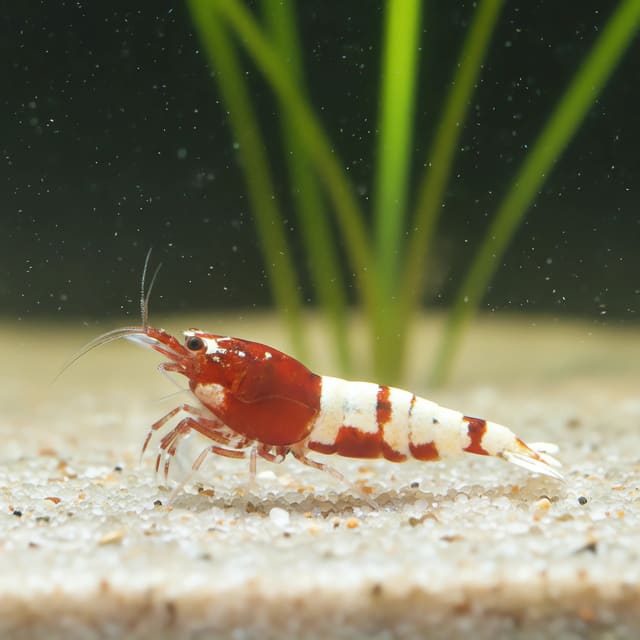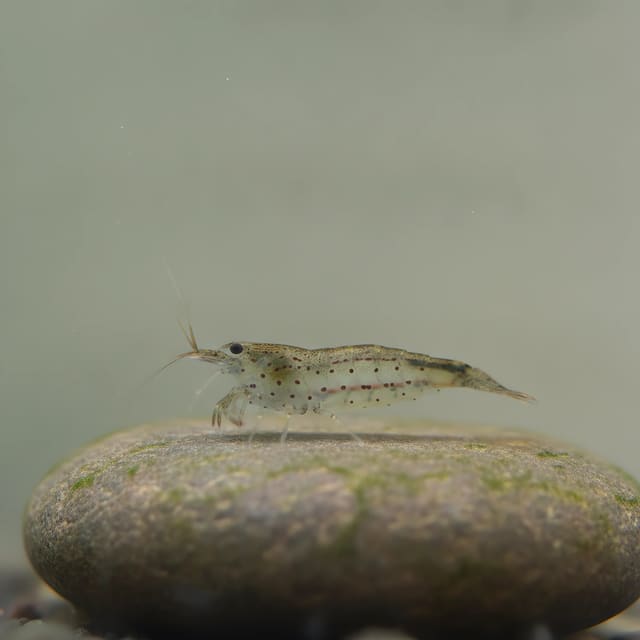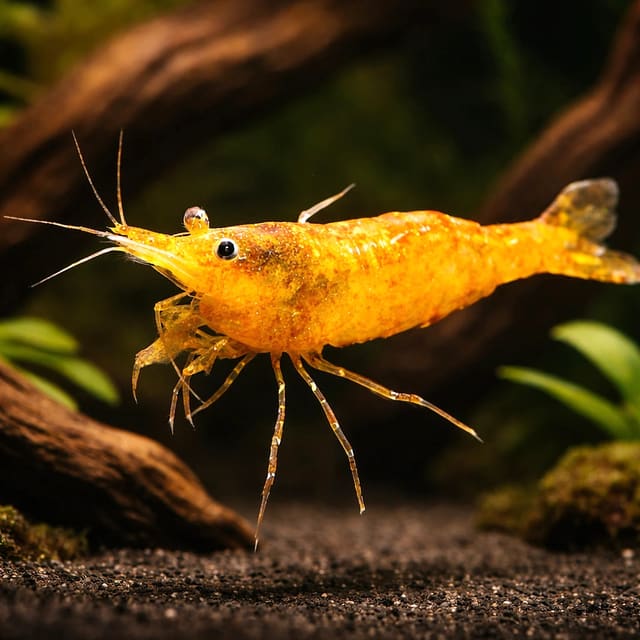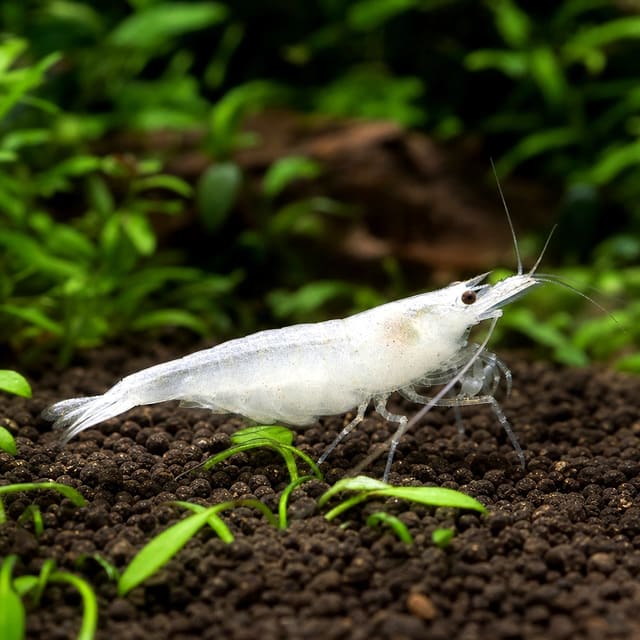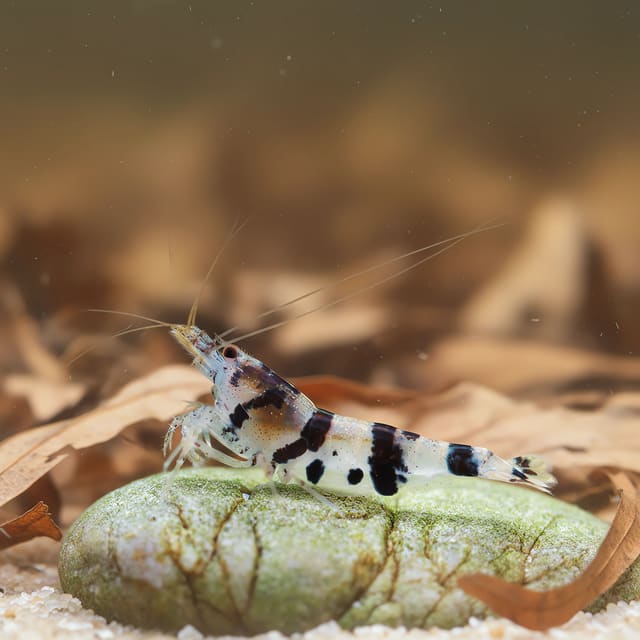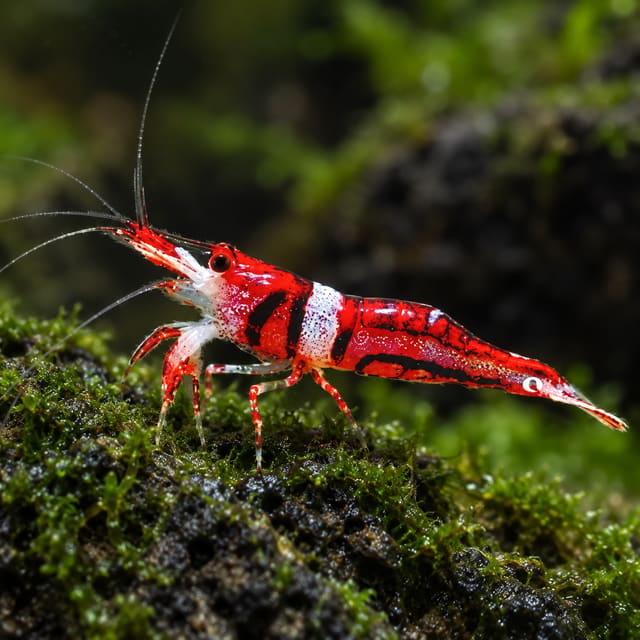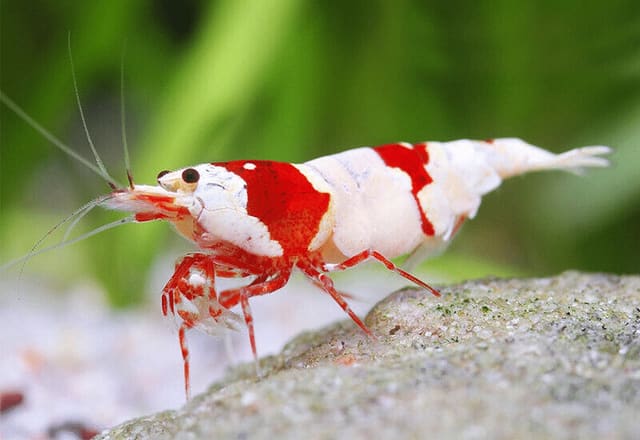
Crystal Red / Red Bee Shrimp (Caridina cantonensis) – 1–2.5cm Sizes
17–27°C · pH 6.5–8
£11.99

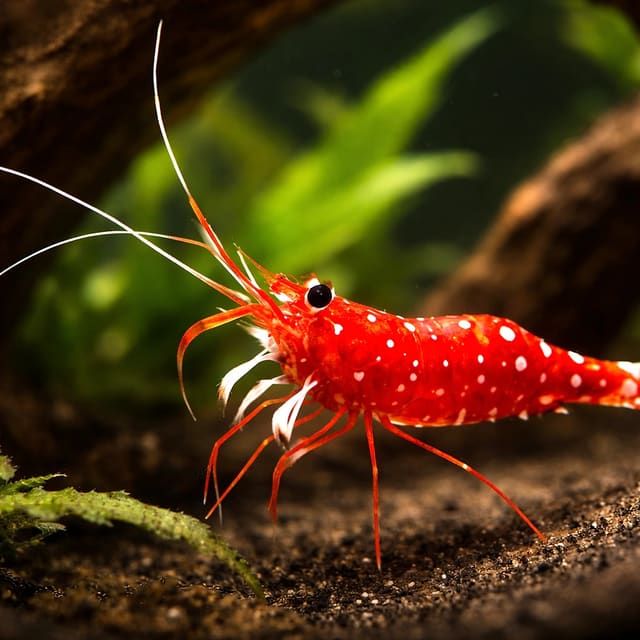
The Red Ruby Taiwan Bee Shrimp (Caridina sp.) is a deep red Taiwan bee colour form for mature, soft and acidic shrimp aquariums. It needs steady water at 20–24°C and pH 6.0–6.8, suits keepers with some shrimp experience, and each purchase is one live shrimp.
Caridina sp.
Lives in groups: kept together they stay settled, active and show their best colour.
The Red Ruby Taiwan Bee Shrimp (Caridina sp.) is a deep red Taiwan bee colour form for mature, soft and acidic shrimp aquariums. It needs steady water at 20–24°C and pH 6.0–6.8, suits keepers with some shrimp experience, and each purchase is one live shrimp.
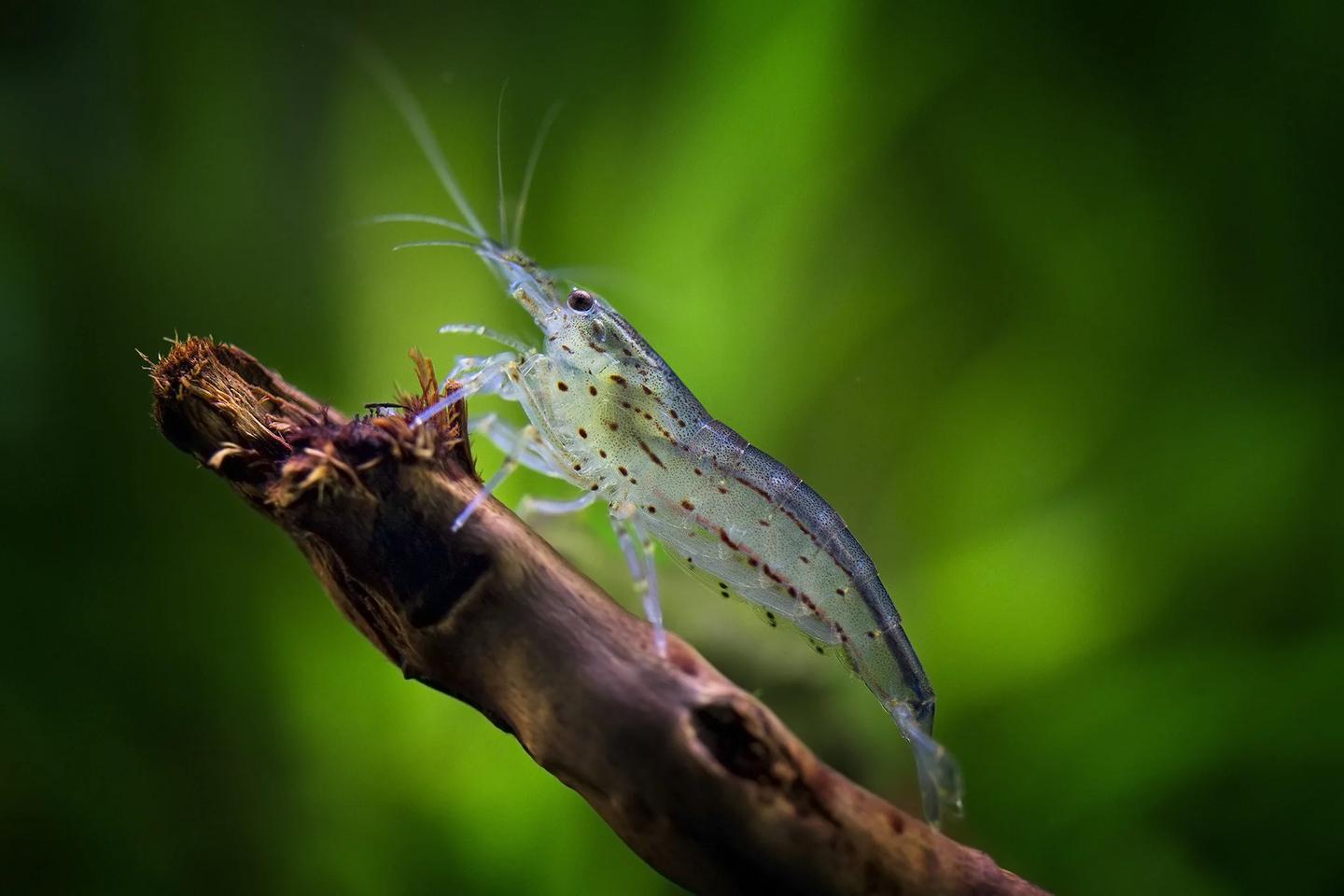
Start with a mature, filtered aquarium. OATA's broad UK guidance suggests approximately 20 litres for Amano Shrimp and at least five for social shrimp, with a larger aquarium when fish are present. Treat those as cautious planning screens—not biological minima or a per-litre formula. Match the complete adult community, test your water, protect the filter inlet and never buy them as a guaranteed algae cure.
Maintain these water conditions for optimal health and vibrant colors
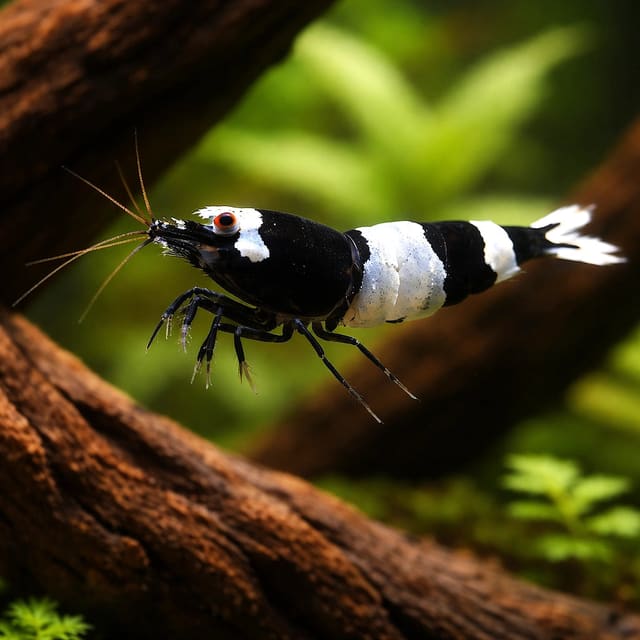
The Red Ruby Taiwan Bee Shrimp is a deep red dwarf freshwater shrimp from the Taiwan bee group, one of the colour forms bred from the Red Bee shrimp. It belongs to the genus Caridina in the family Atyidae. Each purchase is one live shrimp. The deciding question before you buy is the water: this shrimp needs a mature aquarium with soft, acidic water that stays steady, so it makes a better second shrimp project than a first one.
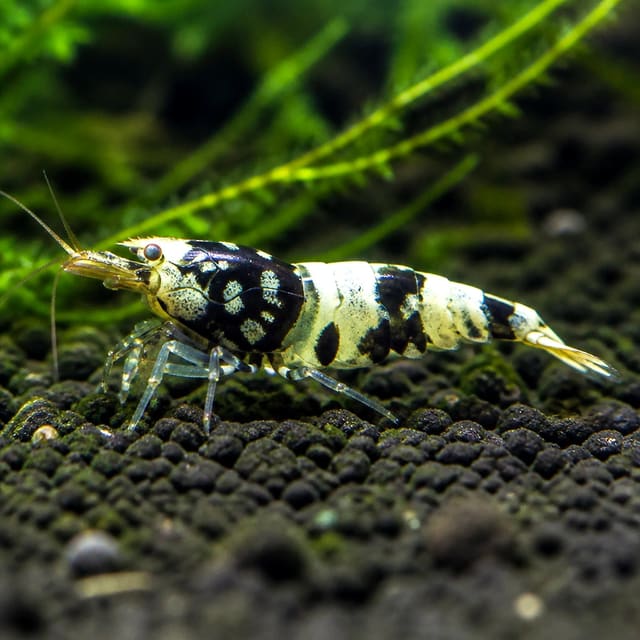
A Practical Fishkeeping feature by Chris Lukhaup explains that the Taiwan bee colour morphs, which breeders call Panda, King Kong, Blue Bolt, Red Ruby or Golden, arose from a spontaneous mutation in the tanks of a Taiwanese breeder working with Red Bee shrimp. The same article treats the Crystal Red shrimp as Caridina cf. cantonensis, scientifically unidentified and possibly an undescribed species. Bee shrimp are usually filed under Caridina cantonensis, which the World Register of Marine Species accepts as a species, and many modern versions of the bee shrimp have been selectively bred for their colour.
The exact species has not been identified, so the care advice here follows the genus Caridina and its care group. WoRMS accepts Caridina as a genus in the Atyidae, and for water and husbandry the relevant care group is the bee shrimp and their Taiwan colour forms, whose needs Practical Fishkeeping describes as practically identical across the varieties.
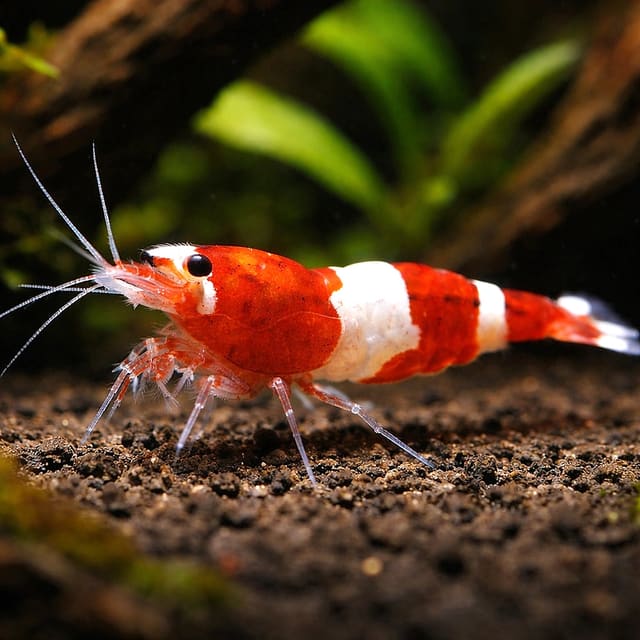
Compared with the Crystal Red or Red Bee shrimp it arose from, the Red Ruby is a colour form rather than a different animal to keep. Practical Fishkeeping describes the requirements of the Taiwan bee varieties as practically identical, and notes that breeding any of them successfully needs water close to their soft-water habitats. So the choice between them is about colour; the aquarium you prepare is the same soft, acidic, steady set-up either way.
| Suits | Keepers with a mature soft-water shrimp aquarium and some shrimp-keeping experience |
|---|---|
| Not suited to | A first shrimp tank, hard tap water or fish that can eat shrimp |
| Care level | Intermediate: not a first shrimp |
| Sold as | One live shrimp per purchase, dispatched at around 1–1.3 cm |
| Temperature | 20–24°C, held steady |
| pH | 6.0–6.8 |
| Hardness | GH 3–6, KH 0–2, TDS 120–150 |
| Aquarium | About 40 litres recommended for stability |
Each purchase supplies one live Red Ruby Taiwan Bee Shrimp, dispatched at around 1–1.3 cm. That is the size at dispatch rather than a full-grown size. Because bee shrimp prefer large groups, plan to keep several together and build the colony up gradually.
Sex is guaranteed only when the selected option explicitly states male or female. This Red Ruby Taiwan Bee Shrimp listing has no sex-guaranteed option.
Gallery images have been digitally enhanced to improve image quality. Natural colour, pattern, size and maturity can vary between live animals.
You can compare other freshwater shrimp in our shrimps and crustaceans collection. Bear in mind that Taiwan bees are more demanding of their water than Neocaridina shrimp, so not every shrimp there belongs in the same tank.
Get the aquarium ready first and order second. Set up the substrate and filter, let the tank mature, then test pH, GH, KH and TDS over several days until the readings hold still. Only then decide how many shrimp to add. Because each purchase is one shrimp, you choose the group size yourself; a modest first group that the filter and your feeding routine can absorb is easier to keep stable than a large one added in a single delivery.
Bee shrimp can be housed in 20 litres or less, but the Shrimp and Snail Breeder bee shrimp guide advises against it without shrimp-keeping experience and recommends about 40 litres as the more common choice. The reason is stability: more water volume holds its parameters more steadily, and bee shrimp are more sensitive to changes in water quality than hardier shrimp. The Taiwanese breeding station described by Practical Fishkeeping kept no breeding tank smaller than 80 litres, because larger systems are easier to keep stable.
The OATA shrimp and snail care sheet gives 10 litres as its lowest figure for a group of small freshwater shrimp and advises a larger aquarium if fish share the tank. Treat that as a floor for hardy shrimp, not a target for this one.
Bee shrimp need a well-established tank. Before adding any shrimp, check that ammonia and nitrite are both at zero, and add livestock slowly, because the beneficial bacteria in a matured filter need to increase each time more animals are added and feeding rises. Stocking too quickly can cause new tank syndrome, where waste outpaces the bacteria and ammonia and nitrite rise to levels that can make shrimp ill or kill them. Our shrimp-keeping care guide walks through preparing and maturing an aquarium before livestock arrives.
A filter is always essential. Sponge or matten filters are the usual recommendation for bee shrimp, because they are safe for baby shrimp. At the breeding station in the Practical Fishkeeping feature, filtration was an undergravel filter driven by an external filter or combined with an air-driven sponge filter. The RSPCA's aquarium guidance explains what that filter is doing: beneficial bacteria convert toxic ammonia into nitrite, which is also toxic, and then into safer nitrate.
Good aeration matters too. Bee shrimp come from mountain streams and rivulets, and both specialist sources stress a well-aerated tank. An air-driven sponge filter, as used at that breeding station, provides filtration and air movement together.
Give the shrimp a substrate and cover. OATA recommends gravel or sand and ideally live plants; if live plants are not used, plastic plants and ornaments such as plant pots or model caves give shelter. For this shrimp the substrate choice also affects the water, which is covered in the next section.
Water chemistry is the biggest single factor with this shrimp. The specialist bee-shrimp guide gives the aquarium targets below and notes that the colour strains bred from bee shrimp are especially demanding of water parameters compared with Neocaridina shrimp.
| Parameter | Aquarium target |
|---|---|
| Temperature | 20–24°C |
| pH | 6.0–6.8 |
| General hardness (GH) | 3–6 |
| Carbonate hardness (KH) | 0–2 |
| Total dissolved solids (TDS) | 120–150 |
| Ammonia and nitrite | Zero |
| Nitrate | Below 20 ppm |
Dwarf shrimp do not like big and sudden changes, and with bee shrimp those changes can cause serious moulting problems. They are also sensitive to ammonia and nitrates. Practical Fishkeeping adds that many shrimp react badly to a quick rise in temperature, shrimplets first and foremost, while a fall seems to be less of a problem. The practical rule is to pick a point inside each range, hold it there and make every adjustment slowly.
Aim for 20–24°C. Higher temperatures speed up metabolism and breeding but shorten a bee shrimp's life, so warmer is not better. Practical Fishkeeping reports that these shrimp can also be kept successfully at 17–22°C, similar to their habitats, and that 22–24°C is used for breeding. A heater set in the low 20s and a thermometer you actually read keep you inside all of those figures.
Bee shrimp appreciate acidic water. They can sometimes thrive at a neutral pH of 7.0, but only after several generations bred in those conditions, so newly arrived shrimp belong at 6.0–6.8. With KH at 0–2 the water has very little buffering of its own, which is why an active substrate is used to hold the pH down. GH 3–6 and TDS 120–150 describe the overall mineral content to aim for; a TDS meter gives a quick reading between fuller tests.
Practical Fishkeeping describes habitats in South China, Taiwan and Hong Kong as shallow water near the banks of small, slow-flowing, heavily shaded brooks, measured in the wild at 16°C, with no detectable carbonate hardness, a conductivity of 12 µS and a pH of 5.8. Those are wild measurements, not aquarium targets. Its breeding values of 200 microsiemens/cm and pH 6.4–6.9 are likewise for breeding set-ups. Both show the same direction as the targets above: very soft, slightly acidic water.
General shrimp-and-snail care sheets, including OATA's, quote much wider ranges because they cover hardier species too; use the bee-shrimp targets for this shrimp. Our water chemistry guide explains what each reading means, and the water matcher tool lets you compare your own test results with these targets.
The specialist bee-shrimp approach does not use tap water for these shrimp. Its choice is RO/DI (reverse osmosis/de-ionised) water, which contains no minerals, so pH, KH, GH and TDS can be set exactly with a shrimp remineraliser. The benefit is repeatability: every batch comes out the same, so a water change does not shift the chemistry the shrimp are used to.
An active, buffering substrate lowers pH and plays a crucial role when pH must stay below 7.0, which it must for this shrimp. That makes an active buffering shrimp soil the usual way to keep soft water acidic. An inert substrate is an option only when the water itself is very soft: the breeding station in the Practical Fishkeeping feature used fired clay granules without fertiliser, which do not influence the water, together with very soft water.
Whichever you choose, set the substrate up and let the tank mature before the shrimp arrive, then test pH, GH, KH and TDS over several days to confirm the readings are stable rather than drifting.
Wikipedia describes bee shrimp as scavengers that eat small pieces of decayed vegetation and algae. The specialist guide calls them opportunistic omnivores that find algae and biofilm in a well-established tank, which is one more reason to add them only once the aquarium has matured. Supplement that grazing with shrimp foods, leaves and blanched vegetables; OATA also notes commercial pellets made for freshwater shrimp.
Feed once a day, or once every two to three days in a matured tank, and give only what the shrimp finish within 3–6 hours. Remove anything left after that, because uneaten food breaks down and releases toxic waste into the water. Never overfeed, because bee shrimp are sensitive to ammonia and nitrates.
A healthy group comes to food readily. OATA lists reduced intake or lack of interest in food among its warning signs, so a colony that ignores a normal portion is worth a water test the same day.
Every order is hand-packed by our team: the shrimp is bagged in pure oxygen and packed in an insulated poly box, with a heat pack when the weather calls for it. We email the tracking number and your confirmed Thursday or Friday delivery date, and a licensed live-animal courier carries the parcel. The full terms are on our delivery and Live Arrival Guarantee page.
If anything has gone wrong, contact us the same day, with WhatsApp the fastest route, and send your order number and the unboxing video. We will then arrange a replacement or refund under the Live Arrival Guarantee.
Bee-shrimp specialists add one more stage between floating and release. The specialist guide advises acclimating very slowly, with 2–3 hours being good enough, and Practical Fishkeeping says it is extremely important to adapt these shrimp to new water quite slowly, adding small amounts at long intervals. So once the bag has floated, keep the shrimp in its bag water, open the bag and add small amounts of aquarium water at long intervals over about 2–3 hours. Then net the shrimp into the aquarium and discard the bag water.
If you already keep shrimp, the specialist guide also recommends quarantine before new shrimp join an existing tank. Test the main aquarium in the days before delivery too: ammonia and nitrite at zero, and temperature, pH, GH and TDS steady inside the targets.
OATA strongly recommends a 25% partial water change at least once every week, with a siphon to remove solid waste from the gravel. For bee shrimp the replacement water matters as much as the routine: make it from RO/DI and remineraliser to the same GH and TDS as the tank, bring it to the same temperature and add it slowly. Consistency is the aim: big and sudden differences between tank water and new water are what bee shrimp handle worst.
Test the water regularly, at least once a week, so that ammonia and nitrite never build up. For this shrimp, add pH, GH, KH and TDS to that routine and note the results. A note of TDS between changes shows whether the water is drifting away from the 120–150 target.
Keep the substrate, sponge filter and décor as undisturbed as practical. A stable, well-grazed aquarium is exactly what these shrimp need, and frequent rescaping works against it.
Shrimp grow by moulting their shell. A moulting shrimp should not be touched, and the shed shell can be left in the aquarium for the shrimp to eat. Because big and sudden changes in water can cause serious moulting problems, check the water-change routine first whenever a moult goes wrong.
Stressed bee shrimp dull their colour for a time. A Red Ruby that looks faded after a move, a large water change or a temperature swing is telling you something about its surroundings. Test straight away, correct the cause slowly and give the colony time to settle.
OATA lists the changes worth watching so problems are caught before they become a real health issue:
Freshwater shrimp are very sensitive to copper and will die if exposed even to low levels. Bee shrimp do not tolerate copper-based medications, so always make sure any treatment added to the aquarium is safe for invertebrates. If a problem appears, test the water before reaching for any product, and contact us with your readings if you would like help interpreting them.
The mistakes below are the ones the specialist sources warn about most directly. Practical Fishkeeping puts it bluntly: keepers who do not cater properly to these shrimp's rather high requirements often lose them after a few days. Each point below comes straight from the care advice above.
Most of them come down to patience, regular testing and the habit of changing things slowly.
The specialist guide describes a species tank as the ideal home for bee shrimp. They are completely harmless and not territorial, and they prefer large groups: the bigger the colony, the safer they feel. OATA also notes that shrimp species are usually social. A well-planted tank given over to a growing colony shows this shrimp at its best.
Freshwater shrimp should not be mixed with any fish that can fit them in their mouth, or with any species known to be predatory, and they may be eaten by common aquarium fish. Large or aggressive fish should be avoided altogether. Other peaceful tank mates are possible if they share the same soft, acidic water and are chosen with care, and OATA advises a larger aquarium whenever shrimp share with fish. Always check a fish's needs and mouth size before combining it with shrimp.
Keep bee shrimp away from most crayfish and freshwater crabs. Even small African dwarf frogs will try to catch them, so they do not belong together either.
Snails need more thought here than in a hard-water tank. Some snails can suffer shell attrition below pH 7.0, and this shrimp is kept at 6.0–6.8, so choose any snail with that pH in mind and watch its shell.
No, it is a colour form. Practical Fishkeeping describes Red Ruby, King Kong, Panda and similar Taiwan bees as colour morphs that arose from a spontaneous mutation in a Taiwanese breeder's Red Bee shrimp tanks. Bee shrimp are usually filed under Caridina cantonensis, but the exact species behind these lines has not been pinned down, so this shrimp is listed as Caridina sp.
Soft, acidic water that stays steady. The specialist bee-shrimp targets are 20–24°C, pH 6.0–6.8, GH 3–6, KH 0–2 and TDS 120–150, with ammonia and nitrite at zero and nitrate below 20 ppm. The usual way to hold those values is RO/DI water remineralised for shrimp, over an active buffering substrate.
The specialist bee-shrimp guide says tap water cannot be used for these shrimp. Its route is RO/DI water, which contains no minerals, brought up to the target GH, KH and TDS with a remineraliser made for shrimp. That gives you the same water at every change, which matters more than any single reading.
Bee shrimp appreciate acidic water. They can sometimes thrive at pH 7.0, but only after several generations bred in those conditions, so newly bought shrimp should be kept at pH 6.0–6.8 over an active buffering substrate that holds the pH down.
It is not a good first shrimp. Bee shrimp leave little room for mistakes and need a well-established aquarium with suitable soft water, and Practical Fishkeeping warns that keepers who do not meet their rather high requirements often lose them within days. Gain experience with an easier shrimp first.
About 40 litres is the recommended size for bee shrimp, because a larger volume keeps the water more stable. Smaller set-ups of 20 litres or less are best left to experienced shrimp keepers. OATA's lowest figure for a group of small freshwater shrimp is 10 litres, and any tank that also holds fish needs to be larger.
Keep them as a group rather than singly. Bee shrimp prefer large groups and feel safer as the colony grows, so plan for several and build numbers gradually, adding new shrimp slowly so the filter bacteria can keep pace.
They scavenge algae, biofilm and small pieces of decayed vegetation in a well-established tank. Add shrimp foods, leaves and blanched vegetables once a day, or once every two to three days in a matured tank, in portions finished within 3–6 hours, then remove what is left. Never overfeed.
It is completely harmless and not territorial. A shrimp-only tank is ideal; peaceful tank mates that share the same soft water can work if chosen with care. Avoid fish that can fit a shrimp in their mouth, predatory species, large or aggressive fish, most crayfish and freshwater crabs, and even small African dwarf frogs. Take care with snails, as some suffer shell wear below pH 7.0.
Only treatments confirmed safe for invertebrates. Freshwater shrimp are very sensitive to copper and will die if exposed even to low levels, and bee shrimp do not tolerate copper-based medications, so check the label of every product before it goes in.
Stressed bee shrimp dull their colour for a time. Test the water straight away and look for a recent sudden change in temperature, hardness or TDS. Colour usually returns once the cause is corrected, but a shrimp that stays pale, hides more than normal or stops feeding needs closer attention.
Leave it alone. A moulting shrimp should not be touched, and the shed shell can stay in the tank for the shrimp to eat. Big, sudden changes in the water can cause serious moulting problems, so keep every change gentle and well matched.
It is hand-bagged in pure oxygen and packed in an insulated poly box, with a heat pack when the weather calls for it, then carried by a licensed live-animal courier on your confirmed Thursday or Friday delivery date. Be in to receive it, film a continuous unboxing video from the sealed parcel onwards, open and inspect it the same day, then float the bag for 20–30 minutes. Bee-shrimp keepers then add small amounts of tank water over about 2–3 hours before netting the shrimp in without the bag water.
Packing, delivery days and the Live Arrival Guarantee follow our store delivery policy, linked in the arrival section.
No reviews for this item yet. Bought one? Honest reviews only, good or bad.
What customers say about ordering from us
I have a small group of long finned mountain minnows. So was delighted to be able to order ten of this variety to increase the genetics in my tank . The ones I recieved are healthy but it’s to early to give a verdict on wether they are of a long finned type since they are small currently.
Gordon Walker · 23 Sept 2026
100% success travel and "installation". Pleased with quality of purchase. The Siamese fighter a bit "shy" so have not yet seen him at his best yet but looking good. Happy customer. GG
George E Garratt · 21 Sept 2026
Reviews of our shop, collected by Judge.me, an independent third-party review collector. Newest first.