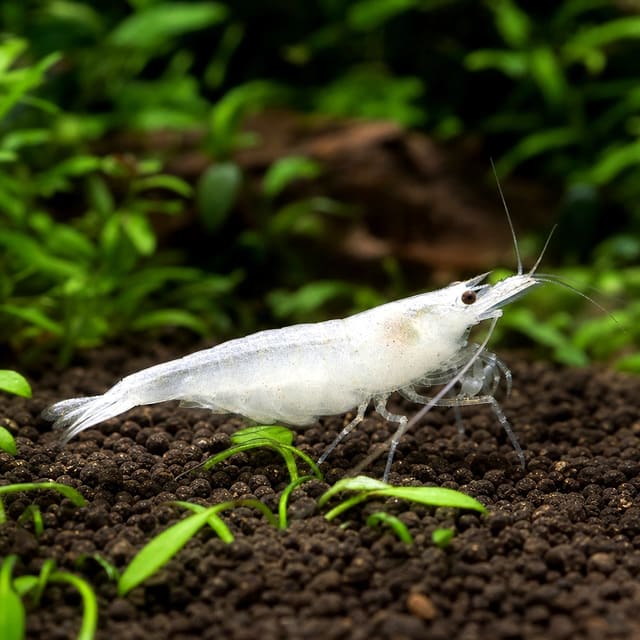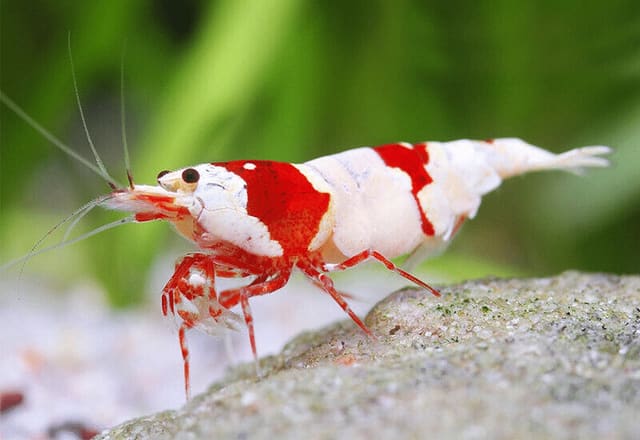
Crystal Red / Red Bee Shrimp (Caridina cantonensis) – 1–2.5cm Sizes
17–27°C · pH 6.5–8
£11.99

Crystal Black Shrimp (Caridina sp.) is a black-and-white banded freshwater shrimp for a mature, stable aquarium without shrimp-eating fish. Each purchase is one shrimp at 1 cm, 1–1.5 cm or 2–2.5 cm, so order several: shrimp do best in a group.
Caridina sp.
Lives in groups: kept together they stay settled, active and show their best colour.
Crystal Black Shrimp (Caridina sp.) is a black-and-white banded freshwater shrimp for a mature, stable aquarium without shrimp-eating fish. Each purchase is one shrimp at 1 cm, 1–1.5 cm or 2–2.5 cm, so order several: shrimp do best in a group.
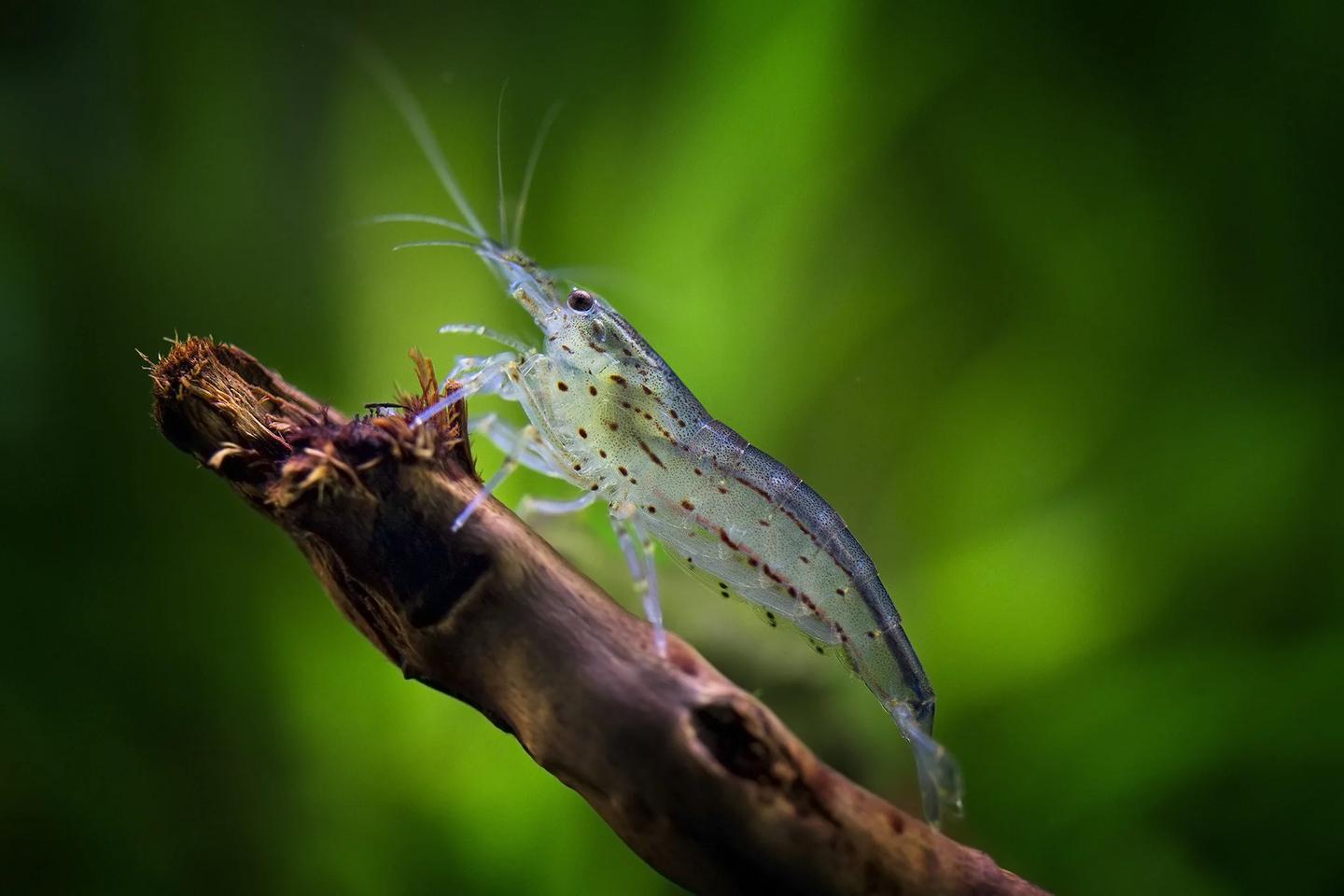
Start with a mature, filtered aquarium. OATA's broad UK guidance suggests approximately 20 litres for Amano Shrimp and at least five for social shrimp, with a larger aquarium when fish are present. Treat those as cautious planning screens—not biological minima or a per-litre formula. Match the complete adult community, test your water, protect the filter inlet and never buy them as a guaranteed algae cure.
Maintain these water conditions for optimal health and vibrant colors
Crystal Black Shrimp is a black-and-white crystal form of Caridina, a genus of freshwater shrimp in the family Atyidae. Each purchase is one live shrimp, and because shrimp are usually social animals, plan to order several and start a small group. They need a mature, well-filtered aquarium with stable water, no copper and no fish large enough to swallow them.
The exact species has not been identified, so the care advice here follows the genus Caridina and its care group. In practice that means following the OATA care sheet for freshwater shrimp and snails, keeping conditions steady rather than chasing precise numbers, and paying close attention to water quality and to anything that could carry copper into the tank.
| Scientific name | Caridina sp. (species not identified) |
|---|---|
| Family | Atyidae |
| Genus range in the wild | Tropical and subtropical waters of Asia, Oceania and Africa |
| Supplied as | One shrimp per purchase, at 1 cm, 1–1.5 cm or 2–2.5 cm |
| Group water guidance | 17–27 °C, pH 6.5–8.0, 4–18 °dH (OATA, freshwater shrimp and snails) |
| Temperament | Peaceful; generally compatible with most aquarium species |
| Main risk | Fish that can fit a shrimp in their mouth, and any copper in the water |
| Suits | A mature, stable shrimp aquarium kept by someone who tests the water weekly |
Every unit is a single shrimp. Choose 1 cm, 1–1.5 cm or 2–2.5 cm on the product page, then set the quantity to the size of group you want. The size you select is the size supplied, not the adult size. Order all the shrimp you need for a group in one size if you want them to look alike as they settle in together.
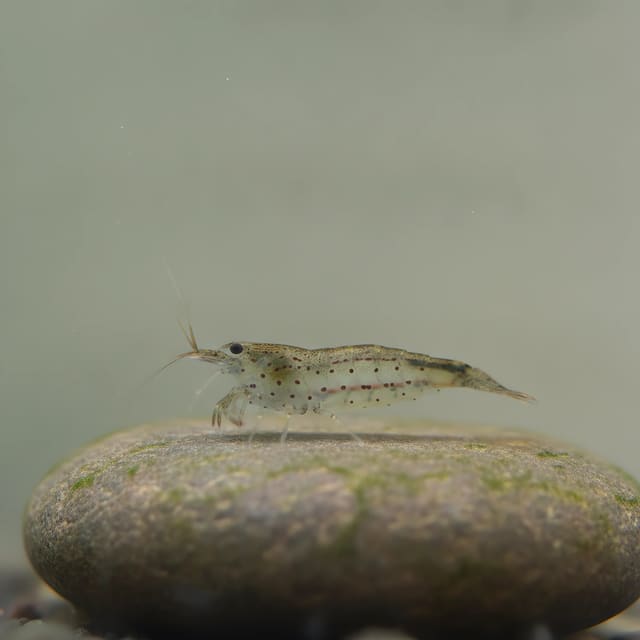
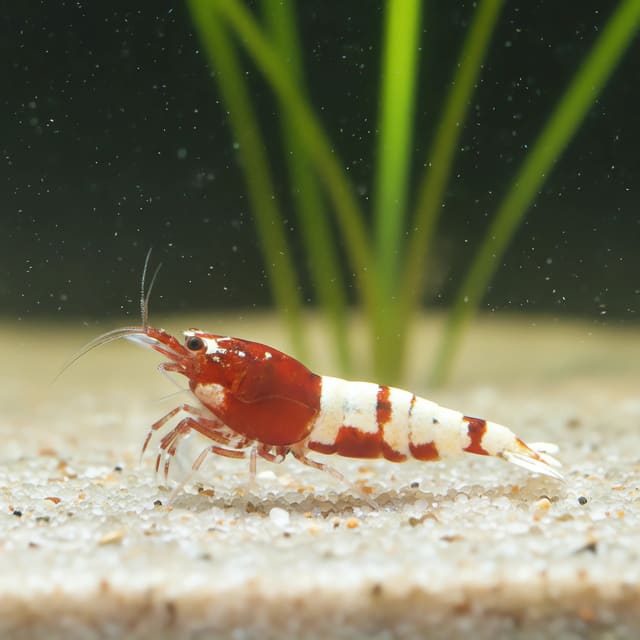
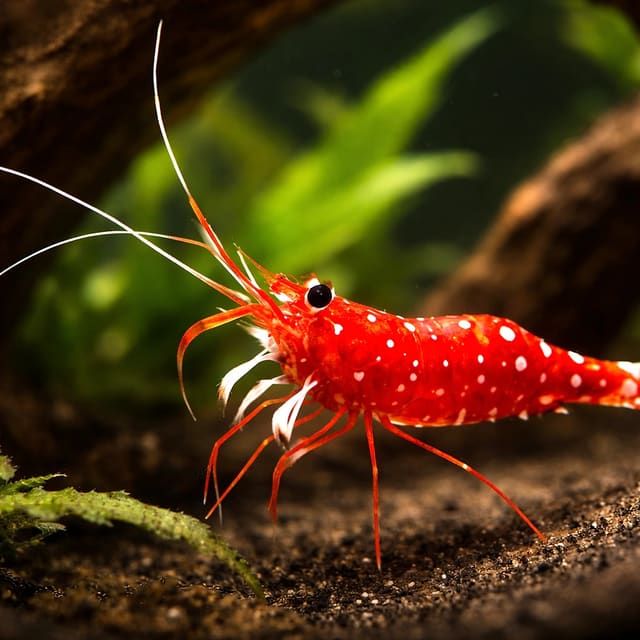
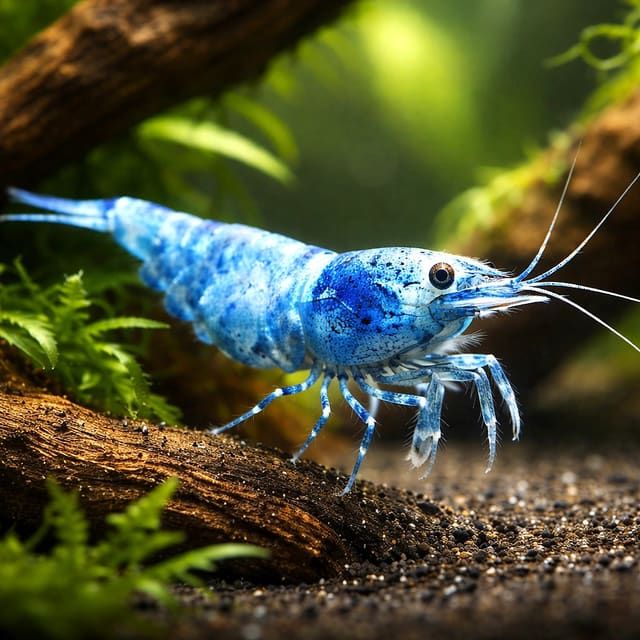
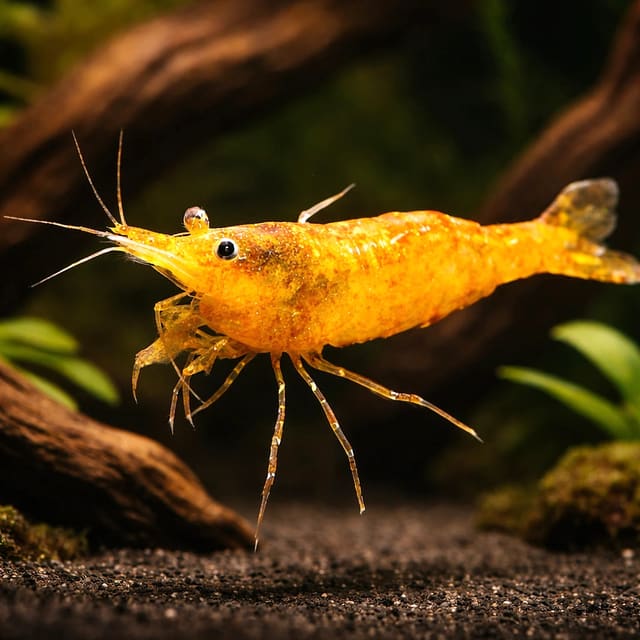
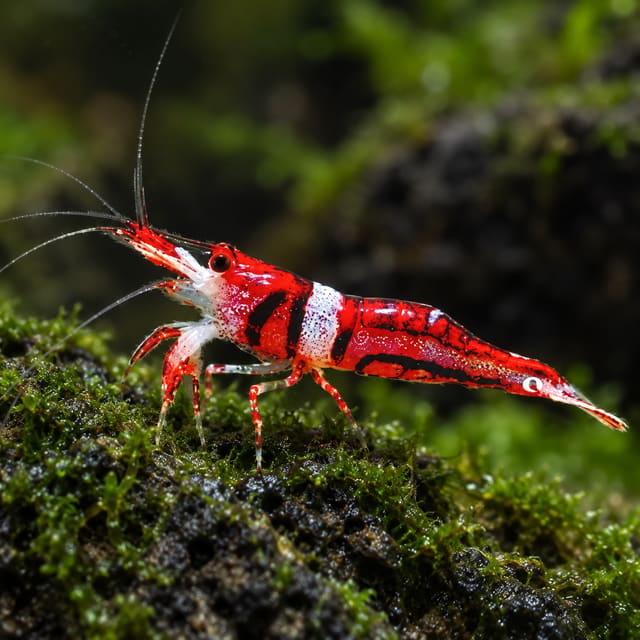
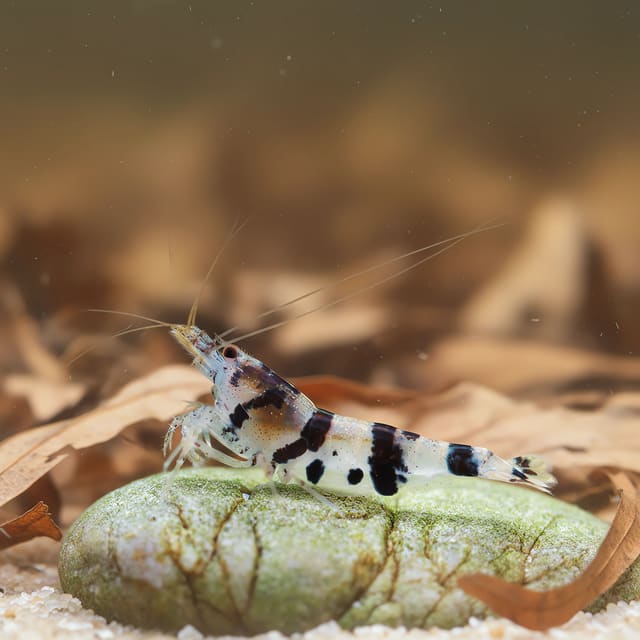
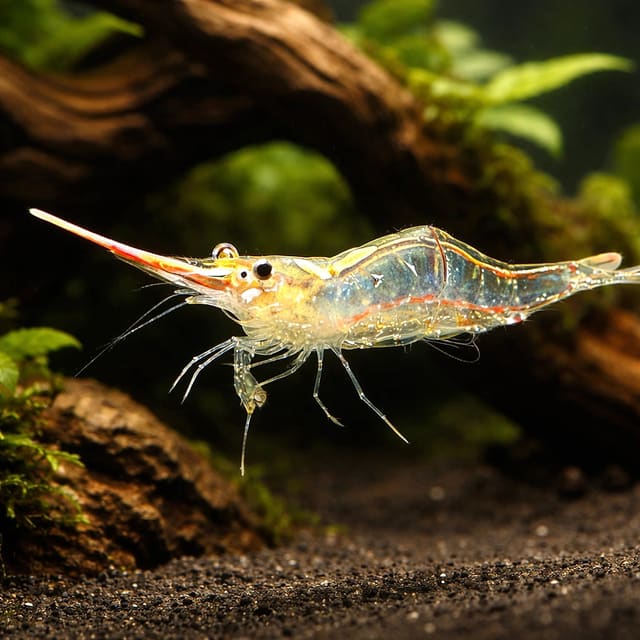
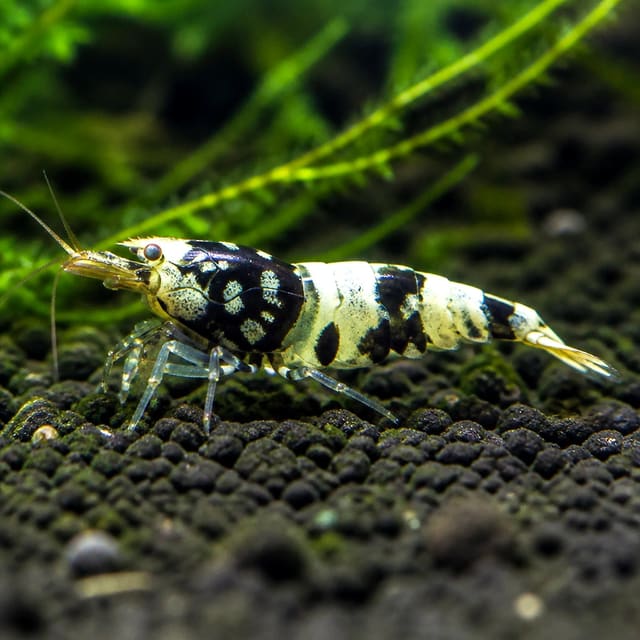
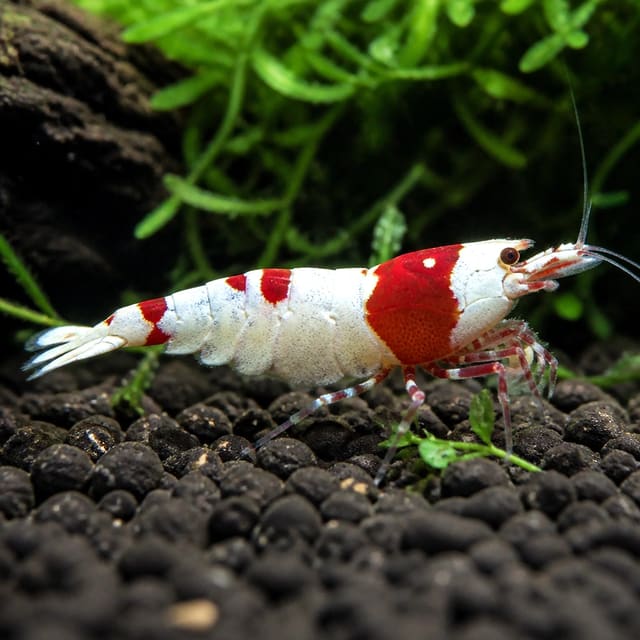
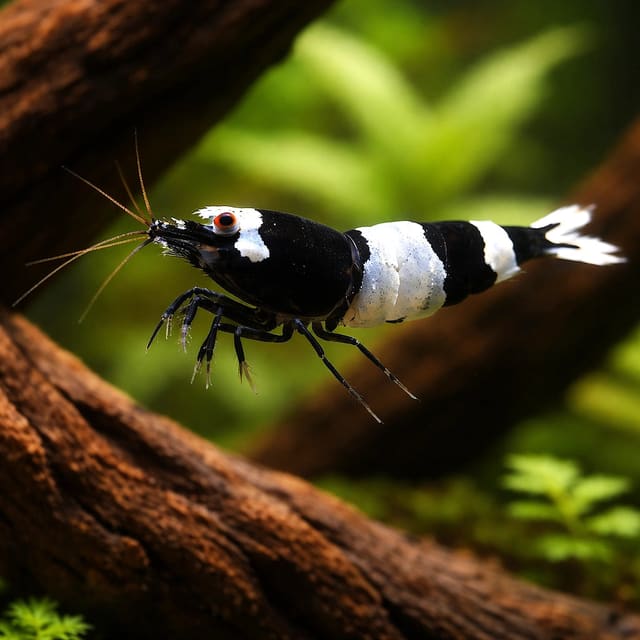
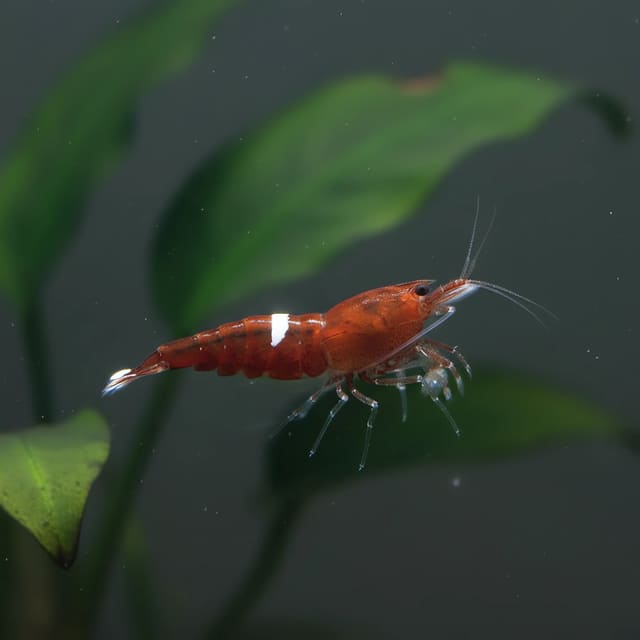
This black-and-white crystal form is chosen for its pattern. The gallery shows shrimp with dark bands across a white, partly clear body and a speckled, translucent head. Gallery images have been digitally enhanced to improve image quality. Natural colour, pattern, size and maturity can vary between live animals.
In a shrimp-only aquarium any of the three sizes works, and the choice comes down to how you would like the group to start. If small fish will share the tank, size matters more. OATA warns against keeping shrimp with any fish that can fit them in its mouth, and a 1 cm shrimp fits into more mouths than a 2–2.5 cm one. The larger size narrows that risk but never removes it, so the rules on the compatibility tab still apply whichever size you pick.
Sex is guaranteed only when the selected option explicitly states male or female. This Crystal Black Shrimp listing has no sex-guaranteed option. Shrimp are chosen from the size you select, not by sex.
The abbreviation sp. after a genus name means the animal belongs to that genus but has not been identified to species level. The World Register of Marine Species lists Caridina as an accepted genus in the family Atyidae, and that is as far as this crystal form is identified here. For you as a keeper, it means the care on this page is built on what applies to freshwater shrimp as a group, with extra weight on stable water, clean conditions and safe companions.
To compare other shrimp before deciding, browse our shrimp and crustacean collection.
A shrimp aquarium needs stability as much as space. The OATA care sheet for freshwater shrimp and snails recommends an aquarium of at least 10 litres for a group of small freshwater shrimp, and says it will need to be larger if you keep shrimp with any fish. OATA also points out that the larger the aquarium, the more stable temperature and water quality will be, so a bigger tank gives a small, sensitive animal a wider safety margin.
A filter is always essential, whatever the size of the tank. As the RSPCA explains, animals release ammonia, which is toxic, and a working biological filter lets beneficial bacteria turn it into nitrite, which is also toxic, and then into nitrate, which is safer. A shrimp tank depends on that filter being fully matured before the first shrimp goes in.
Live plants and mature surfaces also carry the algae that freshwater shrimp graze on, which OATA describes as their natural way of feeding in the aquarium. A tank with established plants and decor therefore offers food as well as cover between meals.
Think about the tank for the group, not for a single animal. Shrimp are usually social, and OATA's 10 litre figure is for a group of small shrimp. If you hope to add more later, or to keep a few small peaceful fish alongside them, start with a larger aquarium rather than upgrading once the shrimp have settled.
Our freshwater shrimp care guide walks through setting up a first shrimp tank, from choosing equipment to maturing the filter, and is worth reading before you order.
OATA describes freshwater shrimp and snails as usually undemanding of water chemistry and gives the following suggested parameters as a general guide for the whole group:
| Temperature | 17–27 °C |
|---|---|
| pH | 6.5–8.0 |
| General hardness | 4–18 °dH (soft to hard) |
| Carbonate hardness | 3–15 °dKH (soft to hard) |
| Ammonia | Zero |
| Nitrite | Zero |
| Nitrate | No more than 20 mg per litre above your tap water |
These are broad figures for many kinds of shrimp and snail, not a species-specific optimum. OATA itself advises checking any species-specific requirements with your retailer before buying, and that advice carries extra weight for a shrimp whose exact species is unknown. If you would like to compare your own test results with the ranges above before ordering, contact us with the readings.
Because the ranges are wide, the most useful thing you can do is pick a point within them that your aquarium holds naturally and keep it there. Change conditions slowly if you need to change them at all, and match the temperature, pH and hardness of replacement water to the tank during every water change, so that routine maintenance never becomes a sudden swing.
OATA sets nitrate relative to your tap water rather than as a fixed number: no more than 20 mg per litre above normal tap water levels. Test your tap water once to find its nitrate level, note it, and then keep the aquarium within 20 mg per litre of that figure. Weekly partial water changes are the main way to hold nitrate down.
The group range of 17–27 °C is wide. Choose a temperature within it, set a reliable heater if your room can fall below that point, and keep a thermometer in the aquarium so you can see the temperature at a glance. Steady warmth matters more than the exact figure you pick.
General hardness (GH) measures dissolved minerals such as calcium and magnesium. Carbonate hardness (KH) measures how well the water resists changes in pH. Test both, alongside pH, so you can see whether your water is steady or drifting between changes. Our guide to aquarium water parameters explains each reading, and the water parameter matcher lets you set your results against the ranges in the table.
Being invertebrates, freshwater shrimp are very sensitive to copper and will die if exposed even to low levels. Always make sure that any treatment added to the aquarium is safe for invertebrates, and read the label of every product before it goes near a shrimp tank. Treat all tap water with a conditioner to remove chlorine or chloramine before it goes in.
OATA describes freshwater shrimp as generally herbivorous grazers that feed on algae in the aquarium. That grazing should be supplemented with prepared food so the shrimp get enough to eat.
OATA advises feeding freshwater shrimp only two or three times a week. They need time to eat, so any pellets or wafers should be left for at least 30 minutes to give the whole group a chance to reach them. Take care not to overfeed: uneaten food breaks down and releases toxic waste into the water, and a small shrimp aquarium can be affected quickly.
A practical approach is to offer a small amount, watch how quickly the shrimp gather and eat, and adjust the next portion to match. If food is still lying untouched well after the shrimp have lost interest, lift it out and offer less next time.
In the first days after arrival, feed lightly and watch rather than adding extra food to tempt the shrimp. A newly matured aquarium has less algae to graze than an established one, so wafers and pellets matter more at first; keep the portions small until you can see how much the group actually eats.
OATA stresses that good husbandry is essential for freshwater shrimp, which are easily stressed by poor water quality. A short, regular routine is the best protection.
Write down each test result and water change. With a small animal in a small volume, a slow drift in pH, hardness or nitrate is easier to spot in a list of numbers than by looking at the tank, and the record helps you link any change in the shrimp to a change in the water.
All freshwater shrimp vary a little in behaviour and appearance, but OATA recommends watching for changes in these areas, which can reveal a problem before it becomes a real health issue:
Test the water first: check ammonia and nitrite, then look for any recent swing in temperature, pH or hardness, as a result outside the ranges on this page points to the fix. Think back over anything new added to the aquarium in the last few days, especially treatments, fertilisers or decor, and check each one for copper.
Remove any dead shrimp promptly so it does not foul the water, and keep up the normal weekly routine rather than making several big changes at once. If you are still concerned, get in touch with your test results and a description of what you have seen.
Prepare the aquarium well before the shrimp arrive. OATA advises checking that ammonia and nitrite are both at zero, and increasing the number of shrimp slowly, because the bacteria in a matured filter need to grow each time more livestock is added and feeding increases. Stocking too quickly can cause new tank syndrome, where there are not enough nitrifying bacteria to cope with the extra waste, and unhealthy levels of ammonia and nitrite may cause shrimp to become ill or die.
Every order is hand-packed by our team: livestock is bagged in pure oxygen inside an insulated poly box, with a heat pack when the weather calls for it. We email you the tracking number and your confirmed delivery date, and a tracked courier legally licensed to carry live fish brings the parcel to your door. Someone must be at the address to receive it, because livestock cannot be left unattended. The full terms are on our delivery and Live Arrival Guarantee page.
After floating, the simplest way to keep bag water out of the aquarium is to lift the shrimp across with a small, soft net. Work calmly, move a few at a time and let each one swim off the net inside the tank. Dispose of the bag water afterwards rather than adding any of it to the aquarium.
Over the days after release, check the group against the health list above, keep testing weekly, and feed lightly. Hold off adding more shrimp until the readings stay steady, then add further shrimp in small numbers so the filter can keep pace.
OATA notes that, unlike snails, shrimp species are usually social animals and should be kept in groups. A group is also easier to enjoy, with more shrimp grazing across plants and decor where you can see their banded pattern against green planting.
Because each purchase is a single shrimp, the quantity you choose is the size of your group. Allow for the stocking advice above: a small, well-kept group in a stable aquarium is better than a large one added all at once to a tank that has not yet caught up.
Feeding time is the easiest moment to count your shrimp. Most of the group should come out to the food within the feeding window, so a quick count every few days shows whether numbers are steady. If you notice fewer shrimp than usual, test the water and look over the health signs above before adding anything new.
Wikipedia describes Caridina as a genus of freshwater shrimp found widely in tropical and subtropical waters of Asia, Oceania and Africa, and OATA notes that most freshwater shrimp sold for aquariums are bred in captivity.
Freshwater shrimp are peaceful, and OATA describes them as generally compatible with most species in the aquarium. The risk runs the other way: shrimp may be eaten by common aquarium fish, so OATA advises mixing them with caution.
OATA recommends always checking with your retailer before mixing freshwater shrimp with fish species, and notes that an aquarium housing shrimp and fish needs to be larger than a shrimp-only tank. If you do plan a mixed aquarium, choose fish that are too small to fit a shrimp in their mouth and give the shrimp plenty of planted cover.
| Shrimp-only aquarium | The simplest and safest home, with no predation risk |
|---|---|
| Shrimp with small, peaceful fish | Possible with care: larger tank, dense planting, fish too small to eat shrimp |
| Shrimp with larger or predatory fish | Unsuitable: the shrimp are likely to be eaten |
If the answer to the first two questions is yes, or you are unsure, leave that fish out. A shrimp group is far easier to protect by leaving a doubtful fish out than by trying to manage it later.
The OATA sheet covers freshwater shrimp and snails together and gives both the same general water guidance. Snails are not social in the way shrimp are, and OATA notes that one kind covered by the sheet, the assassin snail, preys on other snail species. If you add any other invertebrate, check its needs against the conditions in your aquarium first.
Because freshwater shrimp are generally compatible with other species, compatibility is really about protecting them. Keep the aquarium calm, planted and free of anything that treats a small shrimp as food, and the group can graze and forage in the open where you can see it.
Adult size depends on the exact Caridina species, and the species behind this black-and-white crystal form has not been identified, so plan the aquarium around the group rather than a single length. OATA recommends at least 10 litres for a group of small freshwater shrimp.
OATA recommends an aquarium of at least 10 litres for a group of small freshwater shrimp, and a larger one if any fish will share it. A bigger tank also keeps temperature and water quality more stable.
Keep a group rather than a single shrimp, because OATA describes shrimp species as usually social. Build the group gradually so the filter bacteria can keep pace with the extra waste.
It can suit a careful keeper of any experience who already runs a mature, stable aquarium and tests the water weekly. Shrimp are very sensitive to copper and to poor water quality, so steady conditions and regular testing matter most.
They graze on algae in the aquarium, and OATA advises supplementing this with algae wafers or pellets made for freshwater shrimp. Feed only two or three times a week and leave food for at least 30 minutes so every shrimp can reach it.
OATA group guidance for freshwater shrimp and snails is 17–27 °C, pH 6.5–8.0 and a general hardness of 4–18 °dH. Because the exact species has not been identified, keep conditions steady within those broad limits rather than changing them often.
No. OATA describes freshwater shrimp as generally compatible with most aquarium species. The risk runs the other way, as shrimp may be eaten by common aquarium fish.
Never keep them with any fish that can fit a shrimp in its mouth or with predatory species, and check with us before adding any fish at all. A planted shrimp-only aquarium is the safest home.
They are hand-packed in bags of pure oxygen inside an insulated poly box, with a heat pack when the weather calls for it, and carried by a licensed live-animal courier with tracking. Someone must be in to receive the parcel. Film a continuous unboxing video from the sealed parcel to the shrimp still in the bag, then float the bag for 20–30 minutes before releasing them; our Live Arrival Guarantee needs that video for any claim.
The care advice on this page draws on these public sources:
No reviews for this item yet. Bought one? Honest reviews only, good or bad.
What customers say about ordering from us
I have a small group of long finned mountain minnows. So was delighted to be able to order ten of this variety to increase the genetics in my tank . The ones I recieved are healthy but it’s to early to give a verdict on wether they are of a long finned type since they are small currently.
Gordon Walker · 23 Sept 2026
100% success travel and "installation". Pleased with quality of purchase. The Siamese fighter a bit "shy" so have not yet seen him at his best yet but looking good. Happy customer. GG
George E Garratt · 21 Sept 2026
Reviews of our shop, collected by Judge.me, an independent third-party review collector. Newest first.