Expert
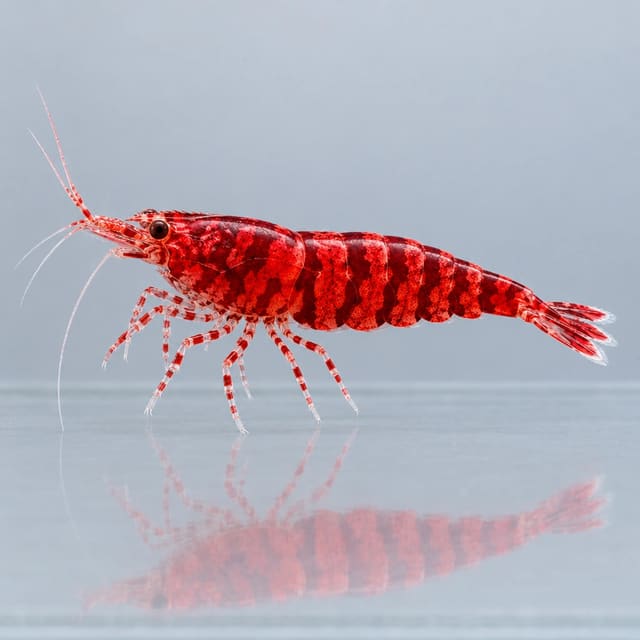
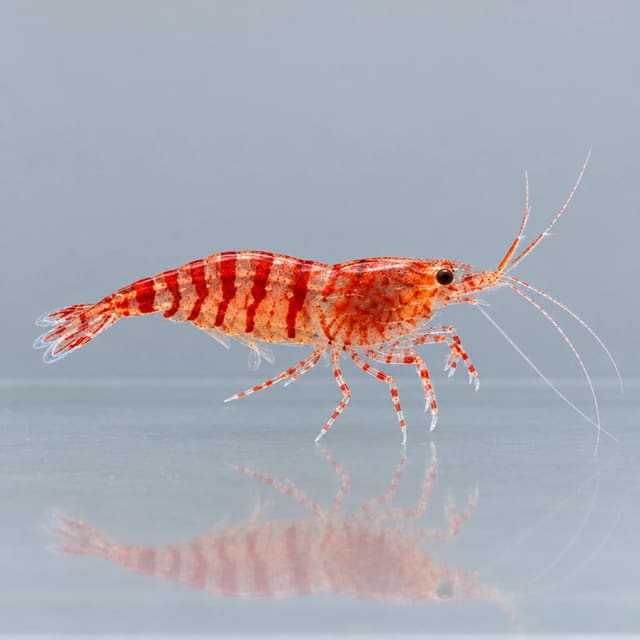
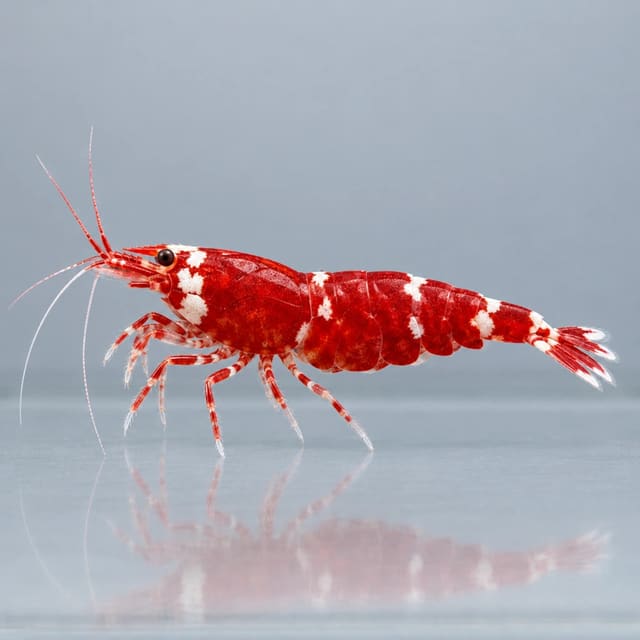
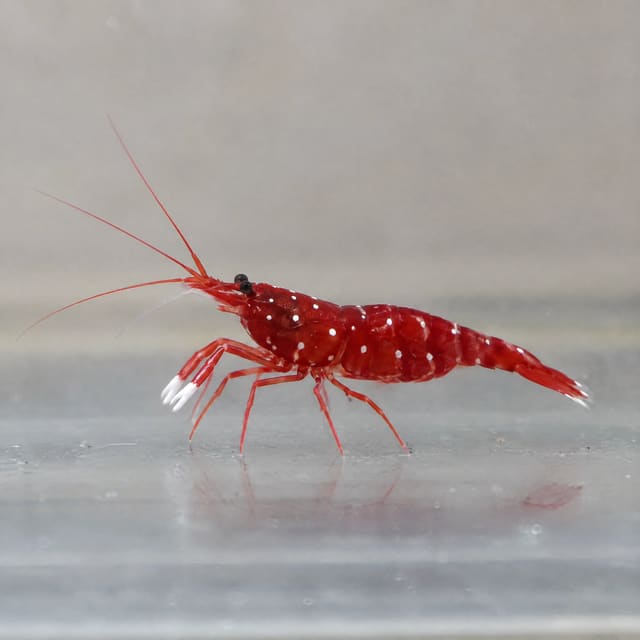
Red Pinto Taiwan Bee Shrimp (Caridina cantonensis)
20–24°C · pH 5.8–6.6
£42.99
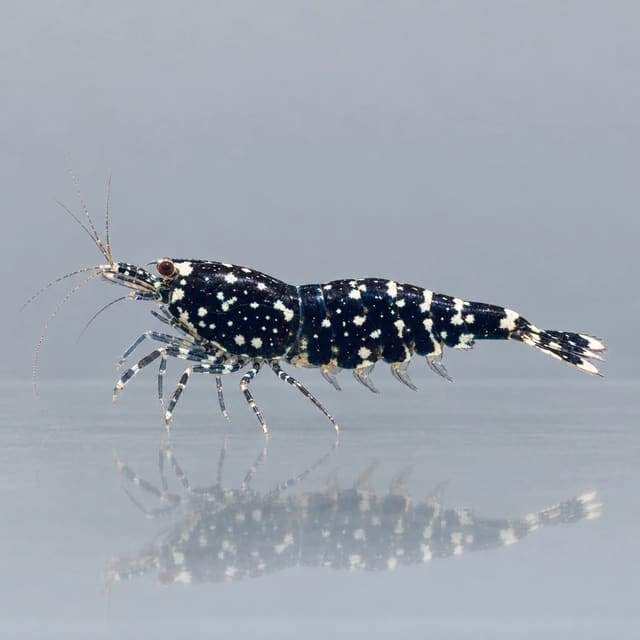
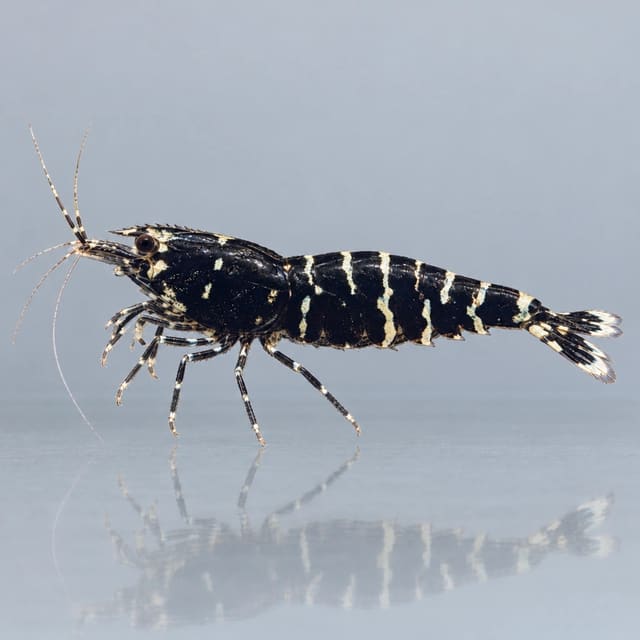
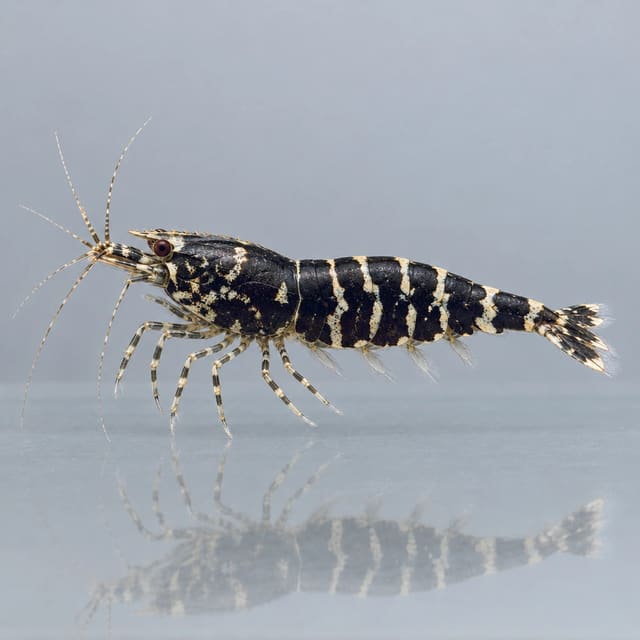
The Blue Diamond King Kong Shrimp is a line-bred Taiwan bee shrimp (Caridina) with a deep blue-black body broken by white patches. Keep five or more in a mature, shrimp-only tank with soft, acidic, steady water at about 20–23°C. Sold singly as one live shrimp.
Adult size is the maximum length this species reaches at full maturity (scientific sources). The livestock you receive will be younger and smaller. Product-photo provenance and any image-specific limitations are stated on the listing.
Caridina sp. (Taiwan bee line)
Choose a quantity for your aquarium. Discount thresholds are pricing offers, not a stocking recommendation.
The Blue Diamond King Kong Shrimp is a line-bred Taiwan bee shrimp (Caridina) with a deep blue-black body broken by white patches. Keep five or more in a mature, shrimp-only tank with soft, acidic, steady water at about 20–23°C. Sold singly as one live shrimp.
Adult size is the maximum length this species reaches at full maturity (scientific sources). The livestock you receive will be younger and smaller. Product-photo provenance and any image-specific limitations are stated on the listing.
Read the full care guidance when planning conditions for your aquarium.
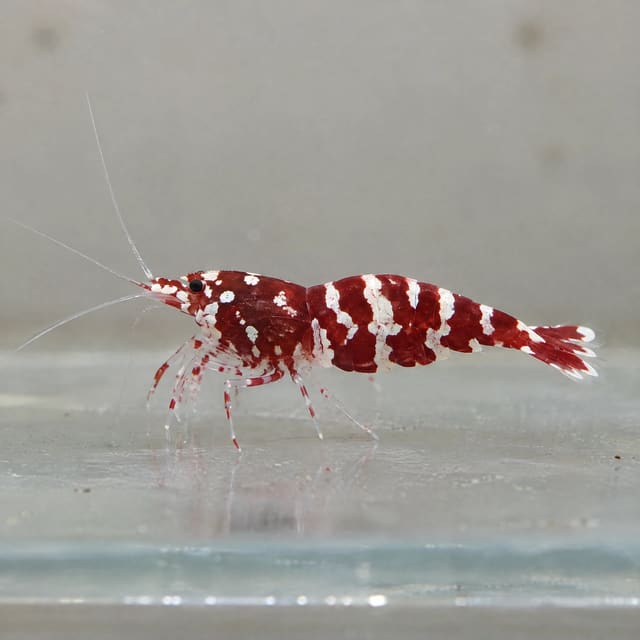
The Blue Diamond King Kong Shrimp is a Taiwan bee shrimp, a selectively bred Caridina, with a deep blue-black body broken by bright white patches, blue-washed legs banded with white, and a white-edged tail. Under good light the dark areas show a glossy blue sheen. It is a soft-water shrimp for a mature, stable aquarium, ideally one kept for shrimp alone, and it rewards keepers who prepare their water carefully.
Read on for what the trade names mean, what arrives when you order, and the full routine for water, tank, feeding, acclimatisation, health and breeding, with the sources for every figure.
Taiwan bee shrimp first reached European hobbyists as a group of new colour morphs. Chris Lukhaup, in Practical Fishkeeping in December 2009, named Panda, King Kong, Blue Bolt, Red Ruby and Golden, and traced them to a spontaneous mutation in the tanks of a Taiwanese breeder working with Red Bee shrimp. Lukhaup and Pekny’s Aquarium Invertebrates notes that in Asia the same shrimp are called Shadow Shrimp or Shadow Bees, includes Blue Bolt in the Shadow Bee grade list, and offers a second origin theory, a tiger x bee cross, which the authors consider viable. TFH Magazine describes the Taiwan strains as apparently all caused by the same mutation.
“King Kong” is the name for the dark-bodied Taiwan bee line, and blue-based King Kong forms are sold under several names, including this one. No source we checked publishes how blue King Kong lines were produced, and sellers do not use the names consistently, so the photographs on this page are the best description of what you are buying. The species question is also open: a 2014 study by Klotz and von Rintelen grouped all five ornamental bee samples with Caridina cantonensis, which Seriously Fish’s summary calls “the genuine ancestor of line-bred aquarium forms such as the ‘crystal red’, ‘King Kong’, or ‘blue bolt’”, while Practical Fishkeeping files bee shrimp under C. logemanni. We list it as Caridina sp.
| Shrimp | Genus | Look | Water |
|---|---|---|---|
| Blue Diamond King Kong (this listing) | Caridina (Taiwan bee) | Deep blue-black with white patches; blue legs banded white | Soft, acidic |
| Blue Bolt Shrimp | Caridina (Taiwan bee) | Pale sky-blue and white marbling in our photographs | Soft, acidic |
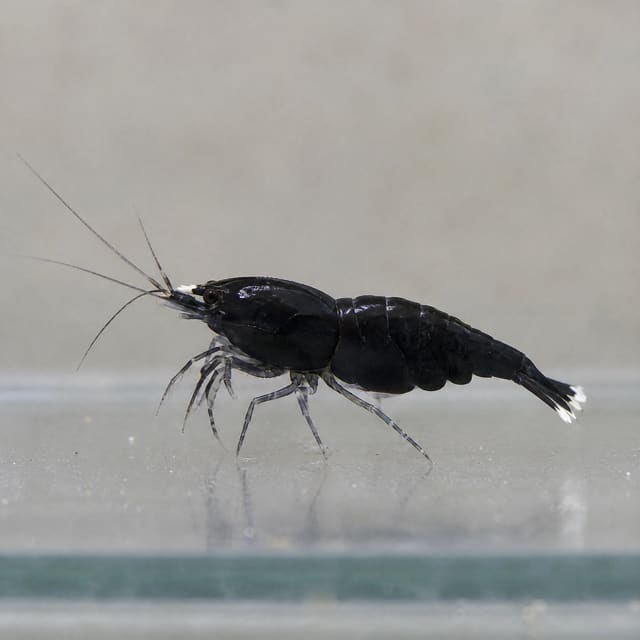
| King Kong Taiwan Bee Shrimp | Caridina (Taiwan bee) | Glossy black | Soft, acidic |
| Blue Diamond Shrimp | Neocaridina davidi | Solid blue cherry-type shrimp | Harder: pH 6.5–8, GH 8–18 (Practical Fishkeeping) |
| Black diamond (tiger form) | Caridina (tiger) | Dark blue body with heavy black striping (TFH Magazine) | Soft; crosses with bees |
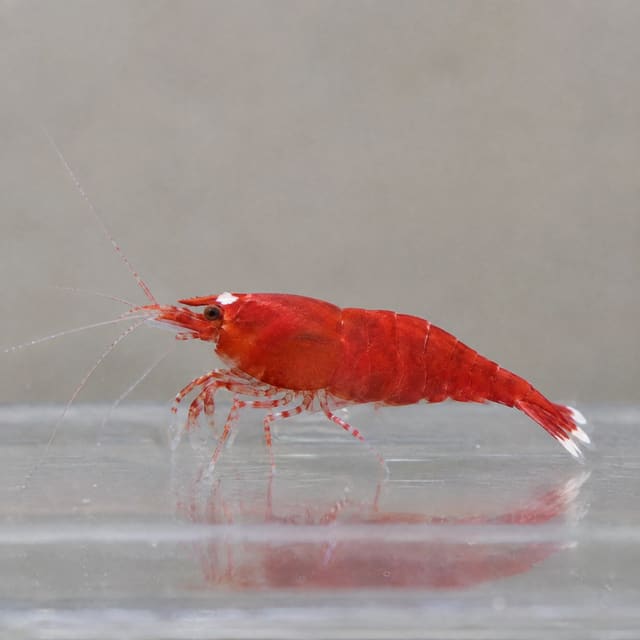
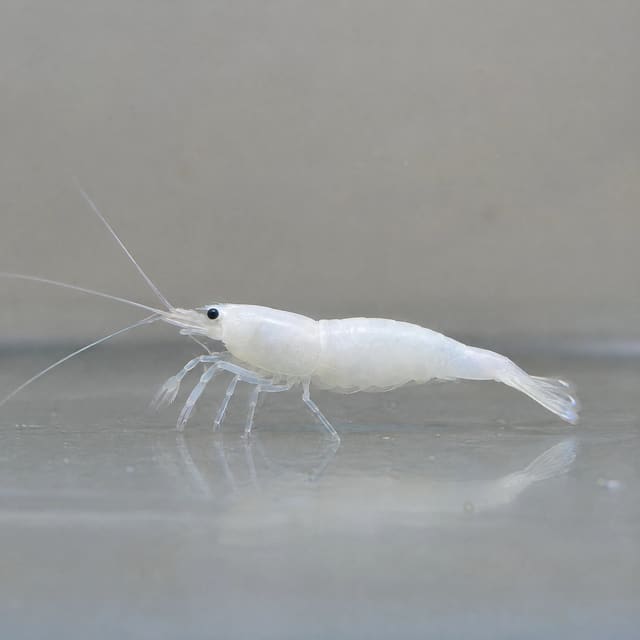
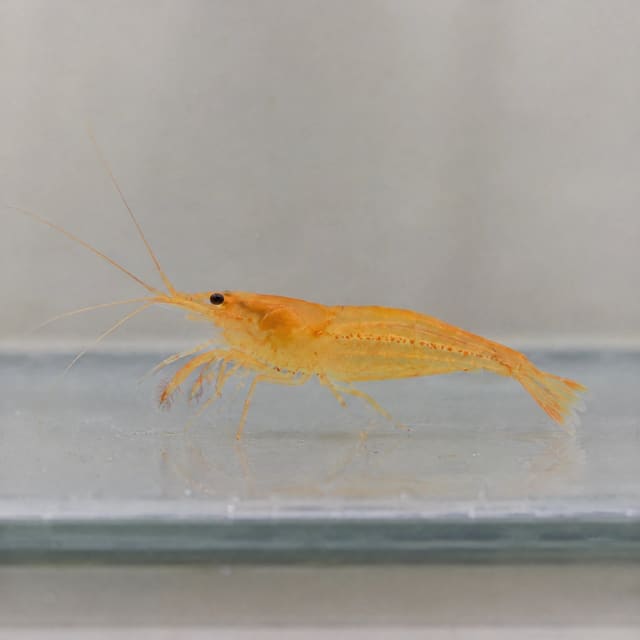
Each purchase is one live Blue Diamond King Kong Shrimp; set the quantity in the basket. Our photographs show the colour form, but each shrimp is different: the proportion of white to blue-black, the depth of the blue sheen and the pattern on the legs all vary, and a shrimp may look duller for a few days after travelling. OATA lists colour change among the signs to watch, so note whether it improves during the first week. No size grade is recorded for this line, so we do not promise a size at dispatch; OATA gives about 3 cm as the adult size of bee-type shrimp, and TFH Magazine notes females are a little larger and more robust. Our delivery and live arrival terms explain dispatch days and packing.
OATA recommends at least five shrimp, and Neale Monks in Practical Fishkeeping suggests six to twelve adults to start a colony. Females have a deeper, more curved underside; TFH Magazine adds that the saddle of developing eggs behind the head shows in non-opaque varieties, and on a heavily patterned shrimp like this it can be hard to see. Ordering the whole group at once means one acclimatisation and a colony that settles together. If the tank will also hold small fish, check numbers with the stocking calculator.
TFH Magazine describes Taiwan bees as the rarest and most fragile of the bee shrimp, and water is where most of that care goes. Their ancestors live in very soft streams: Lukhaup recorded 16°C, pH 5.8, no detectable carbonate hardness and 12 µS at a bee shrimp site in South China and Hong Kong, and the 2014 study measured pH 6.0, 33 µS and 19.8°C in the Hong Kong streams of C. logemanni (Seriously Fish).
| Source | Temperature | pH | GH | KH |
|---|---|---|---|---|
| Practical Fishkeeping, introduction to shrimp | 18–23°C | 6–6.8 | 5 | 0–2 |
| Lukhaup, Practical Fishkeeping 2009 | 17–22°C kept; 22–24°C breeding | 6.4–6.9 breeding | About 200 µS/cm for breeding | |
| Lukhaup and Pekny | 17–26°C tolerated | 6.4–6.9 | About 200 µS/cm | |
| TFH Magazine | Not above about 74°F (about 23°C) | About 6.5 | 4–6 | About 2 |
| Neale Monks, Practical Fishkeeping | Not given | 6.5–7.0 | 2–5 | Not given |
| OATA, every freshwater shrimp and snail | 17–27°C | 6.5–8.0 | 4–18 | 3–15 |
| Our planning range | 20–23°C | 6.0–6.8, ideally about 6.5 | 4–6 | 0–2 |
The planning range is where the bee shrimp sources agree. OATA’s figures are a general guide for all common freshwater shrimp and snails together, so they reach harder and more alkaline water than a Taiwan bee should see. Practical Fishkeeping also cautions that TDS readings can mislead, which is why serious breeders steer by GH and KH.
OATA’s minimum for a small group of shrimp is 10 litres. Larger tanks are more stable (Practical Fishkeeping), and the Taiwanese breeding tanks Lukhaup visited were never smaller than 80 litres. For a Blue Diamond King Kong colony we suggest 20 litres or more, fully cycled before you order. Use the tank volume calculator to check the real water volume.
| Step | What to use | Why |
|---|---|---|
| 1. Substrate | Active shrimp soil, or fired clay granules without fertiliser | Soil holds pH steady but can release ammonia for a couple of weeks, so cycle first (Practical Fishkeeping); fired clay is what Lukhaup’s breeders used |
| 2. Hardscape | Lime-free rock and wood | Rock that fizzes under vinegar or dilute acid contains lime and raises hardness |
| 3. Plants | Mosses, Vallisneria and similar easy plants, kept sparse | Grazing surface and cover, as in Lukhaup’s breeding tanks; buy pesticide-free |
| 4. Biofilm | Wood and moss left to grow aufwuchs | Lukhaup’s breeders relied on it as constant food |
| 5. Cover | Moss, leaves, small caves | Freshly moulted shrimp hide until the new shell hardens |
Blue-black and white shrimp look their best against green moss and dark soil. Keep sight lines open so you can count the colony each evening.
A sponge filter run from an air pump is the easiest choice: Practical Fishkeeping’s author prefers it because it cannot suck in young shrimp and gives them a grazing surface. Cover the intake of any power filter. Lukhaup’s breeders used undergravel filters powered by an external filter, or air-driven sponge filters, and kept the water well aerated. Caridina do not need a heater at room temperature (Practical Fishkeeping), but rapid warming harms shrimplets (Lukhaup), so keep the tank away from sunny windows and radiators.
Taiwan bees graze biofilm, algae and fine detritus between meals, so prepared food should be a top-up. OATA recommends feeding two or three times a week; Practical Fishkeeping’s author feeds every other day.
Bee shrimp cope badly with sudden changes in hardness or pH, so take an hour over the move. Practical Fishkeeping describes the drip method: dim the lights, pour the shrimp and their water into a small container, and run airline from the tank with a clamp or flow controller at one to two drops a second for about an hour, until the volume has tripled or quadrupled. Net the shrimp into the tank and throw away the transport water. Lukhaup’s advice is the same in principle: add small amounts at long intervals. OATA’s floating-bag method (10 minutes floating, then tank water over at least 30 minutes) is the minimum. See our step-by-step acclimatisation guide.
| When | Milestone | If it is missing |
|---|---|---|
| First hours | Shrimp walking and picking at surfaces | Check temperature; test ammonia and nitrite |
| Days 1–3 | Blue sheen and white patches looking crisp again | Recheck GH and pH against the targets |
| Days 1–7 | Every shrimp seen | OATA advises close monitoring for the first week |
| Any time | A clear, empty shell | A moult, not a death; Practical Fishkeeping notes a corpse is never transparent |
A failed moult is a major cause of unexplained shrimp deaths, according to Practical Fishkeeping, and is linked to water of the wrong hardness or short of minerals and calcium. Practical Fishkeeping also lists the household dangers: insecticides on plants (buprofezin, imidacloprid, trichlorfon), cigarette smoke, scented candles and air fresheners, flea spray and some medications. OATA adds copper and gives the general warning signs: changes in swimming, colour, temperament, breathing, appearance, body condition or feeding.
| Warning sign | Possible cause | Response |
|---|---|---|
| Shrimp stuck in a part-shed shell | Failed moult | Test GH; keep each batch of change water identical |
| Fluffy growths on head or gills | Vorticella | Reduce waste; potassium permanganate is semi-reliable (Practical Fishkeeping) |
| White threads between the eyes or around the rostrum | Scutariella | Treatment results vary; never add shrimp showing white growths |
| Several deaths together | Household chemicals or new plants | Large matched water change; find and remove the source |
| Losses after a remedy | Copper (OATA) | Keep every copper-based product away from the tank |
All bee shrimp belong to one species, so TFH Magazine notes that crossing strains does not make a true hybrid, but it does degrade the selected look. Practical Fishkeeping adds that Caridina crosses do not revert to a wild type; they keep throwing new patterns, so a few stray shrimp can change a colony permanently.
OATA advises against any fish that can fit a shrimp in its mouth and against predatory species. TFH Magazine suggests only very small fish, such as Otocinclus and least killifish, with bee shrimp, and a species-only tank for breeding. It also lists Amano shrimp and Paracaridina, such as our Princess Bee Shrimp, as compatible. Check any plan with our tank mates checker.
| Good choice | Think twice | Avoid |
|---|---|---|
| Golden Otocinclus and other Otocinclus | Any fish in a breeding tank: young shrimp get eaten | Fish large enough to swallow shrimp (OATA) |
| Amano shrimp, Princess Bee Shrimp (TFH Magazine) | Neocaridina: no hybrids, different water | Other bee forms and tigers if you want a pure line |
| Small snails, covered in the same OATA care sheet | Very active tank mates that stop shrimp grazing | Predatory species (OATA) |
Given steady water and no fish, a colony breeds on its own. Practical Fishkeeping says shrimp start breeding at around six months, can breed roughly monthly, and that a female about to moult releases pheromones that send the males searching. Eggs are carried under the tail for about three weeks (Practical Fishkeeping) or about a month (TFH Magazine), and the young hatch fully formed and graze biofilm at once.
| Stage | Published figure | Your part |
|---|---|---|
| Maturity | About six months (Practical Fishkeeping) | Give a new group time |
| Eggs carried | About three weeks to about a month | Keep changes small and matched |
| Young | Hatch as miniature adults | Cover intakes; add powdered Spirulina |
| Colour inheritance | Taiwan look recessive to the crystal look (TFH Magazine) | Keep the line pure; select the best-coloured young |
| Line breeding | Taiwanese breeders kept King Kong lines with Red Bee rather than King Kong x King Kong, claiming more stable young (Lukhaup) | An advanced option; a display colony is simpler kept pure |
| Lifespan | Up to about two years (Practical Fishkeeping) | Let the colony renew itself |
For more, read the Tropical Fish Co shrimp-keeping guide and our UK freshwater shrimp guide, or browse Caridina Taiwan bee and tiger shrimp, the freshwater shrimp category and all our shrimps and crustaceans.
A line-bred Taiwan bee shrimp (Caridina) with a deep blue-black body broken by white patches. King Kong is the trade name of the dark Taiwan bee line; “Blue Diamond” describes this blue-based form. It is not a separate species.
No. Our Blue Diamond Shrimp is a Neocaridina davidi, a cherry-type shrimp that prefers harder water (Practical Fishkeeping gives Neocaridina pH 6.5–8 and GH 8–18). The Blue Diamond King Kong is a Caridina Taiwan bee for soft, acidic water. They should not be kept in the same water.
Both are blue Taiwan bees, but our Blue Bolt photographs show pale sky-blue and white marbling, while the Blue Diamond King Kong is a much darker blue-black with white patches. Care is the same.
It needs care with water. TFH Magazine describes Taiwan bees as the rarest and most fragile of the bee shrimp, and Practical Fishkeeping gives them 18–23°C, pH 6–6.8, GH 5 and KH 0–2. If you can make remineralised RO water and keep it steady, a colony is very achievable.
Five or more, as OATA recommends for shrimp; Neale Monks suggests six to twelve adults to start a breeding colony, which makes it likely you get both sexes.
Not all of them. Taiwan bee lines are kept by selective breeding, and TFH Magazine says the Taiwan look is recessive to the normal crystal appearance, so crosses with crystal bees give crystal-looking young. Keep the line on its own and keep the best-coloured shrimp together.
Only very small, peaceful fish such as Otocinclus (TFH Magazine), and breeding is best in a shrimp-only tank. OATA advises against any fish that can fit a shrimp in its mouth.
Not normally indoors: Practical Fishkeeping says Caridina do not need a heater at room temperature. Aim for about 20–23°C and avoid sudden warming, which Lukhaup says harms young shrimp.
No reviews for this item yet. Bought one? Honest reviews only, good or bad.
What customers say about ordering from us
Easy website plenty of info on fish your buying great to pick a time slot
TRACEY DURRANT · 7 Oct 2026
Got some lovely fish thank you
Kevin Mackie · 7 Oct 2026
Reviews of our shop, collected by Judge.me, an independent third-party review collector. Newest first.
Moved by UK carriers licensed to handle live animals
Hand-packed with oxygen bags, poly box, heat pack
Email photos the same day; an optional unboxing video helps us review problems faster — claim terms apply
Klarna & PayPal Pay in 3 at checkout