Moderate
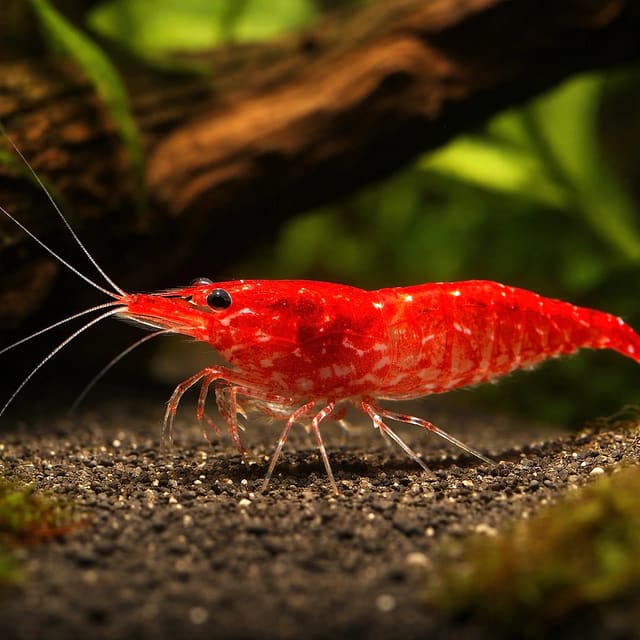
Caridina Taiwan bee red bolt
20–25°C · pH 5.5–6.8 · 20L
£35.99

A delicate, peaceful dwarf shrimp prized for its striking bee-shrimp appearance and best kept in a stable, planted nano aquarium. Difficult care, peaceful. 18-24C, pH 6.0-7.2.
Adult size is the maximum length this species reaches at full maturity (scientific sources). The livestock you receive will be younger and smaller. Product-photo provenance and any image-specific limitations are stated on the listing.
Paracaridina sp.
Lives in groups: kept together they stay settled, active and show their best colour.
Confirm your email, then we’ll send an availability message for this exact item if it returns within 180 days.
This request is only for this product—no newsletter or other promotions. A mail-provider retry may very rarely duplicate the same availability message. Unconfirmed addresses are removed after 48 hours. See our privacy policy.
A delicate, peaceful dwarf shrimp prized for its striking bee-shrimp appearance and best kept in a stable, planted nano aquarium. Difficult care, peaceful. 18-24C, pH 6.0-7.2.
Adult size is the maximum length this species reaches at full maturity (scientific sources). The livestock you receive will be younger and smaller. Product-photo provenance and any image-specific limitations are stated on the listing.
Maintain these water conditions for optimal health and vibrant colors
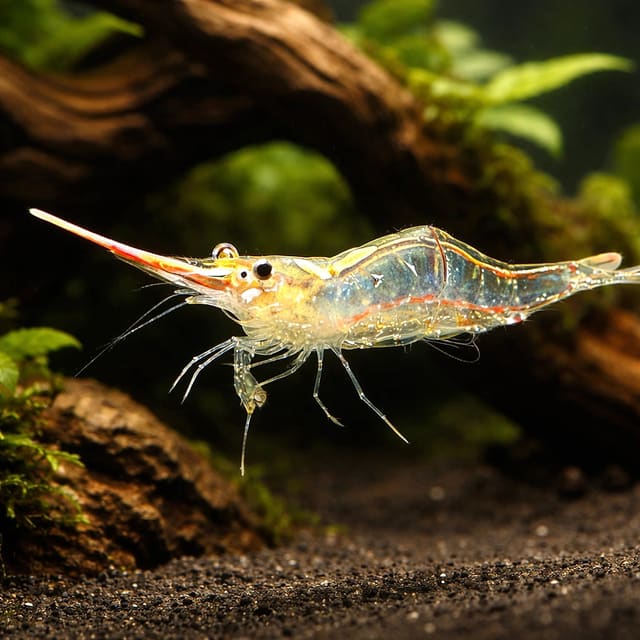
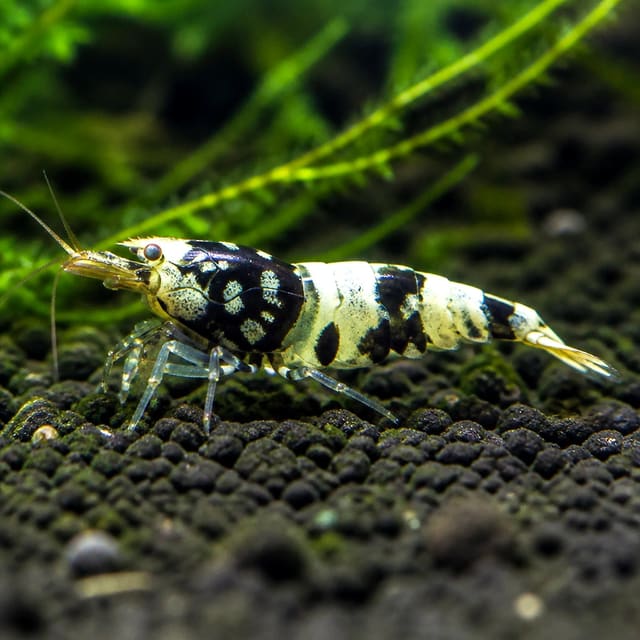
The Princess Bee Shrimp (Paracaridina sp. Princess Bee) is a delicate and visually striking dwarf shrimp prized by specialist aquarists for its bee-shrimp appearance and peaceful temperament. Reaching an adult size of just 1.5cm, this species is ideally suited to nano aquariums and heavily planted setups where stable water parameters and pristine conditions can be maintained. With its intricate banding pattern and diminutive size, the Princess Bee Shrimp is a rewarding but challenging species best kept by aquarists with prior experience in shrimp husbandry. Native to freshwater habitats in Asia (exact origin unknown), this species requires soft, slightly acidic water and is highly sensitive to changes in water chemistry, copper-based medications, and poor water quality. For those seeking rare and ornamental freshwater shrimp, the Princess Bee is an exceptional choice for sale UK-wide.
Quick Care Summary: Delicate dwarf shrimp; adult size 1.5cm; minimum 10L nano tank; needs stable, soft water and mature biofilm; peaceful; sensitive to water quality fluctuations; difficult care level.
The Princess Bee Shrimp displays a distinctive bee-shrimp pattern characterised by alternating bands of opaque white and dark (black, brown, or blue-tinged) stripes running across the body and tail. The exact colouration and intensity of banding can vary between individuals and may be influenced by genetics, diet, and environmental conditions. The body is semi-translucent, allowing some internal structures to be visible, and the legs and antennae are long and delicate. Females are slightly larger and rounder-bodied than males, particularly when carrying eggs. Healthy specimens display crisp, well-defined banding, active foraging behaviour, and constant movement across plants and surfaces. Faded colouration, lethargy, or loss of pattern definition can indicate stress, poor water quality, or nutritional deficiencies. The species' small size and intricate appearance make it a captivating subject for nano aquarium enthusiasts.
The exact wild origin of the Princess Bee Shrimp is not well documented, though Paracaridina species in the aquarium trade are generally associated with freshwater habitats in Asia, often China or nearby regions. In nature, these shrimp inhabit slow-moving streams, forest pools, and leaf-litter zones where the water is soft, acidic, and rich in organic matter. The environment typically features dense vegetation, submerged roots, fallen leaves, and abundant biofilm and microorganisms on which the shrimp graze. Water is clear to slightly tannin-stained, well-oxygenated, and stable in temperature and chemistry. Understanding the natural ecology of dwarf shrimp is essential for replicating suitable conditions in captivity and ensuring their long-term health and reproductive success.
A minimum aquarium size of 10 litres is suitable for the Princess Bee Shrimp, though larger tanks (20-30 litres) provide greater stability and are easier to maintain. The substrate should be fine, inert sand or gravel, or specialised shrimp soil designed to buffer water to slightly acidic conditions. The aquarium must be densely planted with fine-leaved plants such as Fissidens, Riccardia, or Taxiphyllum moss, Anubias, Cryptocoryne, and floating plants to provide grazing surfaces, cover, and shade. Add leaf litter (Indian almond or oak leaves) and driftwood to create natural foraging opportunities and release beneficial tannins. Filtration should be gentle and efficient; use a sponge filter or shrimp-safe canister filter with intake guards to prevent accidental siphoning of tiny shrimp or fry. Water flow should be minimal to moderate, replicating the still to slow-moving habitats of their natural environment. Lighting should be subdued to moderate, and the tank must be allowed to mature for at least 4-6 weeks before adding shrimp to establish essential biofilm and microfauna.
Maintaining stable, soft, slightly acidic water is critical for the success of the Princess Bee Shrimp. Temperature should be kept between 18-24°C, with 20-22°C being ideal. pH should range from 6.0-7.2, with slightly acidic values preferred. Water hardness should be low, with GH 4-8 and KH 0-4 recommended. Ammonia, nitrite, and nitrate must all be kept as low as possible; aim for zero ammonia and nitrite, and nitrates below 10ppm through frequent small water changes (10-15% weekly) and efficient biological filtration. The species is extremely sensitive to fluctuations in water chemistry, temperature, and the presence of heavy metals (particularly copper), so all additives, medications, and fertilisers must be shrimp-safe. Use RO (reverse osmosis) or distilled water remineralised with shrimp-specific salts to achieve consistent, controlled parameters. Invest in a reliable test kit and monitor parameters regularly. Stability is far more important than chasing exact numbers; avoid sudden changes at all costs.
Top Tip: Always use shrimp-safe products — avoid copper-based medications and fertilisers, and test all additives before use in the main tank.
The Princess Bee Shrimp is an omnivorous detritivore, feeding primarily on biofilm, algae, decaying plant matter, and microorganisms. In a mature, well-planted aquarium, much of the diet will be obtained naturally through constant grazing. Supplement with high-quality shrimp pellets or powders, spirulina-based foods, and occasional blanched vegetables (such as spinach, courgette, or carrot) offered in very small amounts. Provide mineral-rich foods and calcium supplements to support healthy exoskeleton development and successful moulting. Feed sparingly — 2-3 times per week is often sufficient in a well-established tank. Overfeeding is a common mistake and can quickly degrade water quality in a small nano tank. Remove any uneaten food within 2-3 hours to prevent fouling. A varied, balanced diet supports vibrant colour, active behaviour, and successful breeding.
The Princess Bee Shrimp is a peaceful, social species that thrives when kept in small groups of 10-20 individuals or more. In groups, they display natural foraging behaviour, social interactions, and coordinated grazing across plants, substrate, and surfaces. Solitary specimens or those kept in inadequate numbers may become stressed and withdrawn. The species is active throughout the day, constantly moving and grazing, though they may become less active during moulting periods when they seek shelter and remain hidden until the new exoskeleton hardens. Females carrying eggs ("berried") will fan and groom the eggs regularly, a behaviour that is fascinating to observe. The species is entirely non-aggressive and will not harm tank mates, though their small size and delicate nature make them vulnerable to predation. Observing a thriving colony of Princess Bee Shrimp is one of the great rewards of nano shrimp keeping.
Choosing tank mates for the Princess Bee Shrimp requires extreme care, as their small size and gentle nature make them vulnerable to predation. Suitable companions include other peaceful dwarf shrimp species (though hybridisation with Caridina species is a concern if kept together), small non-aggressive snails (such as Clithon or Neritina), and very small, peaceful fish that will not prey on shrimp (such as Boraras microrasboras or Sundadanio species). Avoid all cichlids, barbs, large tetras, gouramis, loaches, crayfish, and any fish with a mouth large enough to consume a shrimp. Even seemingly peaceful fish may opportunistically predate on shrimplets or juveniles. For the safest and most successful setup, a species-only or shrimp-only tank is strongly recommended. This allows the colony to thrive, breed, and display natural behaviours without the stress or risk of predation.
The Princess Bee Shrimp breeds readily in captivity when provided with stable, mature conditions and excellent water quality. Females carry fertilised eggs under the abdomen for 3-4 weeks, during which time they fan and groom the eggs regularly to ensure oxygenation and prevent fungal growth. The eggs are small and dark, and their development can be observed through the translucent abdomen. Juveniles hatch as fully formed miniature shrimp and are independent from birth, grazing on biofilm and microfauna. Survival rates are typically high in a well-established, predator-free tank with ample biofilm and hiding places. Provide fine-leaved plants, moss, and leaf litter to support fry development. Avoid sudden water changes or disturbances during breeding periods. With proper care, a small group can develop into a thriving, self-sustaining colony within a few months.
Tropical Fish Co is proud to offer healthy, carefully acclimated Princess Bee Shrimp sourced from reputable breeders and quarantined to ensure peak condition upon arrival. Every shrimp is inspected for health, colour, and vitality before dispatch, and we provide expert advice and ongoing support to help you create the ideal nano shrimp environment. With fast, reliable delivery across the UK and a commitment to customer satisfaction, Tropical Fish Co is your trusted partner for rare and ornamental freshwater shrimp for sale UK-wide. Whether you're setting up your first shrimp tank or expanding an established collection, our team is here to help you succeed. Shop with confidence and discover the beauty and charm of the Princess Bee Shrimp from Tropical Fish Co.
No reviews for this item yet. Bought one? Honest reviews only, good or bad.
What customers say about ordering from us
I have a small group of long finned mountain minnows. So was delighted to be able to order ten of this variety to increase the genetics in my tank . The ones I recieved are healthy but it’s to early to give a verdict on wether they are of a long finned type since they are small currently.
Gordon Walker · 23 Sept 2026
100% success travel and "installation". Pleased with quality of purchase. The Siamese fighter a bit "shy" so have not yet seen him at his best yet but looking good. Happy customer. GG
George E Garratt · 21 Sept 2026
Reviews of our shop, collected by Judge.me, an independent third-party review collector. Newest first.