Expert
Cardinal Sulawesi Shrimp (Caridina dennerli)
24–28°C · pH 7.8–8.5 · 30L
£29.99

A striking, tiny Sulawesi shrimp with bold purple-and-white patterning, best suited to experienced keepers with a stable specialist setup. Expert care, peaceful. 26-30C, pH 7.8-8.8.
Adult size is the maximum length this species reaches at full maturity (scientific sources). The livestock you receive will be younger and smaller. Product-photo provenance and any image-specific limitations are stated on the listing.
Caridina spongicola
Lives in groups: kept together they stay settled, active and show their best colour.
Confirm your email, then we’ll send an availability message for this exact item if it returns within 180 days.
This request is only for this product—no newsletter or other promotions. A mail-provider retry may very rarely duplicate the same availability message. Unconfirmed addresses are removed after 48 hours. See our privacy policy.
A striking, tiny Sulawesi shrimp with bold purple-and-white patterning, best suited to experienced keepers with a stable specialist setup. Expert care, peaceful. 26-30C, pH 7.8-8.8.
Adult size is the maximum length this species reaches at full maturity (scientific sources). The livestock you receive will be younger and smaller. Product-photo provenance and any image-specific limitations are stated on the listing.
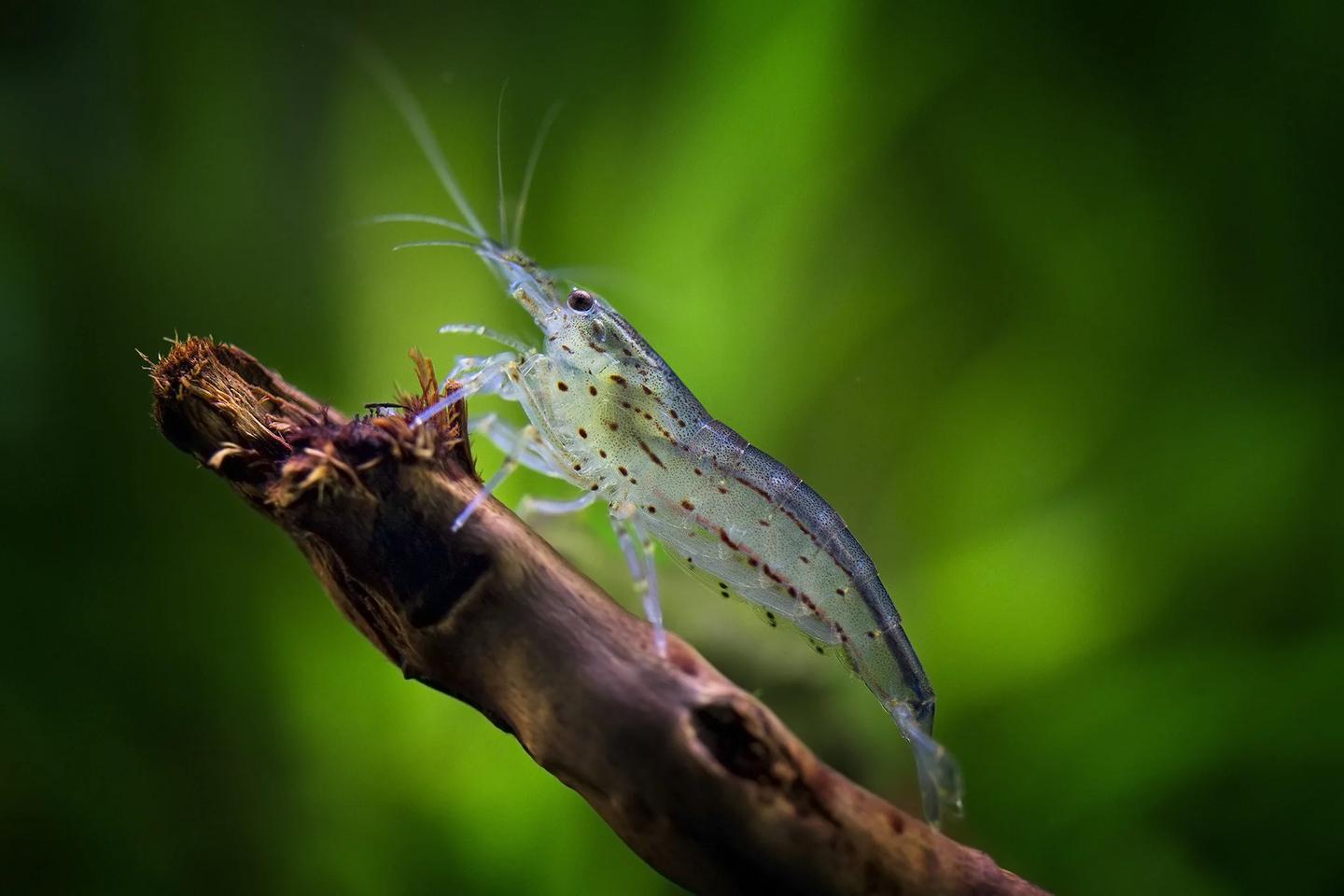
Start with a mature, filtered aquarium. OATA's broad UK guidance suggests approximately 20 litres for Amano Shrimp and at least five for social shrimp, with a larger aquarium when fish are present. Treat those as cautious planning screens—not biological minima or a per-litre formula. Match the complete adult community, test your water, protect the filter inlet and never buy them as a guaranteed algae cure.
Maintain these water conditions for optimal health and vibrant colors
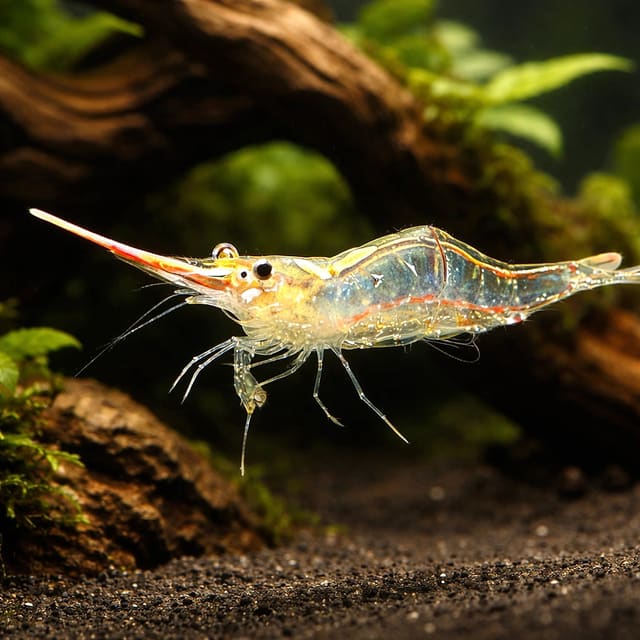
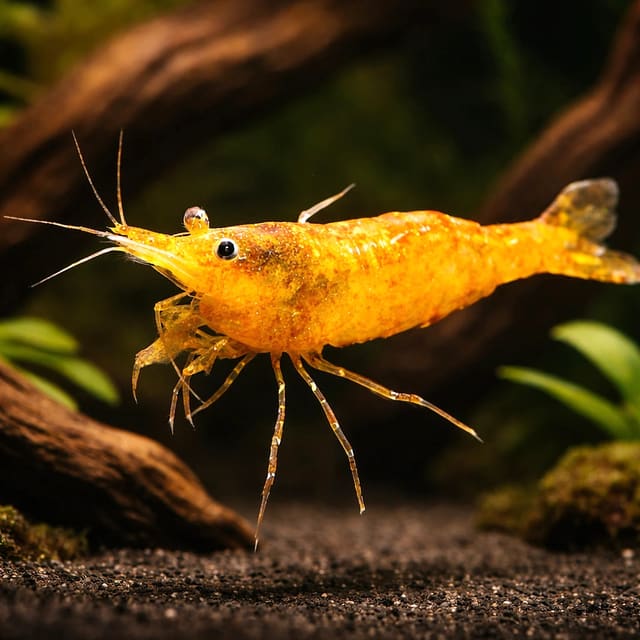
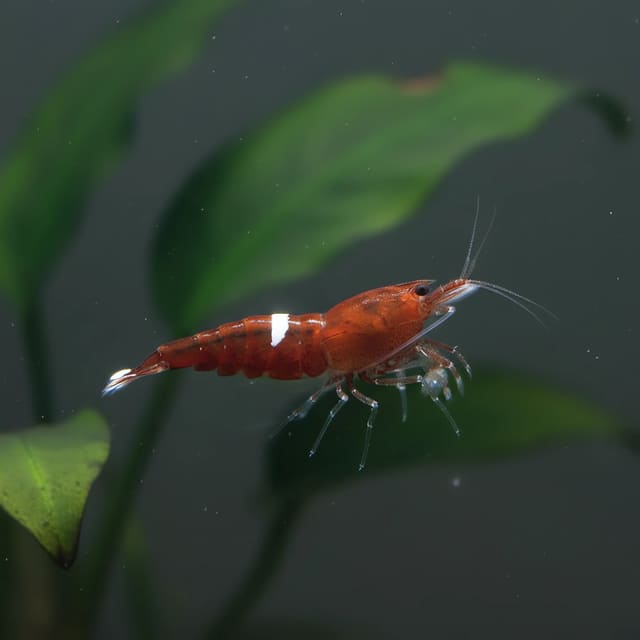
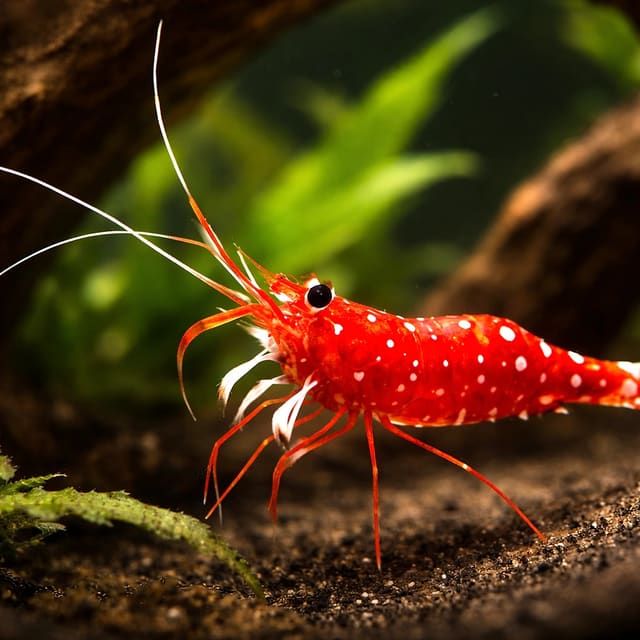
Purple is rare currency among freshwater invertebrates, and the purple zebra Caridina spends it boldly — purple-and-white zebra banding on a 1 cm Sulawesi shrimp built for the dedicated specialist aquarium. Its record is direct about the audience: experienced keepers running a stable, purpose-built setup, and nothing less. For that audience, few invertebrates offer a colour scheme this unusual in a freshwater system.
The water explains why. This shrimp asks for real warmth at 26–30 °C and conspicuously alkaline conditions between pH 7.8 and 8.8, with hardness of 6–12 dGH — a profile almost no community tank already runs, which is exactly why a species-focused aquarium of at least 30 litres is the right vehicle. Inside those parameters it is a peaceful, bottom-dwelling omnivore with a typical two-year lifespan, going about its grazing with the unhurried confidence of an animal whose needs are being met precisely. Warmth at this level rules out unheated systems entirely, and the alkalinity rules out the soft-water setups most shrimp keepers already own — be honest about both before falling for the colour.
Where companions are used at all, choose conservatively: peaceful nano fish, snails, or other peaceful shrimp species kept in very stable, species-appropriate systems. Loaches, barbs inclined to harass shrimp, cichlids, crayfish and any fish large or predatory enough to take a 1 cm shrimp are all recorded exclusions, and there is no version of this animal that belongs in a rough-and-tumble community. A species-focused tank also makes observation easier, which matters when your livestock is a 1 cm grazer working at substrate level.
Have the aquarium already running warm and alkaline before any shrimp arrive — stability is the requirement the expert rating points to. With a typical lifespan of two years, colonies rather than individuals are the sensible way to think about the purchase. Once you are ready, we deliver throughout the UK by licensed live-animal courier with a live arrival guarantee.
No reviews for this item yet. Bought one? Honest reviews only, good or bad.
What customers say about ordering from us
I have a small group of long finned mountain minnows. So was delighted to be able to order ten of this variety to increase the genetics in my tank . The ones I recieved are healthy but it’s to early to give a verdict on wether they are of a long finned type since they are small currently.
Gordon Walker · 23 Sept 2026
100% success travel and "installation". Pleased with quality of purchase. The Siamese fighter a bit "shy" so have not yet seen him at his best yet but looking good. Happy customer. GG
George E Garratt · 21 Sept 2026
Reviews of our shop, collected by Judge.me, an independent third-party review collector. Newest first.