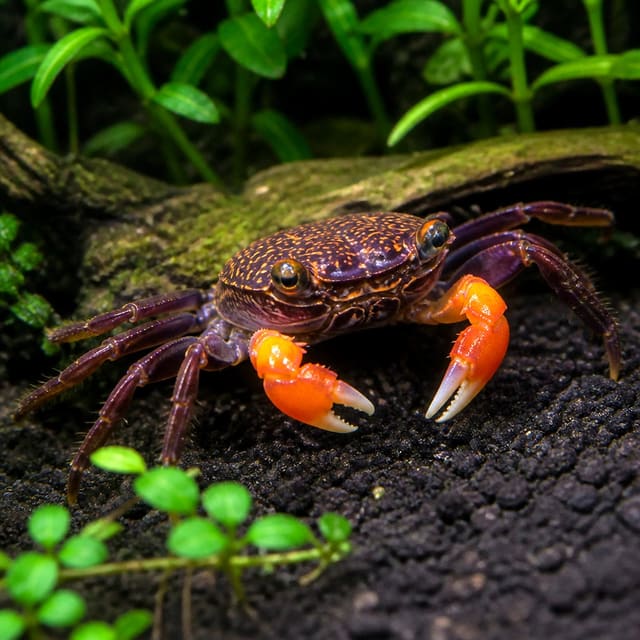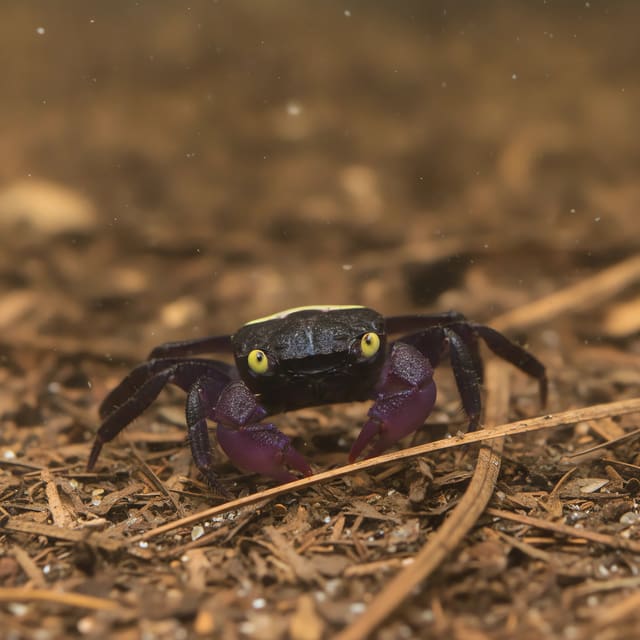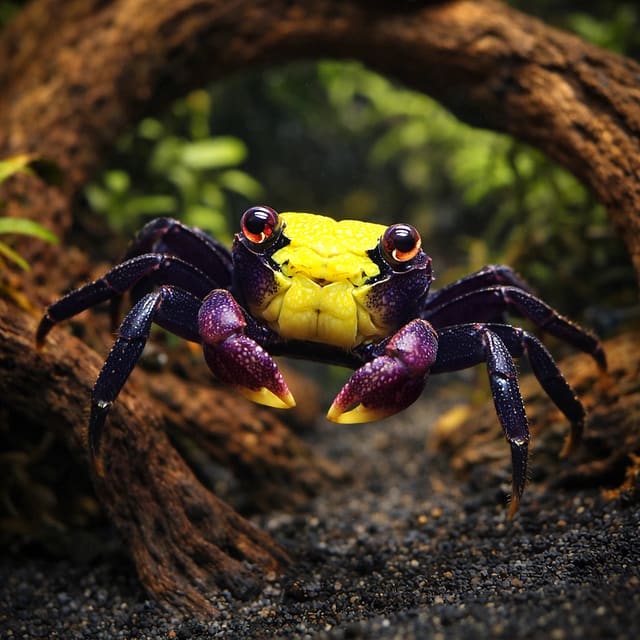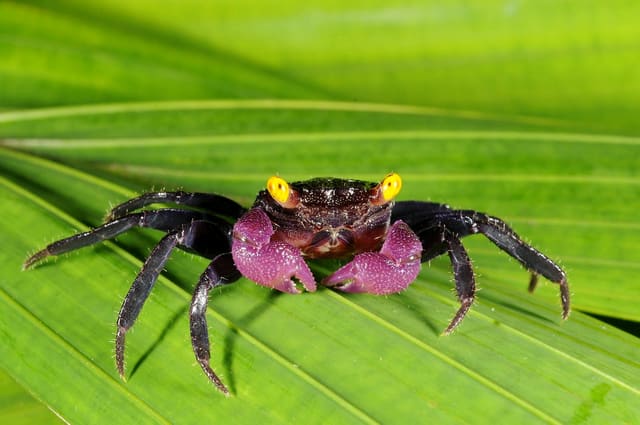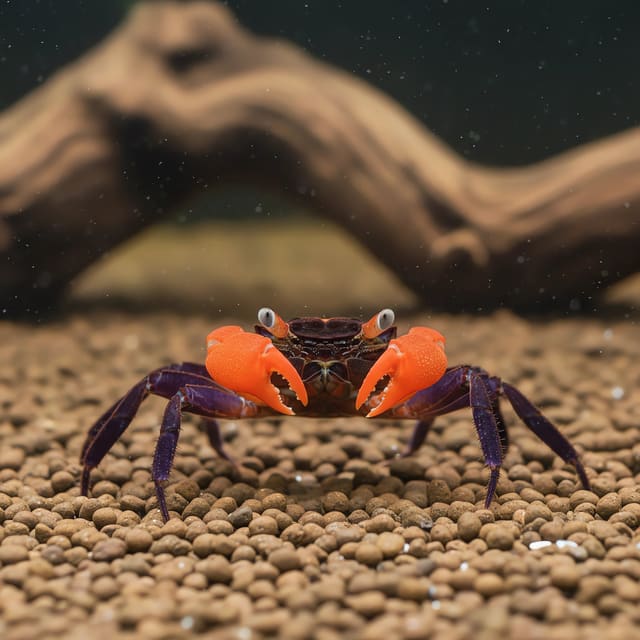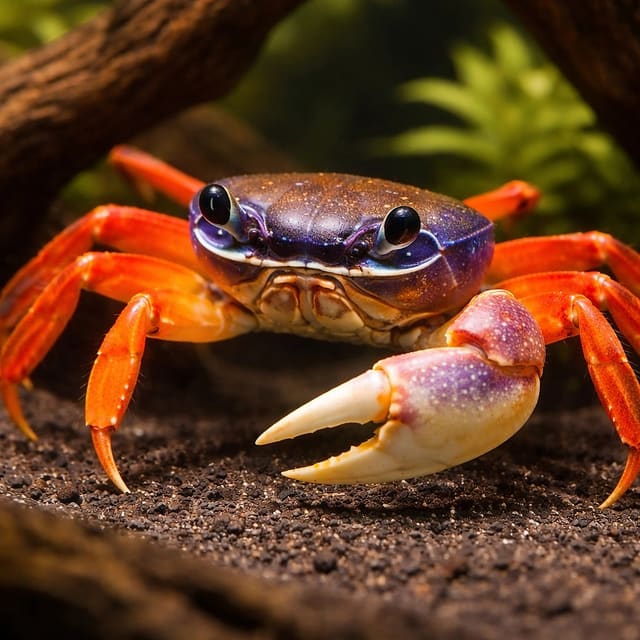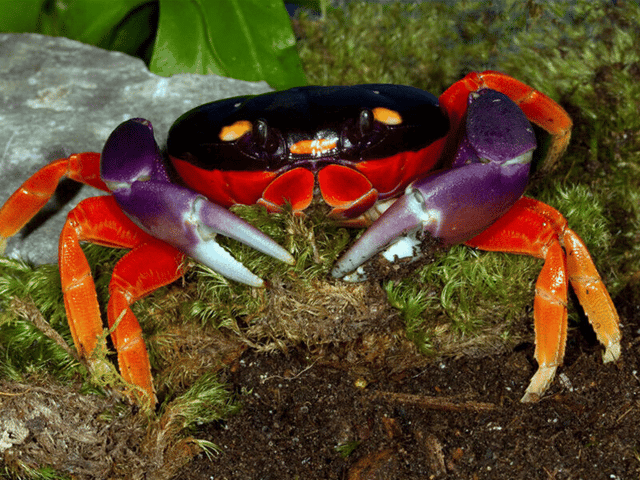
Halloween crab (Gecarcinus quadratus)
£83.99
Blue Kong is supplied as Cherax sp., not a confirmed species. Ask us to establish the current animal’s identity, water requirements and any destination permissions before ordering.
Water requirements for this listing are not yet confirmed. General care ranges are not a species-specific recommendation. Check temperature, pH and hardness needs with us before ordering.
Cherax sp.
Blue Kong is supplied as Cherax sp., not a confirmed species. Ask us to establish the current animal’s identity, water requirements and any destination permissions before ordering.
Water requirements for this listing are not yet confirmed. General care ranges are not a species-specific recommendation. Check temperature, pH and hardness needs with us before ordering.
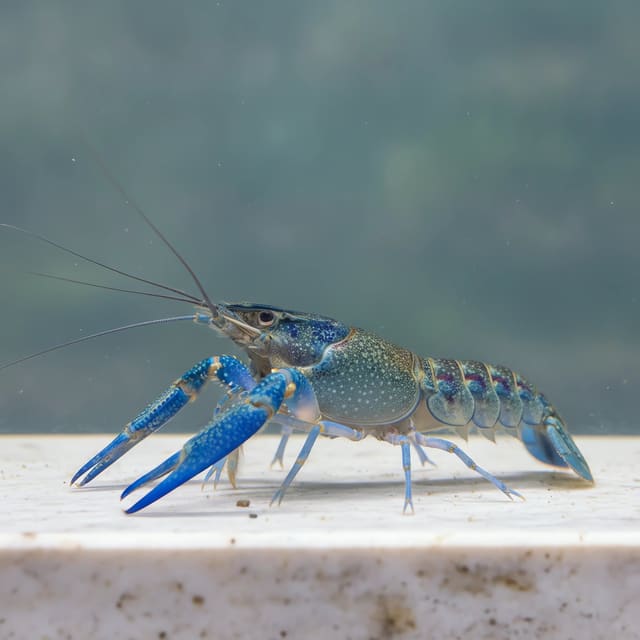
The Blue Kong Papua Crayfish (Cherax sp.) is a fully aquatic freshwater crayfish in the family Parastacidae. It suits a keeper prepared to provide a dedicated, mature aquarium, monitor water quality and avoid mixing it with fish. Its trade name identifies a colour form within Cherax, while “sp.” means that it is identified to genus rather than species.
WoRMS places Cherax in Parastacidae, within the decapod crustaceans. This is the accepted genus behind the scientific label used here; it should not be expanded into a species name without a firm identification.
Wikipedia describes Cherax as the most widespread genus of fully aquatic crayfish in the Southern Hemisphere. Different members occur in still and flowing freshwater across much of Australia and New Guinea. That distribution belongs to the genus as a whole, so the word “Papua” in the trade name should not be used to infer a precise collection locality or origin for this animal.
Choose the permanent aquarium around the adult dimensions and needs of the exact Cherax involved. A genus includes animals that may differ in mature size and behaviour, so the length of the animal on arrival is not a dependable guide to its final space requirement. Use a dedicated setup large enough for normal movement and reassess the plan when the exact identity and adult dimensions are known.
If you are still deciding which kind of aquarium resident fits your plans, compare the husbandry demands across our bottom dwellers collection before committing the enclosure.
Keep this crayfish at 22–27°C, pH 7.0–8.0 and 8–18°dH in freshwater. OATA’s crayfish and freshwater-crab sheet gives these as broad group guidance, not a species-specific optimum for this unidentified Cherax. The same guidance calls for zero ammonia, zero nitrite and nitrate no more than 20 mg/l above the normal tap-water level.
A dedicated aquarium is the appropriate community plan. OATA advises that crayfish are opportunistic, may hunt small and slow-swimming fish, and should not be mixed with fish. This is a predation risk rather than a question of finding a fish that looks large, fast or robust enough.
| Suits | Not suited to |
|---|---|
| A dedicated freshwater aquarium | A fish community aquarium |
| A mature biological filter | A newly stocked or rapidly stocked setup |
| 22–27°C and pH 7.0–8.0 | Water outside the stated group planning range |
| Weekly testing and maintenance | A routine without ammonia and nitrite checks |
| A keeper able to assess an unidentified Cherax | A plan that depends on a fixed adult size or group number |
OATA states that only the red-clawed crayfish, Cherax quadricarinatus, may be traded in England and Wales, and that no crayfish may be traded in Scotland. Because this animal is labelled Cherax sp., do not treat the trade name as a legal species identification. Proceed only when the animal’s legal identity and the rules for the destination have been resolved.
One purchase supplies one live Blue Kong Papua Crayfish. The animal is sold individually, so plan the aquarium and stocking decision around one crayfish rather than a pair or group.
The exact species has not been identified, so the care advice here follows the genus Cherax and its care group. This keeps the water, feeding and maintenance instructions useful without assigning the animal a species name that the trade label does not establish.
Sex is guaranteed only when the selected option explicitly states male or female. This Blue Kong Papua Crayfish listing has no sex-guaranteed option.
The gallery images are representative of this type of animal rather than photographs of the exact animal supplied, so colours can look slightly different from the live animal.
Use the animal’s supplied length only to understand its condition on arrival. Do not choose a permanent aquarium by treating that length as its mature size. Confirm the adult dimensions associated with the exact identity before finalising the enclosure, and leave enough flexibility to enlarge or revise the setup if necessary.
The colour shown in the gallery is also a guide to the named form rather than a promise that every animal will display identical blue, white, orange or dark markings. Assess health through normal activity, feeding, breathing, condition and moulting rather than by expecting an exact photographic match.
Set up and mature the aquarium before the crayfish arrives. OATA explains that beneficial bacteria in a mature filter must process the waste created by livestock and feeding. Adding animals too quickly can leave too few nitrifying bacteria to cope, allowing ammonia and nitrite to rise and causing new tank syndrome.
Use a working biological filter from the start. The RSPCA explains the biological filtration process: waste produces toxic ammonia, bacteria convert ammonia into toxic nitrite, and further bacterial activity converts nitrite into the safer nitrate. For this crayfish, both ammonia and nitrite should test at zero before introduction.
Our guide to preparing and maturing an invertebrate aquarium provides a useful sequence for establishing the system before livestock arrives. Apply its preparation principles while following the crayfish water and compatibility decisions on this page.
A fixed minimum volume would create false precision for a genus-level animal. Choose an aquarium only after matching the adult dimensions of the exact crayfish to the space, and consider the filter’s ability to manage feeding and waste at that mature size. Do not rely on a smaller temporary aquarium simply because the animal arrives below its eventual length.
Keep the temperature at 22–27°C, pH at 7.0–8.0 and general hardness at 8–18°dH. Maintain carbonate hardness at 10–15°dKH. These values provide a practical freshwater target for the care group while the animal remains identified as Cherax sp.
| Measurement | Target |
|---|---|
| Temperature | 22–27°C |
| pH | 7.0–8.0 |
| General hardness | 8–18°dH |
| Carbonate hardness | 10–15°dKH |
| Ammonia | 0 mg/l |
| Nitrite | 0 mg/l |
| Nitrate | Up to 20 mg/l above the normal tap-water level |
Test the aquarium rather than judging water quality by clarity. Clear water can still contain ammonia, nitrite or an unsuitable pH. Record the results so that a gradual movement is visible before it becomes a larger change. Our water chemistry guide explains what the principal aquarium measurements mean and why biological waste affects them.
Compare the measured aquarium values with the targets using the water matcher. Check each value separately: a suitable temperature does not compensate for measurable ammonia, and an acceptable pH does not make nitrite safe.
Cherax is a fully aquatic freshwater genus. Prepare this animal’s aquarium as freshwater and do not add salt merely because some other traded crabs come from estuarine environments. Any change involving salinity should follow a firm identification and a requirement for that exact animal.
Stability matters alongside the numerical range. Match replacement water carefully, treat it before use and avoid large unplanned shifts during maintenance. If a test result moves outside the target, check the result, inspect the filter and correct the cause rather than making several abrupt changes at once.
At least once every week, carry out a partial water change of 25%. OATA recommends using a siphon to remove solid waste from the gravel while water is removed. This combines dilution of dissolved waste with physical removal of material that would otherwise continue breaking down.
Do not run filter media under the tap. OATA warns that chlorine or chloramine may kill the beneficial bacterial population established in the media. If cleaning is needed, rinse the media lightly in aquarium water removed during the partial water change. The aim is to remove obstructing debris while retaining as much of the bacterial population as possible.
Do not clean every part of the system aggressively simply because one reading has changed. Begin with the measurements, look for uneaten food or a blockage, and preserve the bacteria that process waste. A filter can look physically clean yet perform poorly if its biological population has been damaged.
A single weekly result is useful; a sequence of results is better. If ammonia or nitrite becomes measurable, reduce the addition of waste, inspect filtration and repeat the test while correcting the cause. If nitrate rises towards its limit, check feeding, waste removal and the regularity of water changes. This routine connects each action to a measured reason.
Feed this crayfish once a day and allow about 30 minutes for it to eat. OATA describes crayfish and freshwater crabs as omnivorous scavengers that take a mixture of animal and plant foods. Keep portions controlled because uneaten food breaks down and releases toxic waste into the water.
Use variety across the foods rather than relying on one item indefinitely. The group guidance describes both plant and animal material, so the feeding plan should reflect omnivorous scavenging. Choose pieces the animal can handle and place them where its feeding response can be observed.
Begin with a controlled amount and watch what remains after about 30 minutes. Remove uneaten food so that it does not continue decomposing. At the next feed, reduce the amount if food was left, or adjust carefully if the entire portion disappeared quickly and the animal remains in normal condition.
Do not respond to uncertain appetite by adding several extra foods at once. First check whether the crayfish is showing reduced interest, whether old food remains in the aquarium, and whether ammonia or nitrite has changed. Appetite is one useful observation, but it should be read alongside activity, breathing, colour, condition and moulting.
Every increase in food increases the work required from the biological filter. OATA advises raising livestock numbers slowly because feeding and waste place extra demand on beneficial bacteria; the same principle applies when portions increase as a crayfish grows. Adjust food gradually, continue weekly tests and remove leftovers before they become part of the waste load.
The crayfish is hand-bagged in pure oxygen and placed in an insulated box, with a heat pack used when the weather calls for it. Arrange for someone to receive the parcel in person because a live animal must not be left unattended.
These steps follow the Tropical Fish Co delivery and Live Arrival Guarantee policy. Film every delivery from the sealed parcel onward. For a claim, send the order number and continuous unboxing video on the day the animal arrives, before release.
Before introduction, confirm that the aquarium is mature and within the planned water range. Ammonia and nitrite must both be 0 mg/l. Temperature should be 22–27°C, pH 7.0–8.0 and general hardness 8–18°dH. These aquarium checks come from OATA’s crayfish group guidance and belong alongside, rather than inside, the delivery sequence.
Do not add other livestock at the same time. The established filter bacterial population must respond to every increase in waste and feeding, so introduce the single purchased crayfish and continue measuring water quality before considering any later stocking change.
Add the crayfish only after the filter is mature, then avoid further livestock additions until the aquarium’s response is clear. OATA explains that beneficial bacteria need to increase whenever more animals and feeding are added. Stocking too quickly can create unhealthy ammonia and nitrite, leading to illness or death.
Test ammonia and nitrite before introduction and continue the regular testing routine afterwards. A result of zero for both is the target. If either becomes measurable, treat that as a sign that waste production is exceeding the system’s present biological capacity.
Inspect the practical causes in a consistent order:
A new animal adds waste immediately, while the beneficial bacteria need time to increase. Delay any further stocking decision until ammonia and nitrite remain at zero under the normal feeding routine. This applies to another crayfish as well as any other proposed aquarium resident.
Keep the community plan dedicated even when the filter readings are good. Biological capacity and compatibility are separate decisions: a filter may process the waste from more livestock, but that does not remove the predation risk that makes fish unsuitable companions for crayfish.
Use changes in normal behaviour, appearance and feeding as early warning signs. OATA advises watching activity, colour, temperament, breathing, physical condition, feeding and moulting. The important comparison is with the individual animal’s usual pattern rather than with a gallery image.
| What you see | What to do |
|---|---|
| Increased inactivity, restlessness or unusual activity | Test the water and inspect the aquarium for recent changes. |
| Darker or paler colour than normal | Check it alongside activity, breathing and water results. |
| More aggression or more hiding | Review stocking, disturbance and water quality. |
| Changed breathing rate or effort | Test ammonia and nitrite immediately and check filtration. |
| Difficulty moulting or an incomplete shed | Check the complete water profile and monitor condition closely. |
| Noticeable weight change or abnormal swelling | Review feeding and water results, then seek help promptly. |
| Reduced food intake | Remove leftovers and check behaviour, moulting and water quality. |
When a change appears, test temperature, pH, ammonia, nitrite and nitrate. Compare them with the established record and check hardness if moulting or general condition has changed. Inspect the filter for blockages, but do not run it under the tap.
Remove uneaten food and check whether the normal once-daily feeding amount has become too large. Avoid adding several foods in an attempt to force a response, because leftovers can worsen water quality and obscure the original problem.
Contact us if abnormal breathing, swelling, marked loss of condition, prolonged refusal of food or moulting difficulty continues after the immediate water and filter checks. Give the measured water values, recent maintenance, feeding pattern and the change you observed so that the situation can be assessed concretely.
Do not mix the Blue Kong Papua Crayfish with fish. OATA describes crayfish as opportunistic hunters that may take small and slow-swimming fish and recommends keeping them in a dedicated setup. Treat this as a predation risk, not merely a chance of occasional fin damage.
Do not assume that a fish will be safe because it swims in another part of the aquarium, appears quick, or is not among the small species mentioned in the warning. OATA’s recommendation is not to mix crayfish with fish, so the clear instruction is separation rather than a trial based on speed, size or temperament.
Good water chemistry also does not establish compatibility. A fish may share the same nominal temperature or pH range while remaining at risk from an opportunistic crayfish. Water fit, biological capacity and physical safety are three different decisions; all must work before animals can share an enclosure.
| Proposed plan | Decision |
|---|---|
| Dedicated freshwater crayfish aquarium | Use this plan. |
| Small fish | Avoid; crayfish may hunt them. |
| Slow-swimming fish | Avoid; crayfish may hunt them. |
| Other fish | Avoid; OATA advises not mixing crayfish with fish. |
| More livestock because tests are stable | Screen compatibility separately from filter capacity. |
Do not introduce a fish as a test and plan to remove it only if aggression occurs. Predation can happen before a trial produces a useful observation. A dedicated aquarium prevents that experiment from being carried out on a live companion animal.
Treat every proposed non-fish companion as a separate risk assessment and do not assume that two freshwater invertebrates are compatible. The dependable plan for this crayfish is a dedicated setup. Water overlap by itself is not enough to justify sharing an enclosure.
A fixed group number should not be applied to an unidentified Cherax. Begin with the single animal purchased. Before considering another, reassess adult space, feeding, filter capacity and the behaviour of the resident animal. OATA advises increasing crayfish numbers slowly so the beneficial bacterial population can respond to the additional waste.
Do not translate that slow-stocking advice into a promise that multiple crayfish will live together safely. It addresses biological filtration rather than social compatibility. A stable ammonia result shows that the filter is processing waste; it does not show that another crayfish or invertebrate will be physically safe.
Any plan involving acquisition or movement must also account for the destination rules. OATA states that only Cherax quadricarinatus may be traded in England and Wales and that no crayfish may be traded in Scotland. Resolve the identity and legal position before proceeding with this animal or adding another crayfish.
Plan the permanent aquarium around confirmed adult dimensions for the exact Cherax involved. The name Cherax sp. identifies a genus rather than one species, so do not use the animal’s arrival length as its final size.
Choose a permanent aquarium only after matching its adult dimensions to the enclosure. OATA says crayfish need a special setup and advises checking that the aquarium is an appropriate size before adding one.
Treat every additional crayfish as a separate stocking decision. OATA advises increasing crayfish numbers slowly so beneficial filter bacteria can respond to added livestock and feeding; begin with the single animal purchased and reassess water quality before any later addition.
Choose this crayfish only if you can provide a dedicated mature aquarium, test water every week, control feeding and resolve the legal and adult-space implications of its genus-level identity. Do not choose it for a community aquarium containing fish.
OATA describes crayfish as omnivorous scavengers. Feed once a day, allow about 30 minutes for feeding and remove leftovers; suitable examples include mysis, prawns, krill, larger lancefish as it grows, courgette, cucumber, lettuce, sinking crustacean pellets, algae wafers and dried algae.
OATA’s crayfish group guidance gives 22–27°C, pH 7.0–8.0 and general hardness of 8–18°dH. Keep ammonia and nitrite at 0 mg/l and nitrate no more than 20 mg/l above the normal tap-water level.
Do not mix it with fish. OATA says crayfish are opportunistic and may hunt small and slow-swimming fish, so treat fish as being at risk of predation rather than only fin-nipping.
Keep it in a dedicated setup and do not mix it with fish. For any proposed non-fish animal, assess the risk without assuming compatibility; the clear instruction is a separate crayfish aquarium.
Start filming the sealed parcel before opening it, keep the outer box visible and continue while the crayfish is shown inside its sealed bag. It is hand-bagged in pure oxygen and packed in an insulated box; receive it personally, inspect it the same day, float the bag for 20–30 minutes before releasing, and keep bag water out of the aquarium.
No reviews for this item yet. Bought one? Honest reviews only, good or bad.
What customers say about ordering from us
Easy website plenty of info on fish your buying great to pick a time slot
TRACEY DURRANT · 7 Oct 2026
Got some lovely fish thank you
Kevin Mackie · 7 Oct 2026
Reviews of our shop, collected by Judge.me, an independent third-party review collector. Newest first.