Blue Kong Papua Crayfish (Cherax sp.)
Check species-specific water needs
£91.99
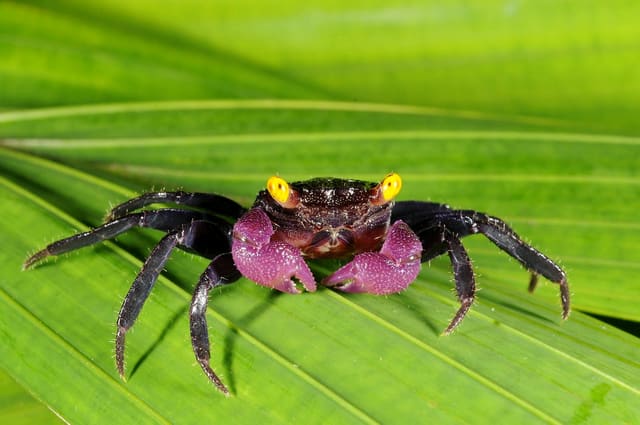
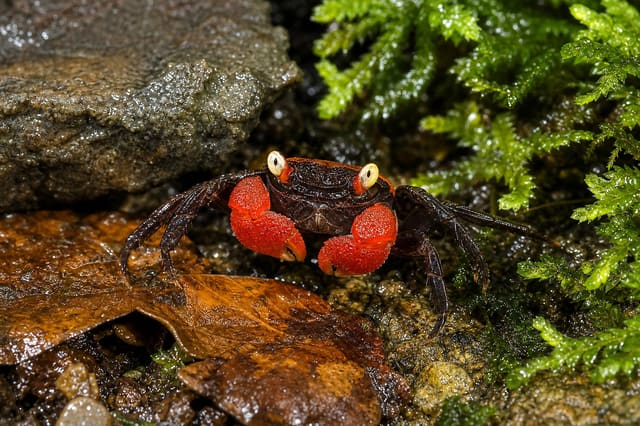
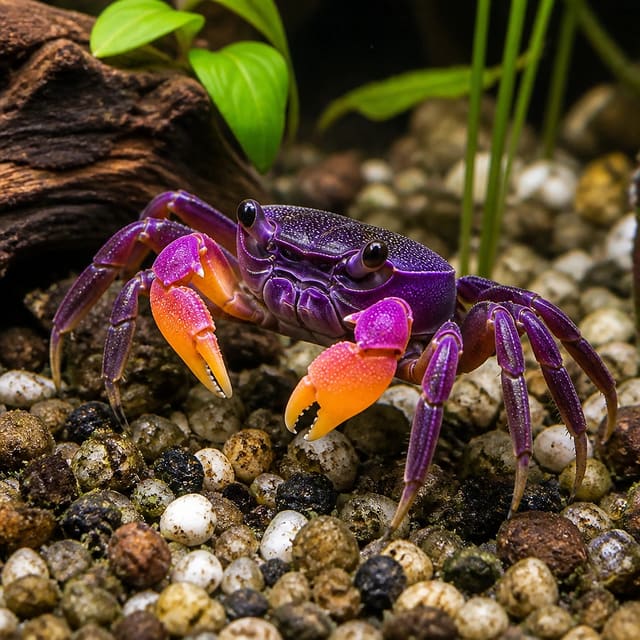
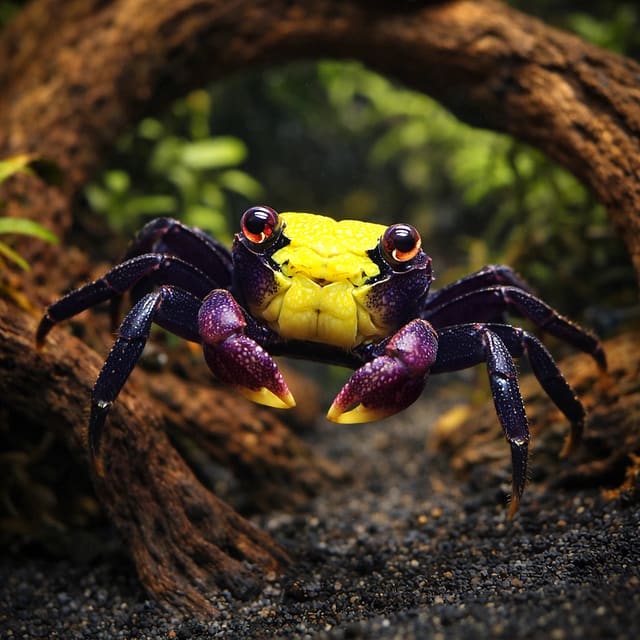
Halloween crab is a colourful burrowing land crab for a warm, humid terrarium with deep substrate and safe access to water. Sold individually; plan a dedicated enclosure before ordering.
Gecarcinus quadratus
Halloween crab is a colourful burrowing land crab for a warm, humid terrarium with deep substrate and safe access to water. Sold individually; plan a dedicated enclosure before ordering.
The Halloween crab, sold here as Gecarcinus quadratus, belongs in a carefully prepared land enclosure. Its dark shell, bright legs and substantial claws make it an appealing animal to watch, but the first buying decision is about its habitat. It needs room to burrow, sheltered places to withdraw and dependable humidity. A filled freshwater aquarium cannot provide that home.
The accepted scientific combination is Hartnollius quadratus. The published taxonomic treatment establishes that name as a new combination of the older Gecarcinus quadratus combination used on this listing. The name change does not turn it into a different pet; both names help you find relevant information. When reading about Halloween or moon crabs, check the scientific name because common names are shared by other land crabs.
One purchase supplies one live crab. This listing has a single offer, without a choice of measured dispatch sizes. Plan the enclosure around the animal's longer-term needs, leaving room for movement and growth, rather than choosing a small container because the crab looks compact in a photograph. A picture cannot tell you how much useful ground space a furnished enclosure will provide.
Sex is guaranteed only when the selected option explicitly states male or female. This Halloween crab listing has no sex-guaranteed option. Buying additional individuals therefore does not establish a male-and-female combination or a settled pair. The straightforward keeping plan is an individual animal in its own prepared home.
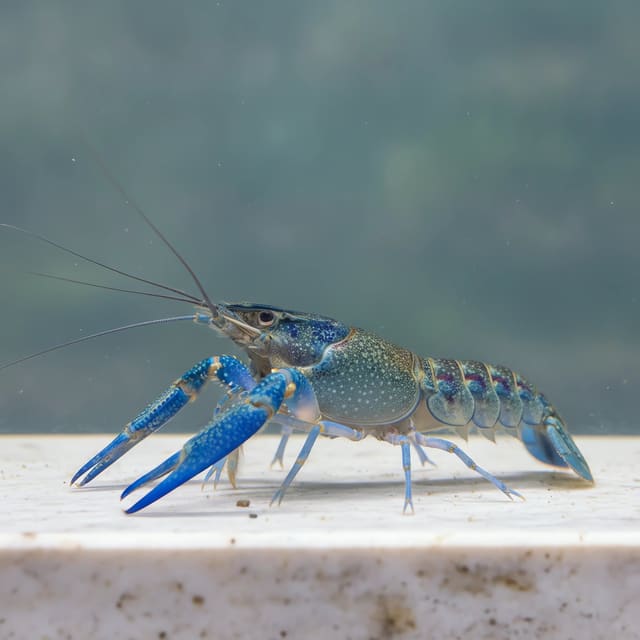
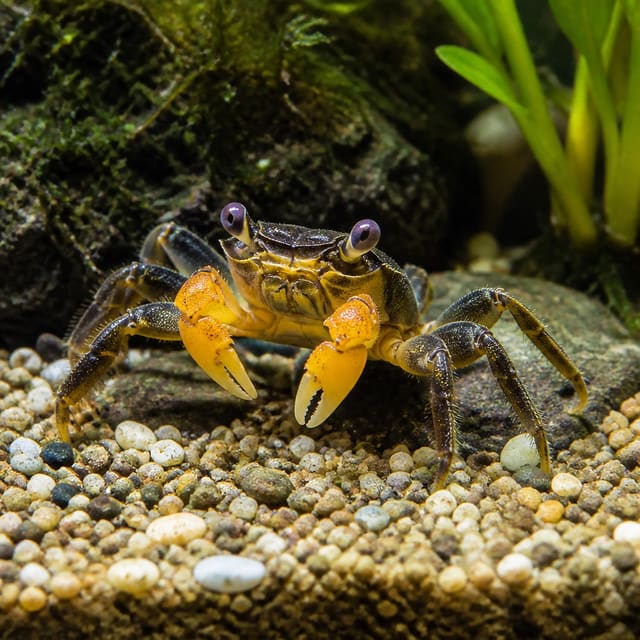
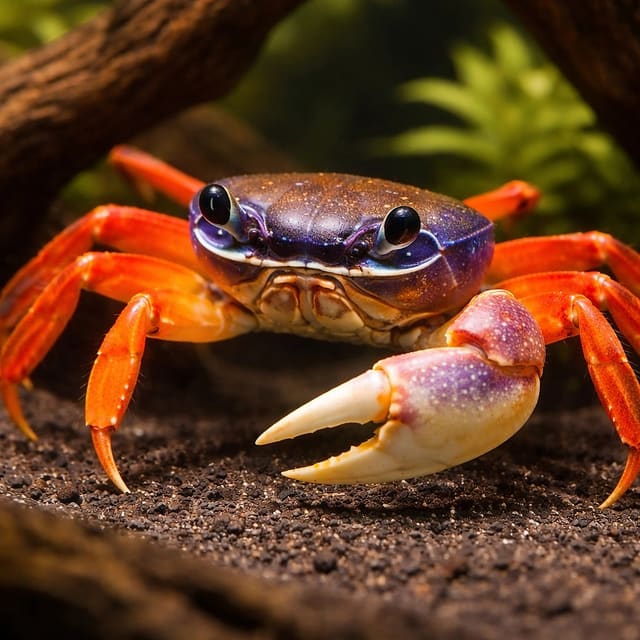
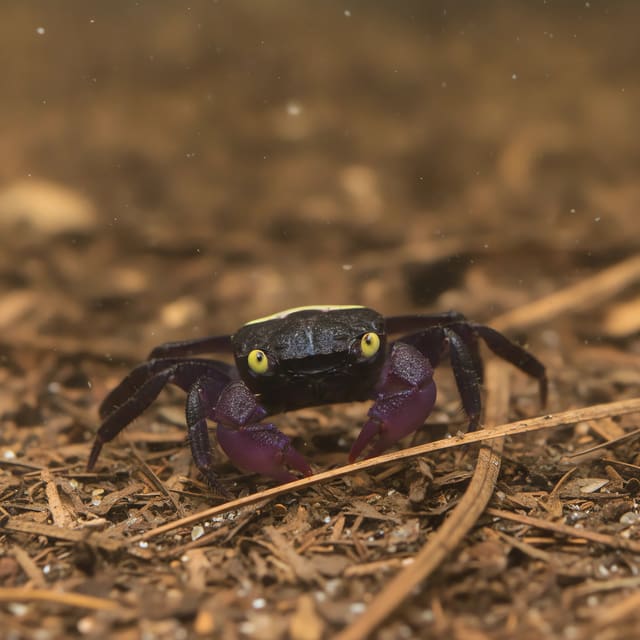
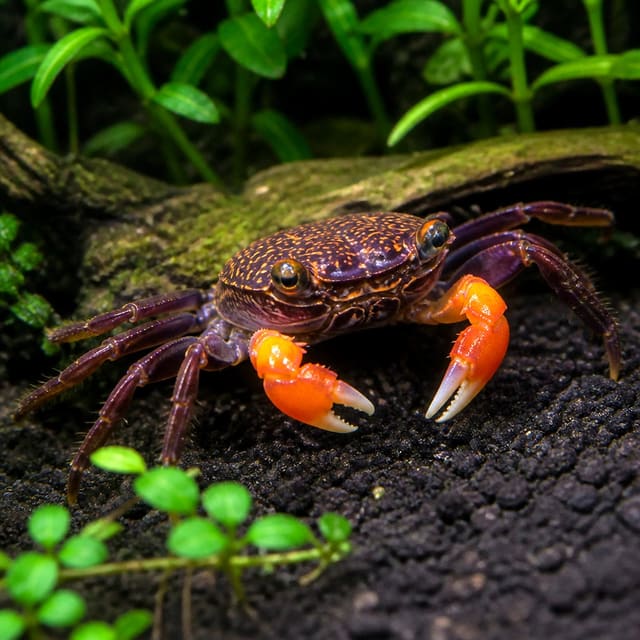
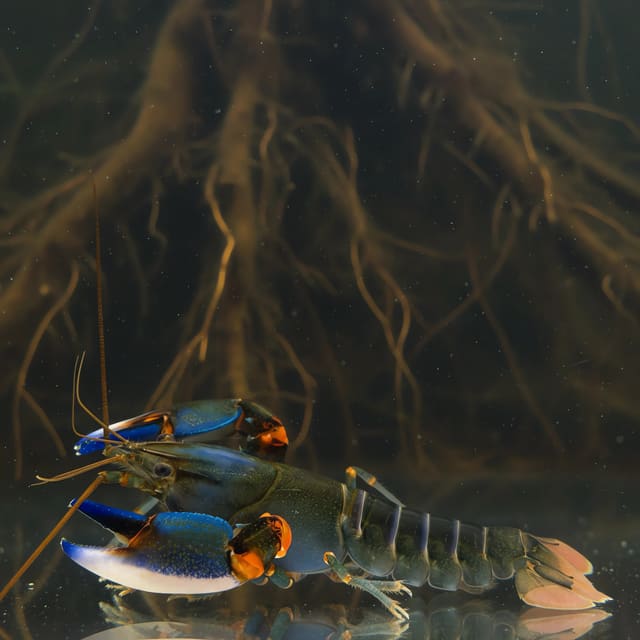
The gallery images are representative of this type of animal rather than photographs of the exact animal supplied, so colours can look slightly different from the live animal.
This crab is a good subject for someone who enjoys observing how an animal uses its surroundings: which entrance it chooses, where it carries material and how it rearranges the surface. Its enclosure is a living space, and its preferences may change the arrangement you planned. Choose furnishings that continue to work when soil is moved around them. An immaculate decorative scene is less useful than a stable, accessible home.
Think about your expectations before ordering. A land crab should be able to remain out of sight without being brought out for visitors or photographs. If you want a pet to hold regularly, or something that must remain visible whenever you look into its enclosure, reconsider whether this is the right choice. Observation should fit around the animal's access to shelter.
Keeping one crab also makes practical sense for observation. You can relate displaced substrate, food consumption and changes in activity to the same individual. With several animals sharing a space, it becomes harder to know which one has eaten or whether every crab can reach the resources you provide. Extra animals add responsibilities even when they seem to occupy very little space.
It helps to draw the arrangement before buying equipment. Mark where bowls, hides, monitoring probes and doors will sit. Then consider the route your hand will take when changing water or retrieving a food dish. A layout that is easy to service calmly is more likely to remain consistent over time, particularly when the crab has chosen an inconvenient corner for its retreat.
A well-prepared land enclosure can be rewarding in its own right. You are creating opportunities for a burrowing animal to choose where it spends its time, with the conditions and access it needs. That is the useful measure of the design: whether the crab can use it comfortably and whether you can keep it working reliably.
Ground space, depth of substrate and access to resources should guide the enclosure choice. Read the dimensions of a terrarium as usable space, then allow for the volume occupied by the substrate and furnishings. A tall empty box may look generous while leaving little room for a crab to move around a large water bowl and a hide.
The Crustacean Council guidance published by Indoor Ecosystem, written jointly for H. quadratus and H. lateralis, recommends a minimum enclosure of 90 × 45 × 40 cm, an environment around 27°C and approximately 80% humidity. It also recommends deep substrate, a water bowl made brackish with marine salt at 1.010 specific gravity, and a natural day-and-night cycle. These are keeper recommendations for those two land crabs, rather than experimentally established limits for this species.
Use the enclosure dimensions as a planning starting point, then check the actual arrangement. You should be able to place the necessary bowls and retreats without turning the remaining ground into a narrow corridor. Leave accessible space for routine tasks as well as room for the crab. If a bowl can only be lifted by moving the main hide, the layout needs revision before an animal is introduced.
Field research in Corcovado, Costa Rica records this crab's terrestrial burrows and their association with sandy ground. The study supports taking burrowing seriously; it does not supply a terrarium depth or a captive substrate recipe. In a home enclosure, provide a substantial area of moisture-retentive material in which the crab can excavate and retreat.
For your layout, separate the burrowing area from the surfaces that must remain stable. Place heavier objects on a secure support instead of balancing them on a mound the crab may remove. Test the arrangement by gently pressing each object before filling in around it. A bridge or stone that shifts under light pressure is unsuitable beside a burrow entrance.
A sheltered retreat should still be usable when a little substrate is pushed across its entrance. Inspect entrances during routine checks, especially after obvious digging, but avoid treating every moved grain as a problem. The purpose of the substrate is to be used. Repeatedly levelling it for appearance defeats part of the reason for providing it.
Choose a bowl that offers secure footing and a straightforward exit. Think about the complete route: approach from the soil, movement over the rim, access to the water and the climb back out. A smooth high-sided container can be awkward even if the water inside seems shallow. Arrange access so it remains usable after some substrate is displaced.
The bowl should sit firmly and be accessible for removal. Avoid putting it directly above the place where you intend the crab to burrow. When you lift it for cleaning, check whether the supporting ground has changed. Return it to a stable position without pressing down on hidden spaces beneath it.
Review every opening around cables, sliding panels and lids. The enclosure must contain the animal when you are not watching as well as during quiet daytime checks. Follow the enclosure manufacturer's instructions for fitting closures and ventilation components. Do not depend on a loosely resting lid or on a heavy object laid across it.
Keep the surrounding work area simple. Put spare dishes, cleaning materials and any temporary holding container within reach before opening the enclosure. Work with one access point at a time, and close it when interrupted. These habits reduce the chance that an ordinary feeding or water change becomes a rushed search for an animal.
For this land crab, the useful environmental questions concern the air, the burrowing material and the accessible water. A freshwater fish's temperature, pH and hardness card cannot describe all three. Keep your checks specific: record what you measured, where you measured it and which part of the enclosure it represents.
Install a thermometer and humidity monitor where they can be read without opening the enclosure. Follow the instrument instructions for placement, and keep sensors protected from direct contact with heaters or water. A reading immediately beside equipment may describe that tiny spot rather than the area the crab can use.
Before ordering, run the furnished enclosure through your normal household routine. Observe it when the room heating is on and off and when lights change. This gives you a practical picture of how the setup responds in its intended position. Moving it after the crab arrives creates another change to manage, so choose the location thoughtfully.
Write down a normal range of readings for your actual equipment and room. This is a monitoring record, not a reason to redefine the care target. It helps you notice a heater that has stopped working, a sensor that has slipped or a ventilation change that is drying the enclosure faster than before.
Choose heating equipment intended for the enclosure type and use the controls specified by its manufacturer. Secure the probe and wiring so that routine cleaning cannot casually move them. Check the operating instructions before covering any surface or placing substrate against equipment. Good installation matters as much as the setting printed on a dial.
Keep equipment accessible for inspection without making it accessible to the crab. Arrange cables outside the path of doors and removable bowls. Label controls if another person will look after the animal; a helper should not need to guess which plug powers the heater or which setting was deliberate.
Keep the burrowing material appropriately moist and the atmosphere humid, while avoiding standing water through the land area. Add moisture in a controlled way and watch where it goes. Pouring water onto one spot can saturate the lower material while leaving another area dry. A wet surface also tells you little about the conditions deeper down.
Use a consistent method for adding moisture and note any change in how often it is needed. If the enclosure suddenly dries much faster, check ventilation, room conditions and equipment before simply adding ever more water. A change in routine often has a practical cause that can be found and corrected.
Use a product intended for making marine or brackish water when following the brackish-bowl guidance. Ordinary table salt is not a substitute for a marine salt mix. Prepare the water in a clean separate container, follow the product instructions and measure it with suitable equipment before placing it in the enclosure.
Keep fresh water used for moisture management clearly separate from the prepared brackish bowl water. Label your containers and do not use drinking glasses or food storage vessels interchangeably for enclosure maintenance. Consistent preparation is easier when the necessary items live together and each has a clear purpose.
Clean the bowl when it becomes soiled and replace the contents rather than leaving a dirty dish because the crab appears to ignore it. After refilling, recheck the approach and exit. The service is only finished when the water is accessible and the bowl is back in a secure position.
Offer a varied omnivorous diet with plant material and suitable protein foods. The keeper guidance includes vegetables, fish pellets and shrimp. Variety should be deliberate: select foods appropriate for a crab, watch how they are used and keep the enclosure clean. A dish full of assorted food is not automatically a better feeding plan.
A removable dish makes feeding easier to observe and service. Put it somewhere you can reach without pulling apart the main retreat, and where the crab can approach without crossing an exposed obstacle course. Keep the initial position consistent so that you can compare feeding observations meaningfully.
Offer manageable portions and check what remains. If food is repeatedly left behind, reduce the amount or review what you are offering before adding more. A crab may move food, so a cleared dish alone does not show how much was eaten. Inspect accessible surfaces for discarded pieces during your ordinary cleaning.
Use clean utensils and containers for preparing food. Keep them away from cleaning products, gardening treatments and anything used for other pets. Prepare only what you can handle and store sensibly under the food manufacturer's instructions. Avoid leaving frozen food out while you complete unrelated maintenance.
Place food carefully and close the enclosure before clearing up. It is easy to leave a door open while looking for a spoon, disposing of packaging or answering a message. Gather everything first, complete the feeding step and then finish the kitchen tasks.
A short feeding record can be more useful than trying to remember whether the crab ate yesterday. Note the food offered, whether you saw feeding and any accessible leftovers removed. Record an observation as an observation: disappearance of food and witnessed eating are different pieces of information.
Look at appetite alongside the rest of the environment and the animal's usual pattern. A change deserves attention, but adding more food is not a reliable response to uncertainty. Check the enclosure readings, water access and recent disturbances, then seek appropriate advice if the change continues or the crab appears unwell.
You can make feeding interesting without hiding perishable food where it cannot be retrieved. Choose accessible places and change one feature at a time so that you can see how the animal uses it. Leave its main shelter available. Feeding should add choice, not require the crab to abandon its retreat whenever you want to watch.
Review the routine as the crab grows and the enclosure changes. A dish that was easy to reach may become crowded by moved substrate or a shifted furnishing. Adjust its position when needed, making the smallest useful change, and check that the route remains clear afterwards.
Design routine care around tasks you can carry out with little disturbance: reading instruments, checking closures, inspecting accessible water and removing leftovers. Keep the same basic order so that an interruption is less likely to make you forget a step. The equipment should support that routine instead of requiring repeated dismantling.
Keep a simple written record when something changes. Include what happened before it: a room-temperature change, cleaning, different food or replacement equipment. This context is useful when asking for help, and it reduces the temptation to make several unrelated adjustments at once.
A crab that is out of sight still needs its environment maintained. Continue checking water access and equipment while allowing it to use its retreat. Do not repeatedly open a burrow merely to obtain a head count. If there is a specific concern, describe the circumstances to an experienced land-crab keeper or suitable veterinary professional before undertaking a disruptive inspection.
Moulting is a particularly vulnerable period, and keeping the crab alone removes the risk of another crab interfering. Give it access to shelter and avoid unnecessary handling. Do not pull at a shell or attempt to assist a suspected moult without appropriate expert direction.
Remove accessible waste without digging through every part of the substrate. Lift removable items carefully and return them securely. If a larger cleaning task is needed, prepare the work area and any safe temporary accommodation before starting. Consider where the crab is likely to be before moving a heavy object or scooping material from beneath it.
Use products appropriate to animal enclosures and follow their instructions, including any rinsing and drying requirements. Keep sprays and household cleaning chemicals away from open bowls, food and substrate. A tidy shelf beside the enclosure is useful only if it does not become a storage place for unsuitable products.
Show a helper the routine in advance. Give them a short list of tasks, the normal equipment settings and your contact details. Explain which observations need a call and which parts of the enclosure should be left alone. A labelled supply box is more helpful than asking someone unfamiliar with the setup to identify salts, conditioners or food containers.
Leave the enclosure in a familiar arrangement before a planned absence. Avoid a major redesign immediately before handing over care. The helper should be checking a setup that has already been running predictably, with clear instructions for replacing water and providing food.
Read the current delivery and Live Arrival Guarantee policy before ordering and arrange to receive the parcel. For a claim, the policy requires a continuous unboxing video beginning with the sealed parcel, together with same-day contact and the order number. That video is claim evidence. Arrange animal-specific handling advice before delivery and have the terrarium ready. Fish-bag floating and underwater release are unsuitable approaches for a land crab.
Individual housing is the clearest starting plan for a Halloween crab. It avoids competition over the best retreat and makes it easier to monitor food and activity. The fact that two crabs can sit together briefly does not establish that they will share an enclosure safely through changes in size, condition or moulting.
Hiding should prompt a review of expectations and the enclosure, not an automatic purchase of another animal. A second crab brings its own need for resources and adds the possibility of conflict. You would also need the ability to provide separate appropriate housing if the arrangement failed.
A photograph showing several crabs together is not a stocking recommendation. It may show a temporary situation and does not demonstrate long-term coexistence. Make a deliberate housing decision for each animal rather than using the number visible in a picture as a shopping list.
This land enclosure is not a community aquarium. Do not add fish to a small water bowl or enlarge the water area simply to create a mixed display. That changes the design around another animal's needs and may reduce the ground available to the crab.
If your aim is a freshwater aquarium, pause before choosing a land crab. Decide which kind of enclosure you actually want to maintain and research animals suited to that plan. Trying to combine two different projects in one limited space makes it harder to meet either animal's needs.
Do not assume another crab, reptile or invertebrate will be safe because it comes from a broadly similar climate. Sharing temperature preferences does not establish compatible behaviour, feeding or use of space. Each species needs its own assessment, and an animal that disappears into the substrate is especially difficult to supervise in a mixed enclosure.
Keep spare accommodation in mind when planning any future change. A divider improvised after a conflict may leave both sides without suitable access or sufficient ground. Dedicated housing from the outset makes the arrangement simpler to maintain and easier to evaluate.
You can create a rewarding display through layout, changes in visible activity and careful observation without adding more animals. Keep track of the crab's routes and how it uses different retreats. That information can help you improve the home while retaining familiar features, and it gives you a more useful picture of the individual than a crowded mixed exhibit.
It needs a predominantly terrestrial enclosure with deep burrowing substrate, humid air and safe access to water. A filled freshwater aquarium is unsuitable.
A keeper guide covering this species and H. lateralis recommends at least 90 × 45 × 40 cm. Allow useful ground space after bowls and retreats are installed; height or empty volume alone does not describe a suitable layout.
Plan individual housing. Shared space creates competition and a risk of injury, especially around moulting. Buying more than one does not establish a compatible pair.
Prepare the land enclosure first and practise monitoring its environment and servicing its water and food. Choose this animal only if you are comfortable maintaining those conditions and allowing it to stay hidden.
Offer varied suitable plant and protein foods, including vegetables, appropriate pellets and shrimp. Use manageable portions and remove accessible leftovers rather than allowing food to spoil in the enclosure.
Joint keeper guidance for this species and H. lateralis uses around 27°C and approximately 80% humidity. These refer to a land enclosure; freshwater aquarium pH and hardness targets do not describe its complete environment.
Plan a dedicated land-crab home. Its water access is not a fish aquarium, and fish should not be added to the bowl or used as a reason to replace the burrowing area with open water.
The 2025 taxonomic treatment in Zoosystema explains the accepted scientific combination. Griffiths, Mohammad and Vega's Corcovado study documents terrestrial burrows in the wild. The Crustacean Council guide provides practical keeping guidance for H. quadratus and H. lateralis together. The links appear beside the relevant topics above.
No reviews for this item yet. Bought one? Honest reviews only, good or bad.
What customers say about ordering from us
Easy website plenty of info on fish your buying great to pick a time slot
TRACEY DURRANT · 7 Oct 2026
Got some lovely fish thank you
Kevin Mackie · 7 Oct 2026
Reviews of our shop, collected by Judge.me, an independent third-party review collector. Newest first.