Ring-Necked Shrimp (Macrobrachium assamense)
17–27°C · pH 6.5–8
£19.99

A hardy, transparent freshwater shrimp that adds constant activity and useful scavenging to peaceful community aquariums. Easy care, peaceful. 20-30C, pH 6.5-7.5.
Macrobrachium sp. (exact species not verified)
Lives in groups: kept together they stay settled, active and show their best colour.
Confirm your email, then we’ll send an availability message for this exact item if it returns within 180 days.
This request is only for this product—no newsletter or other promotions. A mail-provider retry may very rarely duplicate the same availability message. Unconfirmed addresses are removed after 48 hours. See our privacy policy.
A hardy, transparent freshwater shrimp that adds constant activity and useful scavenging to peaceful community aquariums. Easy care, peaceful. 20-30C, pH 6.5-7.5.
Maintain these water conditions for optimal health and vibrant colors
The shrimp for tropical tank enthusiast will find Macrobrachium glass shrimp a hardy, transparent freshwater prawn that adds constant activity and useful scavenging behaviour to peaceful community aquariums. This species, often sold simply as 'glass shrimp', displays near-transparent colouration and engaging behaviour, making it a popular choice for aquarists seeking active, low-maintenance invertebrates. Available for sale UK hobbyists should note that whilst marketed as peaceful, some Macrobrachium species can exhibit opportunistic predatory tendencies, particularly towards very small tankmates. At 3cm, these specimens are juveniles or young adults, and with proper care they thrive in well-maintained tropical aquariums with stable water parameters.
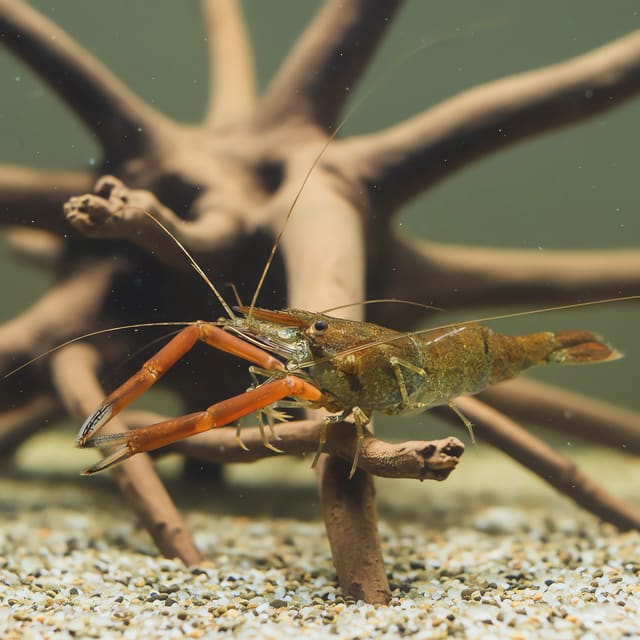
Macrobrachium glass shrimp are characterised by their near-transparent bodies, which allow internal organs and eggs to be visible through the exoskeleton. The body is elongated and slightly compressed, with long antennae and prominent eyes on stalks. The claws are moderately sized and used for feeding and defence. Colouration ranges from clear to very pale grey or greenish-brown, often with subtle speckling or banding visible under good lighting. At 3cm, these specimens are compact and delicate, though many Macrobrachium species can grow significantly larger depending on exact species identification. Healthy specimens display active movement and clear, unblemished exoskeletons.
Macrobrachium species inhabit tropical and subtropical freshwater rivers, streams, ponds, and lakes across Asia, Africa, and the Americas. These environments feature clear to moderately turbid water with rocky or sandy substrates, submerged wood, and abundant vegetation. Water conditions vary widely depending on species and location, but most inhabit warm, well-oxygenated waters with moderate flow. In the wild, glass shrimp are opportunistic omnivores and scavengers, foraging for detritus, biofilm, small invertebrates, and plant matter. Some species exhibit a complex life cycle with larvae requiring brackish water, though many adapt to pure freshwater in aquaria.
Provide a minimum of 60 litres with efficient filtration and stable water parameters. Use a fine sand or smooth gravel substrate and furnish the aquarium with driftwood, rocks, live plants such as Java moss, Java fern, and Anubias, and hiding places to provide security. Maintain moderate water flow and excellent oxygenation. Install a secure, tight-fitting lid, as shrimp are capable climbers and may escape. Perform regular partial water changes to maintain pristine water quality. Provide abundant plant cover and leaf litter to encourage natural foraging behaviour and offer safe moulting sites. A mature, biologically stable aquarium is ideal.
Macrobrachium glass shrimp are omnivorous scavengers that accept a wide variety of foods. Offer sinking shrimp pellets, algae wafers, blanched vegetables such as courgette and spinach, and biofilm-rich surfaces. Supplement with occasional protein-rich foods including frozen or live bloodworms, daphnia, brine shrimp, and small pieces of raw shrimp or fish. Provide calcium-rich foods such as cuttlebone or specialised invertebrate supplements to support healthy moulting. Feed in the evening when the shrimp is most active, and remove uneaten food after a few hours to maintain water quality. A varied diet promotes vibrant health and natural behaviour.
Glass shrimp are generally peaceful and constantly active, exploring all areas of the aquarium and foraging on surfaces. They are most active during twilight and night, though they can often be seen during the day. These shrimp are social and can be kept in groups, though territorial disputes may occur if space and hiding places are insufficient. During moulting, the shrimp will seek shelter and remain hidden until the new exoskeleton hardens, a vulnerable period lasting several days. Some individuals may exhibit opportunistic predatory behaviour towards very small fish or shrimp, particularly at night, so careful observation is recommended.
Compatible with snails and very peaceful fish that are too small to threaten the shrimp but not likely to be harassed. Suitable tankmates include small rasboras, peaceful tetras, and non-aggressive livebearers, though compatibility depends on confirming the exact Macrobrachium species. Avoid large predatory fish, cichlids, barbs that nip, loaches that prey on invertebrates, large crayfish, and any species that view shrimp as prey. Be cautious housing with very small shrimp or fry, as larger Macrobrachium individuals can be opportunistic and may catch small tankmates at night. Species-only tanks or housing with robust, similarly sized invertebrates is often safest.
Many Macrobrachium species have a larval stage that requires brackish or marine conditions, making breeding in a home freshwater aquarium challenging. Adults may carry eggs under the abdomen in freshwater, but successful larval rearing typically requires salinity adjustments and specialised care. Larvae are planktonic and require microscopic foods such as rotifers or newly hatched brine shrimp. Most aquarists keep Macrobrachium glass shrimp for display rather than breeding, though dedicated enthusiasts with appropriate equipment and experience may achieve success with careful research and preparation. Confirm species identification before attempting breeding.
Provide excellent filtration, hiding places, and a secure lid to prevent escapes. Like most Macrobrachium shrimp, larger individuals can become opportunistic and may catch very small tankmates at night, so choose companions carefully. Avoid all copper-based medications, which are highly toxic to crustaceans. Maintain stable water chemistry and provide adequate calcium to support healthy moulting and exoskeleton development. After moulting, leave the shed exoskeleton in the tank for the shrimp to consume as a calcium source. Monitor tankmates closely, especially at night, and be prepared to separate if predation occurs. Best suited to aquarists with some experience managing invertebrates.
Tropical Fish Co is a trusted UK supplier of healthy, active freshwater shrimp including Macrobrachium glass shrimp. Each specimen is carefully selected for robust health, active behaviour, and excellent condition. Our livestock is quarantined and health-checked before dispatch, ensuring you receive only the finest quality. We provide expert care advice, detailed species information, and ongoing support to help you succeed with your shrimp. With fast, secure delivery across the UK and a commitment to sustainable fishkeeping practices, Tropical Fish Co is your reliable partner for premium freshwater invertebrates and aquatic livestock.
No reviews for this item yet. Bought one? Honest reviews only, good or bad.
What customers say about ordering from us
I have a small group of long finned mountain minnows. So was delighted to be able to order ten of this variety to increase the genetics in my tank . The ones I recieved are healthy but it’s to early to give a verdict on wether they are of a long finned type since they are small currently.
Gordon Walker · 23 Sept 2026
100% success travel and "installation". Pleased with quality of purchase. The Siamese fighter a bit "shy" so have not yet seen him at his best yet but looking good. Happy customer. GG
George E Garratt · 21 Sept 2026
Reviews of our shop, collected by Judge.me, an independent third-party review collector. Newest first.