−15%
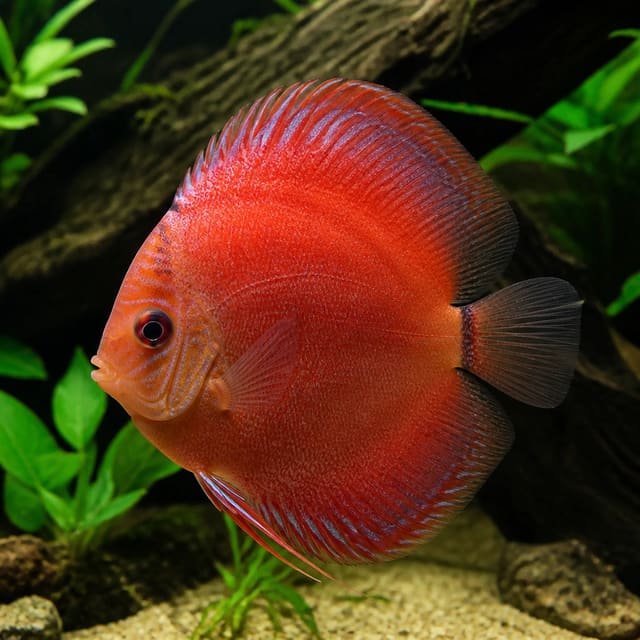
Red Melon Discus (Symphysodon sp.)
26–30°C · pH 6–7.5
£44.19£51.99
The Red Valentine Discus (Symphysodon spp. (domestic discus strain)) is a domestic cichlid colour strain in the South American discus genus. It suits advanced keepers who can follow OATA’s group-level discus guidance: at least five fish, 26–30°C, pH 6.0–7.5 and 4–12°dH. Sold individually in dispatch grades from 4 cm (5 cm) to XL selection HQ.
Symphysodon spp. (domestic discus strain)
Save when buying multiple fish. Each quantity is one fish; sex and pair formation are not guaranteed unless the selected variant explicitly states them.
The Red Valentine Discus (Symphysodon spp. (domestic discus strain)) is a domestic cichlid colour strain in the South American discus genus. It suits advanced keepers who can follow OATA’s group-level discus guidance: at least five fish, 26–30°C, pH 6.0–7.5 and 4–12°dH. Sold individually in dispatch grades from 4 cm (5 cm) to XL selection HQ.
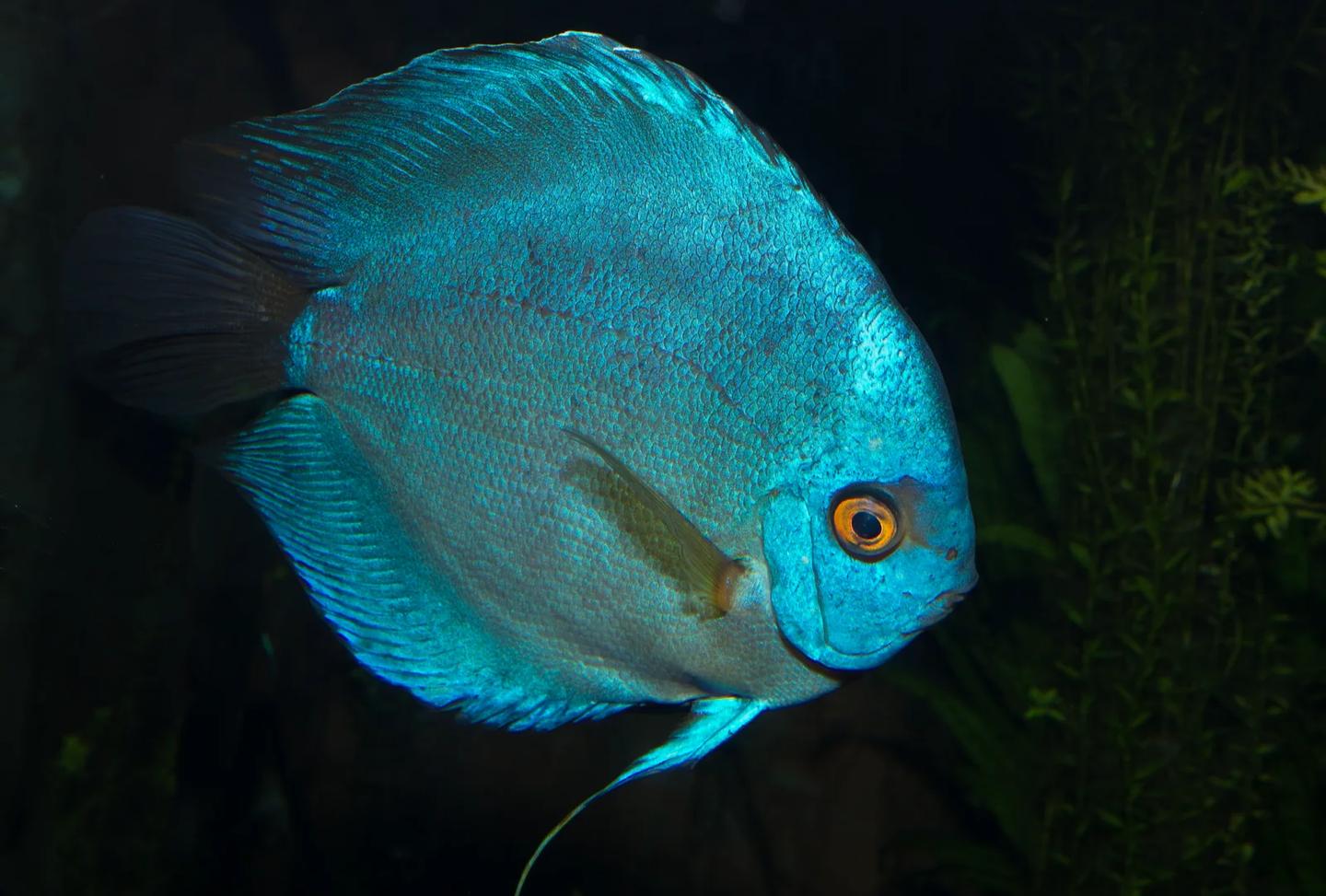
Discus are social Amazonian cichlids with specialised aquarium needs. OATA advises at least five fish, except an established breeding pair, and about 50 litres per adult—roughly 300 litres for six adults. Use that as a planning floor, then check usable dimensions, filtration, source water and the actual fish.
Maintain these water conditions for optimal health and vibrant colors
The Red Valentine Discus (Symphysodon spp. (domestic discus strain)) is a domestic colour strain within the South American discus genus and the Cichlidae family. It is a specialised freshwater tropical fish for an experienced keeper who can maintain warm, clean and stable conditions. Red Valentine is a colour strain, not a separate scientific species, so care for it as you would any discus.
Keep Red Valentine Discus in a shoal of at least five; more is better when the aquarium has suitable space and filtration. Follow OATA’s group-level discus guidance: keep this fish at 26–30°C, pH 6.0–7.5 and general hardness of 4–12°dH. These values are not a species-specific optimum and define the routine aquarium target here. Maintain zero ammonia, zero nitrite and nitrate no higher than 20 mg per litre.
Discus are slow growers, so plan open swimming room and floor area for the full adult group from the start.
| Suits | Not suited to |
|---|---|
| Advanced keepers able to hold warm water steady | A new or biologically immature aquarium |
| A shoal of at least five discus | Keeping one discus or an undersized group |
| Clean, soft-to-medium, slightly acidic water | Cool-water conditions |
| A large aquarium with cover and open swimming space | A cramped layout without group swimming room |
| Carefully screened, calm companions | Boisterous companions |
We rate it advanced because specialised water requirements, shoaling behaviour, substantial space planning and frequent maintenance must all be managed together. Choose this fish when you can manage all four together rather than relying on one favourable value such as temperature alone.
One purchase supplies one Red Valentine Discus in the grade chosen on the live size selector. The labels are 4 cm (5 cm), 5 cm (6.5 cm), 6 cm (7.5 cm), 7cm, 8cm, 9cm, 10cm, 11cm, 12cm and XL selection HQ. Choose the grade you want on the size selector when you order.
The size you select is the size supplied, not the adult size. Dispatch size describes the fish at supply, while aquarium planning must account for its growth. Base space, layout and stocking on the adult group, allowing 50 litres of water for each adult discus.
Selecting a larger dispatch grade does not remove the shoaling requirement or reduce the volume needed for the eventual group. Work out the number of discus, adult water allowance, filtration capacity and open swimming area first. Then use the selector to choose the dispatch grade that fits that prepared plan. A mixed or staged stocking plan must still protect water quality as feeding and waste increase.
Sex is guaranteed only when the selected option explicitly states male or female. This Red Valentine Discus listing has no sex-guaranteed option.
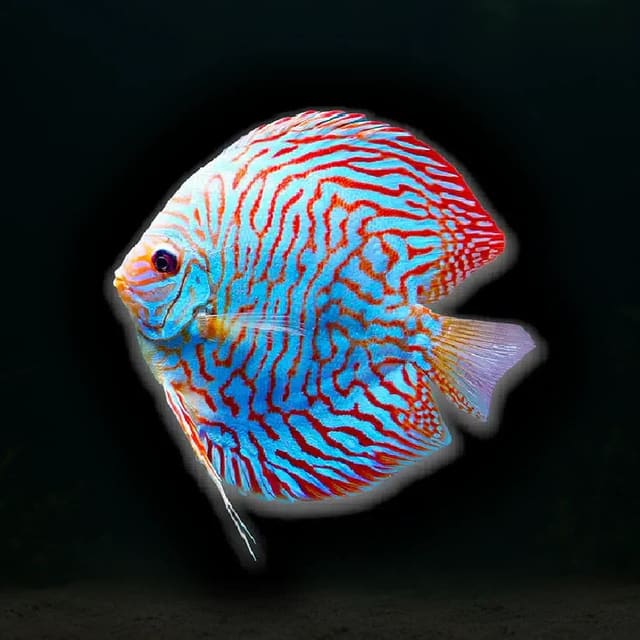
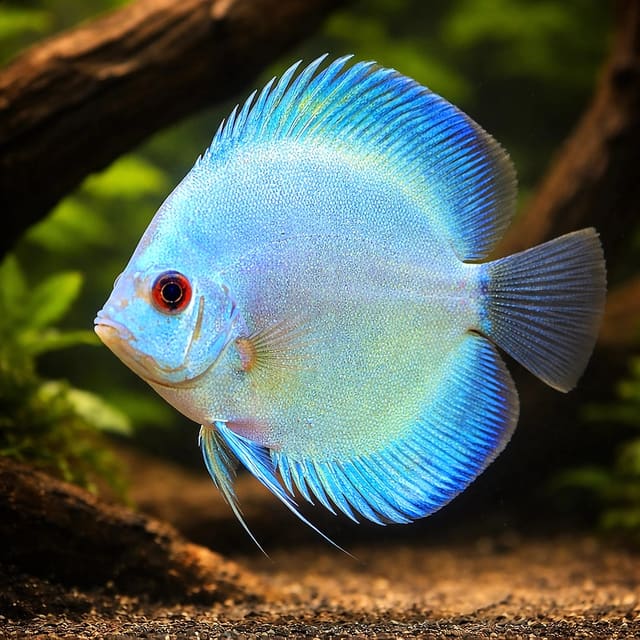
The gallery images are representative of this type of animal rather than photographs of the exact animal supplied, so colours can look slightly different from the live animal.
Browse the discus collection when comparing other discus strains, but assess every choice against the same practical requirements: warm stable water, a suitable shoal, sufficient adult space and compatible companions. Colour or dispatch grade should never be used as a shortcut for sex, eventual size or social position.
Plan at least 250 litres for a five-fish adult discus group when applying OATA’s allowance of 50 litres per adult. OATA also gives approximately 300 litres for six adults. More room is beneficial when the aquarium must also accommodate cover, open swimming space and carefully selected companions.
Give the discus group that volume first, and add space for any companions on top of it. Plants, wood and ornaments displace water, while filters, feeding and additional livestock affect the system’s waste load. Assess the usable water volume, floor area and biological capacity together.
A larger aquarium gives more water volume over which heat, waste and changes in chemistry are distributed. That extra buffer supports stability, but it does not replace maintenance or testing. A large neglected aquarium can still accumulate nitrate or develop filter problems.
Floor space matters because discus need room to explore as a group. Arrange the aquarium so the shoal can move between cover and open water without repeatedly squeezing through narrow gaps.
Before committing to the group, mark out the positions of the filter, heater, wood, plants and maintenance access. Confirm that the finished layout still leaves a broad open area. If décor consumes the swimming room needed by the adult plan, choose a larger aquarium or simplify the arrangement before adding fish.
Keep the aquarium at 26–30°C, pH 6.0–7.5 and general hardness of 4–12°dH. Maintain ammonia at zero mg per litre, nitrite at zero mg per litre and nitrate no higher than 20 mg per litre. Clean, warm, soft-to-medium and slightly acidic water is the central requirement for this fish.
Test at least once each week and record the results. A written log makes gradual movement easier to recognise than memory alone. Record temperature, pH, ammonia, nitrite and nitrate on the same day as routine maintenance, then note anything unusual about feeding, colour, breathing or swimming.
| Result | Action |
|---|---|
| Ammonia above zero | Test again, reduce the immediate waste load and check filtration |
| Nitrite above zero | Treat it as a biological filtration warning and act promptly |
| Nitrate approaching 20 mg/L | Review water-change timing, feeding and stocking load |
| Temperature outside 26–30°C | Correct the cause gradually and check heater operation |
| pH moving between tests | Check source water, replacement-water preparation and KH |
Use our water chemistry guide to understand what each test measures, then compare your measured results with the Red Valentine Discus targets using the water matcher. Always work from measured aquarium and source-water values rather than estimating from appearance.
Prepare replacement water with a tap-water conditioner that removes chlorine or chloramine before it enters the aquarium. Match it closely enough to avoid abrupt movement in temperature and chemistry. Large swings can undermine the stable environment that discus need even when the final reading falls within the target range.
Test outside the weekly routine whenever fish breathe differently, stop feeding, darken, hide more or swim abnormally. Water testing is the first practical check because ammonia, nitrite, nitrate, temperature and pH can affect several fish at once.
Use a well-established, continuously working filter before adding Red Valentine Discus. The RSPCA’s aquarium welfare guidance explains that fish release toxic ammonia and that a biological filter supports bacteria which convert ammonia to nitrite and then nitrate. Both ammonia and nitrite must remain at zero in a discus aquarium.
Prepare and mature the aquarium before livestock arrives; our first tropical tank guide shows how to set up and mature a new tank. Maturity means the biological filter can process the waste produced by the planned fish and feeding routine. Clear water by itself does not demonstrate that ammonia and nitrite are being controlled.
Add fish gradually because the bacterial population must expand as stocking and food input increase. Adding too many fish too quickly can cause new tank syndrome, where the filter cannot keep up and ammonia and nitrite rise to levels that may make fish ill or kill them.
Filter capacity and aquarium volume solve different problems. The filter processes waste, while water volume helps buffer environmental change. A powerful filter cannot compensate for inadequate group space, and a large aquarium cannot compensate for an immature or blocked biological filter.
Watch how the filter moves water through the whole aquarium. Flow should support waste collection without preventing the discus from using their open swimming area. If debris collects in still zones, adjust the layout or circulation and remove the waste during maintenance rather than allowing it to break down.
Change 50% of the aquarium water at least once every week. Treat this as the core maintenance appointment for discus, not an occasional response to cloudy water. Regular partial changes help maintain the clean conditions, low nitrate and chemical stability required by the group.
Test before the change when possible so the result shows what accumulated during the week. Record ammonia, nitrite, nitrate, pH and temperature, then prepare conditioned replacement water. After the change, check temperature and observe the fish so any unusual response is noticed promptly.
Fine gravel and sand both let discus feed by blowing the substrate, but each needs regular cleaning. Siphon waste from fine gravel. With sand, stir open areas regularly so waste does not collect in dead spots. Work around plant roots and décor without dismantling the fishes’ cover every week.
If nitrate repeatedly reaches its 20 mg per litre ceiling before the weekly change, examine the whole load: food entering the aquarium, uneaten material, trapped debris, stocking and filter performance. Do not respond by changing only one number while leaving a clear waste source untouched.
Keep maintenance predictable. A repeatable schedule helps the keeper identify what changed when a reading or behaviour differs. It also prevents the gradual extension of water-change intervals that can allow nitrate and solid waste to rise.
Feed two or three small meals across the day, giving only what the discus can finish within a few minutes. Discus are generally carnivorous and eat aquatic invertebrates in the wild. Use a specialised dried discus granule or pellet at least once each day so the routine includes a formulated source of vitamins.
Add variety with suitable frozen or live feeds. OATA specifically names beef heart, bloodworm and special discus mixes. Rotate foods rather than allowing one treat food to displace the daily specialised discus feed.
Small, frequent meals suit the relatively small stomach of a discus better than one oversized feeding. They also give the keeper several short opportunities to compare appetite and behaviour across the group. Keep each meal controlled because the higher frequency can increase waste quickly when portions are too large.
Distribute food where all members of the shoal can approach it. Watch the entire group rather than only the quickest fish. A dominant or confident fish finishing its share does not show that every other fish has eaten.
Remove uneaten food before it decomposes. Uneaten food breaks down and releases toxic waste into the water, adding to the load on the biological filter. Feeding and water quality are therefore one decision: the correct food must also be offered in an amount the aquarium can process.
Give the shoal both sheltered areas and a broad, unobstructed swimming zone. Discus can be shy and benefit from live plant cover, branches, wood and other ornaments. Their size, shape and group behaviour also require open room in which they can explore together.
Arrange taller cover around the sides or rear where it can create visual shelter without dividing the main swimming area into narrow corridors. Leave enough clearance around décor for adult discus to turn and pass each other. Check that the group can turn and pass through the layout without being funnelled into one route.
Use fine gravel or sand. OATA notes that these substrates allow discus to feed naturally by blowing the substrate. The choice should also fit the maintenance routine: siphon fine gravel and stir open sand areas regularly to prevent waste from building up.
| Layout element | Decision |
|---|---|
| Live plants | Use them to create cover while retaining maintenance access |
| Branches and wood | Position them as shelter without blocking group routes |
| Fine gravel | Leave accessible areas for waste siphoning |
| Sand | Keep open areas easy to stir and clean |
| Open water | Reserve a broad zone for the shoal to swim together |
Overhead aquarium lighting is recommended for discus, but cover should let shy fish withdraw when needed. Observe whether the group uses both shelter and open space. Persistent crowding behind one object can indicate that the layout, companions or aquarium conditions need assessment.
Do not keep adding décor until the aquarium looks full. Every item must justify the water it displaces and the route it occupies. A simpler arrangement with clear maintenance access is often easier to keep clean and stable than a dense arrangement that traps food and waste.
Prepare the aquarium before the parcel arrives. Confirm that the filter is working and that ammonia and nitrite are zero. Check that temperature and pH sit within the intended discus range so the receiving aquarium is ready before the bag is opened.
Follow the Tropical Fish Co delivery and Live Arrival Guarantee policy in this order:
For a claim, send the continuous unboxing video and order number on the same day. The video must show the sealed parcel, the continuous opening and the fish inside the sealed bag before release.
Additions must be gradual because the biological filter needs time to respond to extra waste and feeding. Keep to your weekly testing and water-change routine while the fish settle. A new arrival can alter the aquarium’s biological load even when the water remains visually clear.
Keep the order number and unboxing video together until the initial arrival check is complete. For full eligibility and claim requirements, follow the linked delivery policy.
Check the group every day for changes in swimming, colour, breathing, body condition, appetite and interaction. Familiarity with the fishes’ normal behaviour makes a meaningful change easier to recognise. Observe the whole shoal so a quiet individual is not hidden by the activity of stronger feeders.
| What you notice | What to do first |
|---|---|
| Hanging at the surface, sitting on the bottom or erratic swimming | Test water and check temperature, flow and filtration |
| Darker or paler colour than normal | Compare behaviour, companions and recent water results |
| More aggression or hiding | Check group dynamics, cover and access to food |
| Faster or slower gill movement | Test water promptly and inspect filter operation |
| White spots, fluffy growths, damaged fins or missing scales | Record the change clearly and avoid guessing at treatment |
| Weight change or reduced feeding | Confirm food access and test aquarium conditions |
Begin with measured water values because ammonia, nitrite, nitrate, temperature and pH affect the aquarium as a system. Check whether a filter blockage, missed change, uneaten food or recent stocking increase explains the movement. Correct an identified husbandry cause carefully rather than making several abrupt changes at once.
Contact us for guidance when a health change persists, visible damage appears or water testing does not explain the behaviour. Share the measured values, the maintenance date, recent feeding and stocking changes, and what the fish is doing. Concrete observations are more useful than a general statement that it looks unwell.
Do not wait for every fish to show the same sign. A single individual repeatedly missing food, hiding or breathing differently deserves attention, particularly in a social group where confident fish can mask the condition of quieter members.
Choose companions only after confirming that they suit 26–30°C, pH 6.0–7.5, general hardness of 4–12°dH and the calm structure of a discus aquarium. OATA says only a handful of other species are suitable and names medium-sized tetras, Corydoras, plecos and dwarf cichlids as possible tank mates. Check each species within these groups before you buy it.
Avoid cool-water fish and boisterous companions. Temperature tolerance alone is not enough: a fish that can survive warm water may still be unsuitable because of its activity, feeding behaviour or effect on the discus shoal.
| Category | Decision |
|---|---|
| Medium-sized tetras | Possible after water, behaviour and space screening |
| Corydoras | Possible after checking the exact kind against the aquarium |
| Plecos | Possible after checking water, space and feeding requirements |
| Dwarf cichlids | Possible only after careful behavioural and water screening |
| Cool-water fish | Avoid |
| Boisterous fish | Avoid |
Smaller dither fish may help discus feel more confident, but that potential benefit does not override the screening process. The companion still adds waste, consumes space and needs appropriate food. Include its adult needs in the aquarium plan before purchase.
Compatibility remains conditional because individual behaviour and aquarium layouts differ. Decide from each fish’s water, space and feeding needs, then watch closely to see how the combination works.
Establish a suitable discus shoal before treating companions as the priority. Keep at least five because discus are social, shoaling fish; more is better when the aquarium has enough water volume and floor space. Discus kept singly or in too small a group will often become stressed or be bullied by larger or more dominant fish.
A two-fish arrangement is an exception only when the fish are an already established breeding pair. Do not use that exception as a general reason to buy two unpaired fish. This offer does not guarantee sex, pairing or breeding status.
Add fish gradually rather than introducing the full planned population at once. Every addition increases feeding and waste, and the filter’s bacterial population must expand to process the extra load. Test ammonia and nitrite after stocking changes and keep both at zero.
Watch for persistent hiding, reduced appetite, darker or paler colour, altered breathing, chasing or damaged fins. If one fish is repeatedly excluded from food or shelter, reassess the arrangement rather than assuming the group will resolve every conflict by itself.
Check fins during introductions, provide clear routes between cover and open water, and separate fish when persistent chasing or damage continues.
Do not solve social pressure by adding fish beyond the aquarium’s capacity. More discus can improve the shoal structure only when the aquarium, filter and maintenance routine can support them. If the system cannot meet the calculated water allowance, use a larger aquarium before expanding the group.
You receive one fish in the grade you choose, from 4 cm (5 cm) up to XL selection HQ. That is its size when sent, not the size it reaches as an adult.
Using OATA’s allowance of 50 litres per adult, plan at least 250 litres for five discus or approximately 300 litres for six, with ample floor area and open swimming room.
OATA advises at least five discus, with more preferred when space permits. Discus kept singly or in too small a group will often become stressed or be bullied.
No. We rate it advanced because it needs a mature filtered aquarium, specialised warm-water conditions, a suitable shoal and disciplined testing and maintenance.
Feed specialised discus granules or pellets at least once daily, with suitable frozen or live foods such as bloodworm, beef heart or discus mixes. Offer two or three small meals daily.
OATA’s group-level discus guidance is 26–30°C and pH 6.0–7.5, with general hardness of 4–12°dH; these are not a species-specific optimum. Keep ammonia and nitrite at zero and nitrate no higher than 20 mg/L.
Discus are not as aggressive as some of their close cichlid relatives, but in too small a group they will often be bullied by larger or more dominant fish.
OATA names medium-sized tetras, Corydoras, plecos and dwarf cichlids as possible companions. Screen the exact kind for warm water, calm behaviour, space and feeding before combining it with discus.
We hand-bag fish in pure oxygen, pack them in an insulated poly box with a heat pack when the weather calls for it, and send them with a licensed live-animal courier. Be present, start filming from the sealed parcel before opening, and float the bag for 20–30 minutes.
No reviews for this item yet. Bought one? Honest reviews only, good or bad.
What customers say about ordering from us
Easy website plenty of info on fish your buying great to pick a time slot
TRACEY DURRANT · 7 Oct 2026
Got some lovely fish thank you
Kevin Mackie · 7 Oct 2026
Reviews of our shop, collected by Judge.me, an independent third-party review collector. Newest first.