−15%
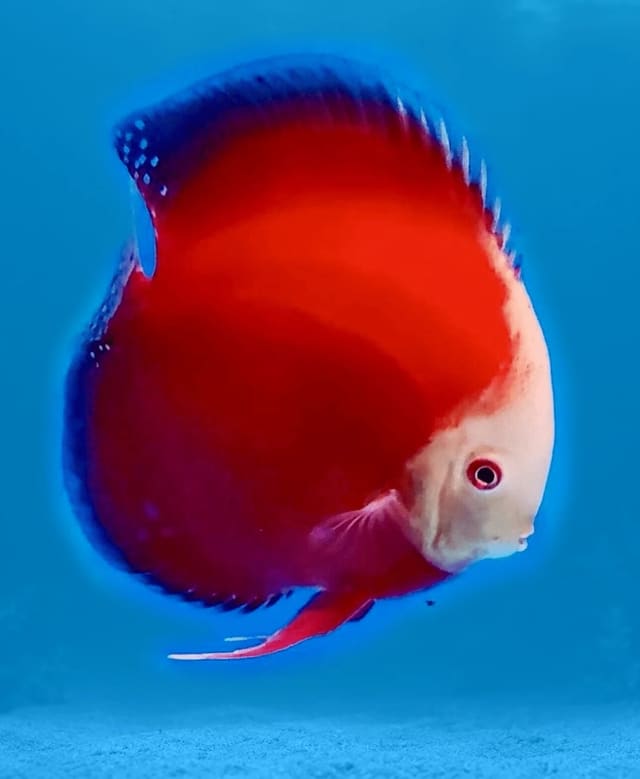
Red Melon Discus (Symphysodon sp.)
26–30°C · pH 6–7.5
£44.19£51.99
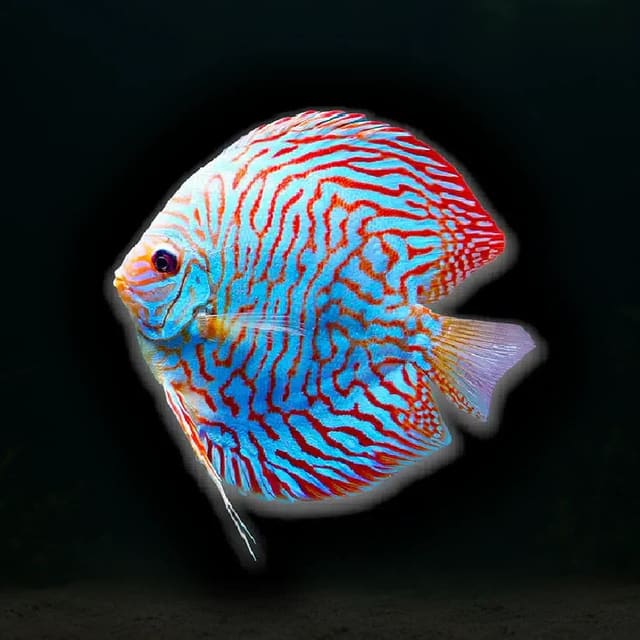
The Leopard Discus (Symphysodon leopard) is a cichlid from the South American discus group that reaches 15 cm. Keep it in a group of at least five at 25–29°C and pH 6.0–7.5; OATA’s broad discus guidance gives 4–12°dH. Sold individually in labelled dispatch sizes from 4 cm (5 cm) to XL selection HQ.
Adult size is the maximum length this species reaches at full maturity (scientific sources). The livestock you receive will be younger and smaller — pick a size above for the actual shipping size. Product-photo provenance and any image-specific limitations are stated on the listing.
Symphysodon leopard
Save when buying multiple fish. Each quantity is one fish; sex and pair formation are not guaranteed unless the selected variant explicitly states them.
The Leopard Discus (Symphysodon leopard) is a cichlid from the South American discus group that reaches 15 cm. Keep it in a group of at least five at 25–29°C and pH 6.0–7.5; OATA’s broad discus guidance gives 4–12°dH. Sold individually in labelled dispatch sizes from 4 cm (5 cm) to XL selection HQ.
Adult size is the maximum length this species reaches at full maturity (scientific sources). The livestock you receive will be younger and smaller — pick a size above for the actual shipping size. Product-photo provenance and any image-specific limitations are stated on the listing.
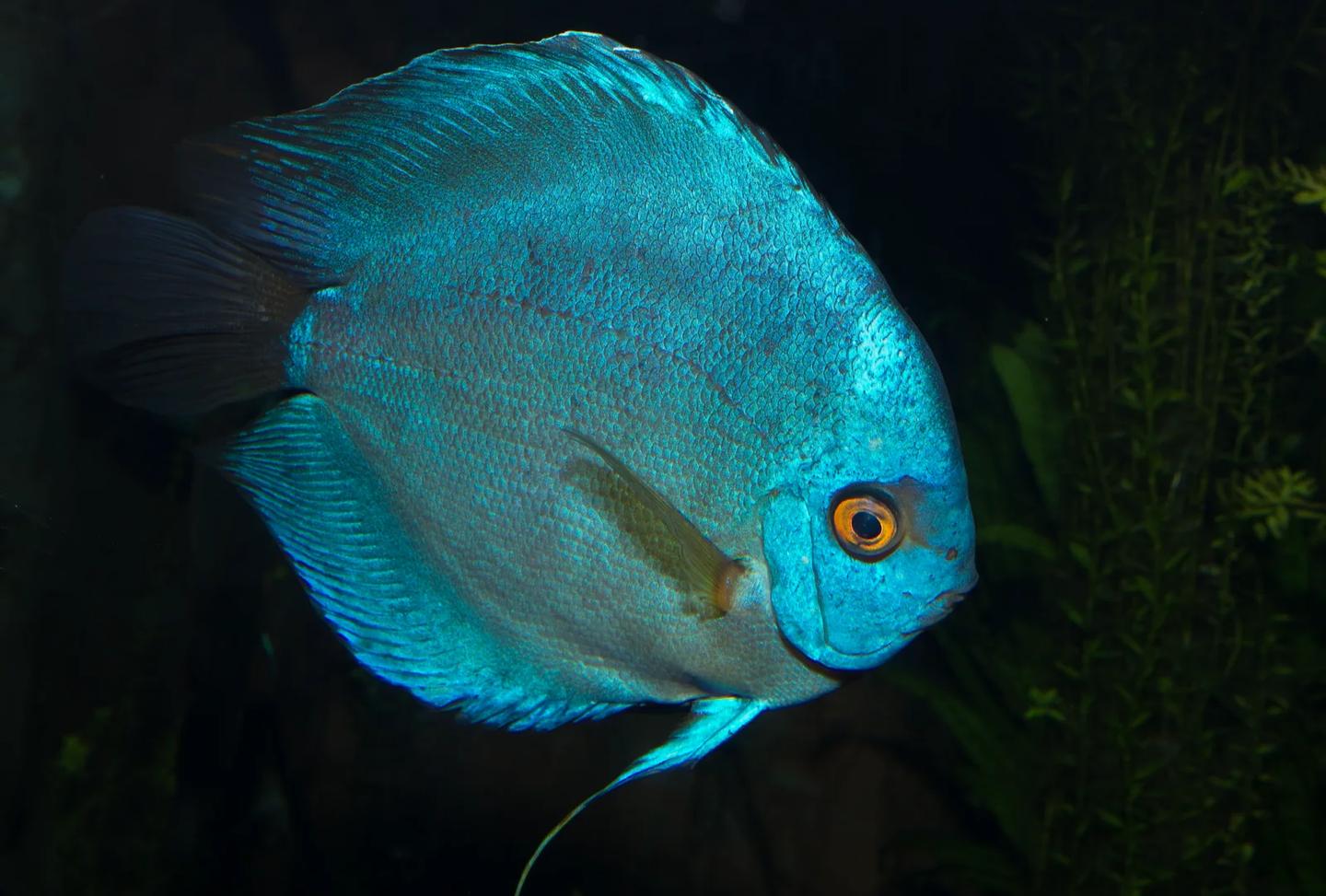
Discus are social Amazonian cichlids with specialised aquarium needs. OATA advises at least five fish, except an established breeding pair, and about 50 litres per adult—roughly 300 litres for six adults. Use that as a planning floor, then check usable dimensions, filtration, source water and the actual fish.
Maintain these water conditions for optimal health and vibrant colors
The Leopard Discus (Symphysodon leopard) is a freshwater cichlid in the Cichlidae family. Discus belong to the South American genus Symphysodon. Adult size: 15 cm. It suits a keeper who can maintain warm, clean and stable water, provide a mature biological filter and plan for a social group rather than a single display fish.
Keep this fish at 25–29°C and pH 6.0–7.5. OATA’s broad discus guidance spans 26–30°C, pH 6.0–7.5 and soft-to-medium water at 4–12°dH for the group. It also advises keeping at least five discus, with more being better. These social and water-quality requirements make preparation more important than simply matching the fish to an attractive aquarium.
Clean, warm, soft and slightly acidic water is the central aim. Ammonia and nitrite should remain at zero, while nitrate should not exceed 20 mg per litre. Reaching those figures depends on filtration, controlled feeding, regular testing and substantial partial water changes rather than occasional corrective work.
This fish is therefore a strong choice for a keeper prepared to measure water, follow a weekly maintenance routine and reserve enough room for a proper discus group. It is a poor fit for an unfiltered aquarium, a cool-water setup or a plan based on keeping one discus alone. You can also browse the discus collection when comparing colour forms, but assess every choice against the same group, space and water requirements.
One purchase supplies one animal in the size selected on the live selector. The labels are 7cm, 8cm, 9cm, 10cm, 4 cm (5 cm), 5 cm (6.5 cm), 6 cm (7.5 cm), 11 cm (14 cm), 12 cm (15 cm), 13 cm (16 cm) and XL selection HQ.
The size you select is the size supplied, not the adult size. Plan the permanent aquarium around the 15 cm adult size. A smaller dispatch grade does not justify a smaller permanent aquarium because the social group, filtration load and mature body size still govern the setup.
Sex is guaranteed only when the selected option explicitly states male or female. This Symphysodon leopard listing has no sex-guaranteed option.
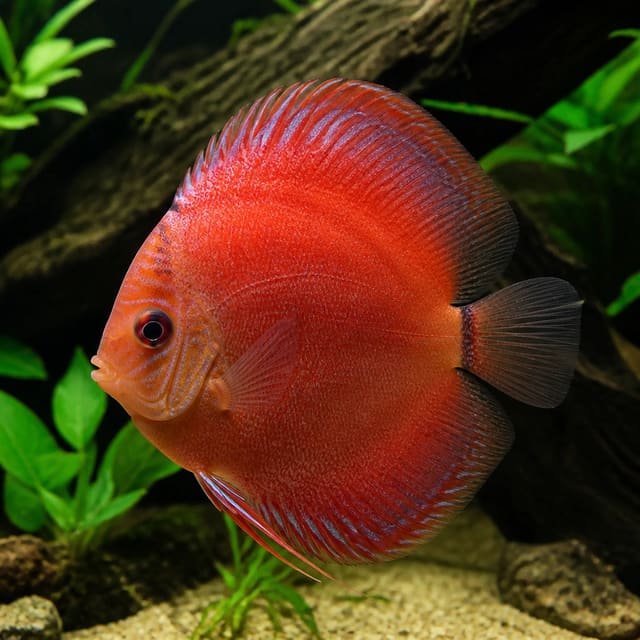
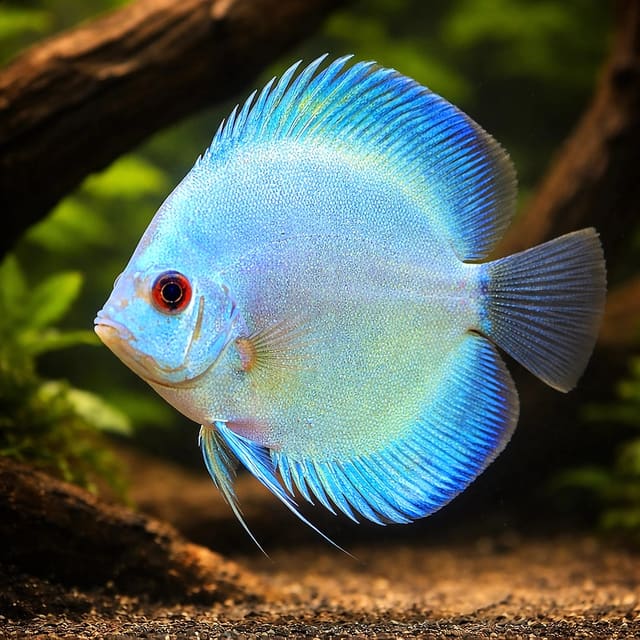
The gallery images are representative of this type of animal rather than photographs of the exact animal supplied, so colours can look slightly different from the live animal.
Complete the aquarium plan before choosing a label. Check that the mature filter can support the intended group, that the aquarium can hold 25–29°C steadily and that weekly maintenance is practical. The live selector should guide the dispatch-size decision, while adult dimensions and OATA’s group planning figures guide the permanent home.
| Suits | Not suited to |
|---|---|
| Keepers prepared for specialised discus care | A plan for one discus kept alone |
| A mature, filtered freshwater aquarium | An unfiltered or newly stocked setup |
| A group of at least five discus | Space calculated for only one fish |
| Stable water at 25–29°C | A cool-water aquarium |
| Soft-to-medium water at 4–12°dH | Water outside the planned discus range |
| Weekly testing and large partial water changes | An irregular maintenance routine |
Start with the hardest constraint: a social group needs room, filtration and a dependable maintenance schedule. OATA recommends 50 litres of water volume for each adult discus and says an aquarium of approximately 300 litres can house six adults. A group of five calculated at the same rate begins at 250 litres, but greater volume improves stability and provides more flexibility for layout and stocking.
Next check the water already produced by your tap-water preparation and aquarium routine. Temperature, pH and hardness must all work together; matching only temperature is not enough. Finally, consider whether companion fish would leave adequate capacity and share the warm discus conditions. If any part of that plan relies on crowding, an immature filter or a rapid correction of unsuitable water, resolve it before adding livestock.
Keep the aquarium at 25–29°C, pH 6.0–7.5 and 4–12°dH general hardness. OATA’s broad guidance for discus spans 26–30°C, pH 6.0–7.5 and 4–12°dH. Its carbonate-hardness range is 3–10°dKH, ammonia and nitrite should remain at zero mg per litre, and nitrate should not exceed 20 mg per litre.
Measure the aquarium rather than relying on its settings. A heater setting is not a temperature test, and clear water is not proof that ammonia, nitrite or nitrate are controlled. Use a thermometer and suitable water tests, then write down the results so gradual movement becomes visible before it turns into a sudden problem. Our water chemistry guide explains what the main readings mean, while the water matcher helps compare measured values with the target range.
Ask what conditions the discus are currently kept in and aim to replicate them in your aquarium. Stability matters because discus have more specialised water requirements than many other tropical fish. Keep the replacement-water method consistent, record any intentional adjustment and test after changes until the aquarium is holding its target reliably.
A working biological filter is essential. The RSPCA’s aquarium guidance explains that fish release toxic ammonia, which filter bacteria convert first to nitrite and then to the safer nitrate. This biological process must already be established before the aquarium carries a discus group and its feeding load.
Prepare and mature the aquarium before livestock arrives. If this is your first setup, follow the steps in our first tropical aquarium guide and confirm with tests that ammonia and nitrite are zero. Do not use elapsed time alone as proof that the filter is ready.
OATA advises increasing fish numbers gradually because the beneficial bacterial population must grow whenever more fish and more food are added. Adding too much livestock too quickly can cause new tank syndrome: waste production exceeds the filter’s present capacity, allowing ammonia and nitrite to rise to unhealthy levels that may cause fish to become ill or die.
A larger aquarium can make temperature and water quality more stable, but volume does not replace biological filtration. Match the filter and maintenance routine to the entire intended group, then leave capacity for any carefully screened companions. The correct sequence is mature, test, stock gradually and test again.
Adult size: 15 cm. Growth speed does not reduce the eventual need for floor space, swimming room and enough water volume for a social group.
OATA recommends 50 litres of water volume for each adult discus and says approximately 300 litres can house six adults. Applying the per-fish figure to the minimum group of five gives 250 litres, but this is a starting calculation rather than a reason to crowd the layout. A larger aquarium makes environmental conditions such as temperature and water quality more stable.
| Planning decision | Action |
|---|---|
| Five adult discus | Begin at 250 litres under the 50-litres-per-adult rule |
| Six adult discus | Use approximately 300 litres |
| Companion fish | Add their space and filtration load to the discus plan |
| Decor and substrate | Preserve open group-swimming room |
| Smaller dispatch grade | Keep the permanent plan based on adult needs |
Floor space matters as well as the litre figure. Discus have a deep, rounded body and need open space in which the group can explore, while cover should remain accessible when a fish wants to withdraw. Choose aquarium dimensions that allow both functions rather than filling the full footprint with ornaments.
Review the plan whenever stocking changes. An aquarium calculated for five discus cannot absorb companions without considering their waste, movement and use of space. A generous plan gives the group more options and leaves the filter with a safer operating margin.
Use fine gravel or sand, provide live plant cover, add branches or wood, and retain a clear area for group swimming. OATA recommends fine gravel or sand because discus can feed naturally by blowing at the substrate. It also notes that discus can be shy and benefit from plants and solid cover.
Do not treat cover and swimming space as opposing choices. Place taller or denser cover around selected edges and keep a broad central or front area open. This gives the fish somewhere to retreat while keeping observation and feeding practical.
Overhead aquarium lighting is recommended in OATA’s discus guidance. Position plants and solid cover so the fish can still choose more sheltered areas beneath that lighting. Watch how the group uses the layout: repeated crowding into one corner can justify checking water, social interactions and whether the aquarium offers usable cover.
Substrate choice changes maintenance. Fine gravel can be siphoned to remove solid waste. Open sand areas should be stirred regularly to prevent dead spots where waste accumulates. Whichever substrate you choose, arrange decor so routine cleaning can reach the places where food and waste settle.
Feed specialised dried discus granules or pellets at least once a day. OATA describes discus generally as carnivores that eat aquatic invertebrates in the wild. Its feeding guidance recommends specialised discus foods for vitamins. Discus will also appreciate frozen or live feeds, including bloodworm, beef heart and special discus mixes.
Offer two or three smaller feeds through the day because discus have relatively small stomachs. Each portion should be limited to what the fish can eat within a few minutes. Remove any food left between meals so it does not accumulate.
| Decision | Practical rule |
|---|---|
| Dried food | Use specialised discus granules or pellets at least once daily |
| Daily frequency | Offer two or three smaller feeds |
| Portion size | Only what is eaten within a few minutes |
| Variety | Rotate suitable dried, frozen or live foods |
| Waste control | Remove uneaten food and review the next portion |
Observe the whole group during feeding. Check whether every fish approaches food and whether one individual repeatedly misses out. Reduced intake or a sudden lack of interest is a health warning. Uneaten food breaks down, releasing toxic waste into the water.
Adjust portions from observation, not from a fixed scoop. If food remains after a few minutes, remove it and reduce the next serving. If the group clears a portion promptly, continue watching body condition and water tests before making any increase. The goal is regular nutrition without allowing feeding to undermine ammonia, nitrite or nitrate control.
At least once every week, change 50% of the aquarium water. OATA strongly recommends this partial water-change routine for discus and advises testing ammonia and nitrite at least weekly. Treat the water change, substrate cleaning, testing and filter check as one planned maintenance session.
Clean filter media only when needed. Do not run it under the tap because chlorine or chloramine may kill the beneficial bacteria established in the media. Rinse it lightly in aquarium water removed during the partial water change. This protects more of the biological population while clearing material that restricts flow.
Use nitrate as a check on whether the routine is keeping pace with feeding and stocking. It should not exceed 20 mg per litre. A rising trend calls for a review of waste removal, portion control, stocking load and adherence to the weekly schedule.
Consistency is the reason for making the routine repeatable. Prepare conditioner and testing equipment before starting, keep notes in the same format and compare readings over time. That makes a gradual change easier to address than relying on memory after the fish begins to look unwell.
Check swimming, colour, breathing, appearance, body condition, temperament and feeding regularly. OATA identifies changes in these areas as useful early warnings because each fish has its own normal pattern. The decision is based on change: compare what you see today with the same fish’s usual behaviour and appearance.
Water testing comes first because ammonia and nitrite are toxic, nitrate has a stated upper limit, and temperature or pH movement can affect the whole aquarium. Write down the readings and the exact change you observed. That is more useful than relying on a broad description such as “not right”.
As soon as you are concerned, test the water and contact us with the results, feeding observations and a clear description of what changed. Do not increase feeding simply because one fish looks thinner; first check whether it is approaching food, being displaced or showing another warning sign. Prompt observation and measured action are safer than making several unrelated changes at the same time.
Prepare the mature aquarium and confirm its water readings before the parcel arrives. Keep ammonia and nitrite at zero, temperature within 25–29°C and the intended group plan within the aquarium’s capacity. Complete these aquarium checks in advance.
The fish is hand-bagged in pure oxygen and packed in an insulated poly box, with a heat pack when the weather calls for it. Read the current delivery and Live Arrival Guarantee policy before arrival so the receiving and claim requirements are clear. Any claim needs the order number and continuous video showing the sealed parcel, opening and fish inside the sealed bag before release.
OATA advises increasing aquarium populations slowly so the biological filter can respond to the greater waste and feeding load. Test ammonia and nitrite after the addition rather than assuming the established filter adjusted immediately. Keep the normal controlled feeding routine and observe whether the new fish swims, breathes and feeds consistently.
Record daily observations during the first week: appetite, breathing, swimming, colour and interactions within the group. If ammonia or nitrite becomes detectable, pause any further additions and address water quality. A first-week log turns a vague concern into a clear comparison of readings and behaviour.
Keep at least five discus together, with more being better when aquarium volume and filtration allow. OATA describes discus as shoaling and social fish. Individuals kept alone or in groups that are too small will often become stressed or bullied by larger or more dominant fish.
A group is therefore part of the welfare plan, not an optional visual effect. Calculate 50 litres per adult and preserve enough open space for the group to explore together. A five-fish plan starts at 250 litres under that calculation, while approximately 300 litres can house six adults. Any companion fish add to the required capacity.
OATA notes that two discus can sometimes be kept together when they are an already established breeding pair. Do not turn that limited exception into a general two-fish stocking plan. The normal home-aquarium guidance remains a group of at least five.
Watch interactions closely. A change in hiding, feeding access, colour or aggression can indicate social stress. If one fish is repeatedly displaced, test the water, review group size and inspect whether the layout offers both retreat space and an open route through the aquarium.
Limit companions to fish that share the warm discus conditions and fit the aquarium’s remaining capacity. OATA names medium-sized tetras, Corydoras, plecos and dwarf cichlids as possible tankmates for discus. These are categories for assessment, not automatic approval of every species within them.
Start with water compatibility. A proposed companion must suit 25–29°C, pH 6.0–7.5 and the planned hardness without forcing the discus outside their range. Then assess adult dimensions, group requirements, waste load, use of space and feeding behaviour. The aquarium must still provide at least 50 litres per adult discus under OATA’s planning rule.
| Check | Decision |
|---|---|
| Water | All inhabitants must share the full planned range |
| Capacity | Include every fish in the volume and filtration plan |
| Feeding | Confirm each discus can take its controlled portion |
| Space | Keep cover and open group-swimming room usable |
| Introduction | Add gradually and test after the load rises |
| Observation | Act on persistent hiding, displacement or injury |
Smaller dither fish may help discus feel more confident by signalling that predators are not nearby, but that role does not replace the screening process. The companion still needs compatible water and adequate space.
Compatibility remains conditional on the particular species and aquarium. Before adding tank mates, seek advice with the aquarium volume, current inhabitants and measured water values.
Symphysodon leopard reaches 15 cm. Plan the permanent aquarium around that size rather than the selected dispatch grade.
OATA’s group-level discus guidance recommends 50 litres per adult and says approximately 300 litres can house six adults. A group of five starts at 250 litres under that rule, with more room improving stability.
OATA’s discus guidance says keep at least five, with more being better when space and filtration allow. One fish or a group that is too small will often become stressed or bullied.
Symphysodon leopard is better suited to a keeper prepared for specialised care. Keep it at 25–29°C. OATA recommends testing the water at least weekly and a 50% partial water change at least once every week.
OATA describes discus as generally carnivorous. Feed specialised discus granules or pellets at least once daily, add suitable frozen or live variety, and offer two or three small feeds eaten within a few minutes.
Keep this fish at 25–29°C and pH 6.0–7.5. OATA’s broad discus guidance gives 4–12°dH general hardness; keep ammonia and nitrite at zero mg/l and nitrate no higher than 20 mg/l.
OATA says discus are less aggressive than some close cichlid relatives. A group that is too small will often become stressed or bullied, so monitor fins, feeding access, hiding and changes in aggression.
OATA’s broad discus guidance names medium-sized tetras, Corydoras, plecos and dwarf cichlids as possible tankmates. Keep this fish at 25–29°C and screen the exact companion species for space, feeding behaviour and total filtration load.
Tropical Fish Co’s policy says the fish is hand-bagged in pure oxygen and packed in an insulated poly box, with a heat pack when needed. Receive it in person, film continuously from the sealed parcel, float the bag for 20–30 minutes and release without adding bag water.
No reviews for this item yet. Bought one? Honest reviews only, good or bad.
What customers say about ordering from us
Easy website plenty of info on fish your buying great to pick a time slot
TRACEY DURRANT · 7 Oct 2026
Got some lovely fish thank you
Kevin Mackie · 7 Oct 2026
Reviews of our shop, collected by Judge.me, an independent third-party review collector. Newest first.