−15%
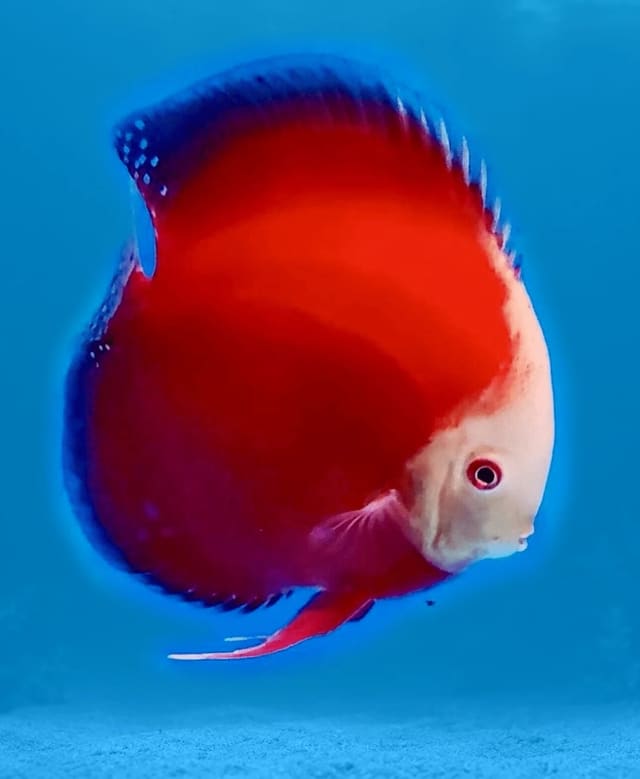
Red Melon Discus (Symphysodon sp.)
26–30°C · pH 6–7.5
£44.19£51.99
The Discus red stone (Symphysodon sp.) is a freshwater cichlid from a genus native to the Amazon river basin in Brazil. It suits experienced keepers prepared for specialised care; OATA's discus guidance gives groups of at least five, 26–30°C, pH 6.0–7.5 and 4–12°dH. Sold individually in dispatch sizes from 4 cm (5 cm) to 9 cm (11.5 cm).
Symphysodon sp.
Save when buying multiple fish. Each quantity is one fish; sex and pair formation are not guaranteed unless the selected variant explicitly states them.
The Discus red stone (Symphysodon sp.) is a freshwater cichlid from a genus native to the Amazon river basin in Brazil. It suits experienced keepers prepared for specialised care; OATA's discus guidance gives groups of at least five, 26–30°C, pH 6.0–7.5 and 4–12°dH. Sold individually in dispatch sizes from 4 cm (5 cm) to 9 cm (11.5 cm).
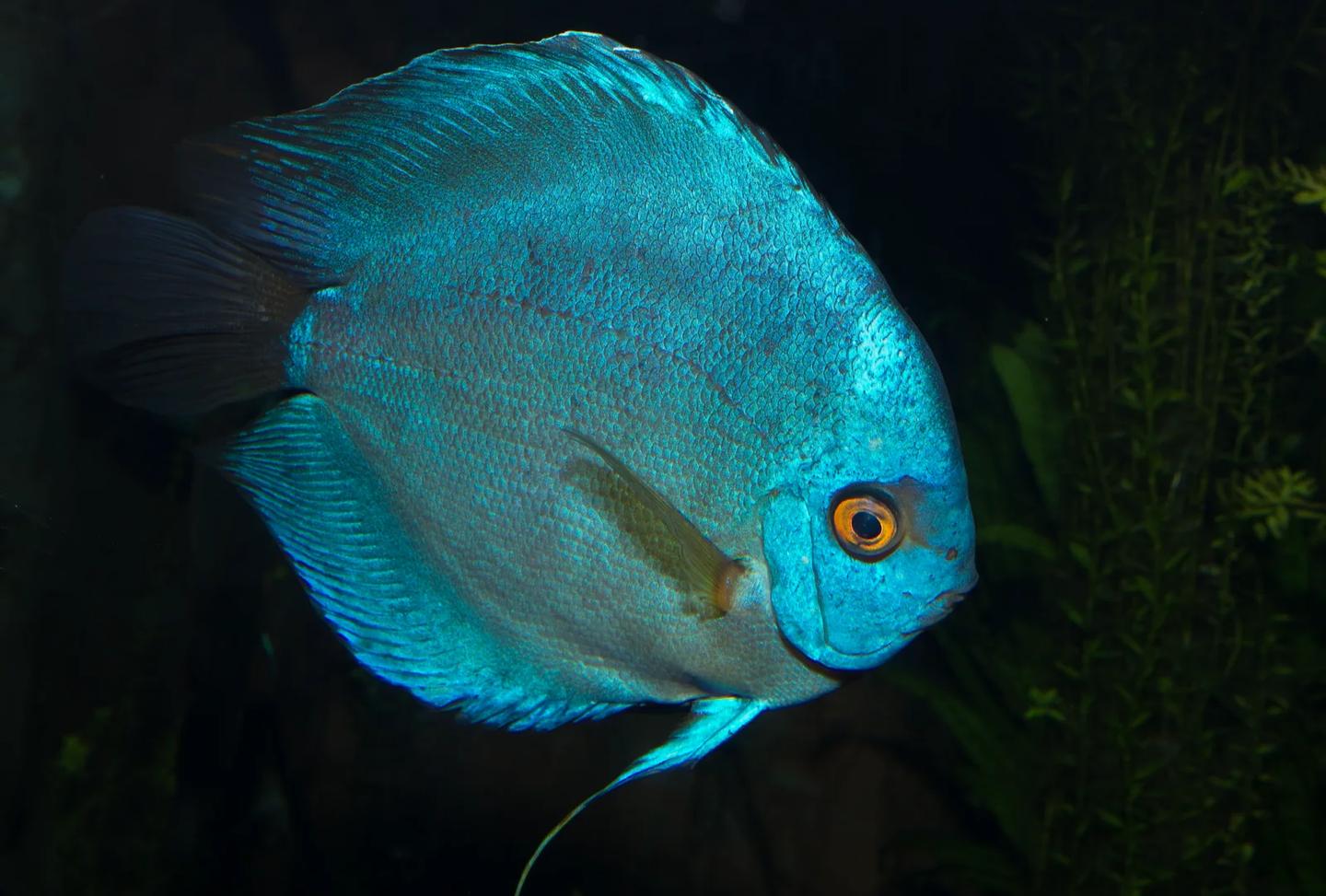
Discus are social Amazonian cichlids with specialised aquarium needs. OATA advises at least five fish, except an established breeding pair, and about 50 litres per adult—roughly 300 litres for six adults. Use that as a planning floor, then check usable dimensions, filtration, source water and the actual fish.
Maintain these water conditions for optimal health and vibrant colors
Discus red stone (Symphysodon sp.) is a freshwater cichlid for an experienced keeper who can maintain warm, clean and stable water. The genus Symphysodon is native to the Amazon river basin in Brazil and is associated with a distinctive shape, calm behaviour and varied colours and patterns.
Keep these fish socially rather than as isolated display animals. OATA's group guidance for discus gives a group of at least five, with more being better, and working aquarium values of 26–30°C, pH 6.0–7.5 and 4–12°dH. These are broad discus values, not a species-specific optimum. Maintain ammonia at zero, nitrite at zero and nitrate at no more than 20 mg/l.
This fish suits an established aquarium with enough room for the whole group, plant or wood cover and an open swimming area. Discus have specialised care requirements and will often become stressed or be bullied by larger or more dominant fish when kept singly or in a group that is too small. Plan for several fish rather than adding one as a solitary ornament.
Use the adult space allowance when deciding whether the aquarium is suitable. OATA recommends 50 litres for each adult discus and gives an aquarium of approximately 300 litres for six adults. That calculation means a five-adult group needs at least 250 litres before allowing for other livestock. Browse the discus collection only after confirming that the aquarium can support the intended group and its long-term maintenance load.
Each purchase supplies one Discus red stone in the size chosen through the live size selector. The labels are 4 cm (5 cm), 5 cm (6.5 cm), 6 cm (7.5 cm), 7cm, 8cm and 9 cm (11.5 cm). Read the complete label when comparing choices because the parenthetical measurements form part of some labels.
The size you select is the size supplied, not the adult size. Dispatch size describes the fish sent for that purchase; it is not a limit on future growth or a substitute for planning the adult group. Discus are slow growers, so aquarium capacity should be based on OATA's adult water-volume allowance rather than on how much space the selected fish appears to need on arrival.
Sex is guaranteed only when the selected option explicitly states male or female. This Discus red stone listing has no sex-guaranteed option. Build the group without assuming sex from colour, body shape, dispatch size or the gallery. Discus are difficult to sex unless they are in breeding condition, when a female's ovipositor can be seen.
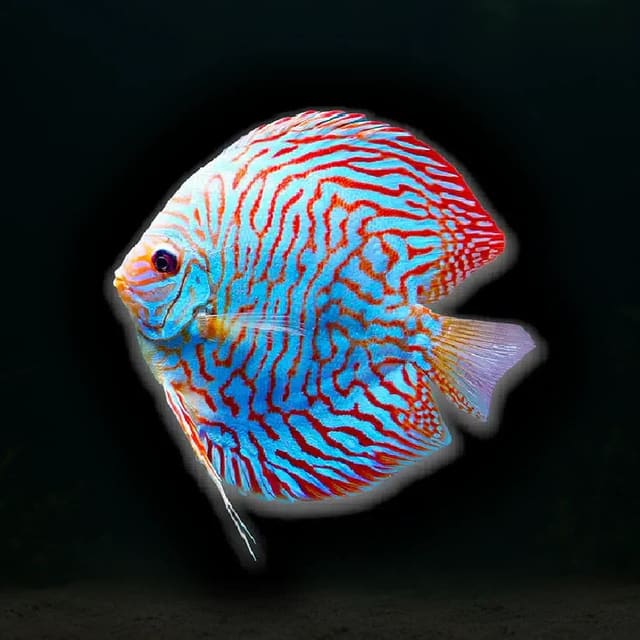
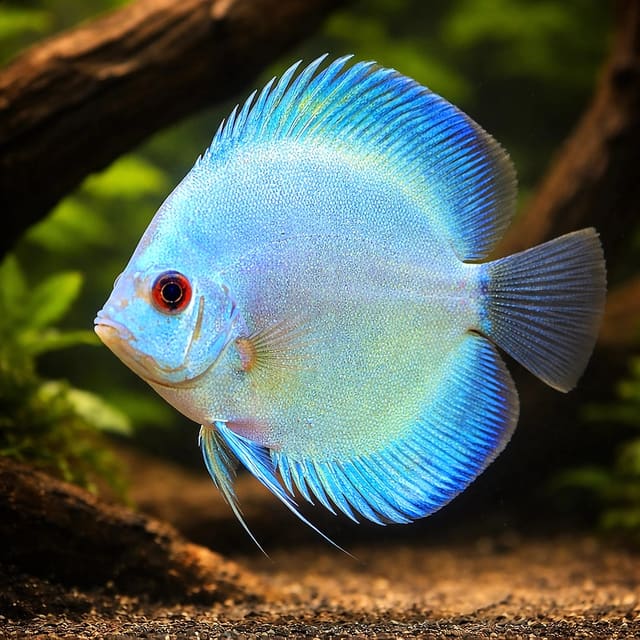
The gallery images are representative of this type of animal rather than photographs of the exact animal supplied, so colours can look slightly different from the live animal.
Before choosing a size, check the existing group's feeding access and the aquarium's ability to keep ammonia and nitrite at zero. Add fish gradually because every increase in livestock and feeding requires the biological filter's bacterial population to process more waste. The selected dispatch size does not reduce the need for a mature filter or your group plan.
This is a good fit when you can keep a social discus group in warm, slightly acidic water and complete substantial weekly maintenance. It is a poor fit for a new, unfiltered aquarium, a solitary-fish plan or water that cannot be kept at 26–30°C, pH 6.0–7.5 and 4–12°dH.
| Suits | Not suited to |
|---|---|
| An experienced keeper prepared for specialised discus care | A keeper seeking a low-maintenance first fish |
| A group of at least five, with more being better | A routine plan based on keeping one discus alone |
| 26–30°C, pH 6.0–7.5 and 4–12°dH | An aquarium whose water cannot remain within those values |
| A mature, biologically filtered aquarium | A newly filled or unfiltered aquarium |
| At least 250 litres for five adults by OATA's 50-litre allowance | A small aquarium chosen only around dispatch size |
| Cover plus open group-swimming space | A layout with no shelter or open route for the group |
Make the decision from measured water, usable swimming room and the number of discus the aquarium will support. A large aquarium helps stabilise temperature and water quality, but volume does not replace testing, water changes or filter maintenance. The practical commitment is a complete system: adequate space, warm water, social housing, suitable food and a repeatable cleaning routine.
Keep the aquarium at 26–30°C, pH 6.0–7.5 and 4–12°dH, with carbonate hardness at 3–10°dKH. Maintain ammonia at 0 mg/l, nitrite at 0 mg/l and nitrate at no more than 20 mg/l. Clean, warm, soft and slightly acidic water is the working target for discus, and stability within those values matters more than chasing a single reading.
Test temperature, pH, ammonia, nitrite and nitrate at least weekly, and test again whenever behaviour, breathing, colour or feeding changes. The aquarium water chemistry guide explains what the measurements mean, while the water matcher helps compare measured values with the targets above. Record the results so gradual movement is visible before it becomes a larger problem.
When moving a fish into the aquarium, begin with water already suitable for discus rather than relying on acclimatisation to repair a poor match. Find out the conditions in which the discus have been held and replicate them as closely as practical. Keep the long-term aquarium at 26–30°C, pH 6.0–7.5 and 4–12°dH while avoiding abrupt changes between holding water, bag water and the prepared aquarium.
Use a mature biological filter and confirm ammonia and nitrite are both zero before adding Discus red stone. The RSPCA's aquarium welfare guidance explains that fish release toxic ammonia, which filter bacteria convert first into nitrite and then into the safer nitrate. A filter is part of the fish's life-support system, not simply a way to make the water look clear.
A newly running filter may move water without having enough established bacteria to process the waste from a discus group. Mature the aquarium before livestock arrives, then use tests to confirm that the biological process is working. The first tropical aquarium guide gives a practical route for preparing and maturing the system.
Increase livestock gradually. Each extra fish and each increase in food adds waste, so the bacterial population needs time to grow with the load. Stocking too quickly or overstocking can produce new tank syndrome, in which ammonia and nitrite rise because too few nitrifying bacteria are present. The fish may become ill or die if that imbalance continues.
Filter size alone cannot compensate for overfeeding, excessive stocking or trapped waste. Combine biological filtration with physical waste removal and the recommended weekly water change. This keeps the filter's workload manageable and helps hold nitrate at no more than 20 mg/l.
Allow 50 litres of water volume for each adult discus and keep at least five together. By that rule, five adults require at least 250 litres and six require approximately 300 litres. More room improves the margin for stable temperature and water quality, but the aquarium also needs useful floor space, cover and an open swimming route.
| Planned discus group | OATA volume calculation |
|---|---|
| Five adults | At least 250 litres |
| Six adults | Approximately 300 litres |
| More than six | Add 50 litres for each further adult |
These figures apply to the discus themselves. Other fish add biological load, use swimming space and compete at feeding time, so do not treat the calculated total as spare capacity for unrestricted additions. Check the actual internal volume after substrate and décor, then consider the filter, maintenance schedule and existing livestock together.
Use fine gravel or sand so discus can feed by blowing at the substrate. Live plants, branches, wood and other ornaments provide cover for shy fish, while an open area lets the group explore and swim without weaving continuously around obstacles. Preserve a clear route through the aquarium and avoid filling every part of the footprint with décor.
If using sand, keep open patches accessible for regular stirring so waste does not accumulate in dead spots. Place wood and ornaments so solid debris can still be reached with a siphon. Cover that cannot be cleaned around may turn a shelter into a waste trap.
Give shy fish places to retreat at the edges of the layout while retaining broad, unobstructed space for group movement. Review that balance as the discus grow rather than allowing a dispatch-size layout to become the permanent plan.
Feed two or three small meals through the day, using a specialised dried discus granule or pellet at least once daily. OATA characterises discus as generally carnivorous and notes that they eat aquatic invertebrates in the wild. A specialised dried food supplies the regular vitamin-bearing part of the routine, while frozen or live foods add variety.
Discus have relatively small stomachs, which is why two or three smaller feeds are preferable to one large serving. Start with a modest amount, watch the whole group eat and stop adding food when interest falls.
Stand where you can see each fish reach food. A meal is also a practical check for hiding, reduced appetite, altered swimming or exclusion by larger or more dominant fish. If one fish repeatedly misses food, review the social arrangement and how the food is distributed rather than increasing the total amount without control.
Spread suitable food across more than one reachable point when necessary so the group can feed without every fish converging on the same mouthful. Keep portions small at each point and count the combined amount as one meal. This supports access without turning a social problem into overfeeding.
Uneaten food releases waste as it decomposes, pushing the filter and raising the risk of ammonia, nitrite or nitrate problems. If food remains after a meal, remove it and reduce the next portion. Test the water when appetite changes or leftover food has accumulated.
Change 50% of the aquarium water at least once every week. Use a siphon to remove solid waste from the substrate, treat replacement tap water with conditioner and check that its temperature and chemistry are suitable before adding it. This routine supports the clean, stable conditions discus need and helps keep nitrate no higher than 20 mg/l.
Do not turn the weekly water change into automatic filter sterilisation. Clean media only when necessary, and rinse it lightly in the removed aquarium water. Preserving the bacterial population protects the biological process that converts ammonia and nitrite.
If nitrate is rising towards 20 mg/l before the next scheduled change, review food quantity, waste removal, stocking and the effective water volume. A larger aquarium can buffer changes, but it still accumulates waste. If ammonia or nitrite appears, focus immediately on biological capacity and avoid adding further livestock while the cause is addressed.
Consistency is more useful than occasional intensive cleaning. A dated record of test results, water changes and filter work makes trends visible. Nitrate that rises by a similar amount each week points to the normal load, while a sudden jump after more fish or heavier feeding shows that the system has changed.
Keep buckets, siphons and test equipment ready for the aquarium so the routine is easy to repeat. The goal is stable water achieved through frequent partial maintenance, not large swings between neglected and over-cleaned conditions.
Have the mature aquarium at 26–30°C with zero ammonia and zero nitrite before the parcel is opened. Someone must be present to receive live fish, and the parcel must be opened and inspected on the day it arrives. Finish water testing and equipment checks beforehand so the arrival sequence can focus on the fish.
Read the Tropical Fish Co delivery and Live Arrival Guarantee policy before the fish arrive. Fish are hand-bagged in pure oxygen, placed in an insulated poly box and given a heat pack when the weather calls for one. A licensed live-animal courier carries the parcel.
Add fish gradually because the filter's bacterial population must respond whenever livestock and feeding increase. Observe swimming, breathing, colour, hiding and feeding through the first week, but use water tests rather than appearance alone to judge the aquarium. Ammonia and nitrite must remain at zero.
During the first few days, compare each fish with the group's normal pattern. Look for one individual staying at the surface, sitting on the bottom, swimming erratically, breathing at a different rate or failing to approach food. Test water promptly when a change appears. This helps distinguish a water-quality problem affecting the group from a change limited to one fish.
Keep feeding and weekly maintenance on a steady routine while the new fish settle. Small controlled meals allow appetite to be observed without leaving excess food, and the normal weekly tests show whether the filter is coping with the increased load.
Test the water immediately when swimming, breathing, colour, temperament, appearance, body condition or feeding changes. Compare the result with the working targets: 26–30°C, pH 6.0–7.5, ammonia 0 mg/l, nitrite 0 mg/l and nitrate no higher than 20 mg/l.
| Change seen | Immediate check |
|---|---|
| Hanging at the surface, sitting on the bottom or erratic swimming | Test temperature, ammonia, nitrite, nitrate and pH |
| Gill covers moving faster or slower than normal | Check water values and filter operation |
| Darker or paler colour, or more hiding | Review water stability and group interactions |
| White spots, fluffy growths, damaged fins, scale loss, ulcers or bumps | Record the change and check water immediately |
| Weight change or reduced interest in food | Observe feeding access and test water |
Healthy fish should show clear, bright eyes, intact scales, undamaged fins and appropriate swimming behaviour. Learn the normal pattern of the group so a change is easier to recognise. Record when it began, which fish are affected and the measured water values.
Do not respond to every symptom by dismantling or washing the filter. First confirm flow, blockages and test results, then protect beneficial bacteria during any necessary cleaning. Sudden disruption to biological filtration can add a water-quality problem to the original concern.
If you are concerned about a fish's health, test the water and contact us for further guidance. Share the measured values and the specific change rather than relying on a general description such as “unwell”; concrete observations make the next decision clearer.
Keep at least five discus together, with more being better. Discus are shoaling, social fish, and individuals kept alone or in a group that is too small will often become stressed or be bullied by larger or more dominant fish. The first compatibility decision is the structure of the discus group itself.
Use 50 litres per adult discus when calculating aquarium volume. Five adults require at least 250 litres and six require approximately 300 litres. A larger aquarium offers more opportunity to arrange cover, feeding access and open water, but every fish still adds waste and increases the demand on filtration.
Do not assume that adding a single discus to an unrelated community meets its social needs. Plan the full discus group, then decide whether any other animals fit after accounting for water values, space and feeding. Two discus can sometimes be kept together when they are already an established breeding pair, but do not use that exception to create an arbitrary pair from separate fish.
When behaviour changes, test water as well as observing interactions. Ammonia, nitrite, unsuitable temperature or unstable pH can occur alongside social pressure. Base the assessment on measured water, feeding access and the position of each fish in the group.
Consider only companions that can thrive at 26–30°C in soft to medium, slightly acidic water and that fit a calm discus aquarium. OATA says only a handful of other species are suitable and names medium-sized tetras, Corydoras, plecos and dwarf cichlids as possible tank-mate groups. These are candidates for screening, not automatic matches.
| Check | Decision rule |
|---|---|
| Water | The candidate must thrive within 26–30°C, pH 6.0–7.5 and 4–12°dH |
| Space | Its adult space and waste load must fit after the discus allowance |
| Temperament | It must fit the calm group without persistent pressure or disruption |
| Feeding | Every discus must still reach its two or three small daily meals |
| Observation | Watch the combination for hiding, fin damage and reduced feeding |
Medium-sized tetras may act as dither fish, whose activity can help discus feel more confident that predators are not nearby. Corydoras, plecos and dwarf cichlids still require an individual match for temperature, water chemistry, adult space and behaviour; belonging to a named group is not enough on its own.
Discus are not as aggressive as some close cichlid relatives, while the genus is associated with calm behaviour. Observe fins, feeding and hiding after any introduction, and separate the compatibility question from water-quality problems by testing ammonia and nitrite.
Account for all animals in the volume and filtration plan. The 250-litre calculation for five adults or approximately 300 litres for six adults covers the discus allowance, not an unrestricted mixed community. Extra livestock must not remove the open swimming area or make the weekly routine unable to hold nitrate at no more than 20 mg/l.
You receive one fish of the size you select: 4 cm (5 cm), 5 cm (6.5 cm), 6 cm (7.5 cm), 7cm, 8cm or 9 cm (11.5 cm). This is its size at dispatch, not its adult size.
OATA's discus guidance gives 50 litres per adult, so a group of five needs at least 250 litres and six adults need approximately 300 litres, with usable floor space, cover and open swimming room.
Keep at least five together, with more being better. OATA identifies discus as social shoaling fish that will often become stressed or be bullied when kept alone or in a group that is too small.
It is better suited to an experienced keeper prepared for specialised care, including 26–30°C water, weekly testing, a 50% partial water change at least once a week and a mature biological filter.
OATA characterises discus as generally carnivorous. Feed two or three small meals daily, using a specialised dried discus granule or pellet at least once a day and adding suitable frozen or live foods for variety.
OATA's discus guidance gives 26–30°C, pH 6.0–7.5 and 4–12°dH, with ammonia and nitrite at 0 mg/l and nitrate no higher than 20 mg/l.
OATA says discus are not as aggressive as some close cichlid relatives, and the genus is associated with calm behaviour. Watch fins, hiding and feeding closely after adding any new tank mate.
OATA names medium-sized tetras, Corydoras, plecos and dwarf cichlids as possible companions. Screen each candidate for 26–30°C water, suitable chemistry, adult space, calm behaviour and feeding access.
Film every delivery continuously from the sealed parcel as it is opened, with the fish still inside the sealed bag. Tropical Fish Co's policy says fish are hand-bagged in pure oxygen and placed in an insulated poly box, with a heat pack when weather calls for one; someone must receive the parcel and the bag should be floated for 20–30 minutes before release.
No reviews for this item yet. Bought one? Honest reviews only, good or bad.
What customers say about ordering from us
Easy website plenty of info on fish your buying great to pick a time slot
TRACEY DURRANT · 7 Oct 2026
Got some lovely fish thank you
Kevin Mackie · 7 Oct 2026
Reviews of our shop, collected by Judge.me, an independent third-party review collector. Newest first.