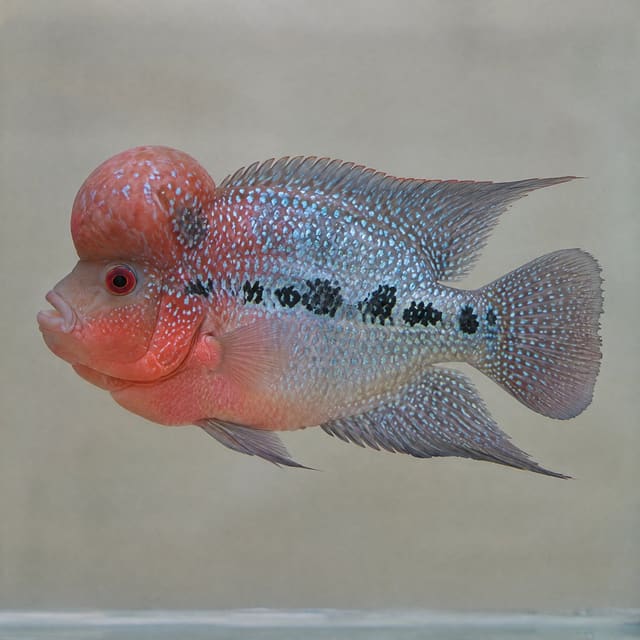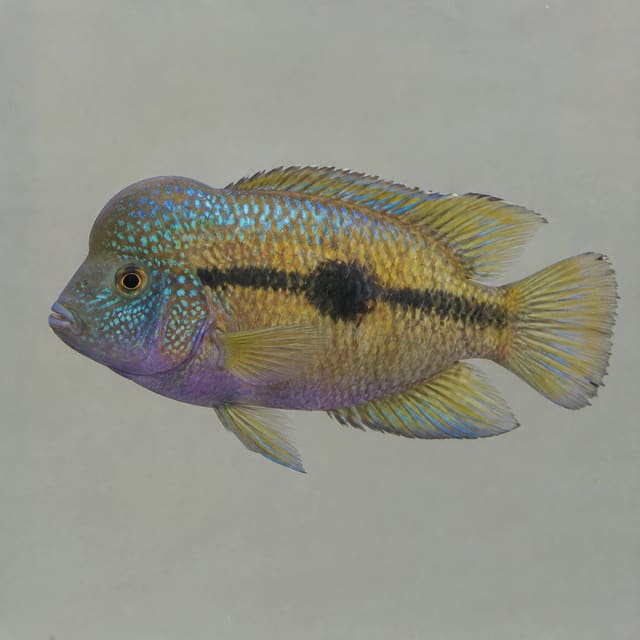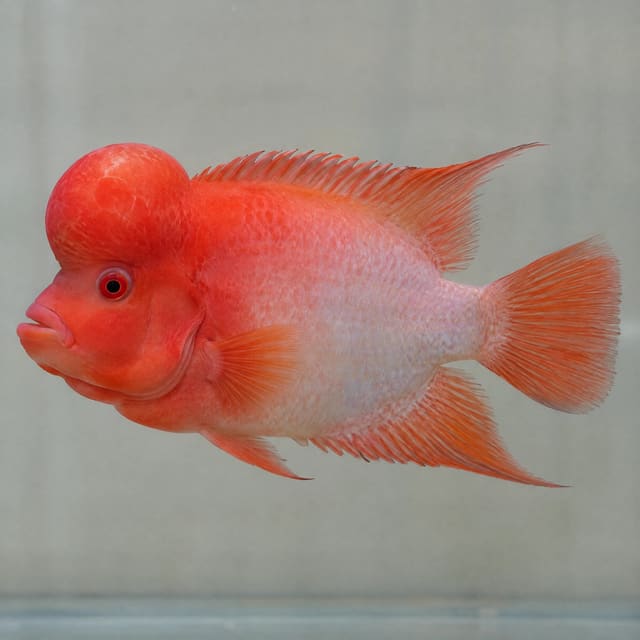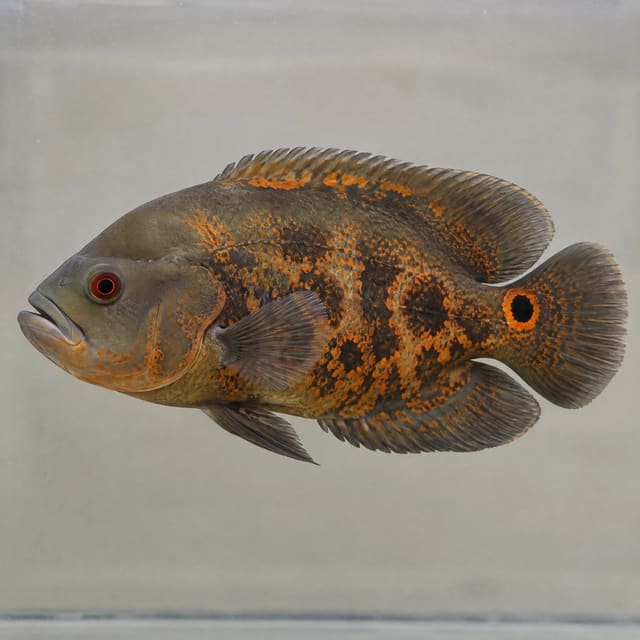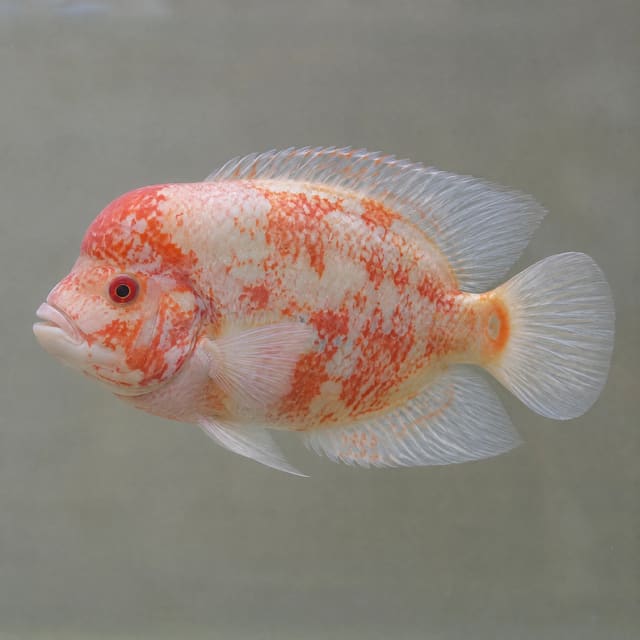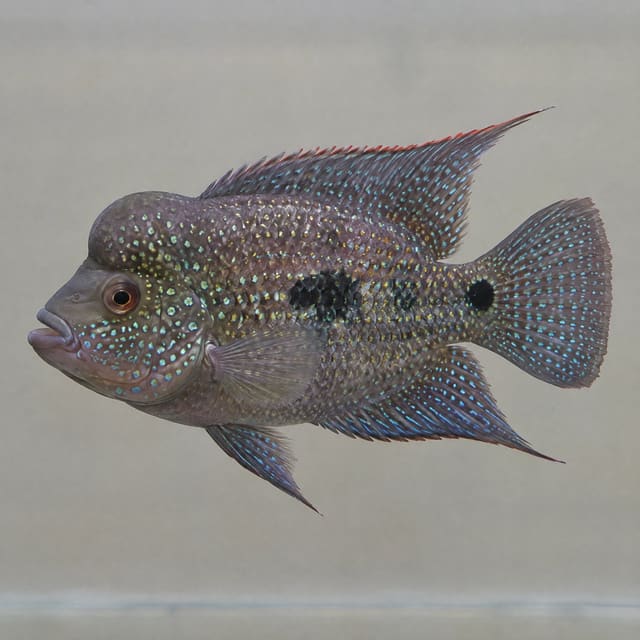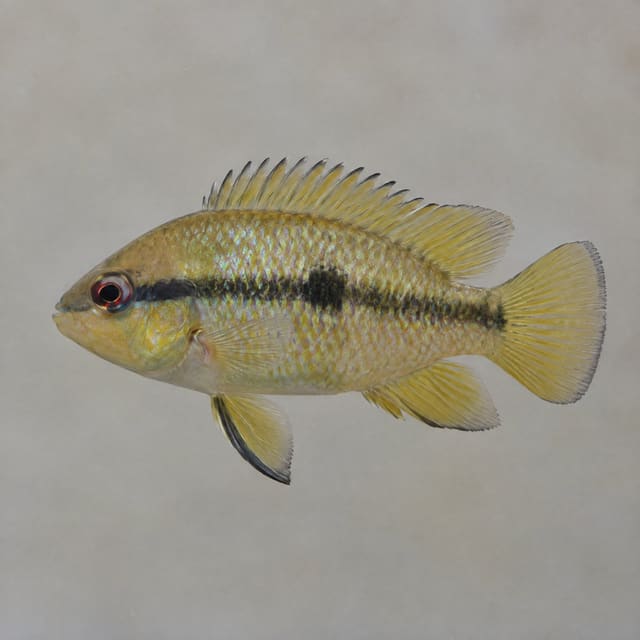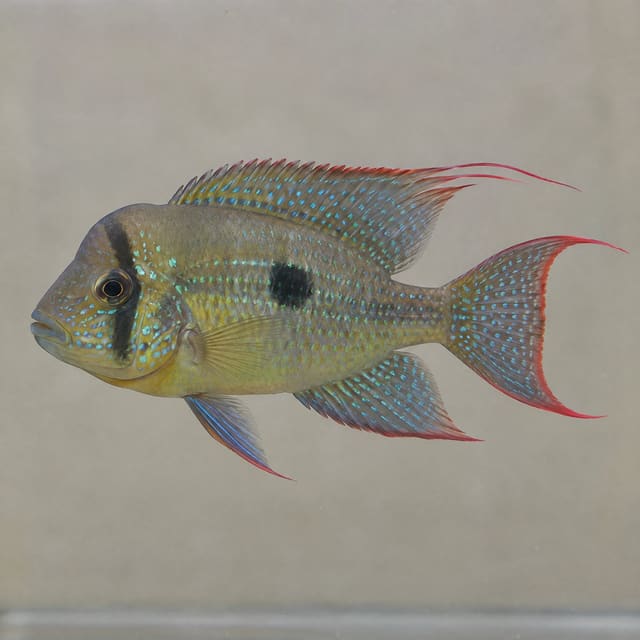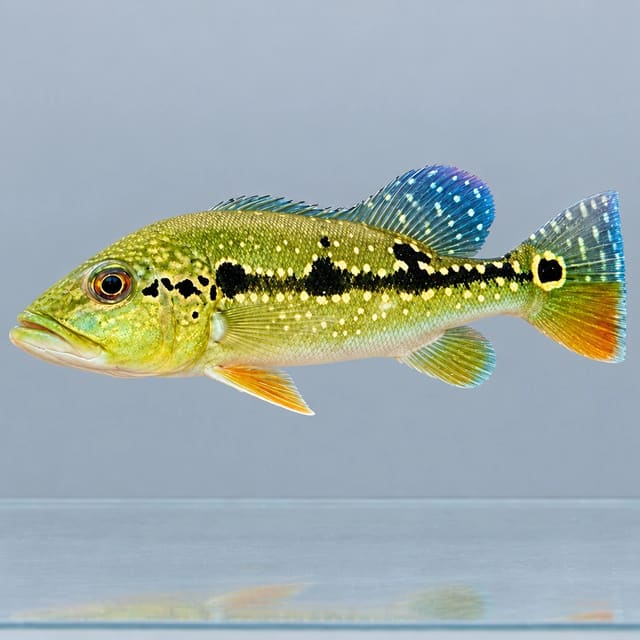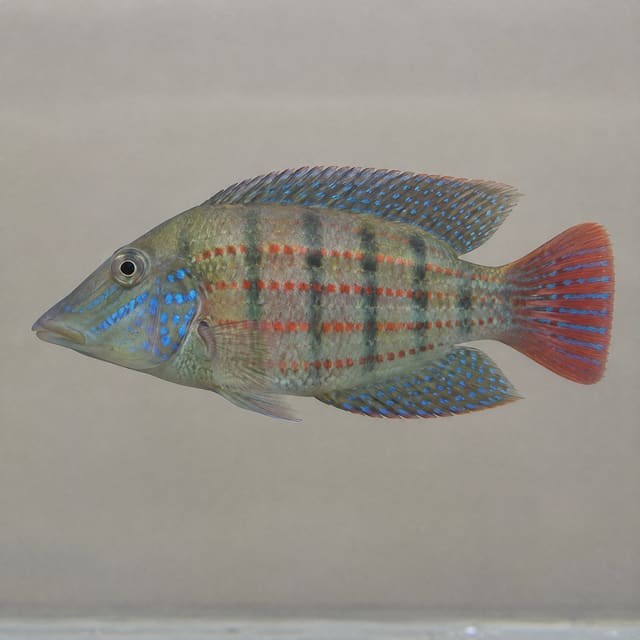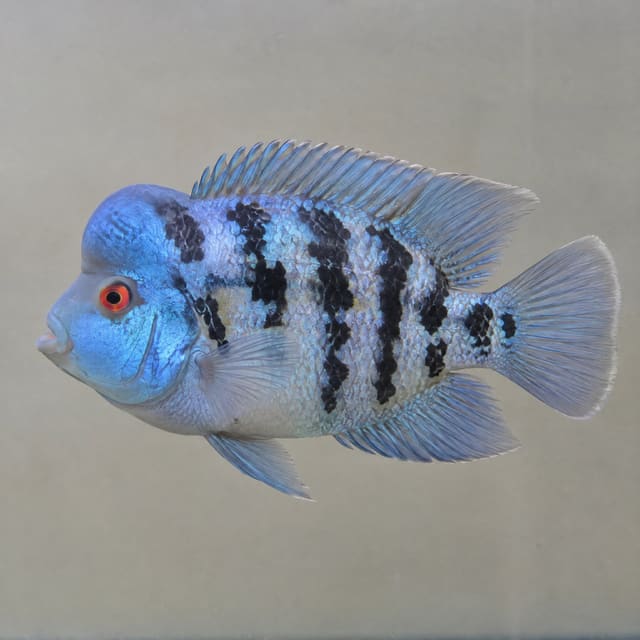
Blue Neon Tiger Parrot Cichlid (Hybrid)
22–27°C · pH 6.5–8
£15.99
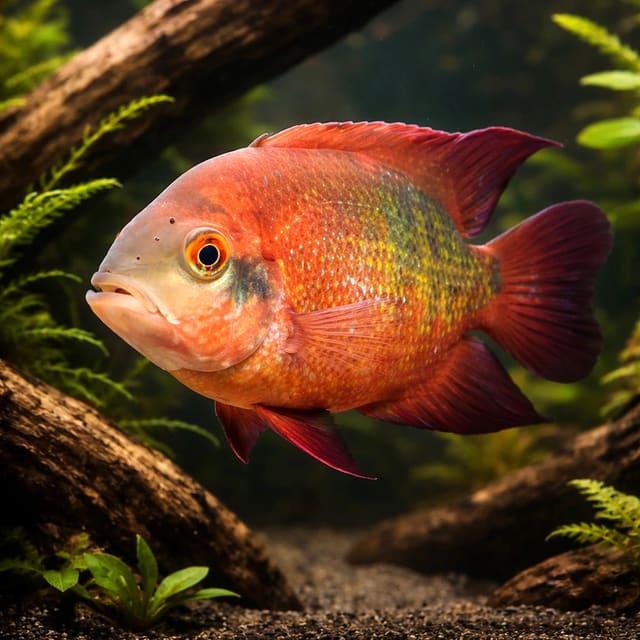
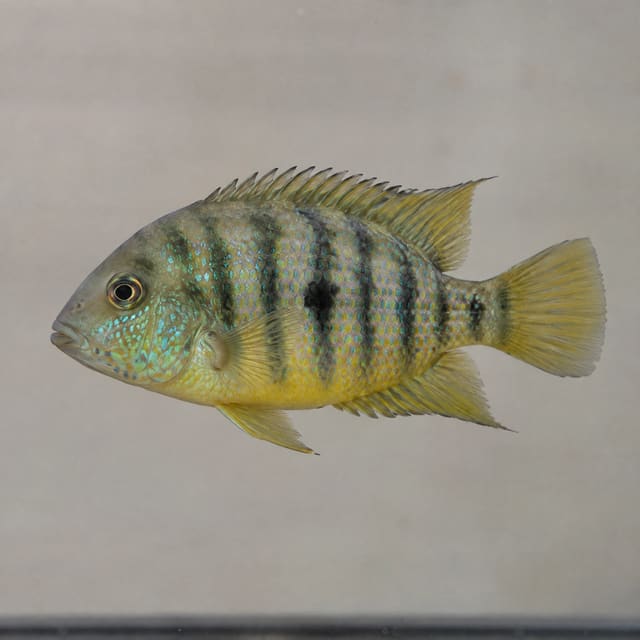
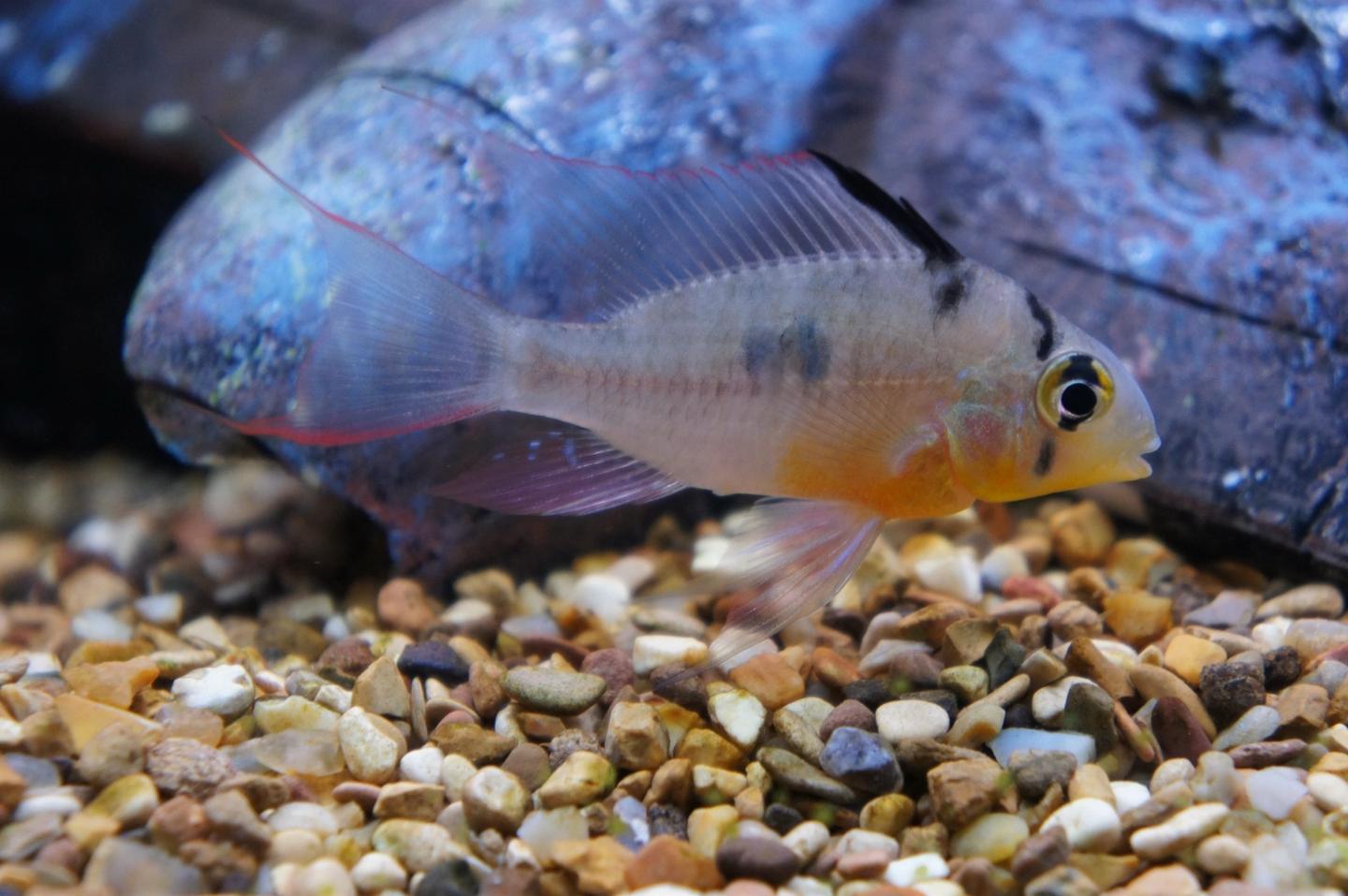
The Natural Parrot Cichlid is an undyed parrot cichlid, a man-made hybrid sold as an Amatitlania (convict) hybrid, shown here in its natural silver-grey colouring with black bars. It grows to 15–20 cm, can live 10–15 years and needs a 120 cm aquarium, steady warm water and small, easy foods for its beak-like mouth. Sold individually as one live fish in a standard size.
Adult size is the maximum length this species reaches at full maturity (scientific sources). The livestock you receive will be younger and smaller. Product-photo provenance and any image-specific limitations are stated on the listing.
Hybrid cichlid (parrot cichlid; no wild-species name)
Save when buying multiple fish. Each quantity is one fish; sex and pair formation are not guaranteed unless the selected variant explicitly states them.
The Natural Parrot Cichlid is an undyed parrot cichlid, a man-made hybrid sold as an Amatitlania (convict) hybrid, shown here in its natural silver-grey colouring with black bars. It grows to 15–20 cm, can live 10–15 years and needs a 120 cm aquarium, steady warm water and small, easy foods for its beak-like mouth. Sold individually as one live fish in a standard size.
Adult size is the maximum length this species reaches at full maturity (scientific sources). The livestock you receive will be younger and smaller. Product-photo provenance and any image-specific limitations are stated on the listing.
Cichlids are a family of roughly 1,800 accepted species, not one care type. Before buying, identify the exact species and source, then compare adult measurement, usable tank dimensions, social system, territory, tested water, diet and an exit plan. No family-wide minimum tank, water range or tank-mate list is safe.
The Natural Parrot Cichlid is a parrot cichlid exactly as it grew: no dye, no injected colour, no tattoo and no cut fins. Our photographs show the natural grey colouring, a silver-grey body with a blue sheen and broad black vertical bars, together with the rounded parrot profile, a large eye and the small, pursed mouth. It is a sociable, inquisitive fish that comes to the front of the tank at feeding time, and it makes a characterful centrepiece for a large aquarium of robust, peaceful fish.
"Natural" is the important word. Parrot cichlids are among the most heavily modified fish in the hobby, and many of the unusual colours and patterned fish you may have seen elsewhere are the result of dye or tattooing. A natural parrot carries only the colours that breeding has given it, and those colours can change as it grows.
| Source | Natural parrot colours |
|---|---|
| Wikipedia | Red, yellow and grey; other colours are added by injection |
| Practical Fishkeeping (Jeremy Gay) | Apricot, the original form, and more rarely olive; neither is dyed |
| Seriously Fish (Midas cichlid, a suggested parent) | Young fish plain greyish at first, changing colour from about 2–2.5 inches (5–6 cm) |
Put together, the sources explain why a natural parrot may be silver-grey and barred when young and why some individuals later turn yellow, apricot or red while others stay grey. We cannot predict how each fish will colour, and we will not add colour to make it look finished. If you want the orange colour from the start, see our Orange Blood Parrot Cichlid or the Yellow Parrot Cichlid.
The parrot cichlid is a man-made hybrid, not a wild species. Wikipedia records that it was first bred in Taiwan around 1986, and Practical Fishkeeping places its first appearance in the late 1980s. Nobody has published the exact parents, and the suggestions differ:
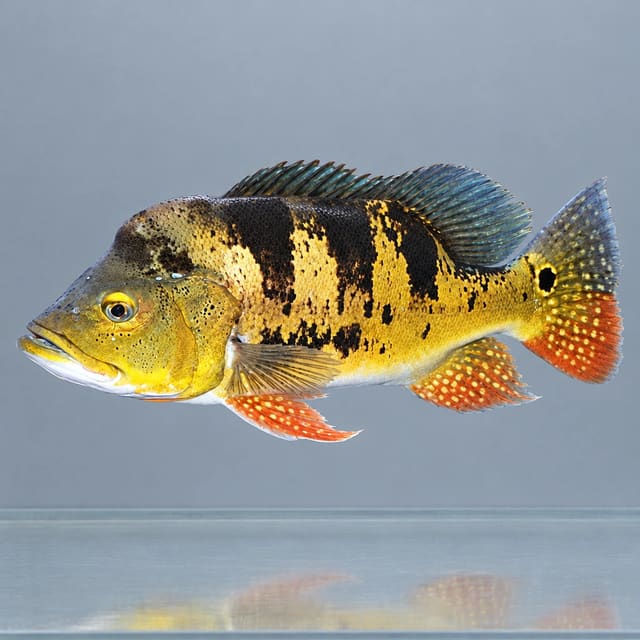
Our Natural Parrot is labelled in the trade as an Amatitlania hybrid. Amatitlania is the convict cichlid's genus, so the label points to the convict ancestry that Matt Clarke suggests, and Wikipedia adds that parrots are sometimes crossed again with convicts. Because a hybrid has no species name, we list it simply as a hybrid parrot cichlid. It should not be confused with the true parrot cichlid, Hoplarchus psittacus, a large silvery-green fish from the Amazon.
We think buyers should know all of this. A natural parrot kept well can live a long, active life, but it depends on its keeper for easy food, calm company and clean water.
Colour in parrot cichlids is not fixed. Matt Clarke notes that red forms of Central American cichlids such as red devils and Midas cichlids can pale with age, and Seriously Fish describes young Midas cichlids starting grey before they colour. Enjoy the fish for what it is now, and expect it to look a little different in a year.
Sources agree that a parrot outgrows small tanks. Matt Clarke gives about 15 cm, sometimes a little more with space; Jeremy Gay has seen rehomed parrots over 20 cm; Wikipedia gives up to 20 cm and a lifespan of 10 to 15 years. Plan for a 20 cm fish from the start.
| Your plan | Minimum aquarium | Basis |
|---|---|---|
| One parrot | 120 cm long, about 208 litres | Jeremy Gay's length rule; Wikipedia's 55 US gallons |
| Two parrots | 120 cm long, about 284 litres | Wikipedia: add 20 US gallons, about 76 litres, per extra fish |
| Parrots with tank mates | At least 300 litres | OATA's figure for American cichlids over 15 cm |
Our stocking calculator helps you check the whole plan, adult sizes included, before you buy.
There is no wild habitat to copy for a hybrid, so build for the fish's body. Leave a wide stretch of open water at the front, where a short-bodied swimmer can turn easily, and put the décor at the back and sides. Use sand or fine, rounded gravel; OATA notes that cichlids dig and sift, and a parrot's narrow mouth can trap a pebble. Smooth rocks, caves and wood give it places to retreat to, and artificial or tough plants survive the digging that OATA warns about.
| Item | Notes for a parrot |
|---|---|
| Aquarium and lid | 120 cm or longer; a lid is recommended |
| Filter | Rated well above the tank volume; parrots are messy eaters |
| Heater and thermometer | Needed all year |
| Lighting | On a regular day and night cycle |
| Sand or fine gravel | Smooth grains only |
| Tap water conditioner and test kits | Ammonia, nitrite, nitrate, pH and hardness |
| Siphon and bucket | For the weekly change |
OATA also advises placing the aquarium away from draughts, heat sources, direct sunlight, loud noise and vibration.
| Source | Temperature | pH | Hardness |
|---|---|---|---|
| OATA (American cichlids) | 22–27°C | 6.5–8.0 | 4–12 dGH, KH 3–10 |
| Jeremy Gay (for parrots) | 24–28°C | 7.0–8.0 | — |
| Matt Clarke | — | Hard, alkaline tap water is fine unadjusted | — |
The sources overlap at 24–27°C, pH 7.0–8.0 and moderately hard water. Waste must stay at zero ammonia and zero nitrite, with nitrate no more than 20 mg per litre above your tap water (OATA).
UK tap water ranges from very soft to very hard depending on the region. Many areas supply hard, alkaline water, which parrots tolerate well, but check pH, GH and KH yourself rather than guessing. Use a conditioner on every refill to remove chlorine and chloramine. Our water parameter matcher shows how your readings compare with the fish's needs.
Wikipedia describes parrots as voracious eaters that leave a lot of debris, and it recommends high-volume filtration and frequent cleaning of the substrate. OATA's routine fits well: test the water weekly, change about 25% each week while siphoning waste from the substrate, and clean filter media only in water taken from the aquarium so the beneficial bacteria survive.
| How often | Task |
|---|---|
| Every day | Check the temperature, watch the fish eat, remove uneaten food |
| Every week | Test the water, change about 25%, siphon the sand |
| When the flow drops | Rinse the filter media in old aquarium water |
| After any change | Test more often, as OATA advises during set-up and after adding fish |
Our cichlid care guide covers the same routine for other large cichlids.
A parrot cannot grab and bite like other cichlids. Wikipedia explains that it crushes food with the muscles and teeth of its throat, which makes it harder to feed and can leave it short of food, and that some foods are made specially for it. Matt Clarke lists flakes, pellets and frozen bloodworm, brine shrimp and mysis as accepted foods; OATA recommends cichlid pellets or granules as the base, once a day, only as much as is eaten in a few minutes.
Small, light granules such as our Red Parrot Granulat or the Cichlid Omnivore Small Pellet suit the narrow mouth, and a frozen cichlid mix adds variety.
| Meal | What to give | Tip |
|---|---|---|
| Most days | Small parrot or cichlid granules | Scatter a few at a time so the parrot gets its share |
| Two or three days a week | Thawed bloodworm, brine shrimp or mysis | Feed near the parrot, away from faster fish |
| Every meal | Only what is eaten in a few minutes | Lift out leftovers to protect the water |
OATA's advice starts in the shop: never buy a fish from a tank that also holds sick fish, because carriers may show no symptoms, and look for clear eyes, whole fins, intact scales and steady breathing. At home, add the parrot only to a mature aquarium with zero ammonia and nitrite. Switch off the lights, float the sealed bag for about 10 minutes, add small amounts of aquarium water over up to 20 minutes, then net the fish across without the bag water. Our guide to acclimatising new fish shows each step.
Wikipedia describes the parrot as semi-aggressive, able to hold its own and ready to eat any fish that fits in its mouth. Two things decide whether a companion works: it must be too big to swallow, and it must not beat the parrot to every meal. Matt Clarke suggests medium to large peaceful fish, robust barbs, catfish, loaches and the smaller Central American cichlids, and advises against a community of small fish. Jeremy Gay lists angelfish, silver dollars, tinfoil barbs, convicts, severums, jewel cichlids and catfish as common companions, and warns against Malawi cichlids.
| Works with a Natural Parrot | Avoid |
|---|---|
| Silver dollars and other large, calm shoaling fish | Neon tetras and other small fish |
| Severums and angelfish in a large, tall aquarium | Malawi mbuna and other hard-hitting cichlids |
| Clown loaches and robust catfish | Shrimp and small invertebrates |
| Other parrot cichlids, added together | Very fast feeders that leave the parrot hungry |
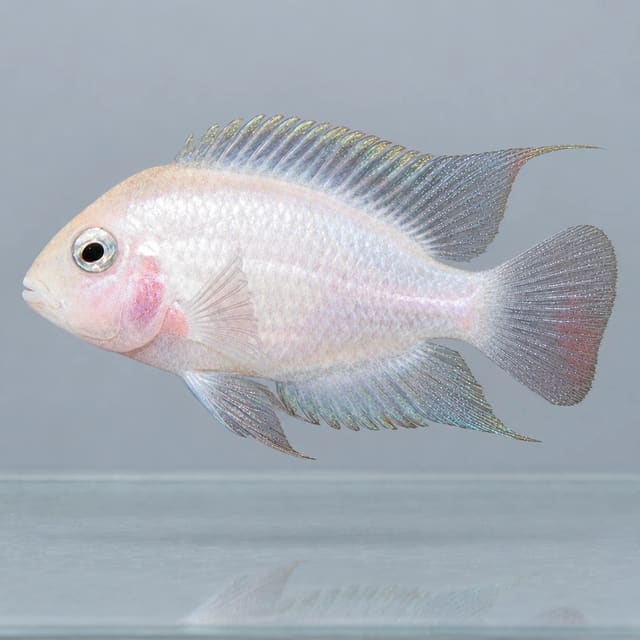
From our range, the Spotted Silver Dollar, the Gold Severum, the Freshwater Angelfish and the Clown Loach are worth considering; check each one's adult size and needs on its own page. A white parrot such as the Platinum Parrot Cichlid needs exactly the same care. Our tank mate checker flags clashes before you buy.
OATA's list of warning signs applies here: changes in swimming, colour, temperament, breathing, appearance, condition or appetite, plus clamped fins, flicking against décor and shimmying. Because natural parrots change colour slowly as they grow, a sudden change over a day or two is the thing to notice, not gradual paling.
| Sign | First step |
|---|---|
| Gasping or hanging at the surface | Test ammonia and nitrite, change some water, check the filter |
| Picking up food and dropping it | Switch to smaller granules; check the mouth for trapped grit |
| Swimming tilted or struggling to stay level | Check the water and temperature, calm the current, get specialist advice |
| Spots, fluffy growths or ragged fins | Ask an aquatic specialist or vet before using any treatment |
Parrots often pair up and spawn. Like their parent species they clean a hard surface, lay their eggs and guard them, and Jeremy Gay describes hundreds of sticky eggs being laid. Wikipedia says males are generally infertile, although successful breeding has occurred and most females are fertile; Jeremy Gay has never seen parrot eggs hatch. Remove eggs once they turn white, expect a guarding pair to be more defensive, and never try to cross a parrot with another cichlid or release one into the wild.
Curious about the other famous man-made cichlid? Our flowerhorn guide explains a hybrid with very different needs, and every parrot colour we stock is grouped on our hybrid parrot cichlids page, part of the South American cichlids category and our wider South American cichlids shop.
It means the colour is the fish's own. Nothing has been injected, painted, tattooed or cut. Wikipedia lists red, yellow and grey as the natural colours of parrot cichlids, and Practical Fishkeeping's Jeremy Gay names apricot and, more rarely, olive as the undyed forms.
It may, but we cannot promise it. In the Midas cichlid, one of the suggested parents, Seriously Fish says the young are plain greyish at first and start to change colour at about 5–6 cm. Some parrots keep their grey colouring, others turn yellow, apricot or red, and each fish is different.
Amatitlania is the genus of the convict cichlid. The label links this fish to convict ancestry, which fits Matt Clarke's list of suggested parrot crosses in Practical Fishkeeping. The exact parents of parrot cichlids have never been published, so the hybrid has no species name of its own.
It belongs to the same group of man-made parrot hybrids, often called blood parrots. "Natural" describes its undyed colour, not a separate kind of fish, and its care is the same as for other parrots.
Plan for 15–20 cm. Practical Fishkeeping gives about 15 cm, sometimes a little more; Wikipedia gives up to 20 cm and a lifespan of 10 to 15 years.
At least 120 cm long. Wikipedia suggests about 208 litres for one parrot plus about 76 litres for each extra fish, and OATA recommends at least 300 litres for American cichlids over 15 cm.
Medium to large, peaceful but robust fish that cannot be swallowed and do not race it to every meal: silver dollars, robust catfish and loaches, angelfish, severums and the calmer Central American cichlids. Avoid small tetras, shrimp and Malawi mbuna.
One live Natural Parrot Cichlid per purchase, in one standard size, unsexed. The photographs show the colour form, not the individual fish you will receive.
No reviews for this item yet. Bought one? Honest reviews only, good or bad.
What customers say about ordering from us
Easy website plenty of info on fish your buying great to pick a time slot
TRACEY DURRANT · 7 Oct 2026
Got some lovely fish thank you
Kevin Mackie · 7 Oct 2026
Reviews of our shop, collected by Judge.me, an independent third-party review collector. Newest first.
Moved by UK carriers licensed to handle live animals
Hand-packed with oxygen bags, poly box, heat pack
Email photos the same day; an optional unboxing video helps us review problems faster — claim terms apply
Klarna & PayPal Pay in 3 at checkout