−15%
Moderate
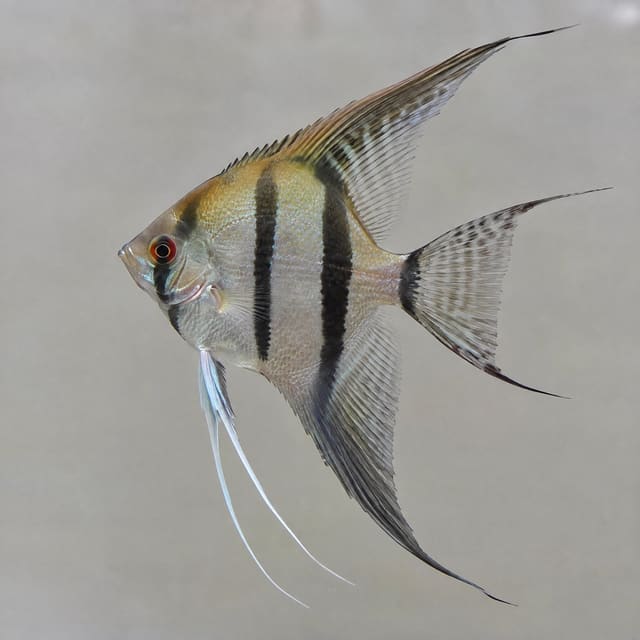
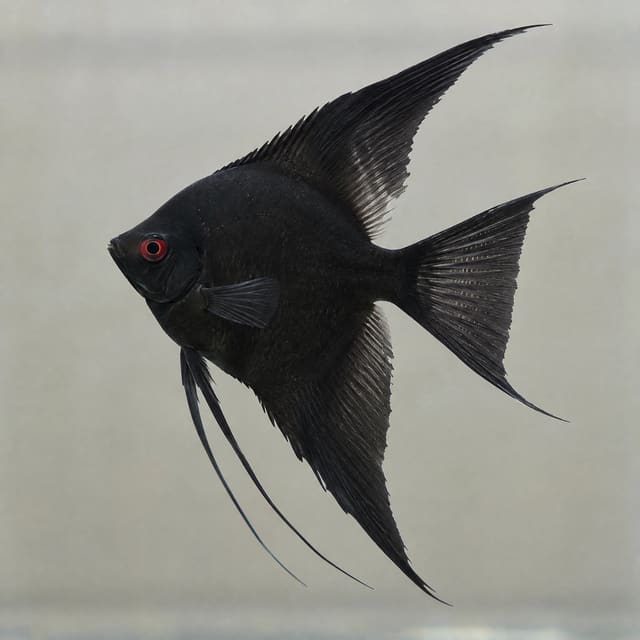
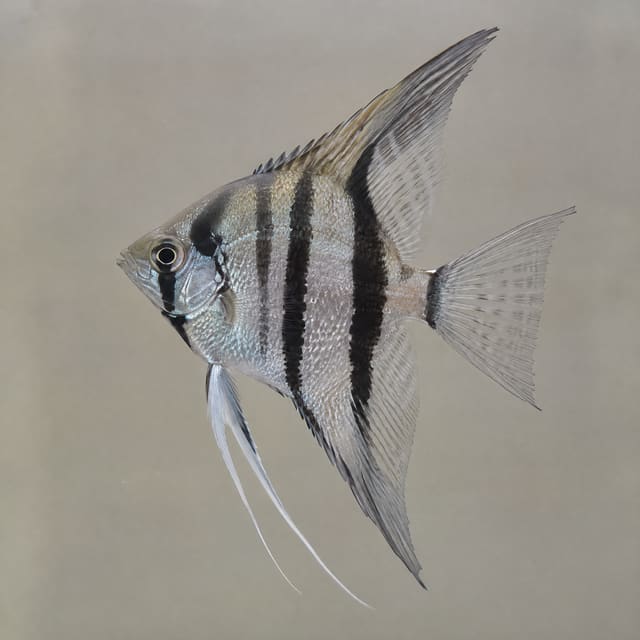
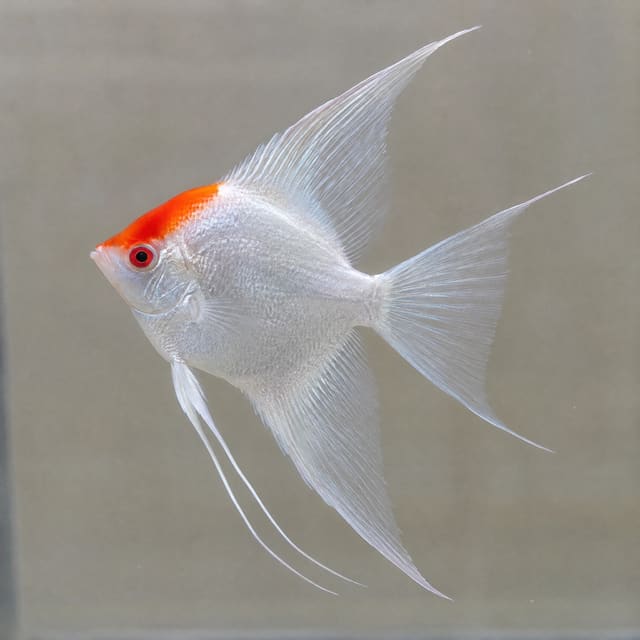
XL Mix Angelfish (Pterophyllum scalare)
24–27°C · pH 6.5–7.4 · 200L
£23.79£27.99
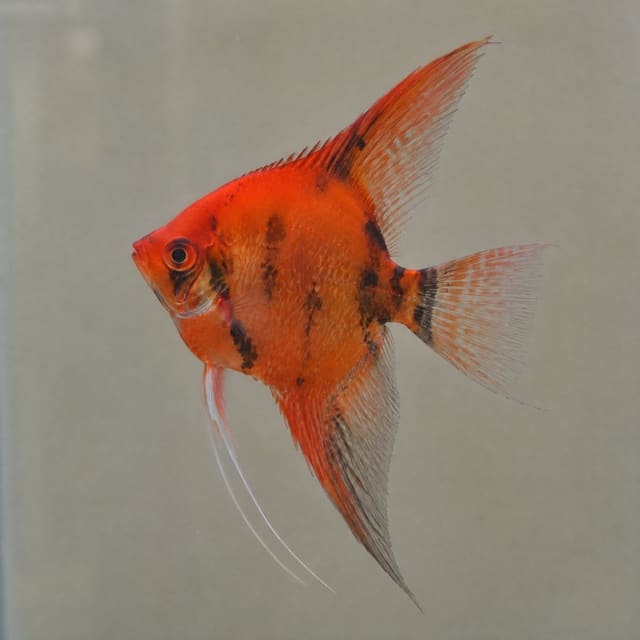
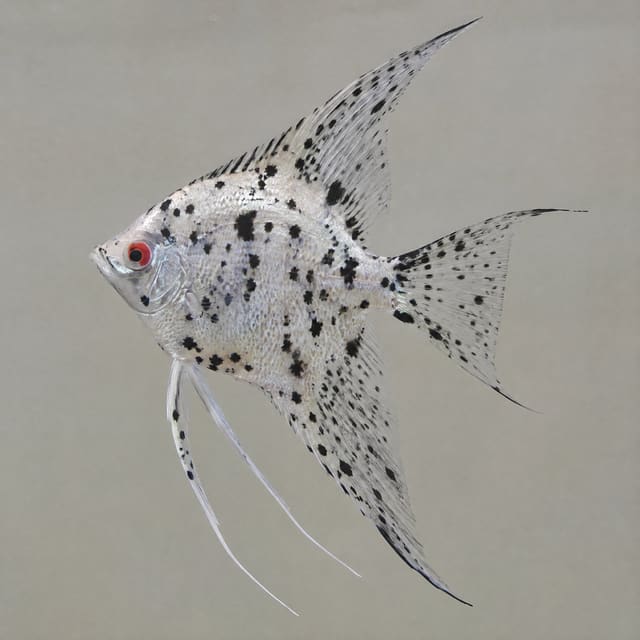
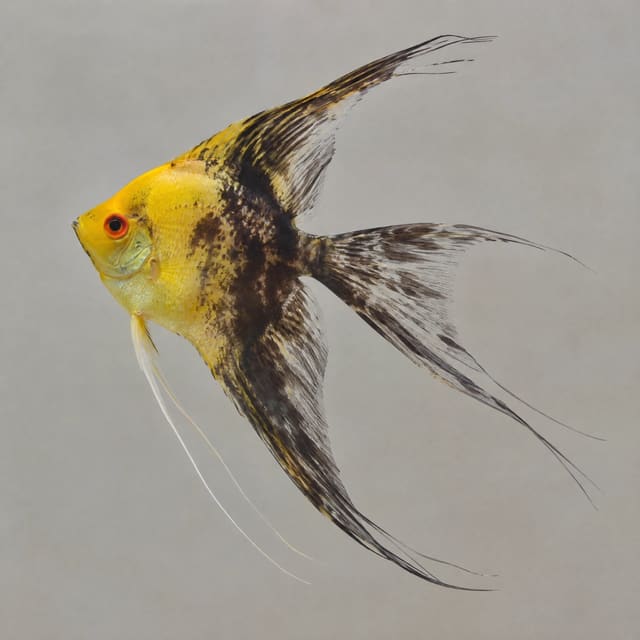
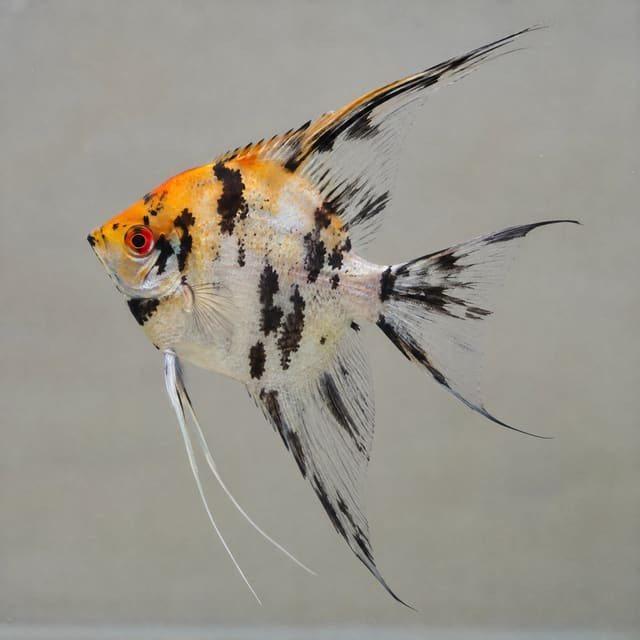
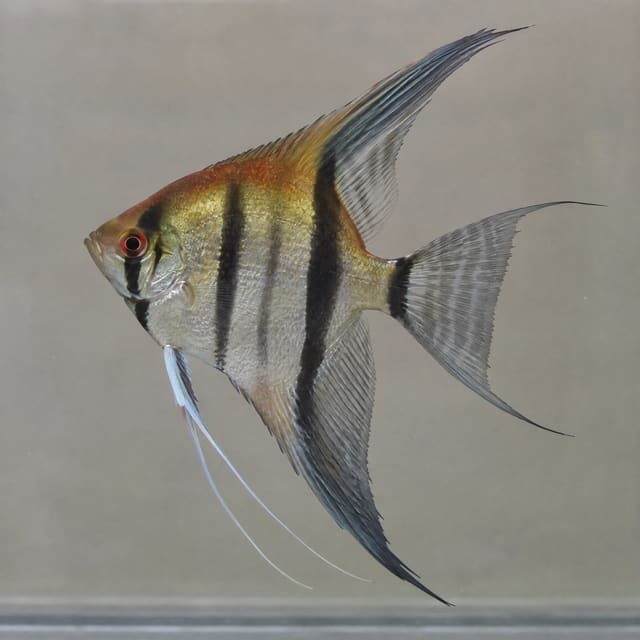
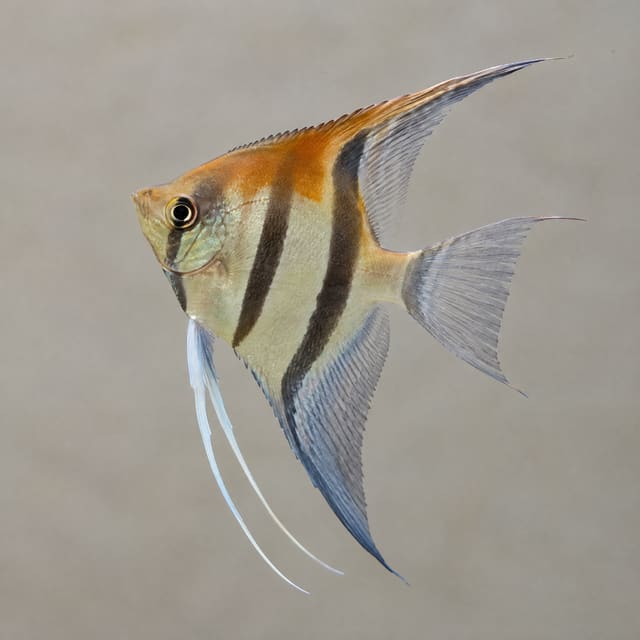
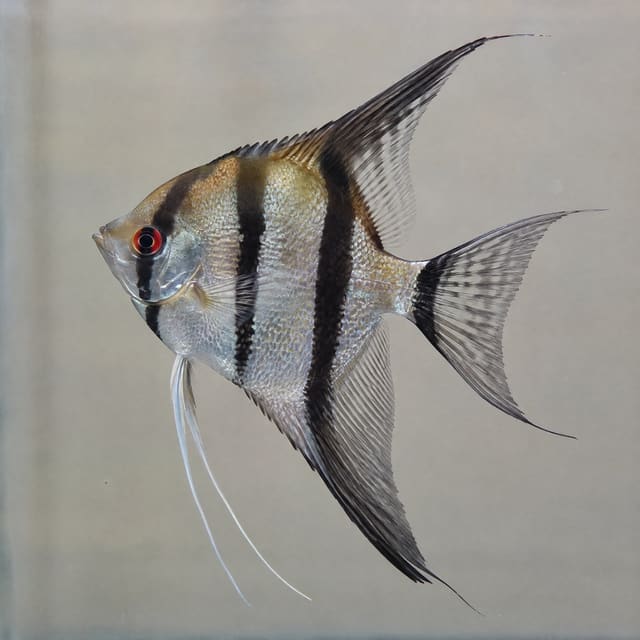
The Gold Marble Angelfish is a captive-bred colour form of Pterophyllum scalare with a gold body and light to moderate black marbling. It grows to about 15 cm long and 20 cm tall, so it needs a tall tank of around 200 litres at 24–27°C. Sold individually as one live juvenile of 3–4 cm.
Adult size is the maximum length this species reaches at full maturity (scientific sources). The livestock you receive will be younger and smaller. Product-photo provenance and any image-specific limitations are stated on the listing.
Pterophyllum scalare
The Gold Marble Angelfish is a captive-bred colour form of Pterophyllum scalare with a gold body and light to moderate black marbling. It grows to about 15 cm long and 20 cm tall, so it needs a tall tank of around 200 litres at 24–27°C. Sold individually as one live juvenile of 3–4 cm.
Adult size is the maximum length this species reaches at full maturity (scientific sources). The livestock you receive will be younger and smaller. Product-photo provenance and any image-specific limitations are stated on the listing.
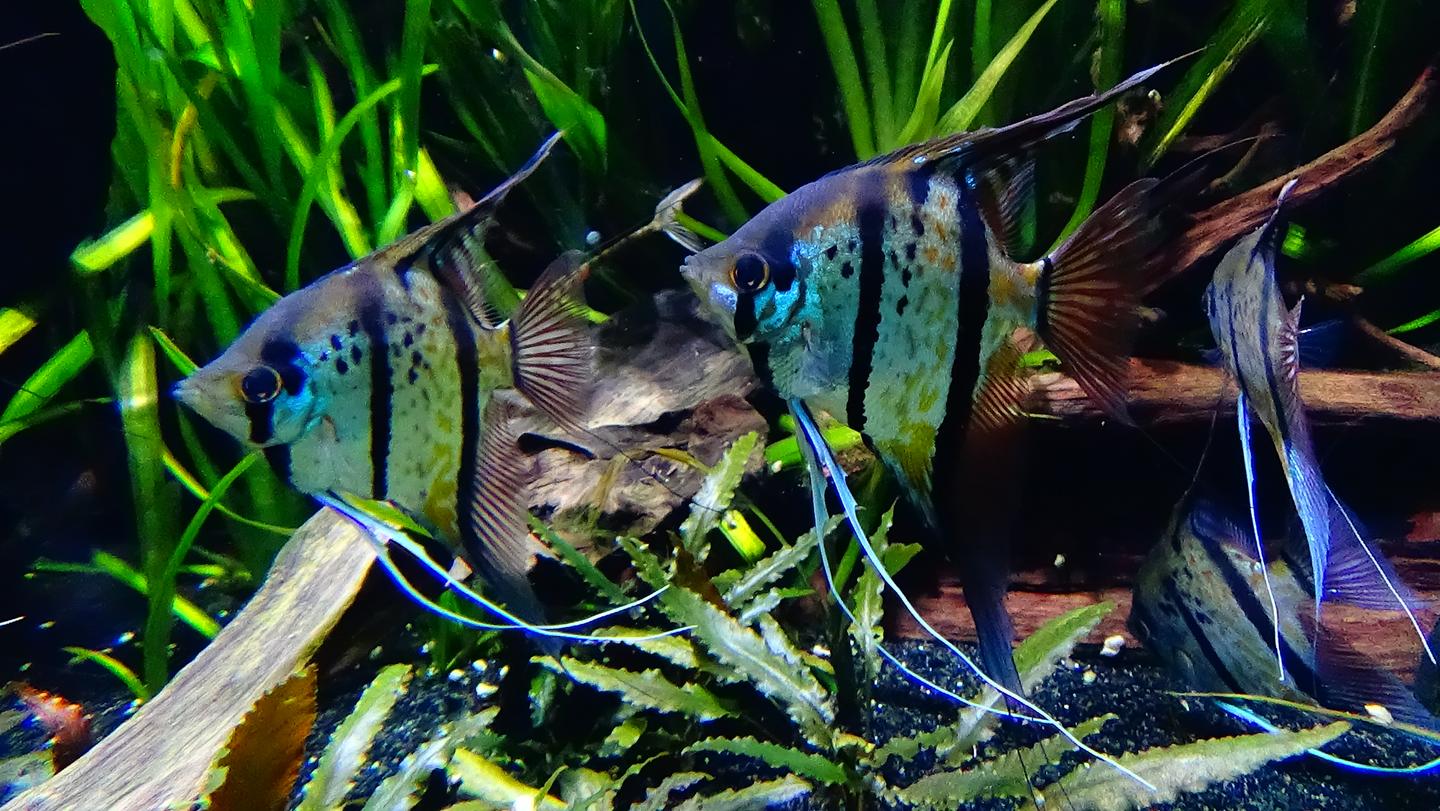
Freshwater angelfish are tall South American cichlids, not small community fish. OATA gives 120 litres as an industry floor for a compatible pair and says the aquarium must be sufficiently tall. We prefer planning around roughly 200 litres, a 100 × 40 cm footprint and about 50 cm height for an adult pair, with more space and an exit plan for a group.
Read the full care guidance when planning conditions for your aquarium.
The Gold Marble Angelfish is a domestic colour form of the freshwater angelfish, Pterophyllum scalare, the tall, disc-shaped South American cichlid that has been a centrepiece of community aquaria for more than a century. A gold marble angel has a warm yellow to gold body, usually deepest on the head, broken by irregular black marbling over the flanks and into the long dorsal, anal and tail fins. The long, thread-like pelvic fins trail below the body. As it grows, a Gold Marble Angelfish becomes a calm, slow-moving focal point that suits a tall, well-planted tank with peaceful company.
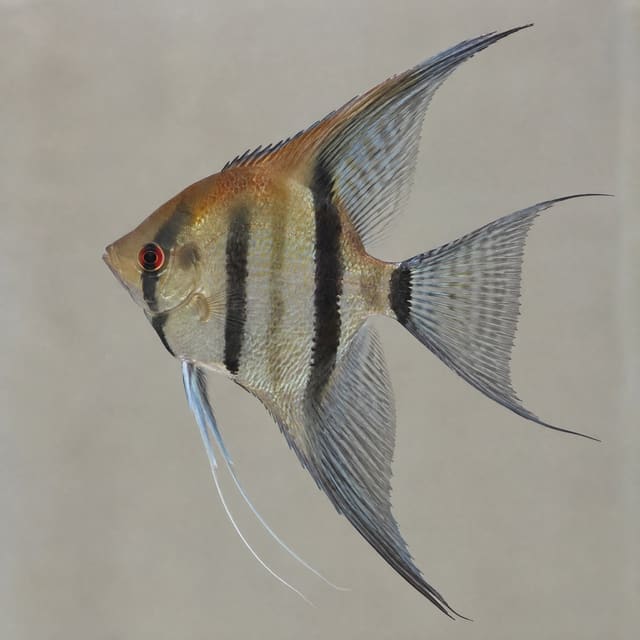
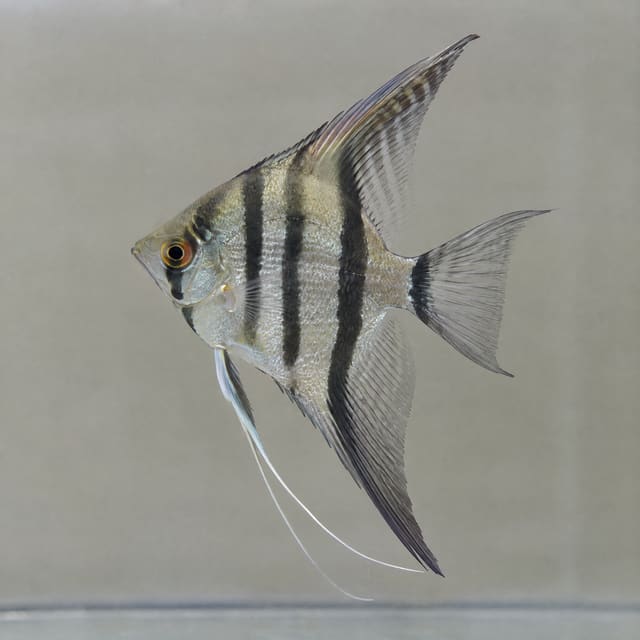
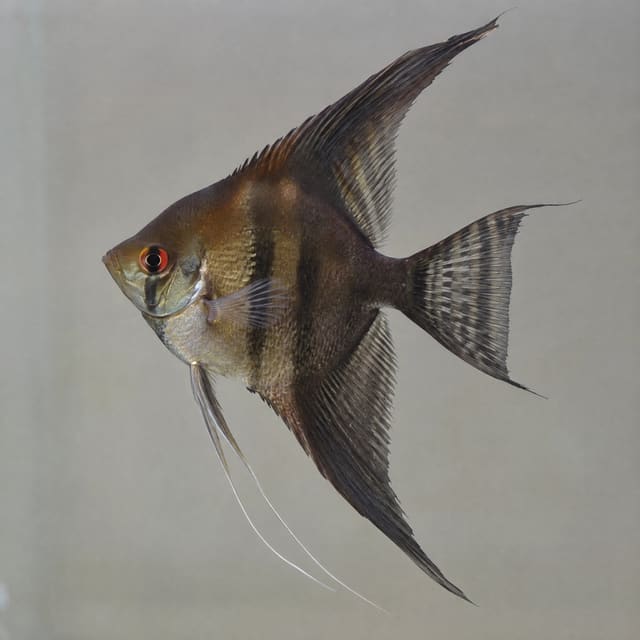
The species was first described by Schultze in 1823 and, according to Wikipedia, was first imported to Germany in 1909. Today almost every angelfish on sale is captive bred. Seriously Fish notes that the vast majority are mass-produced in the Far East and Eastern Europe, in black, gold, koi and marbled strains as well as the wild-type silver.
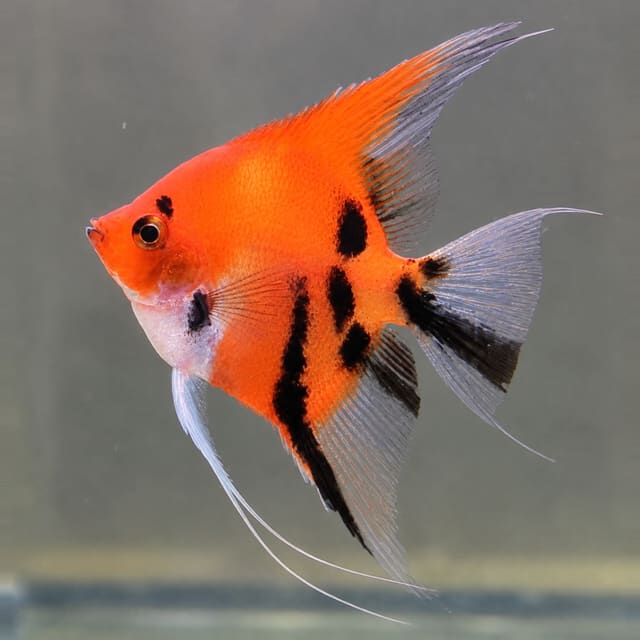
Much of what is known about angelfish colour genetics comes from the work of Dr Joanne Norton, summarised in the Wikipedia article on freshwater angelfish. The gold gene is recessive and produces a light golden body with a darker yellow to orange crown, without the black bars of wild fish. The gold marble gene (written Gm) adds black marbling; depending on whether a fish carries one or two copies, the marbling covers roughly 5% to 40% of the body. The ordinary marble gene (M) produces much heavier black patterning, 50% to 95%. That is why a gold marble looks mostly gold, while a standard marble looks mostly black and white.
| Form | Typical appearance | Genetics (Norton, via Wikipedia) |
|---|---|---|
| Gold Marble Angelfish | Gold body with light to moderate black marbling | Gm/g or Gm/Gm; marbling about 5–40% |
| Gold Angelfish | Plain gold with an orange crown, no bars | g/g, recessive |
| Marble Angelfish | Heavy black marbling over a pale body | M; marbling about 50–95% |
| Koi Angelfish | Orange, white and black patches | Gold marble plus two stripeless genes |
Compare these strains in our range: the heavier-patterned Marble Angelfish, the plain Gold Angelfish and the patchy Koi Angelfish. Our guide to angelfish types explains the other forms, and every one is listed in the angelfish section.
One purchase supplies one live Gold Marble Angelfish of about 3–4 cm. That is a juvenile, measured across the body, which will grow considerably over the following months. Sex cannot be chosen at this size. Because the marbling gene is variable, each fish carries its own pattern, and the amount of black can change as the fish grows; the photographs show the type of fish, not the individual you will receive.
Angelfish are social. The OATA care sheet for American cichlids says they should be kept in groups or as a pair at minimum, and that single fish may become stressed. FishBase recommends groups of five or more. Seriously Fish suggests starting with six juveniles if you hope to breed, as a pair is then very likely to form. Once a pair forms it may claim part of the tank and chase the others, so plan enough space for a group or be ready to rehome extra fish.
Sources agree on a body length of about 15 cm for adults. Seriously Fish gives 150 mm standard length and points out that fish reach 20 cm or more in height with their fins, while FishBase lists a maximum of 15 cm total length from one reference and 10.5 cm from another. Height is the key planning point: Seriously Fish recommends at least 100 × 40 × 50 cm, about 200 litres, with a water depth of at least 50 cm for adults, and FishBase gives a minimum aquarium length of 100 cm. OATA suggests allowing about 40 litres per adult angelfish when stocking a group. Our tank volume calculator works out the litres of any tank.
| Planning point | Figure | Source |
|---|---|---|
| Adult size | 150 mm SL, 20 cm+ tall; 15 cm TL (another reference 10.5 cm TL) | Seriously Fish; FishBase |
| Minimum aquarium | 100 × 40 × 50 cm, about 200 litres; 100 cm long | Seriously Fish; FishBase |
| Stocking | About 40 litres per adult angelfish | OATA |
| Group | 5 or more, or a pair at minimum | FishBase; OATA |
| Lifespan | About 12 years in captivity with good care | Wikipedia |
Wild angelfish live in swamps and flooded ground where aquatic and riverside vegetation is dense, according to FishBase. In the aquarium, Seriously Fish recommends tall leafy plants such as Amazon swords and gentle water movement. Vertical lines suit the fish: upright roots or branches and tall stems give cover and frame its shape. Keep open water in the middle and front for swimming, and avoid strong currents from filter outlets, which tall, narrow fish struggle against. Broad leaves or a piece of slate also give a pair a spawning surface later on. Our aquarium plants range includes tall sword plants and stems for this layout.
Domestic angelfish are adaptable, but sources give different ranges, so aim for the overlap and keep conditions steady. Seriously Fish gives 24–30°C, pH 6.0–7.4 and 0–15 dGH. FishBase gives 24–30°C, pH 6.0–8.0 and 5–13 dH. OATA's general guide for American cichlids gives 22–27°C, pH 6.5–8.0, 4–12°dH and nitrate no more than 20 mg/l above your tap water. Wikipedia describes wild habitat water as pH 6.0–7.0, 3–10 dH and 26–30°C, but today's farmed fish are far removed from wild stock.
| Value | Seriously Fish | FishBase | OATA | Our routine target |
|---|---|---|---|---|
| Temperature | 24–30°C | 24–30°C | 22–27°C | 24–27°C |
| pH | 6.0–7.4 | 6.0–8.0 | 6.5–8.0 | 6.5–7.4 |
| Hardness | 0–15 dGH | 5–13 dH | 4–12°dH | 5–12 dGH |
| Nitrate | – | – | No more than 20 mg/l above tap | As low as possible |
Many UK homes have hard, alkaline tap water above these hardness figures. Captive-bred angelfish usually adapt to moderately hard water if it is stable, but if your tap water is very hard, blending with reverse-osmosis water brings it closer to the target. Check your own water with our water matcher and read the water chemistry guide before you mix.
A mature filter sized for the tank is essential, but keep the flow soft. OATA recommends a 25% water change at least once a week, weekly testing for ammonia, nitrite, nitrate, pH and hardness, and cleaning filter media in removed tank water rather than under the tap, which would kill beneficial bacteria. Remove uneaten food promptly; angelfish are messy eaters of frozen foods. Our angelfish care guide covers routine maintenance in more detail.
Seriously Fish describes the angelfish as omnivorous, with wild fish feeding mostly on small crustaceans and other aquatic invertebrates; farmed fish readily take pellets and flake and relish live or frozen foods. Wikipedia lists brine shrimp, bloodworm, daphnia, krill and small earthworm pieces among foods taken in captivity, and notes that variety supports health and breeding condition. OATA advises feeding once a day, only what the fish eat within a few minutes, and warns against overfeeding. Juveniles of 3–4 cm grow faster on two small meals a day.
| Day | Staple | Extra |
|---|---|---|
| Monday, Thursday | Small cichlid pellet or flake | Frozen brine shrimp |
| Tuesday, Friday | Small cichlid pellet or flake | Frozen or freeze-dried bloodworm |
| Wednesday, Saturday | Flake with plant content | Daphnia or mysis |
| Sunday | Light feed or none | None |
OATA describes the floating bag method: switch off the lights, float the bag for 10 minutes to equalise temperature, then add small amounts of tank water over up to 20 minutes before releasing the fish with as little bag water as possible. Our guide on how to acclimatise new fish shows each step. New angelfish often hide among plants and may darken for a day or two. Feed lightly, keep the lights on a normal cycle, and watch for clamped fins, rapid breathing or flicking against décor. See our delivery information for live arrival details.
Seriously Fish calls the angelfish a generally peaceful cichlid and a good community fish, but warns that it may eat small fish such as tetras and that it can squabble with its own kind. OATA notes that calmer American cichlids such as angelfish can mix with larger shoaling species in a robust community. The long fins are an easy target for fin-nippers. Our angelfish tank mates guide and tank mates checker help you test a plan.
| Suits | Avoid |
|---|---|
| Bronze Corydoras and other peaceful catfish | Neon tetras and other tiny fish an adult angel can swallow |
| Bristlenose Plecos as algae grazers | Fin-nippers such as tiger barbs and some serpae-type tetras |
| Medium tetras such as Lemon Tetras, added large | Boisterous or aggressive cichlids |
| Other angelfish in a group of five or more | Coldwater fish and very fast, pushy feeders |
OATA lists the warning signs that apply to every aquarium fish: hanging at the surface or sitting on the bottom, unusual darkening or paling, hiding more than usual, faster or slower gill movement, white spots or fluffy growths, damaged fins, weight loss and loss of appetite. Angelfish fins show damage clearly, so fraying often points to a nipping tank mate or poor water quality. Test the water first whenever you see a change, and quarantine new fish where you can.
Angelfish form long-term pairs, and both parents guard the eggs and fry, as FishBase describes. Wikipedia reports sexual maturity at six to 12 months, spawning every seven to ten days if eggs are removed, and clutches of 100 to more than 1,200 eggs depending on the female. The pair cleans a vertical surface such as a broad leaf, slate or the glass, and lays lines of eggs that both parents fan. Sexing is difficult: Seriously Fish notes that males have smaller, pointed breeding tubes visible only at spawning time, and that behaviour can be a better guide. Fry can be fed newly hatched brine shrimp once the yolk sac is used, usually after about two days. Generations of farming mean some parents eat their young, so keep them well fed. Browse more in the Pterophyllum scalare category within our angel fish section.
Both are Pterophyllum scalare. A Gold Marble carries the gold marble gene, which gives a gold body with roughly 5 to 40 per cent black marbling. A standard Marble carries a different marble gene that produces much heavier black patterning, about 50 to 95 per cent.
Expect about 15 cm of body length and 20 cm or more in height including the fins, according to Seriously Fish. FishBase gives 15 cm total length from one reference. The fish we send are juveniles of about 3 to 4 cm.
Seriously Fish recommends at least 100 by 40 by 50 cm, about 200 litres, with enough height for the long fins. OATA suggests allowing about 40 litres per adult angelfish in a group.
It is not ideal. OATA says angelfish should be kept in groups or a pair at minimum, because single fish may become stressed. FishBase recommends groups of five or more.
They may. Seriously Fish warns that adult angelfish can eat small fish such as tetras. Choose medium-sized tank mates, or add tetras that are already well grown.
Often, yes. The amount of black in marble angelfish varies with the genes each fish carries and can shift as the fish grows, so the adult pattern may differ from the pattern on a juvenile.
Aim for 24 to 27 degrees C, pH about 6.5 to 7.4 and moderate hardness, the overlap of Seriously Fish, FishBase and OATA guidance. Stable water matters more than an exact number.
Wikipedia reports that angelfish from good stock live about 12 years in captivity when conditions are right.
Yes. Start with a group so a pair can form. The pair lays eggs on a vertical surface and both parents guard them. Feed the fry newly hatched brine shrimp once they are free-swimming.
No reviews for this item yet. Bought one? Honest reviews only, good or bad.
What customers say about ordering from us
Easy website plenty of info on fish your buying great to pick a time slot
TRACEY DURRANT · 7 Oct 2026
Got some lovely fish thank you
Kevin Mackie · 7 Oct 2026
Reviews of our shop, collected by Judge.me, an independent third-party review collector. Newest first.
Moved by UK carriers licensed to handle live animals
Hand-packed with oxygen bags, poly box, heat pack
Email photos the same day; an optional unboxing video helps us review problems faster — claim terms apply
Klarna & PayPal Pay in 3 at checkout