Moderate
Ornate Synodontis (Synodontis ornatipinnis)
23–27°C · pH 6–7.5 · 300L
£43.99
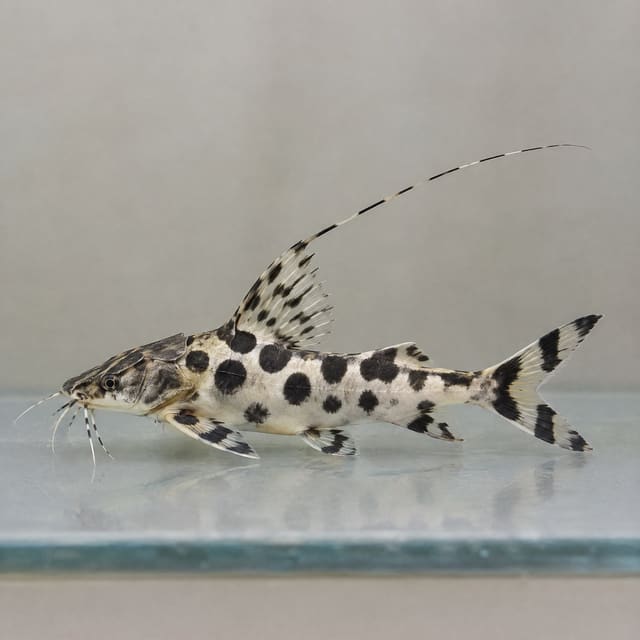
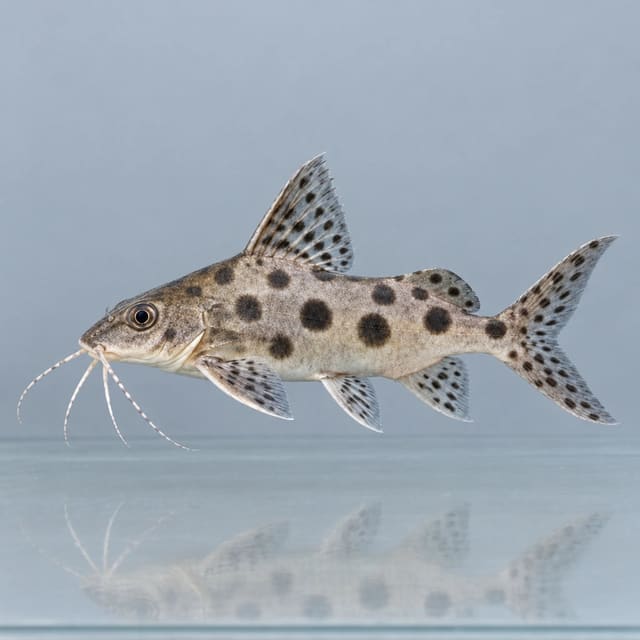
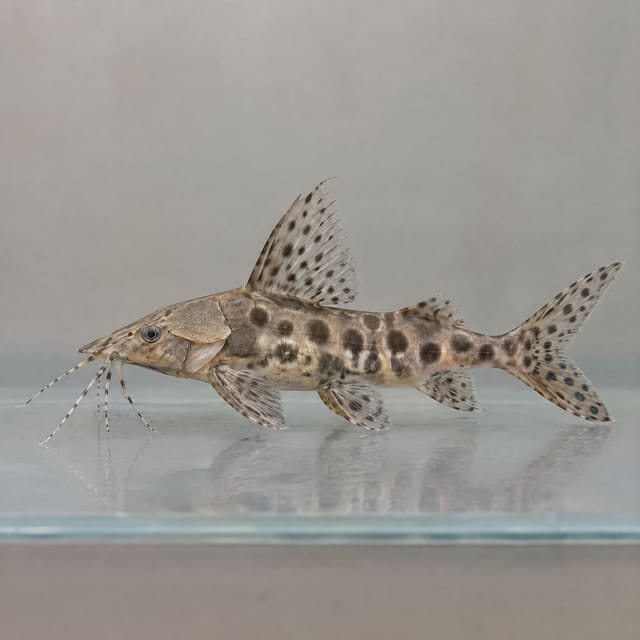
The Soloni Synodontis (Synodontis soloni), also listed as the Scissortail Synodontis, is a squeaker catfish from the Congo rapids at Pool Malebo and the Ubangi that grows to about 15.5 cm. It suits a medium to large aquarium with caves, wood and fish too big to swallow, kept at 23–25°C. Sold individually as one live fish.
Adult size is the maximum length this species reaches at full maturity (scientific sources). The livestock you receive will be younger and smaller. Product-photo provenance and any image-specific limitations are stated on the listing.
Synodontis soloni
Quantity discounts are pricing offers, not a group-size recommendation. Check the full care guidance and your existing animals before choosing a quantity.
The Soloni Synodontis (Synodontis soloni), also listed as the Scissortail Synodontis, is a squeaker catfish from the Congo rapids at Pool Malebo and the Ubangi that grows to about 15.5 cm. It suits a medium to large aquarium with caves, wood and fish too big to swallow, kept at 23–25°C. Sold individually as one live fish.
Adult size is the maximum length this species reaches at full maturity (scientific sources). The livestock you receive will be younger and smaller. Product-photo provenance and any image-specific limitations are stated on the listing.
The Soloni Synodontis (Synodontis soloni) is a squeaker catfish from the Congo River in the Democratic Republic of the Congo. FishBase places it in the rapids just below Pool Malebo (the old Stanley Pool), in Pool Malebo itself and in the Ubangi, and Planet Catfish adds Libenge. It reaches about 15.5 cm, which makes the Soloni Synodontis one of the more manageable members of a genus that includes some very large fish.
It belongs to the Mochokidae, the family of squeakers and upside-down catfishes. Every Synodontis has a hard bony cap over the head with a pointed extension behind the gill opening, called the humeral process, stiff serrated first rays in the dorsal and pectoral fins, and a forked tail. They are called squeakers because they make an audible sound by rubbing the base of the pectoral spine against the shoulder girdle when disturbed.
| Name | Where you will see it |
|---|---|
| Soloni Synodontis, Soloni squeaker | Trade names used by UK shops |
| Scissortail Synodontis | The common name on Planet Catfish and in reference books |
| Synodontis soloni Boulenger, 1899 | The scientific name, unchanged since it was described |
| Scherenschwanz-Synodontis | German name, seen on imports from continental Europe |
The species name honours Alexandre Solon, a young traveller who, according to FishBase, helped Captain Capra collect fish in the Congo and died there shortly afterwards. Boulenger described the species in 1899 from fish collected in the Congo River. Browse our other Synodontis squeakers to compare sizes and patterns.
One purchase supplies one live Soloni Synodontis. The size option is "Standard": the fish is sent at the size currently available, which is smaller than the adult size. Sex is not chosen or guaranteed, and young Synodontis cannot be sexed by eye.
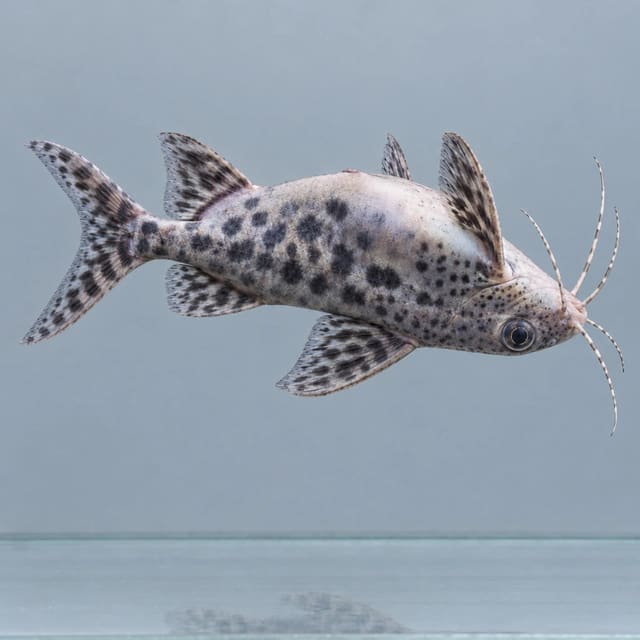
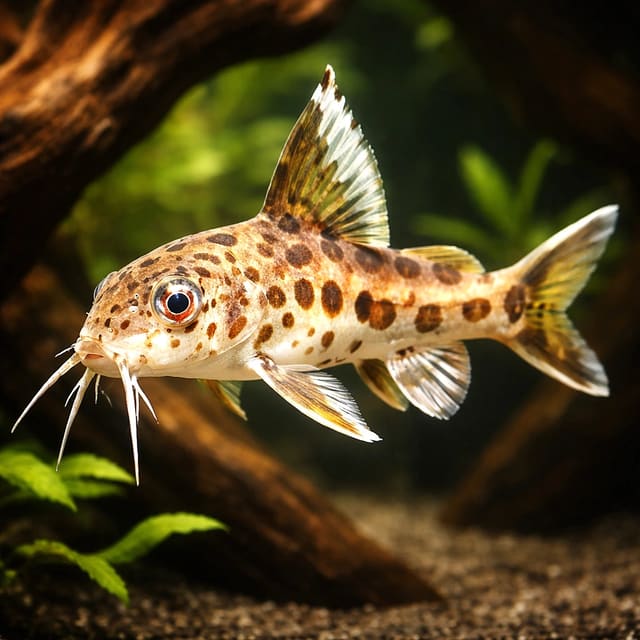
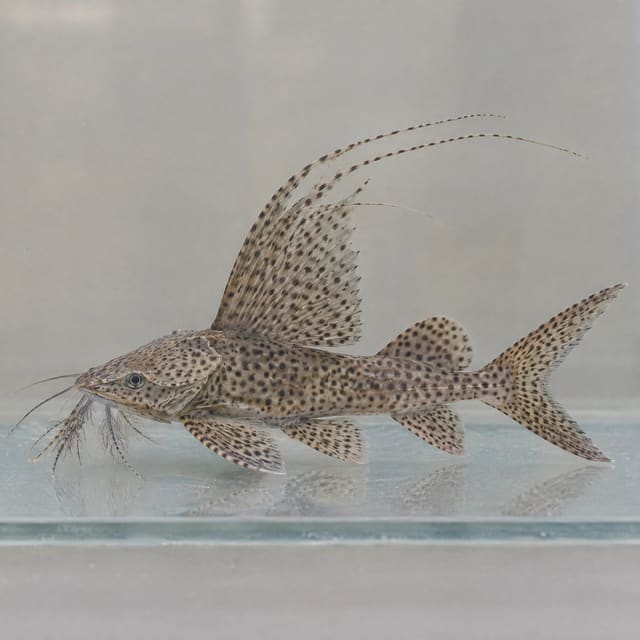
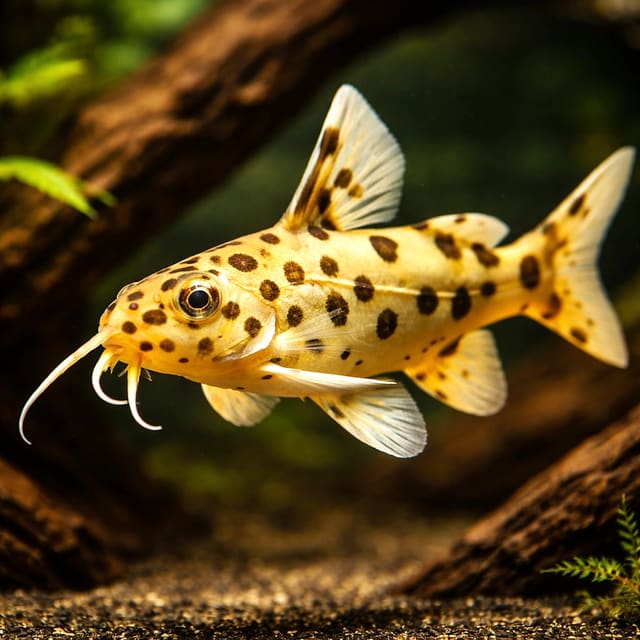
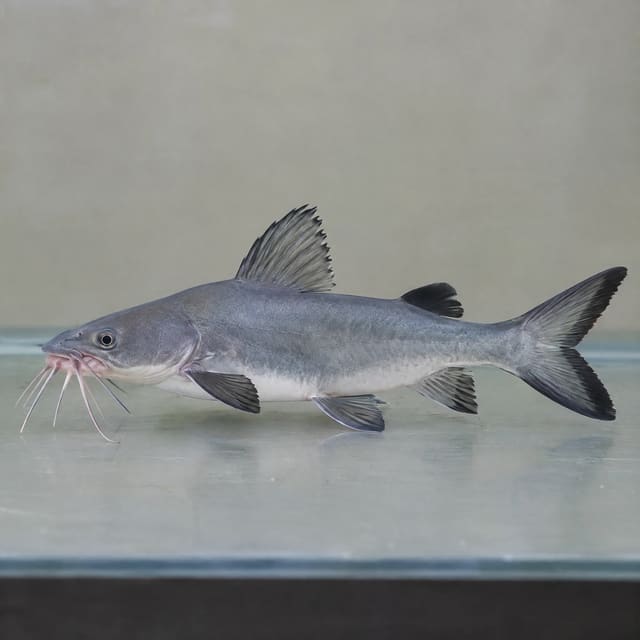
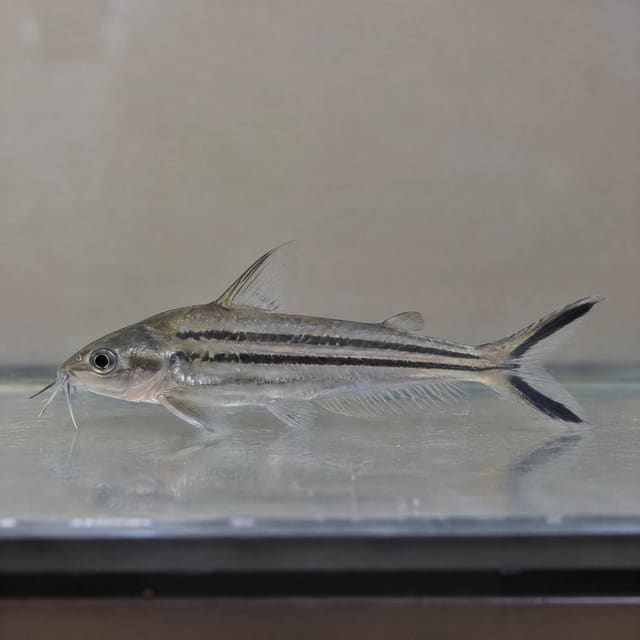
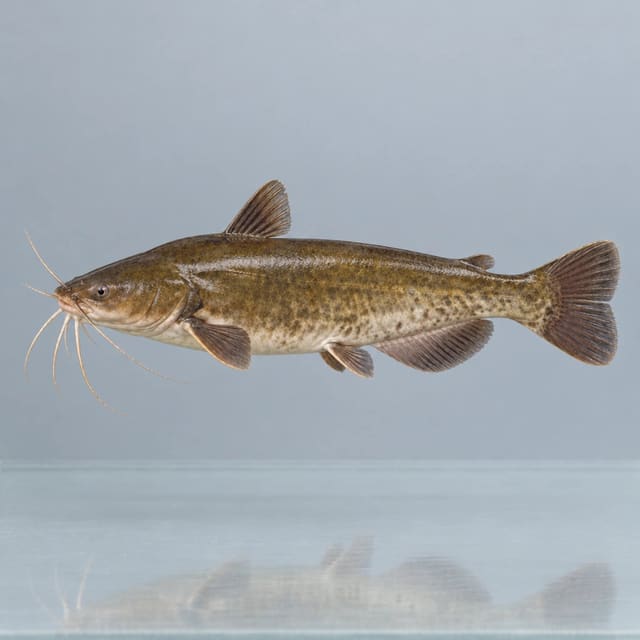
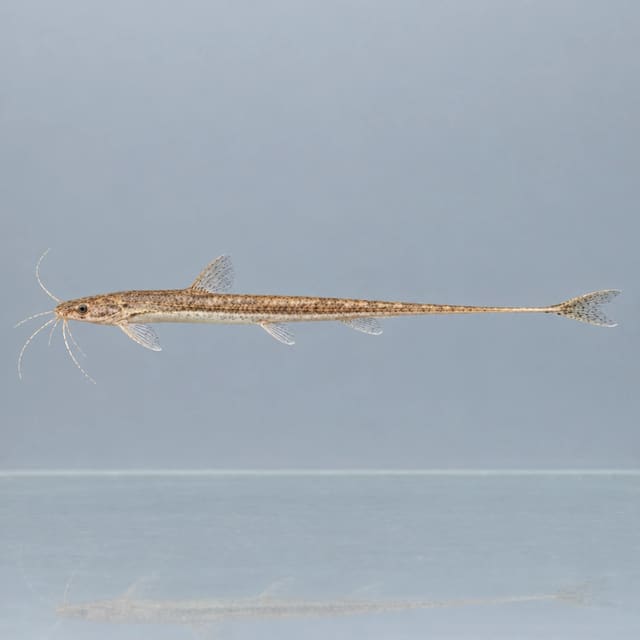
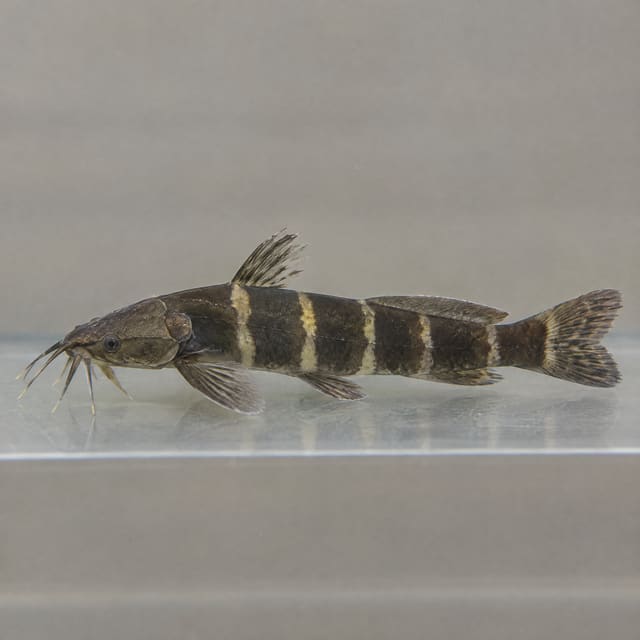
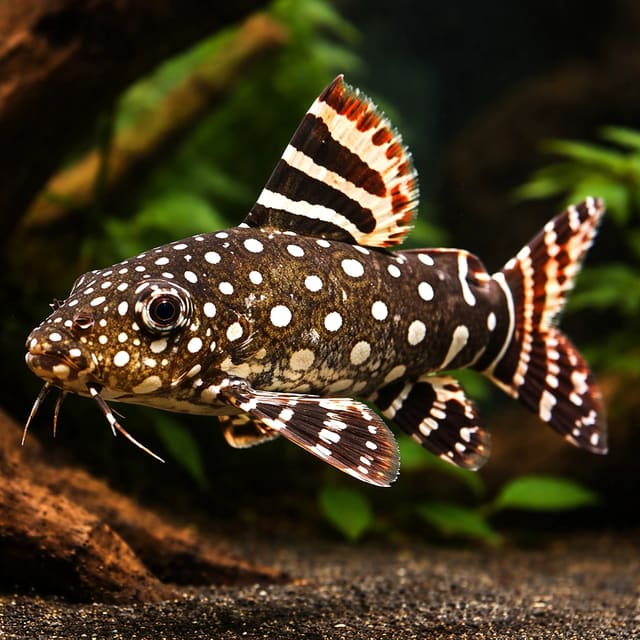
The photographs show the type of fish, not the individual you will receive. Boulenger described the adult as olive-grey on the back, marbled with brown, white underneath, with round brown spots on the dorsal and caudal fins. Pattern varies between individuals and changes with age, lighting and mood, so expect some difference from the pictures.
Before you order, read our delivery and Live Arrival Guarantee information and have the aquarium ready and matured.
Planet Catfish gives a maximum of 155 mm standard length, measured from the snout to the base of the tail, while FishBase gives 15.5 cm total length, which includes the tail. Whichever is right, plan for a solid, spiny fish of around 15 cm with long barbels, not the size that arrives.
No source publishes a minimum aquarium for S. soloni. Seriously Fish recommends a 90 × 30 cm base for Synodontis nigrita, which grows to 175 mm standard length, so we treat 90 × 30 cm as the floor for this slightly smaller fish. If you keep more than one Synodontis, or a lively shoal above it, choose a tank of 120 cm or longer so each fish can claim its own corner.
Place the aquarium away from radiators, windows and draughts, as OATA's catfish care sheet recommends, and run a heater all year round. A lid stops a startled fish jumping.
Like most Synodontis, it spends the day in a cave or under wood and becomes active as the light fades. For the genus, Seriously Fish recommends a dimly lit aquarium with a soft substrate and rocks, driftwood and twisted roots arranged to form hiding places, with floating plants to soften the light. That layout works well here.
Wild fish come from rapids and the large pool below them, so a layout of rounded stones, wood and open sand fits the species better than a dense plant thicket. Robust plants such as Anubias tied to wood add cover without taking floor space.
| Area | Purpose |
|---|---|
| Rock caves, clay pots or pipes | A daytime retreat for each Synodontis |
| Bogwood and roots | Shade, extra hiding places and surfaces to graze |
| Open sand at the front | Foraging space where sinking food lands, easy to siphon |
| Floating plants | Dimmer light, so the fish comes out sooner in the evening |
Use smooth sand or fine gravel. OATA points out that catfish have sensitive barbels and need a soft bottom to avoid injury. Bed rocks onto the glass, not on top of the sand, because a Synodontis digs under stones and can bring a loose stack down.
Planet Catfish and FishBase both give 23–25°C. Neither publishes pH or hardness for this species. For a guide we use the values published for another Congo-basin Synodontis: FishBase gives pH 6.0–7.5 and hardness 4–15 dH for S. notatus. Most UK tap water, once conditioned, falls near this range, and a steady reading matters more than an exact one.
| Reading | Target |
|---|---|
| Temperature | 23–25°C (Planet Catfish and FishBase) |
| pH | 6.5–7.5 suggested; no species figure is published |
| General hardness | Soft to medium-hard suggested, about 4–15 dGH |
| Ammonia | 0 mg/l |
| Nitrite | 0 mg/l |
| Nitrate | No more than 20 mg/l above your tap water |
The ammonia, nitrite and nitrate limits come from OATA's catfish guidance. Treat every water change with a conditioner, because water companies add chlorine or chloramine that harms fish and filter bacteria. Your water company's postcode checker shows how hard your supply is, our water matcher compares your readings with this fish's range, and our water chemistry guide explains each reading.
A fish collected in and below rapids is used to moving, oxygen-rich water. Give it a filter rated for well over the tank volume each hour and point the outlet so it ripples the surface. Seriously Fish suggests a turnover of four to five times the tank volume per hour for the larger S. notatus, which is a sensible target here too. Our guide to aquarium filtration explains how to choose and maintain one.
Add fish gradually. OATA explains that filter bacteria must grow each time stocking and feeding increase; stocking too quickly raises ammonia and nitrite and causes "new tank syndrome". A catfish that feeds at night can hide a water problem for days, so keep testing even when the tank looks perfect.
No feeding study exists for S. soloni. For the genus, Seriously Fish describes Synodontis as omnivorous and unfussy: frozen, live and dried foods are all taken, along with vegetable matter such as shelled peas and cucumber, which they rasp with the teeth in the lower jaw. OATA advises feeding catfish only what they can eat within a few minutes, once a day.
Watch the belly. A well-fed Synodontis has a gently rounded underside. If it looks hollow, feed closer to its cave and later in the evening rather than simply adding more food.
Only add the fish to a filtered aquarium that has run long enough to process waste, with ammonia and nitrite at zero and the temperature in range before it arrives. OATA recommends double-bagging catfish because their spines can pierce a bag, and acclimatising with the aquarium lights off: float the sealed bag for about 10 minutes to match the temperature, then add small amounts of aquarium water to the bag over up to 20 minutes, and release the fish with as little bag water as possible. Our guide on how to acclimatise new fish goes through each step.
| Checkpoint | What to do |
|---|---|
| Before arrival | Test the water, set out the caves and lower the lighting |
| Arrival | Acclimatise, release near a cave and leave the lights off for the rest of the day |
| First evening | Offer a small sinking portion after dark |
| Days 2–7 | Check which cave it uses, that the belly stays rounded and that leftovers are removed |
| End of week | Retest ammonia, nitrite and nitrate and do the usual water change |
Expect to see little of it at first. A new Synodontis often stays hidden for several days and comes out mainly after dark. A fish that hangs at the surface, breathes rapidly or lies on its side is not settling and needs a water test straight away.
Its own temperament has not been described in the sources we checked, so the advice here follows the genus. Seriously Fish advises that medium and large Synodontis should not be kept with any fish small enough to be eaten, and names African tetras, West African cichlids, mormyrids, knifefish, gouramis and larger rasboras and barbs as good companions for related species. It also notes that many become territorial towards other Synodontis as they mature.
| Suits | Avoid |
|---|---|
| African tetras such as the Congo Tetra | Neon tetras, small rasboras and other fish that fit in its mouth |
| West African dwarf cichlids such as the Kribensis Cichlid | Large, aggressive cichlids that take over every cave |
| Mormyrids such as the Elephantnose Fish | Dwarf shrimp, which are likely to be eaten |
| Medium barbs, rasboras and gouramis | Several Synodontis crowded into a small tank |
| Other Synodontis in a long tank with a cave each | Slow, long-finned fish that may be pestered at night |
For other Synodontis of a similar size, see the Vermiculated Synodontis and the Large-Spot Synodontis, or the much smaller Black Upside-Down Catfish. Our kribensis care guide covers the most popular West African cichlid companion. Check a planned mix with our tank mates tool, and browse all catfish and plecos, the wider range of African catfish or other bottom-dwelling fish.
The serrated dorsal and pectoral spines lock upright when the fish is alarmed and catch easily in netting. OATA warns that most catfish carry spines on the pectoral fins and just behind the gills and should be handled with care. Guide the fish into a container rather than lifting it in a net whenever you can.
OATA describes a healthy fish as having clear eyes, undamaged fins, no ulcers or bumps, normal swimming and steady breathing. Learn what normal looks like for your fish in the first month, including where it rests and when it comes out to feed.
| If you see | Do this |
|---|---|
| A hollow belly | Feed after dark, close to its cave, and check whether faster fish take everything first |
| Rapid breathing or hanging near the surface | Test ammonia, nitrite and temperature at once and check the filter flow |
| Worn or short barbels | Check for sharp gravel and a dirty substrate, and siphon more often |
| Torn fins or chased out of its cave | Add caves, break sight lines or rehome the aggressor |
| White spots or fluffy patches | Test the water and seek fish-health advice before treating |
| Not seen for several days | Look with a dim torch after lights-out and count your fish |
Do not diagnose from a single sign. Most changes in behaviour follow a water-quality problem, so test first, note the readings and any recent changes, and then decide what to do.
Planet Catfish lists the Soloni Synodontis as unreported in the aquarium, and there is no breeding report for it. FishBase records only that it lays eggs and forms distinct pairs when breeding. Studies of wild Synodontis cited on the species' Wikipedia page suggest that the genus spawns in the flood season, with pairs swimming together, which is difficult to recreate at home.
Adult Synodontis can be sexed by the shape of the genital papilla behind the vent, which Planet Catfish and Seriously Fish describe in detail; this means handling a spiny fish upside down and is not something to try on a new arrival. Females tend to grow slightly larger and plumper than males of the same age. Seriously Fish notes that most Synodontis take two years or more to mature, so a young fish will not show either sign.
It is Synodontis soloni, a squeaker catfish (family Mochokidae) from the middle and lower Congo basin in the Democratic Republic of the Congo, where it lives in and below the rapids at Pool Malebo and in the Ubangi. Planet Catfish lists it as the Scissortail Synodontis.
About 15.5 cm. Planet Catfish gives 155 mm standard length and FishBase 15.5 cm total length, so the two sources measure it differently; plan for a fish of 15 cm or a little more.
No minimum is published for this species. We use the 90 × 30 cm base Seriously Fish gives for the similar-sized Synodontis nigrita as the floor, and suggest a tank of 120 cm or longer if you keep more than one Synodontis.
Planet Catfish and FishBase both give 23–25°C. No pH or hardness values are published for it; we suggest pH 6.5–7.5 and soft to medium-hard water, which sits inside the published ranges for other Congo-basin Synodontis.
Synodontis soloni belongs to the upside-down catfish family, but none of the sources we checked describes it as a habitual upside-down swimmer. Expect it to rest in caves and under wood and to forage along the bottom.
For a community of medium-sized fish, yes. Do not keep it with fish small enough to swallow, and expect some squabbling with other Synodontis over caves as it matures, as Seriously Fish reports for related species.
Synodontis make an audible sound by rubbing the base of the pectoral fin spine against the shoulder girdle. You may hear it when the fish is netted or handled.
One live fish of the standard size currently available. Sex is not chosen or guaranteed.
No reviews for this item yet. Bought one? Honest reviews only, good or bad.
What customers say about ordering from us
Easy website plenty of info on fish your buying great to pick a time slot
TRACEY DURRANT · 7 Oct 2026
Got some lovely fish thank you
Kevin Mackie · 7 Oct 2026
Reviews of our shop, collected by Judge.me, an independent third-party review collector. Newest first.
Moved by UK carriers licensed to handle live animals
Hand-packed with oxygen bags, poly box, heat pack
Email photos the same day; an optional unboxing video helps us review problems faster — claim terms apply
Klarna & PayPal Pay in 3 at checkout