Easy
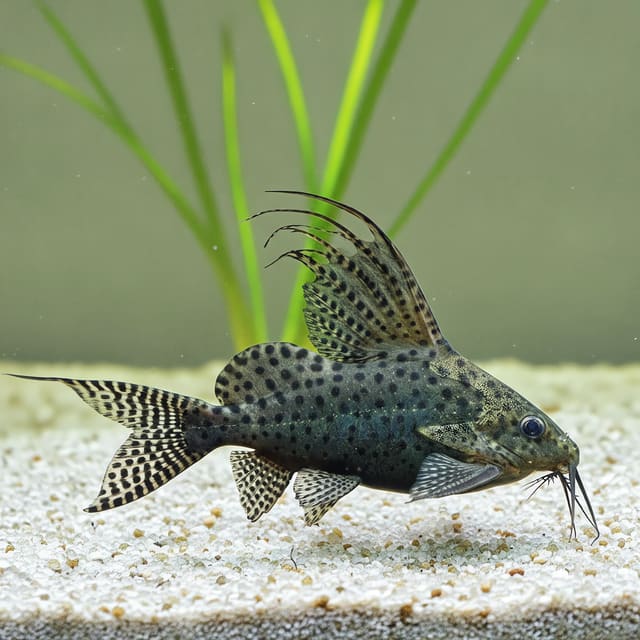
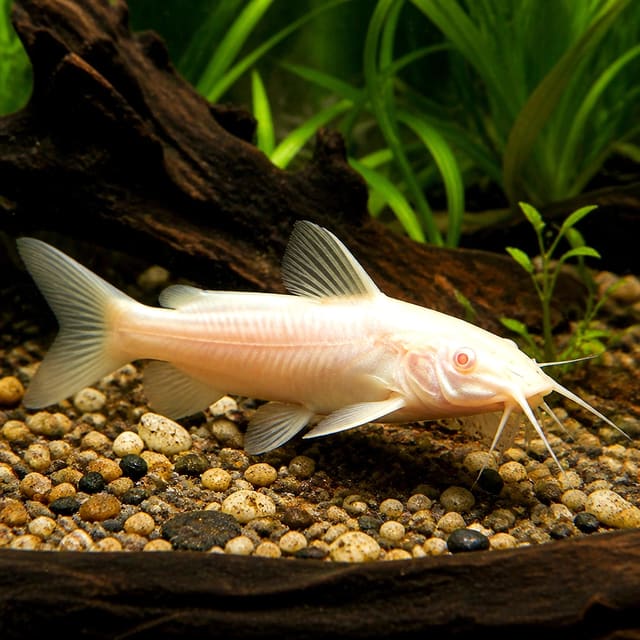
Large-Spot Synodontis (Synodontis ocellifer)
23–27°C · pH 6.2–8 · 81L
£20.99

One live Decorated Upside-Down Catfi (Synodontis decorus) in the selected size. A large, nocturnal Congo catfish needing spacious adult housing, sheltered resting places and a varied sinking diet.
Synodontis decorus
Shoaling fish: kept in a group they feel safer, stay calmer and show their best colour.
One live Decorated Upside-Down Catfi (Synodontis decorus) in the selected size. A large, nocturnal Congo catfish needing spacious adult housing, sheltered resting places and a varied sinking diet.
Maintain these water conditions for optimal health and vibrant colors
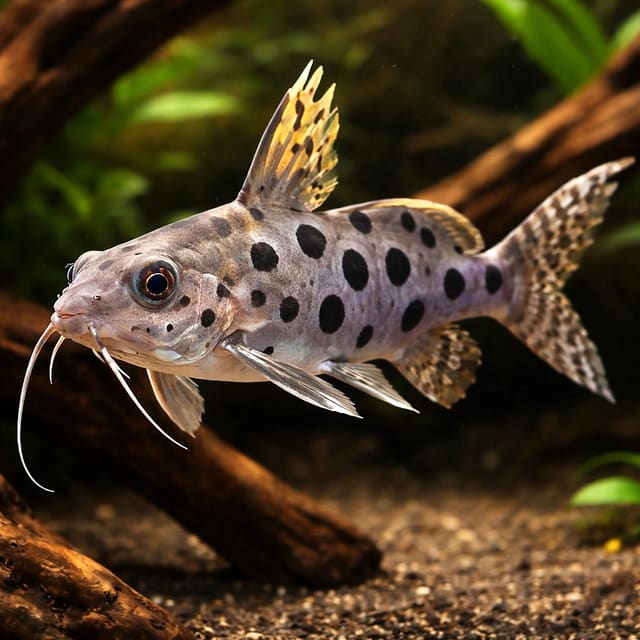
Decorated Upside-Down Catfi (Synodontis decorus) is a substantial African catfish for a spacious, established aquarium. The familiar name Decorated Synodontis also appears in fishkeeping references. Its long dorsal extension and bold pattern are part of the attraction, but its daily rhythm matters just as much: this is a secretive, mainly nocturnal fish that deserves shelter and time to emerge on its own terms. It is an engaging choice for someone who enjoys observing an aquarium after the bright daytime bustle has settled.
One purchase quantity supplies one live fish of the selected size. This listing has six size grades: 3 cm, 5–5.5 cm, 6–7 cm, 7.5–10 cm, over 11 cm and XXL. The size you select is the size supplied, not the adult size. XXL is a size label rather than a precise length; ask for clarification if your aquarium or transport arrangements depend on an exact measurement. The live selector shows the purchase choices, so choose the grade that suits the fish already in your care.
Sex is guaranteed only when the selected option explicitly states male or female. This Decorated Upside-Down Catfi listing has no sex-guaranteed option. Buying more than one therefore does not establish a particular sex combination or a compatible social arrangement. Make the stocking decision around the available aquarium space and the behaviour you can manage.
FishBase records a maximum length of 31.8 cm TL for male/unsexed S. decorus; TL means total length, including the tail. That is a recorded species measurement, not a prediction that every aquarium fish will reach exactly that length. It is nevertheless a good reason to plan for a large adult. A small juvenile may look comfortable in a gap between ornaments, but that gap is not its long-term home.
The practical attraction of this species is a combination of adult presence and a comparatively reserved manner. It need not spend all day swimming at the front glass to be doing well. A suitable layout lets it withdraw into cover, approach food safely and move between resting places without being crowded by other large fish. If you want an animal that is reliably on display throughout the day, weigh that expectation against its nocturnal habits before ordering.
| Planning point | What it means here |
|---|---|
| Identity | Synodontis decorus, family Mochokidae |
| Native range | Congo River basin in Africa |
| Housing reference | Seriously Fish gives a 120 × 45 cm base and approximately 205 litres; allow more room for a large community or several catfish. |
| Feeding approach | Provide a varied sinking diet and make sure the fish can feed when the aquarium is quiet. |
| Companions | Choose suitably sized fish that cannot be swallowed and will not nip the dorsal filament. |
The Congo basin is the species' native distribution, not a claim about the origin of the individual you receive. Seriously Fish describes slow-moving river areas and flooded zones. In an aquarium, soft substrate, sheltered spaces and diffused light translate that background into useful choices without requiring an elaborate geographical display. A well-maintained practical aquarium can provide the important functions just as effectively as an intricate natural-style aquascape.
For a separate species comparison, see the Featherfin Synodontis. Its scientific name is Synodontis eupterus; it is not another name for this fish. Compare the care and eventual size on each page before deciding which animal fits your plans. The catfish and pleco collection is useful when the main decision is whether your aquarium should house a large catfish at all.
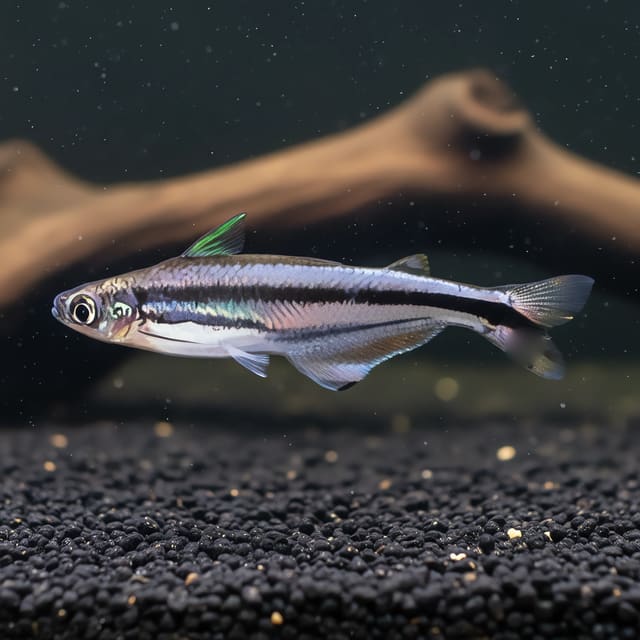
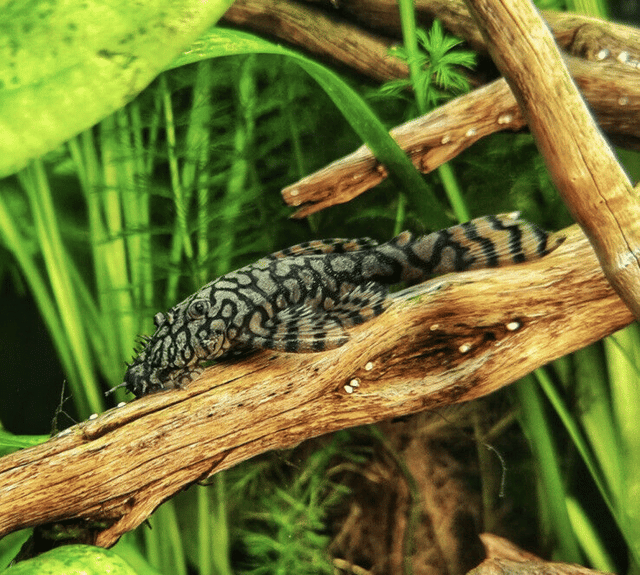
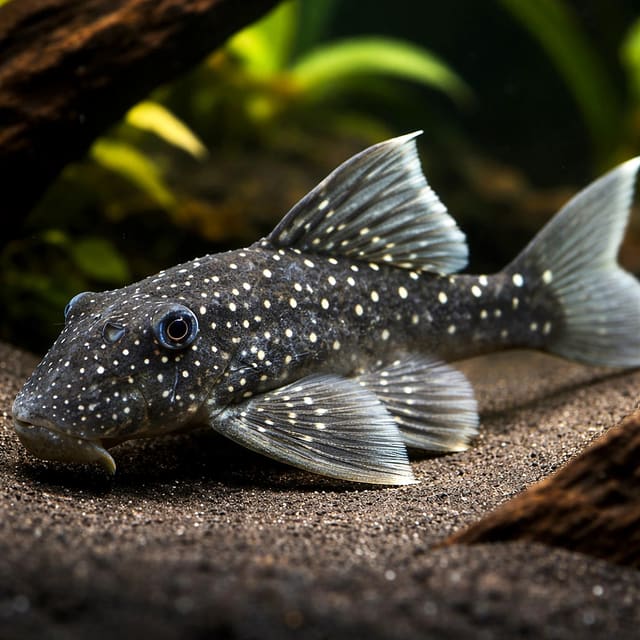
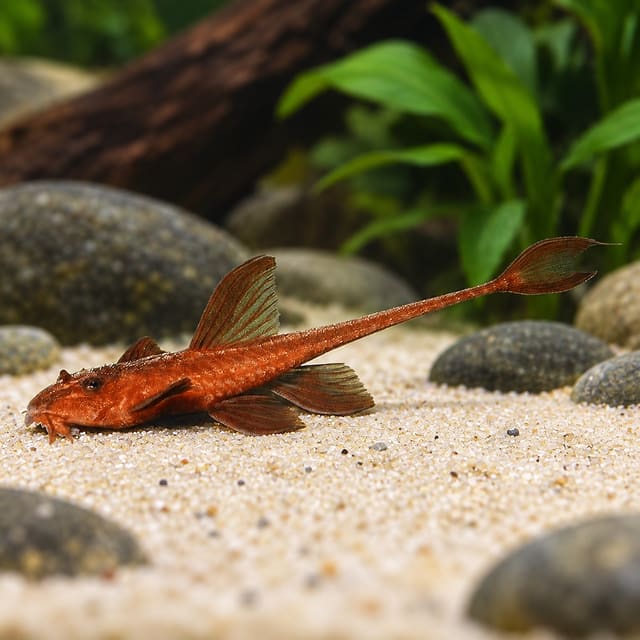
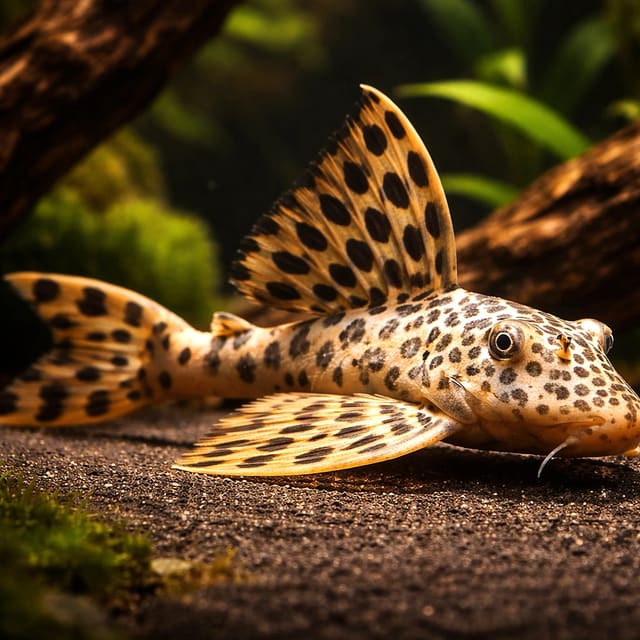
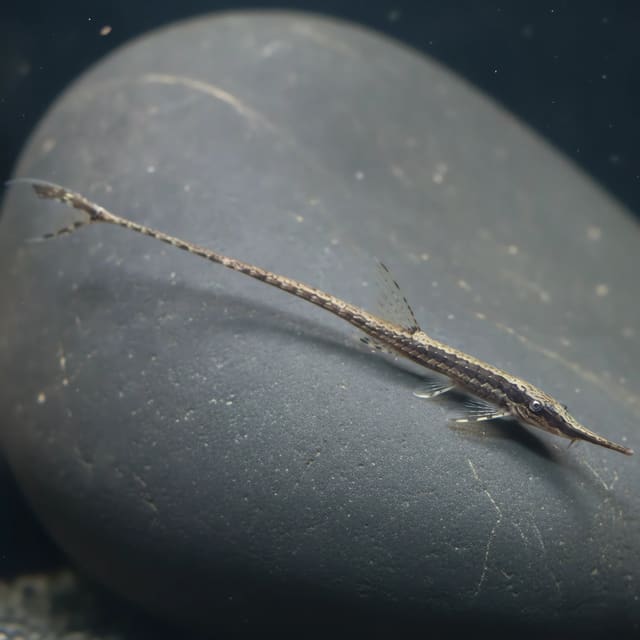
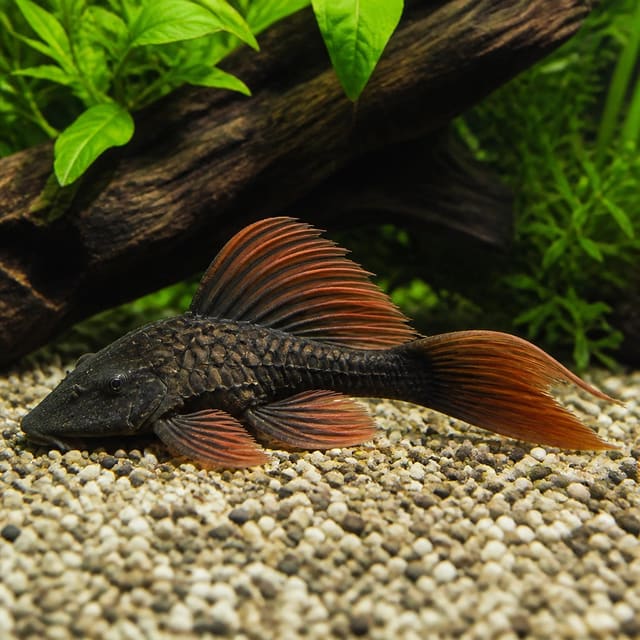
The gallery images are representative of this type of animal rather than photographs of the exact animal supplied, so colours can look slightly different from the live animal. Let the pictures introduce the fish, then use adult size, shelter, feeding access and companion choice to decide whether it belongs in your aquarium.
Seriously Fish gives an aquarium base of 120 × 45 cm, with dimensions of 120 × 45 × 38 cm and an approximate volume of 205 litres. Treat that as a published species housing reference, not a promise that every community will work in that volume. The amount of open floor, the shape of the shelters, the number of residents and their adult size all affect the usable space. A tank filled with large decorative rocks can have considerably less room for a catfish than its outer dimensions suggest.
Use the floor plan before choosing the ornaments. Leave routes wide enough for the adult to pass without scraping against wood, and make sure there is a place to turn around. A long fish with a prominent dorsal extension needs clearance above as well as alongside its resting place. Aim to see several possible routes across the lower aquarium rather than a single narrow corridor that another fish can control.
The 300 mm SL measurement in the Seriously Fish profile is a standard-length figure, excluding the tail; it is not directly interchangeable with FishBase's 31.8 cm total-length record. Both descriptions point towards planning for a sizeable animal. Avoid trying to derive a tail-inclusive length from the standard-length figure, and do not use a smaller dispatch grade as an adult space allowance.
Arrange smooth rocks, driftwood and roots to form shaded resting places. Soft substrate is the species guidance. Check the underside of each structure as carefully as the visible front: an attractive cave is of little use if its entrance is rough, its roof can shift or the fish has to wedge itself tightly inside. Secure the hardscape before adding livestock and leave access for cleaning around it.
Floating plants can soften the light, while other planting adds useful cover where it suits the aquarium. Plants are helpful rather than compulsory. If roots and shelters already offer protection, there is no need to pack every open area with foliage. Keep a balance between covered resting places and clear feeding areas where you can see that food is actually being taken.
Put at least one resting area where you can check the fish without dismantling its shelter. A sideways view into a cave or beneath a branch is often more useful than an exposed centrepiece position. This makes routine observation possible while respecting the fish's preference for privacy. Check also that you can remove a piece of wood safely if a fish ever needs to be caught.
A growing juvenile needs food access and protection appropriate to its present size, while its future aquarium must be ready for an adult. Those are separate requirements. A fish that is too small for existing large residents should not be placed with them merely because it will eventually grow larger. If a separate grow-on aquarium is necessary, it needs the same mature filtration and water-quality checks as the final home.
Reassess shelter openings as the fish develops. A familiar retreat can become too narrow, and a route behind equipment can become a trapping point. Make changes deliberately and retain other cover while replacing a shelter. This gives the fish somewhere secure to move to instead of suddenly leaving the whole lower aquarium exposed.
The species aquarium guidance in Seriously Fish is 22–27°C, pH 6.0–8.0 and hardness 3–25 dGH. FishBase separately lists environmental records of 23–27°C, pH 6.0–8.0 and 4–25 dH. The aquarium range is the practical reference used here; the environmental values describe the species record. Neither range asks you to move the aquarium repeatedly between its extremes.
Test your actual water before buying the fish. General hardness and pH describe different aspects of water chemistry, so a matching pH alone does not establish a suitable home. If you regularly mix or prepare replacement water, make that process reproducible. An aquarium is easier to manage when the water change routine produces stable conditions without repeated last-minute adjustments.
The water chemistry guide explains what the different tests tell you. Keep a record of your normal readings so that a later change has some context. A single result without a baseline can be difficult to interpret, especially if the fish is also settling into a new social environment.
| Check | Useful target or action |
|---|---|
| Temperature | 22–27°C species aquarium range; maintain a steady temperature with a reliable heater and thermometer. |
| pH and general hardness | pH 6.0–8.0 and 3–25 dGH in the species care reference. |
| Ammonia and nitrite | Both zero mg/l, following OATA's broad freshwater catfish welfare guidance. |
| Nitrate | OATA's group guidance is no more than 20 mg/l above the normal tap-water level. |
The RSPCA explains that fish waste produces ammonia, which a mature biological filter processes through nitrite towards nitrate. Clear-looking water is not proof that this process is working. Establish the aquarium and its filter before introducing the catfish, and check ammonia and nitrite rather than relying on the number of days since the tank was filled.
Use the first tropical aquarium guide if you are preparing a new system. A large filter does not instantly become a mature filter, and adding several fish at once increases the waste load before the bacterial population has adjusted. Build stocking gradually and test after meaningful changes to livestock, feeding or filtration.
Position the filter return so that water circulates through the aquarium and the surface moves, while shelters remain places where a fish can rest. Inspect corners and the spaces behind wood for accumulations of uneaten food. A quieter refuge should not become an inaccessible rubbish trap. Changes to hardscape sometimes change where waste collects, so check the layout again after moving a large piece.
OATA's broad catfish advice recommends a partial water change of 25% at least weekly and water testing at least weekly. Treat this as a routine starting point and respond to the actual aquarium's results. Stocking and feeding determine how quickly waste accumulates; a heavily occupied large-fish aquarium may need a different maintenance approach from a lightly stocked one.
Prepare replacement water with an appropriate conditioner for chlorine or chloramine and avoid abrupt changes in temperature or chemistry. Siphon accessible waste from the substrate and around shelters. You need not overturn every hiding place to make the aquarium look freshly arranged: the purpose is to remove accumulating waste while keeping the fish's home functional.
Check the filter for blockages. When reusable biological media needs cleaning, OATA advises a light rinse in aquarium water removed during the water change, rather than under the tap. Preserve the established biological filtration while restoring flow. If flow has fallen unexpectedly, look for the reason instead of simply adding more food or assuming the fish is being unusually shy.
Use the water matcher to compare measured water values as part of your stocking research. The result is a starting point for checking requirements; aquarium dimensions, feeding competition and individual behaviour still need your judgement.
A catfish living near the bottom is not a substitute for cleaning. Provide its own food rather than depending on what other fish leave behind. Seriously Fish describes an omnivorous diet accepting frozen, live and dried foods, with vegetable material also taken. A suitable complete sinking food makes it easier to deliver a balanced meal to the level where this fish is comfortable feeding.
Rotate appropriate foods instead of relying on one favourite item. The species profile mentions shelled peas and cucumber as examples of vegetable foods. Use these as part of variety alongside suitable prepared and aquatic foods, with portions that you can monitor. Remove leftovers rather than leaving a large piece hidden behind a cave indefinitely.
Match food size to the animal in front of you. A small juvenile and a large adult cannot be assumed to handle the same tablet or piece equally well. Watch whether the fish can take and swallow the food, and whether other residents remove it first. Food that disappears from the aquarium has not necessarily been eaten by the intended fish.
This species is notably secretive and nocturnal. Offer food when the aquarium is quiet and the bright main lights have gone off, allowing the fish an opportunity to emerge. There is no need to chase it out of cover or remove its refuge to make feeding visible. A discreet observation position is more useful than repeatedly approaching the glass with a bright light.
If daytime fish also gather around sinking food, distribute the meal so the catfish has a realistic chance to feed. Placing every item in one open corner can turn feeding into a race it is reluctant to join. A small amount near a familiar shelter, with enough space for the fish to emerge and turn, can make observation and access easier.
OATA's general catfish guidance is to feed once a day and give only what is eaten within a few minutes, while recognising that some grazing species take longer. Use that broad advice to control portions, then judge this fish by actual feeding and body condition. Do not keep adding food throughout the evening because the animal has stayed out of sight.
Learn the fish's normal response to its routine. A normally willing feeder that repeatedly misses meals needs attention, even if it is still hidden in its usual place. Check whether a tankmate is guarding the entrance, whether food has changed, and whether water readings remain normal. These observations are more useful than immediately offering larger quantities of increasingly rich foods.
Look for steady body condition and the ability to reach food without being driven away. Keep brief notes after changes to diet or companions so you can recognise a pattern. This is particularly helpful with a nocturnal animal: the everyday signs may be subtle, but they become much easier to interpret when you know what is normal for that individual.
Confirm that the aquarium is ready, the filter is running and suitable cover is available. Make sure someone will be at the delivery address to receive the parcel. Tropical Fish Co's delivery and Live Arrival Guarantee policy explains the current packing, receipt and claim requirements. The fish are hand-bagged with pure oxygen, packed in an insulated box and sent by a licensed live-animal courier, with a heat pack when weather requires one.
The confirmed delivery date and tracking information are sent by email. Arrange your day around receiving a live-animal parcel and inspecting it on arrival. For a Live Arrival Guarantee claim, keep a continuous unboxing video showing the parcel still sealed, its opening and the fish still inside the sealed bag; the policy also requires someone to receive the parcel and inspection on the day it arrives. Contact the team that day with your order number if something is wrong.
Follow the current store acclimatisation guidance. The store policy advises floating the bag for 20–30 minutes to equalise temperature and acclimatising slowly. Keep transport water out of the aquarium when transferring the fish. Prepare the route and equipment beforehand so that a large, spiny catfish is not left waiting while you search for a suitable container.
Catfish require care during handling because their spines can catch in nets. Plan a calm transfer using equipment suitable for the fish's size; a smooth rigid container can help avoid entanglement. Do not grab the fish or try to pull a snagged spine through netting. If it becomes caught, keep it supported in water and seek help with a controlled release.
The same planning applies when moving an established adult. Clear a route through the aquarium and avoid pushing it into a narrow gap behind wood. Remove obstacles carefully if necessary, watching where the fish is before lifting anything. Handling should be purposeful and brief; there is no husbandry benefit in taking a fish out merely to inspect its sex.
Allow the fish to find shelter after introduction. Look for normal breathing and controlled movement, then give it a quiet period. Repeatedly lifting its hiding place can make it harder to settle and prevents you from learning its ordinary behaviour. Check it when the aquarium is calm and again during its feeding routine.
OATA lists changes in breathing, swimming, colour, appetite and body condition among useful warning signs. A catfish resting under wood can be behaving normally; a change from its own normal pattern is more informative than comparing it with an active shoaling fish. Persistent rapid breathing, damaged fins or repeated missed meals need investigation.
Test the water promptly if something changes, check filter operation and review recent events such as a new fish, a large feed or a disturbed shelter. Contact the retailer for guidance if you are concerned. Avoid guessing at a disease or adding a treatment solely because a secretive fish has remained hidden. Water results, photographs taken without disturbing it and a clear account of the change will help make the advice useful.
Seriously Fish describes this as unsuitable for an ordinary general community because of its eventual size, while noting that it can be peaceful with fish it cannot swallow in a larger community. That distinction matters. A calm manner does not make a very small fish safe, and a large aquarium does not remove the need to match the actual residents.
Larger barbs, characins, cichlids and Loricariids are groups named in the species profile as possible companions. These are conditional examples, not a shopping list. Within each group, compare adult size, temperament, water needs and feeding habits. A vigorous individual that harasses the catfish or monopolises its shelter is unsuitable regardless of the category it belongs to.
Avoid fish that nip the long dorsal filament. Fin damage is a clear reason to reassess a combination, but intervene before repeated harassment becomes an established pattern. Watch encounters near shelters and at feeding time as well as open-water swimming. A tank can look quiet during the day while competition develops around the lower aquarium after dark.
The species profile says groups can be maintained in a suitably sized aquarium and describes this fish as less territorial than many other Synodontis. It does not establish a fixed minimum group number. Plan numbers around adult space, independent shelters and the ability to feed and observe every individual, with more room than the basic single-species housing reference when several large fish share it.
Several entrances close together are not necessarily several independent refuges. Look at whether a fish can leave one shelter and reach another without passing directly in front of a dominant resident. Spread feeding access as well as hiding places, and retain a practical way to separate fish if a combination fails.
Assess compatibility again as the animals grow. A combination that works while every fish is small may become crowded, and a companion that was safely sized at introduction may no longer be so beside an adult catfish. Long-term suitability depends on the changing aquarium, not simply on whether the first introduction was uneventful.
FishBase records 31.8 cm total length for male/unsexed fish. Total length includes the tail. Seriously Fish separately gives 300 mm standard length, which excludes the tail. Plan for a large adult without treating those differently measured figures as interchangeable.
Seriously Fish gives a 120 × 45 cm base and approximately 205 litres as its species housing reference. A large community or several catfish needs more usable room, suitable shelters and enough space for adults to turn and feed.
The species can be maintained in a group in a suitably large aquarium, but there is no fixed minimum group recommendation. Choose numbers around adult space, independent refuges and feeding access, and be able to separate fish if necessary.
Its large adult size and nocturnal feeding make preparation especially important. A keeper needs mature filtration, suitable adult housing and confidence checking water quality and feeding access. A small first community aquarium is unsuitable.
Provide a varied diet of suitable sinking prepared foods, frozen or live aquatic foods and vegetable material. Offer food when the aquarium is quiet, watch that the catfish receives its share and remove uneaten food.
Seriously Fish gives aquarium guidance of 22–27°C, pH 6.0–8.0 and hardness 3–25 dGH. Maintain stable conditions within appropriate guidance, with ammonia and nitrite both zero mg/l.
It can be peaceful with fish it cannot swallow, but very small companions are at risk. Larger barbs, characins, cichlids and Loricariids are conditional possibilities in a spacious aquarium. Avoid dorsal-filament nippers and watch competition around shelters.
Tropical Fish Co hand-bags fish with pure oxygen and uses insulated packaging and a licensed live-animal courier, with a heat pack when weather requires it. Be present for the confirmed delivery and inspect the parcel that day. A Live Arrival Guarantee claim needs continuous video of the sealed parcel being opened and the fish still in its sealed bag, plus same-day contact and your order number.
FishBase: Synodontis decorus provides the species identity, distribution and labelled maximum-length record. Seriously Fish: Clown Synodontis provides the aquarium housing, water, diet and behaviour guidance.
OATA's freshwater catfish care sheet supports the general maintenance and welfare advice. RSPCA aquarium environment advice explains why mature, maintained filtration matters for all aquarium fish.
No reviews for this item yet. Bought one? Honest reviews only, good or bad.
What customers say about ordering from us
I have a small group of long finned mountain minnows. So was delighted to be able to order ten of this variety to increase the genetics in my tank . The ones I recieved are healthy but it’s to early to give a verdict on wether they are of a long finned type since they are small currently.
Gordon Walker · 23 Sept 2026
100% success travel and "installation". Pleased with quality of purchase. The Siamese fighter a bit "shy" so have not yet seen him at his best yet but looking good. Happy customer. GG
George E Garratt · 21 Sept 2026
Reviews of our shop, collected by Judge.me, an independent third-party review collector. Newest first.