Featherfin Synodontis (Synodontis eupterus)
22–26°C · pH 6.2–7.5
£6.99

One unsexed Cuckoo Catfish per quantity in the selected size option. A social Synodontis multipunctatus for a group of at least five in a spacious, hard-water African aquarium.
Adult size is the maximum length this species reaches at full maturity (scientific sources). The livestock you receive will be younger and smaller — pick a size above for the actual shipping size. Product-photo provenance and any image-specific limitations are stated on the listing.
Synodontis multipunctatus
Confirm your email, then we’ll send an availability message for this exact item if it returns within 180 days.
This request is only for this product—no newsletter or other promotions. A mail-provider retry may very rarely duplicate the same availability message. Unconfirmed addresses are removed after 48 hours. See our privacy policy.
One unsexed Cuckoo Catfish per quantity in the selected size option. A social Synodontis multipunctatus for a group of at least five in a spacious, hard-water African aquarium.
Adult size is the maximum length this species reaches at full maturity (scientific sources). The livestock you receive will be younger and smaller — pick a size above for the actual shipping size. Product-photo provenance and any image-specific limitations are stated on the listing.
Maintain these water conditions for optimal health and vibrant colors
One quantity buys one Cuckoo Catfish in the size option selected. This product is Synodontis multipunctatus, a spotted Lake Tanganyika catfish also called the Cuckoo Squeaker. It is a social, robust bottom-dweller for a spacious, mature aquarium with hard, alkaline water, strong filtration and secure retreats.
The fish are sold individually, not as a pair or pre-formed group. Choose the dispatch size from the live selector and increase the basket quantity only after planning enough adult space for a social group. The selected option is the approximate size supplied, not the fish's final length.
| Accepted species | Synodontis multipunctatus Boulenger, 1898 |
|---|---|
| What one quantity buys | One unsexed fish in the size option selected |
| Adult planning | FishBase records 27.5 cm total length, so buy for a large adult rather than the juvenile dispatch size |
| Aquarium | A 150 cm or longer aquarium for a group of at least five; use more room with cichlids |
| Temperature | Maintain a stable 23-27°C; around 24-25°C sits within the overlapping published ranges |
| Water | Hard, alkaline freshwater; aim around pH 7.8-8.8 and 15-25 dGH |
| Care level | Moderate |
| Temperament | Social, active and robust; very small fish, fry and timid bottom-dwellers are at risk |
| Diet | Omnivorous benthic feeder; sinking prepared foods plus varied frozen foods and some vegetable matter |
Synodontis multipunctatus is the currently accepted scientific name. Older aquarium references sometimes use Synodontis multipunctata, but Eschmeyer's Catalog of Fishes records the masculine ending multipunctatus as valid. The species belongs to Mochokidae, the squeaker and upside-down catfish family, and is endemic to Lake Tanganyika in eastern-central Africa.
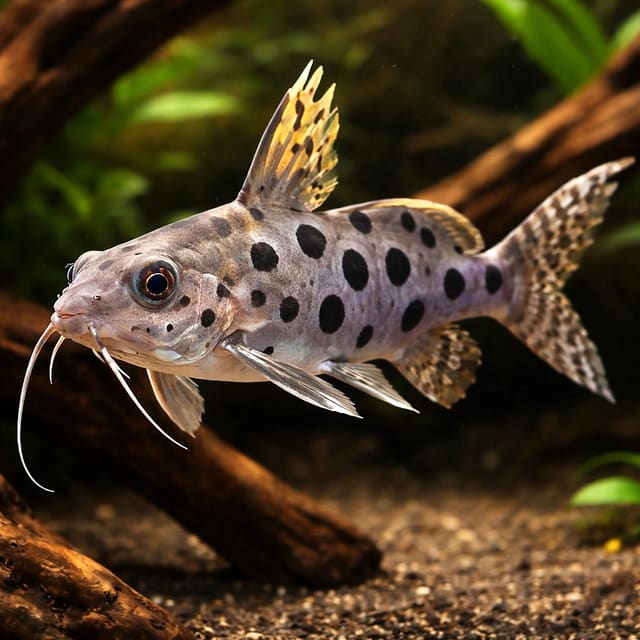
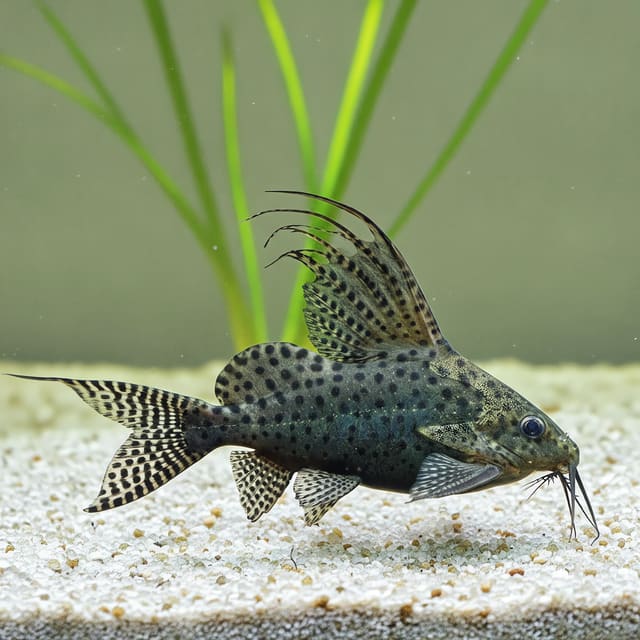
A Cuckoo Catfish has a pale cream, tan or golden body scattered with dark spots. The fins are darker with contrasting pale edging, and several pairs of sensory barbels help it locate food around rocks and across the substrate. Pattern size, ground colour and fin markings vary naturally with age, condition and the individual fish.
FishBase records a maximum of 27.5 cm total length. A juvenile should not be purchased on the assumption that it will remain small. Aquarium footprint, filtration and companion choice should be suitable for the larger published species figure.
The common name comes from an unusual reproductive strategy. During the spawning of mouthbrooding cichlids, the catfish can place its eggs among the cichlid eggs; the host may then collect and brood them. Peer-reviewed research describes this as obligate brood parasitism. It is fascinating natural behaviour, but it can reduce the survival of cichlid broods in an aquarium.
Use a mature aquarium with generous floor space. Specialist species guidance recommends an aquarium at least 150 cm long for a group of at least five. A still larger footprint is prudent when adult cichlids share the space. Length alone is not enough: the aquarium also needs enough width, water volume, filtration capacity and separate retreats for the planned stock.
Build stable rockwork with several caves, overhangs and shaded passages, but leave open substrate where the fish can forage together. Secure rocks before adding livestock because a powerful catfish can squeeze into gaps and disturb unstable structures. Fine sand or smooth rounded gravel helps protect the sensory barbels; avoid sharp substrate and rough-edged decor.
This is a hard-water Lake Tanganyika species, not a general soft-water community catfish. FishBase records 21-25°C and 15-35 dGH, while specialist UK aquarium guidance gives 24-27°C, pH 7.8-8.8 and 15-25 dGH. A stable temperature around 24-25°C and hard, alkaline water therefore provide a sensible overlap for long-term maintenance.
Do not raise pH with occasional chemical additions while leaving hardness and alkalinity unstable. Test pH, GH and KH, use a suitable mineral source where necessary, and make changes gradually. Match replacement water closely during water changes. Clean, consistent water is more important than repeatedly chasing the top or bottom of a published range.
Cuckoo Catfish are gregarious and normally show more confident behaviour in company. Plan for a group of at least five in an aquarium at least 150 cm long, with enough caves, floor space and filtration for every fish. A pair alone can focus competition between two fish; a properly planned group allows more natural movement and interaction.
They are robust rather than delicate. Expect activity around feeding time, at dusk and after the aquarium becomes quiet. Juveniles may spend their first days hidden, then emerge more regularly once they recognise the feeding routine. They are not algae eaters or a substitute for aquarium maintenance, and they must receive food deliberately rather than survive on leftovers.
| More suitable choices | Use caution | Avoid |
|---|---|---|
| Robust Tanganyikan cichlids of an appropriate adult size | Breeding mouthbrooders when fry survival matters | Tiny fish, fry and animals small enough to swallow |
| Similarly sized hard-water African cichlids | Long-finned or slow fish that may be disturbed at night | Delicate soft-water community species |
| Sturdy fish that share the same temperature and mineral requirements | Other bottom-dwellers competing for the same caves and food | Small aquariums without separate retreats |
Compatibility depends on adult size, water chemistry, feeding speed and available territory, not just an "African cichlid" label. Watch every introduction. Repeated hiding, damaged barbels or fins, weight loss and exclusion from food are signs that the arrangement needs to change.
Browse the Synodontis catfish collection to compare other species, but do not treat Cuckoo Catfish, Dwarf Cuckoo Catfish and hybrid Synodontis as interchangeable. Check the accepted scientific name and expected adult size on each product.
Offer a varied omnivorous diet that reaches the bottom. Quality sinking catfish pellets or tablets can form the staple, supported by frozen foods such as bloodworm, mysis, Artemia and mosquito larvae. Add modest vegetable content through suitable prepared foods or occasional pieces of aquarium-safe courgette, cucumber or shelled pea.
Feed measured portions after the lights dim if faster cichlids intercept food in the water column. Observe the catfish eating and remove uneaten food. Their appetite and solid build can produce a substantial waste load, so overfeeding quickly becomes a filtration and nitrate problem.
The selector may offer several dispatch-size bands. Availability and price are shown live beside each option. Every option is the same accepted species and every quantity adds one fish; the size choice does not change the sale unit or guarantee sex.
| Listed dispatch size | Planning note |
|---|---|
| 2.5-3 cm | Small juvenile requiring careful feeding and compatible companions |
| 3-4 cm | Juvenile with slightly more presence in a stocked aquarium |
| 4-5 cm | More visible juvenile for a suitably sized established layout |
| 5-7 cm | Larger young fish; check current availability in the selector |
| 7-8 cm | Larger specimen requiring adult-scale space from arrival |
Prepare the aquarium before delivery, with the filter mature and the water already hard, alkaline and stable. On arrival, inspect the fish and bag, equalise temperature and acclimate gradually to avoid a rapid change in mineral content. Keep the aquarium dim, provide immediate cover and offer the first small sinking feed after the fish has settled.
The dorsal and pectoral fin spines can catch in coarse netting. Move the fish slowly with a suitable fine, soft net or rigid container, keep handling brief and protect the barbels from dry or rough surfaces. Never pull a snagged spine through a net.
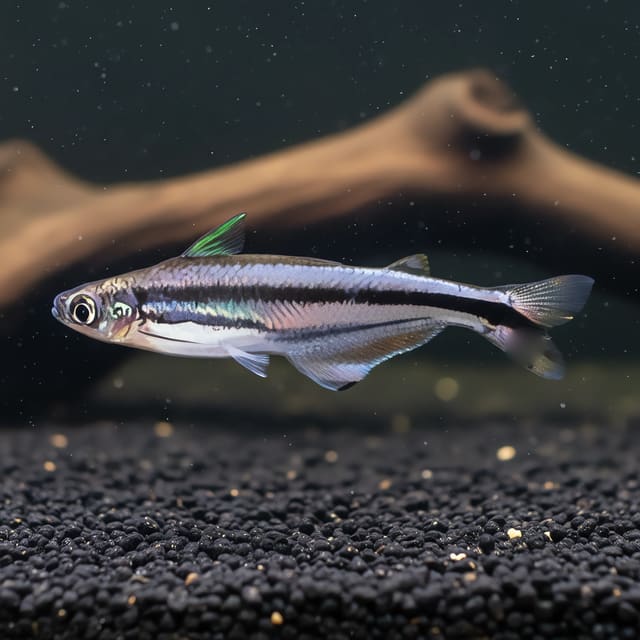
Read the current specialist delivery and Live Arrival Guarantee terms before ordering so the receiving and evidence requirements are understood. The gallery contains a preserved original reference plus representative aquarium views. They show the expected species pattern and body shape, but they are not photographs of the exact individual selected for an order. An image containing two fish illustrates social appearance; the product is still sold as one fish per quantity.
No reviews for this item yet. Bought one? Honest reviews only, good or bad.
What customers say about ordering from us
I have a small group of long finned mountain minnows. So was delighted to be able to order ten of this variety to increase the genetics in my tank . The ones I recieved are healthy but it’s to early to give a verdict on wether they are of a long finned type since they are small currently.
Gordon Walker · 23 Sept 2026
100% success travel and "installation". Pleased with quality of purchase. The Siamese fighter a bit "shy" so have not yet seen him at his best yet but looking good. Happy customer. GG
George E Garratt · 21 Sept 2026
Reviews of our shop, collected by Judge.me, an independent third-party review collector. Newest first.