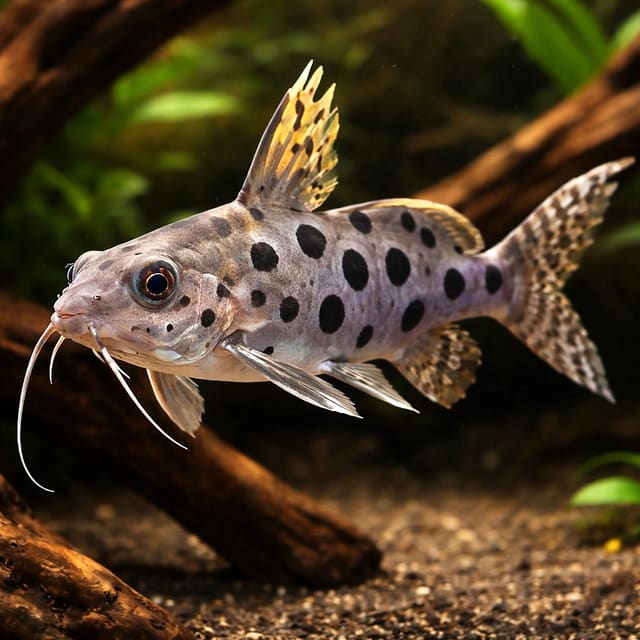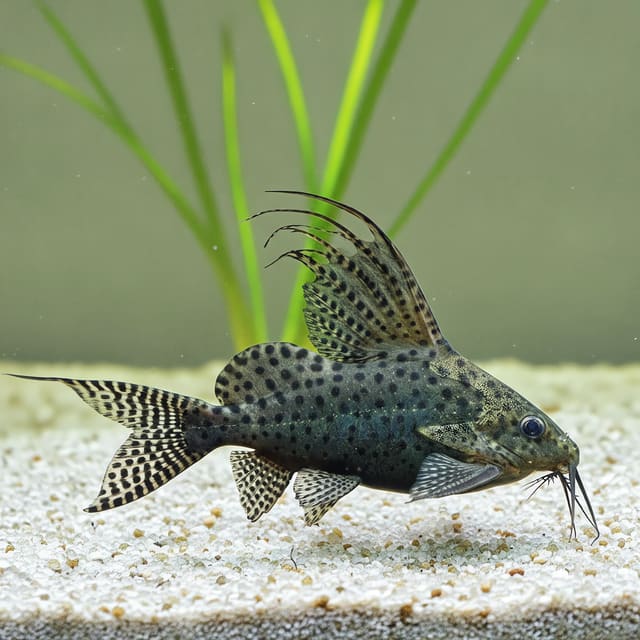
Featherfin Synodontis (Synodontis eupterus)
22–26°C · pH 6.2–7.5
£6.99
Dark form of the cuckoo-type Synodontis from Lake Tanganyika. A social, 15 cm brood-parasite catfish for hard, alkaline tanks of 200 L+.
Adult size is the maximum length this species reaches at full maturity (scientific sources). The livestock you receive will be younger and smaller. Product-photo provenance and any image-specific limitations are stated on the listing.
Synodontis multipunctatus
Shoaling fish: kept in a group they feel safer, stay calmer and show their best colour.
Confirm your email, then we’ll send an availability message for this exact item if it returns within 180 days.
This request is only for this product—no newsletter or other promotions. A mail-provider retry may very rarely duplicate the same availability message. Unconfirmed addresses are removed after 48 hours. See our privacy policy.
Dark form of the cuckoo-type Synodontis from Lake Tanganyika. A social, 15 cm brood-parasite catfish for hard, alkaline tanks of 200 L+.
Adult size is the maximum length this species reaches at full maturity (scientific sources). The livestock you receive will be younger and smaller. Product-photo provenance and any image-specific limitations are stated on the listing.
Maintain these water conditions for optimal health and vibrant colors
Few aquarium fish reproduce quite like this one. Synodontis multip. sp. black — the dark form of the cuckoo-type Synodontis from Lake Tanganyika — is a brood parasite: at spawning time it slips its eggs in among those of mouthbrooding cichlids, which then incubate the catfish fry as their own. Watching that strategy unfold in a home aquarium is one of the hobby's genuine spectacles.
Away from the drama, this is a sociable bottom-dwelling member of the Mochokidae family that reaches about 15 cm and can live a remarkable 15 years. It belongs in hard, alkaline, Tanganyikan-style water — pH 7.5–9.0, hardness 10–25 dGH, temperature 24–27 °C — and needs an aquarium of at least 200 litres. Crucially, it is a group animal: keep three or more, because singletons miss out on the social behaviour that defines the species.
Stocking decisions are refreshingly clear-cut. Tanganyikan cichlids and other Synodontis make natural companions; soft-water species and small fish should be kept away from a semi-aggressive catfish of this size. Mealtimes are easy for an adaptable omnivore — sinking pellets form the staple, rounded out with frozen and live foods. Two practical notes follow from the biology. First, that 15-year lifespan makes this a genuinely long-term stocking decision, so plan the tank around the adult group rather than the juveniles in the bag. Second, the brood-parasite behaviour only has a stage if mouthbrooding cichlids share the water, which is why Tanganyikan communities get far more from this catfish than species-only setups ever will.
This dark variant adds a bold, shadowy accent along the floor of a Rift Lake display, and pairing it with mouthbrooding Tanganyikan cichlids gives you a genuine chance of seeing its famous cuckoo spawning behaviour first-hand. Order a trio or more; every fish is covered by our live arrival guarantee and travels by licensed live-animal courier.
No reviews for this item yet. Bought one? Honest reviews only, good or bad.
What customers say about ordering from us
Easy website plenty of info on fish your buying great to pick a time slot
TRACEY DURRANT · 7 Oct 2026
Got some lovely fish thank you
Kevin Mackie · 7 Oct 2026
Reviews of our shop, collected by Judge.me, an independent third-party review collector. Newest first.