Moderate
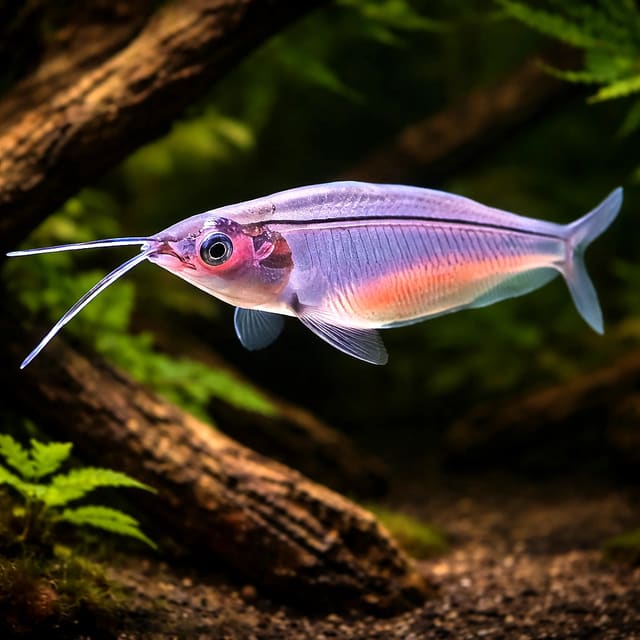
Glass catfish (Kryptopterus bicirrhis)
22–26°C · pH 6–7 · 100L
£9.29

Dwarf Marbled Catfish (Microglanis poecilus) is a South American catfish from the Essequibo basin, French Guiana and Suriname that reaches 6.9 cm standard length. It suits keepers with a mature filtered aquarium who can plan each fish individually; OATA’s freshwater-catfish group guidance is 22–27°C, pH 6.0–8.0 and 4–18°dH. Sold individually at 3–4 cm.
Adult size is the maximum length this species reaches at full maturity (scientific sources). The livestock you receive will be younger and smaller. Product-photo provenance and any image-specific limitations are stated on the listing.
Microglanis poecilus
Dwarf Marbled Catfish (Microglanis poecilus) is a South American catfish from the Essequibo basin, French Guiana and Suriname that reaches 6.9 cm standard length. It suits keepers with a mature filtered aquarium who can plan each fish individually; OATA’s freshwater-catfish group guidance is 22–27°C, pH 6.0–8.0 and 4–18°dH. Sold individually at 3–4 cm.
Adult size is the maximum length this species reaches at full maturity (scientific sources). The livestock you receive will be younger and smaller. Product-photo provenance and any image-specific limitations are stated on the listing.
Maintain these water conditions for optimal health and vibrant colors
Dwarf Marbled Catfish (Microglanis poecilus) is a tropical freshwater catfish from South America. FishBase records it in the family Pseudopimelodidae, with a distribution covering the Essequibo River basin in Guyana and French Guiana, and Suriname. It reaches a maximum recorded length of 6.9 cm standard length. This fish suits a keeper who can prepare a mature filtered aquarium, maintain stable tropical conditions and organise the lower part of the aquarium around its demersal way of life.
FishBase records the wild fish in creeks with little current, living on bottoms covered with decomposing leaves. In the aquarium, provide usable lower-level space and sheltered positions without blocking circulation, feeding access or routine cleaning. Plan around the adult measurement rather than the 3–4 cm size at which the animal is supplied.
| Suits | Not suited to |
|---|---|
| A mature, filtered tropical freshwater aquarium | An aquarium without an established biological filter |
| Water maintained within 22–27°C, pH 6.0–8.0 and 4–18°dH | Water with detectable ammonia or nitrite |
| A layout with usable bottom space and accessible cover | A layout that blocks feeding, inspection or waste removal |
| A keeper planning around 6.9 cm standard length | A plan based only on the 3–4 cm supplied size |
OATA’s freshwater-catfish sheet gives 22–27°C, pH 6.0–8.0, 4–18°dH and an aquarium reference of at least 80 litres for a shoal of smaller species such as Corydoras or for smaller pleco species. These are group-level values, not a species-specific optimum or an individual minimum for M. poecilus. Use adult size, aquarium dimensions, filtration, stocking and floor layout together rather than approving an aquarium from litres alone.
This is one named South American species rather than a general label for every patterned catfish. FishBase places its recorded distribution in the Essequibo River basin of Guyana and French Guiana, and in Suriname. At genus level, Wikipedia describes Microglanis across a wider part of South America, from the Guianas and Venezuela through the Orinoco and Amazon regions and south to the Río de La Plata basin.
One purchase supplies one animal. It is supplied at 3–4 cm; this is its dispatch size, not its adult measurement. Plan the aquarium around the maximum recorded length of 6.9 cm standard length.
Sex is guaranteed only when the selected option explicitly states male or female. This Dwarf Marbled Catfish listing has no sex-guaranteed option.
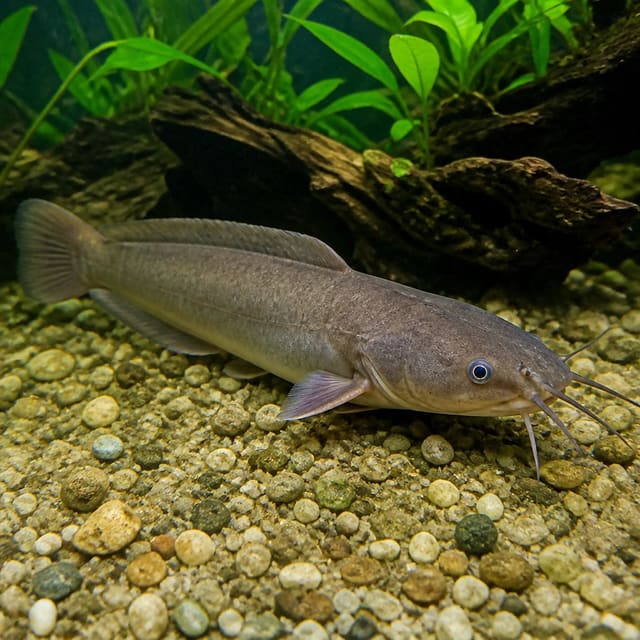
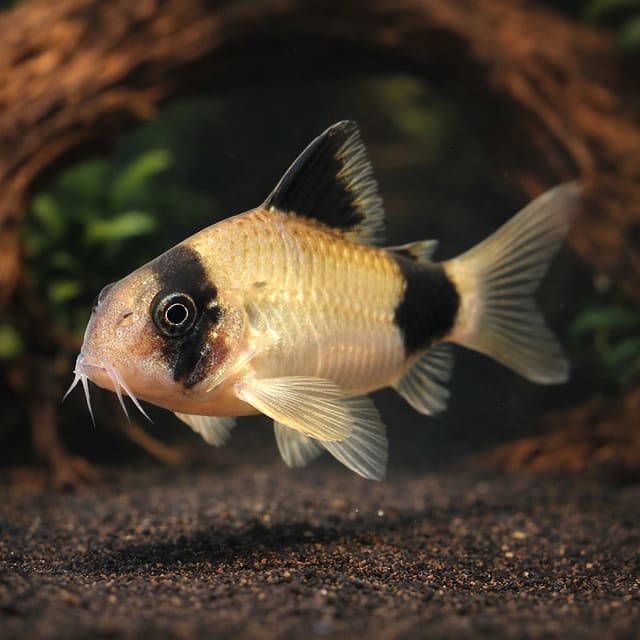
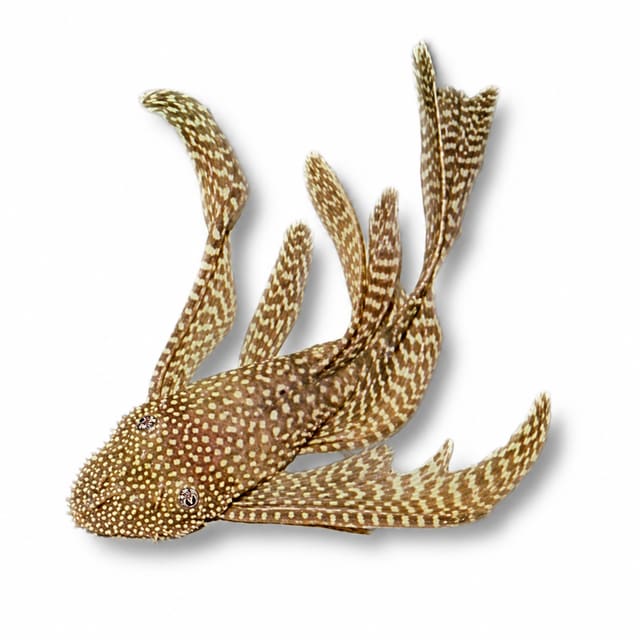
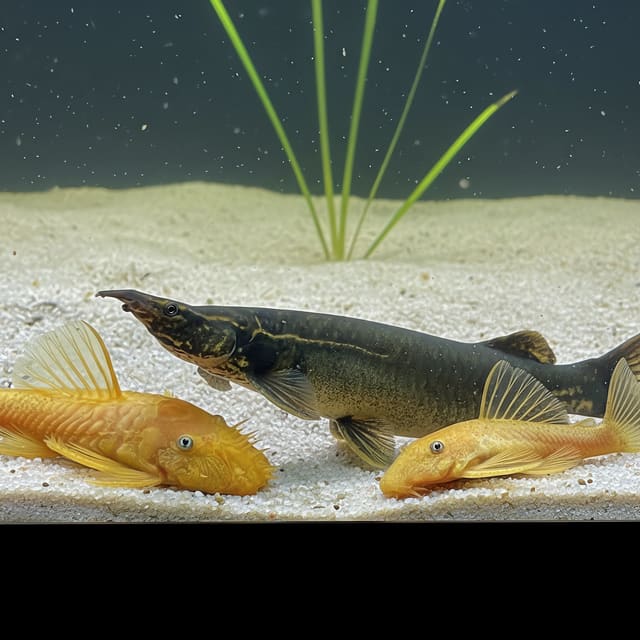
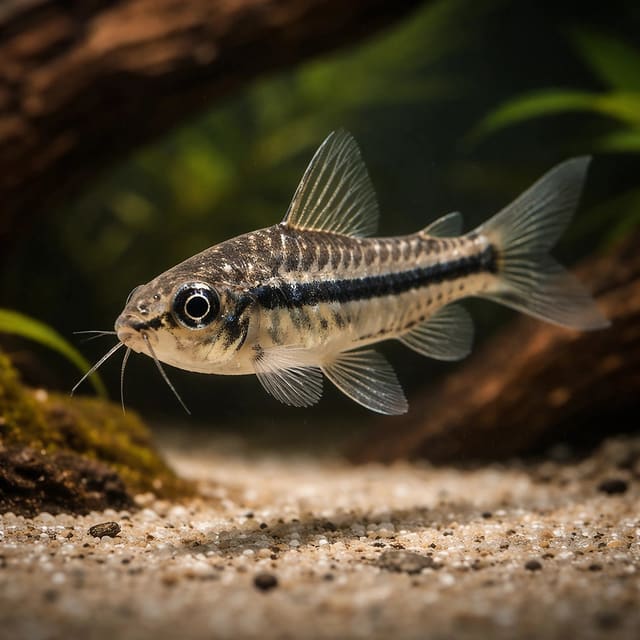
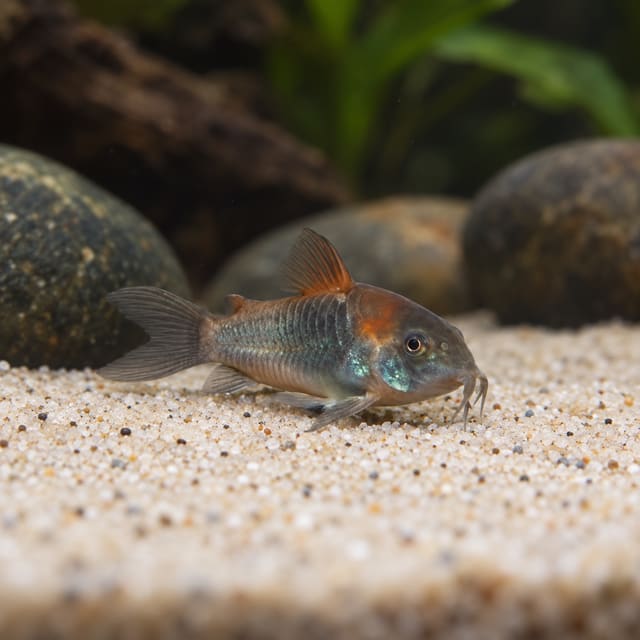
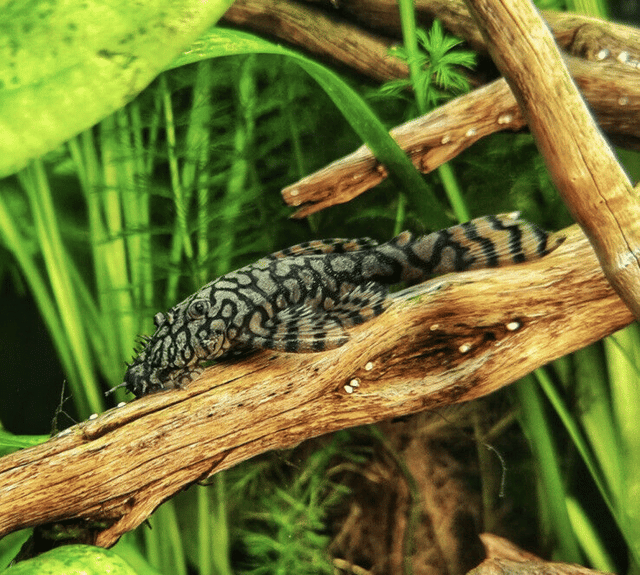
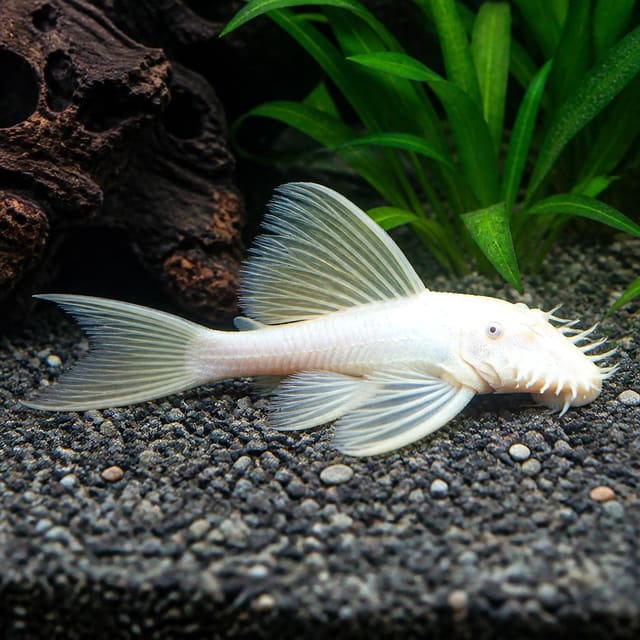
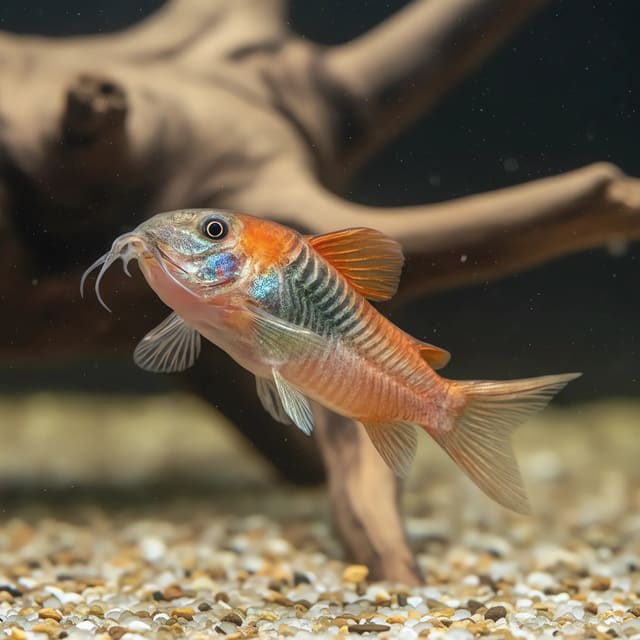
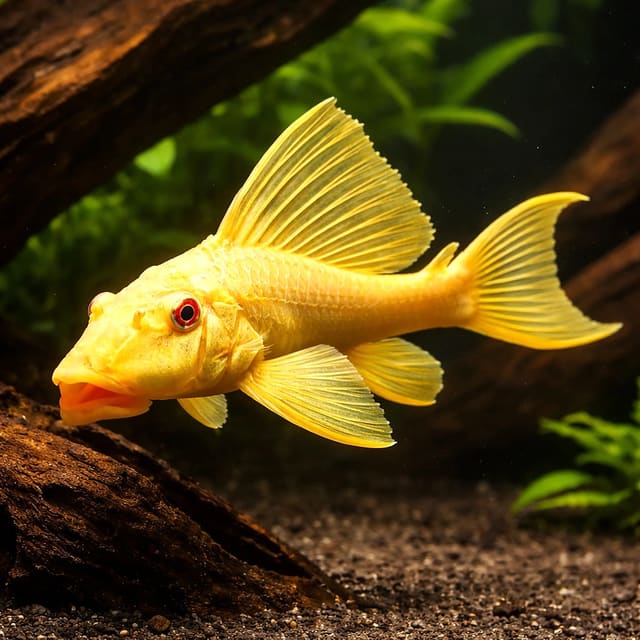
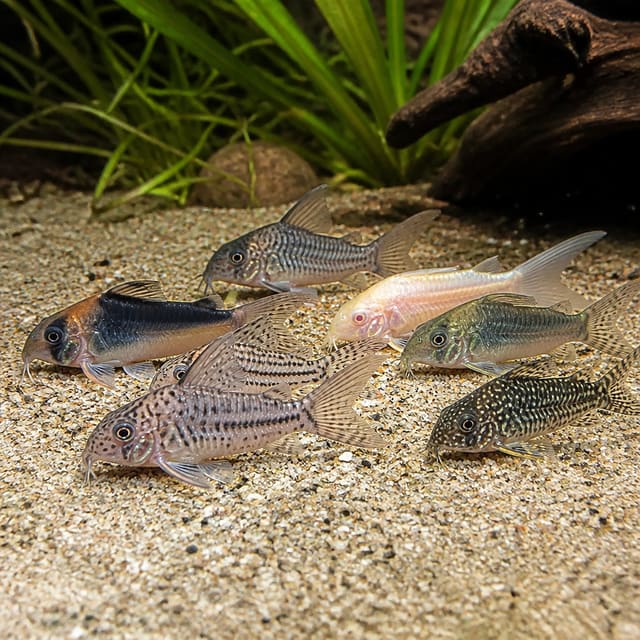
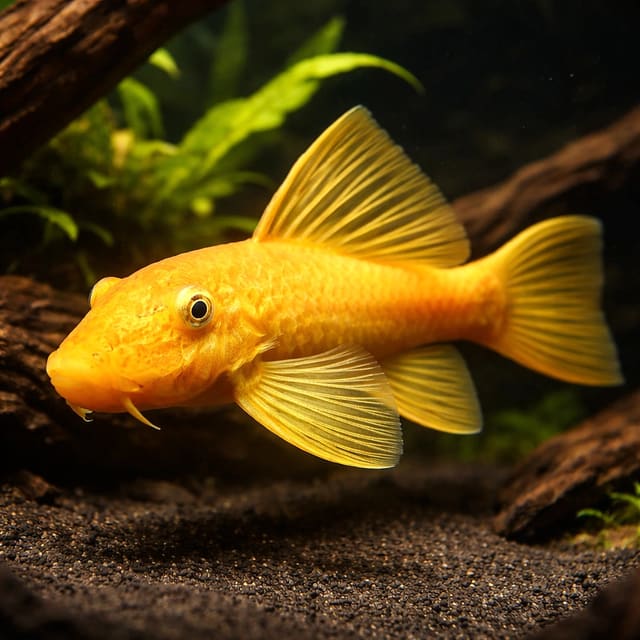
The gallery images are representative of this type of animal rather than photographs of the exact animal supplied, so colours can look slightly different from the live animal.
Read the delivery and Live Arrival Guarantee policy for the applicable dispatch, delivery and claim terms. Prepare the aquarium before arranging the animal’s journey; filtration, water testing and suitable cover should already be in place.
Start with the largest practical aquarium whose dimensions suit the intended community. OATA recommends at least 80 litres for a shoal of smaller species such as Corydoras or for smaller pleco species, but that is a broad planning reference rather than a dedicated minimum for one Dwarf Marbled Catfish. A litre figure cannot account for the number of other fish, their adult sizes, the floor area occupied by decoration or the filter’s established capacity.
Because FishBase classifies this fish as demersal, compare aquariums by their usable bottom dimensions as well as volume. Two aquariums can hold similar amounts of water while offering very different floor space. A taller aquarium may add water volume without creating much extra room around shelters and feeding points.
OATA notes that smaller or shy catfish benefit from plant cover and that many catfish appreciate wood, pots or caves. Arrange those features as functional cover, not merely decoration. If another bottom-dwelling fish already controls every sheltered position, add space and redistribute cover before introducing another animal.
A useful comparison is an open-bottom aquarium against one filled with a single large ornament. The second may look more sheltered, yet it can leave fewer feeding routes and less cleanable floor. Choose several accessible features instead of creating one enclosed area that cannot be inspected.
Browse the Catfish & Plecos collection to compare adult sizes and body forms, but assess the needs of each named fish separately.
A working biological filter is essential. The RSPCA explains that fish release toxic ammonia; beneficial bacteria in a functioning filter convert it to nitrite, which is also toxic, and then to the safer nitrate. A filter therefore needs to be established and maintained, not simply switched on when the fish arrives.
Prepare the aquarium early enough to demonstrate stable waste processing through testing. OATA’s target is 0 mg/l ammonia and 0 mg/l nitrite. If either test is above zero, pause livestock additions and investigate filtration, stocking, feeding and recent maintenance before proceeding.
Clear water can still contain toxic dissolved waste. Conversely, established biological media may look stained while continuing to perform its function. Judge the system through operation and test results rather than appearance alone.
Use our first tropical aquarium guide to organise setup and maturation before livestock is introduced. Overstocking or adding too many fish quickly can cause new tank syndrome because the bacterial population has not expanded sufficiently to process the increased waste.
If power loss, blockage or cleaning interrupts the filter, test the water and watch the aquarium closely. Restore normal flow promptly, but do not compensate by adding more food. Extra food creates extra waste at the point when filtration may be least able to process it.
Use 22–27°C, pH 6.0–8.0 and 4–18°dH as OATA’s freshwater-catfish water guidance. Carbonate hardness is given as 3–15°dKH. Select a stable point within those ranges that also suits every other animal in the aquarium; repeated adjustment is less useful than maintaining compatible conditions consistently.
Ammonia and nitrite should remain at 0 mg/l. Nitrate should not exceed 20 mg/l above the normal tap-water level. That target is an increase over the source water, not a universal total.
| Tap-water nitrate | OATA comparison point |
|---|---|
| 5 mg/l | Up to 25 mg/l in the aquarium |
| 10 mg/l | Up to 30 mg/l in the aquarium |
| 20 mg/l | Up to 40 mg/l in the aquarium |
These examples add 20 mg/l to the measured tap-water result; they do not replace regular testing or justify allowing waste to accumulate. Record both values with the date so changes can be compared accurately.
Use the water chemistry guide to understand what each test measures, then enter real aquarium values into the water matcher. Test at least weekly and also after a filter interruption, unexpectedly heavy feeding or a significant stocking change.
Catfish vary greatly in their diets, so use this species' dietary needs rather than a generic catfish diet. OATA’s practical instruction for the group is to provide an appropriate sinking food so the intended fish receives its nutrition rather than relying on scraps left by other inhabitants.
Offer only what can be eaten within a few minutes, once a day. Some grazing catfish may require up to 30 minutes, but use that longer window only for food and behaviour suited to a grazing fish. Remove excess food before it breaks down and increases the waste load on the filter.
A disappearing portion is not automatically a successful meal. Another fish may have eaten it, or it may have entered a space where it will decay. Observe the route from placement to consumption and adjust the next portion from what you actually saw.
If food remains after several minutes, reduce the next serving rather than extending every meal. Check whether the pieces are too large, whether another food is being given elsewhere or whether water conditions have changed. Continued loss of feeding interest belongs in the health-check process, not in a cycle of adding larger portions.
Every extra portion becomes either fish growth or aquarium waste. A small aquarium, recent livestock increase or interrupted filter gives less margin for overfeeding. Keep the feeding routine steady enough that weekly tests reveal meaningful trends, and make only one measured adjustment at a time.
Complete the aquarium before the animal travels. Confirm that the filter is working, water temperature is stable, ammonia and nitrite are both 0 mg/l, and the intended bottom area contains usable cover. Decide where sinking food will be placed so the first meal is controlled rather than improvised.
OATA advises increasing aquarium populations slowly because beneficial bacteria need to increase whenever fish numbers and feeding rise. Treat one new fish as an additional biological load even when it is small. Its 3–4 cm dispatch size does not make waste processing or compatibility checks optional.
| Checkpoint | Action |
|---|---|
| Before introduction | Test ammonia and nitrite; both should be 0 mg/l |
| After introduction | Keep the aquarium routine steady and confirm equipment operation |
| At feeding | Watch whether sinking food reaches the intended fish |
| During observation | Check breathing, swimming, appearance and body condition |
| During the week | Repeat water tests and record any change |
Do not add several further animals simply because the initial test remains acceptable. Bacterial capacity responds to the total increase in waste over time. Slow stocking also gives you a clearer view of whether the new community arrangement provides enough floor space and feeding access.
Healthy fish are described by OATA as having clear, bright eyes, undamaged fins, intact scales, appropriate swimming behaviour and steady body condition. Use those features as a baseline. A later change is easier to recognise when you have observed the fish under a consistent routine.
If the first meal is missed, remove uneaten food and check water, equipment and competition before offering more. Repeatedly adding food can turn an observation problem into a water-quality problem.
At least once every week, carry out a 25% partial water change, following OATA’s freshwater-catfish maintenance guidance. Use a siphon to remove accessible solid waste from the bottom, especially around feeding points and decoration where sinking food can collect.
Treat replacement tap water with conditioner to remove chlorine or chloramine before it enters the aquarium. Keep replacement conditions suitable for the aquarium rather than making the fish experience an abrupt change during routine maintenance.
Inspect the filter for blockages during maintenance. If its media needs cleaning, do not run it under the tap. Instead, rinse it lightly in the aquarium water removed during the partial water change.
Do not combine every disruptive task into one session. Extensive cleaning of media, substrate and decoration at the same time can remove or disturb more biological activity than a measured routine. Keep enough of the established system intact while restoring water flow and removing accumulated waste.
If nitrate rises more quickly from one week to the next, review feeding, stocking and waste removal rather than simply accepting the higher value. If ammonia or nitrite appears, investigate immediately and pause further livestock additions. A maintenance log turns isolated results into a pattern and helps distinguish a one-off testing error from a developing filtration problem.
Learn the fish’s usual swimming, feeding and resting pattern through regular observation. OATA advises watching for changes in swimming behaviour, colour, temperament, breathing, appearance, body condition and feeding. A change matters most when it differs from the individual’s established baseline or appears alongside a poor water test.
| What you see | What to do first |
|---|---|
| Surface hanging or erratic swimming | Test water and check filter operation |
| Faster or slower gill movement | Check water values and circulation promptly |
| Darker or paler colour | Review recent maintenance, stocking and tankmate activity |
| More hiding or altered temperament | Check for disturbance, competition and water changes |
| White spots, fluffy growths or damaged skin | Record the appearance and seek health guidance |
| Reduced feeding or weight change | Confirm food reaches the fish and test the water |
Begin with objective checks: temperature, ammonia, nitrite, filter flow, recent feeding and recent livestock additions. Correcting a water-quality or equipment problem quickly protects every animal in the aquarium and gives clearer context for any remaining sign.
Do not label a visible sign as a diagnosis from appearance alone. Similar changes can have different causes, while treatment choices require the correct problem, dose and aquarium volume. If you are concerned about a health change, test the water and contact us for further guidance.
Keep observations short and consistent rather than repeatedly moving decoration to find the fish. The aquarium should contain enough accessible cover for security while retaining routes for feeding checks and routine inspection.
Catfish vary from small and peaceful species to large predatory ones, so a shared category name cannot decide compatibility. OATA recommends assessing catfish before adding them to a community aquarium. Apply that caution to Microglanis poecilus rather than promising a universal tank-mate list.
Screen each proposed companion for adult size, feeding behaviour, water requirements, swimming zone and use of bottom cover. The aquarium must support the combined adult community, not merely the fish at their dispatch sizes.
Compatibility remains an aquarium-specific judgement because dimensions, decoration, stocking and feeding patterns change the outcome. A combination that has enough space in one aquarium may compete heavily in a smaller or more crowded layout.
For a stocking assessment, contact us with the aquarium dimensions, measured water values, filtration and the full names and adult sizes of every intended inhabitant.
Choose the number of Dwarf Marbled Catfish from the aquarium’s capacity, usable bottom area and feeding access. OATA explains that some catfish, including Corydoras, should be kept in groups of at least five, while other species need more space and prefer to live alone. For this species, base the number on the conditions you can provide.
A worked stocking decision begins with the adult measurement. Count every intended fish at its adult size, map where bottom-dwellers will feed and shelter, then consider the extra waste entering the filter. If the plan works only while this catfish remains at 3–4 cm, the aquarium is being judged from the dispatch size rather than the adult community.
Build in more usable space, separate sheltered positions and more than one feeding route. Continue monitoring after introduction because compatibility is an ongoing outcome, not a one-time prediction.
FishBase records a maximum length of 6.9 cm standard length for the Dwarf Marbled Catfish. Plan its aquarium and community around that adult measurement rather than the 3–4 cm size at which it is supplied.
Use a mature filtered aquarium with sufficient bottom space for the complete adult community. OATA recommends at least 80 litres for a shoal of smaller species such as Corydoras or for smaller pleco species; this is a group planning reference, so assess Microglanis poecilus through its 6.9 cm adult size, aquarium dimensions, stocking and layout.
Choose the number of Dwarf Marbled Catfish from the aquarium’s capacity, usable bottom area and feeding access. Keeping more than one requires additional bottom area, separate cover, multiple feeding points and slow stocking so the biological filter can adjust.
This fish suits a keeper who can mature and maintain a filtered aquarium, test water at least weekly, keep ammonia and nitrite at 0 mg/l and provide accessible bottom cover. Choose it only if that routine can be maintained consistently.
Give the Dwarf Marbled Catfish an appropriate sinking food once a day, offering only what it can eat within a few minutes. Watch that the food reaches it and remove leftovers before they break down into waste.
OATA’s freshwater-catfish group guidance for Microglanis poecilus is 22–27°C, pH 6.0–8.0 and 4–18°dH. Keep ammonia and nitrite at 0 mg/l and maintain stable conditions that suit every aquarium inhabitant.
Do not assume a fixed temperament from the catfish name alone. OATA notes that catfish compatibility varies widely, so monitor feeding, access to cover and changes in behaviour after every introduction.
Assess every proposed companion for adult size, water overlap, feeding behaviour, predatory risk and use of bottom cover. OATA advises checking catfish individually before adding them to a community aquarium; reassess the plan if any animal loses access to food or shelter.
Someone must be present to receive the parcel. Start filming every delivery while the parcel is still sealed, continue in one take as it is opened and show the animal still inside the sealed bag. Float the bag for 20–30 minutes before releasing the fish, and never pour the bag water into the aquarium.
No reviews for this item yet. Bought one? Honest reviews only, good or bad.
What customers say about ordering from us
I have a small group of long finned mountain minnows. So was delighted to be able to order ten of this variety to increase the genetics in my tank . The ones I recieved are healthy but it’s to early to give a verdict on wether they are of a long finned type since they are small currently.
Gordon Walker · 23 Sept 2026
100% success travel and "installation". Pleased with quality of purchase. The Siamese fighter a bit "shy" so have not yet seen him at his best yet but looking good. Happy customer. GG
George E Garratt · 21 Sept 2026
Reviews of our shop, collected by Judge.me, an independent third-party review collector. Newest first.