Easy
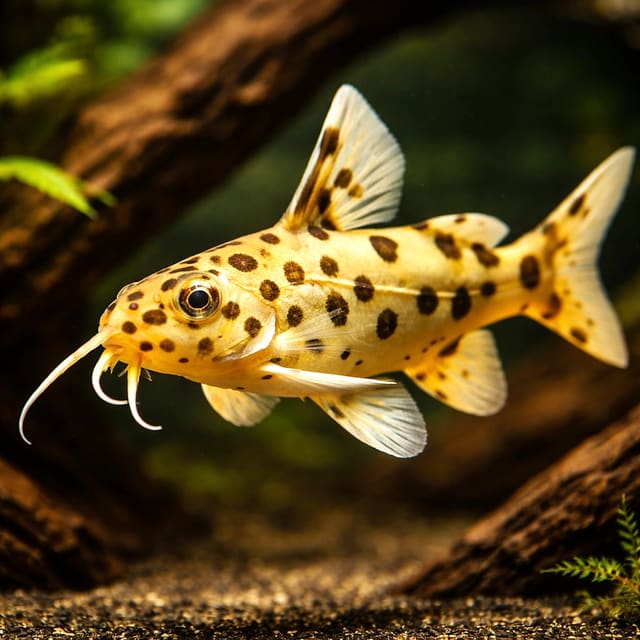
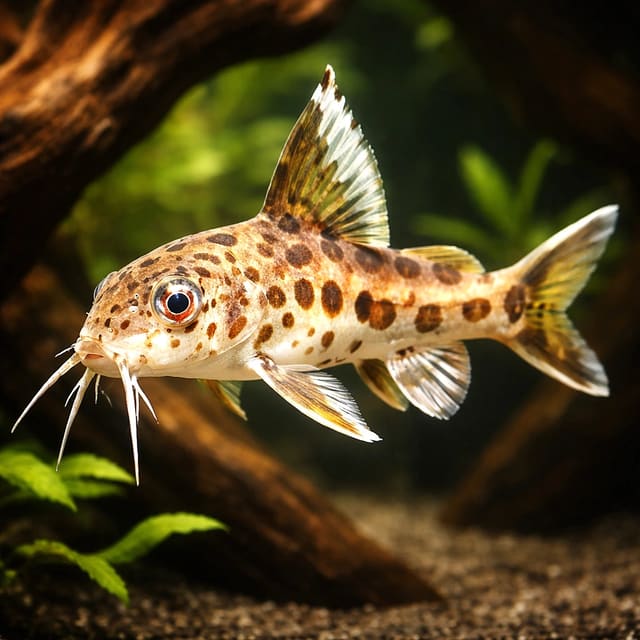
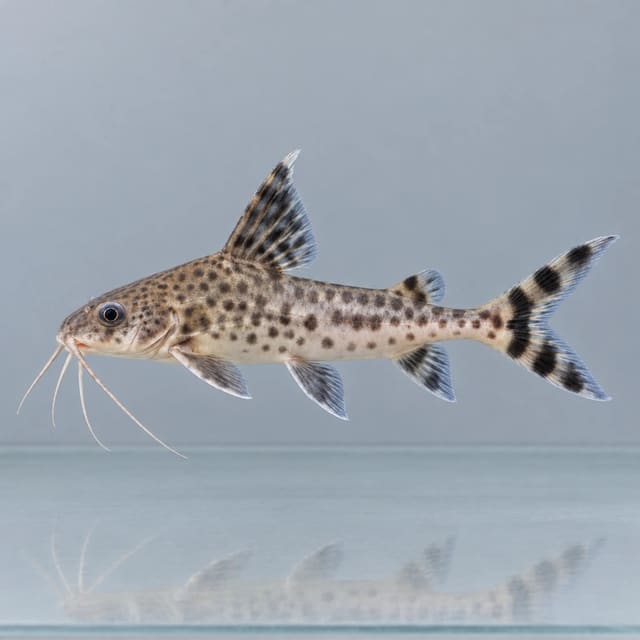
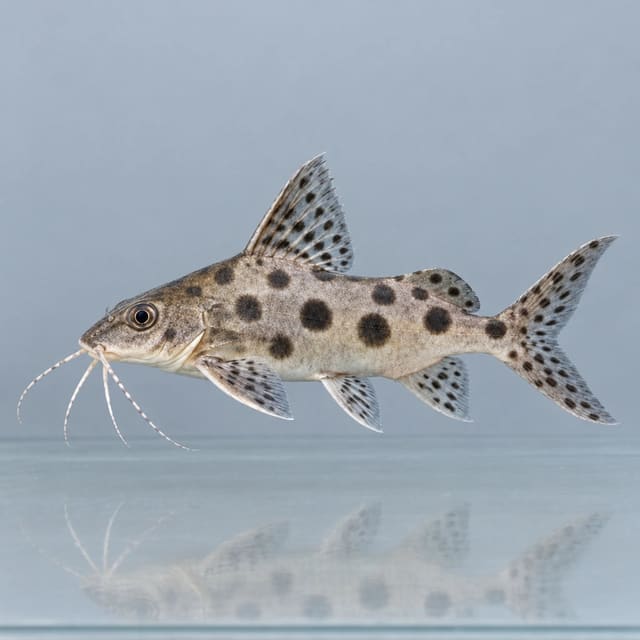
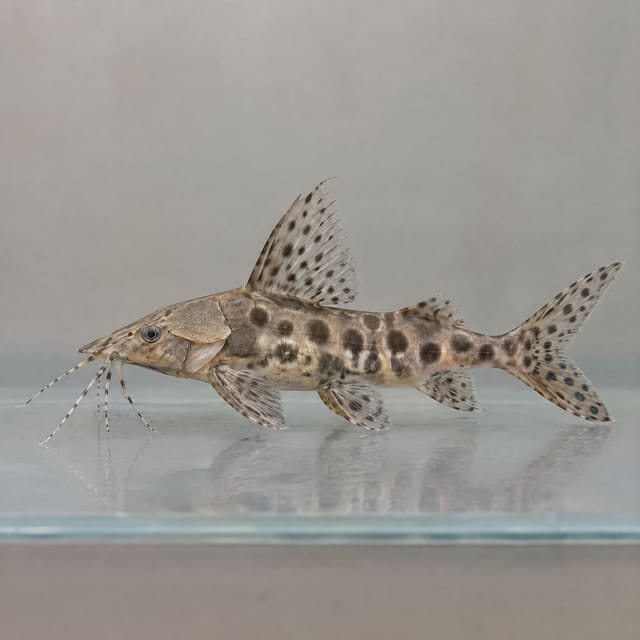
Large-Spot Synodontis (Synodontis ocellifer)
23–27°C · pH 6.2–8 · 81L
£20.99
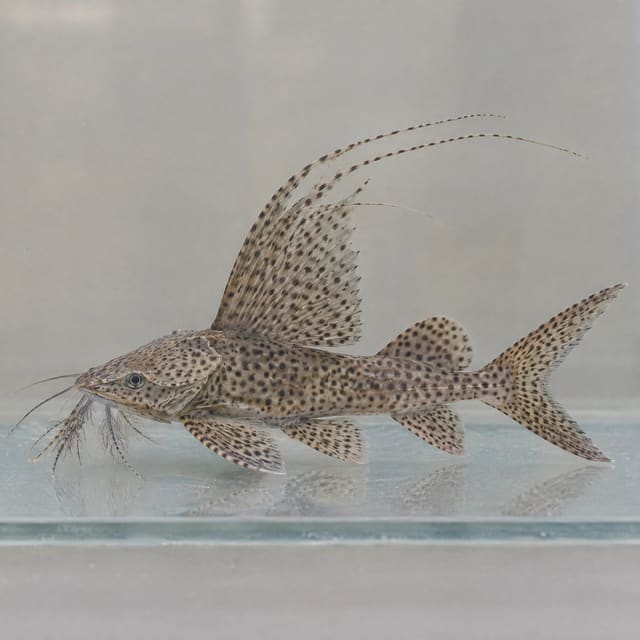
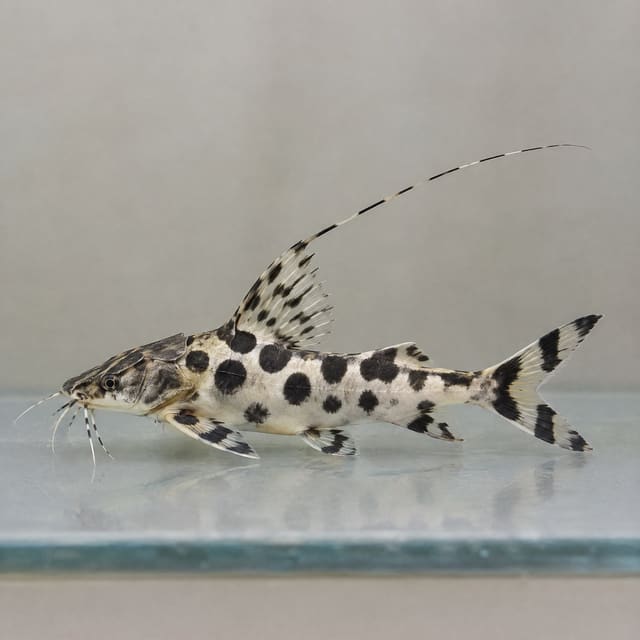
The Giant Upside-Down Catfish (Synodontis batensoda) is a peaceful squeaker from the Nile and West African rivers that swims belly-up almost all the time, with a light grey back and a black belly. It grows to about 28 cm, so it needs a large aquarium with horizontal wood and broad leaves to rest under. Sold individually as one live fish.
Adult size is the maximum length this species reaches at full maturity (scientific sources). The livestock you receive will be younger and smaller. Product-photo provenance and any image-specific limitations are stated on the listing.
Synodontis batensoda
Quantity discounts are pricing offers, not a group-size recommendation. Check the full care guidance and your existing animals before choosing a quantity.
The Giant Upside-Down Catfish (Synodontis batensoda) is a peaceful squeaker from the Nile and West African rivers that swims belly-up almost all the time, with a light grey back and a black belly. It grows to about 28 cm, so it needs a large aquarium with horizontal wood and broad leaves to rest under. Sold individually as one live fish.
Adult size is the maximum length this species reaches at full maturity (scientific sources). The livestock you receive will be younger and smaller. Product-photo provenance and any image-specific limitations are stated on the listing.
The Giant Upside-Down Catfish (Synodontis batensoda) is a squeaker catfish that spends almost its whole life swimming belly-up. Planet Catfish notes that, like the much smaller S. nigriventris, it almost always swims inverted, and its colours match the habit: FishBase describes a reversed pattern, with a light grey back and a black belly, so the fish is camouflaged whichever way up you see it.
It is a fish of the Nile and the great West African rivers. FishBase lists the Nile, Senegal, Gambia, upper Volta, Ogun, Osse, Niger (including the Bénoué) and Chad basins, and Planet Catfish says it lives in slow-flowing pools and marshes beside large rivers. It grows much larger than the upside-down catfish most shops sell, to about 28 cm, so it is a fish for a big, calm aquarium.
| Name | What it means |
|---|---|
| Giant Upside-Down Catfish | The common name used by Planet Catfish and ScotCat |
| Upside-Down Synodontis, squeaker | Trade and general names; "upside-down catfish" is also used for other species |
| Synodontis batensoda (Rüppell, 1832) | The current scientific name |
| Brachysynodontis batensoda | The name used when it was placed in its own genus; still common on labels |
| Synodontis melanogaster | A synonym meaning "black belly" |
The species name comes from schal baten soda, a local name in Cairo that ScotCat translates as "the squeaker with the black belly". Its genus has moved back and forth: Bleeker created Brachysynodontis for it in 1862 because of its gill rakers and the lack of a gap between the dorsal and adipose fins, and a 2010 study of its skeleton, cited by Planet Catfish, returned it to Synodontis. ScotCat adds that this is the fish chosen in 1973 as the emblem of the former Catfish Association of Great Britain.
Three different Synodontis are sold as "upside-down catfish", and they are not interchangeable. We also sell the Black Upside-Down Catfish (S. nigriventris) and the False Upside-Down Catfish (S. nigrita). The table sets out how they differ, so you can be sure which one suits your tank.
| Feature | S. batensoda (this fish) | S. nigriventris | S. nigrita |
|---|---|---|---|
| Adult size | About 28 cm total length (FishBase); ScotCat gives 17.5 cm | About 10 cm standard length (Seriously Fish 100 mm, Planet Catfish 96 mm) | 175 mm (Seriously Fish) to 220 mm (Planet Catfish) standard length |
| Upside-down swimming | Almost always; rests on the bottom when inactive (ScotCat) | Up to 90% of the time, under branches and leaves | Far less often, though it often rests inverted |
| Colour | Light grey to blue-grey back, black belly; spots on the lower fins and tail | Belly darker than the back | Dark grey with black spots on body and fins, a "lace" pattern |
| Distinctive anatomy | Adipose fin almost joined to the dorsal fin; broad black membrane on the upper-jaw barbels; 39–42 gill rakers | Small head and eye compared with the similar S. contractus | Pointed shoulder process that curves upward on its lower edge |
| Home waters | Nile and West African basins | Congo basin and Cameroon | Nile and West African basins |
| Social | Shoals in the wild | Groups of at least three or four | Can be kept in a small group with a refuge each |
In short: choose S. nigriventris for a small community aquarium, and S. batensoda only if you have room for a fish nearly three times as long. The large adipose fin and compressed body are thought to help S. batensoda stay stable while inverted, according to Planet Catfish.
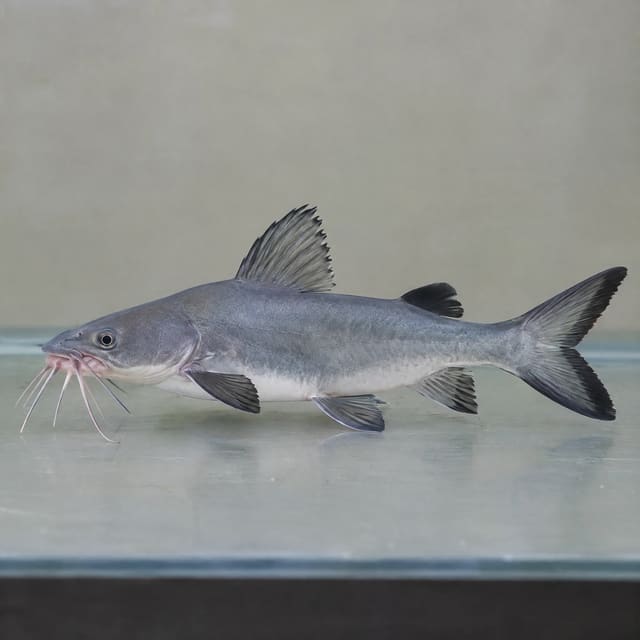
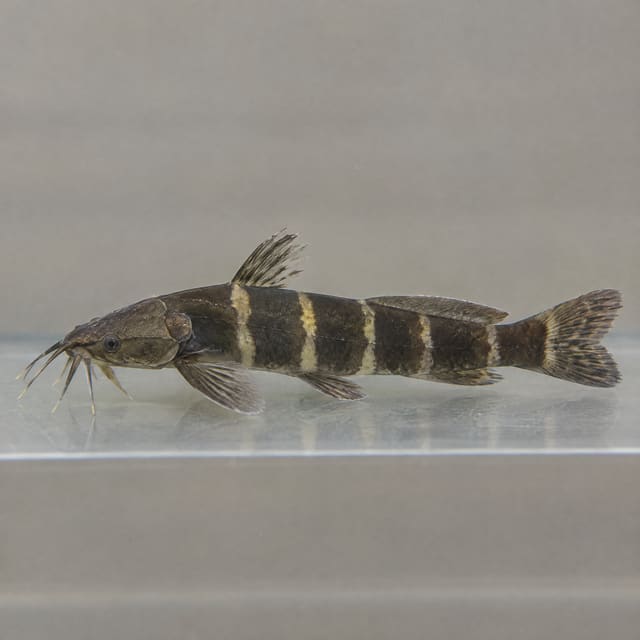
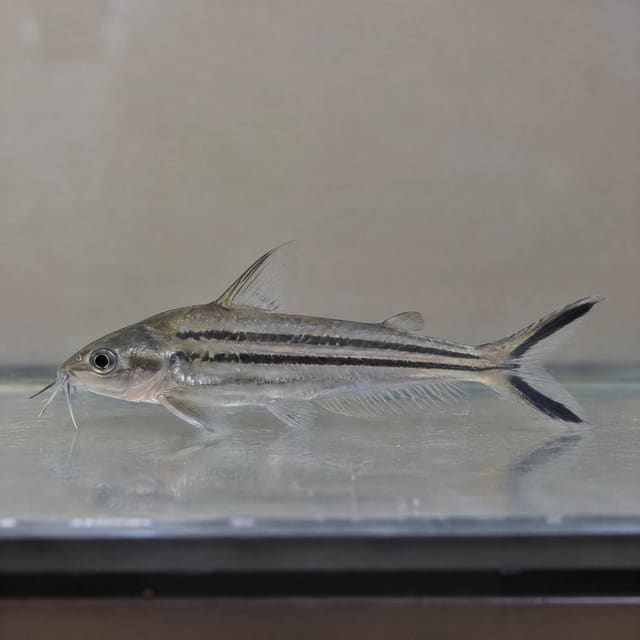
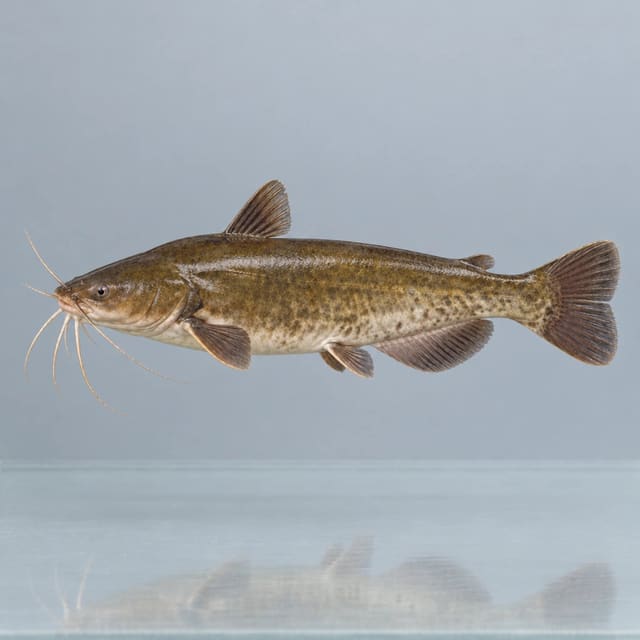
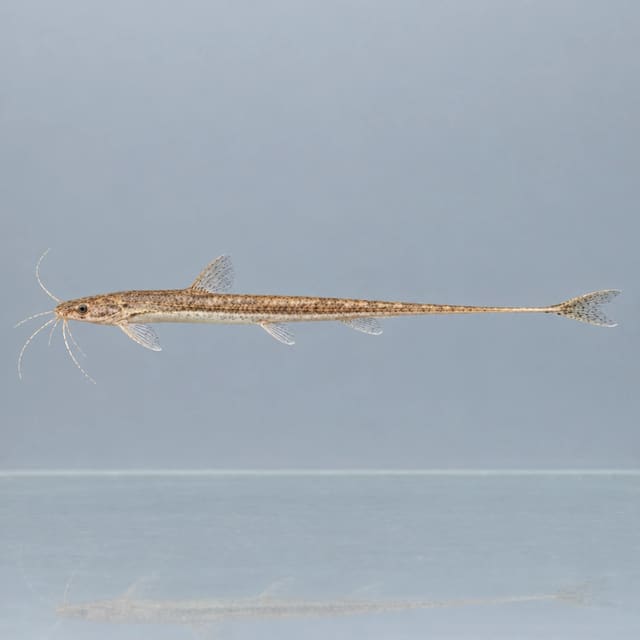
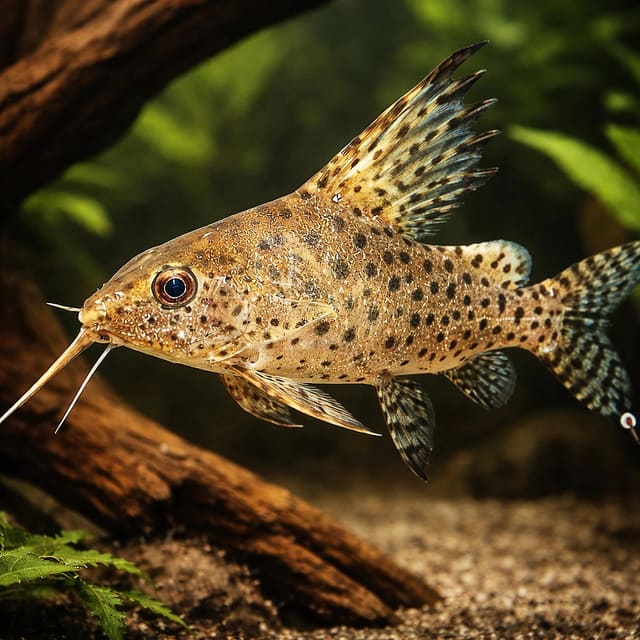
One purchase supplies one live Giant Upside-Down Catfish at the size currently available ("Standard"), which is well below the adult size. Sex is not chosen or guaranteed. The photographs show the type of fish, not the individual you will receive.
Young fish look different from adults. ScotCat describes juveniles with large dark blotches on the flanks separated by a pale network, while adults are silver-green to blue-grey, occasionally reddish-brown, with a blackish underside, grey fins partly marked with dark spots, and black barbels. FishBase adds that the pelvic, anal and tail fins are always covered with spots in cross rows.
Before you order, read our delivery and Live Arrival Guarantee information and make sure the aquarium is mature and large enough for the adult.
Sizes for this species vary more than for most fish. FishBase gives a maximum of 28.6 cm total length and 1.5 kg, but notes that one reference reports 50 cm and another only 26.5 cm. ScotCat gives 17.5 cm, and Planet Catfish lists 500 mm while noting that some sources say 270 mm. Most aquarium fish will stay well below 50 cm, but plan for about 28 cm.
No source we checked publishes a minimum tank. For the similar-sized S. notatus, Seriously Fish recommends a base of at least 120 × 30 cm, so we use that as the floor for one fish. Because this species swims in open water near the surface as well as along the bottom, a long, wide tank of 150 cm or more is the better choice for a group.
Keep the tank away from radiators, windows and draughts, as OATA's catfish care sheet advises, and fit a tight lid.
Planet Catfish recommends driftwood with horizontal branches and broad-leaved plants such as Anubias, because this fish both rests and swims inverted. It will hang beneath a branch or leaf by day. The theories for this habit are summarised on the species' Wikipedia page: it may make it easier to graze the undersides of submerged wood, and a 1994 study in the journal Copeia, cited there, links it to more efficient breathing at the oxygen-rich surface. ScotCat links it to surviving in low-oxygen pools in the dry season.
| Area | Purpose |
|---|---|
| Horizontal bogwood branches | Overhangs to rest beneath, belly-up |
| Broad Anubias leaves on the wood | More upside-down resting places, shaded from the light |
| Open water under the surface | Room to cruise inverted while feeding |
| Sand with a cave or two | A place to sit on the bottom when inactive |
Use smooth sand or fine gravel, which OATA recommends to protect catfish barbels, and keep the lighting moderate or shaded by floating plants.
Planet Catfish gives 24–28°C and pH 6.4–7.8. FishBase gives 23–27°C, and ScotCat 23–27°C with pH 6.0–7.2. The targets below sit inside all of them. No hardness figure is published; wild fish live in river margins and marshes, and soft to moderately hard tap water treated with conditioner suits a hardy species like this.
| Reading | Target |
|---|---|
| Temperature | 24–27°C (sources span 23–28°C) |
| pH | 6.5–7.2 (sources span 6.0–7.8) |
| Hardness | Soft to moderately hard; no species figure is published |
| Ammonia | 0 mg/l |
| Nitrite | 0 mg/l |
| Nitrate | No more than 20 mg/l above your tap water |
The ammonia, nitrite and nitrate limits are OATA's. Compare your own readings with our water matcher, and see our water chemistry guide for what each one means.
A fish of nearly 30 cm needs filtration to match. On its Synodontis pages, Seriously Fish suggests a filter turning the water over four to five times an hour; for a 150 cm tank that means a large external filter or two. Angle the outlet to ripple the surface, but leave calmer water under the branches where the fish rests. Our guide to the nitrogen cycle explains why a mature filter matters before a large fish arrives.
OATA warns that stocking too quickly causes "new tank syndrome", because the filter bacteria cannot keep up. Add a large fish like this only to a well-established aquarium.
In the wild it eats plankton, algae and detritus, and also takes surface insects, midge larvae, small crustaceans and molluscs, according to Planet Catfish and FishBase; its many gill rakers suit straining small food from the water. Planet Catfish says it readily accepts flake in the aquarium and enjoys brine shrimp and bloodworm as treats. ScotCat reports that it feeds by day, takes live, frozen, tablet, pellet and flake foods, and was seen gnawing courgette left for a pleco.
OATA recommends double-bagging catfish because their spines can pierce a bag. Acclimatise with the lights off: float the sealed bag for about 10 minutes, add small amounts of tank water over up to 20 minutes, then release the fish with as little bag water as possible. Our guide on how to acclimatise new fish gives the full method.
| Checkpoint | What to do |
|---|---|
| Before arrival | Test the water and set the branches and broad leaves in place |
| Arrival | Acclimatise in dim light and leave the lights off for the day |
| Days 1–3 | Offer small portions of flake and sinking food; note where it rests |
| Days 4–7 | Watch for other catfish chasing it from its resting place |
| End of week | Retest the water and do the usual water change |
Swimming upside down is normal for this species, so do not mistake it for a swim-bladder problem. Warning signs are rapid breathing, hanging at the surface, lying on the bottom on its side, or clamped fins.
Planet Catfish calls it a peaceful species that poses no threat even to small fish, and warns that more aggressive Synodontis may harass it. ScotCat agrees that it is easy-going but can be bullied by more aggressive members of the family. Its tank mates therefore matter more for its sake than for theirs.
| Suits | Avoid |
|---|---|
| African tetras such as the Congo Tetra | Territorial Synodontis that claim every overhang |
| Peaceful West African cichlids such as the Kribensis | Large, aggressive cichlids |
| Mormyrids such as the Elephantnose Fish | Fin-nippers that pick at a fish resting still under a branch |
| Calm larger Synodontis such as the Velifer Catfish, with space for both | Small tanks, where several large fish compete for the same cover |
| Its own kind in a long aquarium | Dwarf shrimp |
Our kribensis guide covers a good West African cichlid companion. Check any planned mix with our tank mates tool, and browse catfish and plecos, other Synodontis catfish, the wider range of African catfish or our rare and collector fish.
FishBase lists this species as venomous, and OATA warns that most catfish carry spines on the pectoral fins and just behind the gills. ScotCat describes a dorsal spine that ends in a filament and pectoral spines strongly serrated on the inner edge. Never hold it in your hand; guide it into a container for moving, and wash any spine wound and seek medical advice if it becomes painful or swollen.
| If you see | Do this |
|---|---|
| Lying on the bottom on its side | Test the water at once; resting upright on the bottom is normal, lying on its side is not |
| Rapid breathing at the surface | Test ammonia, nitrite and temperature and increase surface movement |
| Chased from its branch | Add more overhangs or rehome the aggressor |
| Hollow belly | Offer food at the surface and on the bottom, and feed after lights-out as well |
| White spots or fluffy patches | Test the water and seek fish-health advice before treating |
Planet Catfish and ScotCat both list aquarium breeding as unreported. FishBase records that the species lays eggs and pairs off to breed, and that fish mature from about 13 cm. In the wild, ScotCat notes, it moves from the main rivers into pools and marshes, possibly ahead of spawning. The IUCN lists it as Least Concern, though Wikipedia, citing the assessment, notes that it is now regionally extinct in northern Africa, where it was once found at Cairo during floods.
It is Synodontis batensoda, a large squeaker catfish (family Mochokidae) from the Nile and the big West African river basins: the Senegal, Gambia, Volta, Niger and Chad. It almost always swims belly-up and has a dark belly and a light grey back, the reverse of most fish.
The common upside-down catfish is Synodontis nigriventris, a Congo species of about 10 cm that lives in groups. Synodontis batensoda grows far larger, at about 26–29 cm according to FishBase, comes from West Africa and the Nile, and has an adipose fin that almost touches the dorsal fin and a broad black membrane along each upper-jaw barbel.
No. The False Upside-Down Catfish is Synodontis nigrita, a dark grey fish with black spots on the body and fins that swims inverted far less often. Synodontis batensoda is light grey above with a black belly, has a deeper, shorter body and swims inverted almost all the time.
Published sizes vary. FishBase gives 28.6 cm total length and notes one reference of 50 cm and another of 26.5 cm, while ScotCat gives 17.5 cm. Plan for a fish of about 28 cm.
No minimum is published for this species. We use the 120 × 30 cm base recommended for the similar-sized Synodontis notatus as the floor for one fish and suggest 150 cm or more for a small group.
Planet Catfish gives 24–28°C and pH 6.4–7.8; FishBase and ScotCat give 23–27°C, with ScotCat suggesting pH 6.0–7.2. We suggest 24–27°C and pH 6.5–7.2.
Yes. Planet Catfish calls it a peaceful species that poses no threat even to small fish, but more aggressive Synodontis may bully it, so choose its catfish companions carefully.
Not that we can find. Planet Catfish and ScotCat both list aquarium breeding as unreported.
One live fish of the standard size currently available. Sex is not chosen or guaranteed.
No reviews for this item yet. Bought one? Honest reviews only, good or bad.
What customers say about ordering from us
Easy website plenty of info on fish your buying great to pick a time slot
TRACEY DURRANT · 7 Oct 2026
Got some lovely fish thank you
Kevin Mackie · 7 Oct 2026
Reviews of our shop, collected by Judge.me, an independent third-party review collector. Newest first.
Moved by UK carriers licensed to handle live animals
Hand-packed with oxygen bags, poly box, heat pack
Email photos the same day; an optional unboxing video helps us review problems faster — claim terms apply
Klarna & PayPal Pay in 3 at checkout