Moderate
Synodontis njassae
22–26°C · pH 7.8–8.6 · 250L
£15.99

A marbled Congo Synodontis catfish for mature, roomy aquariums. Juveniles arrive small, but adults need 17-20 cm planning space, soft substrate, caves and stable warm water.
Adult size is the maximum length this species reaches at full maturity (scientific sources). The livestock you receive will be younger and smaller — pick a size above for the actual shipping size. Product-photo provenance and any image-specific limitations are stated on the listing.
Synodontis schoutedeni
Shoaling fish: kept in a group they feel safer, stay calmer and show their best colour.
Confirm your email, then we’ll send an availability message for this exact item if it returns within 180 days.
This request is only for this product—no newsletter or other promotions. A mail-provider retry may very rarely duplicate the same availability message. Unconfirmed addresses are removed after 48 hours. See our privacy policy.
A marbled Congo Synodontis catfish for mature, roomy aquariums. Juveniles arrive small, but adults need 17-20 cm planning space, soft substrate, caves and stable warm water.
Adult size is the maximum length this species reaches at full maturity (scientific sources). The livestock you receive will be younger and smaller — pick a size above for the actual shipping size. Product-photo provenance and any image-specific limitations are stated on the listing.
Maintain these water conditions for optimal health and vibrant colors
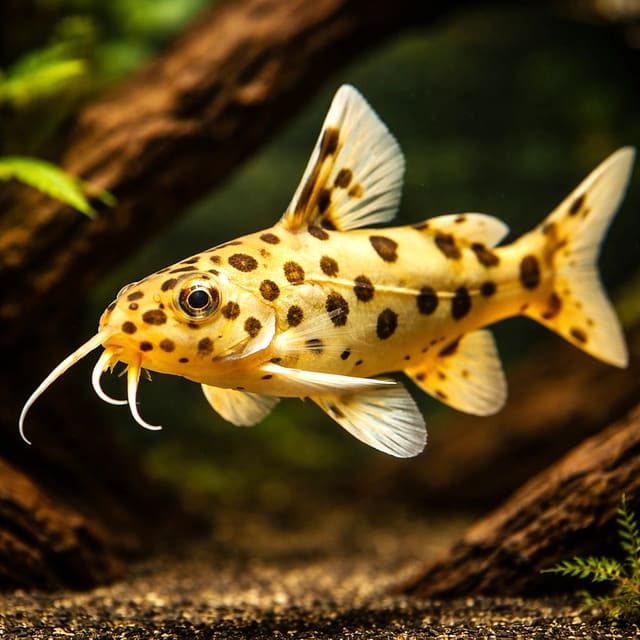
Vermiculated Synodontis (Synodontis schoutedeni), also sold in the hobby as the Yellow Marbled Synodontis, is a Congo Basin squeaker catfish with a cream-to-gold body covered in dark marbled markings.
This species suits aquarists who want an interesting, mostly peaceful bottom dweller for a roomy, well-filtered aquarium. It is not a tiny nano catfish. Give it soft sand, caves, wood, shaded retreats and stable warm water, and it becomes a confident dusk-and-evening forager rather than a fish that hides all day.
| Common name | Vermiculated Synodontis, Yellow Marbled Synodontis |
|---|---|
| Scientific name | Synodontis schoutedeni |
| Family | Mochokidae, the squeaker / upside-down catfish family |
| Current sale sizes | 3-4 cm and 4.5-5 cm juveniles, depending on stock |
| Adult planning size | About 17 cm TL; plan space generously for a 17-20 cm catfish |
| Temperament | Generally peaceful, but robust and food-motivated |
| Best for | Roomy Congo, West African, peaceful catfish or larger community aquariums |
| Care level | Moderate |
FishBase records Synodontis schoutedeni from the middle Congo River basin, including Pool Malebo and the Kasai drainage. In aquarium terms, that points to warm tropical freshwater, plenty of submerged structure and a fish that spends much of its time close to cover rather than cruising bright open water all day.
Like many Synodontis, this species is a tactile forager. The long barbels help it investigate sand, wood, stones and tight spaces for food. It may rest under wood or in caves during bright hours, then become more visible when the room quietens or feeding begins. It can also wedge itself into cover and use its fin spines defensively, so caves should be smooth, stable and large enough for the fish to turn around safely.
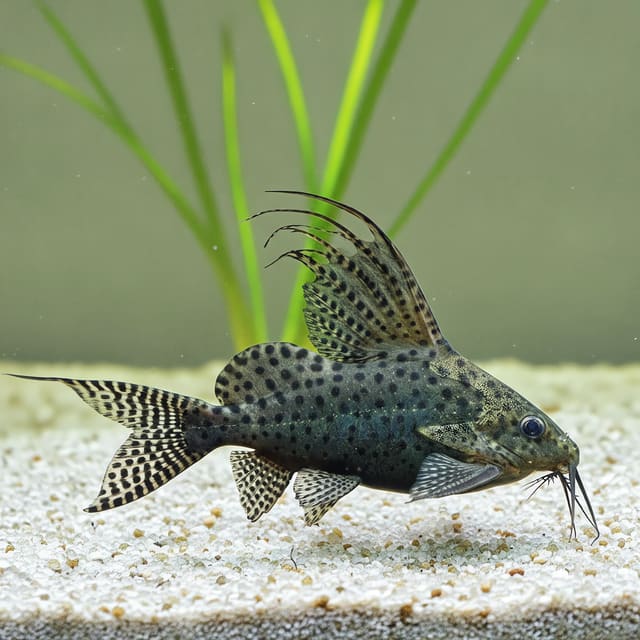
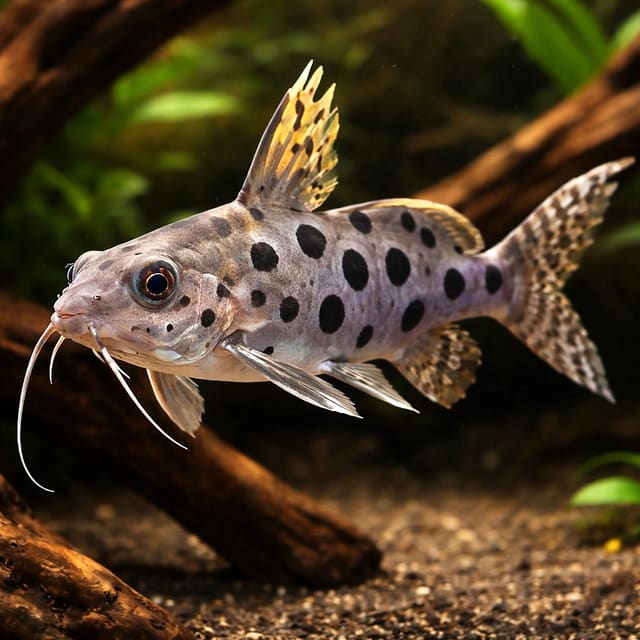
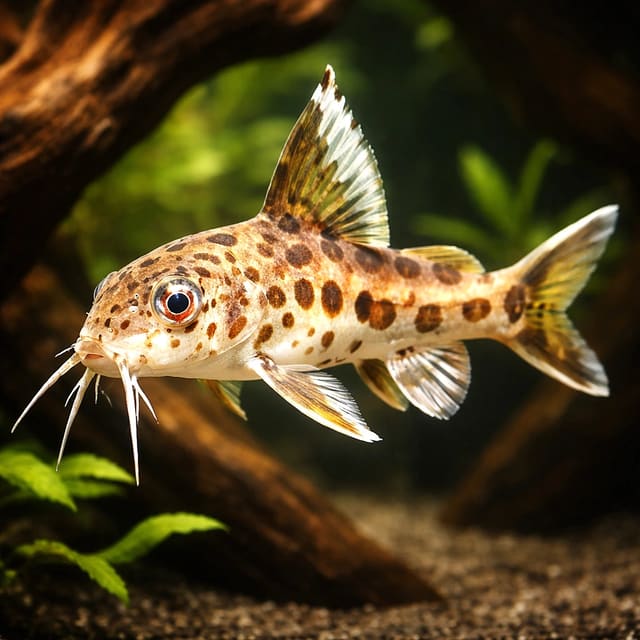
The appeal is the marbled pattern: a pale yellow, cream or golden base with dark brown to black vermiculations across the head, body and adipose fin. The fins are usually translucent with dark speckling, and the fish develops a deeper, more patterned look with age. Juveniles can appear slimmer and more delicate, but the adult is a solid, muscular catfish with a broad head and strong pectoral fins.
Because individual patterning varies, the exact markings may not match every photo perfectly. The important visual checks are clear eyes, intact barbels, full fins, a rounded but not bloated belly and confident response to food after settling.
For long-term care, aim for stable, well-oxygenated water rather than chasing a single exact number.
| Parameter | Recommended range | Care note |
|---|---|---|
| Temperature | 23-27C | FishBase lists 22-26C; our stock guidance lists 23-27C, so a stable mid-20s setup is sensible. |
| pH | 6.0-7.5 | Neutral to mildly acidic water suits most community setups for this species. |
| Hardness | 4-15 dGH, with moderate tolerance | Avoid sudden swings; acclimate carefully if your tap water is very hard. |
| Adult size | 17-20 cm planning range | Do not plan this fish as a 3.5 cm nano catfish. |
| Tank size | 180 litres or larger; 120 cm length preferred | More floor space gives better territories, oxygen and feeding room. |
Build the tank around the fish's barbels and night-time routine. Use soft sand or very smooth fine gravel, then add driftwood, rounded stones, ceramic caves, root tangles and robust plants such as Anubias, Java fern and larger Cryptocoryne. Keep at least one open front area for feeding and observation, but make the back and sides feel secure.
Subdued light helps the fish relax. Floating plants, tannin-stained water, shaded wood and a dusk feeding routine often bring it out more naturally than a bare, bright aquarium. Because Synodontis are powerful for their size, all rockwork must sit securely on the base of the tank rather than balancing on loose substrate.
Vermiculated Synodontis are hardy when kept clean, but they are not low-waste nano fish. Use mature biological filtration, good oxygen exchange and regular water changes. A canister filter or strong internal filter with protected intake works well; if you keep smaller fish alongside them, check that no one can be trapped against the intake.
| Maintenance point | Why it matters | Practical target |
|---|---|---|
| Substrate hygiene | Food can collect around caves and wood. | Siphon lightly around feeding areas without stripping all microfauna. |
| Oxygen | Catfish and richer feeding both increase oxygen demand. | Maintain surface movement and avoid clogged filter media. |
| Nitrate control | Large catfish communities can become nutrient-heavy. | Regular partial water changes and sensible feeding. |
| Cover inspection | Growing fish can outgrow tight hides. | Remove traps and replace small caves as the fish matures. |
This is an omnivorous scavenger, not a glass-cleaning specialist. Offer sinking catfish pellets, quality wafers, frozen bloodworm, brine shrimp, mysis, daphnia, chopped earthworm and occasional vegetable foods such as courgette or shelled peas. Feed after lights dim so food reaches the bottom before faster midwater fish take everything.
Do not rely on scraps. A Synodontis that is always waiting for leftovers may become thin, while overfeeding can cause bloating and poor water quality. The best routine is varied, measured feeding with one or two small bottom-targeted meals rather than a large dump of food.
Synodontis schoutedeni is usually peaceful, but it is still a medium-sized, confident catfish. It is best matched with fish too large to be swallowed and too calm to bully it. Good companions can include Congo tetras, larger peaceful tetras, rainbowfish, robust barbs, kribensis-type West African cichlids, peaceful larger gouramis and suitably sized loricariids.
| Works well with | Use caution with | Avoid |
|---|---|---|
| Congo tetras and larger peaceful characins | Small Corydoras if feeding space is limited | Tiny fry, nano shrimp and very small rasboras |
| Rainbowfish and calm medium barbs | Other territorial bottom dwellers | Aggressive Central American cichlids |
| Peaceful West African cichlids | Very boisterous plecos in cramped tanks | Fin nippers and fish that harass barbels |
Many aquarists keep this species singly without problems. A group can work in a larger tank with several caves and broken sightlines, but crowding Synodontis into a small aquarium can create feeding pressure and territorial friction. If you want more than one, plan the tank around multiple retreats and feed in more than one place.
Home breeding is possible but not a beginner project. FishBase notes that the species is oviparous and forms distinct pairs during breeding. Hobby accounts describe egg scattering and occasional surprise fry rather than a simple repeatable community-tank method. If breeding is attempted, use mature adults, excellent conditioning, stable water, caves and a separate plan for protecting eggs and fry from hungry tank mates.
These fish should be acclimated slowly because barbels, skin and gut health all respond badly to rushed water changes. Float the sealed bag to equalise temperature, then gradually mix small amounts of aquarium water before release. Keep the lights low for the first evening and offer the first small feed after the fish has had time to settle.
Tropical Fish Co packs livestock in insulated boxes with temperature support where needed and covers eligible livestock with the Live Arrival Guarantee. Delivery timing is arranged around live-animal welfare rather than treated like ordinary dry goods.
| Good sign | Risk sign |
|---|---|
| Tank is mature, covered, well filtered and at least 180 litres. | Tank is a new 60-75 litre setup planned around the juvenile size only. |
| Soft substrate and several caves are already in place. | Sharp gravel, narrow ornaments or unstable rock piles. |
| Tank mates are robust, peaceful and similar in water needs. | Nano shrimp, fry, fin nippers or aggressive cichlids. |
| Bottom foods are fed deliberately after lights dim. | The catfish is expected to survive only on leftovers. |
Care guidance was cross-checked against FishBase for accepted identity, Congo distribution, pH, hardness, temperature and adult length; Seriously Fish for dim, soft-substrate aquarium layout; Aquadiction for practical aquarium layout, 120 cm tank guidance, diet and compatibility; and our stock records for the current juvenile sizes, temperature range and supplier source image.
Choose this fish if you want a characterful Congo catfish with strong markings, interesting dusk activity and a long-term place in a mature aquarium. It is best for keepers who enjoy building the right habitat, not for someone trying to fill a small bare tank. The product images are kept SKU-specific: the four existing aquarium-view images remain on the listing, and the verified reference image for SKU 8094 is added so shoppers and search systems can see both the presentation images and the real supplier-style reference photo.
No reviews for this item yet. Bought one? Honest reviews only, good or bad.
What customers say about ordering from us
I have a small group of long finned mountain minnows. So was delighted to be able to order ten of this variety to increase the genetics in my tank . The ones I recieved are healthy but it’s to early to give a verdict on wether they are of a long finned type since they are small currently.
Gordon Walker · 23 Sept 2026
100% success travel and "installation". Pleased with quality of purchase. The Siamese fighter a bit "shy" so have not yet seen him at his best yet but looking good. Happy customer. GG
George E Garratt · 21 Sept 2026
Reviews of our shop, collected by Judge.me, an independent third-party review collector. Newest first.