Moderate
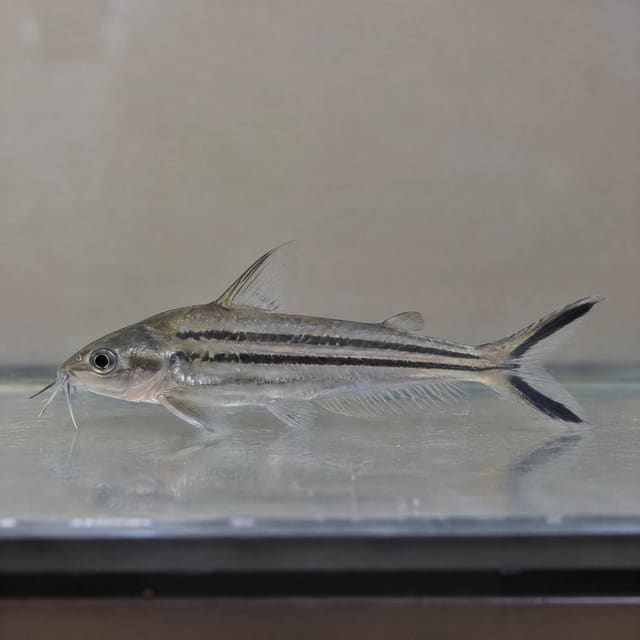
African Glass Catfish (Pareutropius debauwi)
22–27°C · pH 6–8
£13.99
The African Whiptail Catfish (Phractura ansorgii) is a slender, peaceful loach catfish from the lower Niger in Nigeria that grows to about 9 cm. It needs cool, clean, well-oxygenated, flowing water at 20–24°C, a shallow planted tank of 120–150 litres and small live or frozen foods. One live fish per purchase.
Adult size is the maximum length this species reaches at full maturity (scientific sources). The livestock you receive will be younger and smaller. Product-photo provenance and any image-specific limitations are stated on the listing.
Phractura ansorgii
Save when buying multiple fish. Each quantity is one fish; sex and pair formation are not guaranteed unless the selected variant explicitly states them.
The African Whiptail Catfish (Phractura ansorgii) is a slender, peaceful loach catfish from the lower Niger in Nigeria that grows to about 9 cm. It needs cool, clean, well-oxygenated, flowing water at 20–24°C, a shallow planted tank of 120–150 litres and small live or frozen foods. One live fish per purchase.
Adult size is the maximum length this species reaches at full maturity (scientific sources). The livestock you receive will be younger and smaller. Product-photo provenance and any image-specific limitations are stated on the listing.
Read the full care guidance when planning conditions for your aquarium.
The African Whiptail Catfish is Phractura ansorgii, a small, slender catfish from West Africa that spends its life on the bottom of clear, flowing water. It belongs to the Amphiliidae, known as the loach catfishes because, as Planet Catfish notes, they superficially resemble the flat-bellied hillstream loaches. Its genus name comes from the Greek for "fenced-in tail", a reference to the bony plates that enclose its long, thin tail stalk. The species was described by Boulenger in 1902 from Agberi in southern Nigeria, and in Germany it is known as the "Roter Kaulquappenwels", the red tadpole catfish.
FishBase gives its range as the lower Niger, the Niger delta and the Oshun River in Nigeria, and it has also been reported from the Mono River basin in Togo. It lives in flowing water and, like other Phractura, among the plants that grow in the current; ScotCat describes it spending much of its time clinging to leaves such as Vallisneria. Planet Catfish describes a ventrally flattened body with wide, horizontal pectoral and pelvic fins that grip smooth surfaces in the flow, small upward-facing eyes and short, tough barbels. FishBase lists the species as Endangered on the IUCN Red List (assessed in 2019), so each fish deserves a well-planned home.
"Whiptail catfish" in UK shops usually means the armoured suckermouth whiptails from South America. This fish is unrelated and needs different care.
| Feature | African Whiptail Catfish | South American whiptails |
|---|---|---|
| Family | Amphiliidae (loach catfishes) | Loricariidae (suckermouth armoured catfishes) |
| Mouth | No sucker; short, thick barbels | A sucker-like mouth for rasping surfaces |
| Home waters | Lower Niger, Nigeria; reported from Togo | Rivers of South America |
| Temperature | Cool: 20–24°C | Varies by species |
| Main foods | Small worms and insect larvae | Mostly algae, biofilm and vegetable foods, varying by species |
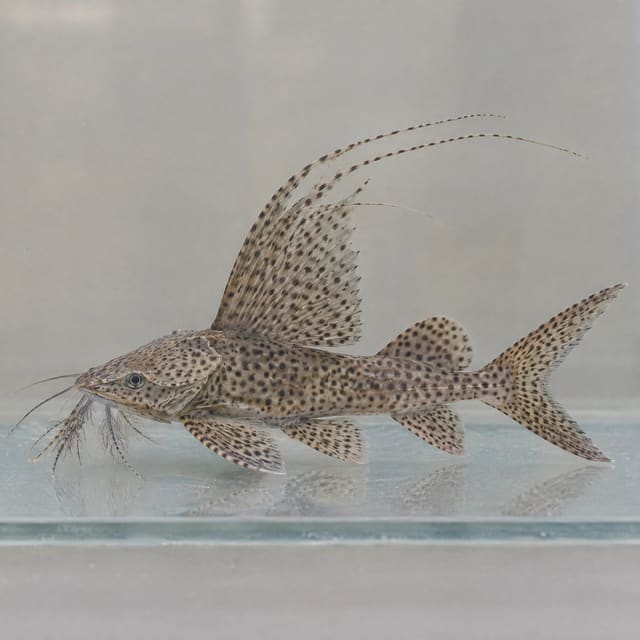
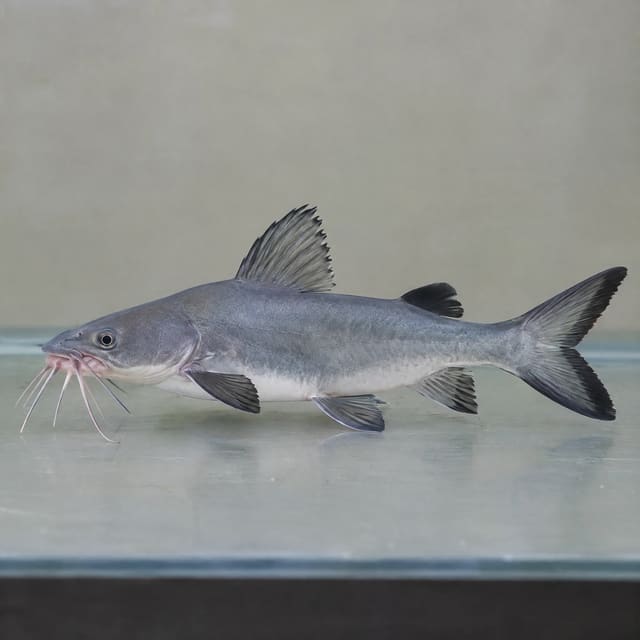
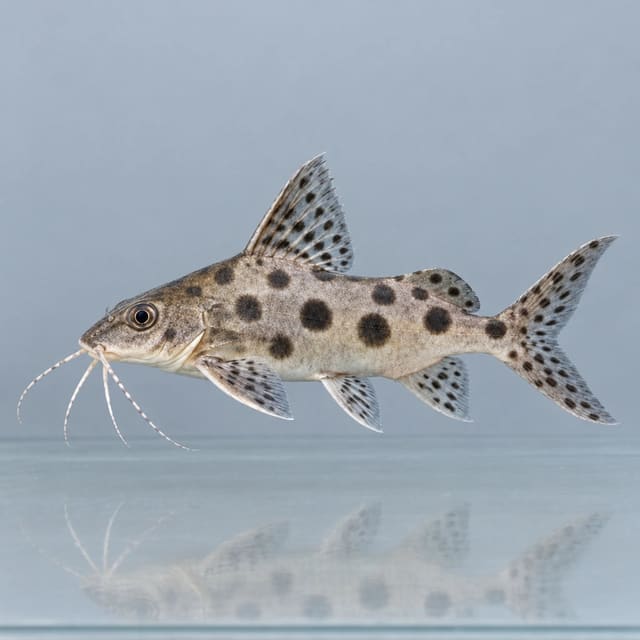
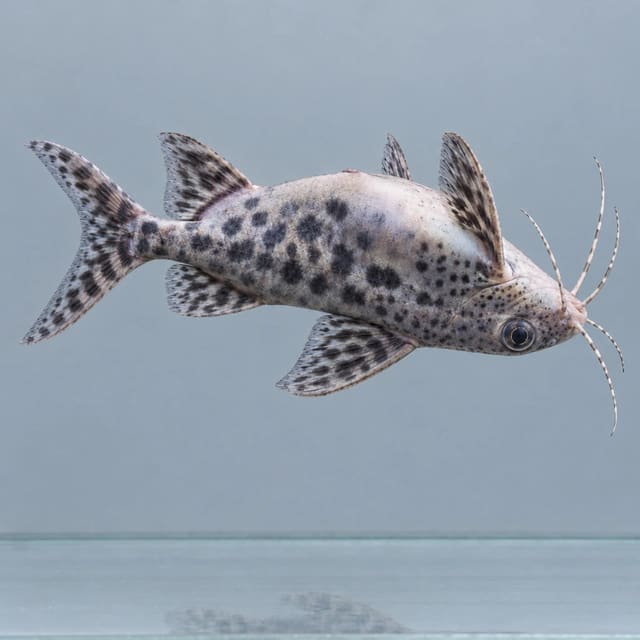
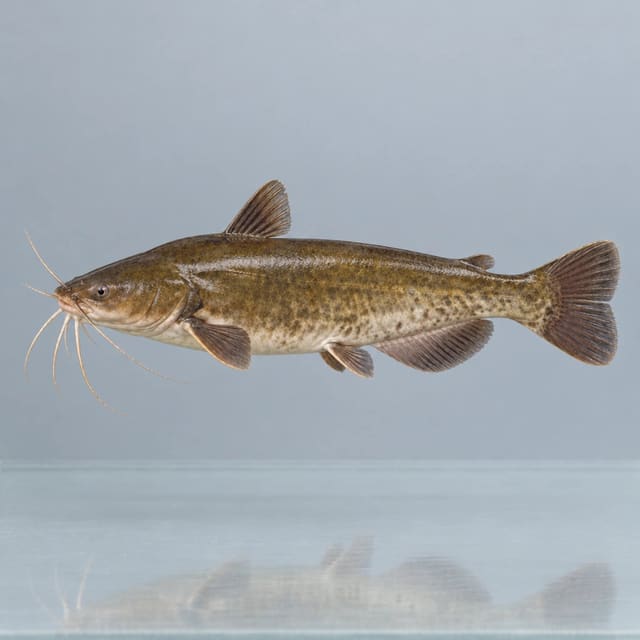
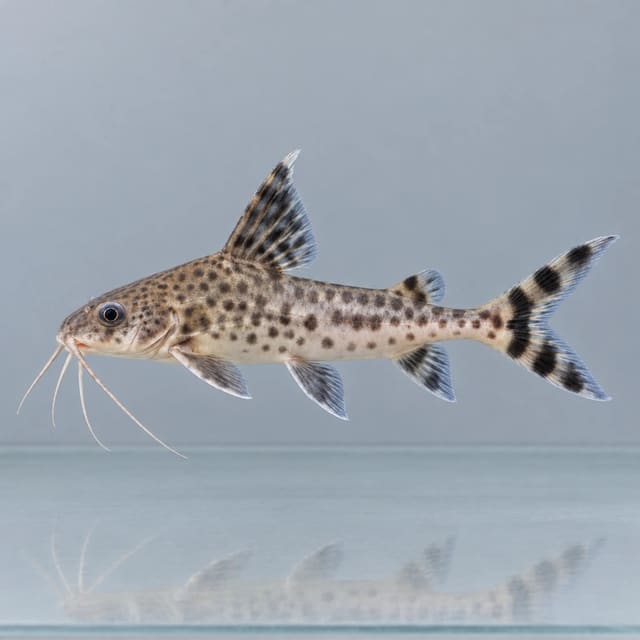
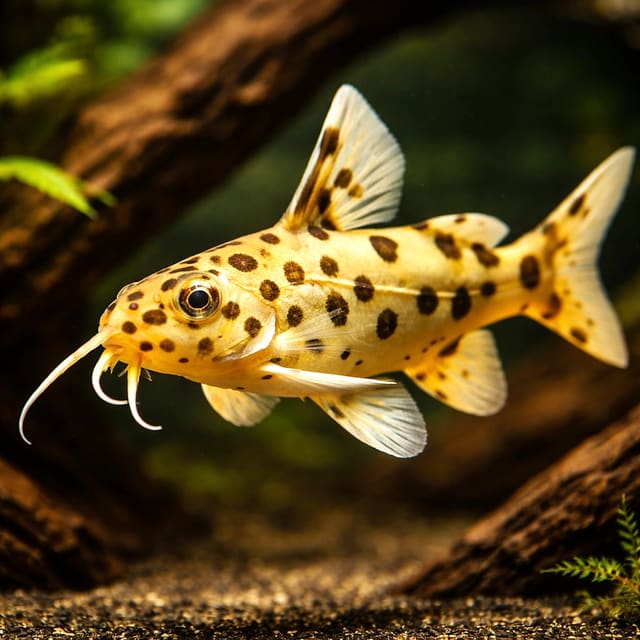
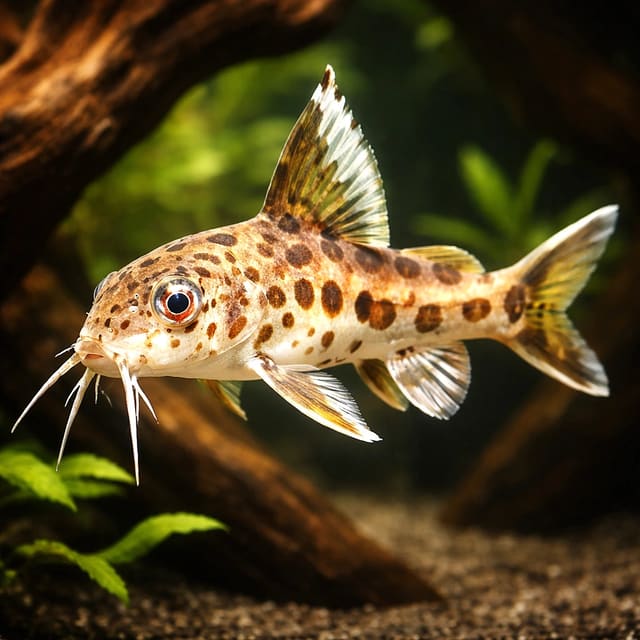
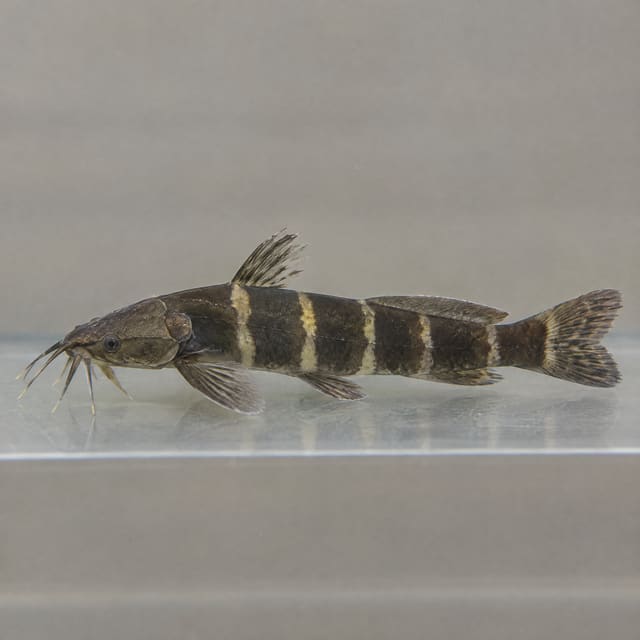
One purchase supplies one live African Whiptail Catfish in the standard size we receive. Sex is not specified. Planet Catfish and ScotCat both note that females grow larger and show dark brown bands across the body, while males stay plain and pale and turn reddish all over at spawning time, so a banded fish is most likely a female. The gallery images are representative, prepared from a reference photograph, and do not show the individual you will receive.
Read our delivery and Live Arrival Guarantee policy before you order, and have the aquarium running and tested before the fish arrive.
FishBase records a maximum of 9.0 cm total length, and Planet Catfish gives 90 mm standard length, measured without the tail fin. Much of that length is the slender tail stalk, so the adult is a light, narrow fish rather than a bulky one. Some sellers quote larger sizes; we use the published figures.
Planet Catfish recommends a largish but shallow aquarium such as a 30–40 US gallon breeder tank, which is 120–150 litres, planted heavily with bogwood and hiding places and with some open areas. A long, shallow tank gives more floor and leaf surface for a bottom-dweller than a tall tank of the same volume, and it is easier to keep moving and oxygenated from end to end. Our tank volume calculator turns your tank's measurements into litres.
Recreate a clear, plant-lined stream. Use fine sand, which OATA advises for all catfish because it protects their sensitive barbels, and add smooth, rounded river cobbles that the fish can rest on in the current. ScotCat describes this species moving across sand with a side-to-side, sidewinding motion as it forages, so leave open sand between the stones. Add long-leaved plants such as Vallisneria in the flow, because this catfish likes to perch on leaves, plus bogwood and a few shaded hiding places.
| Area | Purpose |
|---|---|
| Open fine sand along the front | Foraging space and a clear view at feeding time |
| Smooth cobbles in the main current | Resting places that the fish can grip in moving water |
| Long-leaved plants such as Vallisneria | Perches off the floor, as the fish uses in the wild |
| Bogwood and shaded corners | Daytime cover and calmer spots out of the strongest flow |
Our hillstream loach guide describes the same style of stream aquarium, with its emphasis on clean, moving, oxygen-rich water over stones.
This is a cool tropical fish. All three sources agree on 20–24°C, which is lower than many community aquariums run. The pH ranges differ slightly, so the target column uses the band where they overlap.
| Value | FishBase | Planet Catfish | ScotCat | Our target |
|---|---|---|---|---|
| Temperature | 20–24°C | 20–24°C | 20–24°C | 20–24°C |
| pH | 6.3–7.2 | 6.2–7.2 | 6.5–7.2 | 6.5–7.2 |
| Hardness | 10–18 dH | Not given | Not given | 10–18 dH |
Keep the pH up. ScotCat's author lost a pair of these catfish when the pH fell below 6 and saw the survivors recover once it was raised to about 7, and notes that the species is less hardy than the South American whiptails. Avoid soft, acidic blackwater set-ups. Hardness and pH of UK tap water vary from region to region; your water company publishes figures for your postcode, and our water matcher compares them with this fish. Our water chemistry guide explains how to adjust readings slowly.
Because 24°C is the top of its range, keep the aquarium out of direct sunlight and away from radiators and other heat sources, as OATA advises, and check the temperature during warm weather.
| Reading | Target |
|---|---|
| Ammonia | Zero mg/l |
| Nitrite | Zero mg/l |
| Nitrate | No more than 20 mg/l above your tap water |
These waste limits come from OATA's freshwater catfish care sheet. A tank can sit at the right temperature and pH and still be unsafe if ammonia or nitrite are present, so test both kinds of reading every week.
Planet Catfish asks for clean, cool, well-oxygenated water with ample plant cover, and its feature on the species stresses generous dissolved oxygen and brisk water movement, with a circulation pump pushing water over smooth cobbles and fine sand, and low nitrate. Choose a filter rated comfortably above the tank's volume, direct its outlet along the length of the tank, and keep the surface rippling. Fit a sponge guard over every intake: this is a slim fish that rests close to surfaces. Our guide to aquarium filtration explains how mechanical and biological filtration work together.
Planet Catfish lists live, frozen or freeze-dried bloodworm, tubifex, grindal worms, chironomid and other small larvae, and notes reports of it also eating algae. ScotCat found frozen bloodworm the clear favourite, with tablet foods, grindal worm and white worm also taken; algae were recorded in the diet but ignored by its author's fish, and vegetables such as courgette and lettuce can be tried. Planet Catfish's feature adds quality sinking catfish pellets as a staple, with frozen bloodworm and Artemia.
This catfish is not a strong competitor, so feeding needs a plan, especially with lively tank mates.
Before the fish arrives, confirm a mature filter, zero ammonia and nitrite, 20–24°C and a pH of 6.5–7.2. Use the floating bag method OATA describes: switch off the aquarium lights, float the sealed bag for about 10 minutes so the temperature equalises, then add small amounts of aquarium water to the bag over up to 20 minutes, and release the fish with as little bag water as possible. For sensitive fish OATA also describes drip acclimation, slowly dripping aquarium water into the transport container through an airline. Our guide to acclimatising new fish covers both methods step by step.
| Checkpoint | What to do |
|---|---|
| Before introduction | Test the water and check temperature, pH and flow |
| First evening | Lights off and leave it to settle; offer a small portion of frozen bloodworm |
| Each evening | Find the fish, confirm it is feeding and its belly is not hollow |
| Mid-week | Retest ammonia, nitrite and pH rather than waiting for the weekly test |
| End of week | Full test and a partial water change |
Expect a quiet fish that perches on leaves, wood and stones in the current and forages across the sand. It is easy to overlook in a planted tank, so make a point of finding it at every evening feed. OATA's catfish care sheet lists the changes worth watching for in any catfish.
| If you see | Do this |
|---|---|
| Resting in the open on leaves or stones | Normal; it sits still for long periods |
| A hollow belly or no interest in food | Feed after lights-out, target the food and check tank mates are not taking it all |
| Fast breathing or lying in still corners | Test ammonia, nitrite and temperature at once and increase flow and aeration |
| Colour turning darker or paler than normal | Check pH first: this species is known to suffer when the pH falls low |
| White spots, fluffy growths or damaged fins | Test the water and seek fish-health advice before treating |
If a problem continues, record your readings and contact us with them.
Planet Catfish suggests smaller characins and cyprinids, and warns that this catfish is best not kept with more aggressive or larger species because it does not compete strongly for food. Choose fish that stay in the upper and middle water, tolerate the same cool, flowing water, and do not crowd the floor at feeding time.
| Suits | Avoid |
|---|---|
| Small, calm characins | Larger fish of any kind |
| Small, calm cyprinids | Aggressive or territorial fish, including bottom-dwelling cichlids |
| Others of its own kind | Fast, greedy bottom feeders that take all the food |
| Peaceful midwater fish happy at 20–24°C | Fish that need warm, soft, acidic water |
From our range, consider the small Three-Lined African Tetra or the peaceful, midwater African Glass Catfish, checking that their own water needs overlap with this fish. For another small African catfish see Bates' Dwarf Synodontis, and if stream-style tanks appeal to you, the Marbled Hillstream Loach enjoys similar flowing, oxygen-rich water. Browse all our African catfish, our wider range of catfish and plecos and our bottom-dwelling fish, and check any mix with our tank mates tool before you buy.
This species was bred in an aquarium as early as the 1950s by Dr Walter Foersch, and the account is summarised in Baensch's Aquarium Atlas, volume 3. ScotCat relates the details: chirping sounds were heard, the male curved into a U-shape over the female for a few seconds, and the female laid about 100 eggs with a thick, jelly-like coat that resembled amphibian eggs. The fry hatched after two to three days, began to feed five to six days later, and the survivors looked like newt larvae at 12 mm. Many fry were lost, and Planet Catfish holds no hobbyist breeding reports for the species. Treat breeding as a bonus, not a plan.
It is Phractura ansorgii, a small loach catfish of the family Amphiliidae from the lower Niger in Nigeria, with reports from Togo. It has a slim body and a long, thin tail stalk enclosed in bony plates. It is not related to the South American whiptail catfish sold as plecos.
About 9 cm. FishBase records 9.0 cm total length and Planet Catfish gives 90 mm standard length, so expect a slender adult of roughly that size, much of it tail stalk.
Planet Catfish recommends a largish, shallow tank such as a 30–40 US gallon breeder, which is 120–150 litres, with plenty of plants, wood and hiding places and some open sand. Floor area matters more than height.
Cool, clean and well oxygenated: 20–24°C and a pH between about 6.5 and 7.2, where the published ranges overlap. FishBase gives 10–18 dH. Do not let the pH fall below 6; ScotCat records losing fish when it did.
Small live and frozen foods: bloodworm, tubifex, grindal worms, white worm and other small larvae, plus sinking tablets. It does not compete strongly, so feed in the evening after the main lights go off.
Yes. Planet Catfish describes it as peaceful and notes that several can be kept together. Give each fish its own resting places on leaves, wood and sand.
Small, calm characins and cyprinids that enjoy the same cool, flowing water. Avoid larger, aggressive or boisterous fish, and fast bottom feeders that would take its food.
Planet Catfish and ScotCat say females are larger and show dark brown bands on the body, while males are plain and pale and turn reddish when they spawn.
No reviews for this item yet. Bought one? Honest reviews only, good or bad.
What customers say about ordering from us
Easy website plenty of info on fish your buying great to pick a time slot
TRACEY DURRANT · 7 Oct 2026
Got some lovely fish thank you
Kevin Mackie · 7 Oct 2026
Reviews of our shop, collected by Judge.me, an independent third-party review collector. Newest first.
Moved by UK carriers licensed to handle live animals
Hand-packed with oxygen bags, poly box, heat pack
Email photos the same day; an optional unboxing video helps us review problems faster — claim terms apply
Klarna & PayPal Pay in 3 at checkout