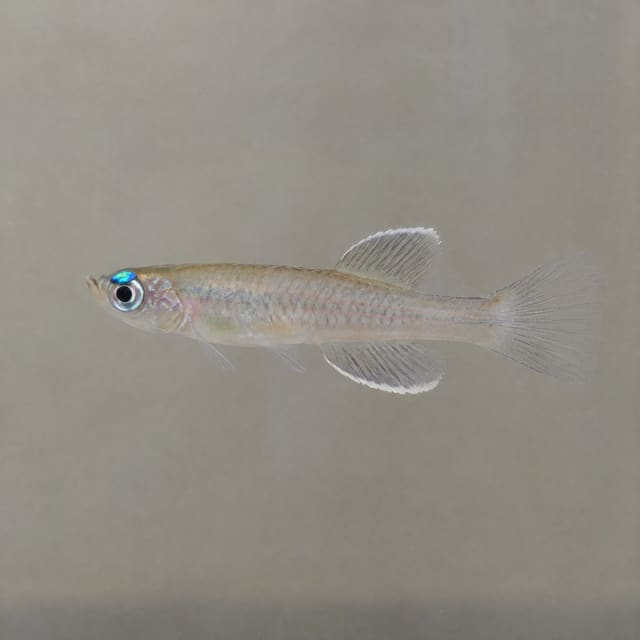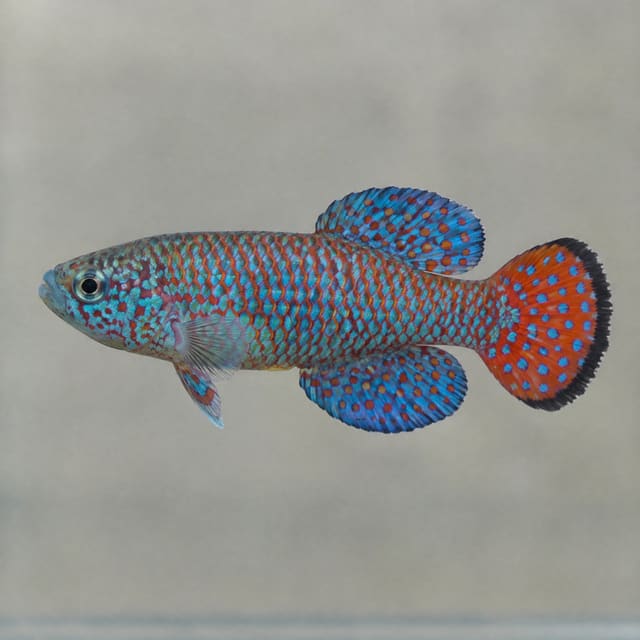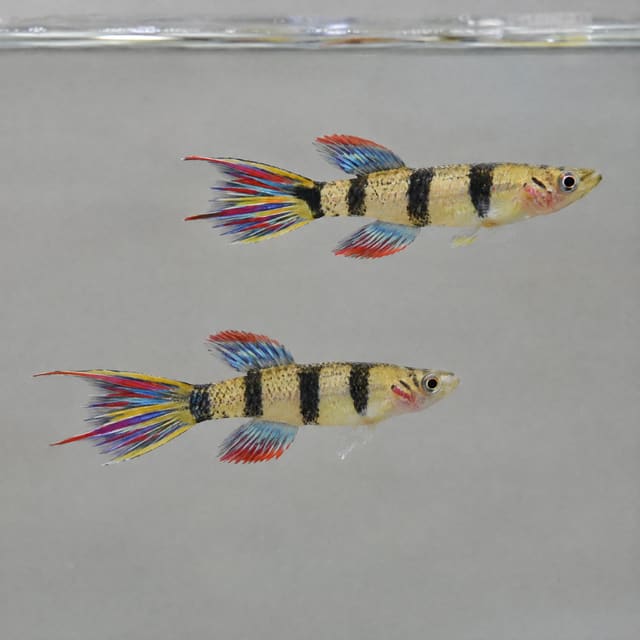
2 × Clown Killifish (Pseudoepiplatys annulatus)
22–26°C · pH 5.5–7
£15.49
The Red Stardust Ricefish is an orange-red ornamental strain of the medaka, Oryzias latipes, sprinkled with glittering scales. It stays around 3.5–4 cm, lives in a group of eight or more in a cool indoor aquarium with a 45 × 30 cm base at 18–22°C, and breeds readily. Sold individually as one live fish.
Oryzias latipes
Save when buying multiple fish. Each quantity is one fish; sex and pair formation are not guaranteed unless the selected variant explicitly states them.
The Red Stardust Ricefish is an orange-red ornamental strain of the medaka, Oryzias latipes, sprinkled with glittering scales. It stays around 3.5–4 cm, lives in a group of eight or more in a cool indoor aquarium with a 45 × 30 cm base at 18–22°C, and breeds readily. Sold individually as one live fish.
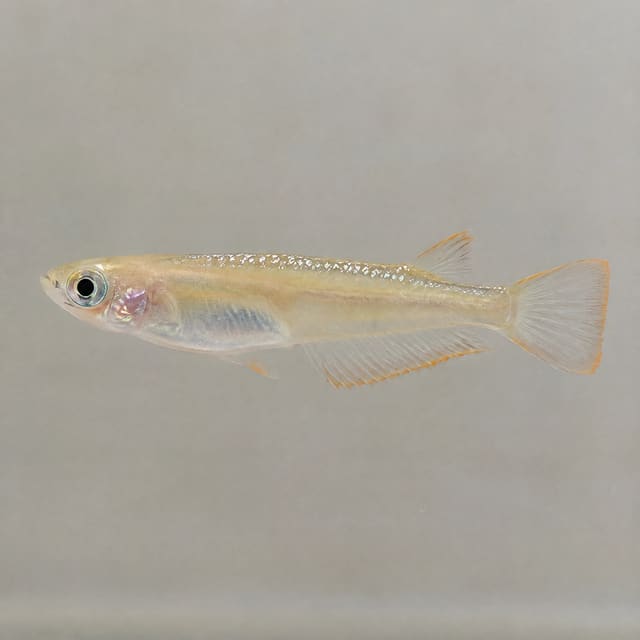
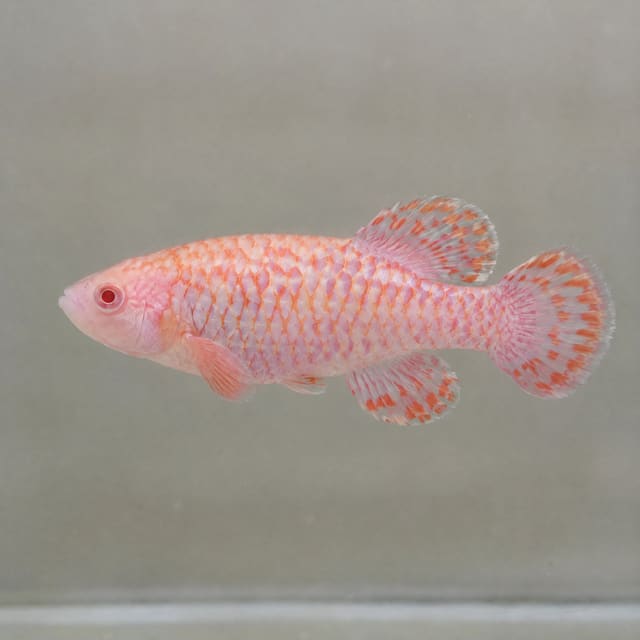
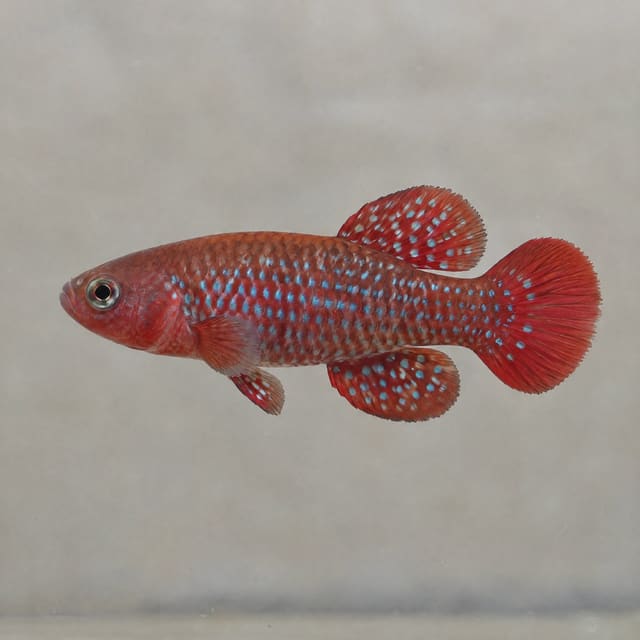
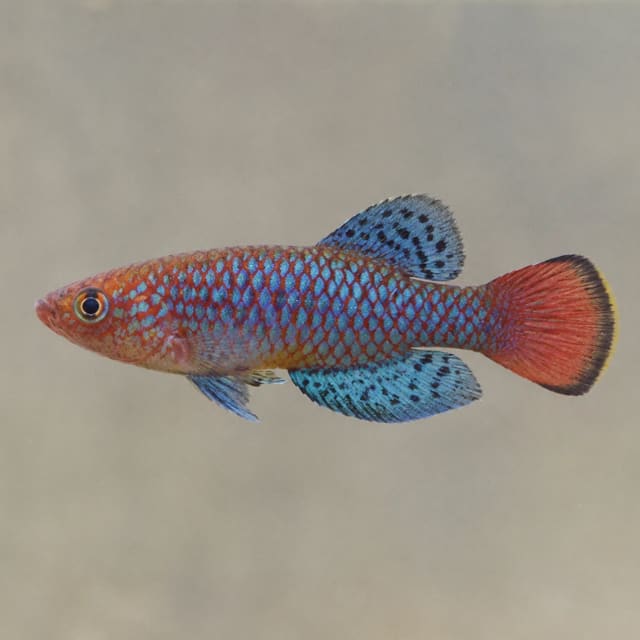
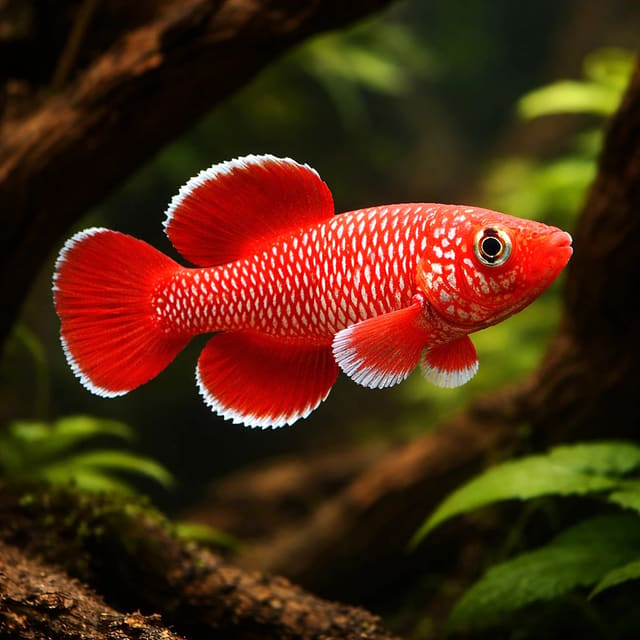
The Red Stardust Ricefish is an ornamental strain of the medaka or Japanese rice fish, Oryzias latipes, bred for colour and sparkle. Our fish shows a slender orange-red body sprinkled with glittering gold and silver scales, a large silvery eye and clear fins edged in orange. If you want a small, peaceful, easy-to-breed fish for a cool indoor aquarium, a group of Red Stardust Ricefish is a lively, eye-catching choice.
Red Stardust is a trade name rather than a formal standard, so expect variation. Aquarium Glaser describes sparkled medaka as fish with scattered, striking silver-white shiny scales and notes that colour intensity differs considerably between individuals, which is why breeders keep selecting for stronger colour. The species itself is famous well beyond fishkeeping: Seriously Fish notes that medaka have been used in biology for more than a century and were the first vertebrates to mate in space, in the mid-1990s.
| Need | What to plan |
|---|---|
| Aquarium | A base of at least 45 × 30 cm (about 41 litres), indoors |
| Temperature | 18–22°C; often no heater needed, and never permanently warm |
| Group | Eight or more |
| Food | Small live or frozen foods every day, plus fine flake or granules |
| Where | Indoor aquarium only in England and Wales: not a pond or patio tub |
Medaka, Japanese rice fish and ricefish are all names for Oryzias latipes. Ricefish are often sold alongside killifish, but they belong to their own family, Adrianichthyidae, in the same order as halfbeaks and needlefish. Seriously Fish gives the wild range as Japan, South Korea, Taiwan, eastern China including Hainan and Hong Kong, Laos and Vietnam, and lists habitats from coastal brackish waters and tidal mangroves to forest streams, rice paddies, canals, pools and oxbow lakes. FishBase adds ponds, marshes and small lowland streams, mostly with slow-moving water, and notes a wide tolerance of salinity.
Seriously Fish notes that the golden ornamental form is now seen more often than the natural one. Red Stardust is one of many strains bred since, combining red-orange colour with sparkling scales. Compare it with our Tomoki Medaka Ricefish, a paler strain of the same species, or see our full range of killifish and ricefish.
| Feature (Seriously Fish) | Male | Female |
|---|---|---|
| Dorsal and anal fins | Convex, with elongated, filament-like rays | Not convex |
| Body | Slightly slimmer | Fuller, especially when carrying eggs |
| Other signs | Small bony contact organs on some fin rays | Eggs often seen hanging below the belly in the morning |
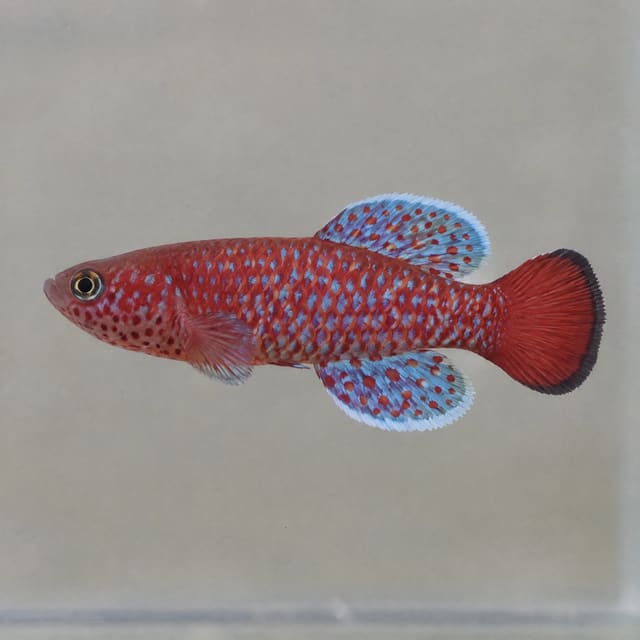
One purchase supplies one live Red Stardust Ricefish. Sex is not chosen or guaranteed. The photographs show the strain, not the individual you will receive: the depth of red and the amount of glitter vary from fish to fish, as Aquarium Glaser describes for sparkled strains.
Medaka tolerate cool water, and Aquarium Glaser notes that in mild climates they are even kept in garden ponds, so some sellers suggest patio tubs. In England and Wales that is not allowed. OATA explains that only six kinds of fish, including goldfish, koi and orfe, may be kept in garden ponds, and that every other freshwater fish, temperate species included, must be kept only in an indoor aquarium. OATA's guide to unheated aquariums repeats that cool-water aquarium fish are not legally permitted outdoors, and the government's non-native fish guidance links to a checklist that lists Oryzias for indoor aquaria only. If you live in Scotland or Northern Ireland, check your local rules before keeping any fish outdoors.
The reason is simple: Seriously Fish records medaka introduced into the wild in the USA, Cuba, Kazakhstan, Turkmenistan, Iran and Russia. Never release aquarium fish.
Seriously Fish gives a maximum of 36 mm standard length (measured without the tail) and FishBase 4.0 cm, so adults stay around 3.5–4 cm. For a group, Seriously Fish recommends an aquarium with a base of at least 45 × 30 cm, about 41 litres. OATA adds that it is worth buying the largest aquarium you reasonably can, because bigger tanks keep temperature and water quality more stable. Browse our nano tank fish for other small species.
Ricefish come from ponds, marshes, rice paddies and slow streams, as FishBase describes. Seriously Fish describes females attaching their eggs to fine-leaved plants or spawning mops, and notes that dense planting lets some fry survive in a community aquarium.
| Area | Purpose |
|---|---|
| Fine-leaved and floating plants | Egg-laying sites and cover for fry |
| Open water near the surface | Space for the group to swim and feed |
| Gentle filter outflow | Clean water without pushing small fish around |
| A cover glass or lid | Reduces evaporation and keeps dust out |
Medaka are not tropical fish. Seriously Fish gives 16–22°C, pH 6.5–8.5 and 5–25 dGH, warns that permanent exposure to warm conditions is likely to shorten their life, and notes that many homes can keep them without year-round heating. FishBase gives 18–24°C, pH 7.0–8.0 and a hardness of 9–19 dH. The table shows the range that satisfies both.
| Reading | Target | Source |
|---|---|---|
| Temperature | 18–22°C | Overlap of Seriously Fish (16–22°C) and FishBase (18–24°C) |
| pH | 7.0–8.0 | Overlap of Seriously Fish (6.5–8.5) and FishBase (7.0–8.0) |
| General hardness | 9–19 dGH | Overlap of Seriously Fish (5–25) and FishBase (9–19) |
| Ammonia and nitrite | 0 mg/l | OATA |
| Nitrate | No more than 20 mg/l above your tap water | OATA |
UK tap water varies a lot from area to area, so check your water company's report for your postcode and compare it with the range using our water matcher. Treat every water change with a tap water conditioner. If the room stays within 18–22°C, you may not need a heater at all; if it falls lower in winter, a heater set inside the range keeps things steady. Do not keep ricefish permanently in a warm tropical aquarium. Our water chemistry guide explains each test.
OATA's guide to unheated aquariums says a filter is essential whatever the size of the tank. Choose a gentle filter, such as a small sponge filter, so the fish are not blown around and eggs and fry are not sucked in.
Seriously Fish describes medaka as micropredators of small insects, worms, crustaceans and zooplankton, and FishBase calls them omnivorous. In the aquarium, Seriously Fish recommends small live or frozen foods every day, such as daphnia, brine shrimp (artemia) and chopped bloodworm, alongside suitably small flakes or granules. OATA's advice is to feed only what the fish eat within a few minutes, because leftovers foul the water.
| Part of the meal | Example |
|---|---|
| Staple | A pinch of fine flake or micro granules |
| Daily extra | Frozen daphnia or frozen artemia, thawed and broken into small pieces |
| Amount | What the group clears within a few minutes |
OATA warns that adding fish too quickly, or to a new aquarium, can cause new tank syndrome, with harmful ammonia and nitrite. Make sure the filter is fully established first; our nitrogen cycle guide explains how to check. Then follow OATA's floating-bag method: lights off, float the sealed bag for about 10 minutes to match the temperature, add small amounts of aquarium water to the bag over up to 20 minutes, and net the fish across with as little bag water as possible. Our guide on how to acclimatise new fish has more detail.
| When | Check |
|---|---|
| Day 1 | Lights low and no food; let the group settle among the plants |
| Day 2 | Offer a tiny meal and remove leftovers |
| Days 1–7 | Test ammonia and nitrite and watch for clamped fins or hiding |
| End of week 1 | Routine water change; feeding should be regular |
Seriously Fish describes medaka as generally peaceful and mostly non-aggressive towards each other. It suggests small companions such as some halfbeaks (Dermogenys), blue-eyes (Pseudomugil), bumblebee gobies (Brachygobius) and neritid snails, and advises against keeping other Oryzias species because they can hybridise. Whatever you choose, check that its temperature range overlaps 18–22°C; many small fish sold as companions prefer a warmer tropical aquarium.
| Suits | Avoid |
|---|---|
| White Cloud Mountain Minnows or the Gold White Cloud Mountain Minnow, which OATA gives as 17–23°C | Other Oryzias species, which can hybridise |
| Neritid snails such as the Sun Nerite Snail | Large, boisterous or predatory fish |
| Halfbeaks such as the Malayan Halfbeak or blue-eyes such as the Pacific Blue-Eye, if their temperature range fits | A permanently warm tropical community |
Read our White Cloud Mountain Minnow guide and check any mix in our tank mates tool before you buy.
OATA describes healthy fish as having clear, bright eyes, undamaged fins, intact scales and steady swimming. Warning signs include clamped fins, flicking against objects, shimmying and changes in feeding or behaviour.
| You see | What to do |
|---|---|
| Fish hanging listlessly or breathing fast | Test ammonia and nitrite, and check the temperature is not too high |
| Clamped fins or rubbing | Test the water and change some of it |
| A female with eggs below her belly | Normal: she will attach them to plants shortly |
| Thin fish | Feed smaller amounts more evenly so every fish gets a share |
Seriously Fish calls medaka quite easy to breed and fairly prolific. A well-conditioned female can spawn every few days, or even daily, usually early in the morning; FishBase explains that the eggs mature overnight and are released at dawn. Females carry the sticky eggs hanging from their belly for a while before attaching them, singly or in small clumps, to fine-leaved plants or spawning mops. Incubation takes one to three weeks, depending on temperature.
The adults ignore the eggs but will eat free-swimming fry, so move eggs to a separate container or keep the aquarium densely planted. Seriously Fish suggests raising the fry on microworm, such as our live microworms, or newly hatched brine shrimp, and separating young of different sizes, because larger fry eat smaller ones. FishBase estimates a generation time of about 0.3 years, so a well-kept group can grow quickly. To keep the Red Stardust look, breed from your brightest fish and keep the strain apart from other medaka.
Browse our full range of killifish, read our killifish buying guide, and before you order, see our delivery and Live Arrival Guarantee information.
It is an ornamental colour strain of the Japanese rice fish or medaka, Oryzias latipes, with an orange-red body sprinkled with glittering scales. Red Stardust is a trade name rather than a formal standard, so the depth of red and the amount of sparkle vary from fish to fish.
Yes. Medaka, Japanese rice fish and ricefish are all names for Oryzias latipes. The Red Stardust is one of many colour strains of the same species.
Not in England and Wales. OATA explains that only six kinds of fish, such as goldfish and koi, may be kept in garden ponds there, and that every other freshwater fish must be kept in an indoor aquarium. The government checklist lists Oryzias for indoor aquaria only, even though medaka are kept outdoors in some other countries.
Often not. Seriously Fish gives 16–22°C and says many homes can keep medaka without year-round heating, warning that permanently warm water is likely to shorten their life. Aim for 18–22°C, where Seriously Fish and FishBase overlap, and use a heater only if the room gets colder than that.
Small: Seriously Fish gives 36 mm standard length and FishBase 4.0 cm, so expect adults of around 3.5–4 cm.
Seriously Fish says medaka look and behave most confidently in a group of eight or more, in an aquarium with a base of at least 45 × 30 cm.
They will live together peacefully, but they are the same species and will interbreed, so keep strains apart if you want Red Stardust fry to stay true. Seriously Fish advises against mixing different Oryzias species because they can hybridise.
One live Red Stardust Ricefish. Sex is not chosen, and the glitter and colour vary between fish. Order eight or more for a group.
No reviews for this item yet. Bought one? Honest reviews only, good or bad.
What customers say about ordering from us
Easy website plenty of info on fish your buying great to pick a time slot
TRACEY DURRANT · 7 Oct 2026
Got some lovely fish thank you
Kevin Mackie · 7 Oct 2026
Reviews of our shop, collected by Judge.me, an independent third-party review collector. Newest first.
Moved by UK carriers licensed to handle live animals
Hand-packed with oxygen bags, poly box, heat pack
Email photos the same day; an optional unboxing video helps us review problems faster — claim terms apply
Klarna & PayPal Pay in 3 at checkout